
Why You Should Never Move A Box Turtle You Find In Your North Carolina Yard, Even A Few Feet

Finding a box turtle in your North Carolina yard can feel like a small miracle, and the first impulse for many people is to pick it up and move it somewhere “safer.” That impulse, however well-meaning, can actually hurt the animal. Eastern box turtles know their territory far better than we do, and unnecessary relocation can disrupt patterns they have spent years building.
Understanding when to step back and when to step in is the most useful thing a backyard steward can learn.
A Healthy Box Turtle in Your Yard Usually Belongs There
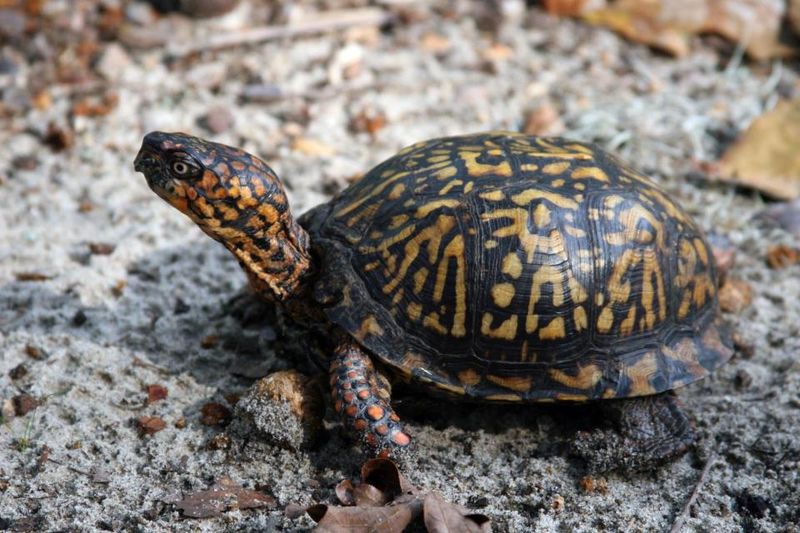
Spotted near the tomatoes, tucked under a shrub, or crossing a garden path, an eastern box turtle in a North Carolina yard is almost certainly not lost. NCWRC guidance on eastern box turtles explains that the species naturally uses residential neighborhoods alongside fields and forests, and that individuals spend their lives within a relatively small, familiar territory.
Seeing one in your yard is a sign that your property is part of that territory, not evidence that the turtle has wandered somewhere it should not be.
Box turtles move for ordinary reasons: finding food, locating shelter, nesting, or settling into a seasonal site. From where you are standing, the animal’s path may look random or even alarming, but the turtle is navigating landmarks it has likely known for years.
Observers cannot determine from a single sighting where the turtle is headed or why, so the assumption that it needs a rescue is almost never warranted.
The right response when a healthy box turtle appears is to leave it alone and watch from a comfortable distance. Approaching too closely, picking it up out of curiosity, or carrying it to what looks like a better spot all introduce disruption the animal did not need.
Quiet observation protects both the turtle and the relationship it has built with your yard over time.
Restraint here is not passive indifference. Choosing not to intervene is an active, evidence-based decision that respects the animal’s knowledge of its own home range.
If the turtle eventually moves on, that is normal. If it returns on another day, that is equally normal.
Either way, the best thing a North Carolina homeowner can do is let the visit unfold without interference.
Why Unnecessary Relocation Can Disrupt Its Routine

Box turtles are not casual wanderers. They build detailed knowledge of a specific area over many years, and that familiarity shapes where they feed, where they shelter, and how far they travel each day.
When a turtle is moved away from that area, even with good intentions, it can respond by increasing its movements dramatically as it tries to reorient, and those extended travels come with real risks.
A North Carolina relocation study by Hester, Price, and Dorcas tracked ten relocated eastern box turtles alongside ten resident turtles. The relocated group showed substantially larger home ranges and greater daily movement distances than the residents.
More significantly, five of the ten relocated turtles died or disappeared during the study period, while none of the ten resident turtles did. Those results make a strong case for leaving a turtle where it already lives.
That said, the study evaluated a managed relocation treatment, not a one-time move of a few feet across a garden path. The findings support a general rule against unnecessary relocation, but they do not prove that every small adjustment guarantees permanent disorientation or death.
The practical takeaway is proportional: the more a turtle is displaced from familiar ground, the greater the disruption to its routine and the higher the associated risk.
Research on managed conservation relocations has produced more varied results. A Maryland highway-construction study by Farnsworth and Seigel found that off-site relocated turtles moved farther and used larger areas than comparison groups, but did not permanently leave the study area.
Overall survival during the three-year study still fell below 65 percent, with possible disease-related mortality contributing to losses. Managed relocations involve monitoring, planning, and professional oversight that a backyard move simply cannot replicate, which is why the default for homeowners remains clear: do not move a healthy turtle unless an immediate hazard requires it.
Move It Only for an Immediate Human-Created Hazard
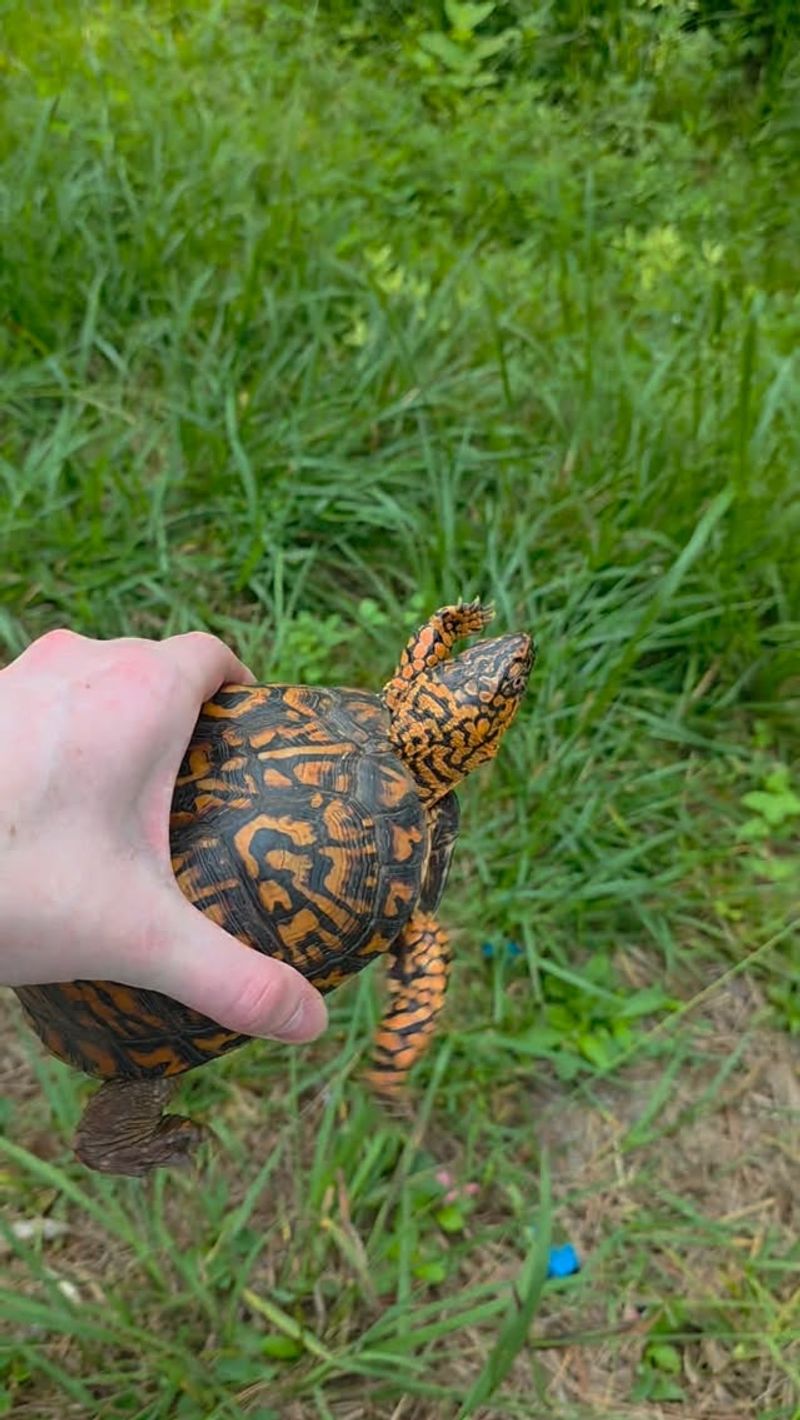
Convenience is not a reason to move a box turtle. Finding one near the garden beds, underneath a vehicle, at the edge of a driveway, or simply headed in a direction that seems inconvenient does not justify picking it up and carrying it somewhere else.
The animal is not in danger from its location; it is in danger only if something you are about to do creates a direct, immediate hazard.
An immediate human-created hazard means something like an active lawn mower approaching the turtle’s path, a construction project that is underway, or a chemical application that cannot be delayed. In those situations, intervention is appropriate.
NCWRC’s eastern box turtle guidance recommends moving the turtle only the shortest distance necessary, ideally less than 50 feet, to clear it from the specific danger. That figure reflects the principle of minimum necessary displacement, not a scientifically tested safe threshold, so the goal is always to move the turtle as little as possible rather than to find the nearest patch of woods or water.
Habitat preference is not a valid reason to relocate a turtle, either. Moving a turtle to a spot that looks more appealing, such as a wooded corner, a pond edge, or a neighbor’s yard with more cover, assumes that the animal’s current location is inferior.
That assumption is almost certainly wrong. The turtle may already be using your yard as part of a familiar range it has occupied for years, and dropping it into unfamiliar ground creates exactly the disorientation the evidence warns against.
The North Carolina Wildlife and Outdoor Recreation Foundation reinforces that personal safety must come first. Do not put yourself at risk while trying to help a turtle.
If the hazard is too dangerous to approach safely, the turtle’s welfare has to be weighed against your own, and your safety takes priority.
Help a Road-Crossing Turtle Without Sending It Back
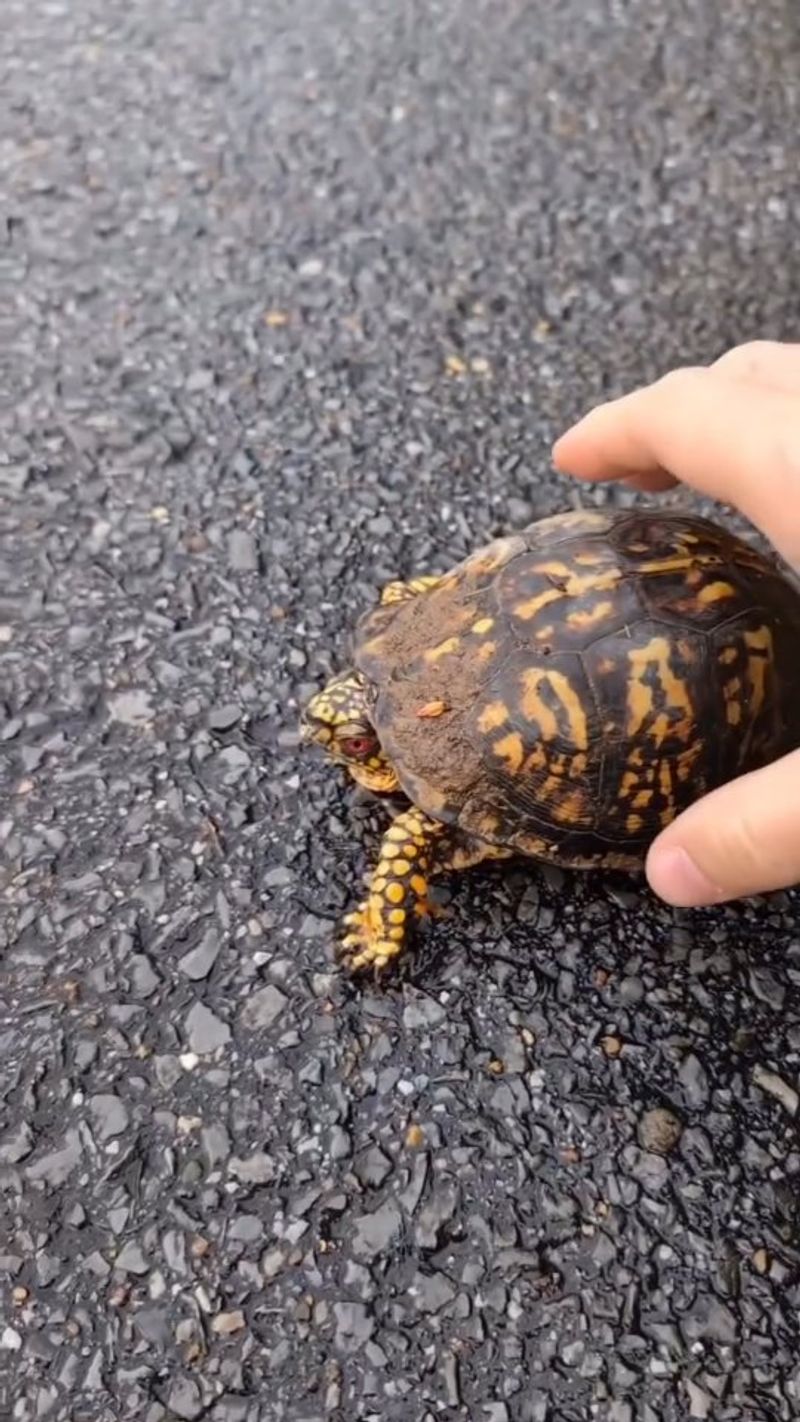
Roads are the most common place where a box turtle genuinely needs human help, and the procedure matters as much as the decision to act. Before doing anything, check that you can pull over, stop, and approach the turtle without entering moving traffic or creating a collision risk for yourself or other drivers.
Human safety comes first, and no turtle rescue is worth a serious injury.
When conditions are safe, pick the turtle up and carry it to the side of the road it was already heading toward. NCWRC advises carrying the turtle across in the direction it was already traveling and setting it down on the far shoulder.
That single instruction contains an important warning: do not turn the turtle around and put it back where it started. A turtle crossing a road has a destination in mind, and returning it to the original side means it will almost certainly attempt the crossing again, facing the same traffic risk you just tried to eliminate.
Equally important, do not take the turtle to a pond, a patch of woods, or any location that seems like a more suitable habitat. Do not put it in your car and drive it somewhere else.
The NC Wildlife and Outdoor Recreation Foundation echoes this guidance, noting that a turtle taken away from its intended path may keep moving toward its original destination regardless, crossing more roads in the process rather than fewer.
The entire intervention should take only a few seconds. Move the turtle across, set it down facing the direction it was going, step back, and leave.
A quick, minimal assist in the original direction of travel is genuinely helpful. Everything else, no matter how well-intentioned, adds risk rather than reducing it.
Stillness Does Not Prove That the Turtle Is Injured
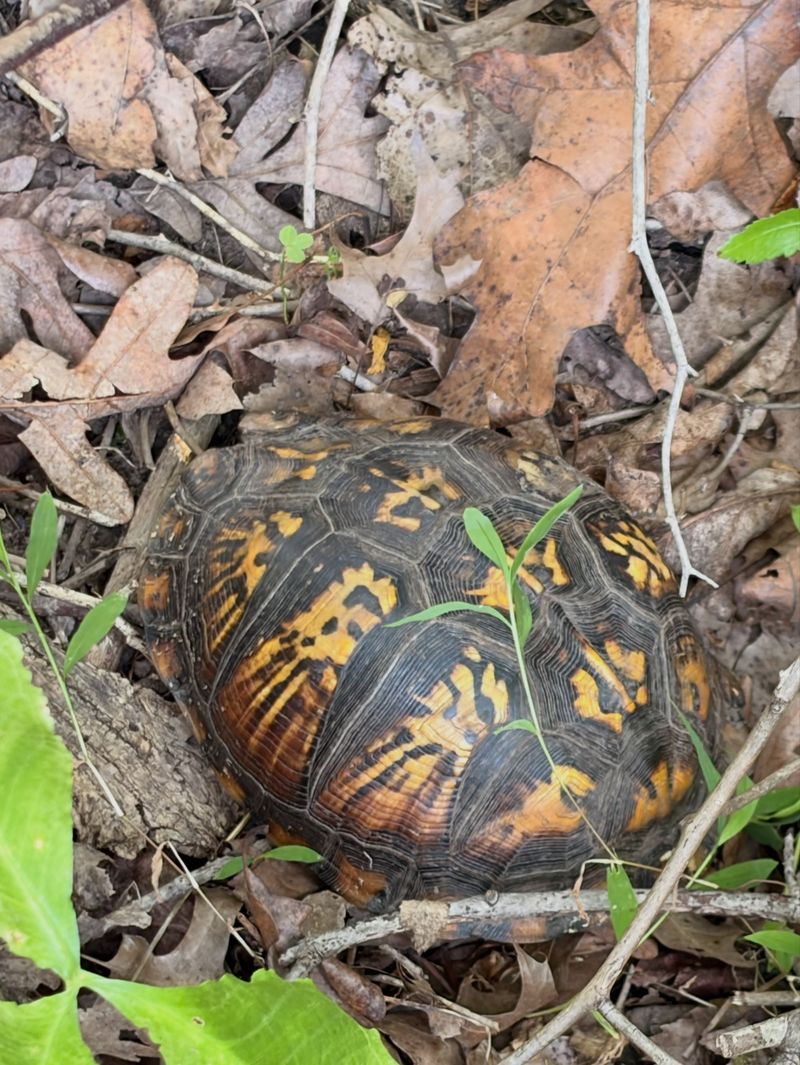
A box turtle that refuses to move, stays tucked tightly inside its shell, or sits motionless for an extended period can look like it is in serious trouble. Most of the time, it is simply frightened.
NCWRC’s injured and orphaned wildlife guidance notes that frightened wild animals may remain completely still for hours, and that the right response is to back away and give the animal space rather than immediately intervening.
Diagnosing a turtle based on stillness or a closed shell alone is not reliable. The animal may be responding to your presence, to a sound, or to a perceived threat nearby.
Give it at least a few hours of undisturbed time before drawing any conclusions. Watching from indoors or from a distance across the yard is fine; hovering nearby keeps the turtle on alert and prevents it from resuming normal behavior.
Visible, obvious injury is a different matter entirely. A cracked or broken shell, active bleeding, a visibly damaged limb, or a turtle that cannot right itself after being turned over are signs that warrant action.
For those situations, NCWRC recommends contacting a licensed reptile rehabilitator rather than attempting home treatment or keeping the turtle indoors. Only a licensed rehabilitator is generally authorized to possess and treat live wildlife in North Carolina, and a professional assessment gives the animal a far better chance than improvised home care.
Do not try to clean a wound, apply tape or adhesive to a cracked shell, offer food or water, or set up an indoor enclosure while you figure out next steps. Call first and follow the rehabilitator’s instructions exactly.
If transport becomes necessary, they will tell you how to do it safely and what container to use.
Handle Only When Necessary—and Wash Your Hands
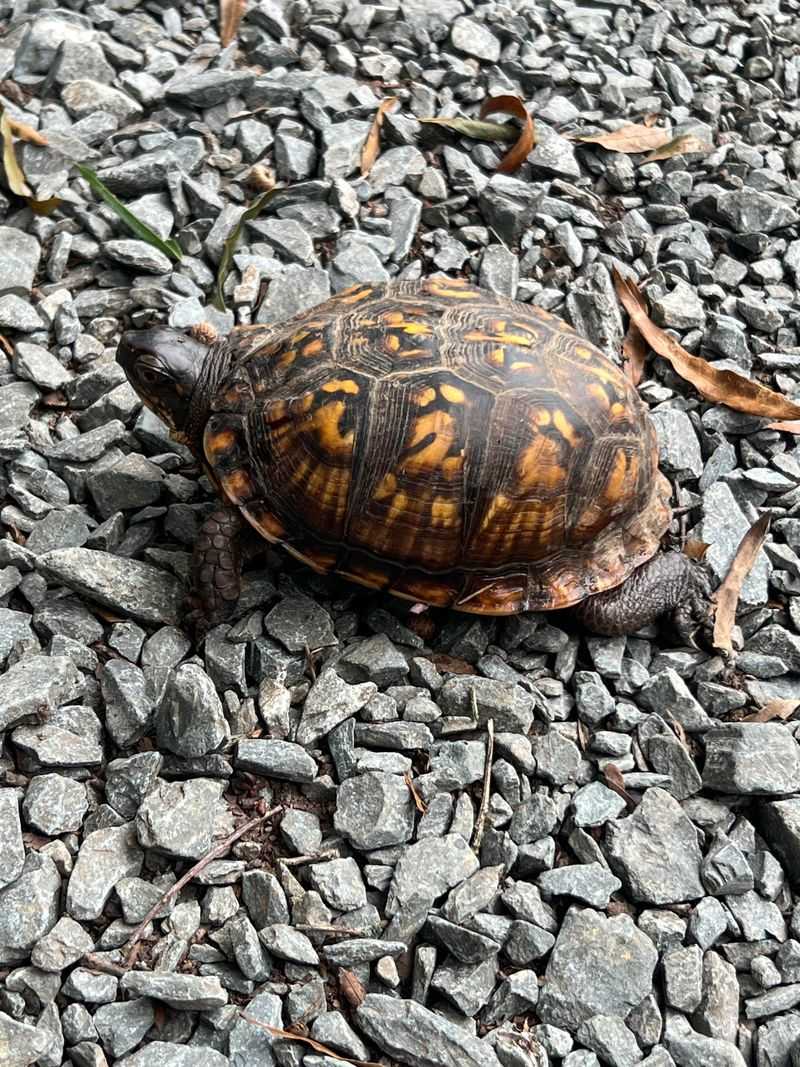
Most encounters with a box turtle in your yard should end without anyone touching the animal. For the limited situations already described, such as moving it clear of an active hazard or carrying it across a road, a brief, careful hold is acceptable.
Keep the contact short, hold the turtle firmly with both hands around the shell, and set it down promptly once it is clear of the danger.
NCWRC’s general wildlife handling guidance recommends wearing gloves when handling turtles and washing your hands thoroughly afterward. Turtles can carry Salmonella bacteria on their shells and skin without showing any sign of illness, and the risk of transmission to people is real.
This is especially relevant if children are nearby, since they are more likely to touch their faces after handling an animal.
Do not collect the turtle, bring it inside, offer it food, or set up a temporary enclosure with the intention of releasing it later. The NC Wildlife and Outdoor Recreation Foundation and NCWRC both advise against keeping wild turtles, even briefly, unless a licensed rehabilitator has given specific instructions.
Well-meaning indoor stays can cause stress, temperature problems, and missed feeding opportunities that do more harm than good.
Near a road or any other active hazard, personal safety governs every decision. Do not lean into traffic, step in front of moving vehicles, or position yourself where you cannot retreat quickly.
A turtle that cannot be reached safely is better left to cross on its own than recovered at the cost of human injury. Handle only when genuinely necessary, keep it brief, and put your hands under running water with soap as soon as the job is done.
The Practical Rule for North Carolina Homeowners

Keeping a healthy eastern box turtle safe in your yard comes down to a short set of decisions. Leave a healthy turtle where it is.
Your yard is likely part of its familiar territory, and a sighting is not a signal that it needs help or a better location. The evidence supports restraint, not the idea that any move of a few feet guarantees lasting harm, but unnecessary relocation still carries real risks that a simple hands-off approach avoids entirely.
Move the turtle only when an immediate, human-created hazard requires it, and then cover only the shortest distance necessary, ideally under 50 feet per NCWRC guidance. For a road crossing, act only when you can do so without endangering yourself, carry the turtle to the opposite side in the direction it was already heading, and set it down without turning it around or taking it elsewhere.
Stillness and a closed shell are signs of fear, not injury. Back away and observe.
If you see a cracked shell, bleeding, or other obvious trauma, contact a licensed wildlife rehabilitator through NCWRC rather than attempting treatment at home. When any handling becomes necessary, use gloves and wash your hands afterward.
Box turtles in North Carolina are declining, and the single most protective thing a homeowner can do costs nothing: recognize that a turtle in your yard already knows where it is, and trust it to carry on.