
The Native North Carolina Shrub That Feeds Songbirds All Winter While Everything Else Goes Bare
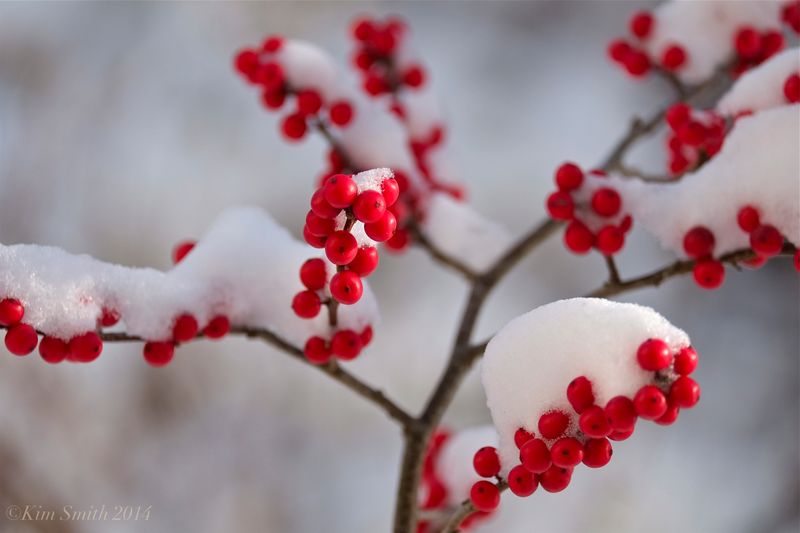
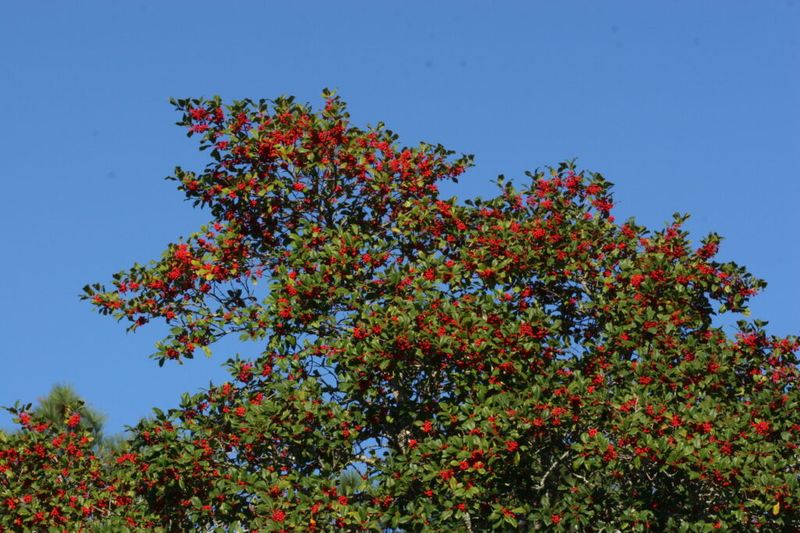
Walk outside on a gray January morning in North Carolina, and most of your yard looks stripped down to sticks and mud. But one native plant can still be holding clusters of bright red berries while standing evergreen against the cold: American holly, Ilex opaca.
Female trees provide fall and winter fruit that birds return to again and again, and their dense foliage offers real shelter when temperatures drop. Before you head to the nursery, though, there are a few honest things to know about this plant’s size, its pollination needs, and what it can realistically do for the birds in your yard.
American holly stays green, but it is not a small shrub
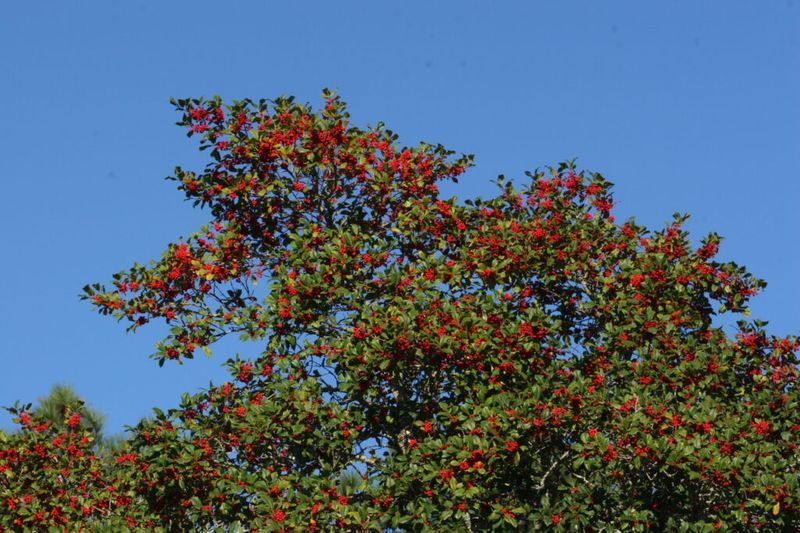
American holly, Ilex opaca, is the strongest answer to the premise of a North Carolina native that keeps its leaves through winter, offers dense cover, and produces colorful fruit that birds use during the cold months. NC State Extension’s Plant Toolbox confirms it is native across all three of North Carolina’s major regions: the Mountains, the Piedmont, and the Coastal Plain.
That broad native range means homeowners from Asheville to Wilmington can grow it without importing an out-of-region species.
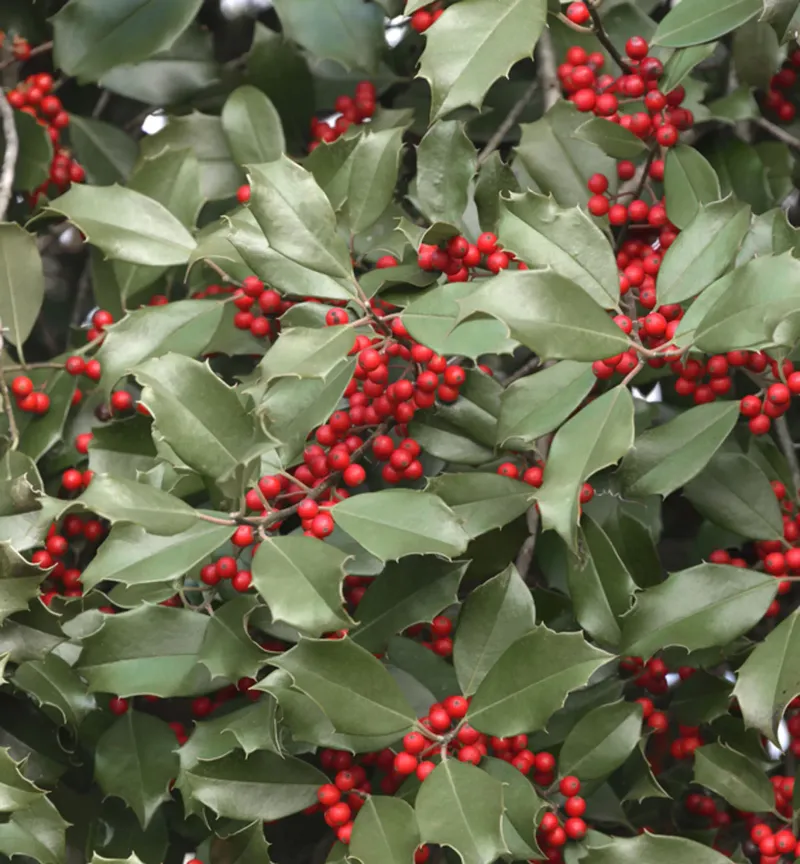
The plant’s broadleaf evergreen foliage is what makes it so useful in winter. While deciduous trees and shrubs drop their leaves, American holly holds onto its spiny, dark green leaves year-round, providing structure and visual cover throughout the coldest season.
Female plants, once pollinated, produce red or orange berry-like fruits that commonly appear from fall into winter, giving birds a potential food source when many other plants have nothing to offer.
Here is where the honest part comes in. American holly is not a compact shrub that fits neatly beside a front door.
It is a slow-growing broadleaf evergreen tree that, over time, can reach approximately 40 to 60 feet tall and 10 to 20 feet wide. Young plants can be managed more like a shrub with careful pruning, but the species has a tree’s ambitions.
Planting one without accounting for its eventual size is a decision that tends to cause problems later, particularly in smaller residential lots where overhead lines, rooflines, and neighboring property lines become real constraints.
Think of American holly as a potential winter anchor for your yard’s structure and seasonal fruit supply rather than a guaranteed all-winter food source or a one-size-fits-all solution. When the site fits and the planting is done thoughtfully, it can be one of the most rewarding native plants a North Carolina homeowner can grow.
Its foliage offers cover and its fruit can last into winter
Two things make American holly worth planting for birds, and they work differently. The evergreen foliage is always on duty.
Through sleet, wind, and hard freezes, that dense canopy gives birds a place to roost, shelter from predators, and protection from the worst weather. NC State recommends placing evergreen trees and shrubs near feeding and watering areas specifically because of this shelter value, grouping American holly alongside yaupon holly, wax myrtle, and eastern redcedar as useful winter-cover plants.
The fruit is a separate story, and it is worth understanding on its own terms. Pollinated female plants produce berry-like drupes, usually red or orange, occasionally yellow, that commonly appear starting in the fall and can persist into winter.
USDA Forest Service documentation on Ilex opaca notes that the fruits usually remain through most of winter unless wildlife removes them sooner. NC State lists the display period as roughly September through February.
At least 18 bird species have been documented eating American holly fruit, including cedar waxwings, American goldfinches, mourning doves, wild turkeys, and northern bobwhite. That is a meaningful list, but it does not mean every bird in your yard will visit every winter.
Fruit persistence does not equal guaranteed food availability. A flock of cedar waxwings can strip a holly clean in a single afternoon, leaving nothing for February.
Beyond timing, published research comparing Ilex opacaIlex verticillata and fruits describes American holly fruit as relatively low in nutritional quality, while also finding that its persistence through the season is greater than winterberry’s. The practical takeaway is that the berries function as a late-season or emergency food resource rather than a nutritionally rich staple that sustains birds through the whole winter.
Frame your expectations accordingly. American holly gives birds a place to hide and a backup food supply that may last well into the cold months.
That combination is genuinely valuable, especially when the rest of the yard has little to offer.
Reliable fruiting requires a compatible male plant
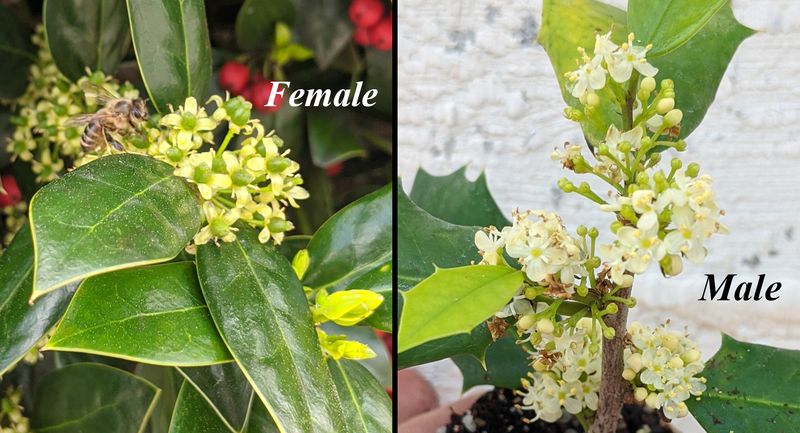
One of the most common reasons a newly planted holly never produces berries is simple: the homeowner bought only one plant, and that plant turned out to be a male, or a female without a male anywhere nearby. American holly is dioecious, which means male and female flowers grow on entirely separate plants.
A female tree has the equipment to produce fruit, but only after pollen from a compatible male reaches its flowers. Without that pollination step, the female tree will bloom and then produce nothing.
NC State’s plant profile for American holly makes the male-female requirement clear. Proximity matters: a male plant needs to be within a reasonable distance, generally within 50 to 100 feet, and it needs to bloom at roughly the same time as the female for pollination to occur.
Bees and other pollinators carry the pollen between plants, so a male hidden behind a fence or tucked out of pollinator flight paths may not do the job reliably.
Before buying, ask your nursery staff directly whether a plant is male or female and whether a compatible male cultivar is available. Do not rely on guessing from the plant label alone, since many hollies are sold without clearly marked sex.
If you are choosing a named cultivar for its fruiting performance, confirm that a recommended male pollinator for that cultivar is available at the same time. Some male hollies sold as pollinators are compatible with a range of female cultivars, while others are more selective.
Getting the pollination piece right before planting is far easier than troubleshooting a non-fruiting holly two or three years later. A little extra conversation at the nursery can save a lot of frustration and make the difference between a tree that feeds birds and one that simply stands there looking green.
Choose a site that can handle a future 60-foot tree
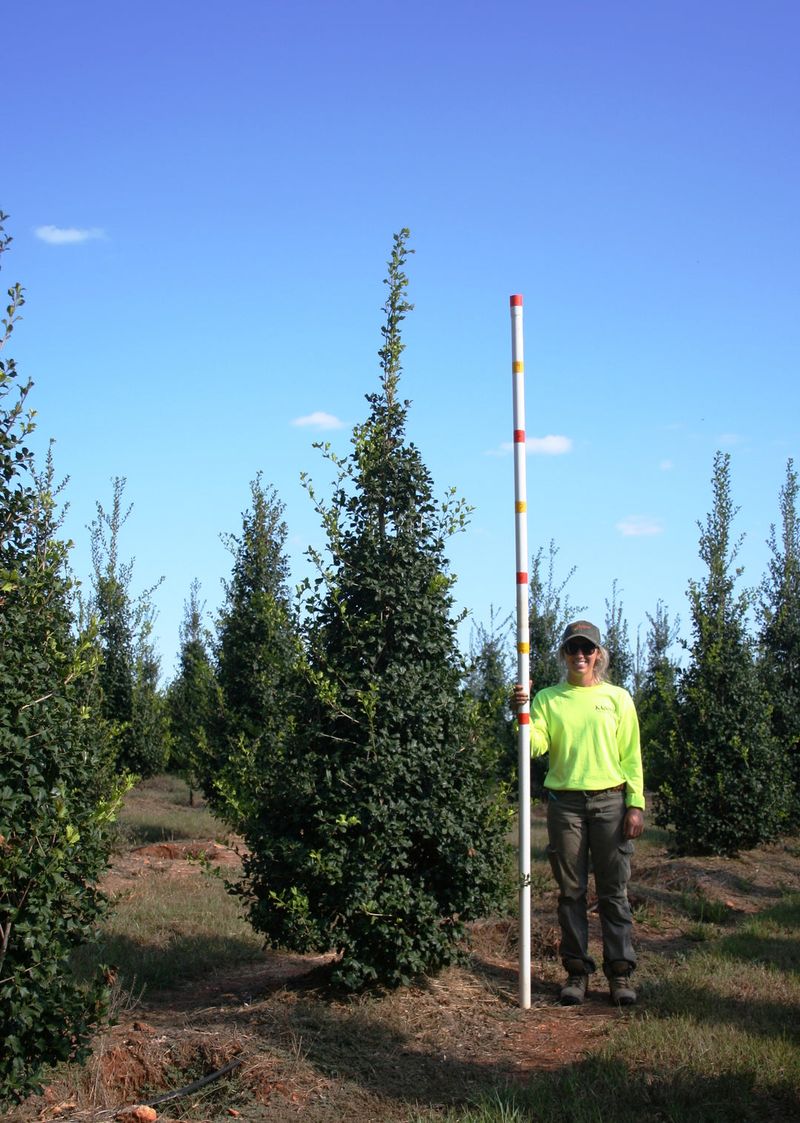
Slow growth can be deceptive. American holly adds height gradually enough that a newly planted tree can look perfectly manageable for years, but the species is working toward a mature form that can top 60 feet.
NC State’s full plant profile for Ilex opaca puts the typical mature size at roughly 40 to 60 feet tall and 10 to 20 feet wide. That is a canopy tree, not a foundation planting, and it needs to be sited with that endpoint in mind.
Start by checking overhead utilities, rooflines, and property lines. A tree that will eventually reach 50 feet should not be planted within 20 feet of a structure unless you have a long-term pruning plan and the time and budget to carry it out.
In a small urban lot, the better choice may be a compact cultivar bred for a smaller mature size, and there are several available. Ask your nursery which cultivars reliably stay under 20 or 30 feet if space is a genuine constraint.
On the soil side, American holly prefers moist, acidic to neutral, well-drained conditions. It does not tolerate limestone soils or sites that stay wet and flooded for extended periods.
In hotter parts of North Carolina, afternoon shade can reduce heat stress, and NC State advises protecting the plant from harsh winter winds and strong winter sun, which can cause foliage damage on exposed sites. The Coastal Plain and Piedmont often offer suitable conditions, while mountain gardeners should pay attention to wind exposure at higher elevations.
One more site factor that North Carolina homeowners near wildland edges should take seriously: NC State rates American holly as highly flammable and advises against planting it within the defensible space immediately around a home. If your property borders a fire-prone area or you live in a community with active wildfire risk, keep American holly farther from the house and choose less flammable plants for the zone closest to the structure.
That boundary matters for safety, not just aesthetics.
Use holly as one layer in a complete bird habitat
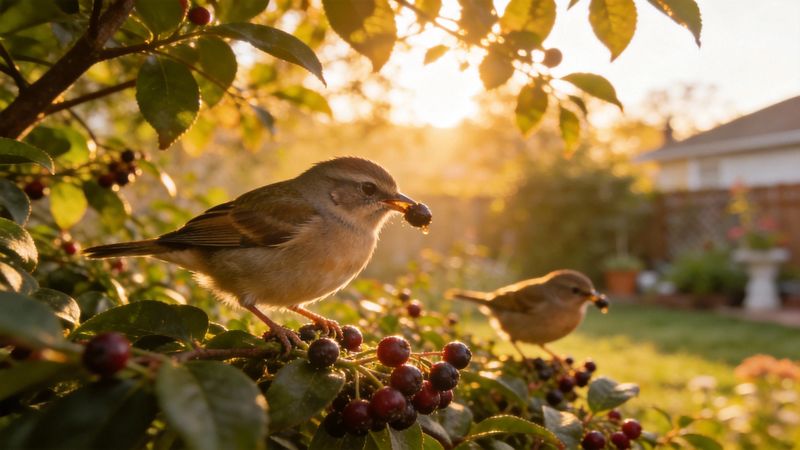
A single tree, no matter how good its berries are, cannot carry the whole weight of a bird-friendly yard. Birds need food from multiple sources across the seasons, water they can access year-round, cover at different heights, and places to nest and escape from predators.
American holly can anchor one corner of that system, but it works best as part of a layered native plant community rather than as a standalone solution.
NC State Extension’s guide to landscaping for wildlife with native plants recommends combining evergreen cover plants with species that fruit or produce seed at different times of year. Native plants that offer summer fruit, fall seeds, or spring insects fill gaps that American holly cannot.
Think about adding native shrubs and small trees such as serviceberry, beautyberry, wax myrtle, or native viburnums alongside the holly to extend the food calendar across more of the year.
Vegetation structure matters as much as plant selection. NC State’s urban bird habitat guidance emphasizes the value of multiple vegetation layers: ground-level plantings, mid-height shrubs, and canopy trees together create a habitat that serves a wider range of bird species than any single height level can.
Ground feeders, thicket nesters, and canopy foragers all use the yard differently.
Water is non-negotiable. A shallow birdbath kept clean and ice-free through winter draws birds even when the berries are gone.
NC State’s songbird resource page also points out that native plants support the insects and caterpillars that breeding birds depend on in other seasons, so the holly you plant now is doing double duty: feeding fruit-eaters in winter and supporting the insect community that warblers and wrens will need next spring. Evergreen foliage gives birds shelter, but it does not automatically create nesting habitat.
Dense thickets of native shrubs and brush piles at ground level fill that role far better.
Consider a smaller evergreen holly when space is limited
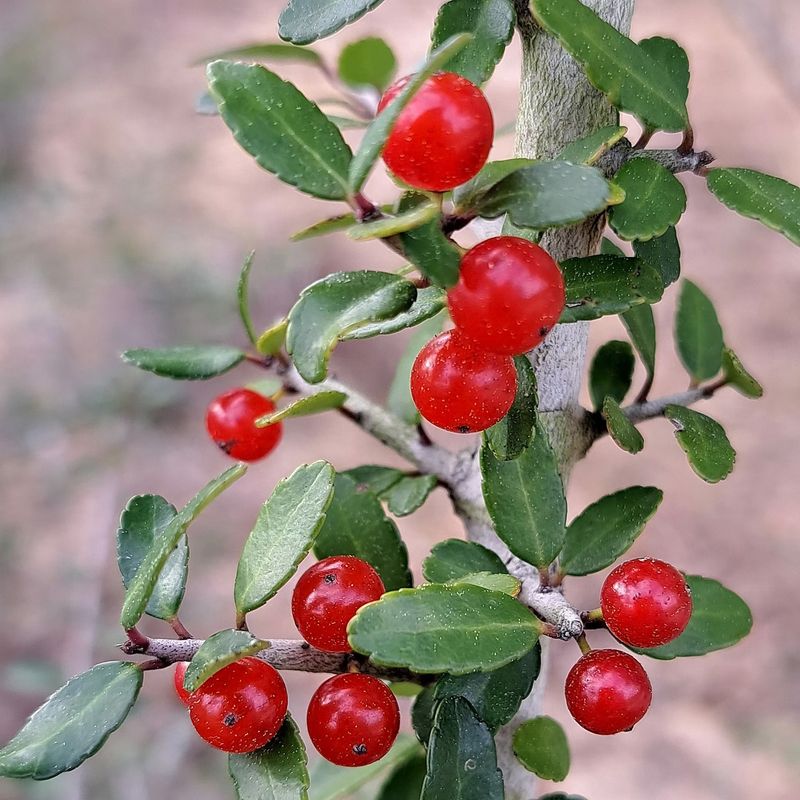
If a 60-foot tree is not in the cards for your yard, the good news is that American holly is not your only native option. Two evergreen relatives offer more shrub-scale forms while still providing winter cover and, with proper pollination, bird-attracting fruit.
Yaupon holly (Ilex vomitoria) is a tough, adaptable evergreen native to the Southeast that stays considerably smaller than American holly and tolerates conditions that would stress other hollies, including drought, occasional flooding, and salt spray near the coast. NC State’s yaupon holly profile notes it can spread by suckering, which means it may need periodic management to keep it from expanding beyond its intended space.
Like American holly, yaupon is dioecious, so you will need both male and female plants for reliable fruit. Inkberry, also known as gallberry (Ilex glabra), is another evergreen option that typically tops out around 5 to 10 feet, making it a realistic choice for smaller lots.
NC State’s inkberry profile confirms it tolerates moist or occasionally wet soil, which makes it useful in low-lying spots where American holly would struggle. Inkberry also requires male and female plants for fruit production.
Winterberry holly (Ilex verticillata) is worth mentioning as a third option, though it plays a different role. Unlike yaupon and inkberry, winterberry is deciduous: it drops its leaves in fall, leaving bare branches that can carry spectacular clusters of red berries well into winter.
NC State’s winterberry profile recommends one male plant for roughly 10 to 20 female plants within 50 feet, with compatible bloom timing. If the evergreen-cover benefit is your priority, winterberry does not deliver it.
If you want striking winter berries on a shrub that fits a moist, acidic spot, it is a strong native choice.
None of these plants are interchangeable with American holly. Each has a distinct size, form, and set of site preferences.
Matching the right species to your actual conditions produces better results than picking whichever one is on the nursery shelf.
Buy the native species and keep the berries away from people and pets
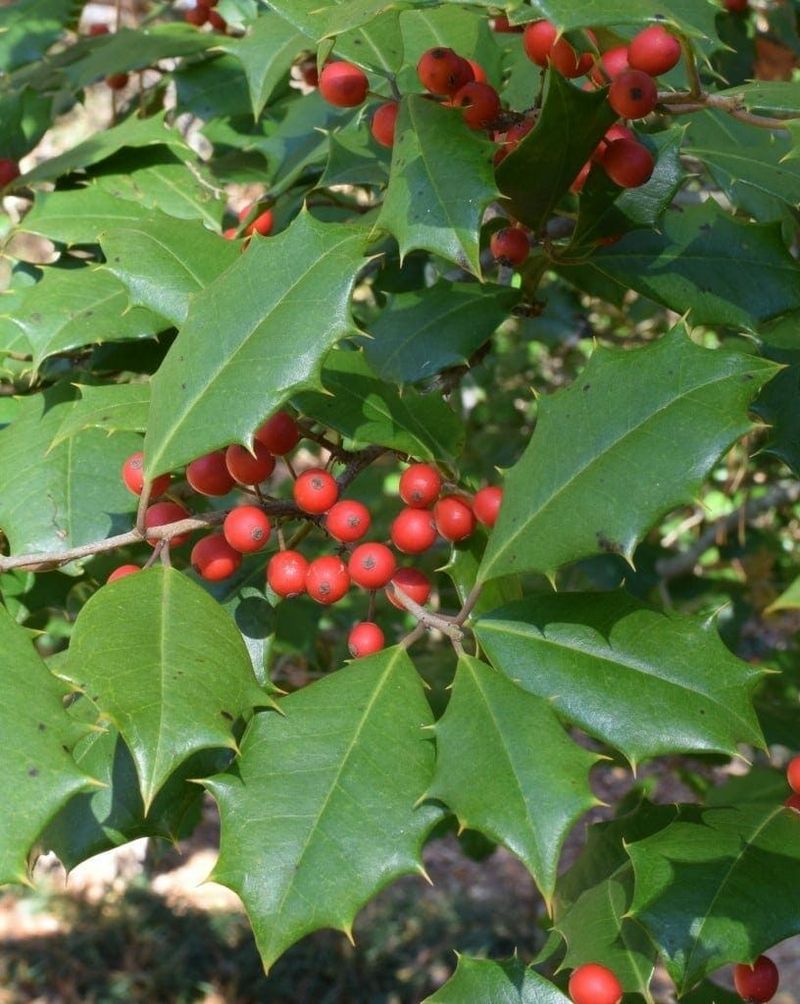
Getting the species right starts at the point of purchase. American holly’s botanical name is Ilex opaca, and confirming that name on the plant tag or nursery label is the single most reliable way to make sure you are taking home the correct North Carolina native.
English holly (Ilex aquifoliumIlex opaca) is a European species, not a North American native, and NC State’s English holly profile identifies it as non-native to this region. Chinese holly and Japanese holly are also common in the nursery trade and are not substitutes for when your goal is supporting native wildlife in a North Carolina yard.
Timing your purchase around fall planting can give roots a head start. Cooler temperatures and seasonal rainfall in autumn help native plants establish before summer heat arrives.
Audubon North Carolina’s native planting guidance treats fall as a generally useful window for getting native plants in the ground, though this applies broadly to native species and is not a hard rule specific to American holly alone. Spring planting works too, as long as you plan for adequate watering during the first summer.
On the safety side, holly berries are not edible household fruit, and that fact matters if you have children or pets spending time near the plant. Poison Control’s information on holly berries reports that ingestion can cause nausea, vomiting, and diarrhea in people.
Birds can eat the berries safely because of differences in their digestive systems, but that does not make the fruit safe for humans or household animals. If a child or pet ingests holly berries, contact Poison Control at 1-800-222-1222 or reach out to a veterinarian promptly rather than waiting to see whether symptoms develop.
Make American holly a deliberate winter anchor
American holly earns a place in a North Carolina yard when the conditions are genuinely right for it. That means enough room for a tree that may eventually reach 40 to 60 feet, a site with moist, acidic to well-drained soil, and a plan that includes a compatible male plant nearby so the female can fruit reliably.
NC State Extension documents its native range across the Mountains, Piedmont, and Coastal Plain, so the species fits most of the state when the site matches its preferences.
The realistic payoff is evergreen winter cover that birds can use for shelter and roosting, plus fruit that often persists from fall well into the cold months. Birds may strip the crop early in a hard winter, and the berries are not a nutritionally complete food source on their own.
NC State’s wildlife landscaping guidance is consistent on this point: a diverse native plant community, with water and varied vegetation layers, serves birds far better than any single species can on its own.
Plant American holly because it fits your site and your long-term vision for the yard, not because one tree will transform your property into a bird sanctuary overnight. The homeowners who get the most out of it are the ones who treat it as a deliberate anchor in a larger native habitat, something that holds its green through the coldest months while the rest of the plan fills in around it.