
If Your Peace Lily Refuses To Flower, Here Are 11 Reasons It Keeps Growing Leaves Instead
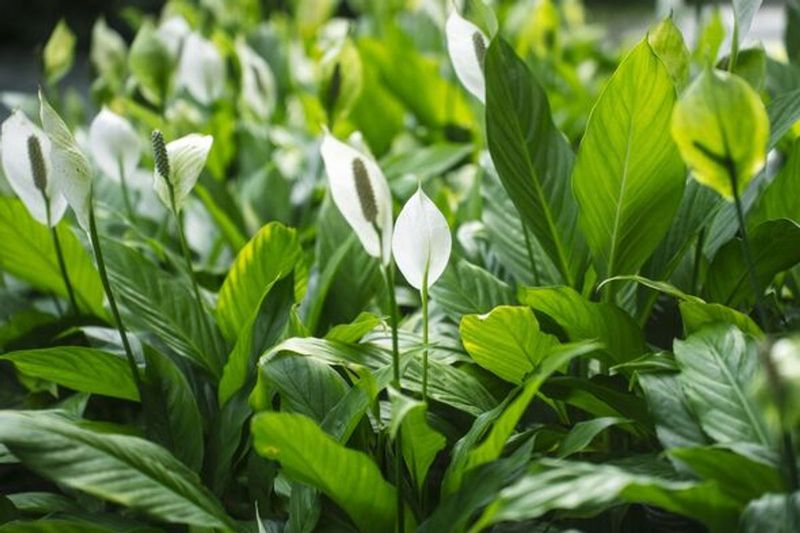
You water your Peace Lily, you love it, and it rewards you with big glossy green leaves but not a single white bloom. It feels like the plant is teasing you on purpose.
The good news is that a leafy, flowerless Peace Lily almost always points to one fixable mistake. Here are 11 reasons yours keeps growing leaves instead of flowers, plus the simple change that gets it blooming again.
1. Insufficient Light
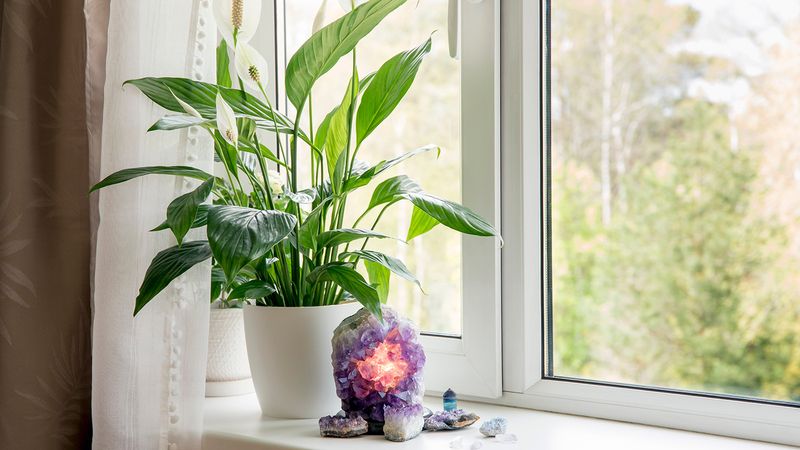
Peace Lilies have a reputation for surviving in dim corners, and that reputation is exactly what tricks so many owners. Survive and bloom are two very different things.
In low light, the plant pours all its energy into leaves and skips flowers entirely.
To make blooms, a Peace Lily needs bright, indirect light for a good chunk of the day. A north or east-facing window is usually the sweet spot, giving steady brightness without harsh midday sun that scorches the foliage.
Try moving your plant a few feet closer to a window and watch it over the next month or two. Just keep it out of direct beams, since burned tips will replace one problem with another.
2. Improper Watering
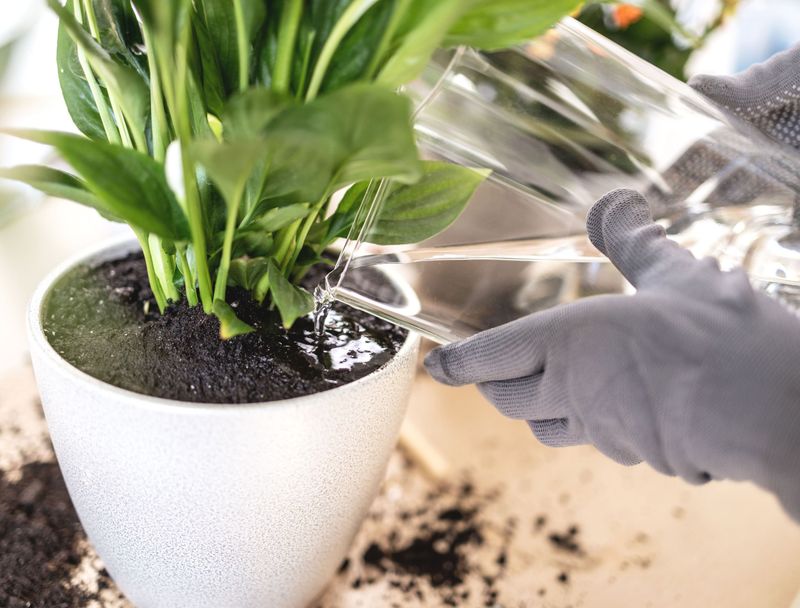
Watering trips up more Peace Lily owners than anything else, and both extremes backfire. Soggy soil suffocates the roots and invites rot, while bone-dry soil sends the plant into survival mode where flowering is the first thing to go.
What these plants really want is soil that stays evenly moist but never waterlogged. The easy test is your finger: poke down about an inch, and water only when that top layer feels dry.
Make sure the pot has drainage holes so extra water can escape. A plant that isn’t fighting stress underground has the spare energy to push out those white spathes you’ve been waiting for.
3. Lack of Nutrients
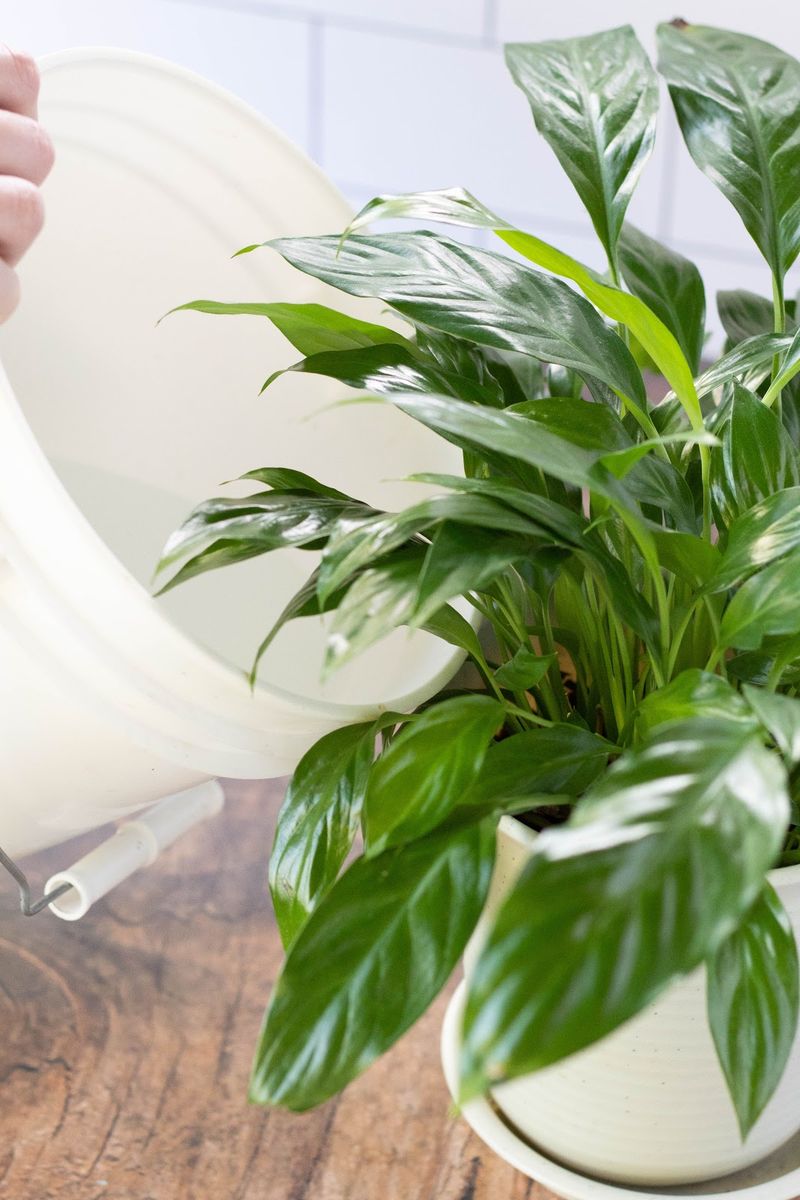
Imagine trying to run a marathon on nothing but crackers. That’s basically what you’re asking of a Peace Lily that hasn’t been fed or repotted in years.
Making flowers takes a burst of energy, and energy comes from nutrients in the soil.
Over time, potting mix gets depleted, especially if the same soil has been in the pot for ages. The plant keeps making leaves because that’s cheaper for it, but blooms demand more resources than what’s left.
Refresh the situation with a light feeding during the growing season, or repot into fresh mix if it’s been a couple of years. A well-fed plant has the fuel it needs to finally flower.
4. Wrong Type of Fertilizer
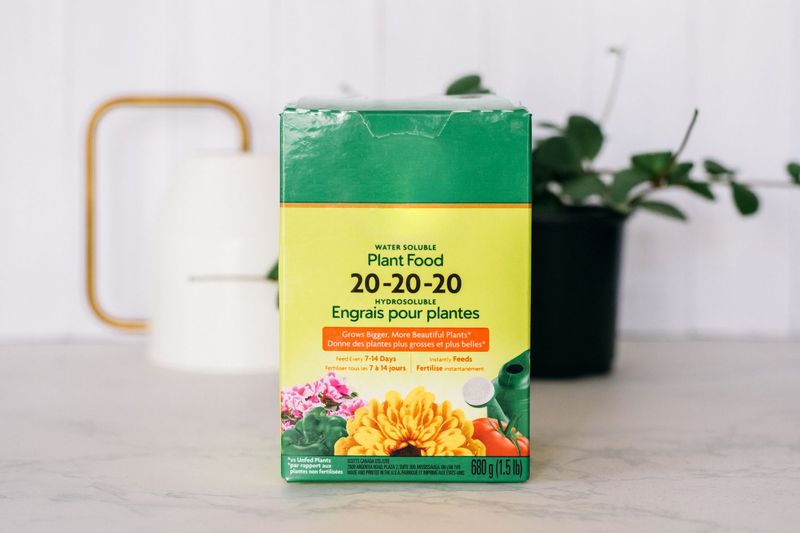
Here’s a sneaky one that catches even careful gardeners. If your fertilizer is loaded with nitrogen, you’re accidentally telling the plant to grow leaves, leaves, and more leaves.
Nitrogen fuels foliage, not blooms.
Flip the script by switching to a balanced, water-soluble fertilizer, or one with a bit more phosphorus, since phosphorus is the nutrient tied to flowering. Save the feeding for spring and summer when the plant is actively growing.
Check the three numbers on the label before you pour. A quick label swap can be the difference between a jungle of green and a plant crowned with white flowers.
5. Over-fertilizing
More food sounds like more flowers, but with Peace Lilies the opposite is true. Piling on fertilizer leads to salt building up in the soil, and that buildup can burn the roots.
Damaged roots can’t support blooming, so the plant just coasts on leaves.
You might spot the warning signs as crusty white residue on the soil or brown, scorched leaf tips. That’s the plant waving a little flag for help.
Dial it back by diluting your fertilizer to half strength and feeding less often. If salt has built up, flush the pot with plain water a few times to rinse it out and give the roots a fresh start.
6. Inadequate Temperature
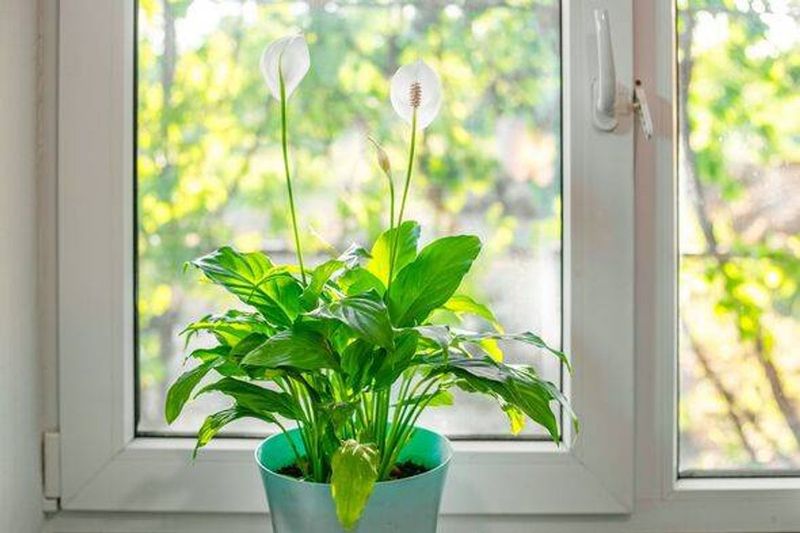
Peace Lilies are tropical at heart, so they’re happiest in the same cozy range most of us like indoors. When temperatures dip too low, the plant slows down and pouts, refusing to bloom until things warm back up.
Aim to keep it in the range of roughly 65 to 85 degrees Fahrenheit. Consistent stretches below 65 can put flowering on hold entirely.
Watch out for cold drafts near doors and windows, and keep the plant clear of air conditioning vents. A steady, warm spot lets it settle in and think about making flowers instead of just surviving the chill.
7. Low Humidity
Back in their rainforest homes, Peace Lilies live in muggy air all day long. Most houses, especially with heating or air conditioning running, feel like a desert by comparison.
That dryness stresses the plant and discourages it from blooming.
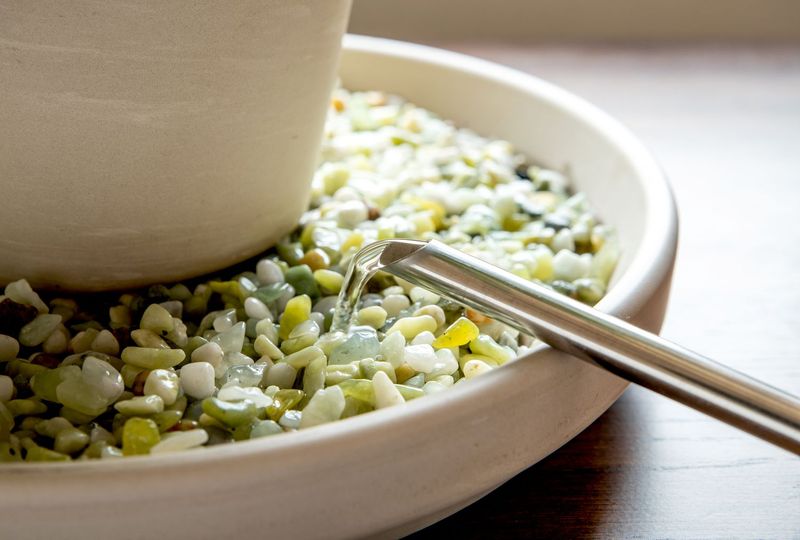
Bumping up the humidity is easier than it sounds. Set the pot on a tray of pebbles with a little water in the bottom, and as it evaporates it creates a moist microclimate around the leaves.
An occasional misting helps too, and grouping plants together raises humidity for the whole cluster. Happier, less-thirsty air often nudges a stubborn plant toward flowering.
8. Plant Immaturity
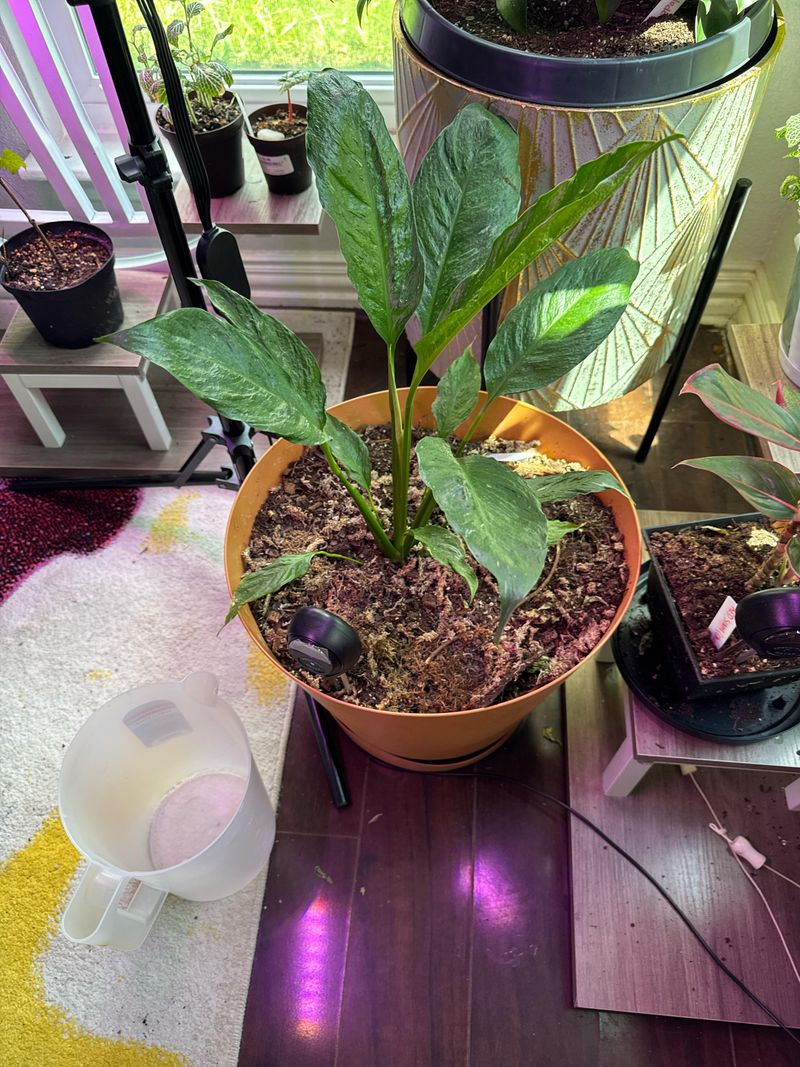
Sometimes the plant isn’t doing anything wrong. It’s just young.
A baby Peace Lily needs time to grow up before it can spend energy on flowers.
Most Peace Lilies won’t bloom naturally until they’re somewhere between one and three years old. If yours is a small, recently propagated plant, patience may be the only fix it needs.
Some commercial growers use hormones to force early blooms, but at home the best move is simply to keep the light, water, and warmth steady. Give it time, and maturity will bring the flowers on its own schedule.
9. Root-Bound Conditions
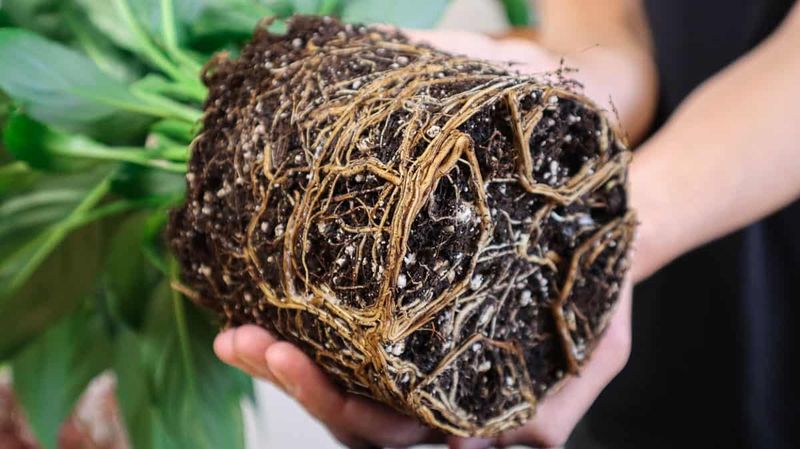
Slide a struggling Peace Lily out of its pot and you might find a dense, tangled knot of roots with almost no soil left. That’s a root-bound plant, and it’s basically stuck in a container it has outgrown.
When roots run out of room, they can’t take up water and nutrients well. A plant that can’t feed itself properly isn’t going to spend precious energy on flowers.
Move it into a pot just one size larger with fresh potting mix. Don’t jump to a giant container, though, since Peace Lilies actually like being a little snug and a huge pot can stall them just as much.
10. Spent Blooms Not Removed
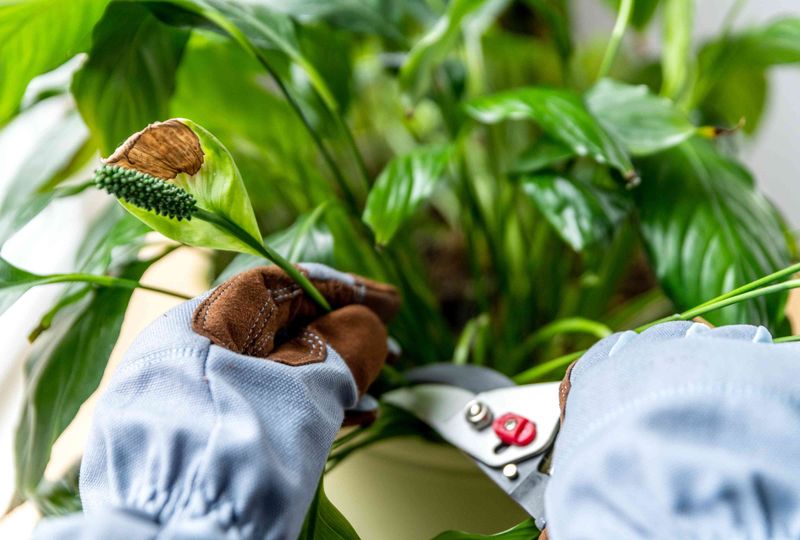
Ever notice how a Peace Lily flower fades from bright white to green and finally to a tired brown? If you leave those old blooms hanging on, the plant keeps spending energy propping them up instead of starting fresh ones.
Give it a nudge by trimming the spent flower stalk all the way back to the base of the plant. A clean cut with sharp scissors is all it takes.
With the old flowers gone, the plant can redirect that saved energy toward new growth. Regular tidying keeps the bloom cycle moving instead of stalling.
11. Post-Nursery Hormones
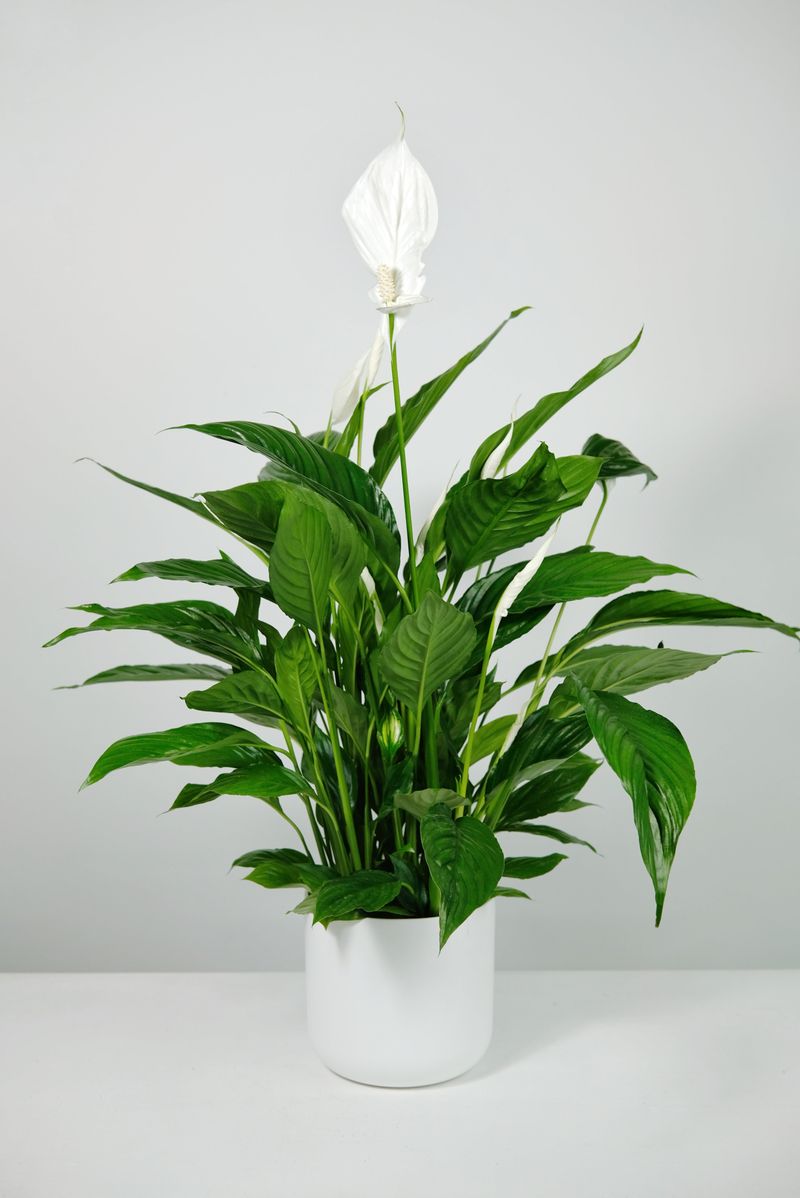
Brought home a gorgeous blooming Peace Lily that hasn’t flowered since? You’re not imagining it.
Many nursery plants are treated with a flowering hormone so they look their best on the shelf and sell faster.
Once that hormone wears off, the plant reverts to its natural rhythm. Under normal home conditions, it can take a while for it to gear up and flower on its own again.
Don’t panic and change everything at once. Keep the light, watering, warmth, and feeding consistent, and give the plant a season or two to reset.
In time it should bloom the honest way, all by itself.