
Blackgum: North Carolina’s Overlooked Native Shade Tree for Late-Spring Pollinators and Year-Round Wildlife
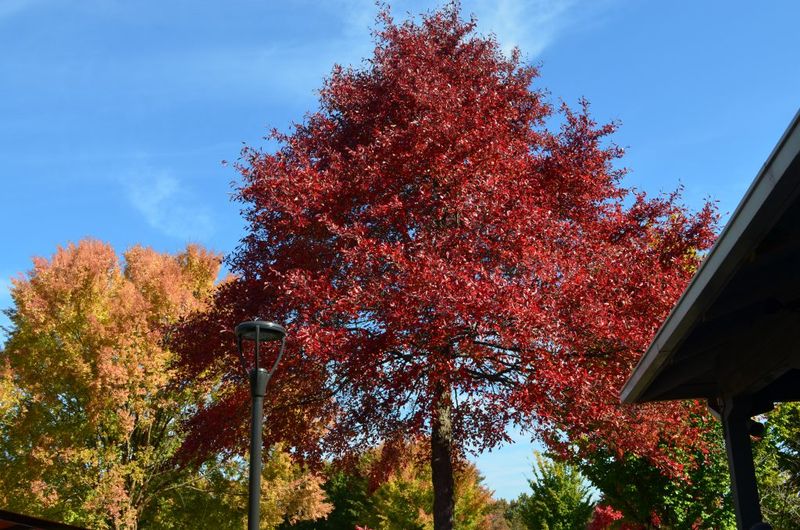
Blackgum, also called black tupelo or sour gum, grows wild from the Coastal Plain to the mountains of North Carolina, yet it rarely makes the short list when homeowners shop for a shade tree. Its small May and June flowers draw bees and other pollinators, its blue-black fruit feeds songbirds and small mammals into fall, and its leaves turn a reliable, deep red before dropping.
Getting the most from this tree, though, means pairing it with other native plants that bloom before and after it does.
Why Blackgum Deserves a Closer Look
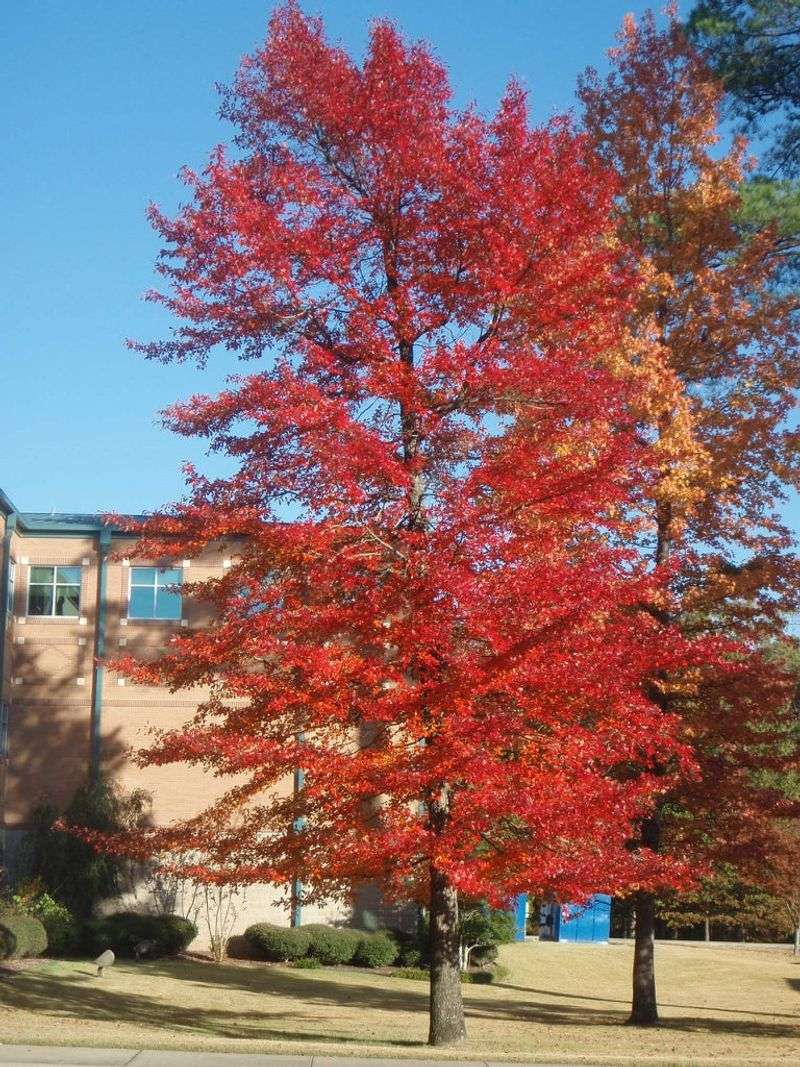
Blackgum goes by several names: black tupelo, sour gum, and its scientific name Nyssa sylvatica. North Carolina Extension identifies blackgum as native throughout the state, from the pocosins and bottomlands of the Coastal Plain to the ridge slopes of the Blue Ridge Mountains, making it a genuinely local choice rather than a regional specialty.
As a long-term landscape tree, blackgum brings several distinct advantages to a residential yard. Its small flowers open mainly in May and June and provide nectar that bees, including honeybees and native bees, actively seek out.
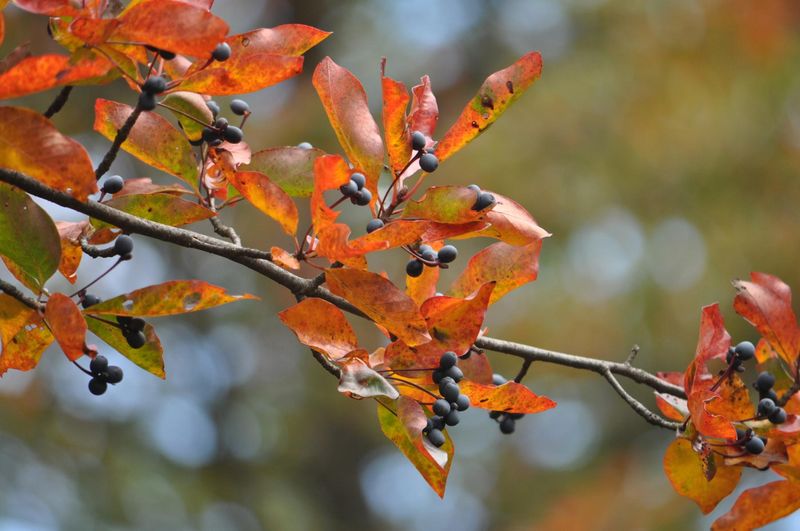
Later in the growing season, female trees produce blue-black fruit that songbirds and other wildlife consume well into fall, adding food value after the blooms are gone.
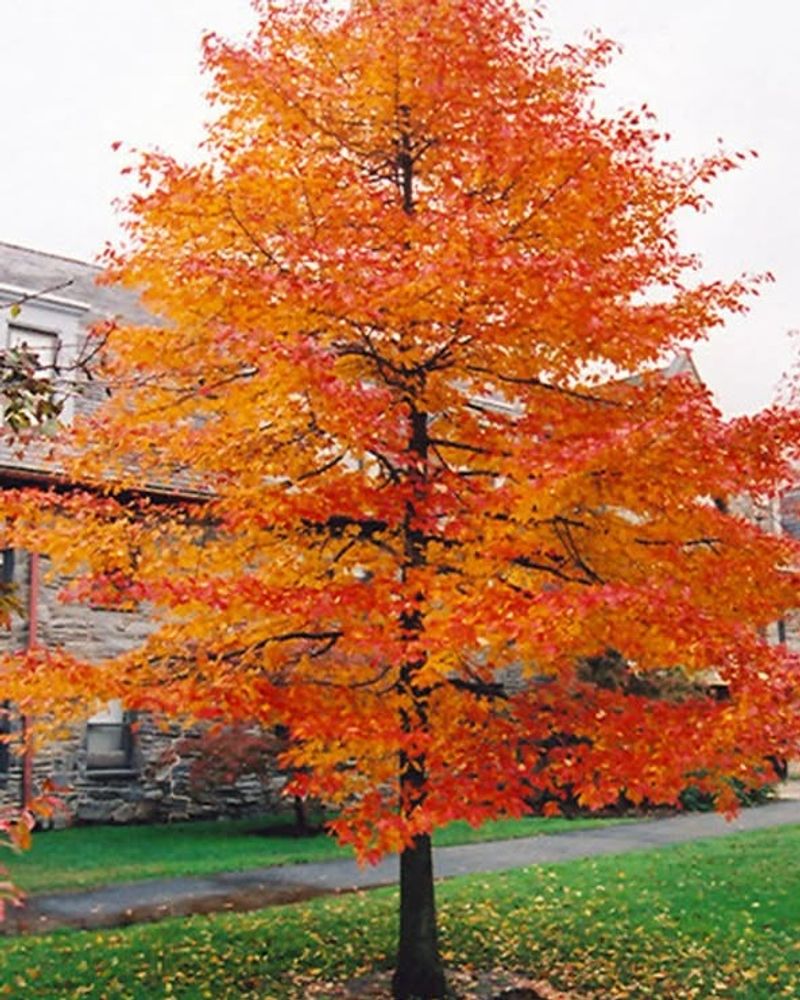
The tree also delivers some of the most reliable fall color of any native species in the state, shifting from deep green to vivid red and occasionally orange or purple before leaf drop. And over a long horizon, it grows into a substantial shade tree that can anchor a yard’s canopy layer for generations.
One thing to address directly: a single blackgum does not supply pollinators with uninterrupted nectar from spring through fall. Its flowering window is real and valuable, but it is concentrated in late spring.
North Carolina Extension’s plant profile and N.C. Forest Service guidance both describe it as a pollinator- and wildlife-friendly tree without suggesting it blooms continuously.
To extend floral resources through the broader growing season, homeowners need a deliberately chosen mix of native plants that fill the early spring, summer, and fall gaps around it.
Blackgum’s Real Pollinator and Wildlife Calendar
Blackgum’s contribution to pollinators is concentrated in a specific window. North Carolina Extension lists blackgum’s flowers as a spring-to-summer nectar resource, with documented bloom primarily in May and June.
The flowers are small and easy to miss from a distance, but bees find them reliably. Both honeybees and native bee species visit the blossoms, and blackgum honey is considered a prized product in areas where the tree grows densely in the wild.
After the bloom period closes, the tree’s role in the yard shifts. Penn State Extension notes blackgum’s late-season fruit as a key wildlife benefit, and this is where the calendar distinction matters.
The blue-black, olive-shaped fruit that develops in late summer and ripens into fall is food for birds and mammals, not a continued nectar source for pollinators. Robins, thrushes, bluebirds, cardinals, and woodpeckers are among the songbirds that consume the fruit, and small mammals take advantage of what falls to the ground.
Readers should keep one important variable in mind regarding fruit production. NC Extension’s detailed plant entry explains that blackgum commonly has separate male and female trees, though some individuals carry a mixture of flower types.
A female tree generally needs a male pollinator nearby to set substantial fruit, and a tree that turns out to be male will not produce berries at all. If fruit production for birds is a priority, ask your nursery about the sex of the tree you are buying, or choose a confirmed female and plant it where a male specimen grows nearby.
The N.C. Forest Service also highlights the fruit’s wildlife value, reinforcing that this later-season benefit is aimed at birds and mammals rather than extending the tree’s service to pollinators.
Understanding that distinction helps homeowners plan realistically and avoid expecting something from the tree that it was never designed to deliver.
Expect Future Shade, Not Instant Relief
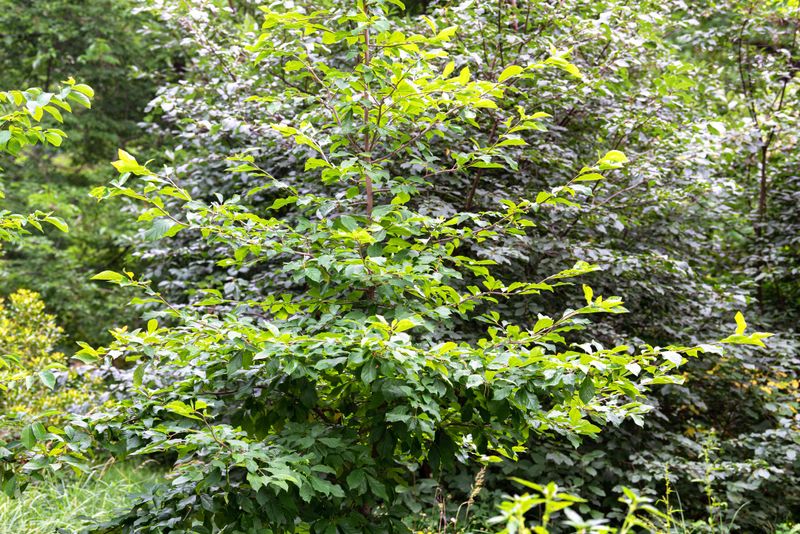
Blackgum earns its place in a yard over decades, not seasons. North Carolina Extension estimates roughly 12 to 15 feet of growth in 10 years under ordinary conditions, which puts blackgum firmly in the slow-growing category.
Homeowners who need shade over a patio or play area within a few years should plan accordingly and consider a faster-growing tree for immediate relief while the blackgum matures alongside it.
Published mature-size figures for blackgum vary depending on the source, and both ranges deserve mention. The N.C.
Forest Service lists an eventual height of approximately 60 to 80 feet with a crown spread of 25 to 35 feet, while North Carolina Extension describes a typical cultivated height of 20 to 30 feet but notes that trees can reach 40 to 70 feet depending on site and conditions. Rather than locking onto a single number, plan for the larger possible footprint before you buy.
That planning step matters more than it might seem. A tree that reaches 60 feet in a favorable site looks very different in 40 years than the modest specimen you planted from a 3-gallon container.
Measure the available space carefully, note what is above and around the planting spot, and treat the larger size estimates as the responsible default.
The reward for that patience is real. A mature blackgum can provide a dense, layered canopy that cools the ground beneath it and offers nesting habitat for cavity-dependent birds as the trunk ages.
Planting a slow-growing native tree is a long-term investment in the yard’s ecosystem, and blackgum’s track record in North Carolina landscapes makes it a reliable one when the site is right.
Match the Tree to the North Carolina Site
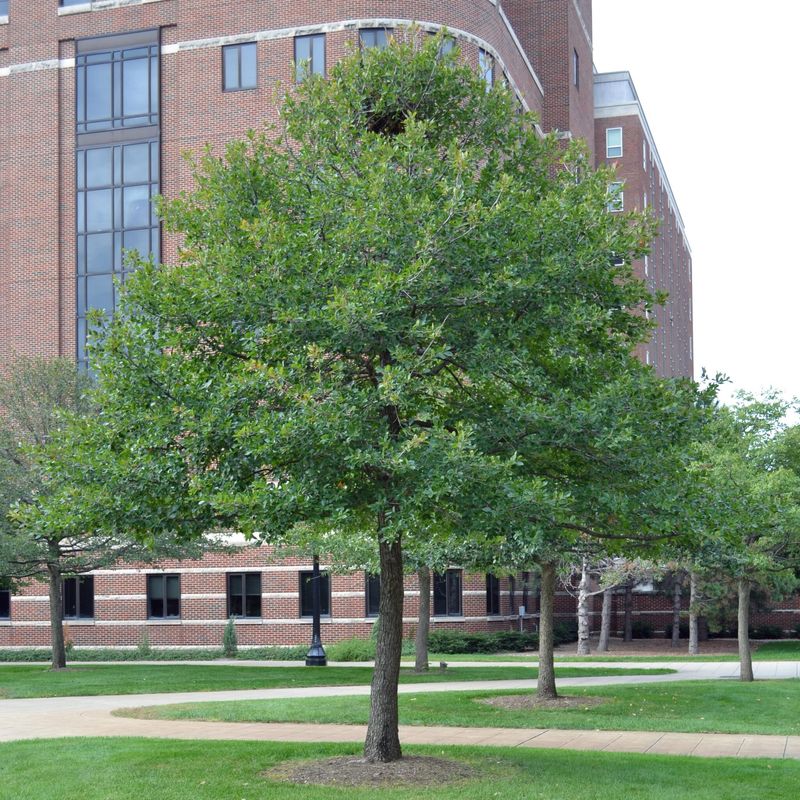
Before buying a blackgum, walk your property and answer a few practical questions. The tree grows well in full sun or partial shade, so light is rarely the limiting factor.
Soil, however, matters considerably. Blackgum prefers moist, acidic, well-drained soil, and while it can tolerate a range of moisture conditions including brief flooding and periods of drought, tolerance is not the same as thriving.
A site with compacted fill, heavy clay with standing water, or reflected heat from pavement can stress even a native tree.
North Carolina Extension notes that blackgum performs best on acidic, moist, well-drained sites and cautions that urban conditions can affect its establishment. If your yard has been regraded, filled, or paved over in large portions, test the drainage before committing.
Dig a hole about 12 inches deep, fill it with water, and check whether it drains within a few hours. Persistent standing water after a normal rain is a warning sign.
NC State’s native plants guidance reinforces that native species still require correct site matching for residential success. Being native to North Carolina does not make blackgum immune to poor planting decisions.
Space planning is equally critical. The N.C.
Forest Service recommends at least 40 feet of open space for blackgum, a minimum of 15 feet from sidewalks and hardscapes, and no planting beneath utility lines. Those clearances exist because the tree can develop a wide crown and a substantial root system as it matures.
Check for overhead wires, underground utilities, and the proximity of driveways, foundations, and fences. A tree planted too close to hardscape will eventually create problems that are expensive and disruptive to fix.
Establish the Tree Correctly from the Start
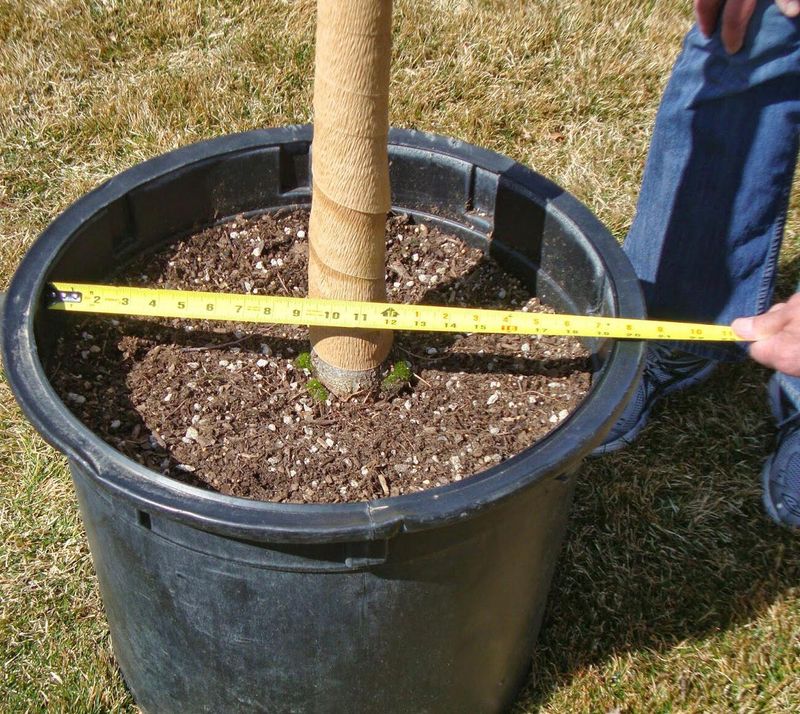
Getting blackgum off to a strong start comes down to three things done right: planting depth, water, and mulch. NC State’s woody ornamentals handbook is clear on planting depth: the root flare, the point where the trunk begins to widen at its base, should sit just above grade.
Planting too deeply buries the flare and can interfere with normal root development and long-term tree stability. If the flare is not visible after you set the tree in the hole, the tree is in too deep.
Water is the most important variable during establishment. For a newly planted 1- to 3-gallon tree, NC State recommends applying approximately 3 to 5 gallons twice weekly when rain is absent, generally for a three- to four-week establishment period.
Trees planted in cooler weather, during fall or late winter, typically need less frequent watering because evaporation rates are lower and roots have more time to settle before summer heat arrives. Check the soil moisture around the root zone rather than watering on a fixed schedule regardless of recent rain.
Mulch protects the root zone, moderates soil temperature, and reduces competition from grass and weeds. NC State’s native plants guidance recommends 2 to 3 inches of organic mulch spread as far beyond the canopy edge as practical.
The critical rule: keep mulch at least 6 inches away from the trunk or crown. Mulch piled against the bark traps moisture, encourages rot, and can attract pests.
A wide, flat ring of mulch with a clear gap around the trunk is the correct picture.
One more point worth stating plainly: native status does not eliminate the need for establishment care. A blackgum planted in suitable soil still needs consistent watering through its first season, and skipping that step because the tree is a local native is a common reason otherwise healthy trees fail in the first summer.
Heavy fertilizer is not a helpful shortcut either; focus on water and proper mulching instead.
Add Native Plants to Cover the Bloom Gaps
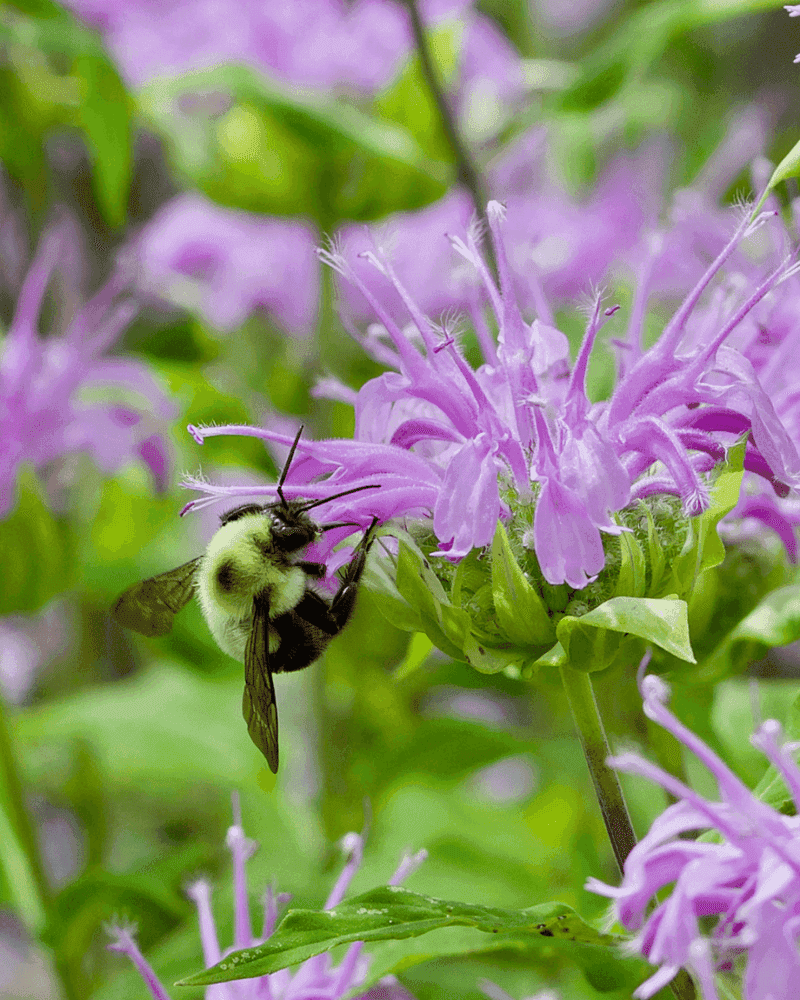
Blackgum’s May-to-June bloom is a genuine contribution, but a single tree cannot supply the staggered, continuous floral resources that a healthy pollinator community needs through the full growing season. Bridging those gaps requires a deliberate mix of native plants chosen specifically for their bloom timing, not just their regional origin.
NC State’s native plants handbook recommends selecting multiple species across growing seasons to build a yard that supports pollinators from early spring through fall. That means thinking in three distinct windows.
Early spring bloomers, such as wild columbine (Aquilegia canadensisEchinacea purpureaMonarda) or native violets, provide nectar before blackgum flowers open. Summer natives like purple coneflower (), bee balm ( species), and native sunflowers carry resources through the hottest months.
Fall-blooming species, particularly goldenrods (Solidago species) and native asters, are critical for bees building winter reserves.
North Carolina’s pollinator plant guidance lists native species organized by bloom period, which makes it a practical starting point for building a planting calendar around your blackgum. Choosing plants suited to your specific site conditions, sun exposure, and soil moisture, rather than simply grabbing whatever is labeled native at the nursery, is what makes the difference between a planting that genuinely supports pollinators and one that looks good on paper.
The Xerces Society also emphasizes plant diversity and staggered flowering as the foundation of effective pollinator habitat, noting that a variety of species with overlapping bloom windows serves a much broader range of bee and butterfly species than any single plant or tree can. Think of blackgum as the structural anchor of the yard’s wildlife planting, with the surrounding native understory doing the work of extending bloom availability before and after the tree’s own flowers open.
Consider Smaller Trees When Space Is Tight
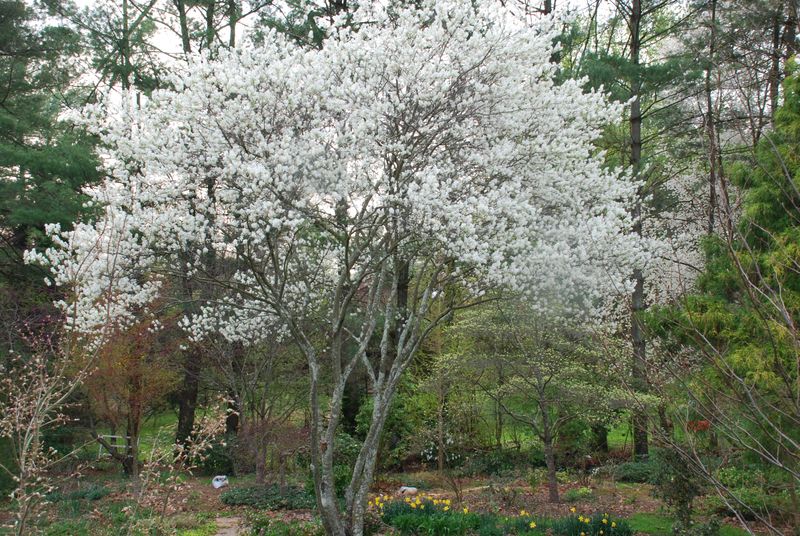
Blackgum is not the right fit for every property, and acknowledging that honestly is part of good tree selection. When the available space cannot comfortably accommodate a potentially large tree, or when the soil conditions simply do not match, two other native options deserve a close look.
Downy serviceberry (Amelanchier arborea) is native throughout North Carolina and typically reaches 15 to 25 feet, making it a realistic choice for yards where a 60-foot canopy would eventually cause problems. North Carolina Extension’s serviceberry profile describes white spring flowers that open early, often before most other native trees, providing nectar when few other sources are available.
The summer-to-fall fruit attracts birds, and the tree’s modest footprint makes it easier to site near structures and utilities.
Sourwood (Oxydendrum arboreum) is another native pollinator tree found across North Carolina, generally growing 20 to 30 feet tall with fragrant white flowers that open in June and July, bridging the gap between blackgum’s bloom and the late-summer natives. NC Extension notes that sourwood prefers acidic soil and can struggle in heavily polluted urban conditions, so it suits suburban and rural sites better than dense city lots.
Neither serviceberry nor sourwood is a universal upgrade over blackgum. Each tree fits a different site and serves a different purpose.
The NC Wildlife Federation points out that oaks hold the broadest documented wildlife value of any native tree genus, worth considering if maximizing wildlife support across the largest number of species is the primary goal. The right tree is always the one that matches your specific site, your space, and what you most want the yard to do.
Choose Blackgum for a Long-Term Landscape
The decision to plant blackgum comes down to a clear set of conditions. North Carolina Extension’s full plant profile supports choosing it when the site has moist, acidic, well-drained soil, enough open space to accommodate a potentially large crown, and no utility lines or hardscape conflicts within the required clearances.
When those boxes are checked, blackgum rewards the investment with a dependable May-to-June pollinator bloom, late-summer and fall fruit for birds and mammals, and vivid fall color that few native trees match.
Growth will be slow. Plan the rest of the yard’s planting around that timeline, and use NC State’s native plants guidance to build a surrounding mix of early-spring, summer, and fall bloomers that extend floral resources while the tree matures.
That combination, a long-lived native shade tree anchoring a thoughtfully layered native planting, is what actually delivers broad-season wildlife value to a North Carolina yard.
Blackgum will not do everything on its own, and it was never meant to. What it will do, given the right site and a little patience, is grow into one of the most enduring investments a North Carolina homeowner can make in their yard’s future.