
If Weeds Keep Taking Over Your Beds, Here Are 12 Ground-Hugging Plants That Crowd Them Out
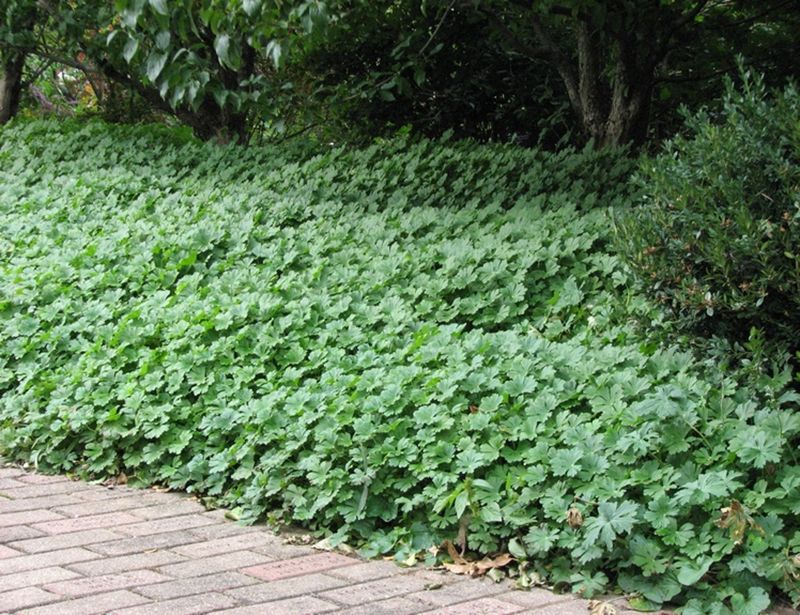
If you feel like you spend every weekend yanking weeds out of your garden beds, you are not alone. The good news is that certain low-growing plants act like a living blanket, covering the soil so tightly that weeds barely get a chance to sprout.
Instead of fighting the same battle over and over, you can let these plants do the heavy lifting for you. Here are 12 tough ground-huggers that fill in the gaps and keep your beds looking neat with far less work.
1. Creeping Phlox (Phlox subulata)
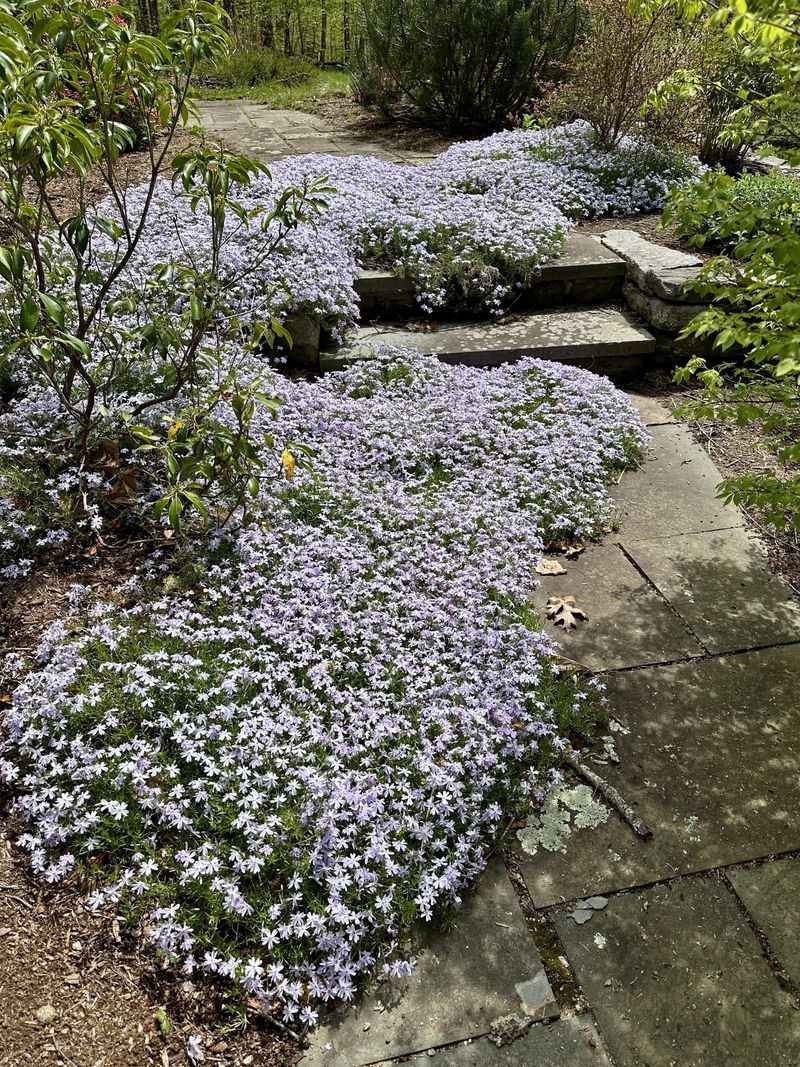
Picture a slope that used to sprout dandelions every spring, now blanketed in a carpet of pink and purple blooms instead. That is the magic of creeping phlox, an evergreen that mats together so tightly weeds simply cannot find room.
It shrugs off poor soil, drought, and summer heat, which makes it a dependable pick for spots where other plants sulk. On slopes especially, those needle-like leaves knit into a solid cover that shades out weed seeds before they germinate.
To get it going strong, clear out the existing weeds first and lay down a generous layer of mulch for the first couple of years. A quick edging once a year keeps it from creeping into your lawn where you may not want it.
2. Sweet Woodruff (Galium odoratum)
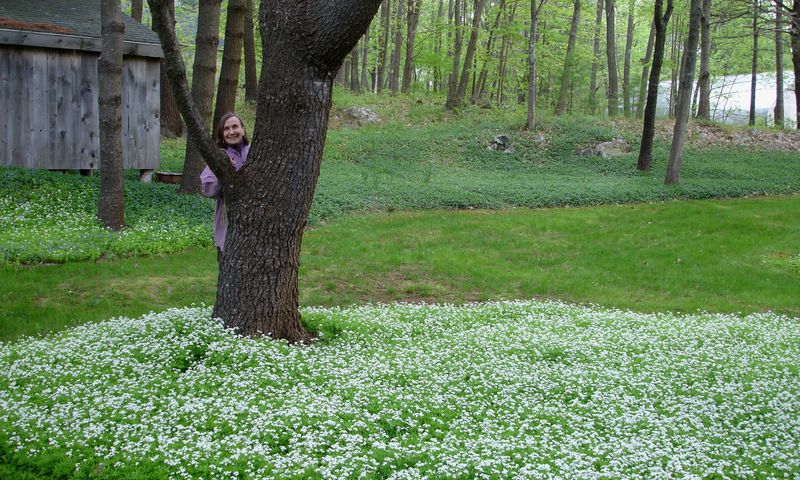
Got a shady, damp corner where nothing seems to thrive except weeds? Sweet woodruff loves exactly that kind of spot, spreading quickly to fill in bare ground and smother weed seeds along the way.
The delicate whorls of leaves release a sweet, hay-like scent, especially once dried, which is where the plant gets its name. Bonus points: deer tend to leave it alone, so it stays lush even in browse-heavy yards.
Because it fills in so fast, it works beautifully under trees and shrubs where grass refuses to grow and weeds usually take advantage.
3. Sedum (Stonecrop)
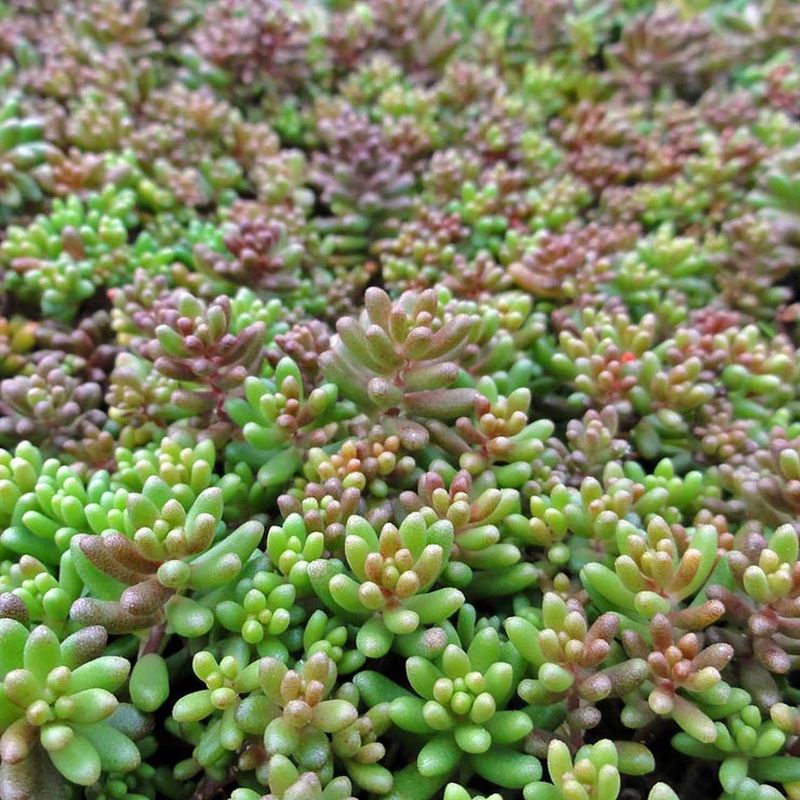
Few plants are as forgiving as low-growing sedum, which stores water in its plump little leaves and keeps going through dry spells that would flatten fussier plants. That toughness is part of what makes it such a reliable living mulch.
Creeping varieties spread into a thick succulent carpet that leaves weeds no soil to claim. Whether your bed gets baking full sun or dappled shade, there is a sedum happy to move in.
Once it settles in, you can practically ignore it, which is exactly what a busy gardener wants from a weed-blocker.
4. Periwinkle (Vinca minor)
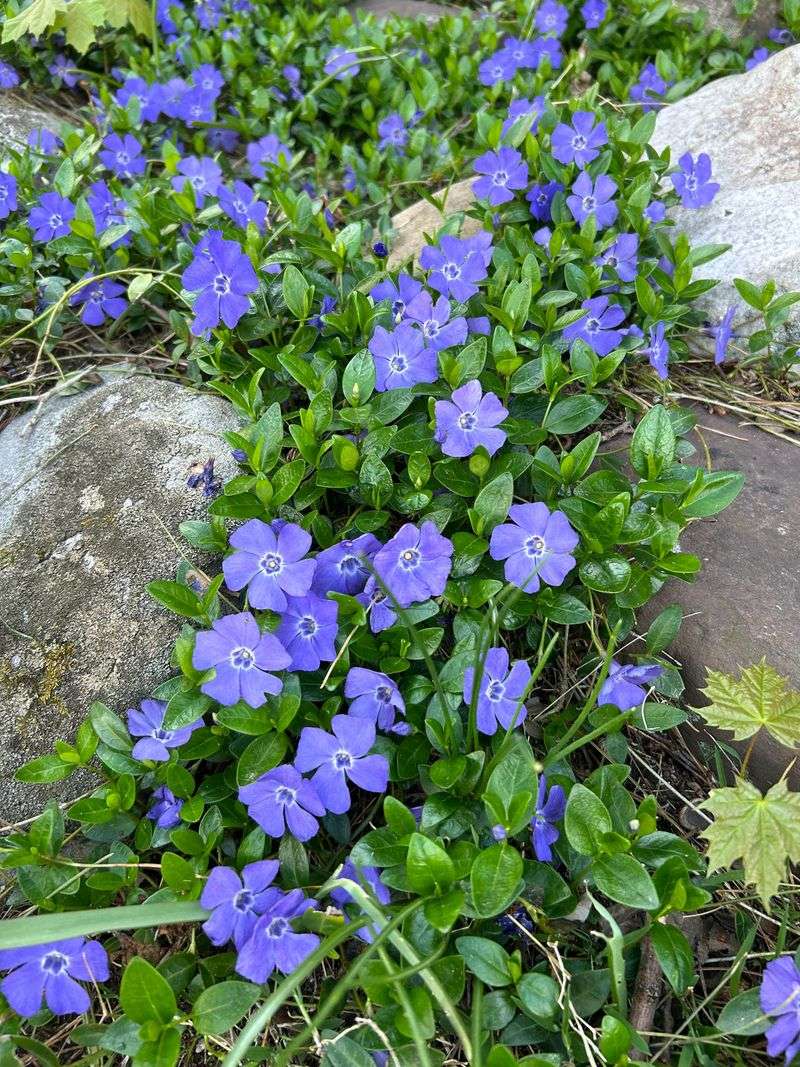
Vinca minor is the sprinter of the groundcover world, growing fast and rooting wherever its trailing stems touch the soil. Those glossy evergreen leaves and cheerful blue flowers create a dense mat that heat, shade, deer, and rabbits all struggle to bother.
Because it spreads so eagerly, it can fill a problem bed in no time. That same enthusiasm means you have to keep an eye on it.
Plant it where it can roam or where you are willing to trim and pull now and then, or it may march right over your other favorites. Placed thoughtfully, though, it can reduce weeding to almost nothing.
5. Bugleweed (Ajuga reptans)
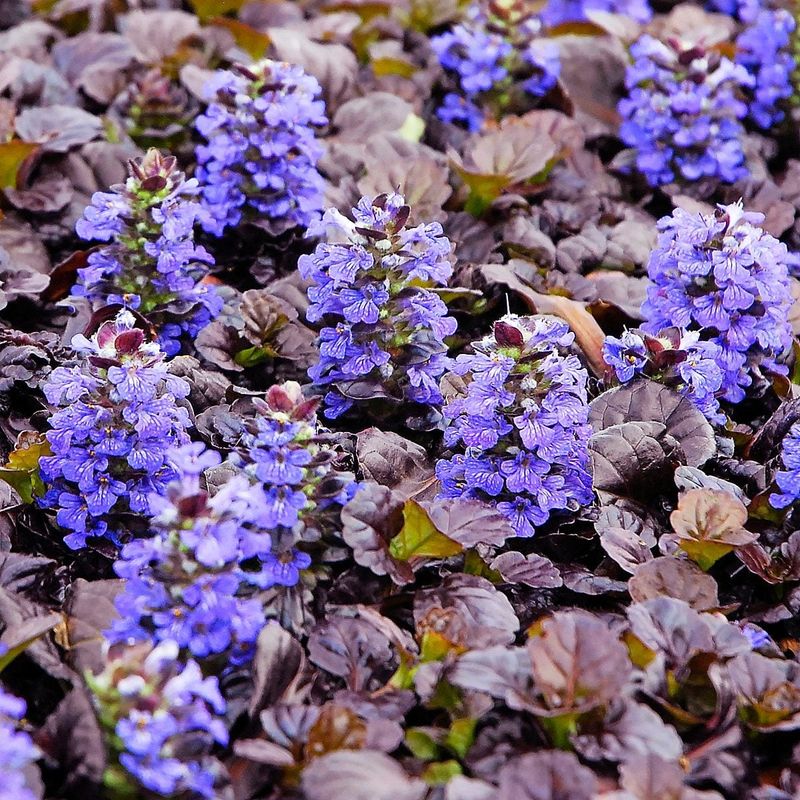
Bugleweed brings color to the fight against weeds, spreading a low mat of bronzy, purple, or variegated leaves topped with little blue flower spikes. In partial shade it really hits its stride, weaving together so densely that weed seedlings never see daylight.
That vigor comes with a warning, though. It spreads by runners, and those runners can slip into a nearby lawn if you let them.
Digging up stray runners or tucking in a barrier along the edge keeps it where it belongs. Manage that one habit and you get a beautiful, weed-crowding carpet in return.
6. Spotted Deadnettle (Lamium maculatum)
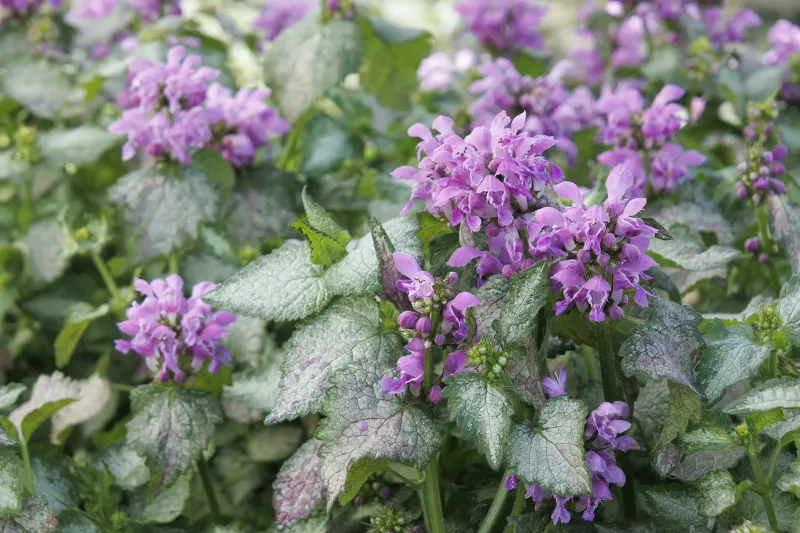
The silver-splashed leaves of spotted deadnettle practically glow in a shady bed, and they earn their keep by shading out weeds at the same time. Little pink or purple flowers add extra charm through the season.
It does best in moist, well-drained soil with some shade, spreading at a moderate, manageable pace by stolons. Unlike some of its pushier cousins, it is not considered invasive across most North American gardens when the conditions suit it.
If you want a groundcover that stays polite while still filling in the gaps, this one is a dependable choice.
7. Epimedium (Barrenwort)
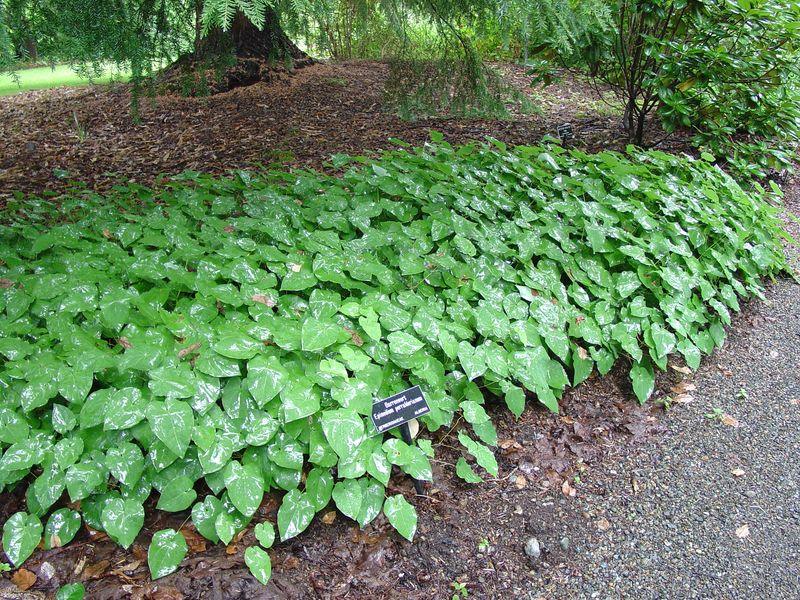
Sometimes called bishop’s hat or fairy wings, epimedium takes its time settling in, but patience pays off. Below the surface it builds a tough, tangled root system that outcompetes most weeds for good.
Dry shade under trees is one of the hardest spots to fill, and this quiet perennial handles it like a champ. It asks for almost nothing once established, returning year after year as a blooming, living mulch.
For that stubborn corner where nothing else will grow except weeds, barrenwort may be the answer you have been hunting for.
8. Sweet Alyssum (Lobularia maritima)
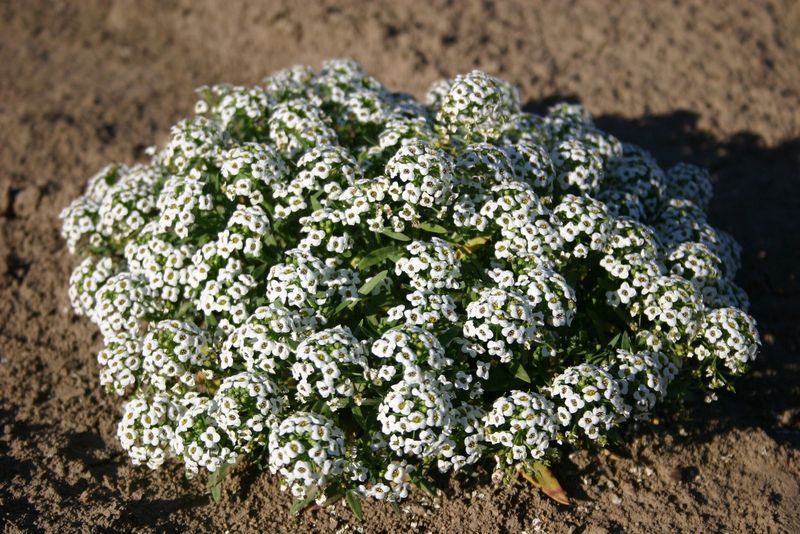
Clouds of tiny, honey-scented flowers make sweet alyssum look almost too pretty to be so useful. Underneath that lovely display, it forms a dense carpet that crowds out weeds and helps lock moisture into the soil.
It fills open spaces in a hurry and cheerfully reseeds itself, so it often returns without any effort on your part. Pollinators adore it, so you get a buzz of bees and beneficial insects as a happy side effect.
Tuck it between taller plants or along a bed’s front edge and let it knit everything together.
9. Wild Ginger (Asarum canadense)
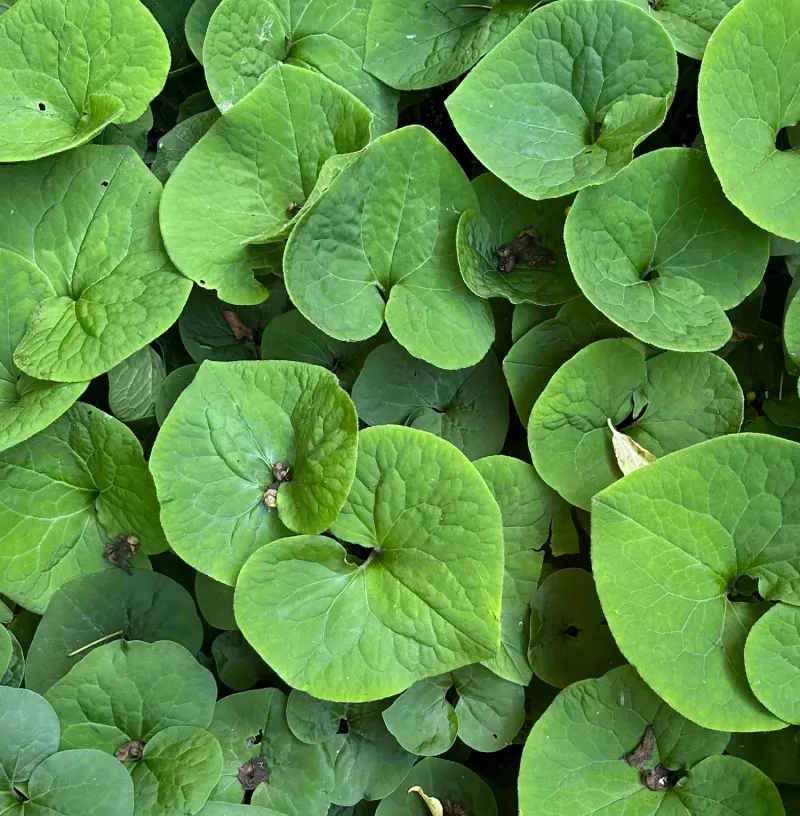
Those glossy, heart-shaped leaves give wild ginger a woodland charm that suits shady beds perfectly. As it spreads, the foliage overlaps into a dense cover that leaves weeds little room to sneak through.
It is an easy plant to grow, though it takes a leisurely approach to spreading, so a little patience helps. Native to much of eastern North America, it feels right at home in naturalized, shady corners.
Give it time and it will reward you with a low, lush blanket that quietly keeps the weeds at bay.
10. Liriope (Lilyturf)
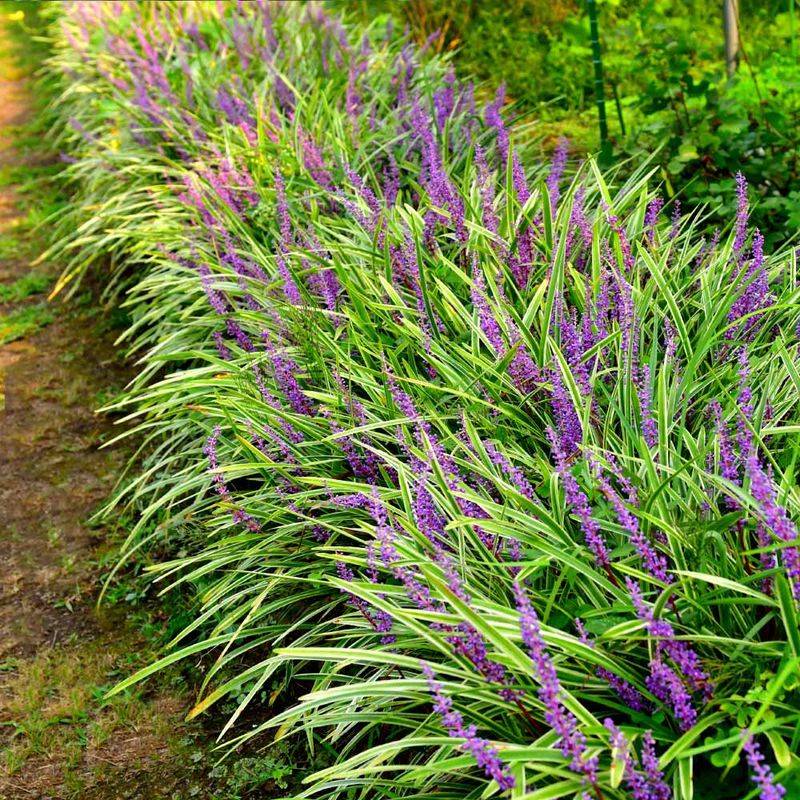
Tough as nails and endlessly adaptable, liriope is often nicknamed monkey grass for the way it clumps and spreads. This grassy little ornamental forms a solid mass that blocks weeds while asking for very little maintenance in return.
You can find it in all sorts of varieties, shapes, and colors, from deep green to variegated, so it slips into almost any garden style. Purple flower spikes pop up to add a seasonal touch.
Use it to edge a bed or fill a stretch of trouble ground and let its dense growth handle the weeds for you.
11. Hostas
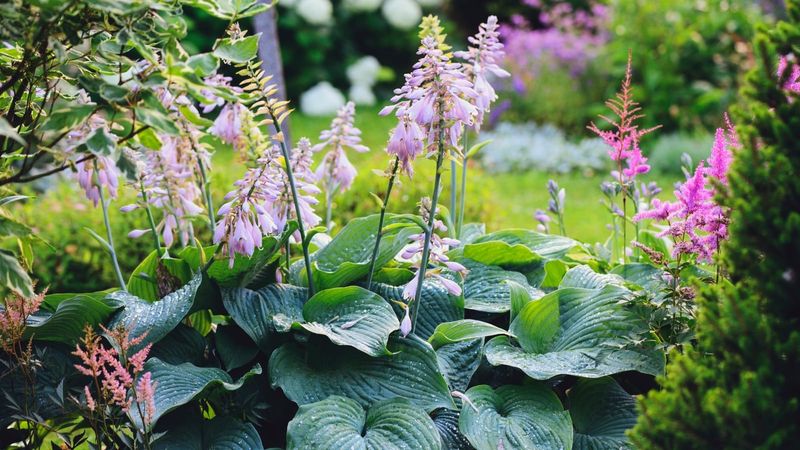
Beloved for their bold, sculptural leaves, hostas do more than look good in a shady bed. Plant them in clumps and those big leaves knit together into a canopy that blocks sunlight from ever reaching the weeds below.
Once mature, a healthy stand of hostas can shrink your weeding to almost nothing in the shadiest parts of the yard. They come in a huge range of sizes and leaf patterns, so you can mix textures while still getting that weed-smothering coverage.
For a shade garden that is equal parts beautiful and low-maintenance, hostas earn their spot easily.
12. Golden Ragwort (Packera aurea)
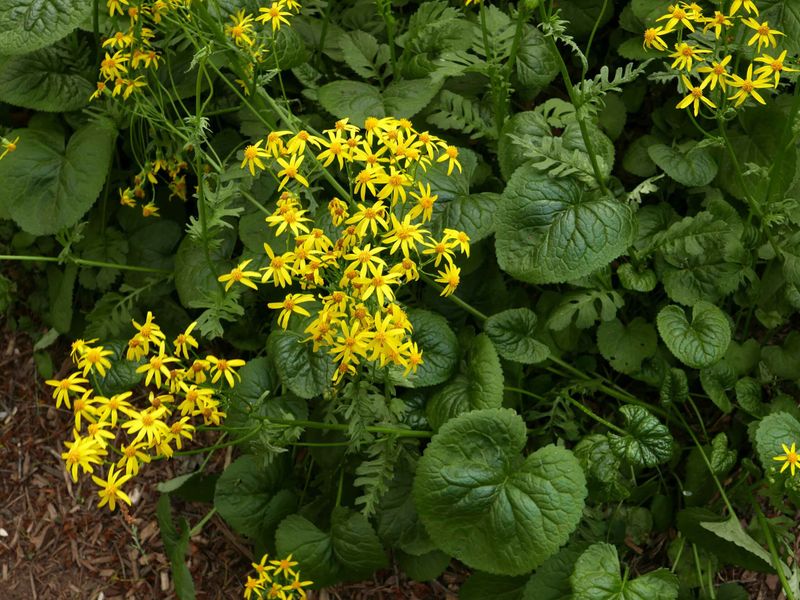
Come spring, golden ragwort lights up a bed with cheerful yellow blooms, and that is only the opening act. Once the flowers fade, wide, heart-shaped leaves take over, forming a dense cover that spreads fast and crowds weeds right out.
It happily handles sun or part shade, making it flexible enough for many spots in a US backyard. Deer and rabbits tend to pass it by, so it stays full even where hungry critters roam.
In a favorable location it can really take off, so give it room to do what it does best: fill in and shut weeds out.