
What North Carolina Homeowners Should Know About A Neighbor’s Overhanging Tree Before It Becomes A Dispute
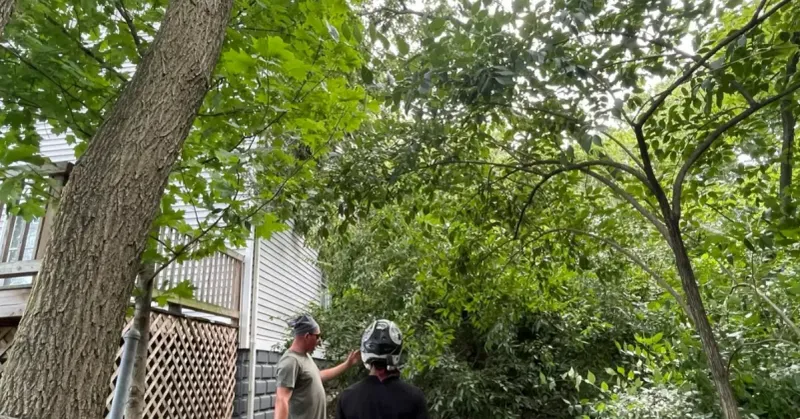
A neighbor’s tree limb hanging over your yard can seem like a simple annoyance until you realize the wrong move could cost you more than the branch is worth. North Carolina has specific rules about where your rights begin and end, and they do not always line up with where the fence sits or where the canopy ends.
Knowing the basics before you pick up a chainsaw, or before you knock on your neighbor’s door, can protect your property, your wallet, and your relationship with the person next door.
The boundary—not the canopy—controls the first decision
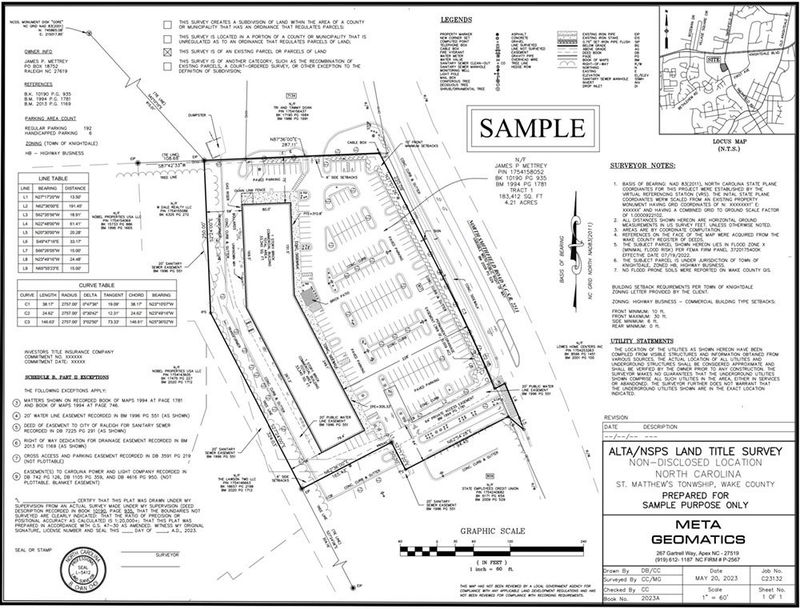
Property lines do not follow canopy edges, fence posts, or the general impression of where one yard ends and another begins. Before a North Carolina homeowner decides who may prune, excavate, or pay for tree work, the first question to answer is where the legally established boundary actually falls.
Getting that answer wrong, even by a few feet, can turn a manageable situation into a costly dispute.
Start with the recorded deed and subdivision plat for your property. A prior survey, if one exists, is also worth locating, along with any visible monuments or iron pins set in the ground at corners.
NC State Extension guidance on maintaining forest property boundaries specifically warns that unclear boundary lines can lead to encroachment problems and recommends hiring a licensed surveyor when any doubt exists. A fence, hedge, row of shrubs, old tree line, or landscaping edge may serve as a rough visual clue, but none of those features reliably marks the legal line.
Online parcel maps and GIS tools carry a similar limitation. County tax maps are useful for general reference, but they are not field surveys and can differ from the recorded plat by meaningful distances.
Relying on a screen image to decide where a mature tree sits relative to your boundary is a shortcut that can backfire.
A professional land surveyor is the appropriate source when the line is genuinely uncertain. North Carolina General Statute 47-30 requires that a survey plat identify the source of boundary information, show surveyed lines and monuments, and carry the signature and seal of a licensed professional land surveyor.
That certification matters especially before you install a fence, hire a contractor, cut near a mature tree, or excavate near roots. An investment in a current survey can prevent a much larger legal or financial problem later.
What exactly is crossing the line?
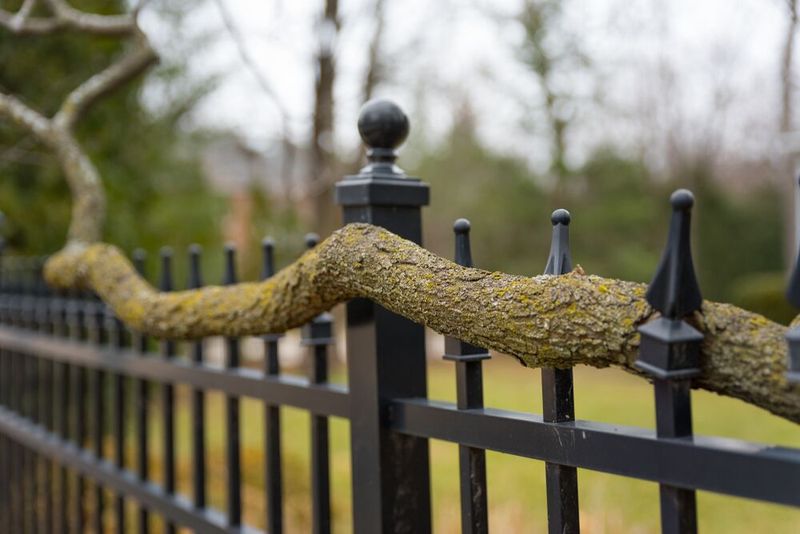
Not every tree situation looks the same from a legal standpoint, and treating them all as one problem is a common mistake. Four distinct fact patterns come up most often: limbs extending over the yard from a neighbor’s tree, roots crossing underground from that tree, a trunk located entirely on the neighbor’s side, and a trunk that actually straddles the boundary line itself.
Each one can affect what options are available and what risks come with acting.
Overhanging limbs are the most visible case. The branches physically occupy the airspace above your yard, but the tree is still rooted on the neighbor’s property.
Roots are less obvious but can travel surprising distances. NC State Extension’s woody ornamentals guidance notes that many active roots are shallow and spread horizontally well beyond the canopy edge, which means roots can cross a boundary even when the tree trunk appears to be well inside the neighbor’s yard.
A trunk located entirely on one side of the line generally belongs to that property owner, even if branches hang far over the other side. A trunk that straddles the boundary is a different situation altogether, sometimes called a boundary tree, and the ownership question becomes more complicated.
Boundary-related guidance from NC State Extension reinforces that the recorded line, not the canopy spread or visible trunk position, establishes who owns what.
Roots and branches also carry different practical risks when it comes to cutting. Root cutting can destabilize a tree or cause it to decline and die, which creates a new hazard rather than solving the original one.
Treating roots exactly like branches, and assuming any growth on your side of the line can be removed freely, does not hold up against the available North Carolina guidance. Identifying which fact pattern applies to your situation is the foundation for every decision that follows.
Permission does not turn pruning into a free-for-all
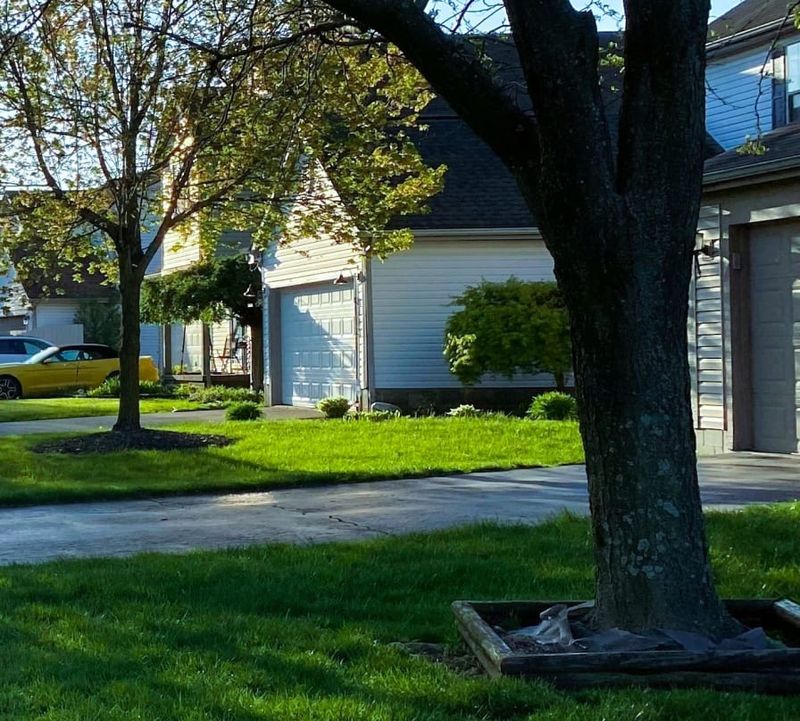
Standing on your own property gives you some ability to address growth that crosses onto your side, but that authority has real limits that North Carolina law takes seriously. Overhanging limbs or encroaching roots do not automatically give a homeowner permission to enter the neighbor’s yard, cut the trunk, or remove the entire tree.
Those actions can create legal exposure that far outweighs the nuisance of a hanging branch.
North Carolina General Statute 14-128 addresses willful injury to another person’s property, which can include trees. Separately, G.S. 1-539.1 provides for civil damages when timber is unlawfully cut, removed, or destroyed on another person’s land.
Together, these statutes mean that crossing the boundary to cut, or causing serious harm to a tree that belongs to a neighbor, can result in both criminal and civil consequences. NC State Extension’s citizen guide to trees in the community reinforces that homeowners should understand these limits before taking action.
The idea that a homeowner may always prune branches back to the property line is sometimes called the boundary-line pruning principle. It appears in other states’ statutes and has been discussed in North Carolina case law.
In Rowe v. McGee, the North Carolina Court of Appeals acknowledged this approach as one used in other jurisdictions, but that decision did not create a comprehensive, unconditional NC statute covering every overhanging-limb or root situation.
Treating it as a guaranteed safe harbor for every scenario would be an overstatement of what North Carolina law has established.
The safer path is to confirm the boundary, identify which fact pattern applies, and talk to your neighbor before any cutting begins. Pruning on your own side, without crossing the line or harming the tree’s structure, is generally less risky than unilateral action, but even that step benefits from a clear understanding of where the line is and what the tree’s condition is before work starts.
When does a tree become a foreseeable hazard?
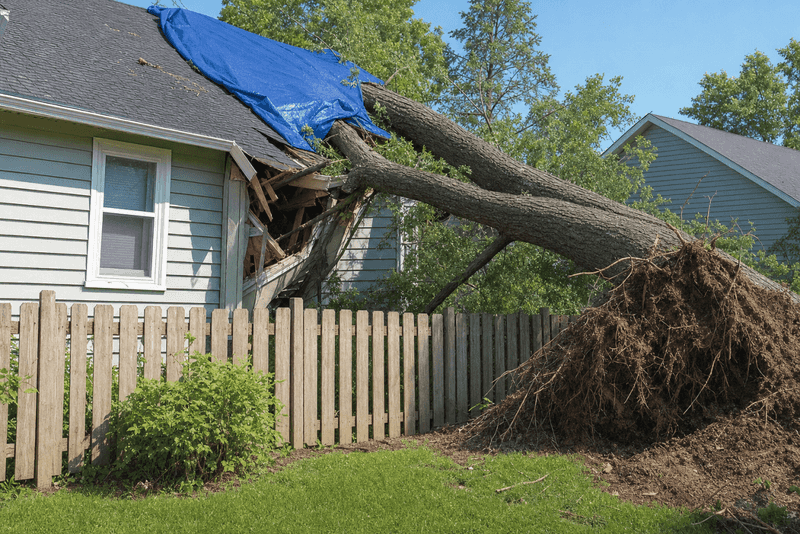
A tree that drops leaves on your driveway is an inconvenience. A tree that is dead, severely leaning, showing large dead limbs, or has suffered significant root damage is something else entirely.
The difference matters because North Carolina’s approach to fallen-tree liability centers on whether a danger was reasonably foreseeable, not simply on who owned the tree.
NC State Extension’s guidance on tree fall liability describes the state’s approach as negligence-based rather than automatic owner responsibility. That means a homeowner seeking to hold a neighbor accountable after a tree falls may need to show that the neighbor knew or should have known the tree presented a foreseeable risk.
Visible decline, dead wood, a pronounced lean toward a structure, storm damage, or prior root cutting are all conditions that can make a risk foreseeable to a reasonable person.
A hurricane or severe storm does not automatically settle the liability question. The condition of the tree before the storm, any prior notice given to the owner, and the visible signs of deterioration all remain relevant.
A neighbor who received a written warning about a leaning dead tree and did nothing is in a different position than one who had a healthy tree fail unexpectedly during an extreme wind event.
Written notice can document that an owner was made aware of a potential problem, which may matter later to how a court evaluates foreseeability. That said, sending a letter does not automatically make the neighbor liable if the tree eventually falls.
Liability still depends on the specific facts: the condition of the tree, what the owner did or did not do after receiving notice, causation, insurance coverage, and other legal considerations. Treating a hazardous-looking tree as a safety issue, rather than just a property dispute, is the right starting point for any homeowner who sees warning signs across the fence line.
A written plan can keep a boundary issue from becoming a feud
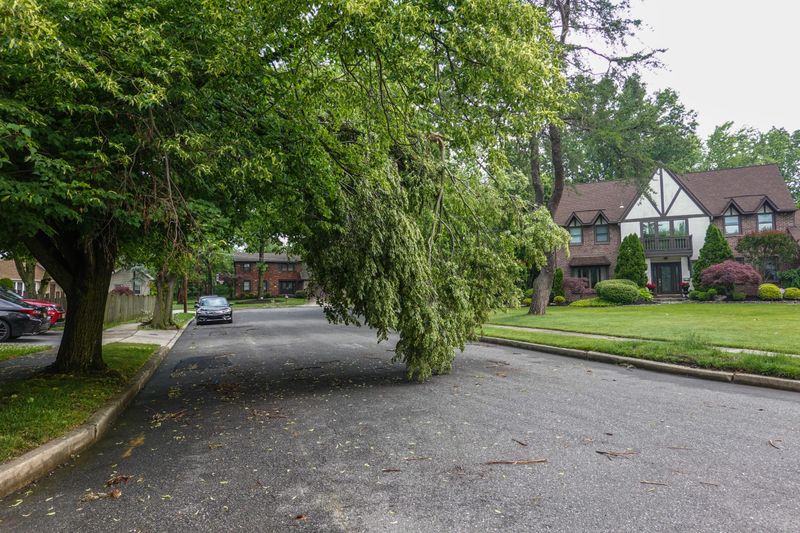
A calm conversation with your neighbor, followed by a clear written record, can prevent months of tension over a tree that neither of you planted. Documentation is not about building a legal case against the person next door.
Practical records protect both parties if a contractor makes a mistake, if damage occurs later, or if memories of the agreement differ.
Start with dated photographs of the tree, the overhanging limbs or visible roots, and any damage already caused. A written description of what you observed and when you observed it adds context that photographs alone cannot provide.
If you send a letter or message to your neighbor about the concern, keep a copy. If your neighbor responds, save that as well.
An arborist’s written assessment, if you hire one, belongs in the same file alongside insurance information for both properties.
When both homeowners agree to share the work or the cost, put the agreement in writing before anyone picks up a tool or calls a contractor. A simple written understanding covering what work will be done, who will do it, who will pay, and who has authorized access to which part of the yard can prevent a great deal of confusion.
This kind of documentation supports clear communication and reduces the chance of misunderstanding, but it does not replace a proper survey when the boundary is uncertain, and it does not substitute for legal advice when the situation involves serious damage, ownership questions, or a contractor dispute.
The goal is to keep the conversation neighborly and the facts clear. Most boundary-tree situations between reasonable people never reach a lawyer’s desk because someone took the time to document the problem and talk it through before work began.
Use the right professional for the work
Matching the right professional to the job is one of the most practical decisions a homeowner can make when a neighbor’s tree is involved. Not every tree situation calls for the same expertise, and using the wrong approach, or attempting dangerous work without proper training, can turn a manageable problem into an injury or a liability.
For large trees, hazardous trees, storm-damaged trees, or any situation involving roots near a trunk, a qualified arborist is the appropriate starting point. NC State Extension’s woody ornamentals guidance recommends a certified arborist when a tree is too large to prune safely from the ground or has sustained extensive damage.
NC State Extension’s Before the Cut resource also advises getting an arborist assessment before major pruning decisions. The NC Forest Service’s urban forestry professionals page lists ISA certification and tree-risk assessment credentials as relevant qualifications when evaluating who to hire.
Power lines require a completely different approach. North Carolina Department of Labor guidance on tree trimming and removal treats work within 10 feet of an energized power line as covered workplace safety activity requiring trained, experienced line-clearance tree trimmers.
That requirement applies to covered tree-trimming work, not necessarily to every private homeowner activity, but the practical safety instruction is the same regardless: do not attempt tree work near energized lines yourself. Contact your utility company or a qualified line-clearance professional instead.
Before any work begins, check whether your property carries restrictions that limit what you can do. NC State Extension’s citizen guide to trees in the community identifies municipal tree ordinances, historic-district rules, riparian buffers, conservation easements, utility easements, deed restrictions, and HOA covenants as possible constraints on pruning or removal.
Not every property carries all of these, but any one of them can require a permit, approval, or complete prohibition on certain work. A quick check before hiring a contractor can prevent a costly mistake.
After a fall, liability and insurance take different paths
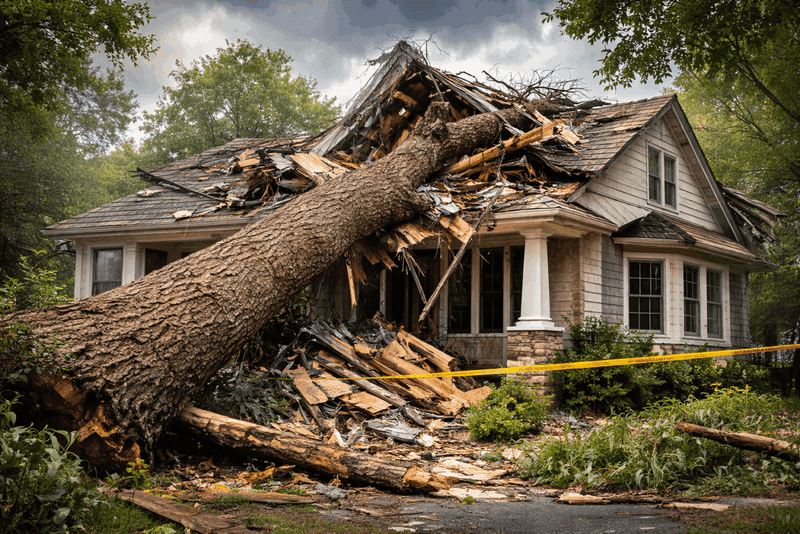
When a tree or large limb actually falls, the immediate priority is making sure everyone is safe and that no one enters an area with downed power lines, unstable debris, or a partially fallen trunk. Once the scene is secure, documentation becomes the next most important step.
Photograph everything before any cleanup begins: the fallen tree, the damage to structures, the condition of the stump or break point, and any visible signs of decay or prior damage in the wood. Note the date and time.
Preserve any written communications you had with your neighbor about the tree’s condition before the fall. NC State Extension’s tree fall liability guidance explains that a homeowner’s insurance policy will ordinarily address covered structural damage and removal costs, so notifying your insurer promptly is a practical first step regardless of who you believe is responsible.
The question of whether a neighbor’s negligence contributed to the loss follows a separate path from the insurance claim. As discussed earlier in this guide, North Carolina’s approach is negligence-based, meaning the facts about the tree’s condition, prior notice, and what the owner knew or should have known will matter to any liability analysis.
Those facts are exactly what good documentation preserves.
Substantial property damage, bodily injury, a dispute over a boundary tree, questions about easement rights, or a situation where a contractor caused or worsened the damage all warrant a consultation with a North Carolina attorney. Public guidance from NC State Extension is genuinely useful for understanding the framework, but it is not a substitute for advice tailored to the specific facts of your situation.
An attorney can assess negligence claims, insurance coverage disputes, and contractor liability in ways that a general guide cannot.
Start with the line, then choose the remedy
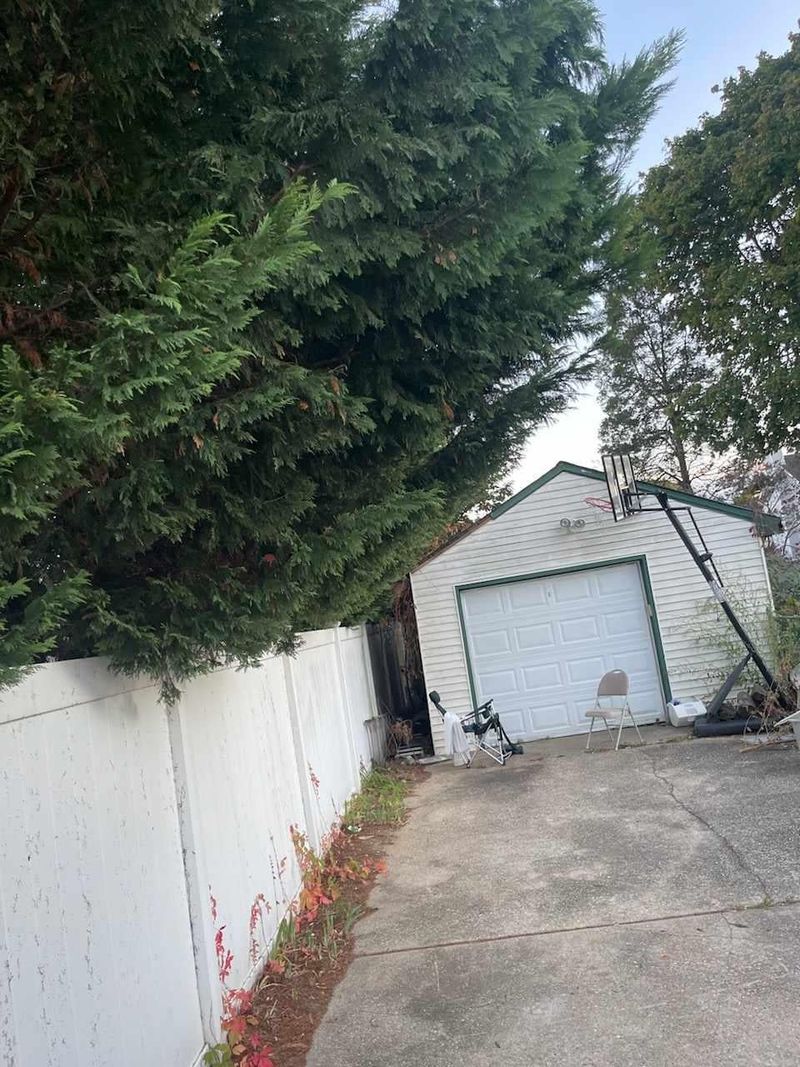
Every overhanging-tree situation in North Carolina benefits from the same starting point: confirm where the legal boundary actually falls before deciding on any other step. A recorded deed, subdivision plat, prior survey, and visible monuments are your first resources.
When the line is genuinely uncertain, NC State Extension’s boundary guidance points to a licensed professional land surveyor as the right call before work begins near a mature tree, fence, or excavation.
Once the boundary is clear, identify which fact pattern applies: overhanging limbs, encroaching roots, a trunk on one side, or a trunk straddling the line. Document the tree’s condition with photographs and written notes.
Talk to your neighbor before taking any action, and put any agreement in writing. Avoid cutting across the boundary, injuring the tree’s structure, or working near power lines without the appropriate professional.
Check for municipal ordinances, easements, deed restrictions, or HOA rules that may restrict the work.
Bring in a certified arborist for hazardous, large, or storm-damaged trees, and contact the utility or a qualified line-clearance professional for anything near energized lines. If the tree shows signs of serious decline, communicate that concern in writing and keep a copy.
Consult a North Carolina attorney when the situation involves serious danger, substantial damage, bodily injury, a boundary-tree ownership question, or a contractor dispute. NC State Extension’s citizen guide to community trees and its tree fall liability guidance are useful starting points, but neither replaces individualized legal advice.
Most neighbor-tree situations resolve quietly when the boundary is known, the facts are documented, and the conversation happens before the chainsaw comes out.