
If Your Zucchini Keeps Blooming But Never Sets Fruit, Here Are 13 Reasons And The Fix For Each
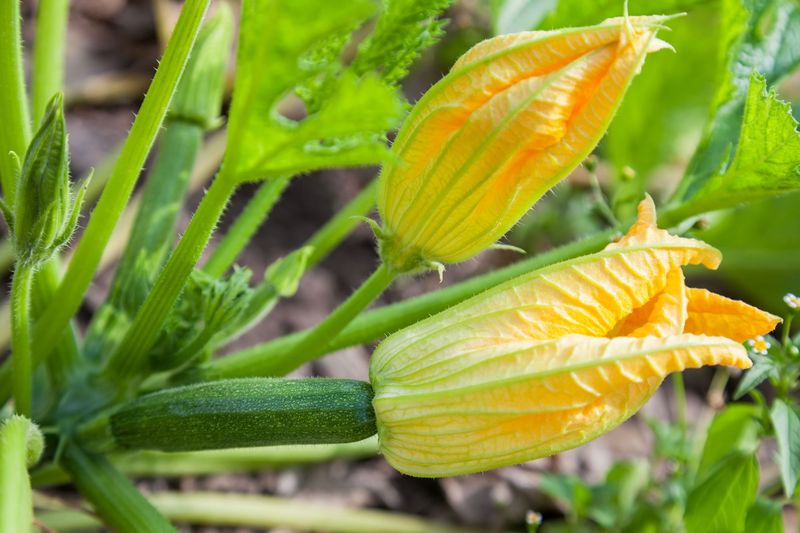
Your zucchini plant looks amazing, covered in cheerful yellow flowers, but not a single squash shows up. It is one of the most frustrating things a backyard gardener can face, and it usually means something small is going wrong behind the scenes.
The good news is that almost every cause has an easy fix you can start today. Let’s walk through the 13 most common reasons and exactly how to turn those blossoms into a real harvest.
1. Poor Pollination From Too Few Bees
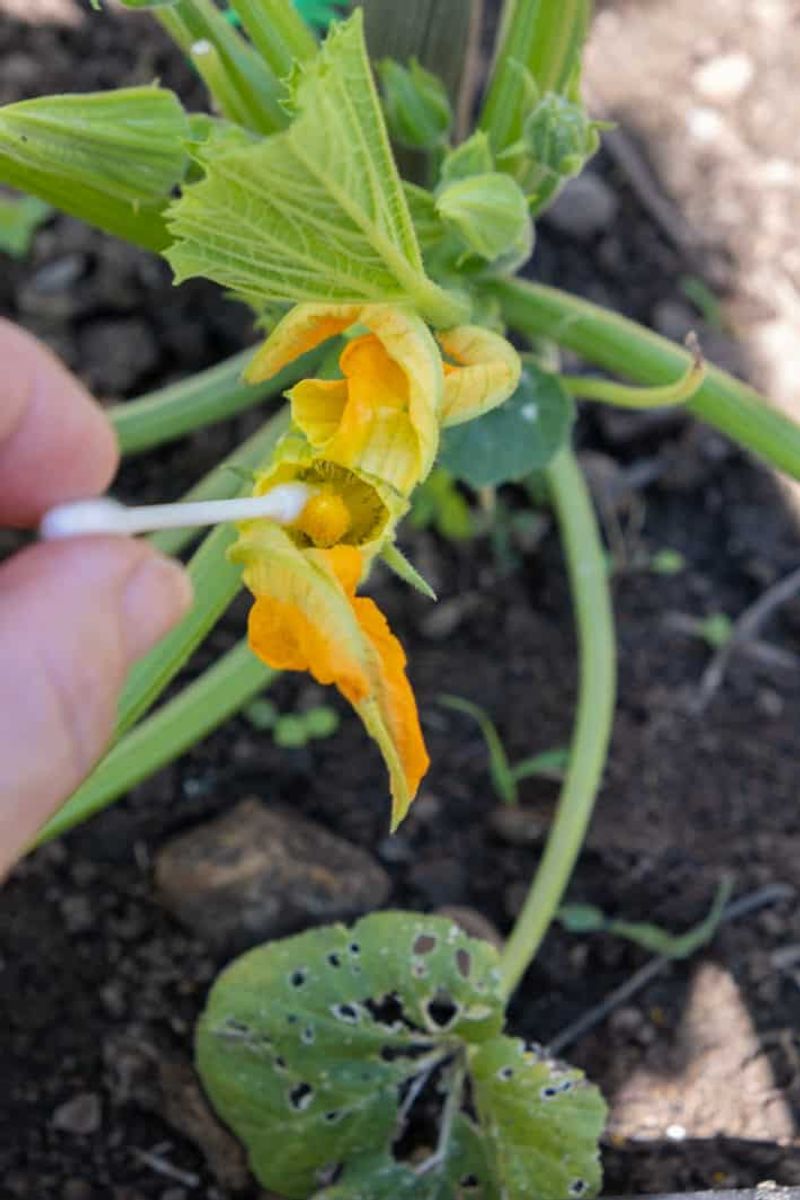
Here is a secret many new gardeners miss: zucchini makes two kinds of flowers, male and female, and a female only turns into fruit when pollen gets carried to her. Bees usually handle that job, but when they are scarce, those female blooms open, wait, and then quietly drop off.
Cold, wet, or windy stretches keep bees home, and so does a yard with few flowering plants nearby. You might have plenty of blossoms and still no squash simply because the pollen never made the trip.
The fix is to become the bee yourself. In the morning, pick a male flower, which sits on a thin stem, peel back its petals, and dab the pollen onto the sticky center of a female flower, the one with a tiny baby zucchini at its base.
A soft paintbrush or cotton swab works too. To bring back the real pollinators, tuck bee-friendly flowers around your garden and set out a shallow dish of fresh water.
2. Early Season Male Flowers Only
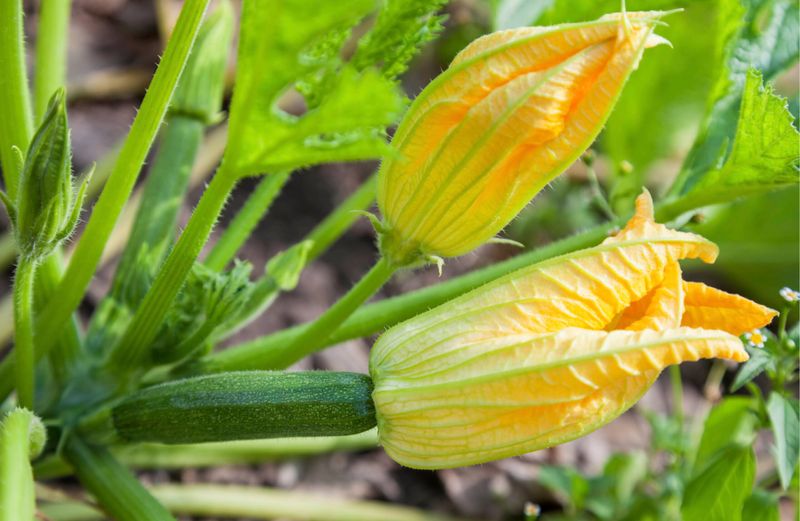
Before you panic, count your flower types. Zucchini plants almost always throw out a wave of male flowers first, sometimes a week or two before any female blooms show up.
It looks like your plant is teasing you.
There is a reason for this timing. That early burst of male blossoms acts like an open sign, drawing bees to the area so they are already visiting when the females finally arrive.
The simplest fix here is patience. Your plant needs to grow bigger and build up energy before it commits to making fruit, which takes real resources.
Keep it well fed and watered, and the female flowers, easy to spot by the little swollen fruit behind the petals, will start appearing soon enough.
3. High Temperatures And Heat Stress

Zucchini loves warmth, but there is such a thing as too hot. When daytime temperatures push past 90 degrees or nights stay above 75, pollen can lose its power and young fruit may abort before it ever fattens up.
You may notice this most during a brutal heat wave, when the plant looks fine but every little fruit shrivels and falls. The blossoms keep coming, yet nothing sticks.
Draping a light shade cloth over the plants during the hottest afternoons can take the edge off. Watering deeply in the early morning helps the plant handle the stress, and if you can, time your planting so the main flowering happens before the peak of summer heat arrives.
4. Inconsistent Watering
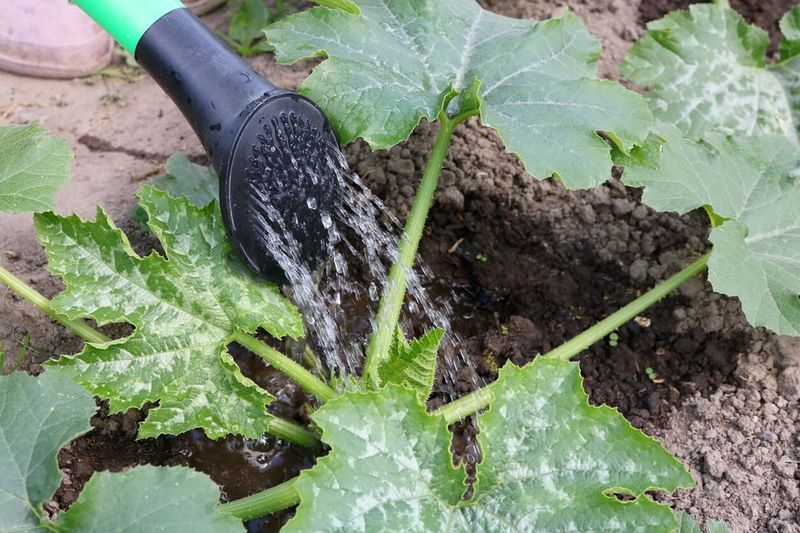
Zucchini has a low tolerance for drama, and swinging between bone-dry and soggy soil is exactly the kind of drama that makes it drop fruit. When roots go thirsty one day and drown the next, the plant reacts by ditching its young squash to save itself.
Both too much and too little water cause trouble. The little fruits may yellow, soften, and fall right off the vine before they get going.
Aim for steady, even moisture instead. Give your plants a deep soak of about one to two inches a week, rather than a light daily sprinkle that never reaches the roots.
A few inches of organic mulch around the base holds that moisture in and keeps the soil temperature calm and consistent.
5. Too Much Nitrogen
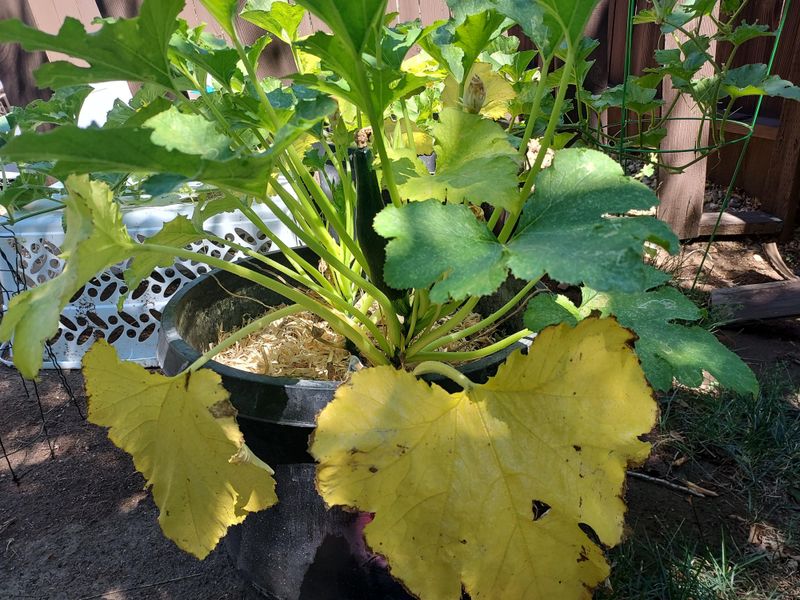
Sometimes a gorgeous plant is the problem. If your zucchini is a jungle of huge, deep-green leaves but shy on flowers and fruit, it may be swimming in nitrogen.
Nitrogen fuels leafy growth, so an overload tells the plant to keep building foliage instead of shifting energy into blossoms and squash. You basically get a beautiful bush that never pays rent.
Ease off any high-nitrogen fertilizer right away. Once flowers appear, switch to a feed higher in phosphorus and potassium, the nutrients that support fruiting, or use a controlled-nitrogen blend.
A quick soil test can tell you for sure whether nitrogen is the culprit before you guess.
6. Blossom End Rot
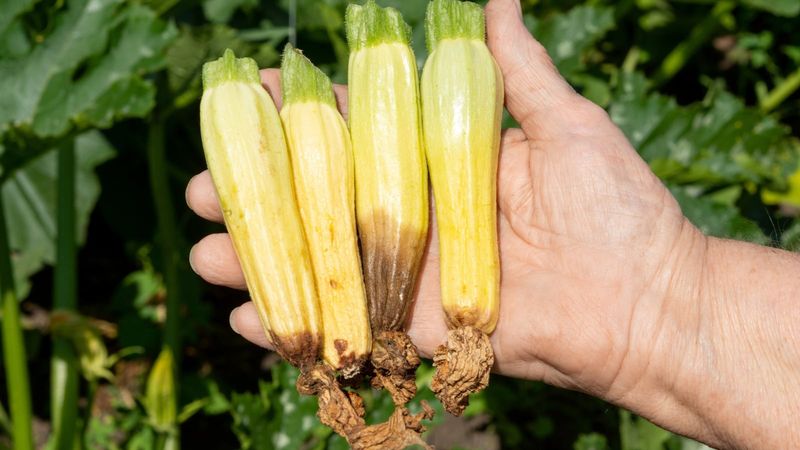
Ever spot a young zucchini turning dark, mushy, and sunken at the far end? That leathery brown patch where the flower used to be is blossom end rot, and it stops fruit dead in its tracks.
The surprising part is that it usually is not caused by a lack of calcium in your soil. Instead, uneven watering keeps the plant from moving calcium into the growing fruit, so the tip breaks down.
Steady, deep watering is the real cure here, since it lets the plant carry calcium where it needs to go. Skip the wild swings in soil moisture and go easy on nitrogen, which can block calcium uptake.
A good layer of mulch keeps everything nice and even underground.
7. Pest Pressure
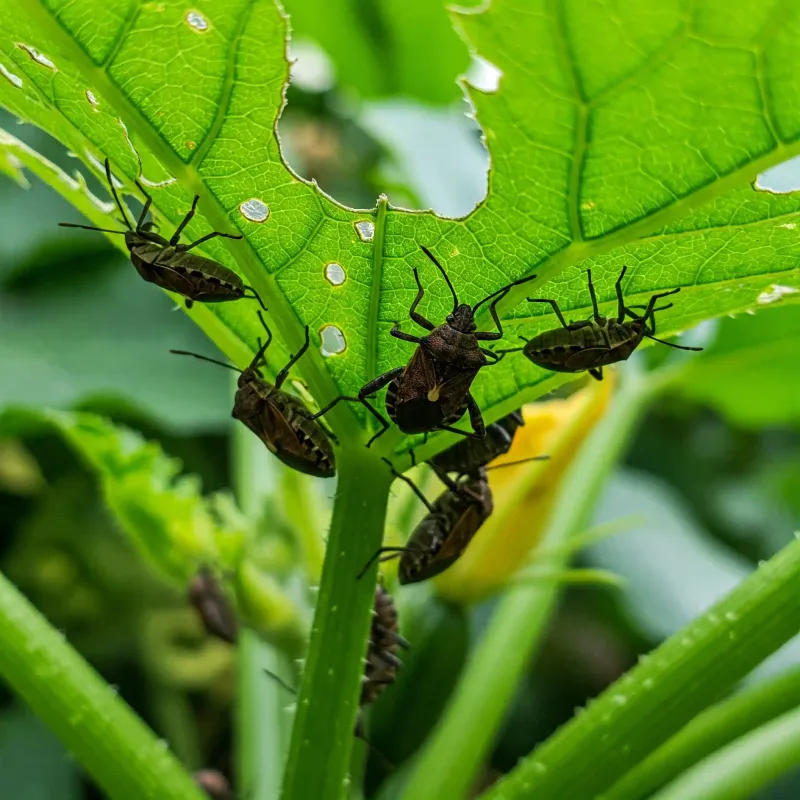
Tiny invaders can wreck your harvest without you noticing. Squash bugs, squash vine borers, and cucumber beetles chew on flowers and stems, drain the plant’s strength, and pull energy away from making fruit.
Some do their damage in plain sight, while vine borers tunnel secretly inside the stem until the plant suddenly wilts. Either way, a weakened plant simply cannot afford to set squash.
Get in the habit of flipping leaves over and checking the base of stems every few days. Catch infestations early and knock them back with targeted, pollinator-safe controls so you do not harm the bees you need.
A vigorous, unstressed plant shrugs off pest damage far better than a struggling one.
8. Disease Pressure
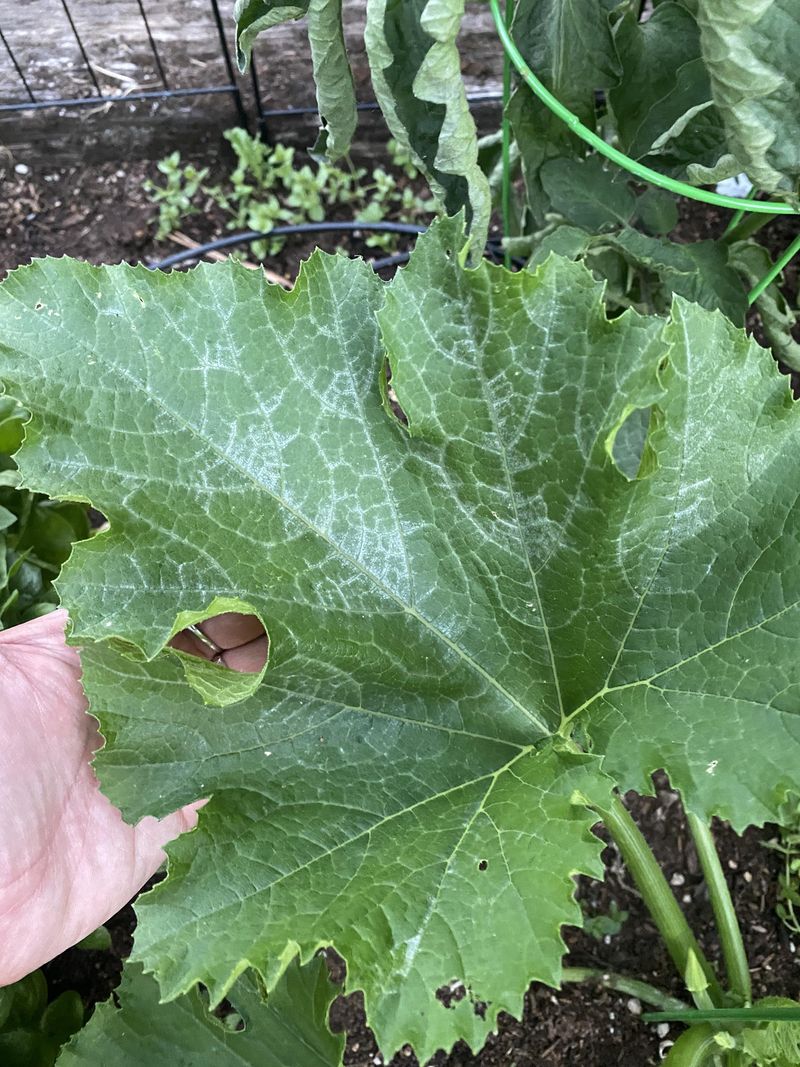
A dusty white coating creeping across your zucchini leaves is bad news for fruit. Diseases like powdery mildew and bacterial wilt sap the plant’s vigor, and a run-down plant produces fewer flowers and even less fruit.
Powdery mildew looks like someone dusted the leaves with flour, while bacterial wilt makes vines collapse seemingly overnight. Both drag down the whole plant’s ability to perform.
For mildew, snip off the worst leaves and spray the rest with a baking soda solution, then boost air movement through better spacing and base watering. Bacterial wilt hitches a ride on cucumber beetles, so controlling those pests is key.
Rotating where you plant squash each year also helps keep soil-borne diseases from building up.
9. Planting Too Early Or Too Late
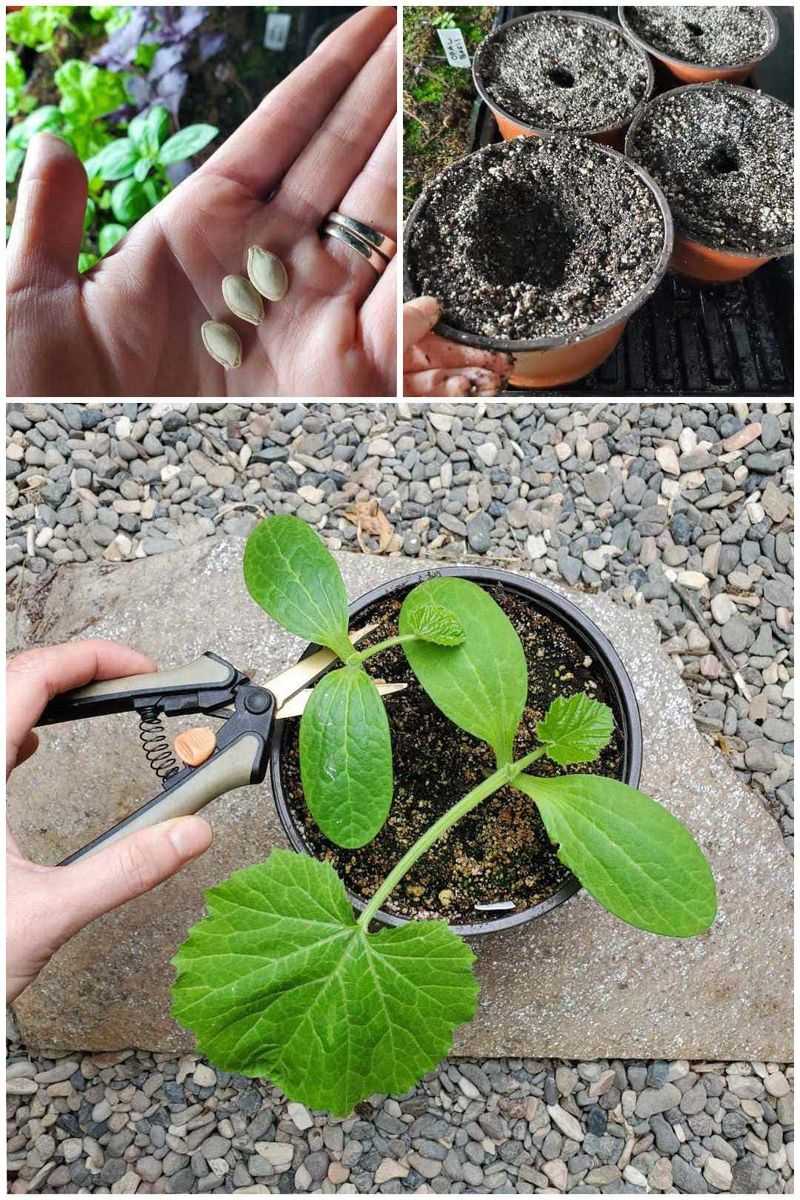
Timing can make or break your zucchini before it ever blooms. As heat lovers, these plants sulk in cold soil and cannot handle frost, so seeds or seedlings put out too soon just sit there, stunted and slow.
Go too late, though, and you swing to the opposite problem. Flowering gets shoved into the fiercest mid-summer heat, which sabotages fruit set just as badly as chilly spring soil.
Wait until all danger of frost has passed and both day and night temperatures stay reliably warm. Soil in the range of 75 to 85 degrees gives zucchini the cozy start it wants, setting the plant up to flower and fruit at the right moment.
10. Overcrowding And Poor Airflow
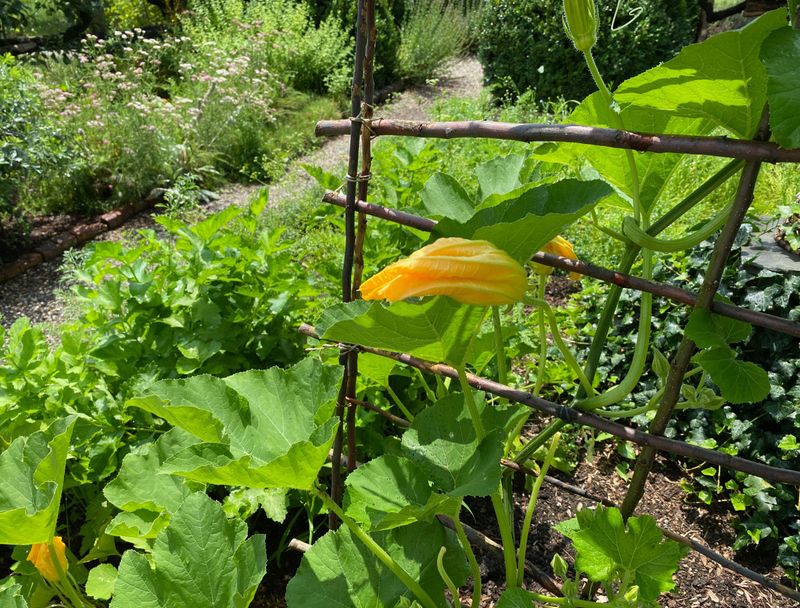
Crammed-in zucchini plants fight each other for everything. When they sit too close, they compete for sunlight, water, and nutrients, and none of them ends up strong enough to churn out fruit.
Tight planting also traps humid air among the leaves. That damp, stuffy space is a playground for fungal diseases like powdery mildew, and it can even make it harder for pollinators to reach the flowers.
Give each plant real breathing room, roughly one and a half to three feet for bush types and more for vining kinds. Growing upward with stakes, or letting vines spill over the edge of a raised bed, opens up airflow and saves precious garden space at the same time.
11. Unbalanced Overall Nutrition
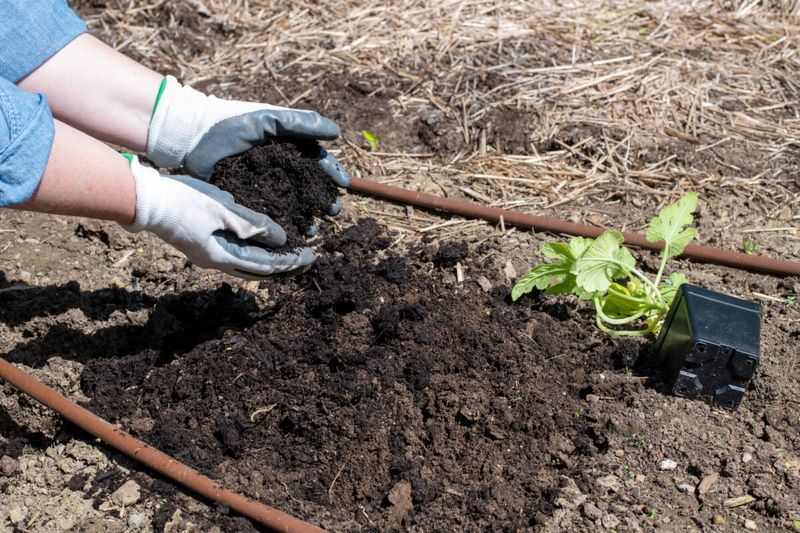
Nitrogen gets the blame a lot, but it is not the only nutrient in the story. Zucchini are hungry, heavy feeders, and if the whole nutrient mix is off or lacking, the plant simply cannot muster the energy to fruit.
Poor, thin soil leaves plants weak and unproductive no matter how many blossoms show up. Rich, well-draining ground is what these squash truly crave.
Set the stage before planting by working in plenty of compost and aged manure so the soil is loaded with slow-release goodness. Add a balanced organic granular fertilizer at planting time, and if growth looks weak once flowering starts, give a gentle balanced liquid feed to help things along.
12. A Hidden Giant Left On The Vine

One overlooked monster squash can shut down your whole plant. When a huge, mature zucchini hides under the leaves and keeps growing, the plant reads it as a signal that its job is done.
Instead of pumping out new blossoms and fruit, it pours all its energy into ripening that giant and filling it with seeds. Meanwhile, you sit there wondering why nothing new is forming.
The fix is delightfully simple: harvest early and often. Pick your zucchini young and tender, around six to eight inches long, and check under the leaves regularly so nothing sneaks past you.
Frequent picking keeps the plant convinced it still has work to do, and it rewards you with a steady stream of squash.
13. Not Enough Sunlight
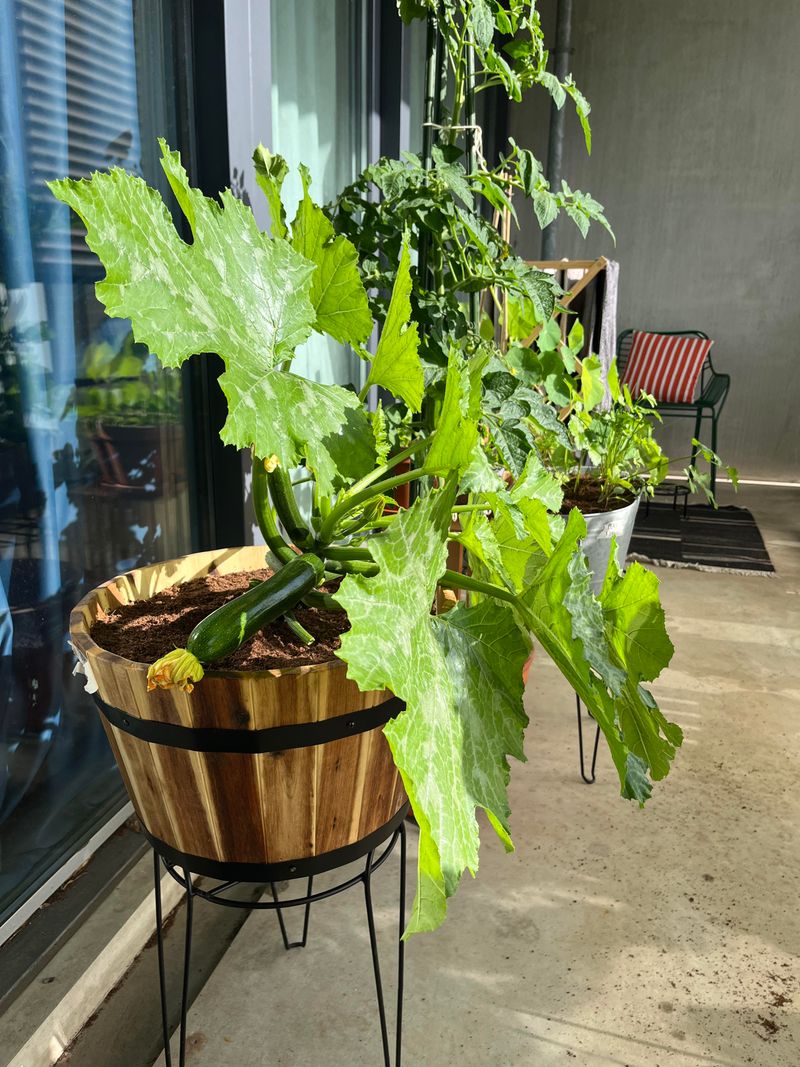
Sun is fuel for fruit, and zucchini demands a lot of it. Tucked in a shady corner or crowded by taller plants, your squash will make fewer flowers, grow weaker, and set little to no fruit.
You might have done everything else right and still come up empty simply because the light is not reaching the plant. Shade is a quiet, easy-to-miss saboteur.
Aim for a spot that soaks up at least six to eight hours of direct sun each day. If nearby plants are casting shade, trim them back to open up the light.
For container zucchini, just slide the pot to a brighter location and watch the difference over the following weeks.