
The North Carolina Native Vine That Blankets A Chain-Link Fence With Blooms Instead Of Invasive Honeysuckle
Japanese honeysuckle has taken over fence lines across North Carolina, and plenty of homeowners have watched it smother everything in reach while wondering if there is a better option. There is.
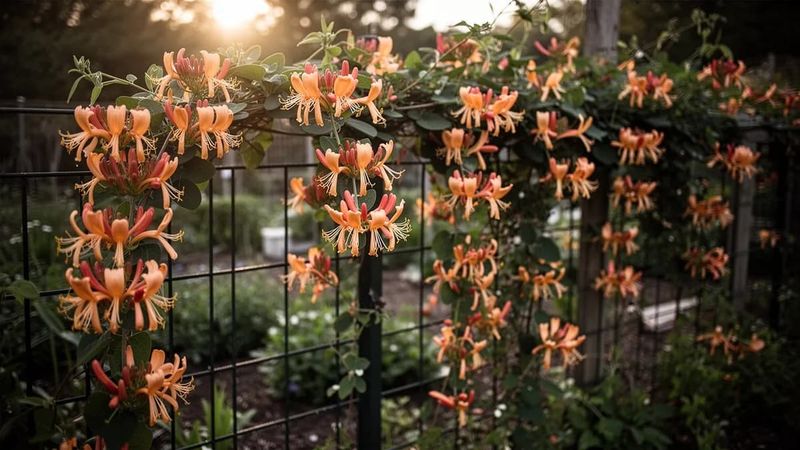
Coral honeysuckle, known botanically as Lonicera sempervirens, is a native North Carolina vine that can be trained through chain-link mesh and produces clusters of tubular coral-red flowers that stop hummingbirds mid-flight. Swapping one for the other takes more than just planting a new vine, but the payoff for your fence line and your yard’s ecosystem is well worth the effort.
Coral honeysuckle offers a native way to green a chain-link fence
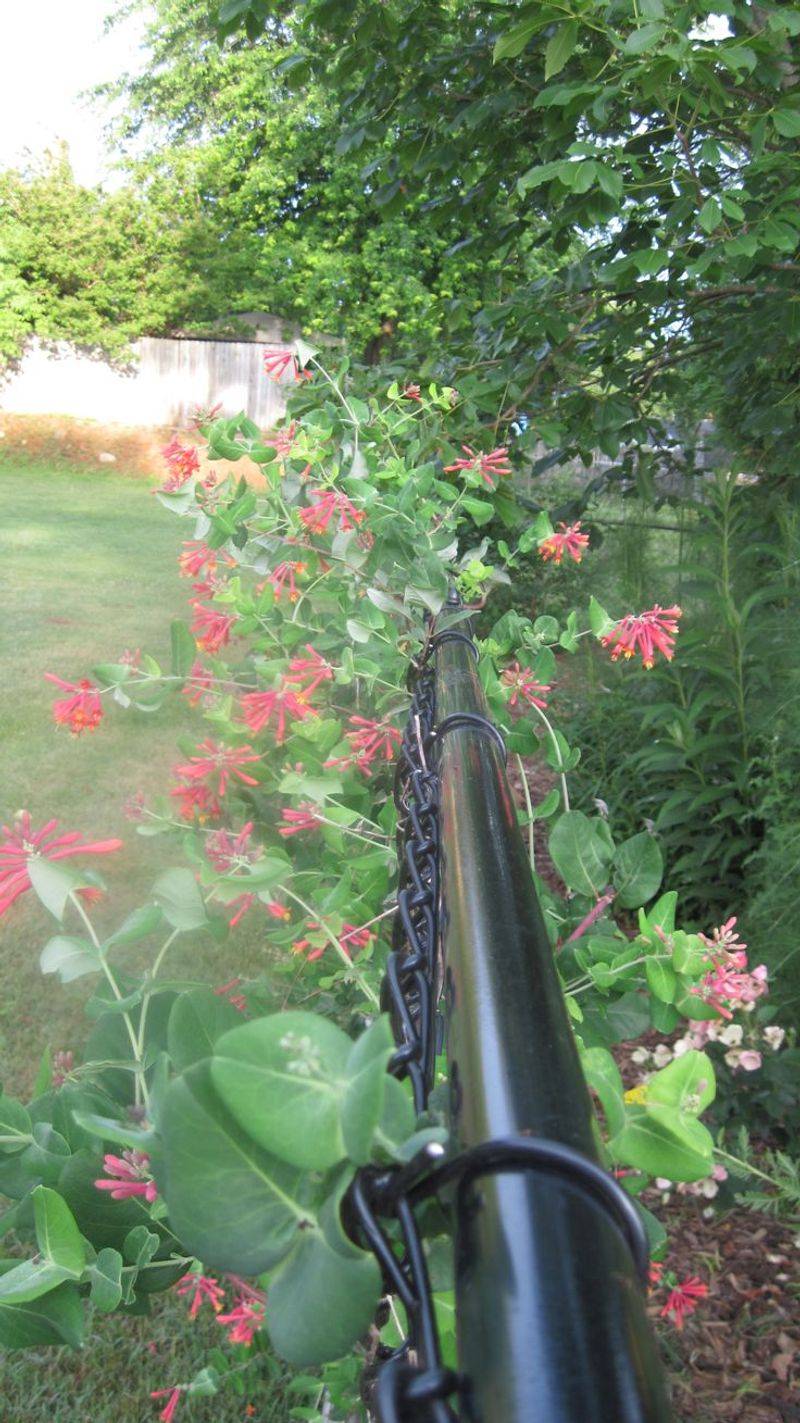
Few native vines match what NC State Extension describes for coral honeysuckle, Lonicera sempervirens: a twining, woody vine native to North Carolina that reaches 10 to 20 feet, thrives across the Coastal Plain, Piedmont, and Mountains, and produces coral-red to orange-red tubular flowers that documented hummingbird and pollinator visitors seek out. That combination makes it a strong candidate for any homeowner who wants something living and flowering on a chain-link fence rather than bare metal or a tangle of invasive growth.
The vine earns its place through the way it grows. Lonicera sempervirens is a twiner, meaning it wraps its stems around available supports instead of clinging with adhesive pads or aerial roots.
Chain-link mesh gives those stems plenty to work with once the plant is established and guided into the fence early in its life. A mature plant in good conditions can spread broadly enough to provide real visual coverage along a fence run, though how much of the fence it actually fills depends on sunlight, moisture, the plant’s size at planting, how consistently it is trained and pruned, and the total length and height of the fence.
Coral honeysuckle is a strong native option for this project, but it is not the only native vine that can grow on a North Carolina fence. What sets Lonicera sempervirens apart for this use is its documented fence and trellis suitability, its adaptability across all three of North Carolina’s major physiographic regions, and its appeal to ruby-throated hummingbirds and other pollinators.
One important reality to set straight from the beginning: planting this vine beside a fence where Japanese honeysuckle already grows will not push the invasive out. The two tasks, managing the invasive and establishing the native, require separate attention and a deliberate sequence.
Identify the vine before you buy, keep, or remove it
The word “honeysuckle” does almost no work as an identifier. North Carolina is home to native species, nonnative ornamentals, and outright invasives that all carry that common name, and some of them look similar enough at a glance to cause real confusion.
Before you buy a plant, decide to keep one that is already growing, or start cutting anything back, you need to know exactly which species you are looking at.
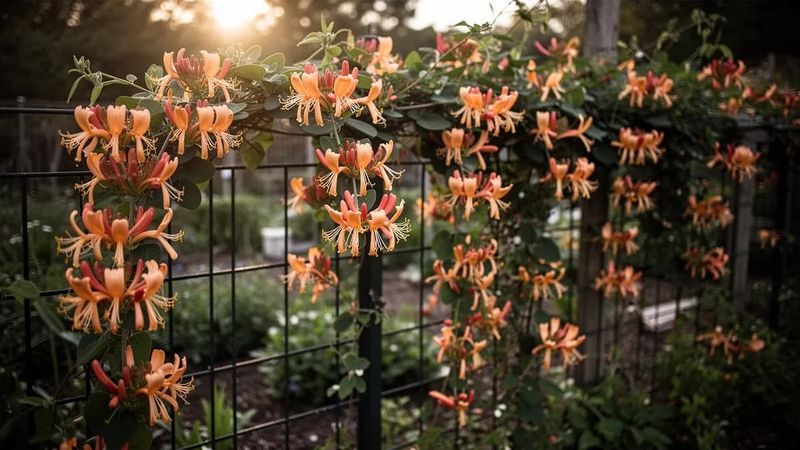
Lonicera sempervirens has narrow, tubular flowers in coral-red to orange-red shades. The flowers are not particularly fragrant, which is one of the clearest sensory clues.
The leaves are oval to oblong, and the uppermost leaf pairs just below the flower clusters are fused together so they look like a single oval disk cupping the stem. In fall, the plant produces small, bright red berries.
Japanese honeysuckle, Lonicera japonica, is the species most homeowners encounter as a problem on fences and woodland edges across North Carolina. Its flowers open white and age to yellow, and they carry a heavy, sweet fragrance that is one of its most recognizable traits.
The berries are black rather than red. Japanese honeysuckle spreads aggressively through runners, underground rhizomes, and seeds that birds disperse widely.
Beyond these two, nonnative shrub honeysuckles such as Amur, Tatarian, and fragrant honeysuckle are also present in North Carolina and are considered invasive or problematic. None of them are interchangeable with Lonicera sempervirens in appearance, growth habit, or ecological role.
When you shop for coral honeysuckle, ask for it by its botanical name to avoid bringing home the wrong plant. Common-name labels at garden centers are not always reliable enough to stake a planting decision on.
Manage Japanese honeysuckle before training the replacement
Sequencing matters here. Planting Lonicera sempervirens on a fence that already carries an established Japanese honeysuckle infestation creates a tangle that makes both identification and control harder over time.
The correct order is to positively confirm you are dealing with Japanese honeysuckle, manage the infestation as thoroughly as you can, monitor for regrowth, and only then establish the native vine on the fence.
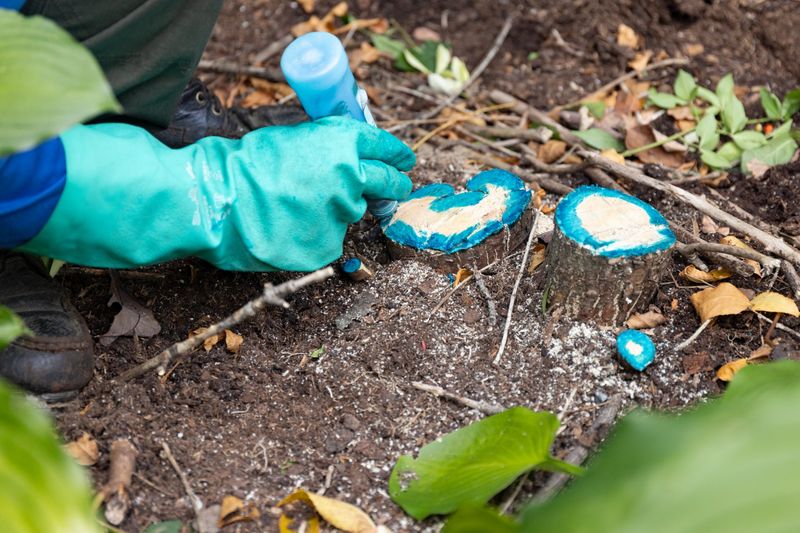
For a small infestation, NC State’s Extension Gardener Handbook guidance on weeds recommends cutting Japanese honeysuckle to ground level in late summer and treating the freshly cut stem ends with an appropriately labeled herbicide. Late summer timing targets the plant when it is actively moving energy toward its roots, which increases the likelihood that a cut-stump treatment will reach the root system.
Cutting the stems down without any follow-up treatment is often not enough because Japanese honeysuckle can resprout vigorously from its rhizomes.
When you use any herbicide, read the label completely before you open the container. The label is a legal document, and it specifies where the product can be applied, how close it can be used near waterways, what protective equipment you need, and how to keep children and pets away during and after treatment.
Never spray herbicide broadly along a fence line without identifying every plant in the area, because drift and soil movement can damage desirable plants nearby.
After the initial treatment, plan to check the area regularly through the following growing season. New shoots from surviving rhizomes or freshly germinated seeds can appear quickly, and catching them early makes follow-up control much easier.
Japanese honeysuckle’s ability to spread through both runners and bird-dispersed seeds means that even a well-treated area can see new seedlings arrive from surrounding properties. Sustained monitoring, not a single removal effort, is what keeps the fence line clear enough for the native vine to establish without competition.
Choose a sunny, well-drained site with fire safety in mind
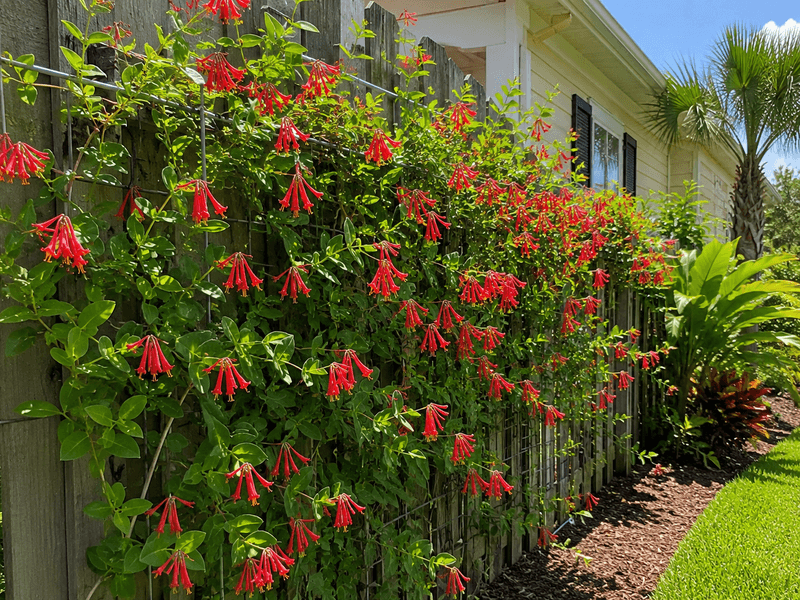
Sunlight is the single biggest factor in how well Lonicera sempervirens performs on a fence. Full sun, meaning six or more hours of direct sun each day, produces the strongest and most reliable flowering.
The plant tolerates partial shade, but flowering becomes noticeably lighter as sun exposure decreases. If your fence line runs along the shaded north side of a building or sits under a tree canopy for most of the day, manage your expectations about bloom density accordingly.
Soil conditions along a fence line are often less than ideal, so it helps to know what the plant actually needs before you dig. NC State lists Lonicera sempervirens as adaptable to clay and loam soils with medium moisture and good drainage.
Humus-rich, neutral-to-acidic soil is suitable, but the plant’s adaptability means it can work in average residential soils as long as they do not stay wet. Permanently soggy or poorly drained ground is a problem because it promotes root rot and weakens the plant before it has a chance to establish.
One site consideration that deserves a direct conversation is fire safety. NC State Extension rates coral honeysuckle as having high flammability, which is a material fact if your fence sits close to your house, a garage, a deck, or any other structure.
A vine that climbs a fence immediately against a building’s wall or eave creates a potential pathway for fire spread. Defensible-space decisions are site-specific and depend on your property’s exposure, surrounding vegetation, and local fire risk.
If you are in an area with any wildfire history or live on a lot with significant tree cover and dry summers, talk to your local fire department or NC Forest Service office before training a high-flammability vine on a fence that touches or nearly touches your home.
Help young stems find the chain-link mesh
Young coral honeysuckle plants do not always find the fence on their own. Lonicera sempervirens is a twining vine, which means it wraps its stems around supports rather than attaching itself with sticky pads or hooks.
That twining habit works well with chain-link mesh once the plant has something to grab, but a newly planted vine sitting a few inches from the fence may just flop on the ground while it figures things out. Giving it a hand early saves weeks of slow progress.
The practical fix is simple. Thread two or three of the longest young stems through the chain-link openings by hand, or use soft garden twine or plant clips to loosely attach stems to the fence at a few points.
Loose is the key word: ties that are too tight can cut into the stem as it thickens. Once the stems have made contact with the mesh and begun to twine around the wire, the plant generally takes over and continues climbing on its own.
NC State notes that twining vines often need this kind of early assistance while becoming established, and coral honeysuckle is no exception. For planting timing, the NC State Extension Gardener Handbook on woody ornamentals notes that container-grown woody plants generally establish with less supplemental watering when planted in late fall or early spring.
Either window gives roots time to settle in before the stress of summer heat arrives.
Watering through the first growing season is not optional. Even a drought-tolerant native needs consistent moisture while its root system is getting established, and a vine growing on a sunny fence can dry out faster than a plant in open ground.
Check the soil moisture at the root zone, not just the surface, during hot or dry stretches. One more caution: watch the ends of the vines as the plant matures.
Lonicera sempervirens can reach into neighboring shrubs and small trees, where its twining stems become difficult to remove without damaging the host plant.
Prune after flowering to manage growth and preserve blooms
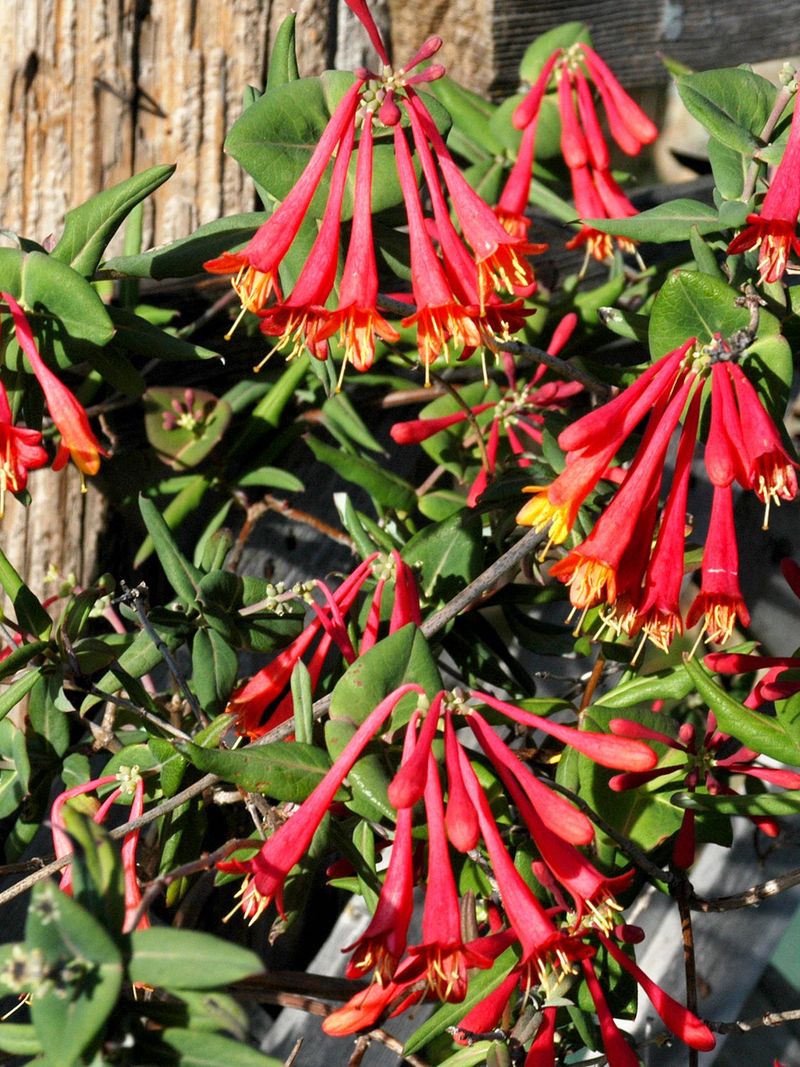
Timing a pruning cut on coral honeysuckle is straightforward once you understand one key fact: the plant flowers on new growth. Cut stems back before the main bloom period and you remove the growth that would have carried the flowers.
Prune after the spring bloom has finished and the plant has time to push out new growth that can produce additional flowers later in the season, depending on the cultivar and growing conditions.
Spring flowering is the most reliable and visually dramatic display you can expect from Lonicera sempervirens. Some cultivars and some sites produce scattered later bloom or a modest repeat flush in late summer or fall, but that is variable rather than guaranteed.
Describing the vine as a continuous summer bloomer or expecting it to flower wall-to-wall from April through October will lead to disappointment. Work with what the plant reliably does and treat any later bloom as a welcome addition.
Post-bloom pruning serves two purposes beyond flower preservation. First, it lets you redirect stems that have wandered into unwanted areas, whether that means stems reaching into a neighboring shrub, growing along the ground, or climbing toward a structure where you do not want them.
Second, removing older, tangled growth periodically keeps the plant from becoming a dense mat that is hard to manage. You do not need to cut the vine back hard every year; selective stem removal and redirection is usually enough to keep it tidy and well-shaped on the fence.
Fertilization is another maintenance lever worth understanding. Heavy applications of nitrogen encourage leafy growth at the expense of flowers.
If your vine is producing vigorous green growth but modest bloom, hold off on any nitrogen-rich fertilizer and let the plant flower on its own schedule. Compost worked into the soil at planting generally provides enough nutrition for an established vine without tipping the balance toward foliage over flowers.
Expect useful wildlife value, not an instant wildlife sanctuary
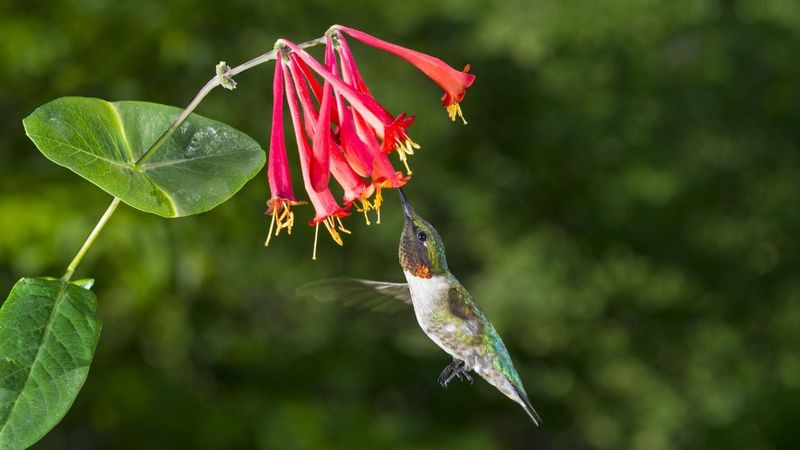
A fence covered in Lonicera sempervirens does real ecological work. NC State documents coral honeysuckle as a nectar source for ruby-throated hummingbirds, bees, butterflies, and moth pollinators, with the tubular flower shape particularly well suited to hummingbird feeding.
The red berries that follow the blooms are eaten by songbirds. The plant also serves as a larval host for the spring azure butterfly and the snowberry clearwing moth, two species that benefit from native plantings in residential yards.
The red berries are for wildlife only. They are not safe for people to eat, and children and pets should be kept away from them.
That point applies specifically to Lonicera sempervirens and should not be generalized to all honeysuckle species, because berry safety varies by species.
NC State Extension’s guidance on landscaping for wildlife with native plants makes clear that one vine, however well chosen, does not create a complete wildlife habitat on its own. Whether hummingbirds visit your fence regularly, which songbirds stop for the berries, and how many pollinators work the flowers all depend on factors well beyond the vine itself.
Surrounding plant diversity, access to water, nearby nesting cover, and whether pesticides are being used in the area all shape the actual wildlife activity on your property.
The practical takeaway is to treat Lonicera sempervirens as one productive piece of a larger yard rather than a standalone solution. Manage the invasive Japanese honeysuckle first, confirm the fence site is suitable and safe given the fire-flammability rating, and then establish the native vine as part of a yard that is genuinely working for North Carolina wildlife.
A chain-link fence draped in coral-red blooms each spring is a satisfying result, and knowing it supports the hummingbirds and pollinators moving through your neighborhood makes it more so.