
What It Really Means When An Owl Starts Hunting Over Your North Carolina Yard At Night
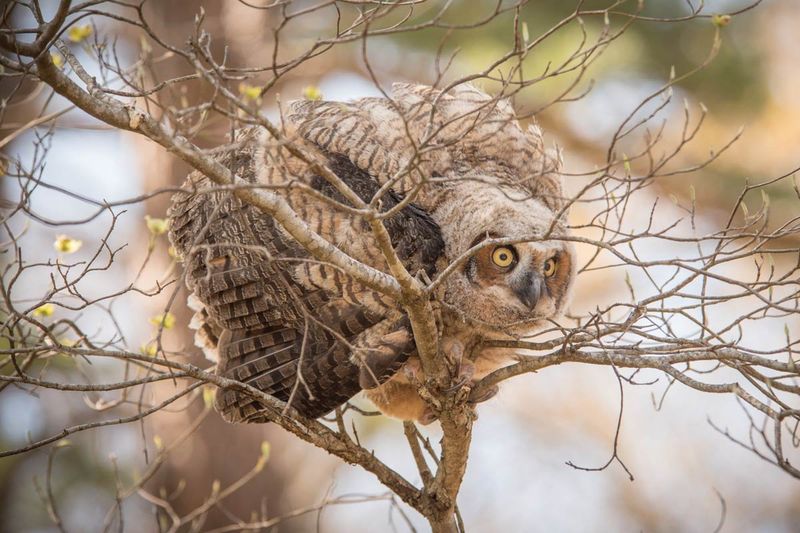
Spotting an owl gliding silently over your yard after dark is one of those moments that stops you in your tracks. Most North Carolina homeowners wonder what drew the bird there and whether it signals something bigger about their property.
The answer is more layered than a simple yes or no, and understanding it can help you make smarter choices for your yard, your family, and the wildlife you share it with.
It Usually Means the Owl Found a Workable Hunting Route
Owls are efficient hunters, and efficiency matters when you burn energy on every flight. When one starts crossing your yard regularly, the most straightforward explanation is that your property sits along a route that combines something worth eating, enough open airspace to hunt, and roosting or nesting cover close enough to make the trip worthwhile.
NC State Extension’s owl overview notes that North Carolina owls prey on rodents, rabbits, squirrels, reptiles, amphibians, insects, and other birds depending on species and local habitat, meaning the food source drawing the bird could be any of those animals rather than a mouse infestation under your porch.
Your yard may also be just one stop on a broader loop. Owls connect woodlands, fields, wetland edges, drainage corridors, and neighboring properties in a single nightly route, and your open lawn or vegetated border may simply be the most accessible segment of that route near your home.
Research on barn owl hunting areas found that foraging ranges can encompass a wide surrounding landscape, meaning prey remains and sighting locations reflect where the bird travels, not necessarily where its food source is concentrated.
That distinction matters before you draw conclusions. A recurring owl overhead is a useful habitat clue, not a diagnosis.
NC Wildlife’s great horned owl profile describes these birds as wide-ranging predators capable of using woodlands, open areas, and suburban landscapes alike, which means one address rarely tells the whole story. The barn owl page reinforces that the bird’s hunting range extends well beyond any single property.
Read the sighting as a starting point for observation, not a verdict about your yard’s rodent situation or ecological condition.
Which Owl Is Crossing Your Yard?
Getting the species right changes almost everything about how you interpret the visit. Three owls account for most nighttime encounters in North Carolina residential areas, and each one points to a different combination of habitat and prey.
Knowing which bird you are watching, even roughly, keeps you from drawing conclusions that belong to a different species entirely.
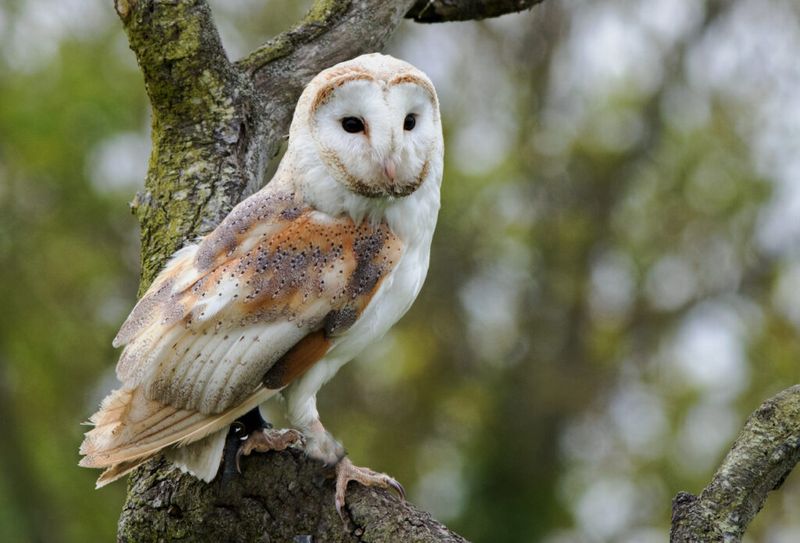
A pale, ghostly bird quartering low and silently over an open lawn, pasture, or large meadow edge is most likely a barn owl. NC Wildlife’s barn owl profile describes these birds as hunters of open fields and pastures who rely on exceptional low-light vision and acute hearing to locate small rodents.
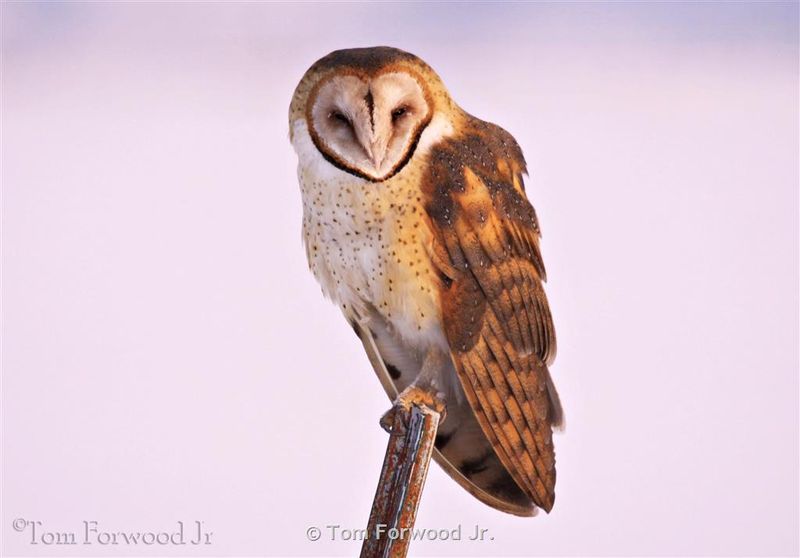
Cornell Lab’s barn owl guide adds that the species favors open country and avoids dense forest, so a barn owl over your yard suggests nearby open hunting habitat rather than mature canopy. Their heart-shaped white face and buffy-to-orange coloring make them distinctive when caught in a beam of light.
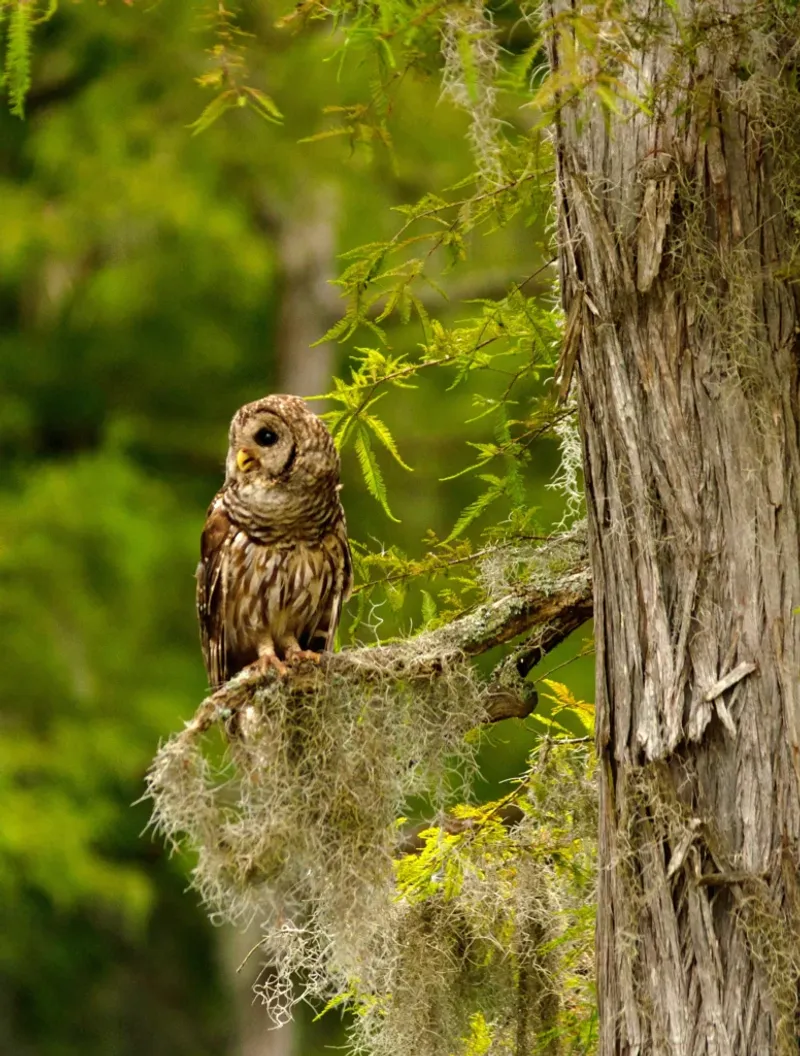
A large, heavily built owl perching in an upland woodland, suburban tree line, or even a neighborhood park is more likely a great horned owl. NC Wildlife’s great horned owl page notes their broad habitat tolerance, which spans dense forest to open country to city parks, and their wide diet that includes rabbits, squirrels, and other birds as well as rodents.
The prominent ear tufts and deep hooting call are the easiest field marks at a distance.
A medium-sized owl calling with a rhythmic “who cooks for you” pattern near a creek bottom, swamp edge, or floodplain forest is almost certainly a barred owl. The NC Wildlife barred owl profile ties this species strongly to mature wet woods and bottomlands.
NC State Extension’s owl resource confirms that barred owls are closely associated with this kind of moist, wooded habitat across the state. A nighttime glimpse may not give you enough to be certain, so call recordings and silhouette shape together offer a better chance at a confident identification than color alone.
A Repeated Flight Path Is Evidence of Use, Not a Rodent Census
One owl sighting on one night is thin evidence of almost anything. A second sighting along the same route, a regular perch worn smooth, pellets on the ground beneath a favored post, prey feathers, or the sound of calling on multiple evenings: those patterns together suggest the area is part of a regular hunting territory.
That shift from a single data point to a pattern is meaningful, but it still does not tell you how many rodents live at your specific address.
Owl pellets look like a direct window into the local prey community, and in some research contexts they are genuinely useful. A peer-reviewed study examining whether owl pellets reliably estimate prey abundance found that pellet evidence carries recognized biases related to prey selection, owl behavior, sample size, and hunting range.
Owls do not hunt randomly across a landscape; they choose where and what to pursue based on accessibility, prey density, and their own experience. A pellet under your oak tree reflects the owl’s entire nightly circuit, not a survey of the half-acre behind your house.
Research comparing owl pellets to direct trapping as a monitoring method reached similar conclusions: pellets can indicate which prey species are present in the broader area, but they are not a precise count. A separate analysis of small mammal trends derived from pellet records found that interpretation requires careful attention to sampling design.
Adding NC Wildlife’s note that barn owl hunting areas can span a wide surrounding landscape reinforces the point: the owl overhead is reporting on a neighborhood, not your yard alone. Treat the repeated flight as confirmation that the area offers something the bird values, and use the other sections of this article to figure out what that something might be.
The Yard Matters as Part of a Larger Habitat Mosaic
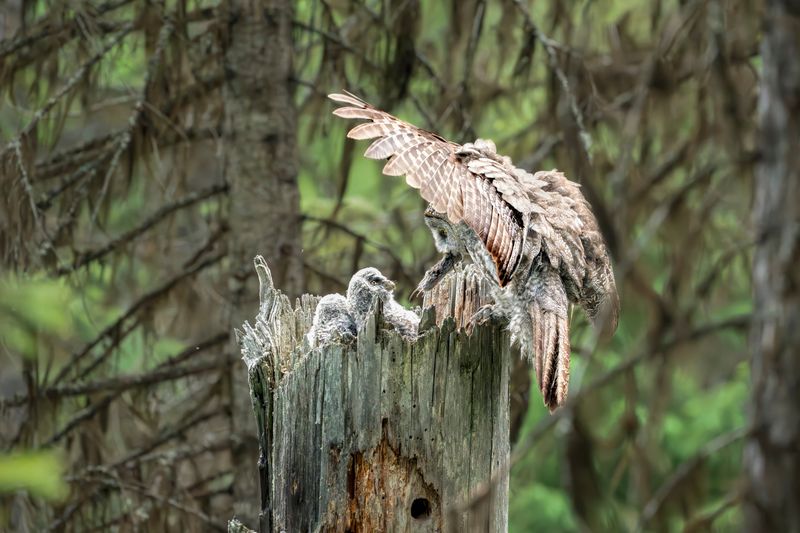
No single residential lot is an island. Owls move across a patchwork of lawns, woodlots, creek corridors, wetland margins, and open fields, and your property contributes pieces of that patchwork whether you intend it to or not.
The combination of open hunting ground, vegetated edges, mature trees, cavities, standing dead wood, and moist low spots can make a yard genuinely useful to a hunting or roosting owl even when the lot itself is modest in size.
Daytime cover is as important as nighttime hunting space. NC State Extension’s owl resource explains that most owl species need dense vegetation, mature tree canopy, cavities, or similar structure for roosting and nesting during daylight hours.
The NC Wildlife barred owl profile links this species specifically to mature bottomland forest with large trees and cavities, while the great horned owl page notes that this species often uses abandoned hawk or crow nests in large trees. Retaining safe, structurally sound mature trees, preserving hollow-tree habitat where it does not pose a hazard, and allowing brushy edges to develop along fence lines or property margins can all contribute to the habitat mosaic an owl needs across its full daily cycle.
Standing dead trees, sometimes called snags, deserve particular attention. They provide cavity nesting sites for owls and the woodpeckers that excavate those cavities in the first place, and they support the insects and small mammals that fill out the food web beneath the owl.
NC Wildlife’s barn owl page also points to the value of open foraging areas near nesting sites, which means a mix of open lawn and adjacent woody cover serves the bird better than either alone. One important safety note: any tree that shows signs of structural failure, root damage, or significant decay near a building or high-traffic area should be assessed and managed by a qualified arborist or tree professional before habitat value becomes a reason to delay necessary work.
A Wildlife-Friendly Response Starts With Sanitation, Not Poison
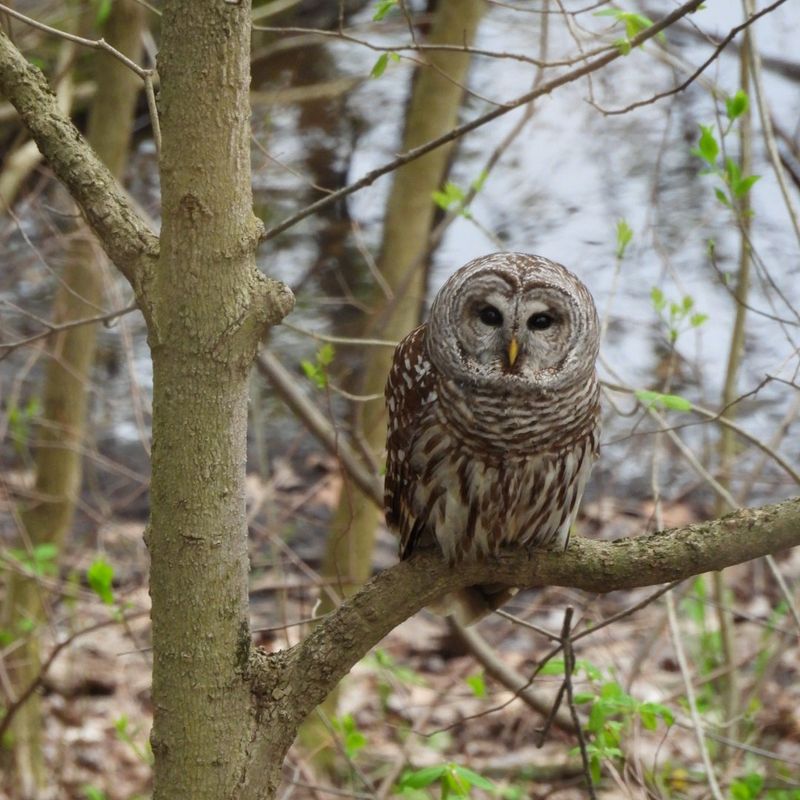
An owl hunting your yard is not necessarily a sign of crisis, but it is a reasonable prompt to look at what your property is offering rodents in the way of food and shelter. Spilled birdseed under a feeder is one of the most common and most overlooked attractants.
NC Cooperative Extension’s bird feeder guidance specifically flags spilled seed as a mouse attractant and recommends cleaning up regularly. Switching to a tray feeder with a catch basin, moving feeders away from the foundation, and sweeping up hulls every few days can meaningfully reduce the ground-level food supply that draws rodents close to the house.
Beyond seed, the standard sanitation checklist applies: store all birdseed, pet food, and livestock feed in sealed metal or heavy-plastic containers; secure garbage lids; eliminate unnecessary clutter, lumber piles, or debris stacked against buildings where rodents can nest undisturbed; and seal gaps around pipes, vents, and the foundation that give mice and rats entry into the structure itself. The NC State Extension Gardener Handbook’s wildlife chapter recommends sanitation and exclusion as the first line of defense, noting that rodent-proofing the building and removing food sources should precede lethal control when an infestation is not yet severe.
These steps reduce artificial food and shelter without trying to eliminate every wild prey animal from the surrounding landscape, which would be neither practical nor beneficial.
Rodenticide is a higher-risk option that deserves careful thought before use near wildlife. EPA’s rodent control pesticide safety review warns that predators and scavengers can be exposed to poison after consuming a rodent that ingested bait, with second-generation anticoagulants posing particular concern because they persist in animal tissues.
EPA’s restrictions on rodenticide products require that consumer products be used strictly according to label directions and inside tamper-resistant bait stations. Research on barn owls and rodent pest management underscores that secondary poisoning is a documented risk to raptors.
If rodent activity inside the home warrants intervention beyond exclusion and trapping, consult a licensed pest management professional who can choose the least-hazardous tool for the situation and apply it correctly.
Nighttime Stewardship Protects the Owl and the Household
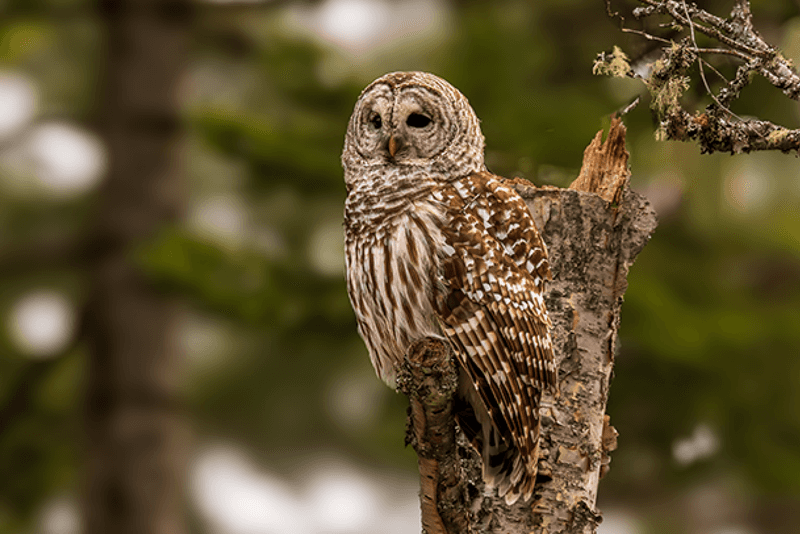
Sharing your yard with a nocturnal predator calls for a handful of practical adjustments that protect both the bird and the people living there. Artificial light is one of the easiest things to reconsider.
Studies on nocturnal owl behavior have found that light pollution can impair prey detection and reduce owl occurrence in affected areas. Experimental research on noise and light pollution and work on how traffic noise reduces foraging efficiency both point in the same direction, though these findings come from broader owl research rather than North Carolina-specific measurements for every species.
Turning off or redirecting unnecessary outdoor lights after dark, choosing warm-spectrum bulbs over bright white LEDs, and using motion-activated fixtures only where safety requires them are reasonable, low-cost steps that support quieter, darker conditions suitable for hunting.
Noise follows the same logic. Research linking nocturnal noise and habitat homogeneity suggests that persistent sound disturbance can make otherwise suitable habitat less usable for sensitive wildlife.
Keeping nighttime activity in the yard calm and avoiding loud equipment after dark costs nothing and leaves the hunting window open for the bird.
Pets and small animals deserve attention too. NC Wildlife’s great horned owl profile and the barn owl page both describe these birds as wild predators capable of defending territories near homes.
Keeping cats indoors at night and supervising small dogs or rabbits outdoors is a reasonable precaution, not a claim that your yard’s owl is actively targeting your pets. Observe the bird quietly from a distance, and do not chase, handle, or attempt to move it.
Federal regulations under 50 C.F.R. 10.13 protect native owls, and NC State Extension confirms that injuring, harassing, killing, or possessing a native owl or disturbing an active nest is illegal under federal and state law. If you find an injured owl or encounter a nest in a genuinely hazardous location, contact a licensed wildlife rehabilitator or the NC Wildlife Resources Commission rather than attempting to handle the situation yourself.
A Nest Box Is a Site-Specific Option, Not a Guarantee
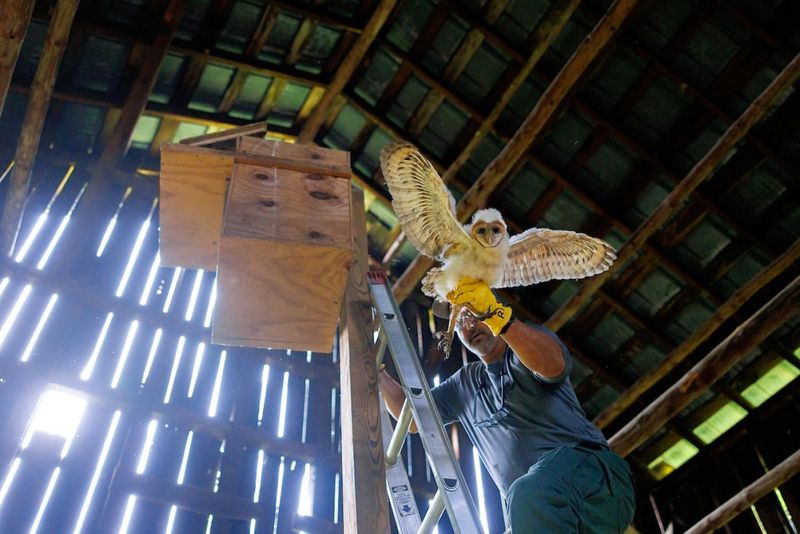
Installing a nest box is often the first thing homeowners want to do after spotting an owl, and the impulse makes sense. Boxes can genuinely support barn owls in the right setting.
The key phrase is “the right setting,” because a box on its own does not attract owls the way a bird feeder attracts chickadees.
NC Wildlife’s barn owl profile states plainly that barn owls are not drawn to a box simply because one is installed. Suitable open foraging habitat, correct mounting height and orientation, and protection from ground predators all factor into whether a box becomes useful.
NC Wildlife’s barn owl live camera program frames nest boxes as a conservation tool best applied where barn owls are already present or where the surrounding landscape – open fields, pastures, large meadows, or low-intensity agricultural land – already offers appropriate hunting habitat. Suburban lots surrounded by dense development, mature closed-canopy forest, or intensively maintained turf present a harder case.
Prior owl presence at a site is not an absolute requirement before putting up a box, but a box should be treated as a site-specific option rather than a universal suburban attraction tactic or a substitute for preserving the natural cavities, mature trees, and open edges that owls use in the first place. If barn owls are already visiting your area and your property has or borders open foraging ground, a correctly placed and predator-protected box is a worthwhile addition.
If the species visiting your yard is a great horned or barred owl, a barn owl box is unlikely to be relevant to that bird at all, since those species use different nest sites and habitat types entirely.
Read the Owl as a Clue, Then Steward the Yard You Actually Have
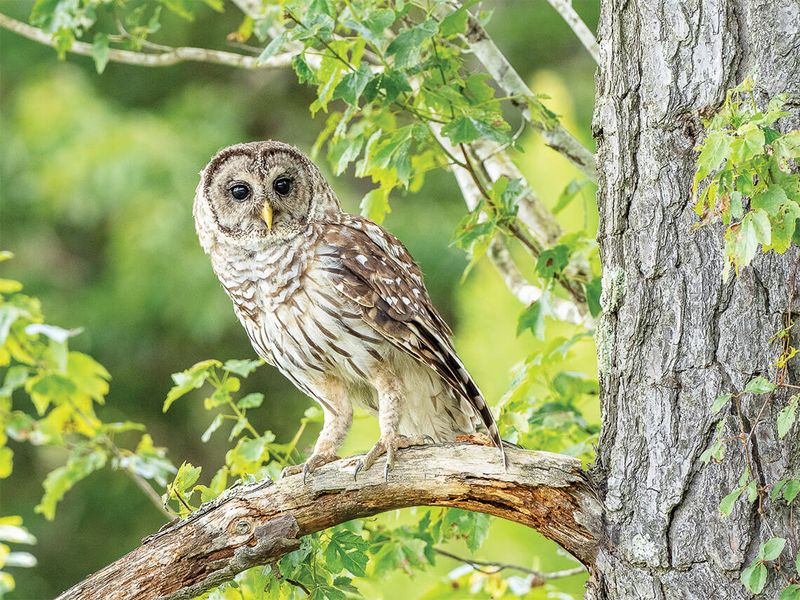
A recurring owl overhead tells you something real: the surrounding landscape offers a workable mix of prey, hunting access, and cover that makes regular visits worth the bird’s energy. NC State Extension’s owl guidance and published research on pellet evidence and prey estimation together make clear that the sighting cannot diagnose rodent abundance at a single address or certify the condition of your yard’s entire food web.
Those are bigger questions that require more than one bird and one flight path to answer.
The practical finish from here is straightforward. Identify the species if you can, because that shapes what you can reasonably infer.
Protect suitable habitat by retaining mature trees, cavity structures, and vegetated edges where they are safe to keep. Remove household rodent attractants through sanitation and exclusion before reaching for any rodenticide, and if poison becomes necessary, follow NC State Extension’s prevention-first framework and EPA label and bait-station requirements to reduce secondary exposure risk.
Then watch the bird respectfully from a distance and let it do what it came to do.
An owl that keeps returning to your yard is not a problem to solve. It is a sign that your corner of North Carolina still has enough of the right pieces in the right places to support a wild predator making its nightly rounds.