
If Your Cucumber Leaves Are Turning Yellow In The Late-Summer Heat, Here Are 13 Reasons And The Fix For Each
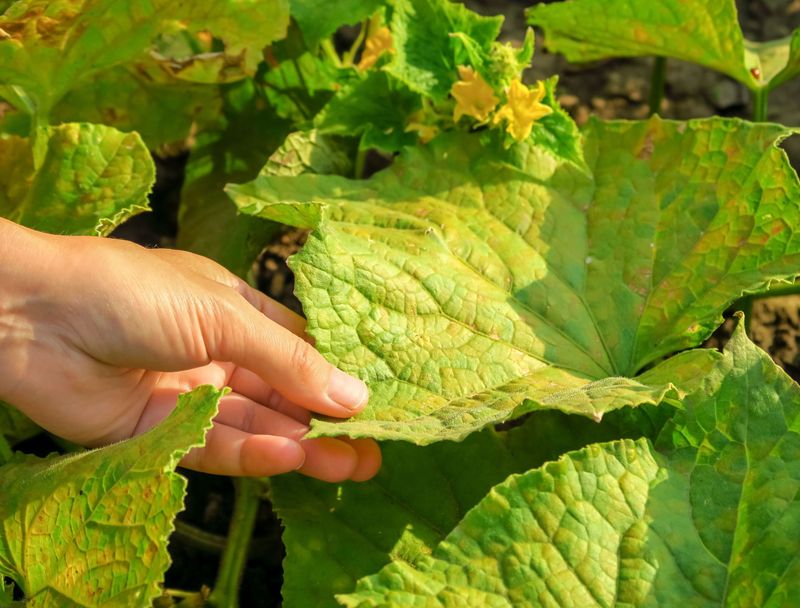
Late-summer heat can be rough on cucumber plants, and yellow leaves are one of the first signs something is off. The good news is that most causes are easy to spot once you know what to look for, and the fixes are simple.
Below are 13 reasons your cucumber leaves might be turning yellow, plus exactly what to do about each one. Grab your watering can and let’s rescue those vines before harvest slips away.
1. Overwatering
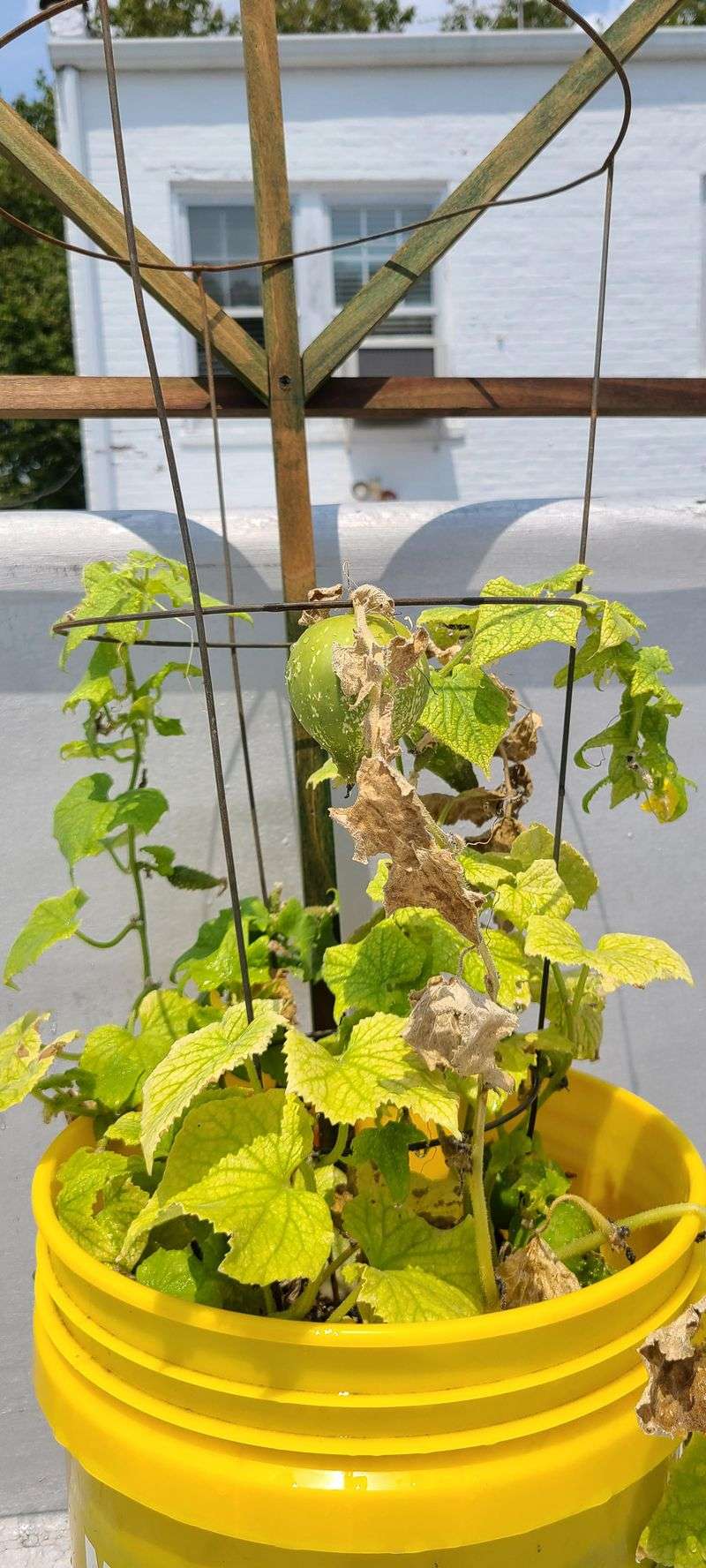
Too much love with the hose is a surprisingly common culprit. When soil stays soaked, roots can’t breathe, and starved-for-oxygen roots start to rot instead of feeding the plant.
The telltale sign is soft, limp, yellowing leaves paired with soil that feels squishy days after watering. If your finger comes out muddy an inch down, you’ve got your answer.
To fix it, push a finger 1 to 2 inches into the soil and only water when it feels dry. Make sure pots have drainage holes and beds aren’t sitting in a low, puddling spot.
Water deeply in the morning so foliage dries out, and stir in compost to help excess moisture drain away.
2. Underwatering
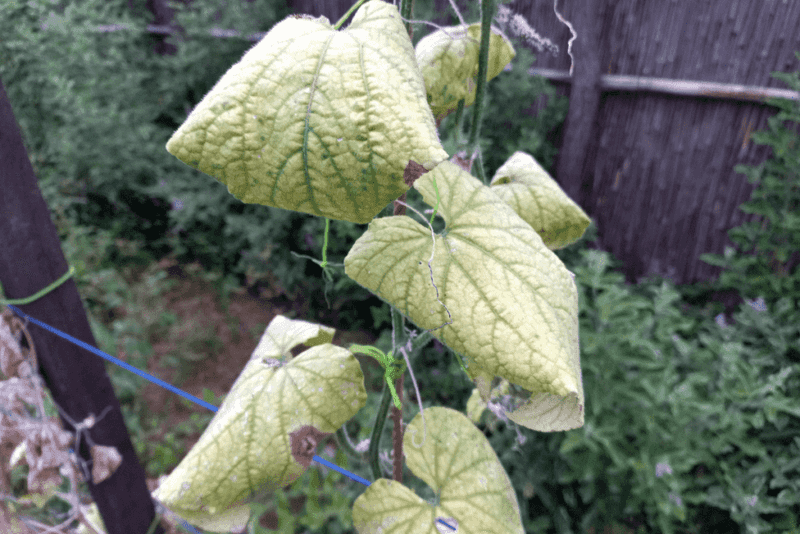
Cucumbers are thirsty plants, and in a heat wave they gulp water fast. Skip a few days and the plant goes into survival mode, pulling energy from its leaves.
Dehydrated foliage looks different from soggy overwatered leaves. It feels dry, papery, and brittle, and it may crisp at the edges before turning fully yellow.
Give your vines consistent, deep drinks, aiming for about an inch of water per week and more during scorching stretches. A layer of mulch around the base works like a sponge, holding moisture in the soil so roots stay happy between waterings.
3. Nitrogen Deficiency
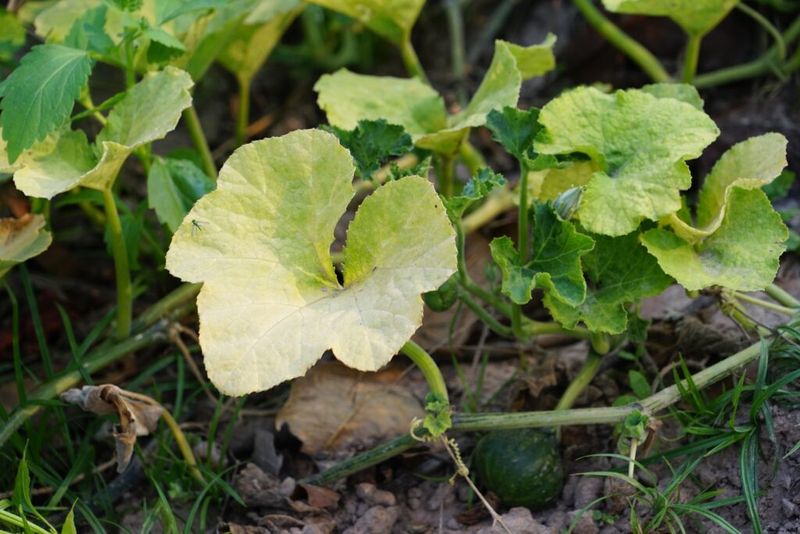
Hungry plants show it in their oldest leaves first. Nitrogen fuels the green chlorophyll that keeps foliage lush, so when it runs short, the lower, older leaves fade from pale green to a flat, uniform yellow.
You might also notice growth has stalled and new shoots look thin and unenthusiastic. It’s the plant rationing what little it has for the newest leaves.
Feed it a nitrogen-rich fertilizer, or go organic with compost, blood meal, or a splash of fish emulsion. A light liquid feed every couple of weeks keeps the tank topped off through the demanding late-summer stretch.
4. Magnesium Deficiency
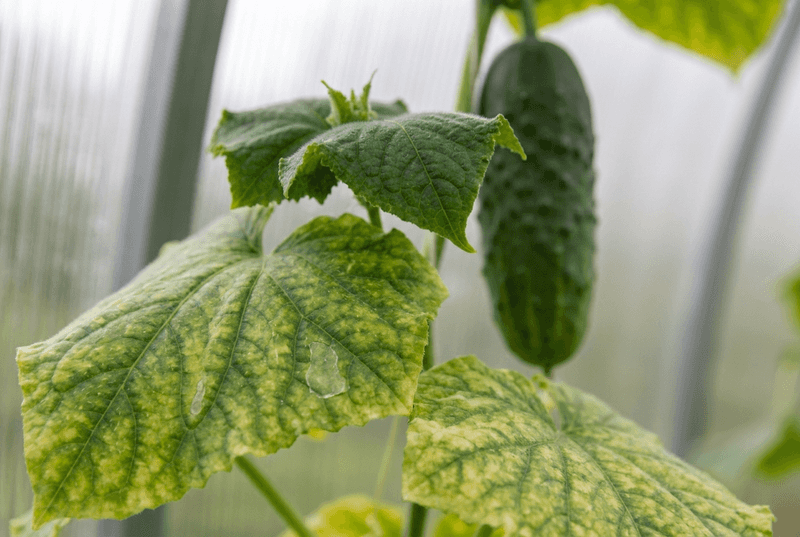
Ever seen a leaf where the veins stay bright green but everything between them turns yellow? That striped, almost stained-glass look is classic magnesium deficiency, known as interveinal chlorosis.
It usually shows up on older leaves first and can be triggered when a high-potash fertilizer crowds magnesium out of the plant’s diet.
The go-to remedy is Epsom salt, which is simply magnesium sulfate. Mix about 2 tablespoons per gallon of water and either spray it on the leaves or drench the soil around the roots.
Plants often perk up within a week or two.
5. Potassium Deficiency
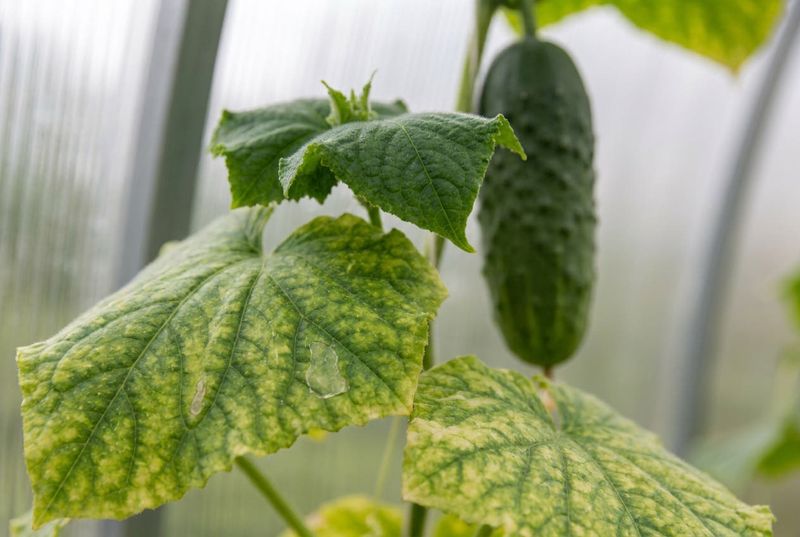
When the edges of your older leaves start to yellow and then scorch brown like they’ve been singed, potassium is often running low. This nutrient helps the plant manage water and switch on key enzymes.
Left unchecked, those crispy margins turn dead and brittle, and any new leaves may come in small and crinkled. It’s a sign the plant’s internal plumbing is struggling.
Reach for a potassium-rich fertilizer. For a fast rescue, muriate of potash (0-0-60) applied at about half an ounce per linear foot in the row, then watered in well, does the trick.
Keep the soil evenly moist and loose so roots can actually grab the potassium.
6. Iron Deficiency
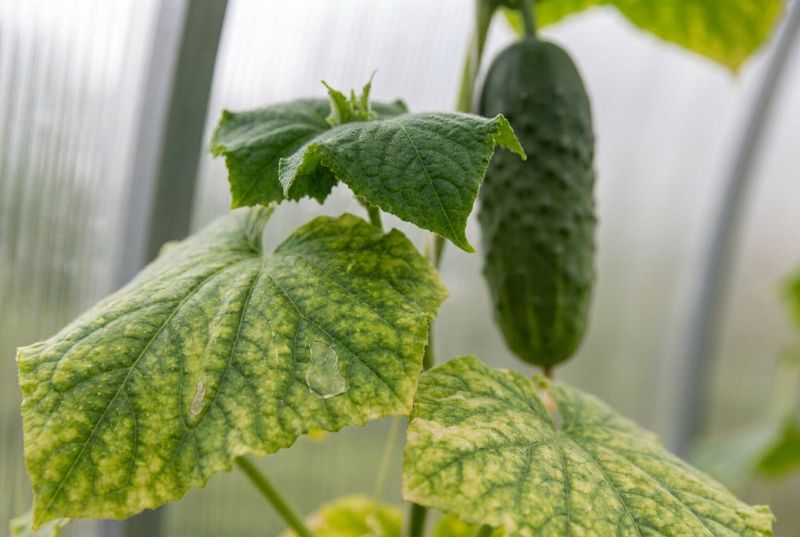
Here’s a clever clue for diagnosis: iron problems show up on the newest leaves, not the old ones. The young growth at the vine tips turns yellow between the veins while the veins themselves stay green.
Cold, wet compost, poor drainage, or alkaline soil with a pH above 7 can all lock iron away from the roots even when it’s technically present in the ground.
Warm the root zone to a cozy 18 to 25 degrees Celsius and water evenly rather than in floods and droughts. If yellowing sticks around, a chelated iron feed sprayed on the leaves delivers the nutrient straight to where it’s needed.
7. Heat Stress and Excessive Sunlight
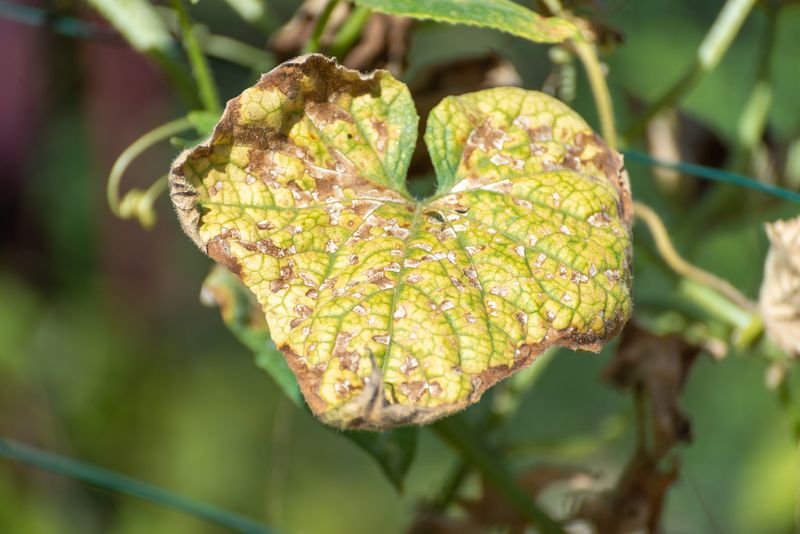
Late summer can turn a sunny bed into a furnace, and cucumber leaves feel it. Blistering direct sun scorches the tissue, leaving yellow or whitish patches, curled edges, and crispy browning.
Keep it up for days and the plant slides into full heat stress, losing moisture faster than the roots can replace it.
The rescue is shade during the worst of the afternoon. A length of shade cloth or even a strategically placed umbrella takes the edge off the heat.
Pair that with steady watering so the plant isn’t fighting drought and sunburn at the same time.
8. Insufficient Sunlight
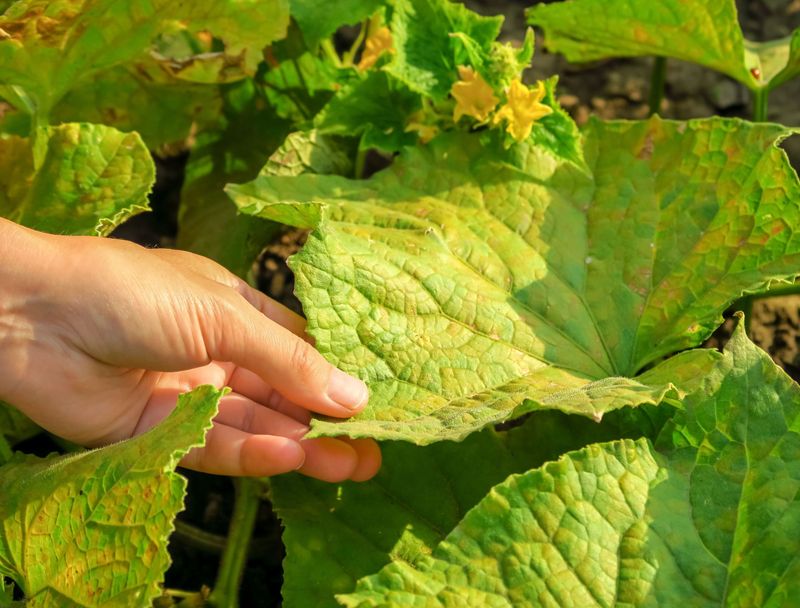
Sunlight is a two-sided coin, and too little causes trouble just as surely as too much. Cucumbers need at least six hours of direct sun a day to run the photosynthesis engine that keeps them fed.
Tuck them behind a fence, a tall crop, or in a dim corner, and they’ll grow leggy, stall out, and yellow from plain old stress.
Move them to the brightest spot you have. If a fence or building casts shade you can’t remove, relocating containers into the sun works wonders.
Growing indoors? A supplemental grow light fills the gap.
9. Aphid Infestation
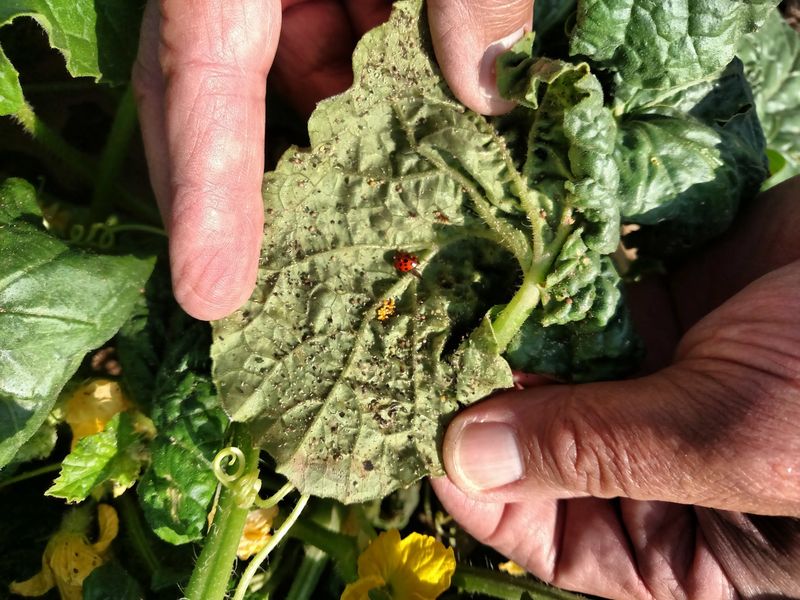
Sometimes the problem is a tiny thief. Aphids are soft, pinhead-sized insects that cluster on stems and leaf undersides, sucking out sap and draining the nutrients your plant worked hard to make.
As they feed, leaves lose their green and turn yellow, often while the bugs hide in sticky colonies you might miss at first glance.
Yellow sticky traps, a garlic spray, or neem oil can knock their numbers down. You can also recruit ladybugs, nature’s hungry aphid patrol, or wash the pests off with insecticidal soap or a mild dish soap and water mix.
10. Spider Mite Infestation
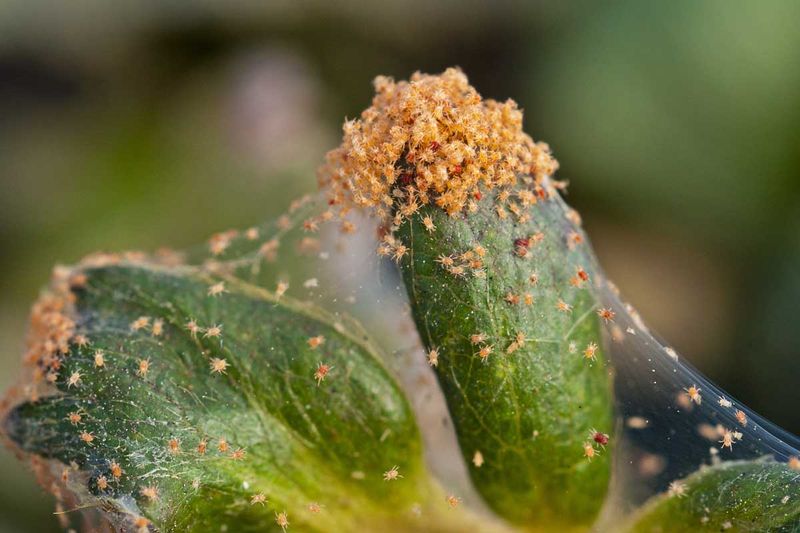
These troublemakers are almost too small to see, but the damage adds up quickly. Spider mites pierce leaf cells and drink the sap, leaving behind a scatter of fine yellow speckles that spread until whole leaves go yellow and dry.
Flip a leaf over and look for delicate webbing on the underside, a dead giveaway that mites have moved in.
A firm blast from the hose can knock many of them off. For heavier infestations, coat the leaves, especially the undersides, with insecticidal soap or neem oil and repeat every few days until they’re gone.
11. Downy Mildew
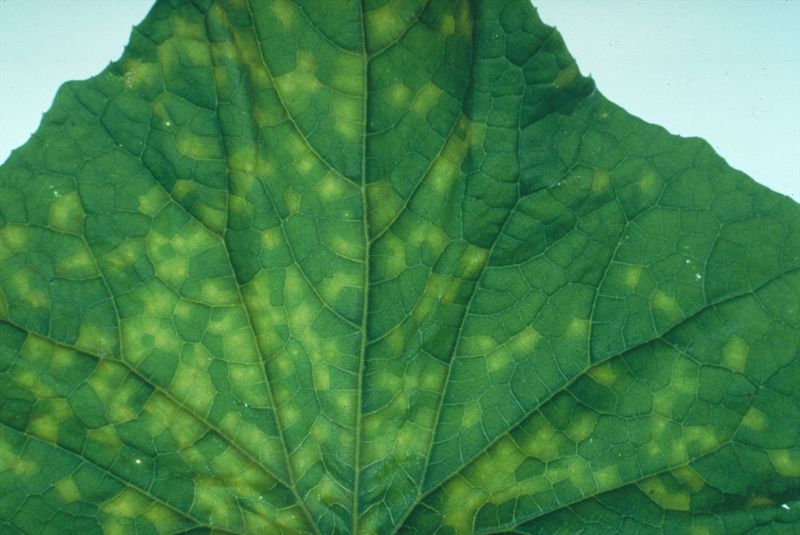
Humid, muggy weather sets the stage for this fungal-like disease. Downy mildew begins on the underside of leaves and pushes up pale green to yellow blotches that are boxed in by the leaf veins, giving them an angular, patchwork look.
It spreads fast when foliage stays wet, so prevention beats cure here.
Space plants generously so air moves freely between them, and water at the soil line instead of overhead to keep leaves dry. If an outbreak takes hold, a treatment using diluted hydrogen peroxide and baking soda can help slow it while you remove the worst leaves.
12. Cucumber Mosaic Virus
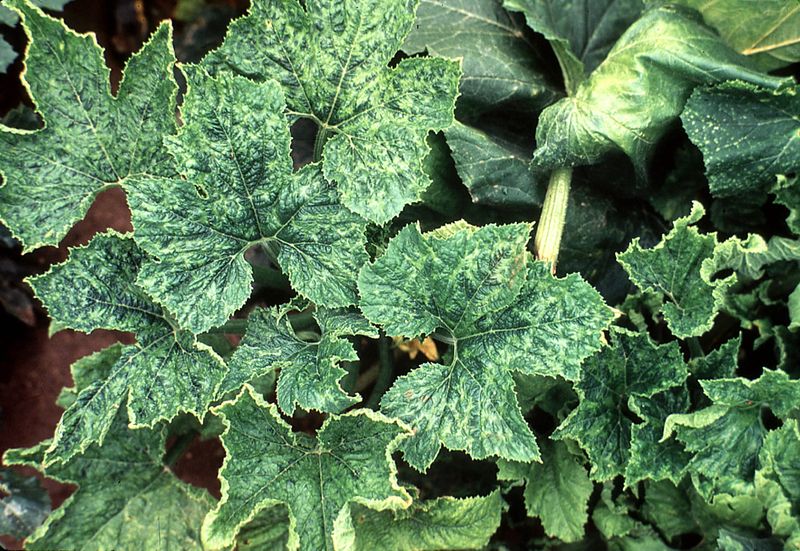
Of all the reasons on this list, this one is the heartbreaker. Cucumber Mosaic Virus paints leaves with a mottled mix of white, yellow, and green splotches, and it often stunts the whole plant while shriveling fruit production.
The mosaic pattern is distinctive, so once you learn to recognize it, you’ll spot it fast.
Sadly, there’s no cure. The kindest thing you can do for the rest of your garden is pull infected plants and destroy them so the virus can’t spread to healthy vines.
Next season, look for disease-resistant cucumber varieties, which give you a real head start.
13. Natural Aging of Leaves
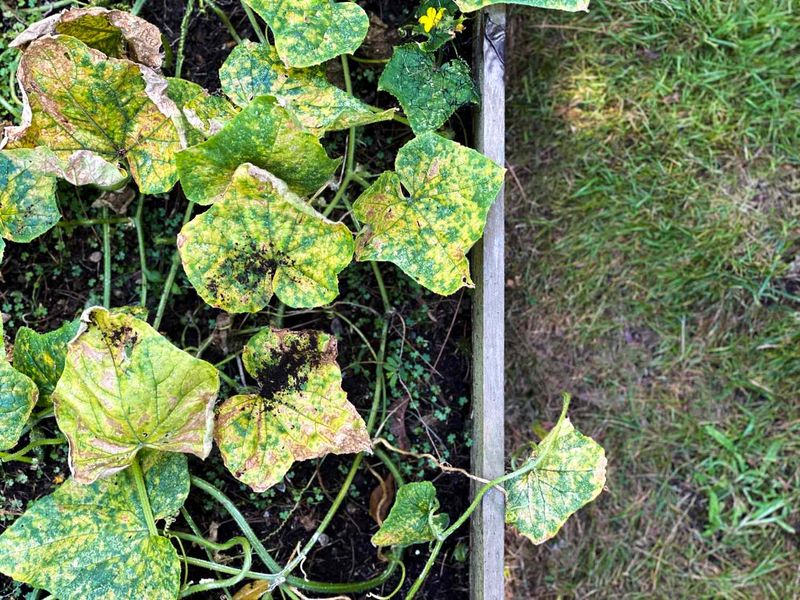
Before you panic, check where the yellow is. If it’s only the oldest leaves at the very bottom of the plant fading while everything above looks green and productive, this is simply nature at work.
As the season winds down, cucumbers pull energy out of tired old foliage and pour it into fresh growth and fruit. Those lower leaves have done their job.
No treatment needed here. Just snip off the yellowing old-timers with clean shears to open up airflow around the base, which also helps keep disease and pests from settling in.
A little end-of-season yellowing is a sign of a plant living its normal life, not a crisis to fix.