
The North Carolina Native That Draws More Butterflies Than Butterfly Bush And Never Turns Invasive
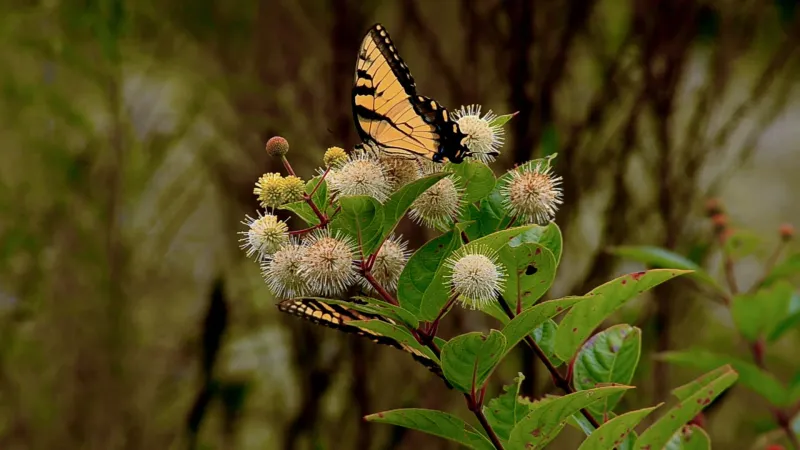
Most North Carolina gardeners have heard that butterfly bush is great for pollinators, but that story has some important holes in it. A native shrub called buttonbush quietly checks more ecological boxes for the right yard, attracting eastern tiger swallowtails, bees, and hummingbirds without the invasive-plant concerns tied to Buddleja davidii in the Mountain and Piedmont regions.
Getting the most out of buttonbush comes down to matching it honestly to your site, because it is not a plant for every yard. Understanding what it needs, and what it cannot do on its own, makes all the difference.
Buttonbush offers a strong native alternative for the right yard
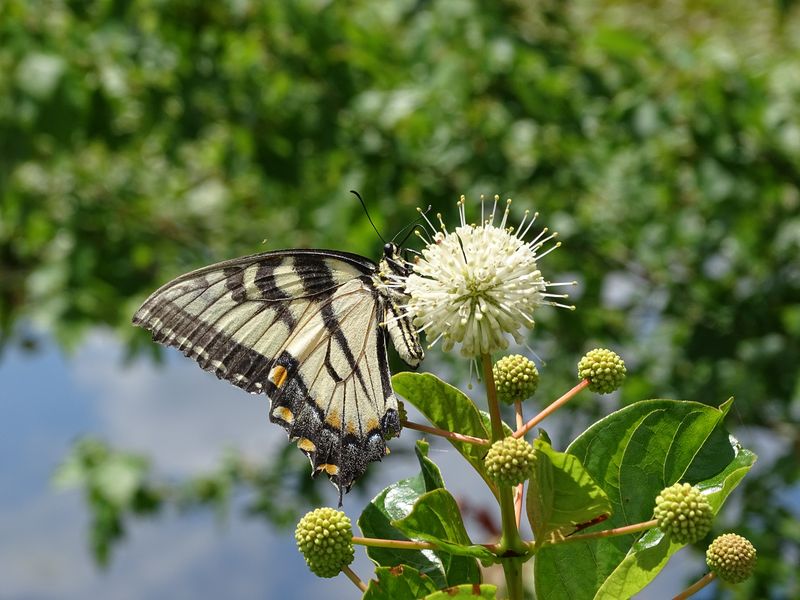
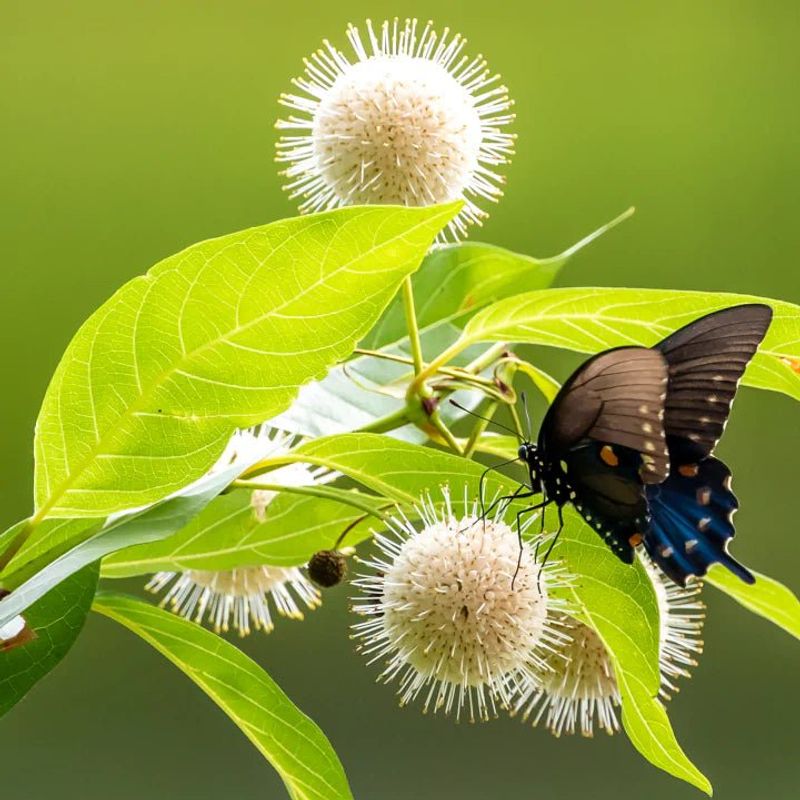
Buttonbush (Cephalanthus occidentalis) grows wild across every region of North Carolina, from the Coastal Plain to the mountains, and it earns its place in a wildlife garden through more than just good looks. NC State Extension’s plant profile for buttonbush documents its appeal to butterflies including eastern tiger swallowtails, as well as native bees, hummingbirds, songbirds, waterfowl, and mammals.
That is a wide circle of wildlife supported by one shrub, and it reflects the plant’s role in native wetland and streamside ecosystems across the state.
The honest case for buttonbush as an alternative to Buddleja davidii is not that it guarantees a higher butterfly count. No reliable head-to-head trial comparing butterfly visits to both shrubs in North Carolina has turned up, and making that claim would overstate what the evidence actually shows.
The real argument is site-specific: for a yard with a genuinely moist or wet spot and decent sun, buttonbush gives you native wildlife value and avoids the invasive-plant concerns that NC State Extension associates with B. davidii in the Mountain and Piedmont regions.
Buttonbush blooms mainly from June through August, sometimes into September, producing distinctive white, spherical flower clusters that pollinators find hard to ignore. Its value to songbirds and waterfowl extends beyond the bloom period, since the seed heads persist and provide food into fall and winter.
Choosing buttonbush for a matched site means selecting a plant with deep regional roots rather than forcing a non-native shrub into a landscape where its spread can become a problem for neighboring native plants and the caterpillars that depend on them.
Butterfly bush attracts adults but does not complete the habitat
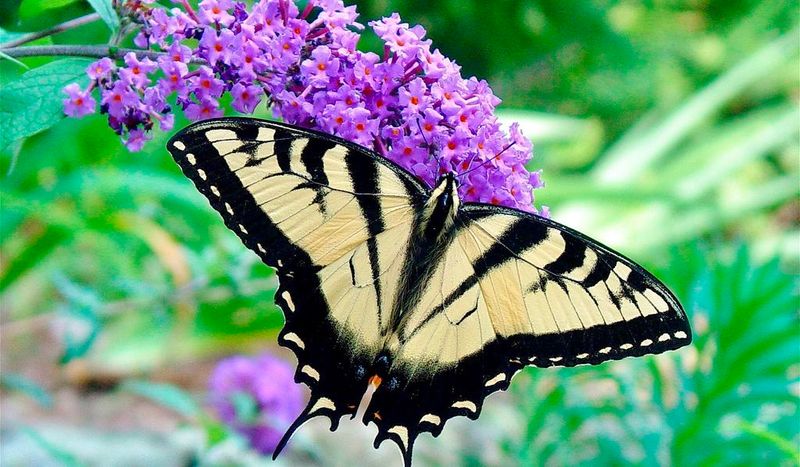
Watching butterflies crowd a butterfly bush on a July afternoon, it is easy to assume the plant is doing everything a butterfly needs. Adult butterflies do use Buddleja davidii for nectar, and that part is real.
Research into what makes B. davidii attractive to butterflies confirms that its floral chemistry draws adult visitors, which explains why the shrub became a garden staple in the first place.
The problem is that adult nectar feeding is only one piece of a butterfly’s life. Most local caterpillars cannot use B. davidii foliage as a host plant, which means the shrub feeds the adults passing through without supporting the next generation.
An NC State Extension article describes butterfly bush as something like junk food for pollinators: visually appealing and genuinely consumed, but not nutritionally complete for the broader population.
Beyond the larval-host gap, NC State Extension lists B. davidii as invasive in North Carolina’s Mountain and Piedmont regions. A shrub that self-seeds into surrounding natural areas can crowd out the native plants that caterpillars actually need, which means a butterfly bush in one yard can quietly reduce habitat quality in the landscape around it.
Some gardeners try to manage this by removing flower clusters before seeds disperse, and that practice may reduce spread for certain cultivars, but the species remains regionally listed as invasive and that listing does not disappear with deadheading.
One more distinction worth keeping clear: “butterfly bush” is not a single biological category. The documented invasive concern applies specifically to Buddleja davidii, also called orange-eye butterfly bush or summer lilac.
Other Buddleja species and cultivars may carry different fertility and risk profiles, and NC State does not automatically apply the same invasive label to every member of the genus. The concern here is precise, not a blanket condemnation of an entire plant family.
Match buttonbush to moisture, light, and space
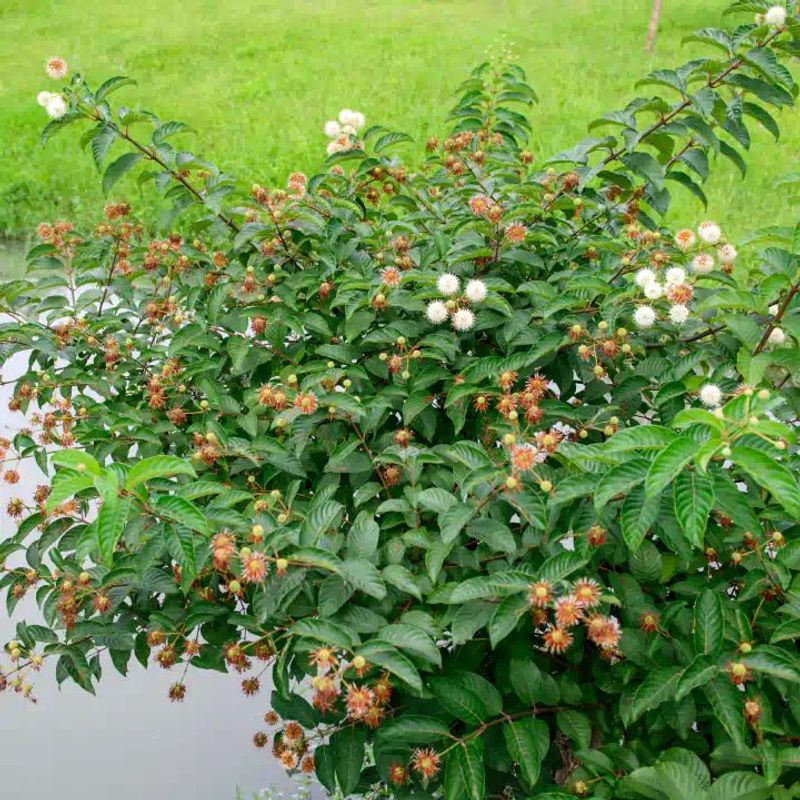
Before purchasing a buttonbush, take a walk around your yard after a heavy rain and watch where the water lingers. Buttonbush thrives in consistently moist to wet soil and performs poorly when that moisture disappears.
Its natural homes are pond margins, streambanks, rain gardens, swales, and low spots with poor drainage, and those are exactly the kinds of sites where it will reward you rather than struggle.
Full sun to partial shade suits buttonbush best. A site that gets at least six hours of direct sun and stays reliably wet is close to ideal.
Deep shade is a poor match, and so is a bed that dries out between rains, even if it floods occasionally. NC State Extension’s guidance on selecting plants for hummingbirds and butterflies echoes the broader principle: match the plant to the site’s actual conditions rather than trying to amend your way to a different environment.
Forcing buttonbush into a dry or compacted bed with extra irrigation is an uphill fight that rarely produces a healthy shrub.
Size is another factor to plan around honestly. Buttonbush commonly reaches 5 to 12 feet tall, depending on conditions and the specific form you plant.
A dwarf cultivar is available and stays somewhat smaller, but it still requires the same moist-soil conditions as the species. Neither form belongs in a tight foundation bed near a house or in a spot where a full-size shrub will need constant cutting back to fit.
The bloom window runs mainly from June through August, sometimes stretching into September. That timing fills a useful gap in a native garden’s midsummer nectar calendar.
Placing buttonbush where natural moisture already collects, rather than where you will need to supply constant irrigation, is the single most reliable way to get a productive, long-lived plant. Check the NC State Extension Plant Toolbox if you want to cross-reference your specific site conditions against the plant’s documented tolerances before you buy.
Choose another native when the planting bed stays dry
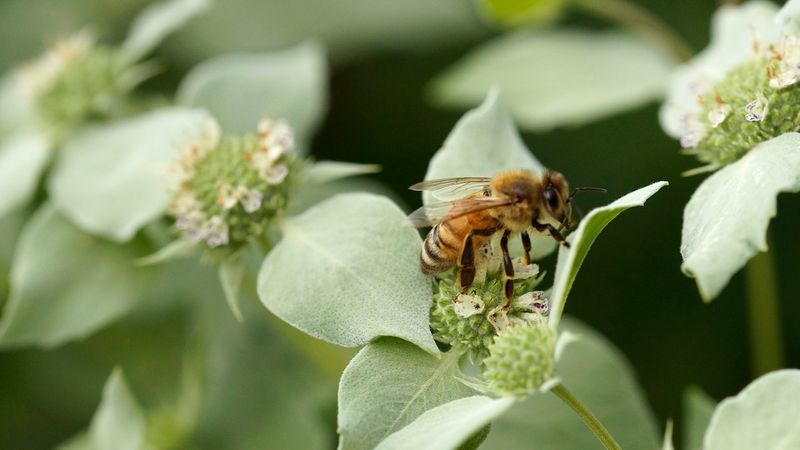
A dry, elevated Piedmont or mountain border is simply not the right home for buttonbush, and planting it there anyway sets up a slow decline that helps no one, least of all the butterflies you are trying to support. For those conditions, narrow-leaf mountain mint (Pycnanthemum tenuifolium) is a native perennial worth serious consideration.
NC State Extension’s profile for narrow-leaf mountain mint describes a plant that tolerates dry and rocky soils, attracts butterflies and native bees in numbers that can be genuinely striking, and even supports wavy-lined emerald larvae as a host plant. It is a perennial rather than a shrub, so its scale and care needs differ from buttonbush, but those differences make it a realistic fit for the kinds of well-drained beds where buttonbush would fail.
Mountain mint spreads modestly by rhizome and can form a loose colony over time, which is worth factoring into your spacing plan. Its silvery-white foliage is attractive even before bloom, and the flowers open across a long summer window that keeps pollinators coming back.
For a dry sunny border in the Piedmont or mountains, it often outperforms native alternatives that look good on paper but need more moisture than those sites provide.
If your site is moist but sits more in partial shade than full sun, summersweet (Clethra alnifolia) is worth adding to your list. NC State Extension documents summersweet as a North Carolina-native shrub that attracts butterflies, hummingbirds, native bees, and other pollinators while tolerating moist soils and partial shade across the Coastal Plain, Piedmont, and mountains.
Neither mountain mint nor summersweet is ranked here as universally better than buttonbush. Each plant fits a different set of site conditions, and matching the plant to what your yard actually offers is the decision that matters most.
Build butterfly habitat beyond one nectar shrub
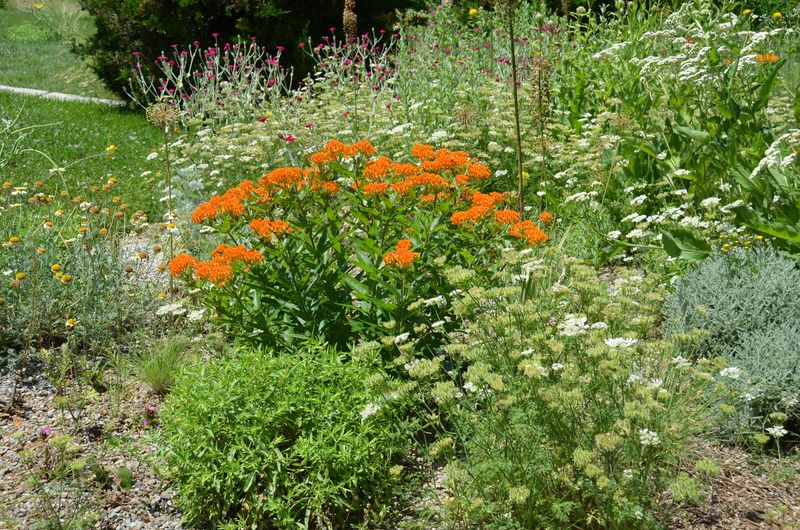
A single flowering shrub, however well-chosen, cannot carry the full weight of butterfly habitat on its own. Research on garden plants and butterfly attraction consistently finds that no single flowering plant draws the majority of butterfly species, and even studies showing strong visitation to one plant conclude that a mix of species is necessary for meaningful habitat support.
Buttonbush earns its place in that mix for the right site, but it is one piece of a larger picture.
Adult butterflies need nectar across a long season, not just during one plant’s peak bloom. Planning for a succession of native flowers from spring through fall keeps butterflies fueled throughout their active period.
NC State Extension’s guide to butterflies in your backyard recommends pairing nectar plants with host plants for caterpillars, providing sunny placement, offering shelter from wind, and leaving room for plants to reach their mature size without crowding.
Host plants are where the population-level benefit actually happens. Milkweeds support monarch caterpillars.
Passionflower (Passiflora incarnata) hosts gulf fritillaries and related species. Pawpaw (Asimina triloba) is the larval host for zebra swallowtails.
Spicebush (Lindera benzoin) supports spicebush swallowtail caterpillars. The NC Native Plant Society’s host plant reference also points to native trees such as black cherry, tulip tree, and willows as important hosts for various swallowtails and other Lepidoptera.
These are not exotic additions; many grow naturally in North Carolina yards or can be sourced from native plant nurseries.
The NC Native Plant Society’s butterfly gardening guide frames the goal plainly: butterflies need places to lay eggs, food for caterpillars, shelter during bad weather, and basking spots in the sun. A garden that meets those needs across multiple life stages does far more for local butterfly populations than a single eye-catching nectar display, however busy it looks on a warm afternoon.
Protect eggs, caterpillars, and pupae through ordinary maintenance
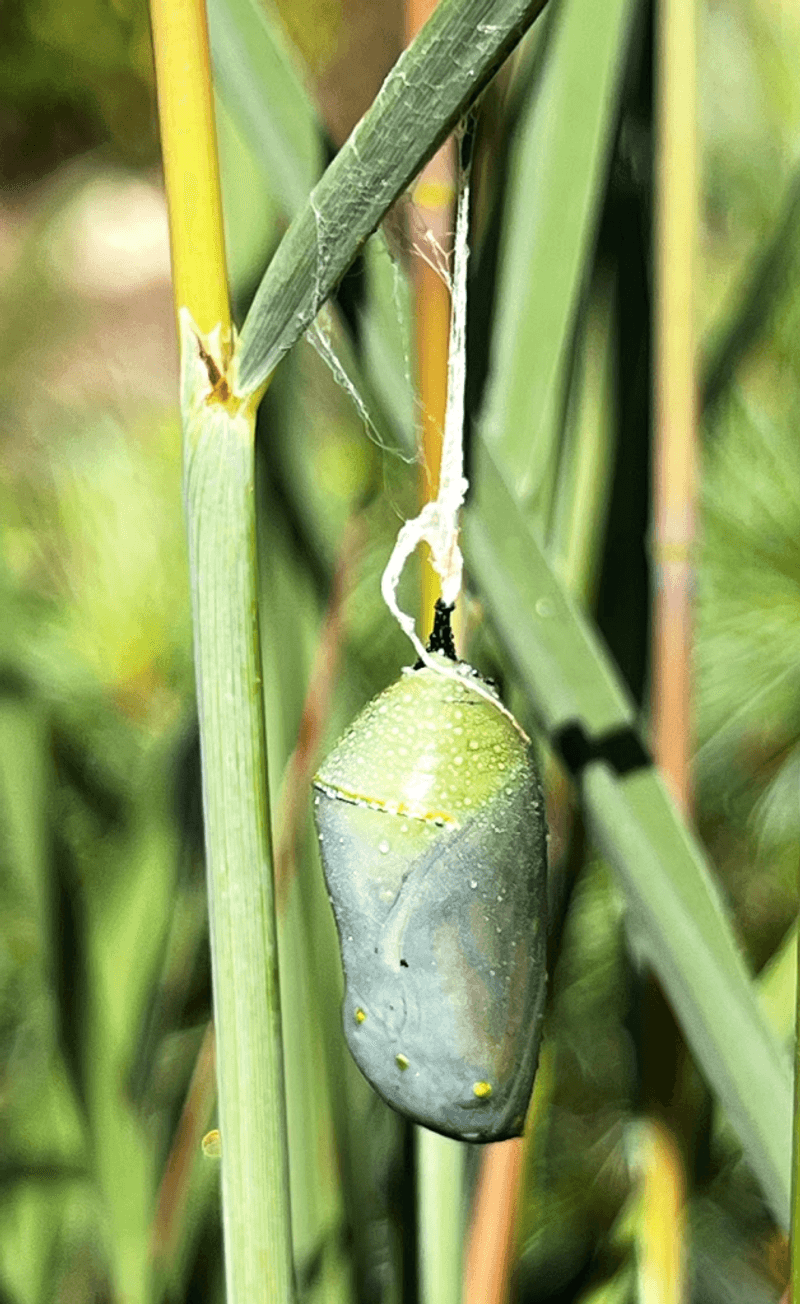
Buying the right plants is only half the work. How you care for them through the growing season determines whether butterflies can actually complete their life cycle in your yard.
Start with a soil test before planting anything new. Knowing your soil’s pH and nutrient levels helps you choose plants that will establish well without heavy amendment, and it keeps you from trying to force buttonbush into conditions that will never suit it.
Source your buttonbush and other natives from a reputable nursery that sells nursery-grown stock. NC State Extension’s butterfly gardening guidance recommends buying nursery-grown native plants rather than digging from the wild.
Wild-collected plants can carry pests or diseases, and removing plants from natural areas depletes the very populations that support local wildlife.
Once your plants are in the ground, resist the urge to keep things too tidy. Eggs and pupae are often attached to foliage, stems, and seed heads that look like garden debris.
NC State Extension’s landscaping for wildlife guidance supports leaving some dead plant material in place through the season, because cutting it away can destroy the next generation of butterflies before they ever take flight. The same logic applies to host plants that look ragged after caterpillars have fed: a chewed-up passionflower or spicebush branch is evidence of success, not a maintenance failure.
Allow buttonbush to grow to its natural size rather than shearing it annually to keep it compact. Repeated hard pruning removes the mature flowering wood and reduces the habitat value the plant would otherwise provide.
NC State Extension’s hummingbirds and butterflies resource reinforces the right-plant, right-place principle: when a shrub is placed where it fits naturally, it needs far less intervention to stay healthy and productive. Maintenance that serves the whole life cycle, rather than just the appearance of the garden on any given afternoon, is what turns a collection of native plants into working butterfly habitat.
Make the replacement decision by site, not by slogan
Replacing Buddleja davidii with a native plant is a reasonable goal for North Carolina gardeners who want to avoid the invasive-plant concerns that NC State Extension associates with B. davidii in the Mountain and Piedmont regions. Buttonbush is a strong candidate for that swap when your site offers full sun to partial shade and consistently moist or wet soil.
Under those conditions, it delivers native wildlife value, a long midsummer bloom, and documented appeal to butterflies, bees, hummingbirds, and a range of other species.
If your yard is dry, elevated, or shaded, a different native will serve you better. Narrow-leaf mountain mint handles sunny dry borders well.
Summersweet fits moist, partially shaded spots. NC State Extension’s butterfly habitat guidance applies regardless of which focal plant you choose: pair your nectar plants with larval host plants, plan for blooms across multiple seasons, and treat the whole yard as habitat rather than a backdrop for one ornamental.
Two promises this article cannot make: buttonbush has not been proven in a controlled North Carolina trial to attract more butterflies than butterfly bush, and calling any plant categorically incapable of ever becoming a problem overstates what any single source can guarantee. What the consulted NC sources do support is this: buttonbush is native, it is not identified as invasive, and it fits a specific set of site conditions where it can do real ecological work.
That is a solid basis for a decision, and it is a more honest one than a slogan.