
If Your Christmas Cactus Looks Limp And Faded In Late Summer, Here’s The Seasonal Care Mistake Quietly Wearing It Down
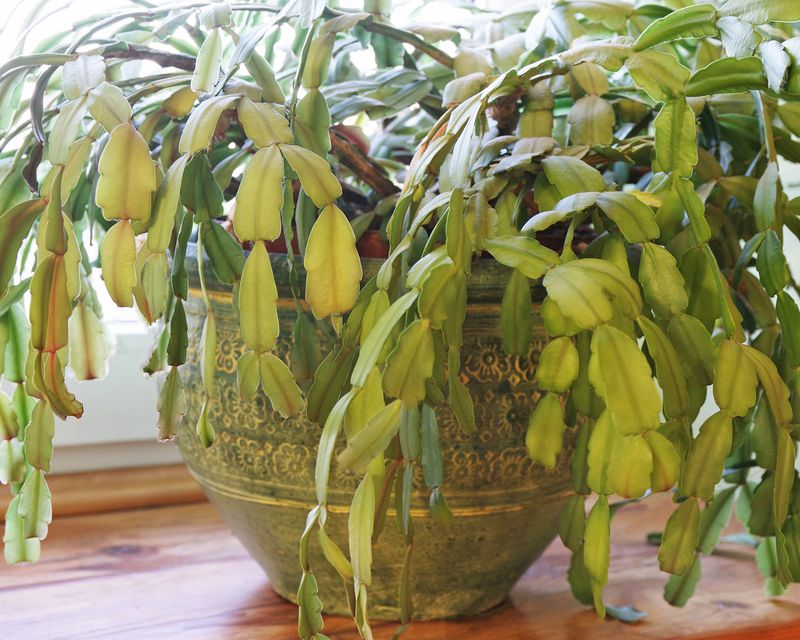
Seeing your Christmas cactus go limp and pale in late summer is genuinely alarming, especially when you’ve been caring for it all year. Before you assume the worst, know that this kind of stress usually has a fixable cause, and the most common one is treating a tropical plant like a desert cactus.
A holiday cactus that gets harsh direct sun, extreme dry-downs, or poor drainage will struggle, and late summer is exactly when those habits catch up with it. The good news is that checking a few key conditions, light, moisture, drainage, and roots, can tell you what the plant actually needs before fall flowering season begins.
A common late-summer mistake can stress a holiday cactus
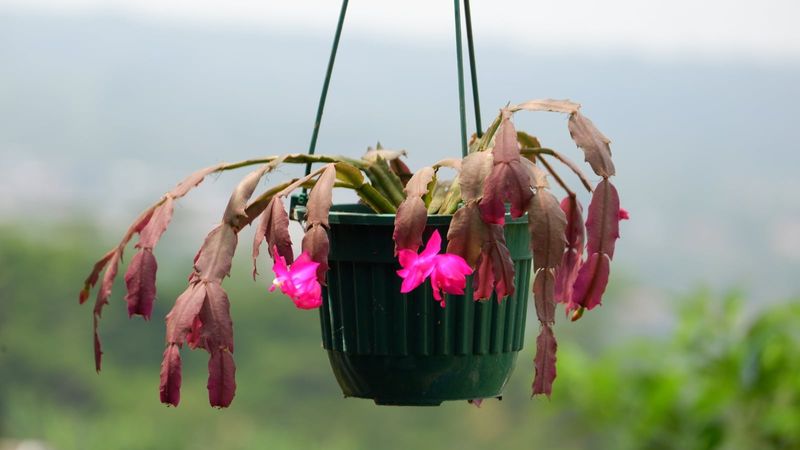
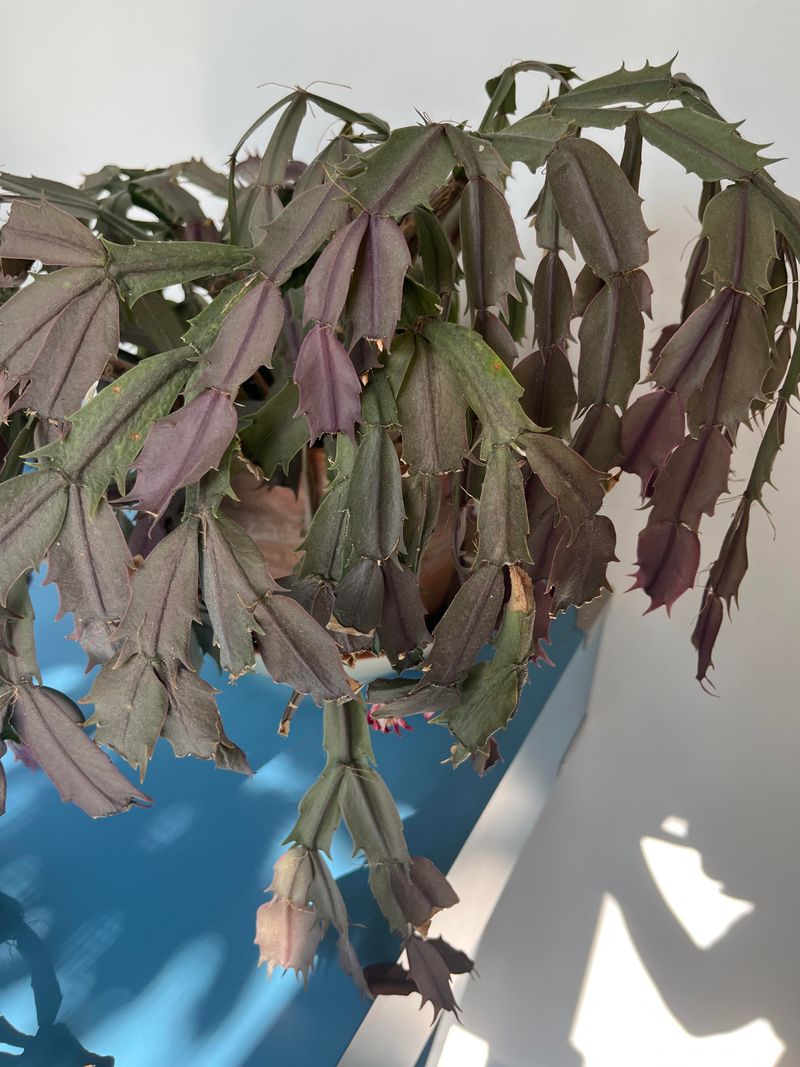
Limp, dull, pale, reddish, or wrinkled segments on a holiday cactus in late summer are easy to misread. Many growers assume the plant is simply aging or needs more fertilizer, but the more common culprit is a care habit that works fine for desert cacti and backfires on this one: exposing it to harsh direct sun, letting it dry out severely, or leaving it in waterlogged soil.
No single mistake explains every case, though, so treating the symptoms without checking conditions first can make things worse.
Holiday cacti are tropical or subtropical epiphytes, meaning they grow anchored to trees in humid, filtered-light environments in their native habitat. University of Minnesota Extension guidance on holiday cacti notes that these plants prefer part shade outdoors and bright indirect light indoors, with good drainage and moderate moisture.
They are not built to handle the punishing afternoon sun or the prolonged bone-dry spells that a true desert cactus tolerates easily.
Late summer also marks the start of a seasonal shift that matters for these plants. As days naturally shorten and nights cool, holiday cacti begin moving from active vegetative growth toward flower-bud initiation.
When a plant is already stressed by light, heat, or moisture problems at that point, it enters the transition in poor shape. Timing varies by latitude, cultivar, indoor or outdoor placement, and local temperatures, so there is no single calendar date that applies to every grower.
One more thing worth knowing before you start troubleshooting: Illinois Extension’s holiday cactus identification guide explains that most plants sold as “Christmas cactus” are actually Thanksgiving cacti, which have pointed or toothed segment edges rather than the smooth, rounded edges of a true Christmas cactus. Bloom timing and exact care responses differ slightly between types and cultivars.
The diagnostic steps in this article apply to both, but keep in mind that a November bloom is not a sign that your plant missed the schedule.
Read pale or reddish segments alongside the plant’s light exposure
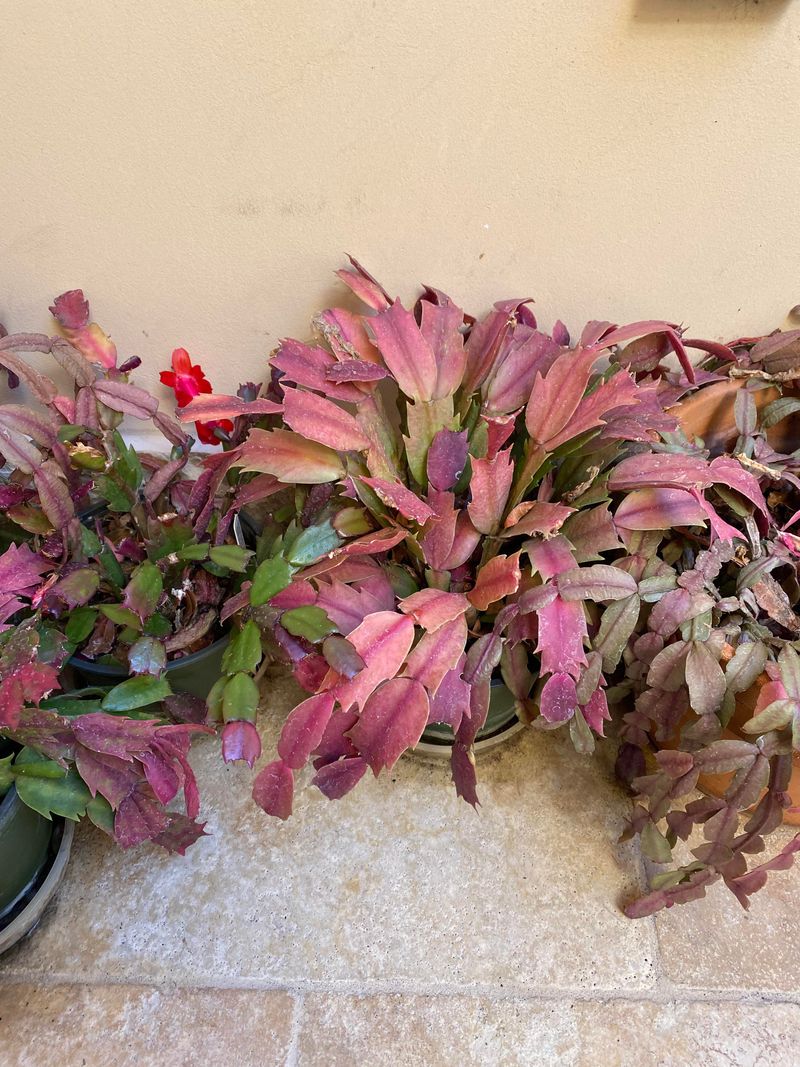
Pale green, reddish, or bleached segments are one of the more confusing symptoms a holiday cactus can show because they look like a nutrient problem when they are often a light and heat problem. Strong direct summer sun can wash out the deep green color, cause reddish discoloration, or even scorch individual segments.
The key is to connect the fading to what the plant has actually been experiencing, not to jump straight to fertilizer.
University of Minnesota Extension specifically warns that excessive sunlight can cause pale green branches, drought stress, and sunburn on holiday cacti. Bright indirect light indoors, or filtered and part-shade conditions outdoors with roughly three to six hours of gentler sunlight, is the appropriate range.
Unprotected full sun, especially in summer afternoon hours, pushes well past what the plant can handle.
Ask yourself whether the plant recently moved to a sunnier windowsill, went outside without being gradually introduced to outdoor conditions, or shifted into a spot that gets direct afternoon rays. University of Maryland Extension’s guidance on excess light for indoor plants makes clear that sudden exposure to intense light can cause bleaching and damage even before visible scorching appears.
If the exposure fits, moving the plant to a brighter but filtered spot is reasonable. If the plant has been in consistent indirect light all summer, fading alone does not confirm a light problem, and moisture and roots need to be checked next.
Pale growth is not proof of nutrient deficiency. Ask Extension’s holiday cactus diagnostic notes point out that excessive light, heat, and drought stress are well-documented explanations for color loss.
Adding fertilizer before light and root conditions are sorted out can add stress rather than fix anything.
Check the potting mix before watering a limp plant
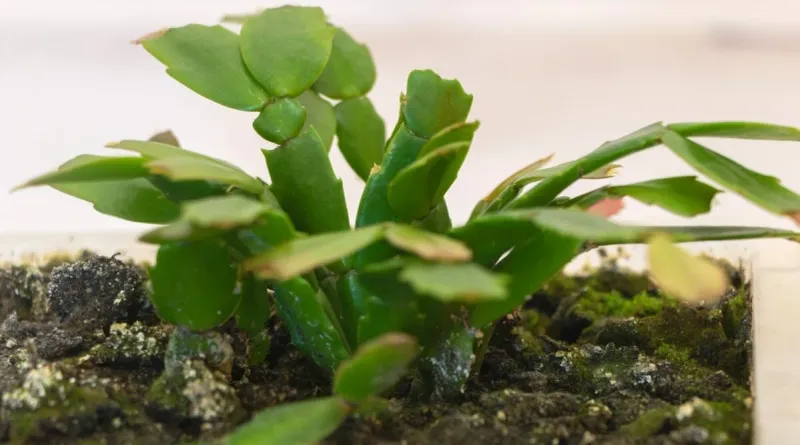
Before you reach for the watering can, feel the potting mix. A limp holiday cactus is not automatically a thirsty one, and watering a plant that is already sitting in wet soil can turn a recoverable problem into a serious one.
The soil check is the single most important step between seeing a symptom and taking action.
Two very different problems can produce nearly identical symptoms above the soil. Prolonged dryness causes wilting, shriveling, and wrinkling as the plant loses moisture it cannot replace.
Saturated soil damages roots through rot, and once roots are compromised, the stems go limp even though there is plenty of water in the pot, because the roots can no longer absorb it. Illinois Extension’s holiday cactus care guide specifically notes that wilted, shriveled, wrinkled, or dull gray-green stems can result from either under- or overwatering, with overwatering being a frequent cause.
Press your finger about an inch into the mix near the edge of the pot. If it feels dry, the plant likely needs a thorough watering.
Water until it flows freely from the drain hole, then let all excess drain away completely before returning the pot to its saucer or decorative cover. University of New Hampshire Extension’s Christmas cactus watering guide recommends watering based on the condition of the mix rather than a fixed schedule, and confirms that free drainage after each watering is essential.
If the mix feels wet or soggy and the plant is still limp, stop adding water. Check that the drain hole is open and not blocked, and empty any saucer, cachepot, or decorative foil that may be holding standing water.
Ask Extension’s plant diagnostic notes and Illinois Extension’s houseplant watering guidance both emphasize that allowing pots to stand in water is a leading cause of root problems. If limpness continues after drainage is corrected, inspect the roots for rot or seek advice from your local extension office rather than assuming more water will help.
Use filtered light and moderate moisture to stabilize the plant
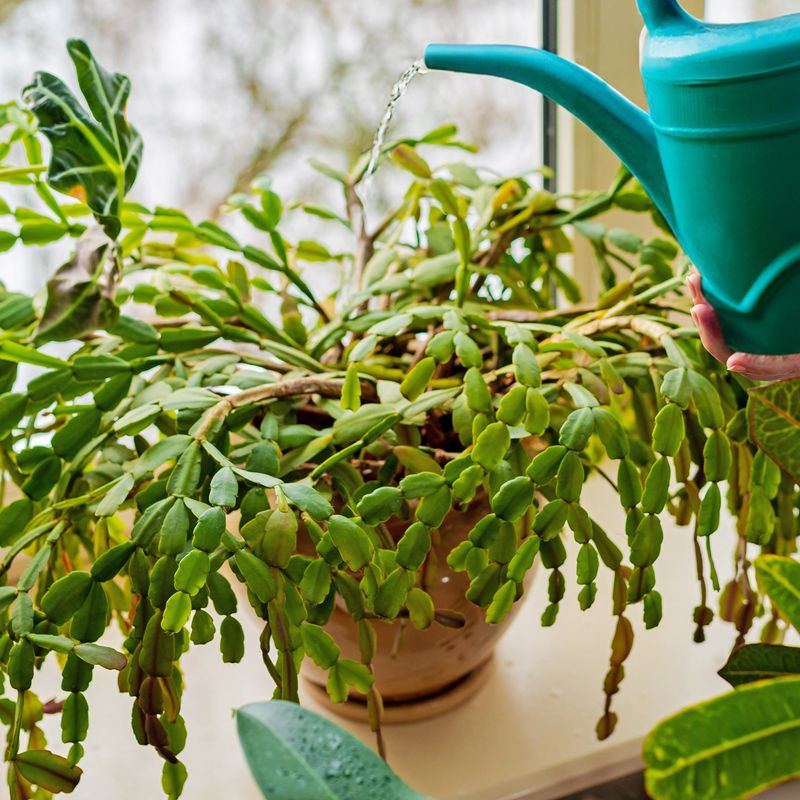
Once you have a clearer picture of what went wrong, the reset is straightforward. Move the plant to a spot with bright, filtered, or indirect light if its current exposure is harsh.
A location near a window with a sheer curtain, or a shaded outdoor spot that avoids direct midday and afternoon sun, fits the bill. The goal is consistent, usable light without the bleaching and dehydrating effect of full summer sun.
Water when the potting mix has dried somewhat near the surface, not on a fixed calendar. Penn State Extension’s holiday cacti care guide and University of Minnesota Extension both recommend condition-based watering: water thoroughly, let excess drain freely, and do not let the pot sit in standing water.
That last step matters more than most growers realize. A decorative pot cover or saucer holding even a small amount of water keeps the root zone wetter than it should be.
The target moisture level is moderate and consistent, not swinging between soaking wet and bone dry. A severely dry plant needs a thorough rehydration, but do it gradually if the mix has been extremely dry for a long time, since very dry media can initially repel water rather than absorb it evenly.
UNH Extension’s watering guidance notes that bottom-watering or slow, repeated passes can help rehydrate a very dry mix. If limpness persists in wet soil after drainage is corrected, that points toward root damage that a watering change alone cannot fix.
Fertilizer has a limited role here. Illinois Extension’s houseplant guidance and multiple extension sources suggest a balanced, half-strength fertilizer only during active growth, reducing or stopping it as fall approaches.
Fertilizer cannot compensate for poor light, drainage problems, or root damage. Routine repotting is also not the answer unless you have identified a clear root or media problem.
When repotting is necessary, spring is generally the better time.
Let shorter days and cool nights support bud initiation
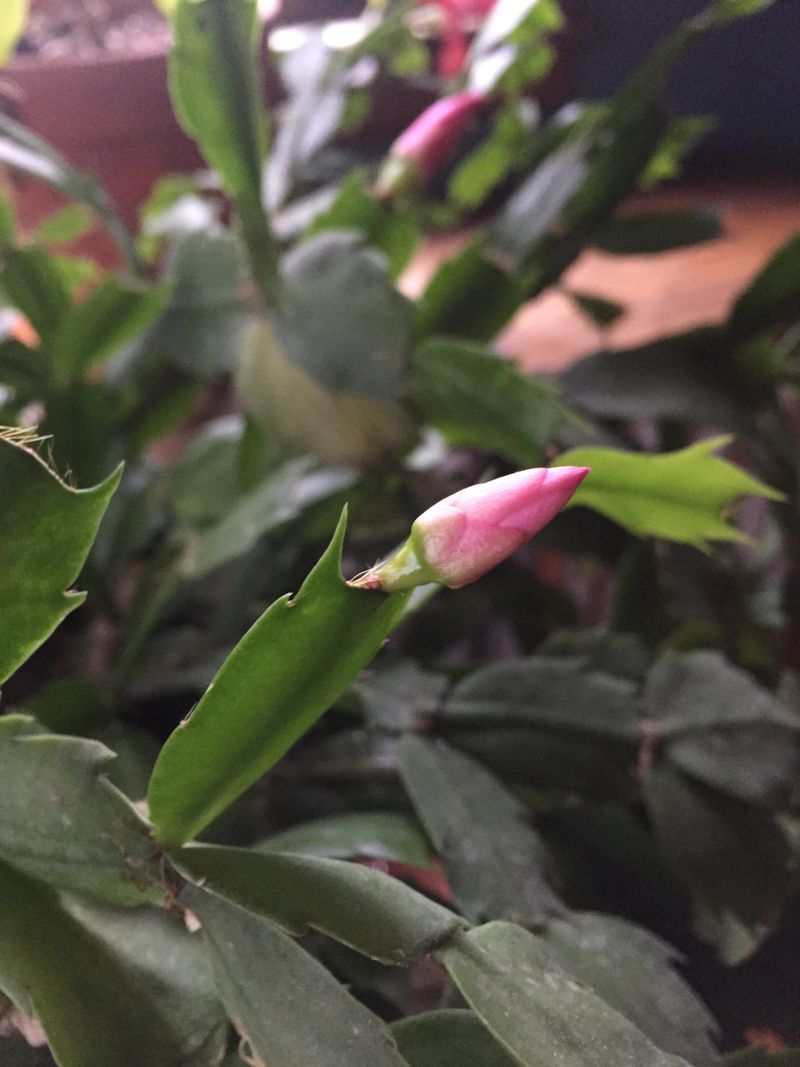
Holiday cacti are what botanists call short-day plants, meaning they respond to changes in day length and temperature to shift from growing leaves to forming flower buds. All summer long, long days and warm temperatures keep the plant in vegetative mode.
As late summer moves into early fall and natural days shorten, the conditions that support bud initiation begin to appear, but only if the plant is healthy enough to respond.
University of Minnesota Extension and Iowa State University Extension’s holiday cactus guide both describe the commonly recommended conditions: approximately 12 to 14 hours of continuous, uninterrupted darkness each night for about five to six weeks, combined with cool nighttime temperatures in the range of roughly 55 to 65 degrees Fahrenheit. These are typical ranges, not universal requirements.
Cultivar, household temperature, and whether the plant is indoors or outdoors all affect the response.
During the dark treatment period, the plant still needs bright indirect or filtered light during the day. Artificial light at night, even brief exposure from lamps, streetlights through windows, or opening a closet door, can interrupt the darkness cycle and delay or prevent bud set.
Illinois Extension’s garden scoop on holiday cacti points out that the timing and reliability of bud initiation vary and are influenced by multiple factors, which is why condition-based guidance works better than a single target date.
The sequence matters. Stabilize any drought, sun, or root problems before focusing on bud initiation.
A plant that is still limp, sun-stressed, or sitting in poor drainage is not ready to respond well to darkness treatment. Michigan State University Extension’s rebloom guide confirms that complete drought is not an appropriate method for forcing flowers.
Reduce watering frequency slightly as fall approaches, but do not let the plant dry out severely.
Keep conditions steady after buds form
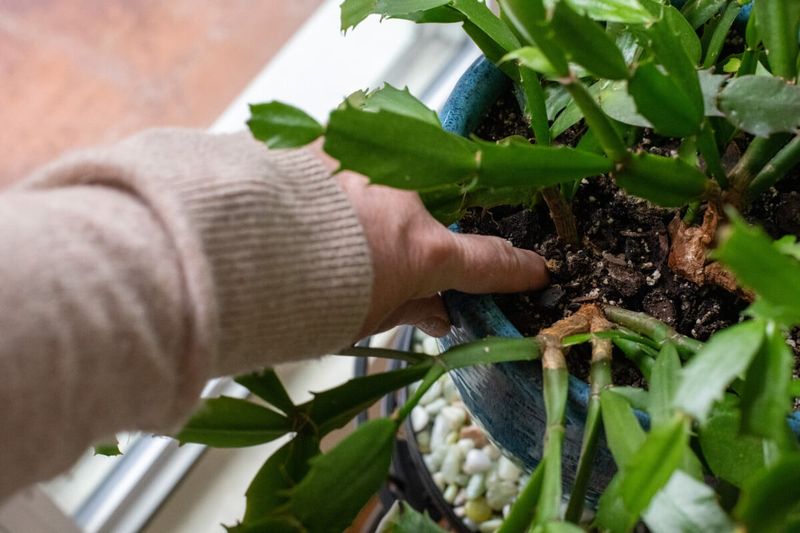
Getting buds to form is only half the challenge. Many growers are surprised to find buds dropping off before they open, often because something changed right after the plant started looking promising.
Holiday cacti are sensitive to sudden shifts once budding begins, and the most common triggers for bud drop are not mysterious.
University of Wisconsin Extension’s holiday cactus article and MSU Extension’s rebloom guidance both list the same culprits: sudden moves to a new location, cold drafts near windows or doors, heat vent proximity, large swings in temperature, drought stress, overwatering, and exposure to intense light. The fix is simple in principle, even if it requires some patience.
Once buds appear, leave the plant where it is and maintain consistent light, moisture, and temperature rather than shuffling it around the house for display purposes.
Watering stays condition-based during this period. Keep the mix from going severely dry, but do not overcompensate by keeping it constantly saturated.
Avoid repotting during bud formation unless a serious root or drainage problem is actively harming the plant. Virginia Cooperative Extension’s specialty potted plant care guide notes that holiday cacti often perform well when slightly pot-bound, and repotting is generally needed only every few years.
If your plant blooms in November rather than December, that is not a sign of failure. Oregon State University Extension’s holiday cactus overview explains that Thanksgiving cacti, the type most commonly sold in retail stores, naturally bloom earlier than true Christmas cacti.
A November bloom simply means you likely have a Thanksgiving cactus, which is a perfectly healthy outcome.
Use a diagnosis-first checklist before making another change
When a holiday cactus looks limp or faded, the instinct to act immediately is understandable, but the right move is to pause and check before changing anything. Running through a short mental checklist takes only a few minutes and keeps you from accidentally compounding the problem.
Start with light exposure. Has the plant been in direct sun, moved recently to a brighter spot, or placed outdoors without gradual acclimation?
If so, filtered or indirect light is the correction. Next, feel the potting mix.
UNH Extension’s watering advice is clear: check the soil condition before watering, not the calendar. Dry mix calls for a thorough watering with free drainage.
Wet mix calls for stopping water, checking the drain hole, and emptying any standing water. If limpness persists in wet soil after drainage is corrected, inspect the roots.
Illinois Extension and University of Minnesota Extension both point to root damage from wet soil as a documented cause of limp stems that watering alone will not fix.
Once the plant is stable, the fall setup is filtered light during the day, moderate and consistent moisture, cool nights near 55 to 65 degrees Fahrenheit, and uninterrupted darkness for roughly 12 to 14 hours each night over five to six weeks. Limp or faded segments are a signal worth investigating, not a reason to panic.
A plant that has been quietly stressed by the wrong care all summer can often regain its footing once conditions improve, though recovery takes time and no specific outcome can be promised.