
The North Carolina Native Ground Covers That Smother Weeds So You Can Finally Skip The Mulch Bags
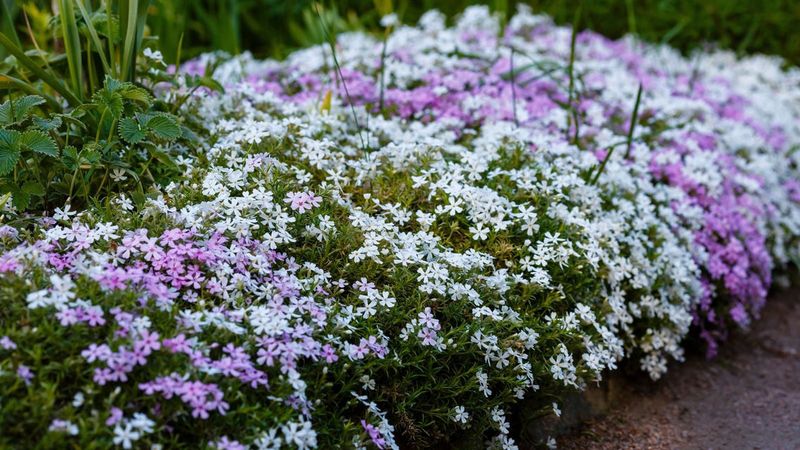
Hauling bag after bag of mulch every spring gets old fast, and the weeds always seem to win anyway. Good news for North Carolina gardeners: there are native plants that spread into thick living carpets, choke out weeds on their own, and feed the box turtles, fireflies, and pollinators that make your yard feel alive.
These plants belong here, from the sandy Coastal Plain to the Blue Ridge foothills, so they thrive without much fuss. Here are seven native ground covers that do the hard work for you.
1. Allegheny Spurge (Pachysandra procumbens)
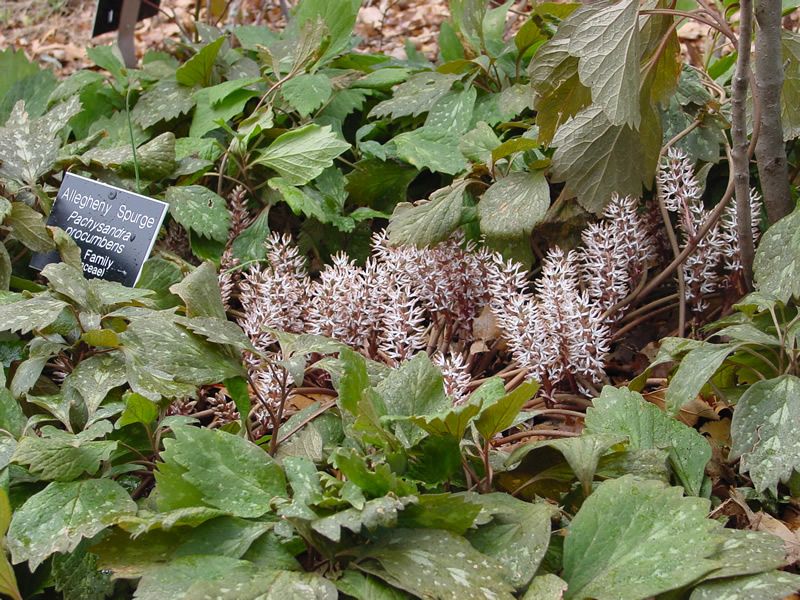
If you have ever been tempted by the glossy Japanese pachysandra at the big box store, here is your homegrown swap. Allegheny spurge is the native cousin that behaves itself, forming a thick carpet of softly mottled leaves without the aggressive takeover the Asiatic version is known for.
It creeps slowly through shade, whether you garden in the mountains or down toward the coastal plain. Once it knits together, weed seeds simply cannot find bare ground to sprout in.
Choosing this native over invasive Japanese pachysandra keeps your yard’s food web intact, which tends to support a more balanced, healthier patch of ground over the years. For shady corners where nothing else fills in nicely, it is hard to beat.
2. Wild Ginger (Asarum canadense)
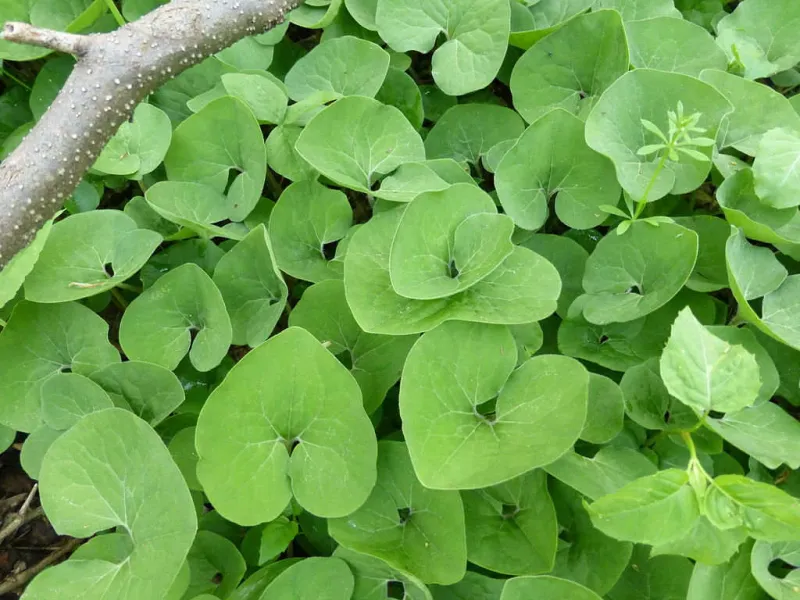
Broad, heart-shaped leaves stacked shoulder to shoulder make wild ginger one of the prettiest weed blockers you can grow. Give it part to full shade and steady moisture, and it spreads into a dense green quilt that keeps weed seeds from ever seeing daylight.
Here is the wildlife bonus: wild ginger serves as a larval host for the pipevine swallowtail butterfly. Plant a patch and you are essentially building a nursery.
The moist, shady, leaf-littered conditions it loves also happen to be exactly where box turtles like to shelter and cool off. If you want evergreen options, native Hexastylis heartleaf gingers do a similar job and hold their leaves through winter.
3. Creeping Phlox (Phlox stolonifera and Phlox subulata)
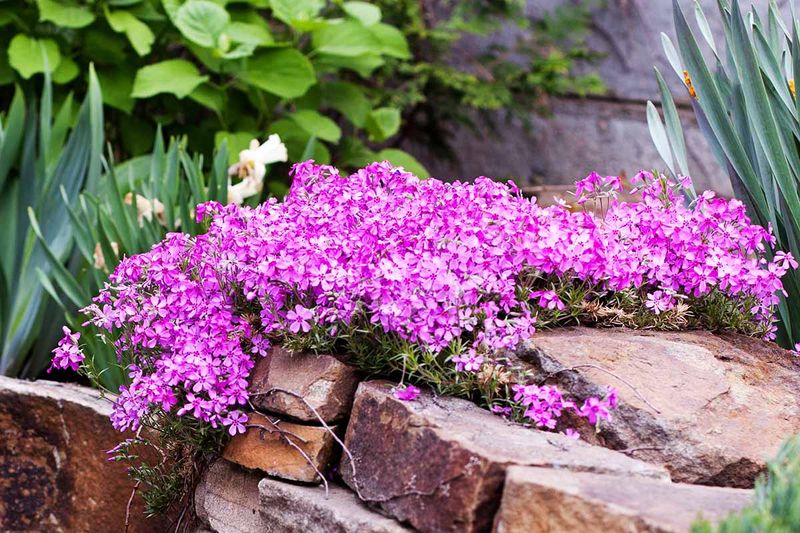
Come early spring, these two phlox species light up like a fireworks show while quietly smothering weeds underneath. Phlox stolonifera is an Appalachian native that spreads happily in dappled shade across the Piedmont and mountains, and it even shrugs off light foot traffic.
Its cousin Phlox subulata, or moss phlox, does the opposite job beautifully. Plant it in hot, dry, sandy spots in full sun and watch it form a dense evergreen mat that laughs at bare, baking soil.
Both are erosion-control champions on slopes, and their early blooms hand nectar to bees, butterflies, and hummingbirds at a time of year when meals are scarce. Two plants, two conditions covered, one very hungry crowd of pollinators fed.
4. Golden Star or Green-and-Gold (Chrysogonum virginianum)
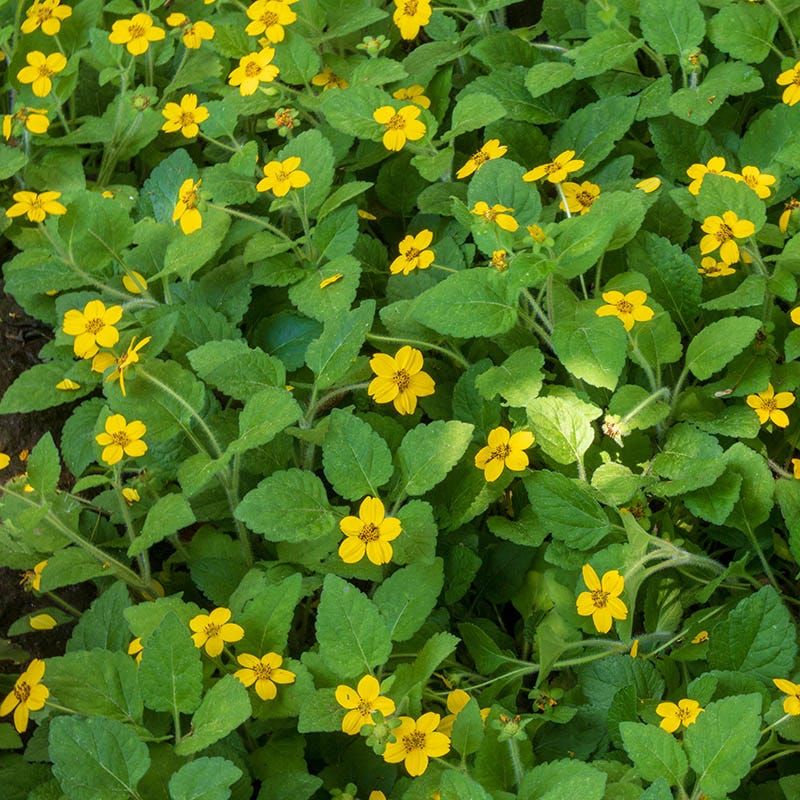
Sunny yellow stars scattered across low green foliage give this plant its cheerful nickname, and it earns its keep in every region of the state. Golden star spreads into a tidy mat in shade with well-drained soil, tolerating a bit of foot traffic while it goes.
What sets it apart is the long stretch of spring color it delivers while doing serious weed-suppression duty below.
Those early blooms are a lifeline for bees and butterflies emerging into a still-hungry landscape. Plant it along a shaded walkway and you get color, coverage, and pollinator food in one modest little package.
5. Wild Strawberry (Fragaria virginiana)
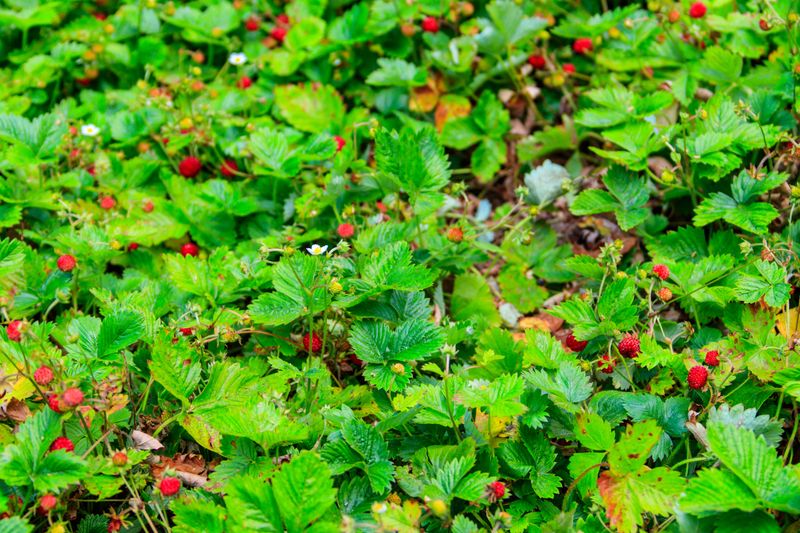
Want coverage in a hurry? Wild strawberry races across sunny ground, throwing down runners that quickly stitch into a dense green blanket dotted with white flowers and tiny red berries.
Unlike thuggish non-natives such as vinca, this one spreads fast without becoming a bully you regret planting.
The berries and foliage feed box turtles, birds, and small mammals, while the blooms bring in native bees. Just know that during a hot, muggy Carolina summer it may slow down or take a little dormant nap, so do not panic if it looks tired in July.
It bounces back, and it is a far kinder choice for your yard’s wildlife than any invasive alternative.
6. Creeping Blueberry (Vaccinium crassifolium)
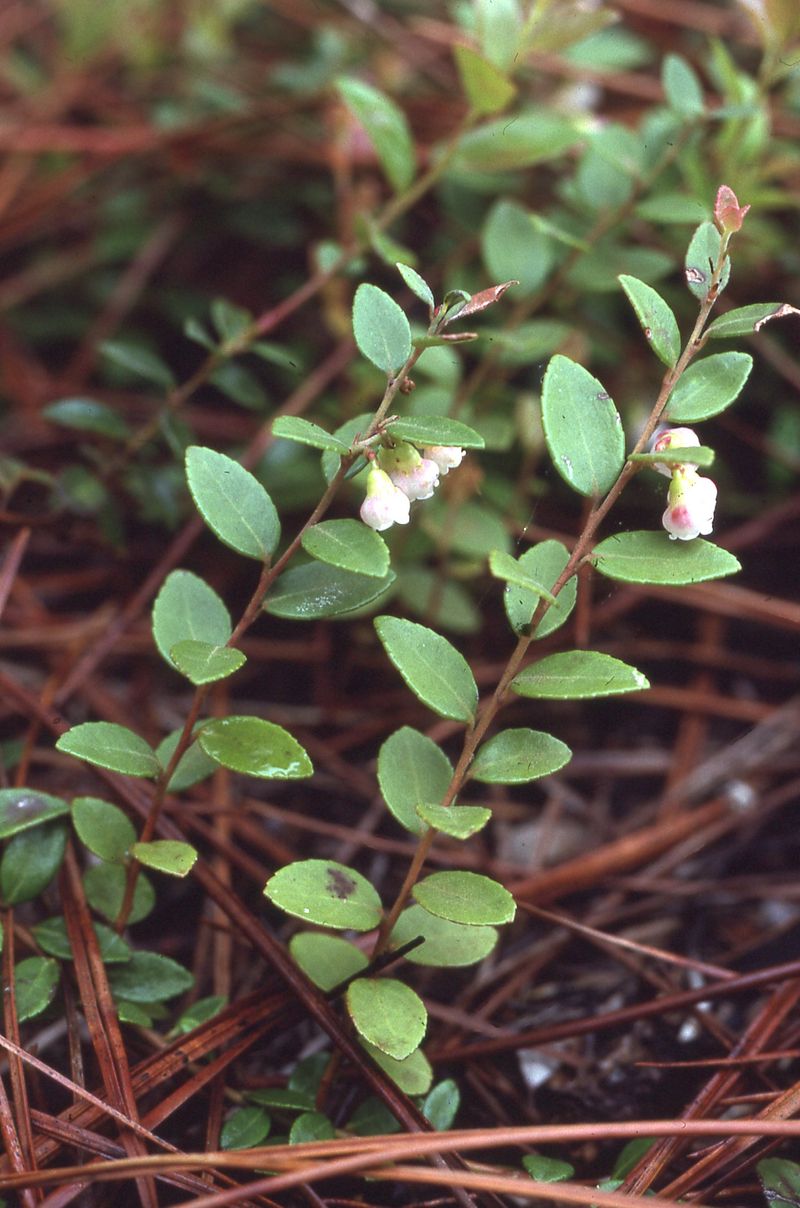
Coastal Plain gardeners, this one is practically made for your sandy, acidic soil. Creeping blueberry forms a low, woody, evergreen mat that grips slopes, holds soil in place, and blocks weeds with quiet stubbornness.
Being a true woody plant, it stays put through winter instead of dying back, which means year-round coverage and no bare-dirt gap for weeds to exploit.
Its flowers draw native bees, and it fits right into the acidic conditions that trip up so many other ground covers. If you have a tricky sandy bank near the coast, this evergreen workhorse deserves a spot.
7. Foamflower (Tiarella cordifolia)
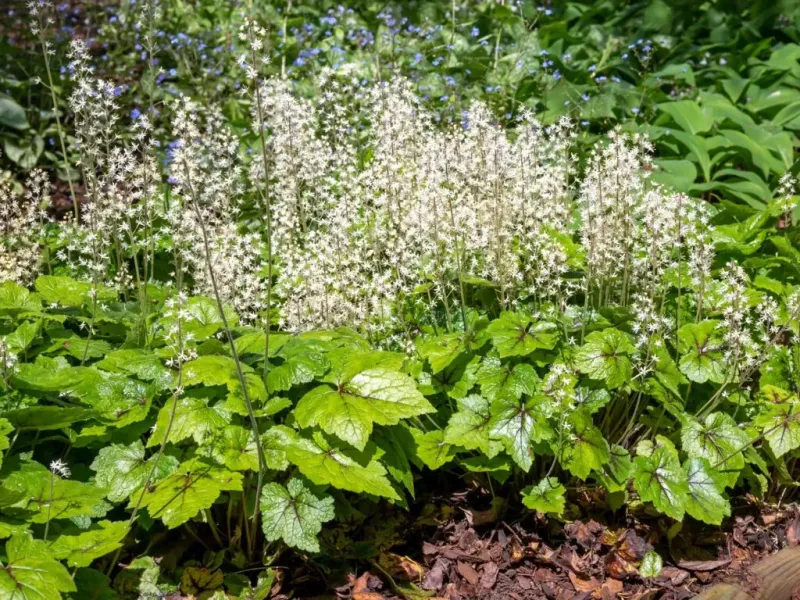
Frothy white flower spikes rise above lobed leaves like little clouds, which is how foamflower got its dreamy name. It travels by runners, forming gentle colonies of dense low foliage in moist, shaded spots throughout North Carolina.
Beyond the good looks, that thick foliage shelters ground-dwelling insects in the damp leaf litter below.
Why does that matter? Those insects are exactly what firefly larvae hunt.
Pair foamflower with a habit of leaving some leaf litter and a few logs in place, and you are quietly building the layered, moist habitat that keeps fireflies flickering in your yard on summer nights. It is a stewardship win wrapped in a pretty spring show.