
The Most Underrated North Carolina Native Grass That Softens A Bare Patio Edge Without Ever Asking For Extra Water
Bare concrete edges look harsh, and most North Carolina homeowners reach for mulch or invasive ground covers just to soften the lines. Purple lovegrass, a compact native perennial, can do that job better with far less fuss.
It grows across the Coastal Plain, Piedmont, and mountains, handles summer heat without complaint, and needs little routine watering once its roots settle in. The honest story is a bit more layered than that, and the details below will help you get this plant right the first time.
Purple lovegrass is a strong native answer for a bare edge
Bare patio edges are one of those small yard problems that bother you every time you sit outside. Mulch washes away, weeds creep in, and most ornamental plants grow too large or too thirsty to fit a narrow strip of sun-baked soil beside concrete.
Purple lovegrass, Eragrostis spectabilis, fills that gap quietly and without much complaint.
According to the NC State Extension Gardener Plant Toolbox, purple lovegrass is a native perennial ornamental grass found across all three major North Carolina regions: the Coastal Plain, Piedmont, and Mountains. That wide natural range matters because it means the plant is already adapted to the climate shifts, soil types, and rainfall patterns your yard deals with, whether you live in Raleigh, Asheville, or Wilmington.
What makes it a genuine fit for a patio edge is its combination of small scale, fine texture, and a tolerance for heat and dry conditions that few other native grasses match at this size. N.C.
Cooperative Extension recommends it specifically for hot, dry landscape trouble spots and describes it as well-suited to borders and difficult areas.
One qualification deserves front placement before anything else: purple lovegrass is not a plant-and-ignore solution. New plants need regular water while their roots establish, and a patio edge with pavement on one side and a wall on the other can create a hotter, drier microclimate than the surrounding yard, which may call for occasional irrigation even after the plant is fully settled.
Get those two conditions right, and the grass earns its low-water reputation honestly.
Its airy form softens concrete without swallowing the patio
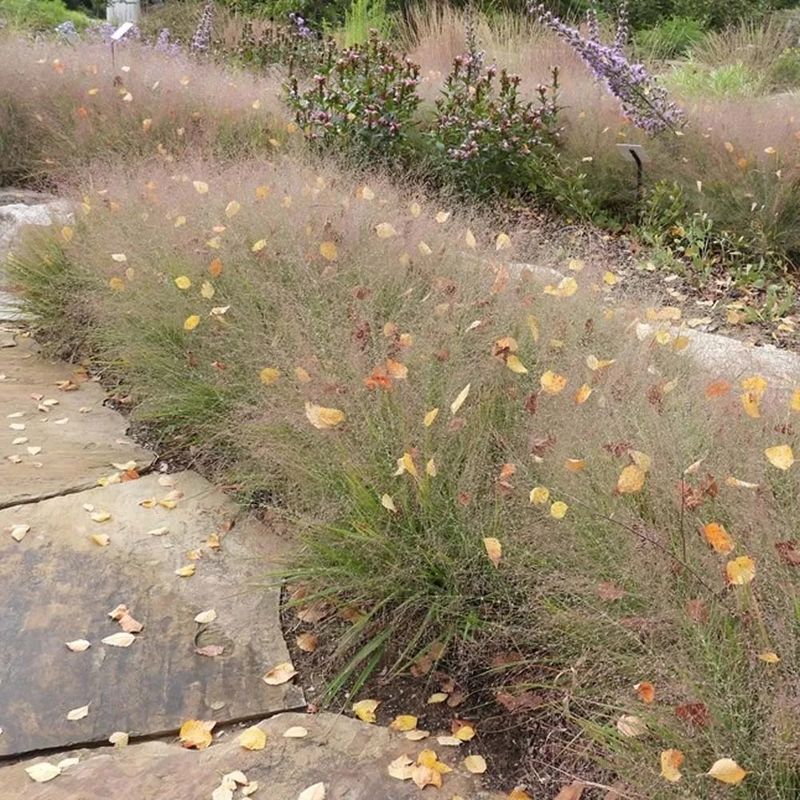
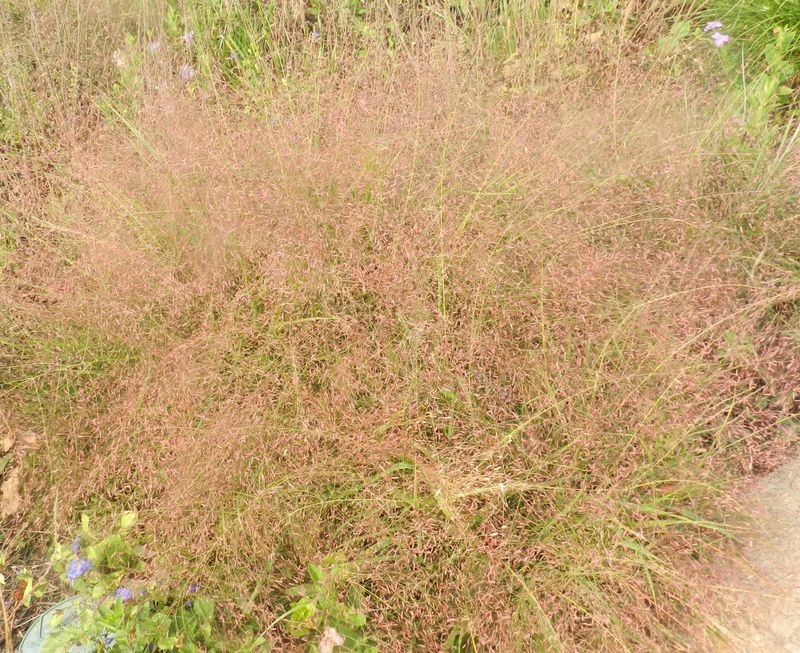
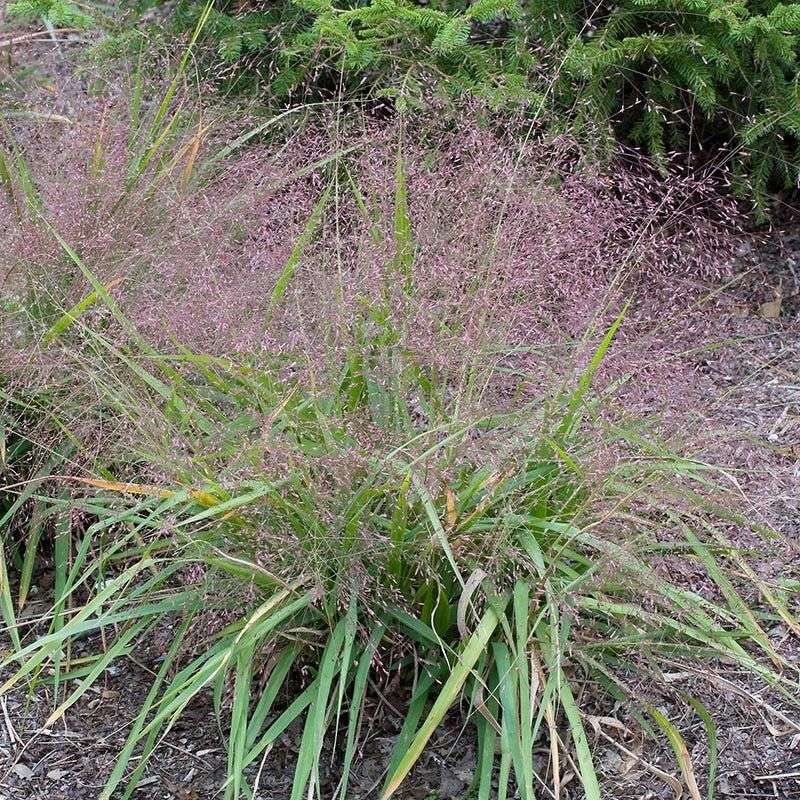
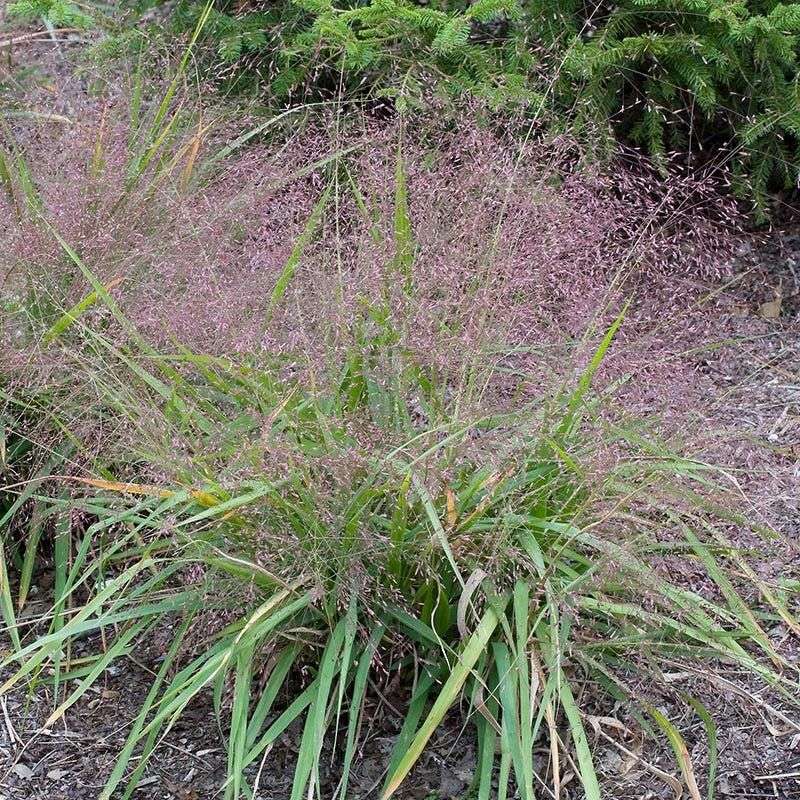
Picture a clump of fine, arching green leaves sitting low and tidy along a concrete edge, then watch what happens in late summer. Loose, branching panicles rise above that base and turn a hazy reddish-purple that catches afternoon light in a way solid foliage never does.
That combination of compact base and airy flower heads is exactly what makes purple lovegrass so useful at a patio border.
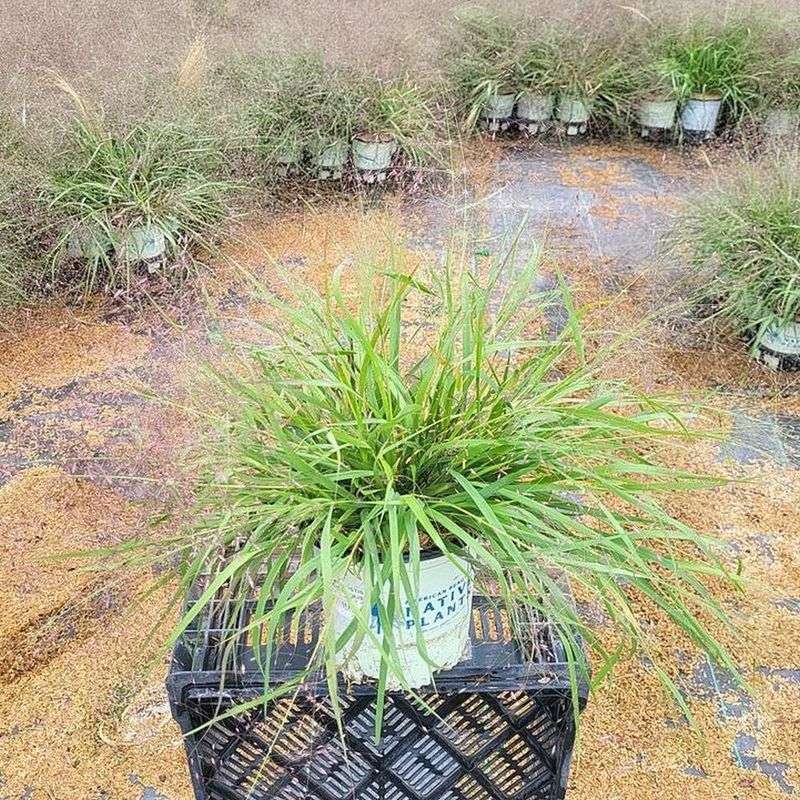
The NC State Plant Toolbox lists a mature height of roughly 8 to 14 inches and a spread of about 10 to 16 inches. Those dimensions matter in a practical way: the clump stays low enough that it does not block sightlines across the patio, and it stays narrow enough to fit a border that might only be a foot or two wide.
The seed heads rise a bit higher than the foliage but are so open and light that they read as texture rather than obstruction.
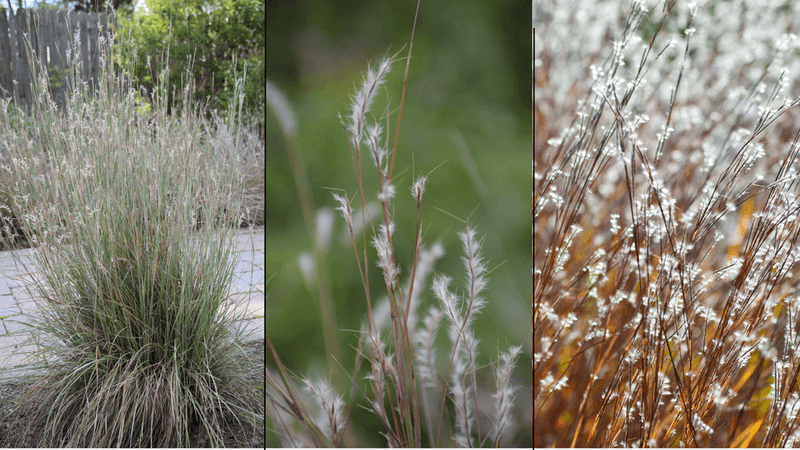
Compare that footprint to other well-regarded North Carolina natives that sometimes get suggested for similar spots. Little bluestem is a beautiful grass, but it commonly reaches 2 to 4 feet tall, which can overwhelm a narrow strip beside a small patio.
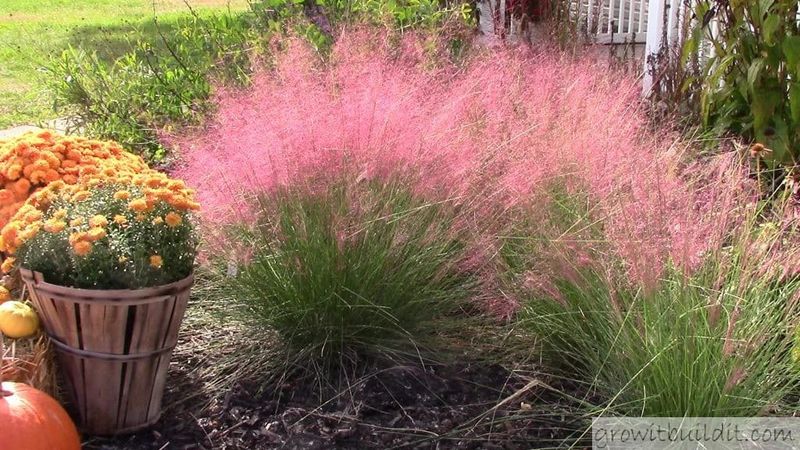
Pink muhly produces a spectacular fall display but also grows taller and wider than most patio borders can accommodate comfortably. This comparison is based on published mature sizes and is offered as an editorial placement judgment, not a critique of those plants.
The seasonal arc of purple lovegrass also suits a residential setting. Green foliage through spring and summer gives a clean, understated look.
Then the reddish-purple panicles arrive in August and September, softening the concrete line with color and movement just when the summer heat finally starts to let up. N.C.
Cooperative Extension notes that these seed heads can soften harsh landscape lines, which is a plain description of what the plant actually does at a patio edge.
The right patio edge is sunny, dry, and well drained
Before buying a single plug, walk your patio edge at midday and count the sun hours. Purple lovegrass is a full-sun plant, and the NC State Plant Toolbox is clear that it needs at least six hours of direct light to perform well.
A south- or west-facing edge beside an open yard almost always qualifies. A north-facing edge shaded by the house or a fence line probably does not, regardless of how appealing the spot looks on paper.
Soil type is more forgiving than sun exposure. Purple lovegrass grows in clay, loam, and sand when drainage stays adequate, which means it can handle the red clay Piedmont soils or the sandy coastal soils that trip up many other ornamentals.
The firm limit is persistent wetness. UGA Cooperative Extension specifically describes the grass as intolerant of heavy, wet soils, so any edge where water pools after a hard rain or where soil stays soggy for more than a day or two is a poor match.
Concrete patios and nearby walls create a microclimate that deserves honest attention. Pavement absorbs heat and radiates it back at ground level, and hard surfaces reduce how much rainwater actually soaks into the border soil beside them.
The NC State Extension Gardener Handbook on native plants notes that buildings and hard surfaces can increase irrigation needs because they interfere with rainfall infiltration. That means a patio edge may be genuinely drier and hotter than your open lawn, even after a good rain.
Native status does not override these site requirements. A plant that evolved in dry, sandy savannas along the Coastal Plain is well-adapted to those conditions, but placing it in dense shade or waterlogged clay does not suddenly become safe because the species is native to North Carolina.
Match the site first, then choose the plant.
Plant in spring or fall and establish the roots first
Timing a planting is one of the simplest ways to give a new plant a fair chance. N.C.
Cooperative Extension recommends spring or fall as the preferred windows for purple lovegrass, and the reasoning is straightforward: roots planted in mild weather have weeks or months to spread into surrounding soil before they face their first real stress test. A plug dropped into a sun-baked patio edge in July has almost no margin for error.
Spring planting in North Carolina typically means March through early May, before daytime temperatures climb past 85 degrees and stay there. Fall planting runs from late September through October, giving roots time to settle before the ground cools significantly.
Either window works, but fall planting in the Piedmont and mountains tends to benefit from more reliable rainfall, which can reduce how much hand-watering you need during establishment.
The establishment period is where the low-water promise gets earned, not assumed. The NC State Extension Gardener Handbook on native plants recommends keeping new natives well-watered until their roots establish, and NC State ornamental-grass guidance says most ornamental grasses need at least one inch of supplemental water during the first few weeks, with sandy soil requiring more frequent attention than clay or loam.
Practically, that means checking the soil moisture at root depth every two to three days for the first four to six weeks, then gradually stretching the interval as the plant shows healthy new growth. Do not stop watering abruptly the moment you see new leaves.
Taper off slowly, watch how the foliage responds, and let the plant signal when it no longer needs your help. A plant that coasts through its first summer with careful establishment watering will be far more self-sufficient by its second season than one that struggled through drought stress as a seedling.
After establishment, let the plant earn its low-water reputation
Once purple lovegrass has spent a full growing season pushing roots into your border soil, its relationship with water changes noticeably. The NC State Plant Toolbox lists it as drought-tolerant, and N.C.
Cooperative Extension specifically calls it suited to hot, dry conditions. In practical terms, that means you can stop running a scheduled irrigation program and let rainfall carry most of the load through a typical North Carolina summer.
The routine to follow after establishment is simple: turn off regular supplemental watering, then watch the foliage. Healthy purple lovegrass in a well-matched site stays green and upright through dry stretches that would wilt less-adapted plants.
If the tips begin to brown more than the plant’s normal late-summer coloring, or if the clump starts to flatten and look limp rather than arching, those are signals to give it a slow, deep drink. That kind of response-based watering is very different from running a drip line twice a week regardless of conditions.
Patio edges deserve a separate, honest look. Hard surfaces reduce how much rain actually reaches the soil beside them, and concrete and nearby walls radiate heat that pushes soil temperatures higher than the open yard nearby.
The NC State Extension Gardener Handbook on native plants acknowledges that buildings and pavement can increase watering needs even for established natives by interfering with infiltration. A plant growing right against a south-facing wall with pavement on both sides may need occasional irrigation during an extended dry spell even after it is fully established.
The honest promise, then, is little or no routine supplemental irrigation after establishment under suitable conditions, not zero water ever. NC State ornamental-grass guidance supports reducing irrigation once grasses are settled, but exceptional drought or a particularly punishing microclimate can still call for occasional help.
That is a reasonable trade-off for a plant that handles the average North Carolina summer with almost no attention from you.
Low maintenance still includes winter cleanup and sensible placement
Low maintenance is not the same as no maintenance, and purple lovegrass has two honest requirements that are easy to overlook when you are focused on its summer performance. The first is winter dormancy.
The grass goes tan and dry in late fall and stays that way through winter, which means your patio edge will not hold its soft green look year-round. Plan for that before you plant, especially if the edge is a focal point from inside the house during the cold months.
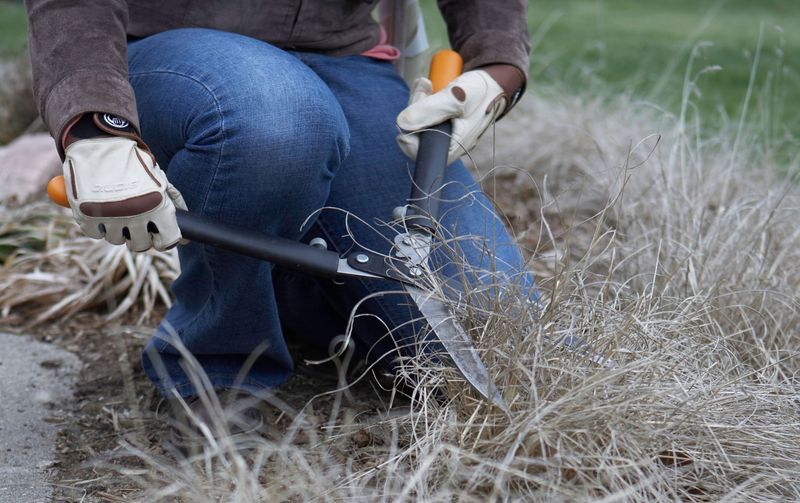
The second requirement is an annual late-winter cutback. NC State ornamental-grass guidance recommends cutting ornamental grasses back to approximately 6 to 8 inches before spring growth resumes, typically in late February or early March in most North Carolina regions.
Cutting too early can expose tender new growth to a hard freeze; cutting too late means you are working around new green shoots. A pair of hand pruners handles a small clump easily, and the job takes only a few minutes per plant.
Placement beside the patio matters more than many homeowners expect. NC State notes that purple lovegrass can tolerate light or occasional foot traffic but will not hold up under heavy use.
Keep it at the edge of the patio, not in the gap between pavers where people actually step. If your patio has a natural traffic path along one side, offset the planting to the far edge of that path rather than centering it in the walking zone.
Spread is another realistic consideration. UGA Cooperative Extension notes that purple lovegrass spreads by both seed and short rhizomes and can establish new colonies nearby.
It is generally slow-growing and considered well-behaved, but calling it completely non-spreading would be inaccurate. Finally, dead plant material near a house adds combustible fuel.
NC State defensible-space guidance recommends clearing dry plant material within 10 feet of the structure, so remove the dormant clippings after your late-winter cutback rather than letting them accumulate against the foundation.
The native edge can add modest habitat value, too
Softening a concrete edge is reason enough to plant purple lovegrass, but the grass does a bit of quiet ecological work at the same time. Both the NC State Plant Toolbox and N.C.
Cooperative Extension associate the grass with songbirds and small mammals, citing its seeds as a food source and its dense foliage as potential cover for ground-nesting birds. Those are real benefits, even if they are modest ones.
Keep the expectations honest. The published sources support general habitat and seed value for songbirds and small mammals.
They do not document that purple lovegrass specifically attracts goldfinches, fireflies, bats, or box turtles, or that it prevents tick activity. A few clumps along a patio edge are not a wildlife sanctuary.
They are a small improvement over bare concrete or landscape fabric, and that is a worthwhile thing to be.
Local provenance is worth a brief mention for anyone interested in habitat-oriented planting. NC State’s native plant guidance recommends considering local provenance when habitat value is a priority, because plants grown from regional seed stock may be better matched to local pollinators and wildlife than nursery stock sourced from distant populations.
Ask your native plant nursery where their purple lovegrass plugs were propagated if that detail matters to your planting goals.
The grass’s slow-spreading rhizomes offer a secondary benefit worth naming: modest soil stabilization along a border edge. This can help hold soil in place on a slight slope beside a patio, but it does not replace proper grading, drainage infrastructure, or erosion-control measures on a site with real water-movement problems.
Treat it as a small bonus, not a drainage solution.
Choose purple lovegrass for the edge, not a zero-care fantasy
The decision rule is simple. Choose purple lovegrass when your patio edge gets at least six hours of direct sun, drains well after rain, and sits outside the main foot-traffic path.
Those three conditions, met together, give you a compact native clump that softens concrete with fine foliage and airy reddish-purple seed heads and asks for little routine water once its roots are settled, as confirmed by NC State’s plant profile and NC State’s native plant guidance.
Skip it when the edge is shaded, stays wet, or sits in the middle of where people walk. Accept that establishment takes patient watering, that a hot pavement microclimate may still call for occasional irrigation in dry stretches, and that the clump will go dormant and tan every winter.
None of those limits cancel the plant’s value; they just define where it works best.
Establish it carefully, monitor the hard-surface conditions through the first full summer, trim it back in late winter, and resist the urge to treat it as evergreen, maintenance-free, or guaranteed non-spreading. A well-sited purple lovegrass plant is one of the more rewarding low-effort additions a North Carolina patio can have – a genuinely native edge that earns its keep season after season.