
The One Thing North Carolina Oakleaf Hydrangeas Need Before Fall Or They Skip Next Year’s Blooms
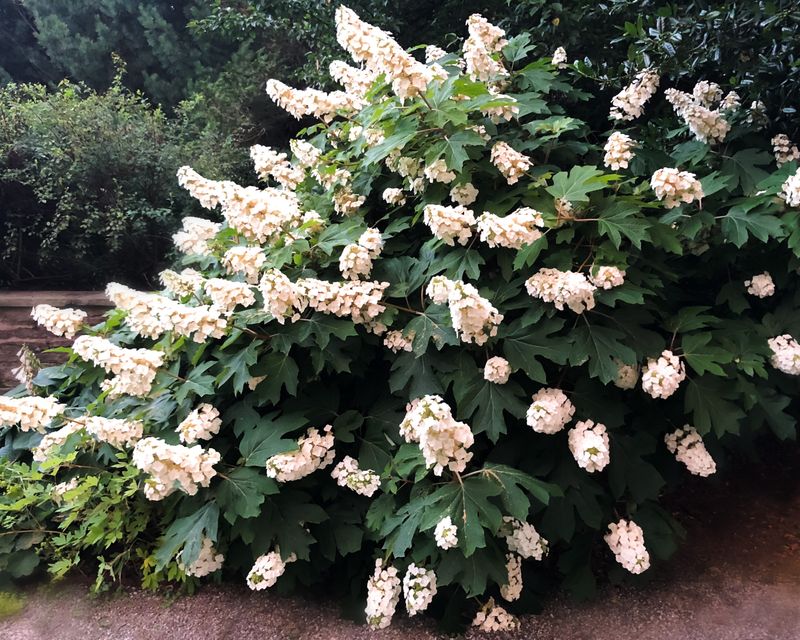
Oakleaf hydrangeas are one of the most rewarding native shrubs you can grow in a North Carolina yard, but one pruning mistake can leave you staring at bare stems instead of blooms next summer. The timing of when you cut, and whether you cut at all, matters more than almost anything else you do for this plant.
Not every oakleaf hydrangea needs pruning before fall, and missing a deadline does not guarantee your shrub will go flowerless. Understanding how this plant works gives you the confidence to either pick up your pruners at the right moment or put them back in the shed.
Identify the hydrangea before making a cut
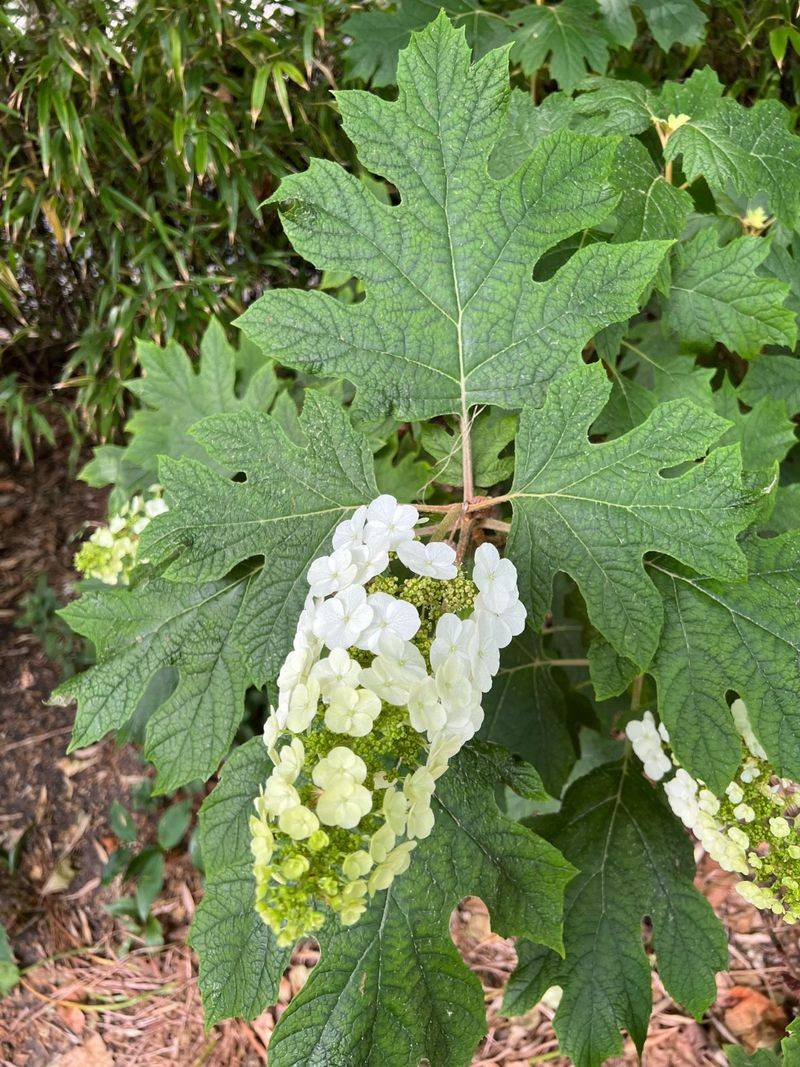
Grabbing your pruners before you know exactly what shrub is standing in front of you is one of the most common ways North Carolina gardeners accidentally lose a season of blooms. Hydrangeas are not interchangeable when it comes to pruning rules, and the species in your yard determines nearly everything about how and when to cut.
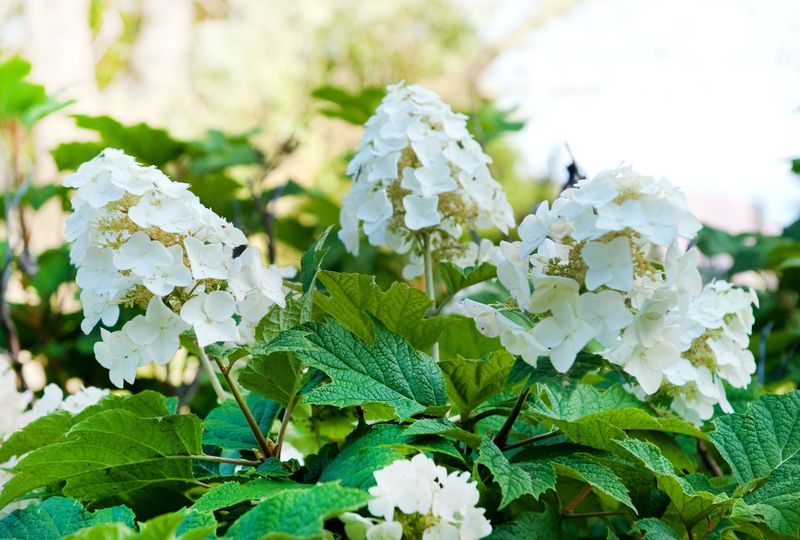
Oakleaf hydrangea, Hydrangea quercifolia, gets its name from its leaves, which are large, deeply lobed, and shaped much like the leaves of an oak tree. The flower clusters are long, cone-shaped panicles that open white and gradually age to shades of pink and tan as summer moves along.
NC State Extension’s plant toolbox lists this species as suitable for North Carolina’s Coastal Plain, Piedmont, and mountains, making it one of the more broadly adaptable native shrubs available to homeowners across the state.
The reason identification matters so much is that different hydrangea species bloom on different types of wood. Smooth hydrangea (H. arborescensH. paniculata), often sold as ‘Annabelle,’ and panicle hydrangea () generally bloom on new wood produced during the current growing season.
Those species can handle late-winter or early-spring pruning without much risk to flowering.
Oakleaf hydrangea works the opposite way. NC State’s hydrangea garden guide explains that oakleaf hydrangea blooms on old wood, meaning the stems from the previous season carry the flower buds for next year.
Bigleaf hydrangeas (H. macrophylla) add another layer of complexity, since some cultivars bloom on old wood, some on new wood, and some on both.
Forsyth County Extension’s hydrangea resources reinforce that identification must come before any pruning decision. Applying a late-winter schedule to an oakleaf hydrangea, simply because that schedule works for a neighbor’s smooth hydrangea, can strip away the very stems the plant needs to produce its next flower show.
Old wood carries next year’s flower buds
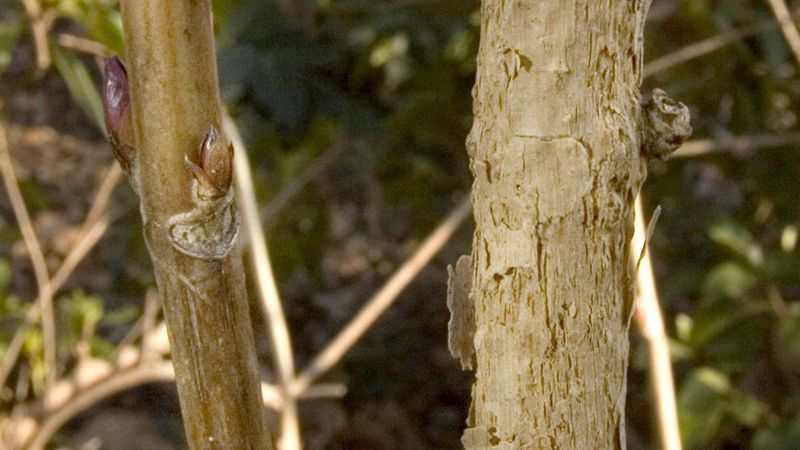
Oakleaf hydrangea follows a bloom cycle that runs across two growing seasons, not one. During the summer when you see the flowers open, the plant is simultaneously pushing new stem growth that will carry next year’s buds.
By late summer and into fall, those buds are already forming on the stems produced during the current season. Come next spring, those same stems, now considered “old wood,” will produce the flower display you are hoping for.
NC State Extension’s oakleaf hydrangea profile confirms that the plant blooms on old wood, meaning previous-season stems carry the following year’s flower buds. That single biological fact is the reason pruning timing matters so much.
A cut made at the wrong time does not just remove a stem; it removes the buds that were already forming on that stem.
The risk is not that every late-pruned shrub loses every flower. Oakleaf hydrangeas can hold buds on multiple stems, and a modest cut that removes only a portion of the old wood may still leave enough budded stems to produce a reasonable display the following year.
UGA Extension’s hydrangea pruning identification guide points out that the more wood removed after bud formation begins, the greater the reduction in next year’s flowering, not an automatic total loss but a real and meaningful setback.
Thinking of each stem as a two-year investment helps put the timing in perspective. The stem you see growing this summer is next summer’s flower source.
Protecting it through fall, winter, and early spring is the whole game for this species.
Prune immediately after flowering when pruning serves a purpose
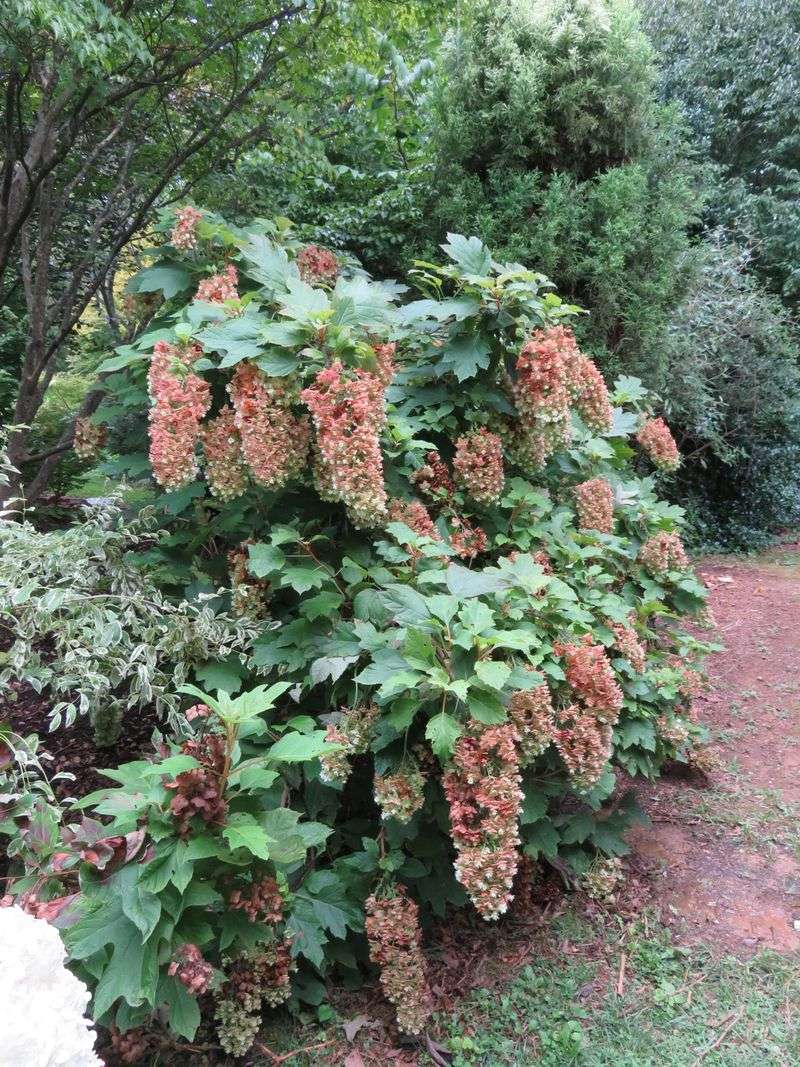
The primary rule for oakleaf hydrangea is straightforward: if the shrub needs pruning, make those cuts immediately after it finishes flowering. That window gives the plant the maximum amount of time to push new growth and form next year’s buds before the season closes down.
For much of North Carolina, flowering typically wraps up somewhere in the July-to-August range, which is why that period appears as a practical reference point in regional Extension guidance. Chowan County Extension’s eastern NC gardening tips list July through August as the appropriate pruning window for old-wood hydrangeas in that part of the state.
The actual timing shifts depending on where you are in North Carolina, which cultivar you are growing, and what the weather did that particular season.
A plant in the Coastal Plain tends to bloom earlier than one in the mountains, sometimes by several weeks. A cultivar with an extended bloom period may not finish until later in summer than a standard-season type.
A cool, wet spring can push bloom timing later than a warm dry one. These variables mean that watching your specific shrub is more reliable than following a fixed calendar date.
NC State’s oakleaf hydrangea profile gives the more conservative and broadly applicable rule: prune only if needed, and do it immediately after flowering. That phrasing captures both pieces of the guidance, the timing and the condition that pruning should serve a clear purpose rather than happen on a schedule.
Fall, winter, and early spring carry real risk because bud formation may already be underway. Buncombe County Extension’s pruning pitfalls article specifically identifies fall pruning as a hazard for old-wood hydrangeas.
Calling “before fall” a firm statewide deadline oversimplifies the situation. The honest version of the rule is: finish your cuts as soon as the flowers are done, whatever month that happens to be in your corner of the state.
Use restrained cuts to preserve the flowering framework
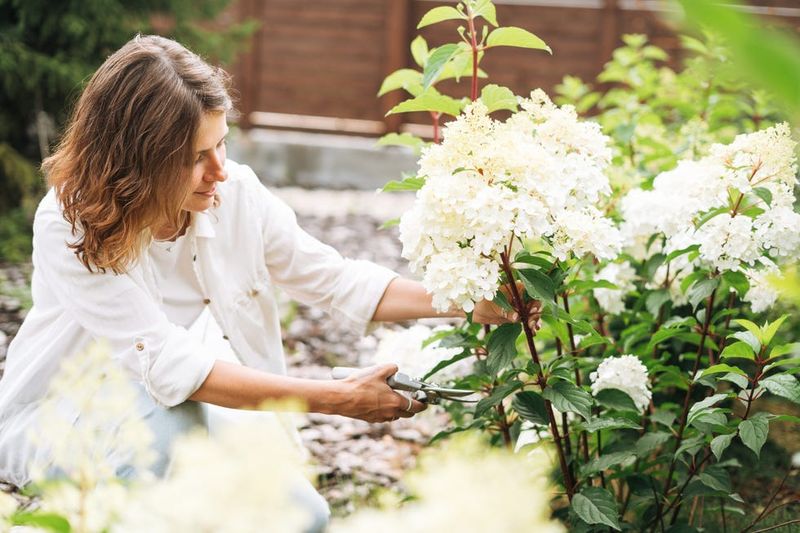
Even when the timing is right, how much you cut matters just as much as when you cut. Oakleaf hydrangea is a shrub that naturally develops into a multi-stemmed, layered form over time, and that structure is exactly what produces the most flowers.
Disrupting it more than necessary works against the plant.
A conservative approach starts with removing dead or damaged wood first. Dead canes are easy to identify because they will not have leafed out and will snap cleanly rather than bend.
Removing them opens up the shrub’s interior, improves airflow, and does not cost next year’s flowers because dead wood carries no viable buds. After the dead wood is cleared, look for any branches that are crossing and rubbing against each other, since those friction points can create wounds that invite disease.
UGA Extension’s hydrangea identification guide notes that oakleaf hydrangea often needs little or no routine pruning. If the shrub has grown larger than its space allows, remove a few of the oldest, thickest canes at ground level rather than shearing the whole plant back to a uniform height.
Shearing removes the newest, most productive stems along with the old ones and leaves the shrub without the tiered structure it relies on for strong flowering.
Hard rejuvenation pruning, cutting the entire shrub to the ground, is sometimes presented as a way to renew an overgrown shrub. Penn State Extension’s deciduous shrub pruning guidance makes clear that this approach sacrifices at least one full flowering season and should not be treated as routine maintenance for a shrub that blooms on old wood.
Reserve it for a genuinely overgrown plant with no other option, and accept that next year’s bloom will likely be minimal or absent.
NC State’s plant profile recommends keeping cuts clean and disinfecting tools when moving between plants, particularly after removing any diseased tissue. A simple wipe with diluted bleach or rubbing alcohol between cuts takes only seconds and prevents spreading fungal or bacterial problems from one plant to another.
The goal across every cut is to remove only what genuinely needs to go and leave the healthy flowering framework intact.
Deadhead flowers without cutting into the stems
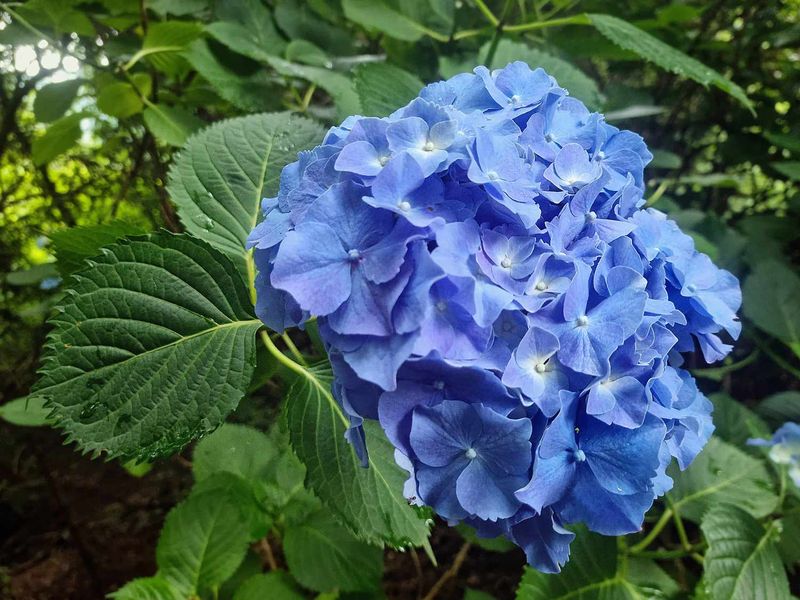
Deadheading and pruning are two different actions, and mixing them up is an easy way to accidentally remove next year’s buds while thinking you are just tidying up. Deadheading means removing only the spent flower head, while pruning involves cutting back into the stem itself.
Johnston County Extension’s fall gardening newsletter states clearly that snipping off faded blooms at the flower base should not affect next year’s flowers, while cutting farther down the stem can remove the developing buds that are already forming below the old flower head. The practical takeaway is to cut right where the flower cluster meets the stem, and stop there.
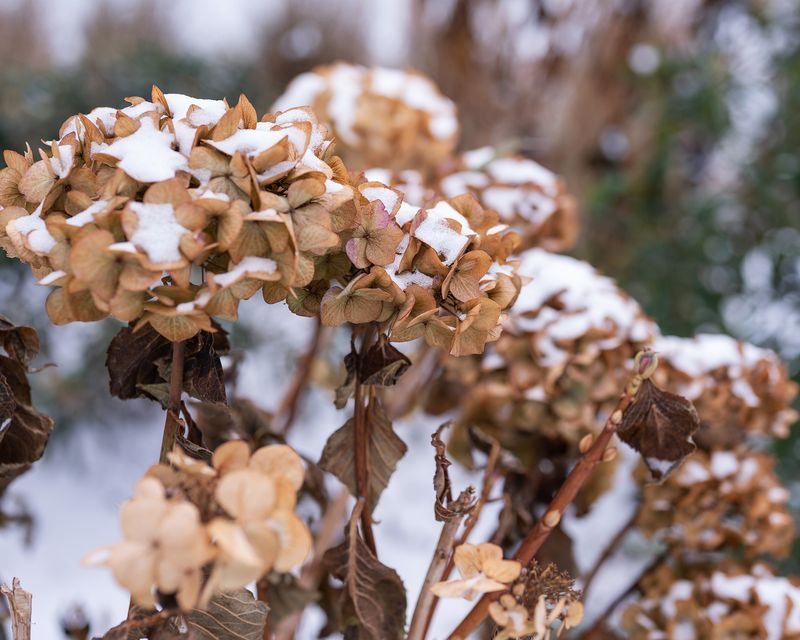
Leaving dried flower heads in place is also a perfectly reasonable choice. University of Maryland Extension’s hydrangea pruning resource notes that the dried, papery flower heads of oakleaf hydrangea provide winter interest and do not need to be removed for the plant’s health.
The rust and tan tones of the old blooms can look attractive against winter bark, and birds occasionally visit the seed heads.
A healthy, well-sized oakleaf hydrangea that has finished blooming does not need deeper cuts simply because its flowers have faded. The urge to clean up a shrub that looks a little rough in late summer is understandable, but restraint pays off the following June.
If you do deadhead, keep the cut shallow, stay at the base of the flower cluster, and leave the rest of the stem alone to carry the buds forming just below the surface.
Check other causes when flowers fail
Correct pruning timing is one piece of the flowering puzzle, but it is not the only piece. A shrub that was pruned at exactly the right moment can still produce a disappointing bloom display if something else is working against it, and blaming the pruning shears for every problem leads to frustration without solutions.
NC State Extension’s oakleaf hydrangea profile notes that the plant performs best in full sun to part shade and needs some sun to flower reliably. A shrub that has gradually been shaded out by nearby trees as they matured may produce fewer flowers each year regardless of how carefully you time your cuts.
Evaluating the light conditions, especially in summer when neighboring trees are in full leaf, can reveal whether shade is the real issue.
Soil moisture matters as well. Oakleaf hydrangea does best with medium moisture and organically rich, well-drained soil.
Drought stress during the growing season can weaken the plant’s ability to set strong buds, so consistent moisture, especially during hot, dry stretches, supports better flowering the following year.
Winter damage and late frosts are significant factors, particularly in the mountains. Macon County Extension’s hydrangea pruning tips caution that even correctly timed pruning cannot guarantee annual flowering in western North Carolina, where temperature swings can damage or destroy developing buds after they have already formed.
If a late frost hits in April or early May, the buds on properly maintained old wood can still be killed.
Deer browsing is another factor worth checking. Deer will readily browse the new stem growth that carries next year’s buds, and a heavily browsed shrub may look pruned even when no one touched it with shears.
University of Maryland Extension’s hydrangea problem guide lists browsing damage alongside disease and cultural problems as reasons a hydrangea may fail to flower as expected. Cultivar differences and site conditions round out the list of variables worth investigating before assuming pruning was the culprit.
Skip unnecessary fall fixes
Fall can feel like the right time to get the garden in order, and for many plants it is. Oakleaf hydrangea is the exception.
Reaching for the pruners, the fertilizer bag, or the pH-adjusting lime in September or October is more likely to create problems than solve them.
The practical decision rule is simple: confirm the plant is an oakleaf hydrangea, wait until flowering has finished, prune only if there is a clear maintenance or shaping reason, and finish those cuts promptly rather than letting fall become the default pruning season. NC State’s oakleaf hydrangea profile supports leaving a healthy, appropriately sized shrub alone as the safest approach for protecting next year’s flowering wood.
Automatic fall fertilization is not a substitute for correct pruning decisions. UGA Extension’s ornamental plant care guide recommends basing fertilizer decisions on plant need and soil-test results rather than applying nutrients on a fixed seasonal schedule.
Excess nitrogen in particular tends to push leafy growth rather than address a pruning, light, or moisture problem. Soil-pH adjustments to shift flower color are a technique associated with certain bigleaf hydrangeas, not oakleaf hydrangeas, and NC State’s hydrangea garden guide makes clear that the color-change advice should not be transferred across species without qualification.
The shrub that needs nothing done to it is often the healthiest one in the yard. Leaving it alone through fall and winter, with its dried flower heads standing and its budded stems intact, is frequently the best thing you can do before next summer’s bloom season arrives.