
The Native North Carolina Perennial That Fills Shady Beds Better Than Impatiens And Comes Back Every Year
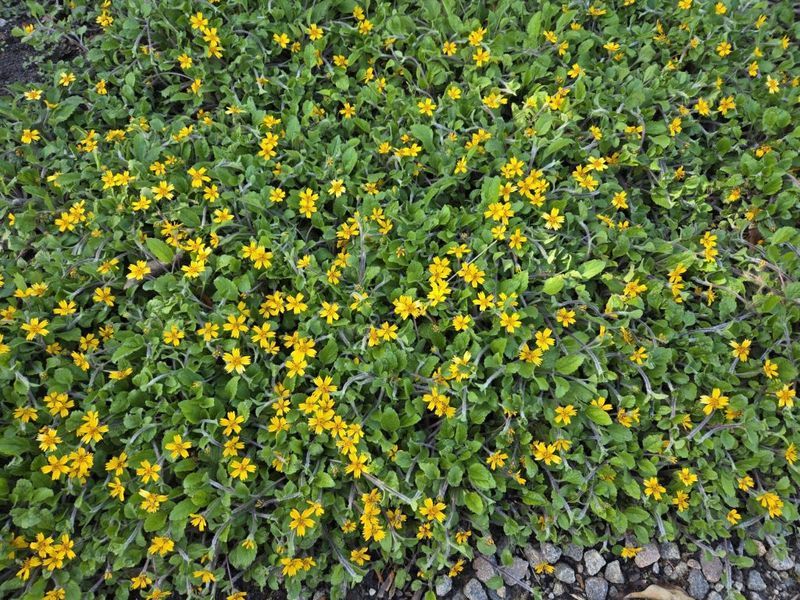
Every spring, thousands of North Carolina gardeners head to the garden center to buy impatiens, plant them in the shade, enjoy a few months of color, and then watch frost take them out. There is a native wildflower that skips the annual replacement cycle entirely, spreading quietly across shady beds and returning each year without a trip to the nursery.
Green-and-gold (Chrysogonum virginianum) is not a perfect swap for impatiens in every yard, but for the right moist, shaded site, it offers something impatiens never can: a permanent, wildlife-friendly ground layer rooted in North Carolina’s own landscape.
Green-and-gold offers a perennial foundation for shady beds
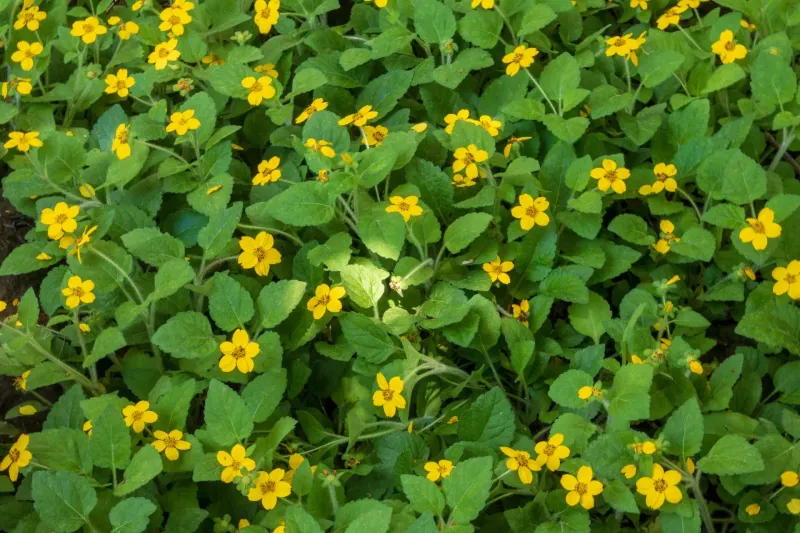
Few native plants earn the label “low maintenance” as honestly as green-and-gold. NC State Extension’s plant record for Chrysogonum virginianum lists it as a rhizomatous, semi-evergreen perennial groundcover suited to the Coastal Plain, Piedmont, and Mountains of North Carolina, covering USDA Zones 5a through 9b.
That statewide reach is unusual for a native wildflower, and it matters for gardeners from the Outer Banks foothills to the Blue Ridge.
The plant stays low, typically forming a foliage mat around 1 to 2 inches tall, and spreads to roughly 1 to 2 feet wide over time. Bright yellow, star-shaped flowers appear in spring, generally from late March through June, making the most colorful show of the year before summer heat takes hold.
The semi-evergreen foliage persists through much of a North Carolina winter, though its appearance can vary with cold, exposure, and regional conditions.
Its real advantage over a tender annual is simple: green-and-gold comes back. A gardener who plants it once in a suitable bed can expect returning foliage year after year, along with spring flowers and a gradually thickening ground layer.
That is a different value proposition than impatiens, which deliver more sheer flower color from late spring until frost but require fresh transplants every spring.
Calling green-and-gold universally better than impatiens would be inaccurate. What it offers instead is a durable native foundation for a shady bed, one that reduces annual replanting, supports local pollinators, and fits naturally into a North Carolina woodland-style landscape.
For a site where recurring foliage and native value matter more than wall-to-wall summer blooms, it is a well-supported candidate worth serious consideration.
Define the goal before comparing it with impatiens
Choosing between green-and-gold and impatiens is easier once you decide what the bed is actually for. NC State Extension classifies common garden impatiens (Impatiens walleriana) as tender plants normally grown as annuals in North Carolina, native to tropical Africa, and valued for dense flower color from late spring until frost.
They do that job well. Green-and-gold does a different job.
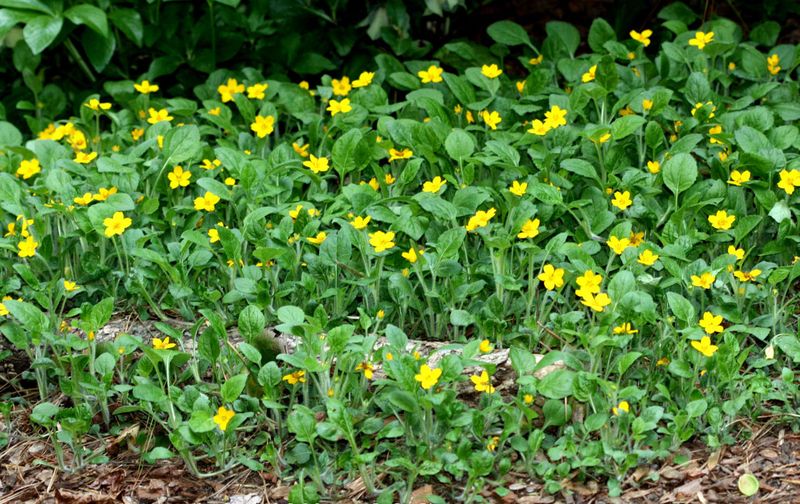
As a perennial, green-and-gold can return each spring from established roots and rhizomes, gradually building a semi-evergreen foliage mat that may carry through much of a mild North Carolina winter. Impatiens leave bare soil the moment frost arrives.
For a gardener who wants the bed to look covered and cared for across multiple seasons without annual replanting, that returning foliage carries real value, even during months when green-and-gold is not actively flowering.
Where impatiens hold a clear edge is in season-long flower color. Common bedding impatiens typically bloom continuously from late spring through frost, producing dense, saturated color across the entire planting.
Green-and-gold peaks in spring and may slow or stop flowering in hot summer conditions, with only light rebloom possible in fall. If uninterrupted color through July and August is the priority, impatiens are the more reliable choice for that specific goal.
One additional factor worth knowing: common bedding impatiens are susceptible to impatiens downy mildew, a disease that Michigan State Extension describes as capable of causing rapid yellowing, defoliation, and plant collapse under favorable wet conditions. The biology of impatiens downy mildew means that once spores establish in a bed, they can persist in the soil for years.
Green-and-gold is not disease-proof, but it is not susceptible to that particular pathogen. That said, downy mildew alone is not a reason to abandon impatiens universally; New Guinea impatiens, for example, are not affected by the same disease.
Match the plant to moist shade and workable soil
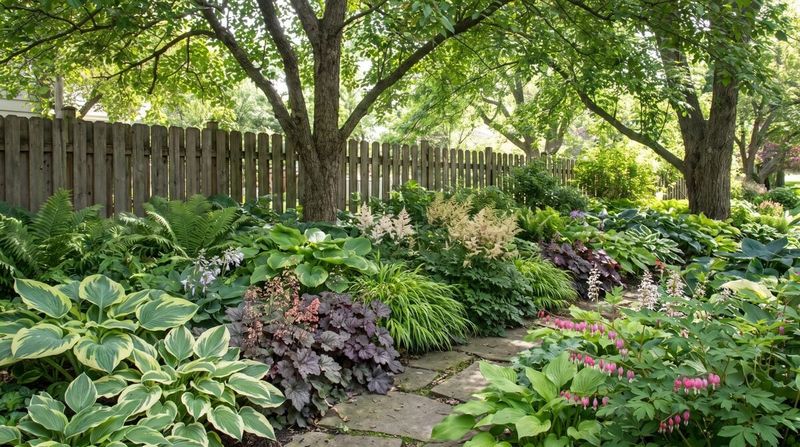
Before buying a single plant, walk the bed and ask honest questions about what is actually happening in the soil and light. NC State Extension’s profile for green-and-gold specifies moist, humus-rich, acidic, and well-drained soil as the preferred growing conditions.
That combination describes a woodland-like setting, not the bone-dry shade under a shallow-rooted mature tree where little else survives.
Light matters more than many gardeners expect. Green-and-gold tolerates deep shade and partial shade, but Brunswick County Cooperative Extension notes that flowering generally improves with more filtered light.
A bed that receives dappled sun through a deciduous canopy will typically produce more blooms than one tucked under dense evergreen cover. Full sun is workable, but only where soil moisture stays consistently high.
Dry shade is a different problem entirely. When mature tree roots compete aggressively for water and nutrients, even a native plant adapted to woodland conditions can struggle.
The NC State Extension Gardener Handbook on native plants emphasizes that soil texture, drainage, pH, light, and root competition all affect how a native plant performs, and native status alone does not guarantee success in a difficult site.
Green-and-gold can tolerate occasional dryness once it is established, but that tolerance should not be read as dependable drought resistance. A bed that dries out completely and regularly is not a good match, particularly during the establishment period or under sustained summer heat.
The NC Native Plant Society’s native plant guidance reinforces that matching a plant to site conditions, rather than assuming any native will adapt to whatever is available, is the foundation of a successful planting.
Let coverage develop instead of promising an instant carpet
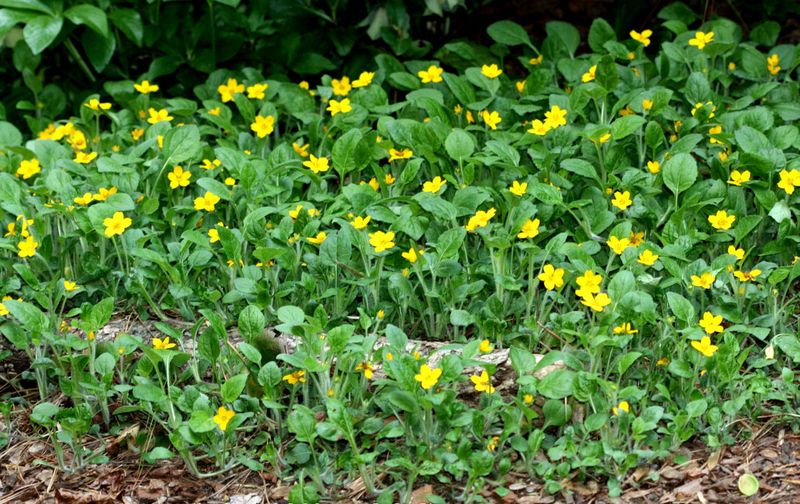
Patience is part of the deal with green-and-gold. The plant’s eventual spread of roughly 18 inches or more sounds generous, but that figure says nothing about how long it will take to get there.
Coverage depends on the size of the transplant, spacing at planting, available soil moisture, competition from tree roots, and which form or variety was purchased.
Not all green-and-gold plants spread the same way. Brunswick County Cooperative Extension explains that naturally occurring varieties differ in stolon production, height, and speed of spread.
Some forms produce stolons that root at nodes and colonize adjacent soil more quickly. Others grow as tighter clumping plants that expand slowly from the crown.
The southern variety, C. virginianum var. australe, tends toward faster spread and may be more useful for covering larger woodland areas, but not every plant sold under the name “green-and-gold” at a garden center will behave that way.
NC State Extension describes green-and-gold’s growth rate as moderate to rapid, which is encouraging, but moderate and rapid are relative terms that depend heavily on site conditions. A plant in moist, organic soil with decent filtered light will fill in noticeably faster than one competing with surface tree roots in drier conditions.
Once a planting is established, it can be expanded without buying more plants. Crown division in late spring and separation of rooted stolons in fall are both practical ways to multiply what is already growing.
Dividing clumps every few years also keeps established patches vigorous. The key is to set spacing and timing expectations based on the actual variety and site, rather than assuming the bed will look finished by the end of the first growing season.
Plant for establishment before expecting a durable display
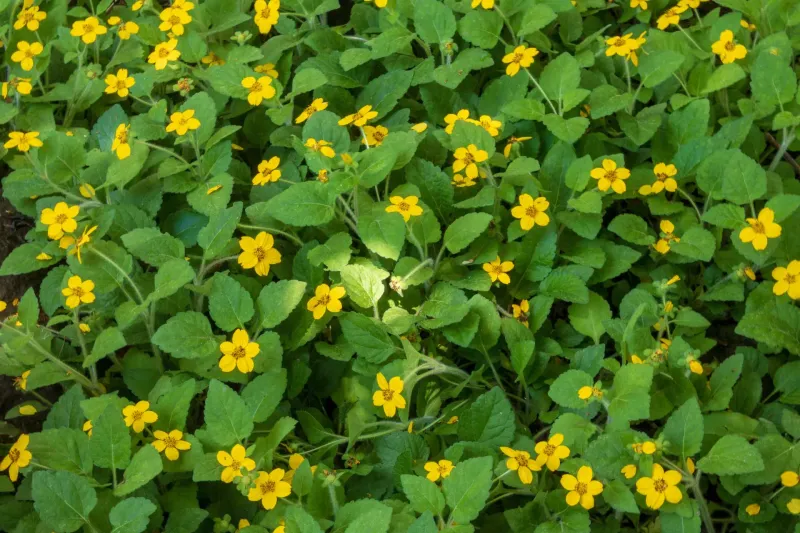
Starting right matters more than starting fast. The North Carolina Native Plant Society advises purchasing nursery-propagated plants or obtaining divisions from reputable fellow gardeners, rather than digging plants from wild populations or public land.
This protects native plant communities and gives the home gardener a plant that is already adapted to cultivation.
Soil preparation sets the tone for everything that follows. Work compost or leaf mold into the planting area to increase organic matter and improve moisture retention.
NC State Extension’s guidance for green-and-gold emphasizes well-drained, humus-rich, acidic conditions, so if the existing soil is compacted clay or sandy and fast-draining, amending before planting will pay off during the first summer. Check that drainage is actually working before you plant; persistently wet or waterlogged soil is as problematic as dry soil.
Position plants according to the light and moisture available in that specific spot. Spacing plants closer together will give faster visual coverage, but it also raises competition for water and nutrients during establishment.
A reasonable starting point for stolon-forming varieties is 12 to 18 inches apart, though clumping forms may need closer spacing to achieve similar coverage in a reasonable time frame.
Water consistently for the first growing season, and do not assume that shade means the plants need less moisture. NC State Extension’s native plant handbook is clear that even well-matched natives need supplemental water during establishment and extended drought.
Tree-root competition can pull moisture away from young transplants faster than expected, so monitoring the soil rather than following a fixed watering schedule is a smarter approach. Apply a light layer of mulch to conserve moisture, but keep it pulled back from the plant crowns.
Mulch piled against the crown can cause rot, particularly in humid summer conditions. Brunswick County Cooperative Extension’s green-and-gold guidance also reinforces that afternoon sun exposure increases water demand, making supplemental irrigation more critical in partially exposed beds.
Keep maintenance light but expectations realistic

Once green-and-gold settles in, its care demands are genuinely modest. NC State Extension rates the plant’s maintenance needs as low, and most gardeners find that description accurate after the first season.
Removing spent flower stems improves the appearance of the planting and keeps the bed looking tidy, but skipping that task will not harm the plant.
Flowering follows a predictable seasonal arc. Spring brings the strongest display, with yellow blooms covering the foliage mat from roughly late March through June in most North Carolina locations.
As summer heat builds, flowering typically slows or stops, and the plant shifts its energy into foliage and root development. Light rebloom may appear in fall when temperatures ease, but it is not guaranteed and should not be expected to match the spring show.
Watering remains part of the picture even after establishment, particularly during extended summer drought or in beds with afternoon sun exposure. The low-maintenance label applies to a plant that is well sited and receiving adequate moisture, not to one that is competing with dense tree roots in dry shade.
Adjust irrigation based on what the soil is actually doing rather than a fixed schedule.
The NC Native Plant Society identifies green-and-gold as a plant that supports birds, butterflies, bees, and other pollinators, and NC State Extension confirms that the flowers attract bees and butterflies while seeds provide food for songbirds. These are real and supported wildlife benefits, worth noting for any gardener trying to make a residential yard more ecologically useful.
Deer are another matter: NC State describes green-and-gold as moderately resistant to deer damage, which means deer may leave it alone most of the time, but a hungry deer in a lean winter will not be stopped by moderate resistance alone.
Choose permanence or peak seasonal color
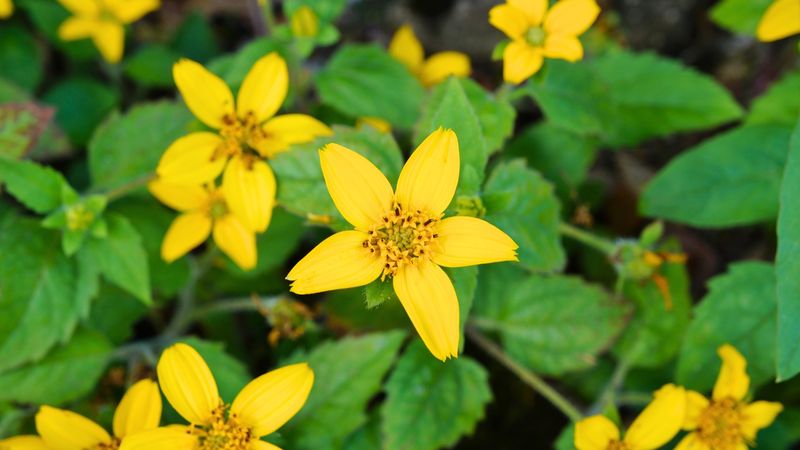
The decision comes down to what the bed needs to do. Green-and-gold is a strong candidate for a moist North Carolina shady bed where the priorities are a returning native ground layer, spring flowers, wildlife value, and freedom from annual replanting.
If the site holds moisture reasonably well, has workable acidic soil, and receives filtered or partial shade, green-and-gold can deliver a durable, low-effort planting that improves with each passing year.
Impatiens remain the more practical choice when continuous, high-impact flower color from late spring through frost is the main goal. No honest comparison puts green-and-gold ahead on that measure.
The two plants serve different purposes, and recognizing that distinction saves frustration for gardeners who expect a native perennial to replicate the wall-to-wall summer bloom of a tropical annual.
Site conditions, not plant labels, determine the outcome. NC State Extension’s native plant guidance and the NC Native Plant Society both make clear that moisture, drainage, light, soil quality, and root competition shape results more reliably than whether a plant carries a native tag.
Green-and-gold rewards the gardener who matches it to the right site; in that setting, the annual replanting ritual becomes someone else’s spring chore.