
The Native North Carolina Vines That Grow Into A Living Privacy Screen Without A Single Fence Board
Building a fence takes lumber, tools, and a whole weekend of frustration. But the best privacy walls in North Carolina grow themselves, made of green leaves and blooms that hummingbirds and songbirds actually visit.
These native vines climb a simple trellis or wire and fill in thick enough to block a nosy view. Even better, they feed the wildlife you love instead of the invasive tangles that choke out your yard.
1. Carolina Jessamine (Gelsemium sempervirens)
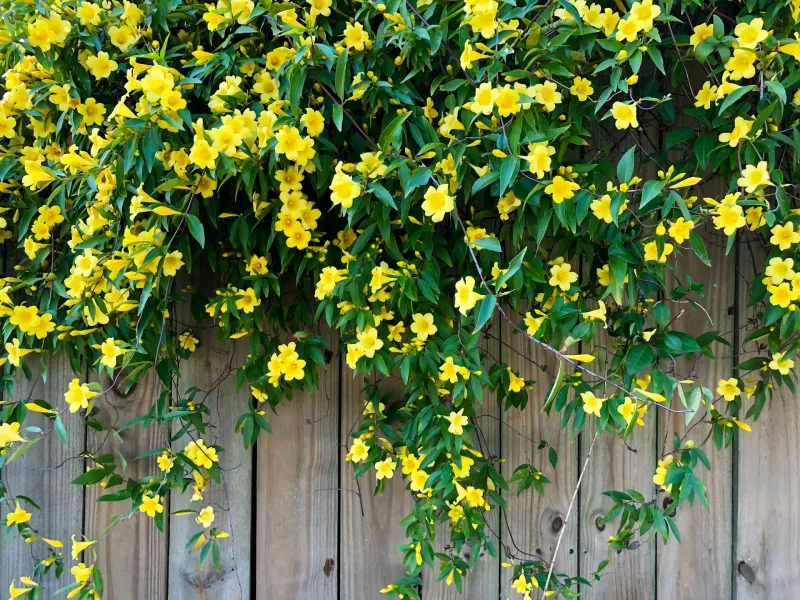
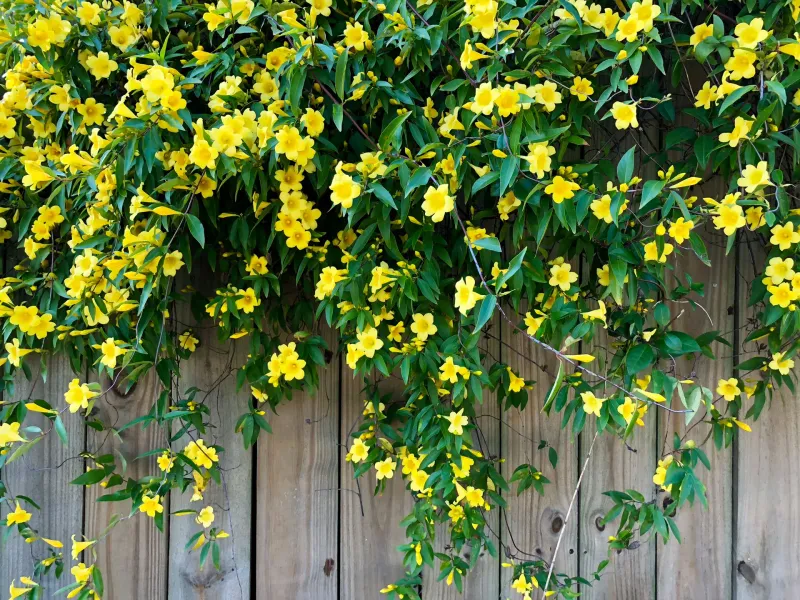
Long before most plants wake up, this vine lights up a fence line with golden trumpet flowers, sometimes as early as February. That early bloom is exactly what makes it a standout, because it hands hungry bees and butterflies a nectar meal when almost nothing else is open.
The glossy, dark green leaves stick around through winter in much of the state, so your screen never turns into a bare skeleton. Growing 10 to 20 feet, it stays refined rather than wild, which suits a smaller Piedmont or Coastal yard perfectly.
Space plants about 4 to 6 feet apart and it will knit into a tidy wall on sun to part shade.
Once its roots settle in, it shrugs off drought and handles sandy or clay soils as long as water drains away. One honest word of caution for the good steward: the sap can irritate skin, so wear gloves when you trim.
Do that, and you get a fragrant, year-round living curtain that pollinators treat like an early spring diner.
2. Crossvine (Bignonia capreolata)
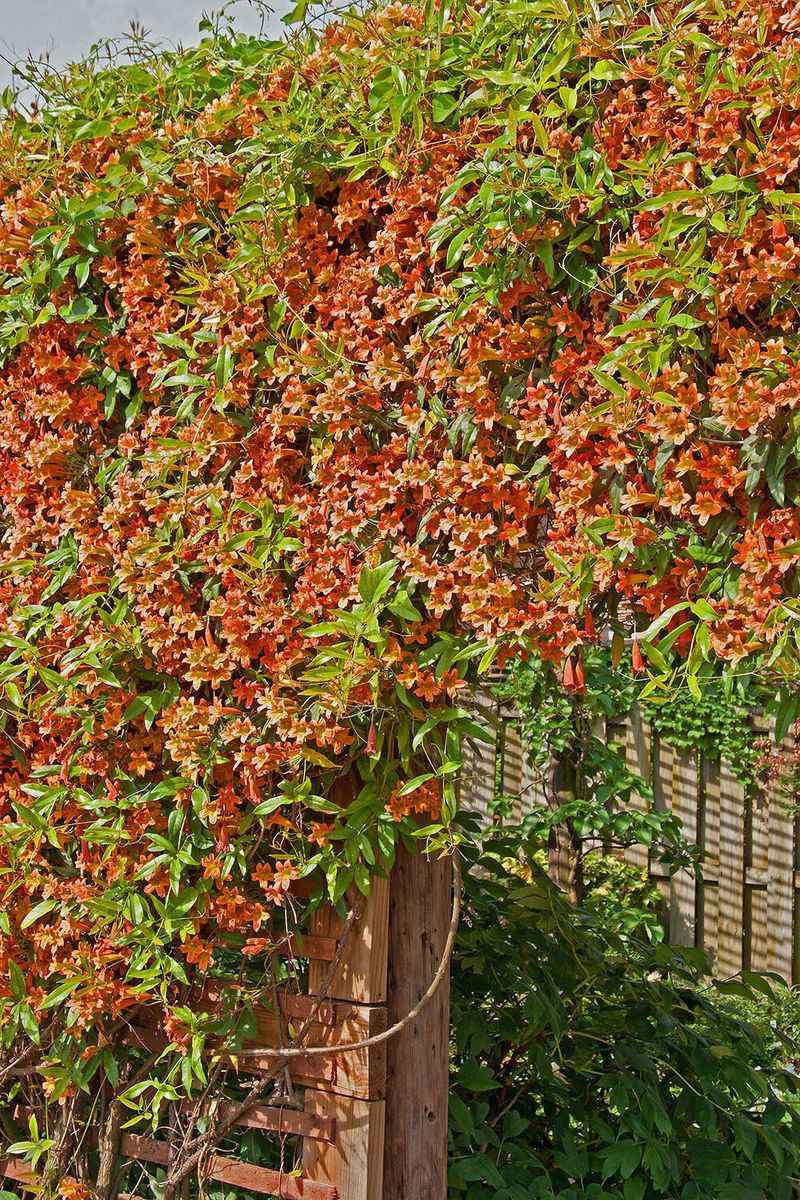
Snap a stem of this vine and you will see a tiny cross shape inside, the quirky detail that earned its name. Beyond the party trick, crossvine is a workhorse that can climb anywhere from 15 to 50 feet and pack a fence with evergreen to semi-evergreen leaves.
The orange-red and yellow trumpets show up early and act like a welcome banner for returning hummingbirds. It adapts to almost anything you throw at it, from full sun to shade and even salty coastal air, though more sun means more flowers.
Because it spreads by root suckers and seed, keep an eye out and pull the wanderers so it stays where you want it. Harsh winters may knock back the top growth, but the roots usually push out fresh shoots come spring.
Give it a sturdy support, and one safety note worth respecting: crossvine is highly flammable, so keep it out of the defensible space right against your house.
3. Coral Honeysuckle (Lonicera sempervirens)
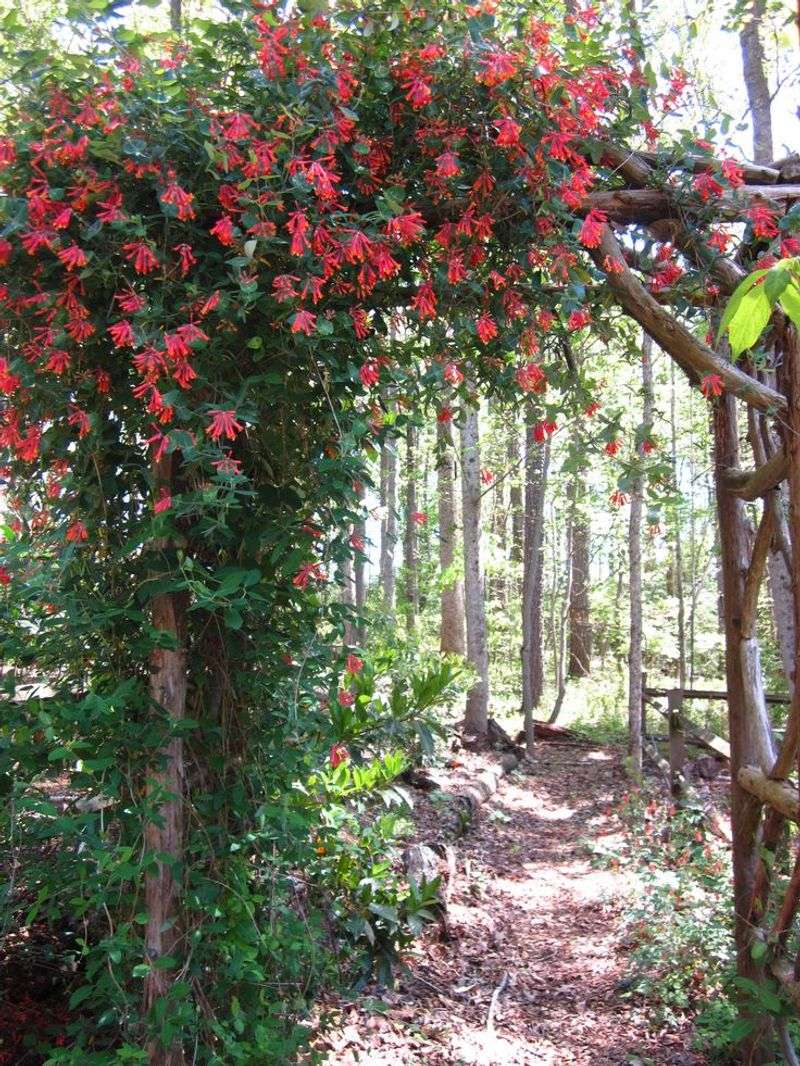
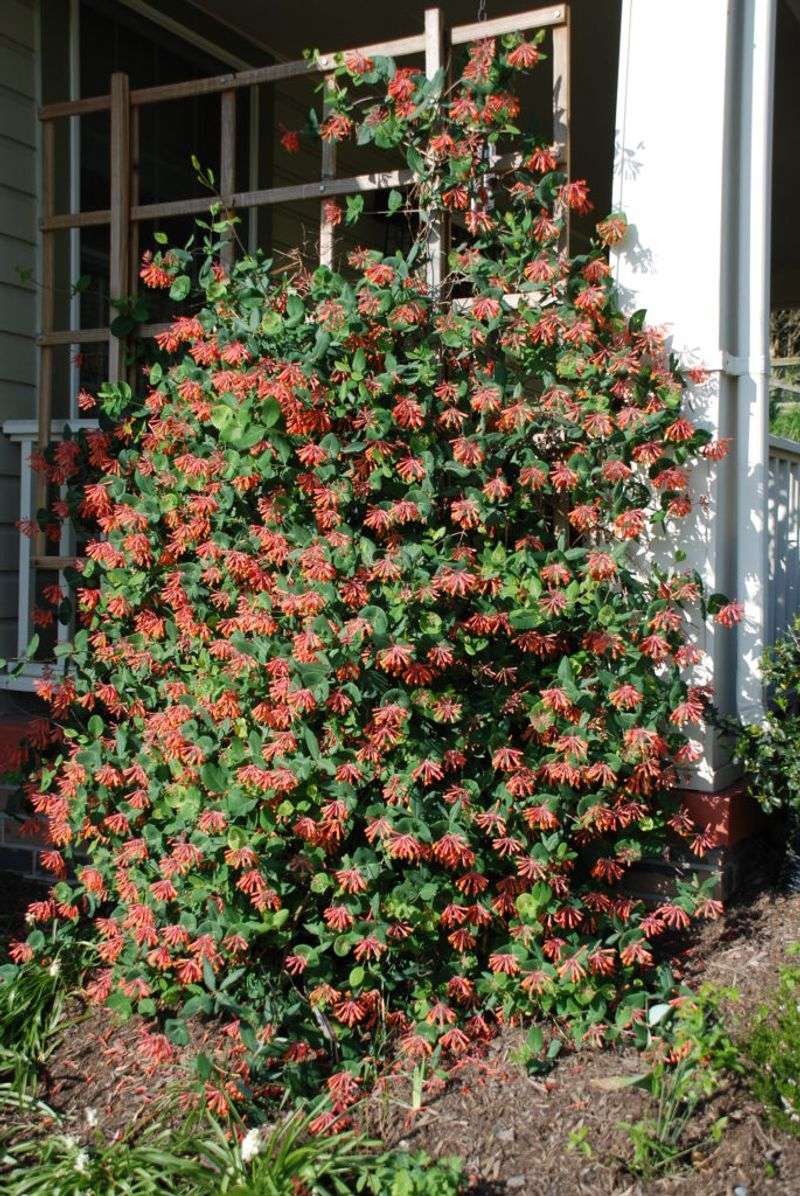
If you have ever cursed the invasive Japanese honeysuckle smothering your woods, meet its polite native cousin. Coral honeysuckle is a well-mannered twiner that climbs 10 to 20 feet without bullying everything around it, making it the smart swap from the mountains to the coast.
Clusters of red to orange-red tubes are basically a hummingbird magnet, and butterflies drop by too. It pulls double duty as a larval host for the spring azure butterfly and both the snowberry and hummingbird clearwing moths, which means your screen becomes a nursery.
Come fall, its red berries feed songbirds looking to fatten up.
It takes clay or moist loam and blooms hardest in sun, though it tolerates part shade just fine. In warmer NC spots it may stay green through winter, while cooler areas see it drop leaves.
Like crossvine, it rates high for flammability, so plant it out along the fence rather than hugging your foundation.
4. Virginia Creeper (Parthenocissus quinquefolia)
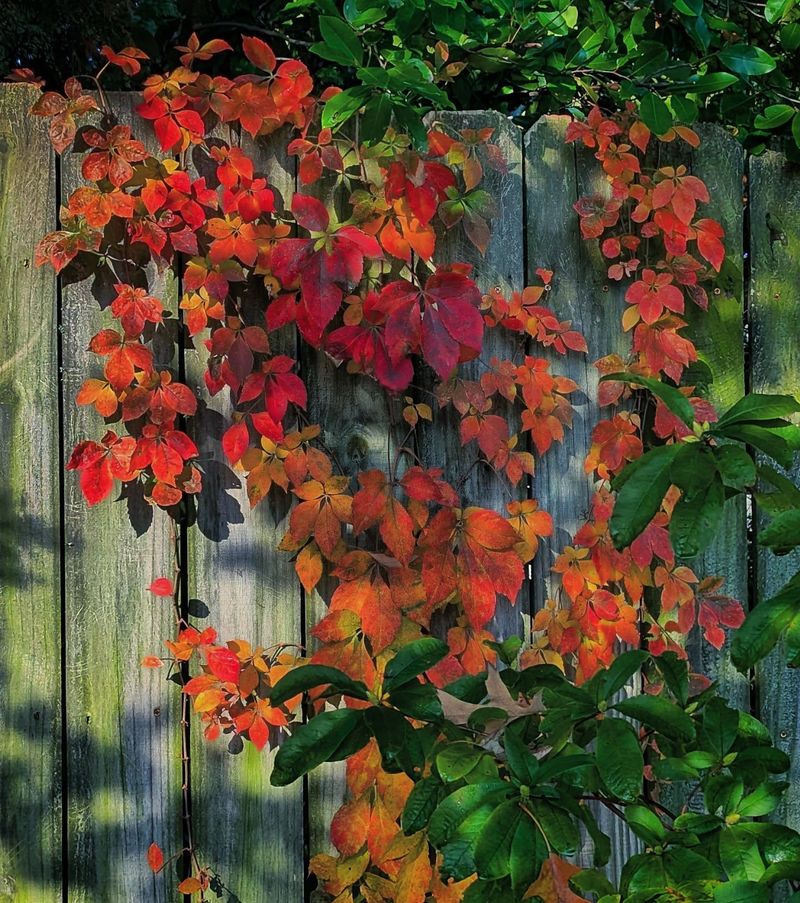
Come October, this vine puts on a fireworks show, turning from deep green to a blazing scarlet that stops traffic. That fall color is the real draw, giving your privacy wall a seasonal costume change no fence board can match.
It grows fast and dense, using little adhesive tendril pads to grip a trellis or fence and fill gaps in a single season. Shade or sun, it barely cares, which makes it handy for that awkward corner where nothing else thrives.
The blue berries feed songbirds and other critters, and the leaves host caterpillars that baby birds depend on for protein. One rule to follow: do not let it climb the walls of your house, because those clingy discs can work into siding and cause damage.
Point it at a standalone support instead, and it earns its keep as a quick, wildlife-friendly screen.
5. Passionflower / Maypop (Passiflora incarnata)
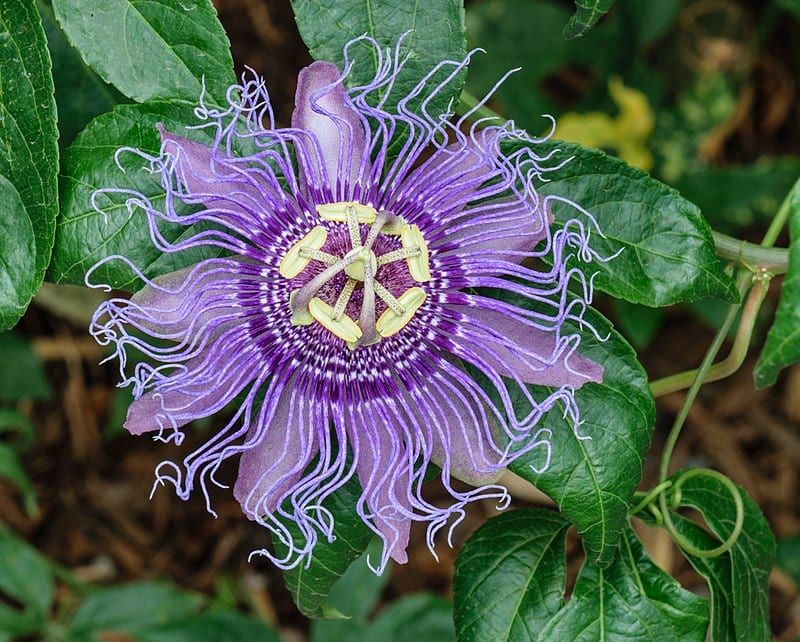
Few flowers look as otherworldly as the maypop, with its fringed purple crown that seems almost too fancy for a backyard vine. That jaw-dropping bloom alone makes it worth a spot on the trellis, but the real payoff is the butterflies.
Passionflower is a key host plant for caterpillars, including the gulf fritillary, so planting it is like opening a butterfly cafe on your fence line. It climbs and sprawls happily along supports, filling in a screen through the warm months before dying back in winter.
Give it full sun to part shade and moist, well-draining soil and it rewards you across all three NC regions, from the Coastal Plain to the Blue Ridge. Fun bit of trivia: the green egg-shaped fruits actually pop when stepped on, which is how it landed the name maypop.
It is a living screen with a personality all its own.
6. Riverbank Grape / Wild Grape (Vitis riparia)
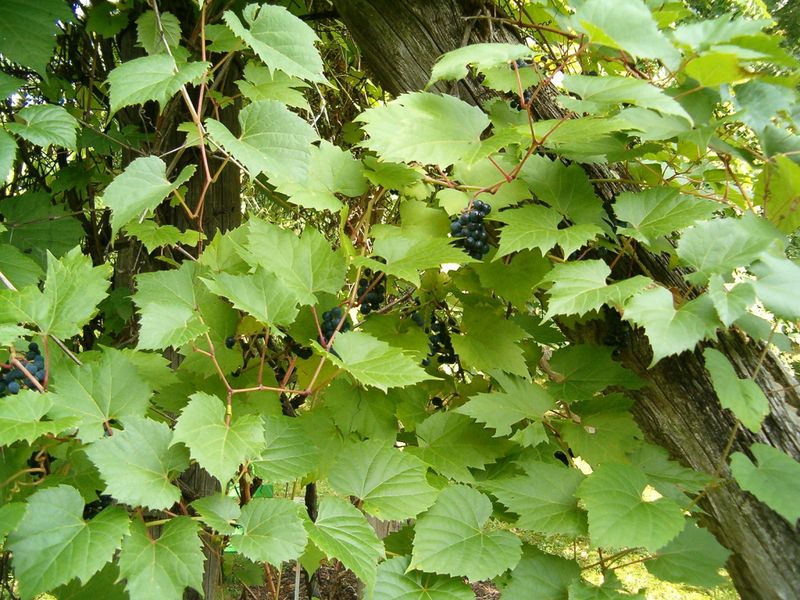
Want privacy that arrives in a hurry and feeds half the neighborhood birds? Riverbank grape climbs up to 75 feet and throws up a thick blanket of heart-shaped, three-lobed leaves faster than most vines dream of.
Sweet-scented greenish flowers appear in spring, then give way to bluish-black grapes by late summer that birds and small mammals devour. That food value is huge, but the sheer size is exactly why this one comes with a warning label.
In full sun it can turn aggressive, shading out and smothering smaller trees and shrubs if you let it run. Plant it only where you can keep up with regular pruning, and mount it on a seriously strong support because it grows heavy.
Handled with respect, it is the fastest, most wildlife-generous screen on this list, ideal for a big open fence line rather than a delicate garden bed.
7. Choosing And Combining Vines For Your NC Yard
Picking just one vine is tough, so the good news is you do not have to. Mixing an evergreen like Carolina jessamine or coral honeysuckle with a fall-color star like Virginia creeper gives you a screen that looks alive in every season.
Match the plant to the spot before you dig. Save the vigorous riverbank grape for a big, sturdy structure far from prized shrubs, and use the tidier jessamine near a patio where you want fragrance and manners.
Keep the high-flammability climbers, crossvine and coral honeysuckle, out along a boundary fence rather than against your siding.
Every vine here earns its place by doing more than blocking a view. They swap out invasive tangles for plants that host caterpillars, pour nectar for hummingbirds, and drop berries for songbirds.
Set up a simple trellis or run some wire this weekend, plant a native or two, and you will grow a privacy wall that quietly turns your yard into a healthier patch of North Carolina.