
Gravel Or Mulched Garden Paths In North Carolina And Which One Actually Holds Up After Summer Storms
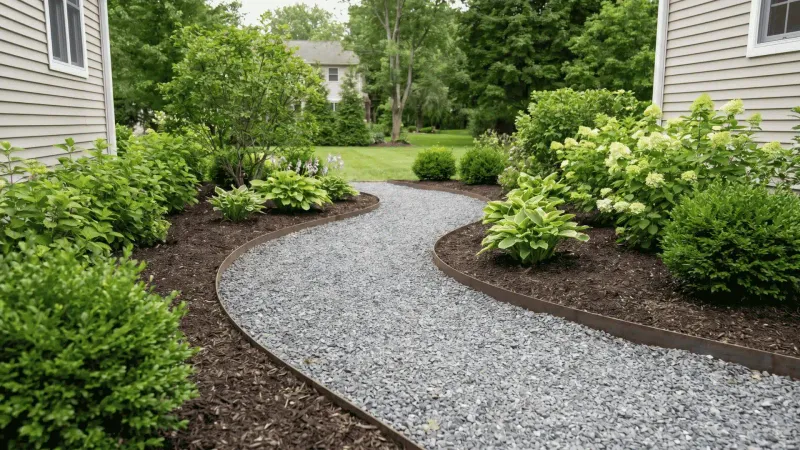
Picking a garden path surface in North Carolina is not just about looks. A hard downpour can wash away a poorly chosen material in minutes, leaving bare soil, ruts, and a muddy mess through your yard.
Whether you lean toward gravel or wood chips, the right answer depends on where your path sits, how water moves across your land, and how much upkeep you are willing to do after the rain clears.
Heavy-rain events make path location the first decision
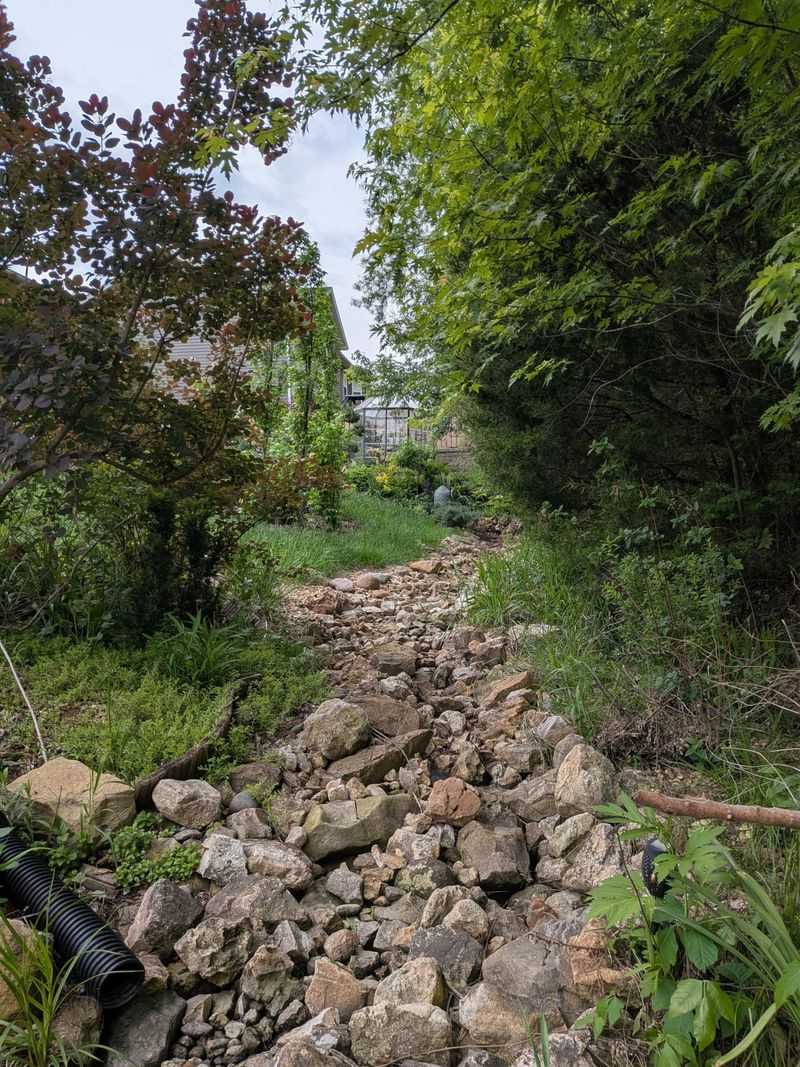
North Carolina sits in the path of tropical systems that can drop several inches of rain in a matter of hours. The NC State Climate Office hurricane hazards page documents the heavy-rain potential from these events, and any homeowner who has watched a cloudburst roll across the Piedmont or coast knows the ground can saturate fast.
That rainfall context matters when you are deciding between gravel and mulch for a garden path.
The bigger variable, though, is not which material you pick – it is where the water is coming from before it reaches your path. Direct rainfall landing on a flat surface is a manageable problem.
Roof runoff emptying off a downspout, uphill sheet flow crossing your yard, or water moving through already-saturated clay soil creates a much harder situation. NC State’s guide to protecting water quality recommends directing roof runoff toward grassy or mulched areas and using swales or berms to slow and redirect water before it concentrates anywhere you do not want it.
A path that doubles as a drainage channel will likely fail regardless of its surface. Mulch floats and scatters; gravel shifts and migrates downhill.
Neither material fixes a water-routing problem on its own.
With that framing in place, a practical starting verdict is reasonable. Where a path faces slope, erosion risk, or substantial runoff, properly compacted angular crushed stone is generally the more stable choice.
For a relatively flat, informal, lightly used path that receives only direct rainfall, coarse wood chips can work well. NC State’s landscape design handbook notes that North Carolina soils range from light coastal sands to heavy Piedmont clay, which means the right drainage approach varies by yard – and so does the best path surface.
Angular crushed stone offers the firmer aggregate surface
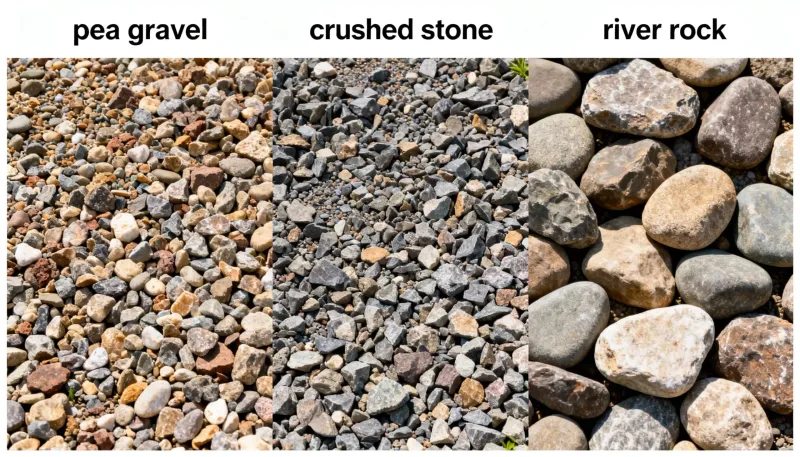
Not all gravel behaves the same way underfoot or in a rainstorm, and that distinction drives the aggregate recommendation here. The U.S.
Forest Service’s wetland trail design and construction guide explains it directly: angular crushed stone has sharp, irregular edges that lock together when compacted, forming a stable mass. Rounded pea gravel or river gravel, by contrast, does not compact into a solid surface.
It permits water movement through the gaps, which can be useful in a drainage bed, but it shifts and rolls under foot traffic rather than holding firm.
Dense-graded aggregate takes this further. It combines a range of particle sizes – from coarse stone down to fine binder material – so that the smaller particles fill the voids between larger ones.
When compacted properly, the result is a surface that resists rutting and displacement better than a single-size rounded material. The Forest Service’s roadway surfacing materials reference identifies dense gradation, angular particles, adequate binding material, and thorough compaction as the combination that improves resistance to erosion and storm damage.
Crusher fines – the fine screenings left from crushing stone – can serve a similar role when blended with coarser aggregate. They help fill voids and improve binding, though a crusher-fines-only surface can become dusty when dry and slick when wet, so mixing matters.
The practical takeaway for a North Carolina homeowner is this: if you are comparing angular crushed stone with pea gravel and assuming both perform equally, you are working from an inaccurate premise. The angular material is generally the more stable walking surface after compaction.
That conclusion follows from material science and trail-design principles, not from a head-to-head residential field comparison conducted across the state. Site conditions – slope, soil type, incoming water volume – still determine how well any aggregate holds up on your specific path.
Wood chips work when the path stays relatively flat
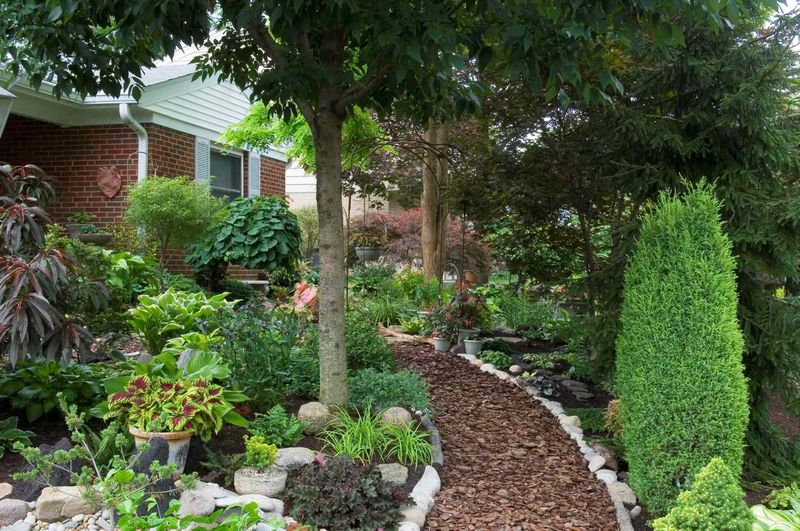
Coarse wood chips earn their place in the NC garden when the conditions suit them. NC State Extension’s community food gardening handbook lists wood chips as a common North Carolina path material that helps avoid mud and is often inexpensive or locally available through tree services and municipal programs.
On a relatively flat, informal, lightly used path – one that receives only direct rainfall and sits away from concentrated runoff – wood chips are a reasonable and practical surface.
The honest maintenance picture matters here. Wood chips break down over time, and that decomposition is gradual but continuous.
Expect to replenish the material at least once a year, sometimes more often after a wet season. The chips also settle and compact over months, which lowers the surface and can leave low spots where water pools.
Weed management becomes part of the routine too, since decomposing wood feeds soil biology and seeds find the softened surface hospitable.
Storm displacement is the sharpest limitation. After a significant downpour, loose chips can scatter across adjacent beds or pile unevenly where water channeled across the path.
Not all mulch types behave the same way. NC State’s planting guide warns specifically that pine-bark nuggets tend to float and wash away on slopes or near drainage areas.
Fibrous, interlocking wood chips hold together better in those situations, though no loose mulch is reliable on a grade where water concentrates.
EPA’s stormwater mulching guidance notes that mulch can wash away during rain and should not be used by itself in areas of concentrated flow. One more placement note: if the path runs near your home’s foundation, keep the wood chips from touching siding or the base of the structure, since moist mulch can conceal termite activity and maintain conditions that favor wood decay.
Design the route so water crosses instead of follows it
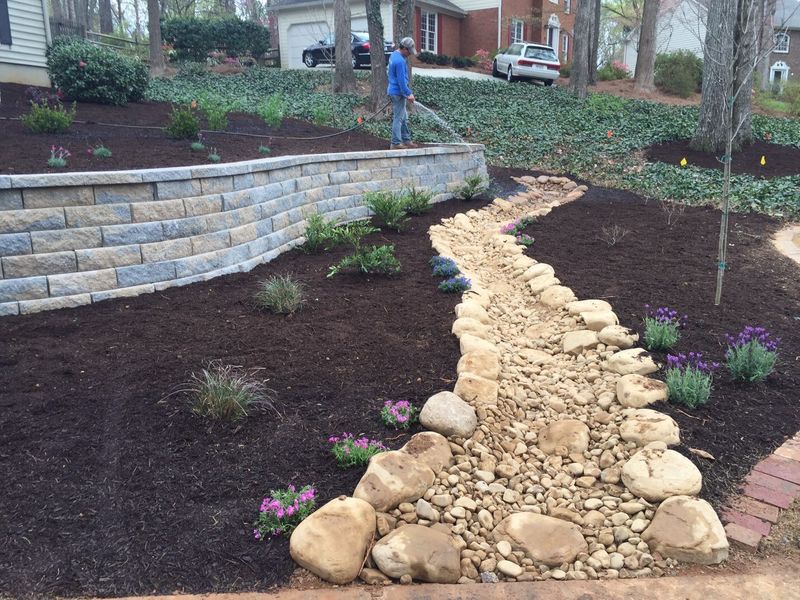
Surface material is only one part of a path’s storm performance. The route itself determines whether water travels with you or against you.
Trail planning from NC State Extension’s recreational forest trails guide and parallel Forest Service design principles point toward the same core idea: a well-designed path sheds water off its sides rather than collecting it in the center or carrying it downhill along the tread.
Following the natural contour of the land where possible keeps grade manageable and reduces the energy that moving water carries across your path. When a path must go uphill or downhill, keeping sustained grades short and breaking them with level sections or grade reversals gives water a place to leave the tread before it picks up speed.
The Forest Service trail drainage and tread design guidance describes out-sloping the tread – tilting the surface slightly toward the downhill side – so water crosses the path and exits rather than running along its length. A modest tilt accomplishes this without making the surface feel awkward underfoot for most users.
Cross-slope does carry an accessibility tradeoff. Forest Service accessibility guidance identifies 5% as an upper cross-slope limit in its trail context, noting that steeper cross-slopes create difficulty for people using walkers, wheelchairs, or garden carts.
That figure is a reference point from a specific trail-access context, not a universal residential rule, but the underlying concern applies: anyone regularly using your path with mobility aids or heavy equipment will notice a pronounced tilt.
Roof and hard-surface runoff deserve separate attention before you finalize the path route. NC State’s water quality guide recommends directing downspout discharge toward grassy areas or mulched planting beds, and using swales or berms to slow and redirect that water before it reaches any path or planting area.
Routing drainage away from the path is a design step, not an afterthought.
Build a crushed-stone path in compacted stages
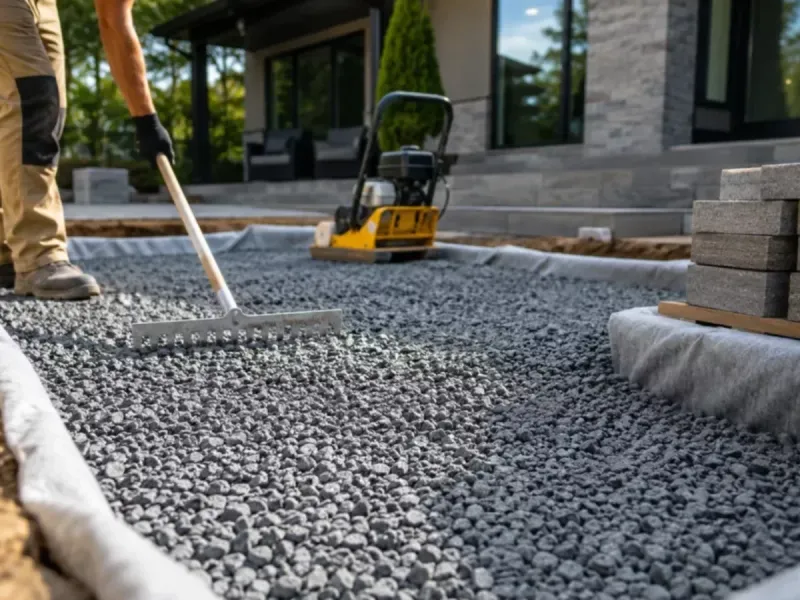
Putting down angular aggregate correctly takes a few deliberate steps, and skipping any of them tends to show up after the first hard rain. Start by removing any loose organic material – sod, roots, soft topsoil – from the path corridor.
Organic matter compresses unevenly and creates a springy, unstable base that aggregate will shift into over time. Shape the subgrade to reflect the drainage direction you want: a slight out-slope built into the soil beneath the path carries through to the finished surface.
Forest Service trail drainage guidance recommends preparing and compacting the tread rather than relying on foot traffic to settle the surface. Foot traffic does compact material over time, but unevenly – it creates a central depression while leaving the edges higher, and that rut channels water straight down the path.
Mechanical compaction, even with a hand tamper on a small residential path, produces a more consistent surface from the start.
Geotextile separation fabric is sometimes placed between the subgrade and aggregate to prevent fine soil particles from migrating upward into the stone. Forest Service aggregate construction guidance supports this practice in wet or unstable conditions where soil migration is a real risk.
On a well-drained, stable subgrade it may not be necessary. If you do use fabric, choose a permeable geotextile rather than solid plastic sheeting; plastic can tear, shift, and become difficult debris to remove later.
Place angular aggregate in layers and compact each one before adding the next. Depth depends on your soil stability, expected use, and drainage conditions – the Forest Service sources are trail-construction references rather than residential specifications, so treat specific depths as site-dependent rather than fixed rules.
Oregon State Extension’s paver installation guidance emphasizes that edge restraints – boards, metal edging, or stone borders – are essential for keeping aggregate from migrating laterally over time. Without them, the path gradually widens and thins at the center, exactly where you need it most.
Inspect the path after every major rain event
What a path looks like the morning after a heavy rain tells you more about its design than any pre-storm inspection can. For wood-chip paths, look for areas where chips have scattered into adjacent beds, piled against edges, or washed off entirely to expose bare soil.
Thin spots are the most urgent concern because exposed soil erodes quickly in the next rain. EPA’s mulching BMP guidance recommends checking mulched areas after rain for loosened or displaced material and replenishing as needed.
Keep a supply of matching wood chips on hand so you can top up thin sections before the next storm arrives.
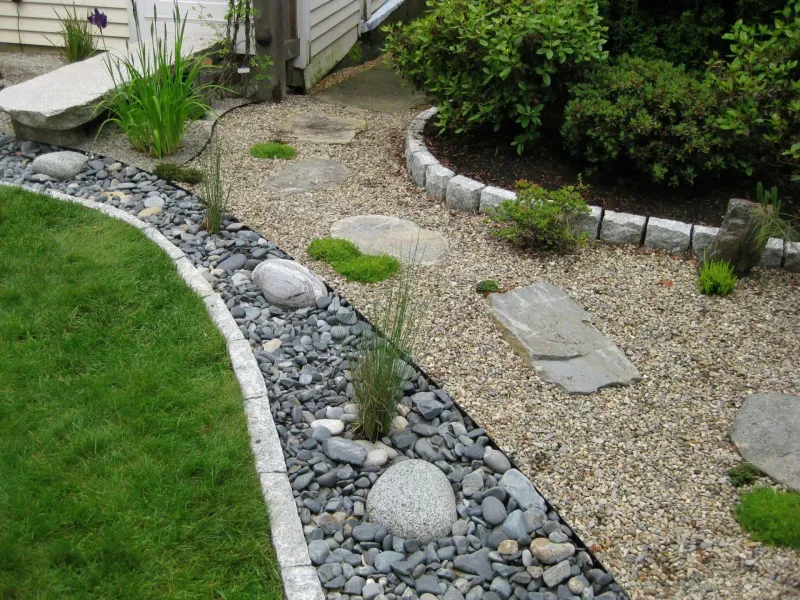
Aggregate paths show different failure patterns. Ruts form where water concentrated and carried stone downhill.
Edges erode or spread where restraints are missing or have shifted. Ponding in a low spot signals that the out-slope has changed, either from settling or from material movement.
Forest Service aggregate maintenance guidance covers raking, regrading, top-dressing with fresh aggregate, and recrowning the tread to restore drainage. None of those repairs are complicated, but they are easier to do promptly than after several rain events have compounded the problem.
Tracing the water source is the most important part of any post-storm inspection. If the same spot erodes repeatedly, the surface material is not the problem – the water route is.
Adding more gravel to a section that keeps washing out does not fix the upstream flow; it may leave the added material just as vulnerable to displacement, and in some site conditions it can redirect water in ways that affect nearby drainage features. NC State’s water quality guide and NC DEQ’s erosion and sediment control manual both point toward redirecting and dispersing concentrated flow rather than trying to armor a path through it.
Whether that means adjusting a downspout, adding a swale, or rerouting the path itself depends on your specific yard – and is worth assessing before the next storm season.
Choose the surface after diagnosing the water
The path surface decision is simpler once you know what the water is doing. NC State’s trail planning guidance and the Forest Service’s material principles both point toward matching the surface to actual site conditions rather than picking a material first and hoping the site cooperates.
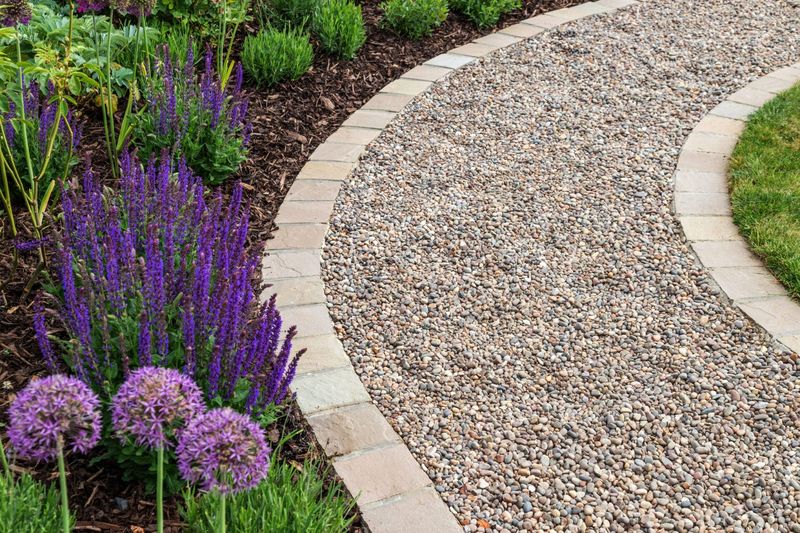
Where the path slopes, receives substantial runoff from uphill areas or hard surfaces, or needs a firmer tread for regular use, compacted angular crushed stone with proper drainage design and edge retention is the generally more stable choice. Forest Service wetland trail guidance is clear that rounded pea or river gravel does not offer the same stability as angular material, so the type of aggregate matters as much as the decision to use aggregate at all.
Where the path is flat, informal, lightly used, and easy to renew each season, NC State’s food garden design guidance confirms that coarse wood chips are a practical and common North Carolina choice. They cost less, require no compaction equipment, and break down into the soil over time.
The deciding principle is the same for both surfaces: manage the water route before you commit to a material. A well-routed path on a stable subgrade with controlled drainage will outperform a poorly routed path with premium materials every time a summer storm rolls through.