
The North Carolina Native Perennial That Keeps Feeding Monarchs Long After Everything Else Has Faded
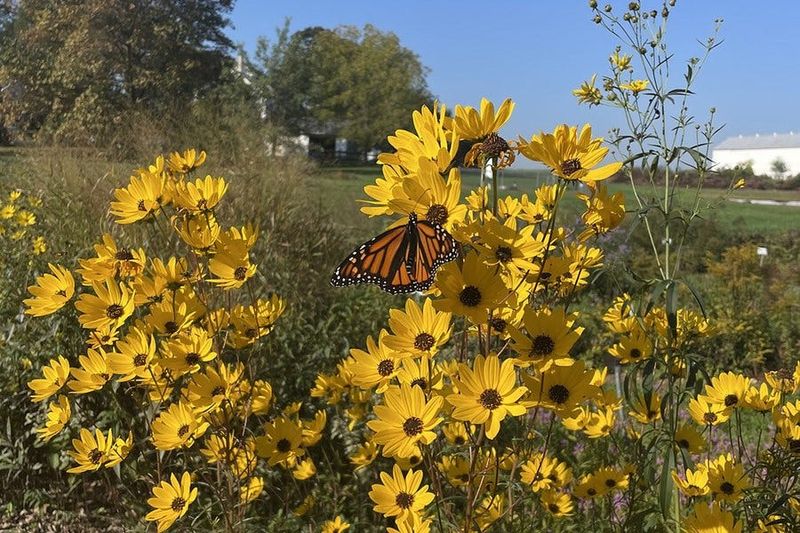
Fall is when monarch butterflies pass through North Carolina on their long journey south, and finding enough food along the way can make a real difference for them. Most garden flowers quit blooming well before October, leaving migrating monarchs with fewer places to refuel.
Swamp sunflower, a native North Carolina perennial, can stay in bloom from September into November, giving adults a reliable nectar source late in the season. Knowing how to grow it well, and what it can and cannot do on its own, helps you put it to work in your yard.
A Better Claim for This Late-Blooming Native
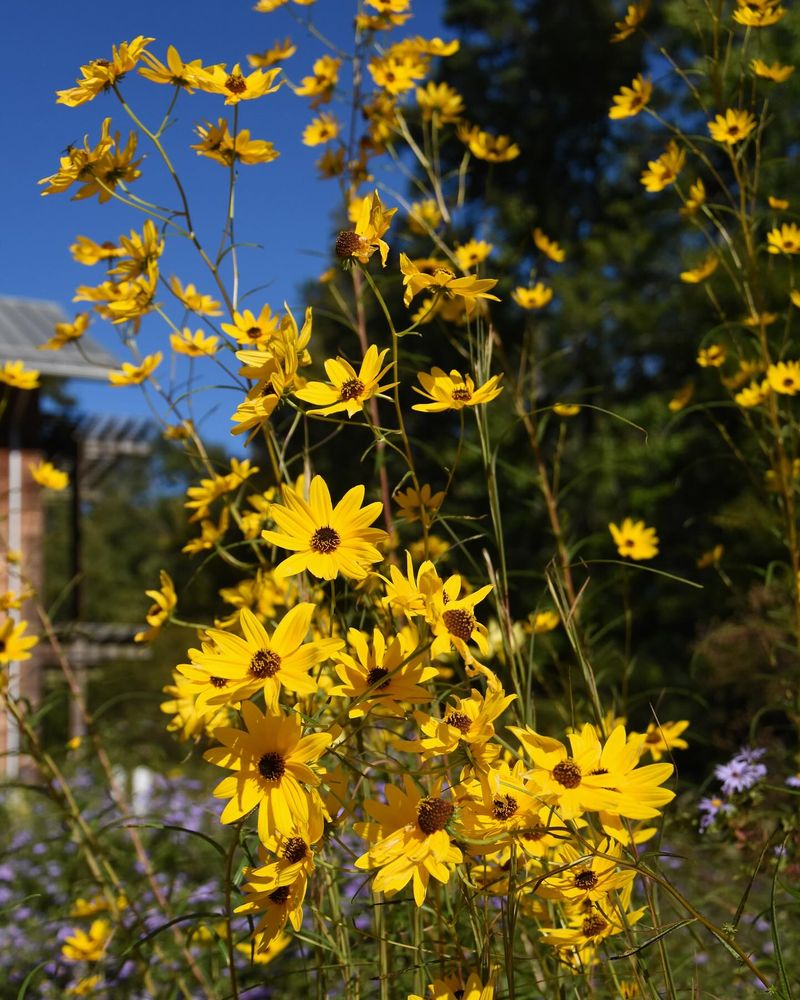
Before going further, the title deserves a small correction. Swamp sunflower, also called narrowleaf sunflower or Helianthus angustifolius, is not the only flower blooming in a North Carolina fall.
Native asters, goldenrods, blue mistflower, and ironweed can also provide nectar during the same season. The defensible claim is that swamp sunflower can remain conspicuous and productive late in the season, often when many common garden plants have already finished, making it a genuinely valuable addition to a fall monarch planting.
As a native herbaceous perennial in the daisy family, swamp sunflower grows across North Carolina’s Coastal Plain, Piedmont, and mountains. NC State Extension describes it as producing a profusion of late-season flowers, and the plant earns that description visually.
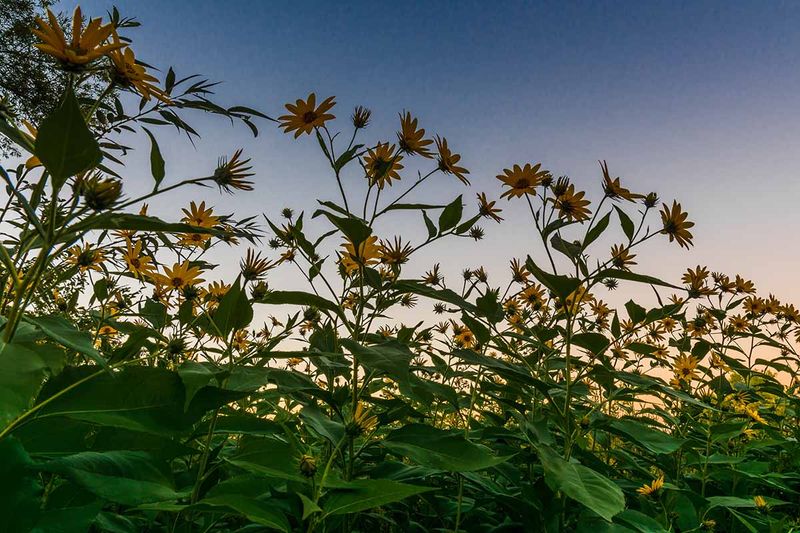
Stems can reach up to about 8 feet tall, carrying narrow, rough-textured leaves and clusters of cheerful yellow, daisy-like flowers with darker centers. The overall effect in a fall border is hard to miss.
One common misconception is worth clearing up right away. The name “swamp sunflower” suggests the plant requires permanently saturated soil, but that is not the case.
NC State notes that it prefers moist to occasionally wet acidic sandy-to-clay loams and can grow in drier soil when it receives adequate moisture. The name reflects where it often grows naturally, not a strict water requirement that limits where you can use it.
Its native status and adaptability are genuine strengths, but the article will also be honest about its vigorous spread and the realistic expectations a homeowner should bring to planting it.
Why Its Fall Flowers Matter to Adult Monarchs
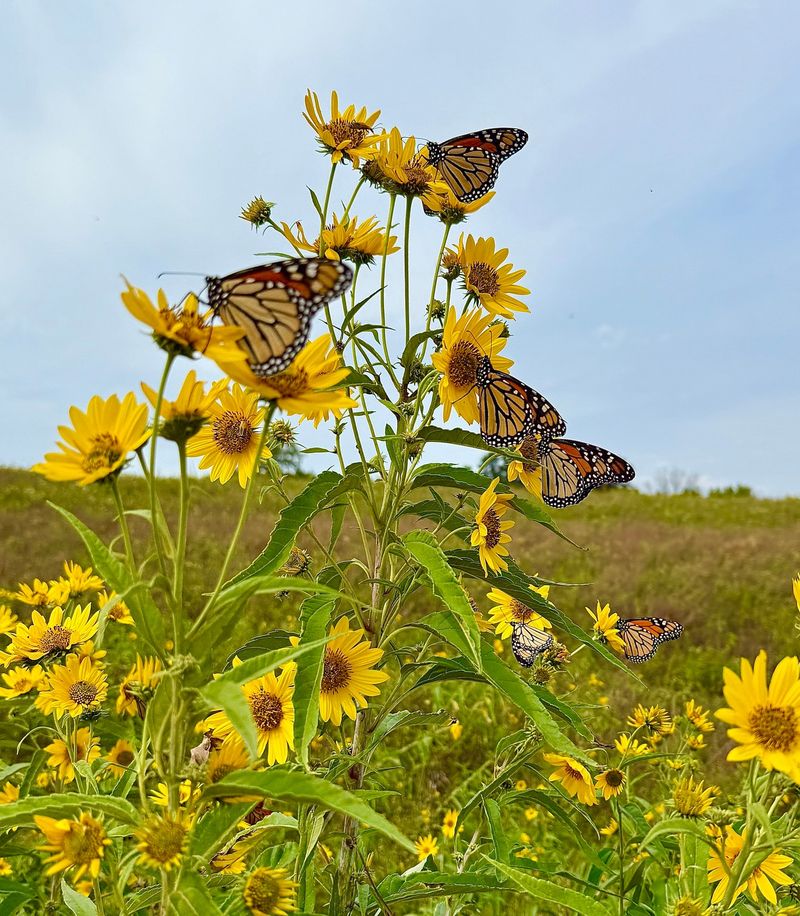
Monarch butterflies that pass through North Carolina in fall are adults fueling a journey that can stretch more than a thousand miles to overwintering sites in central Mexico. They need nectar, and they need it reliably as the season moves deeper into October and November.
That is where swamp sunflower earns its place. The Xerces Society’s Mid-Atlantic monarch nectar guide, which explicitly covers North Carolina, identifies narrow-leaved sunflower as an important nectar source for fall-migrating monarchs and calls it the latest-flowering sunflower species.
That regional designation matters and is the strongest direct evidence connecting this plant to monarchs in our area.
Monarch presence in the Mid-Atlantic region, including North Carolina, generally runs from late August through November, according to the same Xerces guide. Swamp sunflower’s general bloom window of September through November, as documented by NC State Extension, lines up well with that migration period.
Planting it gives you a flower that can still be open and offering nectar when a southbound monarch arrives in your yard in mid-October.
A critical distinction is easy to miss here. Swamp sunflower supplies nectar for adult monarchs only.
It is not a host plant for monarch caterpillars. Monarch larvae require milkweed species to survive, as the U.S.
Fish and Wildlife Service explains, and no amount of sunflower planting substitutes for that. Swamp sunflower plays one specific role in the monarch life cycle, and understanding that role keeps expectations grounded.
Goldenrods, New England aster, blue mistflower, and other native plants also bloom during this period and can attract fall monarchs. Swamp sunflower is a strong contributor, not a singular solution.
A yard with several of these plants in bloom at once gives migrating adults more options and a more reliable fuel stop than any single species can provide on its own.
Match the Plant to Your North Carolina Site
North Carolina is not one climate. A garden in Wilmington on the Coastal Plain, one in Chapel Hill in the Piedmont, and one in Asheville in the mountains face meaningfully different conditions, and swamp sunflower will behave differently in each.
Treating the state as uniform leads to unrealistic expectations, so a little upfront site evaluation goes a long way.
NC State Extension lists swamp sunflower as native across all three regions, but bloom timing and duration vary. Mountain gardens at higher elevations often see earlier frosts that can cut the flowering period short before November.
Piedmont sites experiencing summer drought may produce less vigorous plants that flower later or less abundantly, particularly in their first year before the root system is well established. Coastal Plain gardens, with their typically sandier soils and longer frost-free seasons, often give this plant the most generous flowering window.
Full sun is the most important site factor for strong flowering. The plant tolerates partial shade, but flowering generally declines noticeably when sunlight drops below about half a day.
Soil moisture is the second key variable. Swamp sunflower performs best in moist to occasionally wet conditions, making low spots, rain gardens, and stream or pond edges natural fits.
Where soil dries out in summer, consistent moisture during establishment and through dry spells can still produce a workable result, though the plant will likely be less vigorous than it would be in a reliably moist location.
An early freeze in October or an unusually dry fall can shorten the season regardless of where you garden in the state. Plan for these variables as real possibilities rather than worst-case scenarios, especially in the mountains.
The plant’s value is real, but its performance in your specific yard will depend on local conditions that no general description can fully predict.
Give a Tall, Vigorous Plant Room to Grow
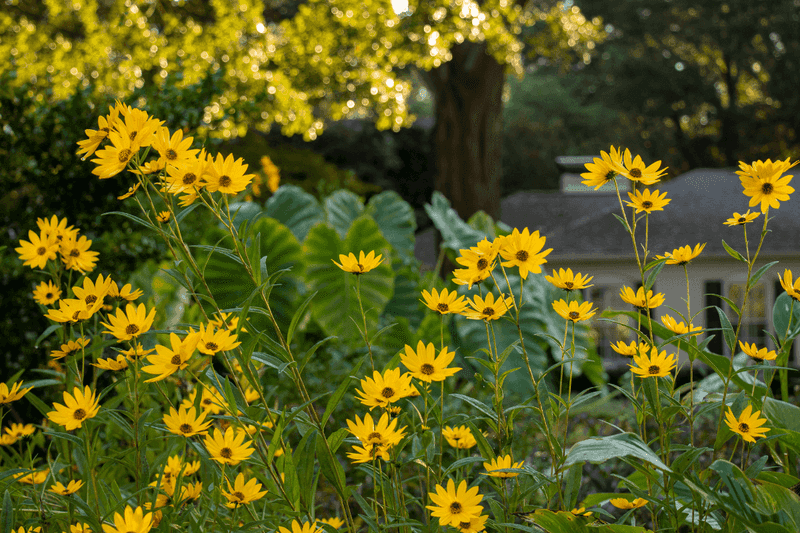
Few native perennials make as bold a statement as swamp sunflower in full bloom, but that statement comes with a size requirement. NC State Extension reports mature heights of up to about 8 feet, which immediately rules out planting this species in front of windows, along walkways, or near shorter perennials that would be shaded out.
Getting the placement right from the start saves a lot of rearranging later.
Back borders along fences or property lines are an obvious fit, especially in full sun. Naturalized areas where the plant has room to spread over several seasons work well too.
Rain gardens, stream banks, and pond edges match its moisture preference and give it the kind of space it needs without crowding other plants. The key in any of these locations is choosing a spot where an 8-foot plant in October is an asset rather than an obstacle.
Partial shade is tolerated, but the trade-off is real. Plants grown in shadier spots tend to produce fewer flowers, which reduces their value both visually and as a nectar resource.
If the sunniest spot in your yard also happens to be a tight corner near a patio, a shorter cultivar may be a more practical choice. NC State notes that shorter cultivars are available, and they can give you the late-season bloom without the full height challenge.
Wind is worth factoring in as well. Tall stems can become floppy in exposed locations, and staking may be necessary to keep plants upright through fall storms.
Planting near a fence or in a sheltered back corner reduces that risk. When stems do flop without support, they are less likely to present flowers at a height that works well for visiting pollinators, so a little structural planning pays off in a more functional fall display.
Manage Rhizomes, Branching, and Minor Damage
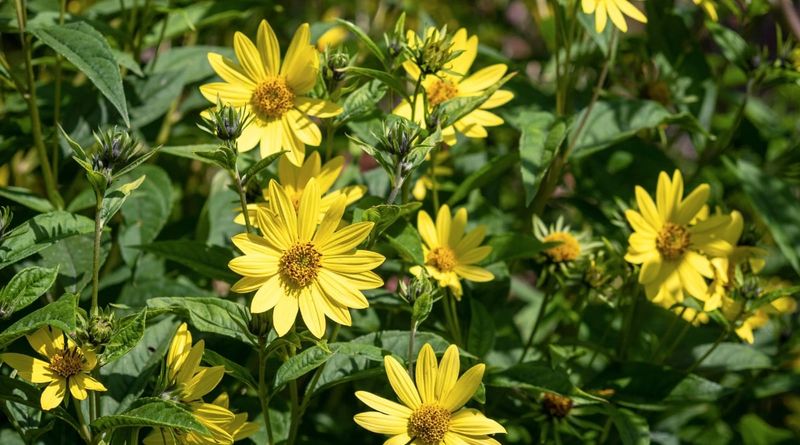
Swamp sunflower is a plant that rewards honest expectations. NC State Extension describes it as aggressive, and that label reflects real behavior.
The plant spreads through rhizomes, which are underground stems that send up new shoots around and beyond the original clump. In a large naturalized area or along a pond edge, that spreading habit fills space beautifully.
In a tightly managed perennial bed, it can overtake neighbors within a few seasons if left unchecked.
The practical response is to site the plant where expansion can be managed or simply accommodated, rather than trying to confine it to a small space. The USDA Natural Resources Conservation Service describes swamp sunflower as a beneficial native forb desirable within its natural habitat, and neither the USDA nor NC State Extension designates it as an invasive species.
Still, being native does not automatically mean the plant manages itself without attention in a residential setting. Checking the perimeter of the clump each spring and removing unwanted shoots before they establish is a straightforward way to keep things in order.
NC State recommends cutting plants back in June to encourage branching, which tends to produce a fuller, more flower-covered plant in fall. The source does not specify exactly how much this changes bloom timing or overall height, so treat it as a useful technique rather than a guaranteed outcome.
If you miss the June window, the plant will still flower, just possibly with fewer branch points and a leggier silhouette.
Ordinary foliage damage from chewing insects, aphids, or minor fungal issues is common and seldom serious enough to need treatment, according to NC State. Routine insecticide use in a pollinator planting is counterproductive.
Xerces advises avoiding insecticides where possible near nectar plants, since these chemicals can harm monarchs and other pollinators directly. A few chewed leaves on a plant that is otherwise healthy and blooming is a sign of a functioning ecosystem, not a problem that needs fixing.
Build a Fall Nectar Sequence Around It
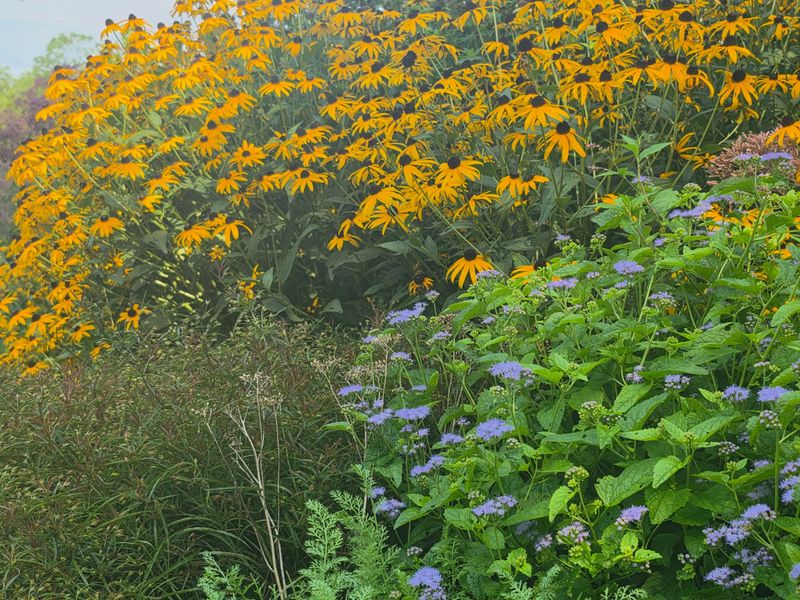
Swamp sunflower works best as one piece of a larger fall planting, not as a standalone solution. The Xerces Mid-Atlantic guide recommends combining plants with overlapping or sequential bloom periods so that nectar is continuously available as the migration season progresses.
Starting in late summer and carrying through November, a well-designed North Carolina planting can offer monarchs and other pollinators a reliable sequence of flowers rather than a single short window.
Several native plants pair naturally with swamp sunflower in this kind of sequence. New England aster tends to peak in September and October, overlapping with the early part of swamp sunflower’s bloom.
Seaside goldenrod, wreath goldenrod, and flat-top goldentop can bridge late summer into fall, providing nectar before the sunflower reaches its peak. Blue mistflower, with its soft lavender clusters, often blooms into October and adds a different flower form that attracts a wide range of pollinators.
Together, these plants give migrating monarchs more than one place to feed across a longer stretch of time.
Nectar plants feed adult monarchs, but caterpillars need something entirely different. According to the U.S.
Fish and Wildlife Service, monarch larvae require milkweed species to develop. Including native milkweeds, such as butterflyweed or common milkweed, in your planting addresses the breeding side of the equation.
Tropical milkweed is sometimes sold as an easy alternative, but the Xerces guide warns that it can persist year-round in mild climates, encourage winter breeding, and increase risk from the OE parasite. Native milkweed species are the better choice for North Carolina gardens.
When sourcing plants, Xerces recommends choosing regionally appropriate native plants and asking suppliers about plant or seed provenance. The North Carolina Native Plant Society’s nursery directory can help you find nurseries that specialize in local natives, though asking each supplier directly about the geographic origin of their stock is still the best practice.
Also ask whether nursery plants were treated with systemic insecticides before purchase, since those treatments can persist in plant tissue and harm pollinators that feed on the flowers.
Use One Perennial as One Responsible Step
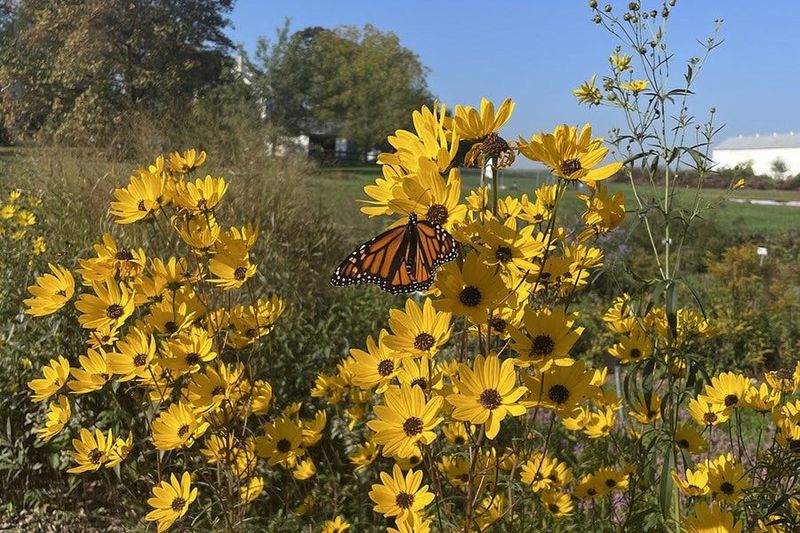
Swamp sunflower is a genuinely useful native perennial for North Carolina homeowners who have a sunny, roomy spot that can handle a tall, spreading plant. Its value is specific: it can extend adult monarch nectar availability into fall, during a migration window when many other flowers have already finished.
That is a real contribution, and a yard with a healthy clump of swamp sunflower is meaningfully better for fall-migrating adults than a yard without one.
At the same time, one perennial cannot do everything. The Monarch Joint Venture notes that monarchs need both milkweed for caterpillars and nectar plants for adults across the full migration season.
The U.S. Fish and Wildlife Service points to habitat loss, pesticide exposure, and climate pressures as factors in monarch population trends, none of which a single garden plant resolves.
Planting swamp sunflower is a responsible step, not a complete answer.
A practical action sequence for North Carolina homeowners: choose a full-sun location with room for an 8-foot plant and rhizomatous spread. Ask your nursery about plant provenance and whether the stock was treated with systemic insecticides.
Cut plants back in June to encourage branching. Avoid unnecessary pesticide use once the plant is established and attracting pollinators.
Surround it with overlapping native nectar plants and include native milkweed nearby. Xerces recommends planting in open, sunny clumps and building a diverse planting that covers more of the migration season than any single species can.
A yard that offers monarchs nectar in September, October, and into November is doing something worth doing, even if no single flower guarantees a visit.