
The Most Underrated North Carolina Cover-Crop Option You Sow In Fall For Soil That Builds Over Winter
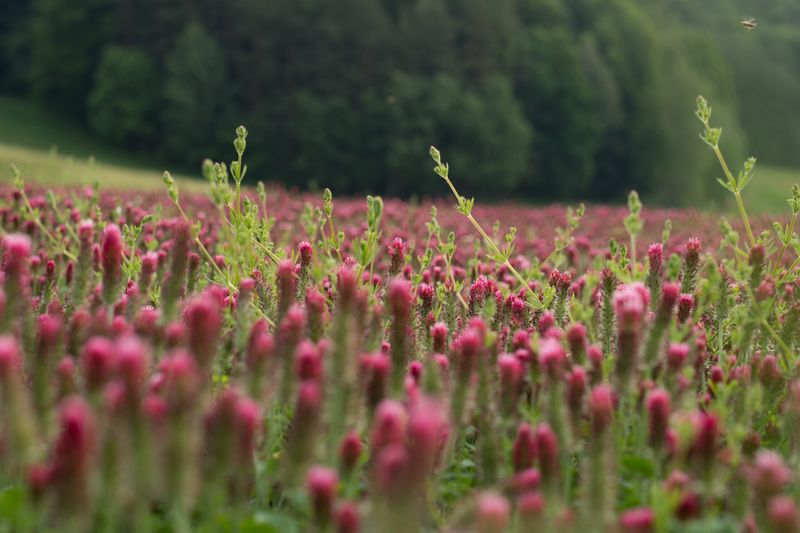
Most empty garden beds in North Carolina spend the winter doing nothing except losing topsoil to rain and growing weeds when the weather warms. Crimson clover is a low-cost legume you can sow in fall to put that idle ground to work, protecting the soil surface, feeding soil organisms, and setting up a modest nitrogen payoff for your spring vegetables.
The timing, the prep, and the spring finish all matter more than the seed packet suggests, so this guide walks through what actually works and what to watch out for across the Piedmont, Coastal Plain, and mountains.
Crimson clover gives an empty bed a winter job
Bare soil is not resting between seasons. Every heavy rain pounds the surface, breaks apart soil aggregates, and carries fine particles downhill or into low spots in your yard.
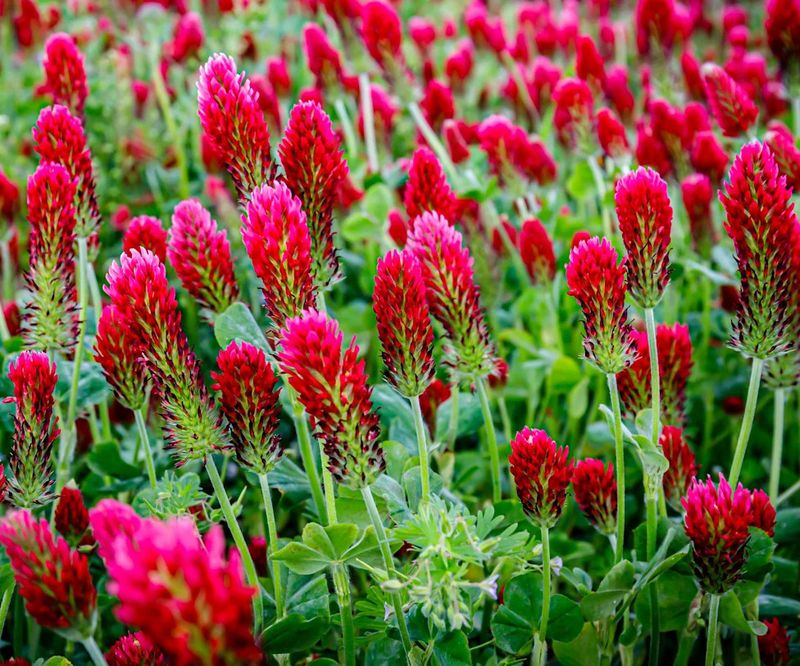
Crimson clover (Trifolium incarnatum) is a strong candidate for filling that gap in many unused North Carolina residential beds, though it is not a single best answer for every yard or every winter.
A healthy stand shields the soil surface from raindrop impact and slows erosion during winter storms. As the plant grows, its roots create small channels in the soil, and when the residue eventually decomposes, it feeds soil organisms and contributes to nutrient cycling.
NC State’s organic-gardening guidance lists crimson clover among the cover crops that can reduce erosion, add organic matter, and support soil structure when managed well.
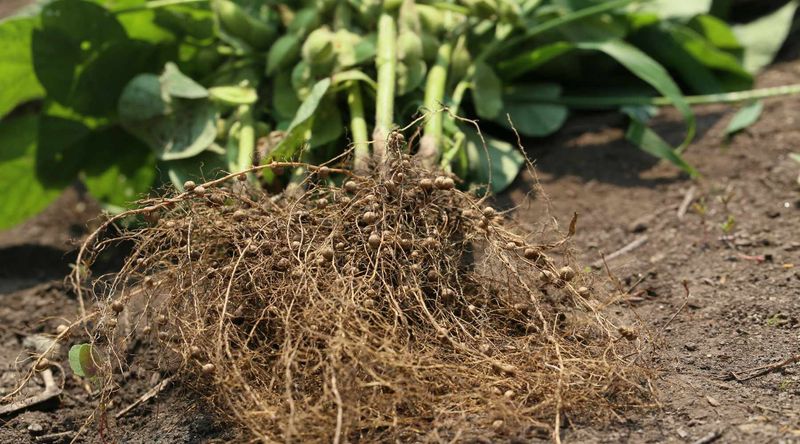
Crimson clover is also a legume, which means it works with soil bacteria to fix atmospheric nitrogen into a form that plants can use. After you terminate the cover in spring and the residue breaks down, some of that nitrogen becomes available to your next vegetable crop.
NC State’s winter annual cover-crop guide describes this nitrogen contribution as one of the practical reasons to include crimson clover in a vegetable rotation.
The hands-off appeal is real but limited. Winter growth requires little attention once the stand is established, but the gardener still does the work that makes it possible: preparing the bed in fall, ensuring good seed-to-soil contact, watering through early establishment, monitoring the stand, and terminating it on schedule in spring.
Skipping any of those steps can leave you with thin coverage, unwanted reseeding, or a residue problem that delays planting. Think of crimson clover as a low-maintenance winter tenant, not an automatic soil-repair service.
North Carolina timing starts with your region
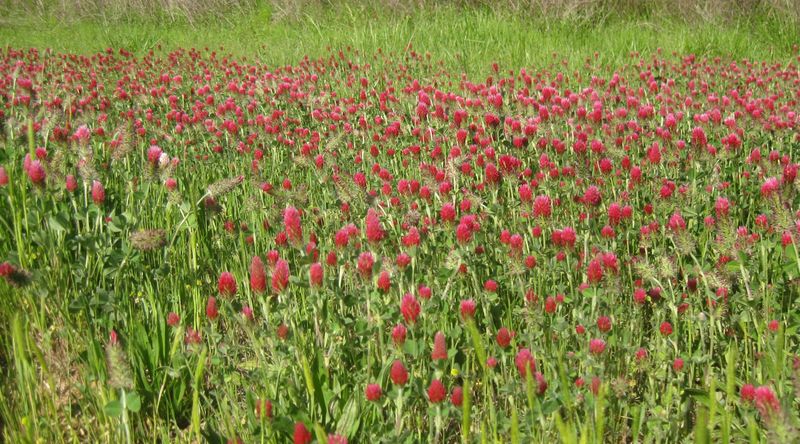
September is a reasonable starting point for some North Carolina gardeners, but treating it as a statewide deadline sets up a lot of people for poor stands. Soil temperature, frost timing, and rainfall patterns vary enough across the state that a single calendar date does more harm than good.
A practical way to think about fall timing: NC State’s vegetable-gardening handbook places the general fall cover-crop window at approximately September 15 through October 20 in the Piedmont. Coastal Plain gardeners typically have one to two weeks of additional flexibility on the back end, pushing the window slightly later.
Mountain gardeners face earlier frost and should plan to sow one to two weeks earlier than the Piedmont window, making mid- to late September the practical outer limit for many mountain beds.
Separately, NC State’s organic-gardening section lists crimson clover specifically for sowing from September through November, reflecting the state’s range of climates and the crop’s tolerance for mild fall conditions. That broader window applies mainly to warmer, lower-elevation sites where hard freezes arrive late.
Your local conditions matter at least as much as any regional rule. A bed in a low spot that stays shaded until mid-morning may need earlier sowing than a raised bed on a south-facing slope nearby.
The goal is to give the clover enough time to germinate, develop a small root system, and reach a few inches of top growth before hard freezes arrive. A seedling caught by a killing frost before it has established will not recover the way a rooted plant will.
Plan your sowing date backward from your expected first hard freeze, allow three to four weeks for establishment, and use the regional windows above as guardrails rather than fixed rules.
A smooth seedbed makes establishment more reliable
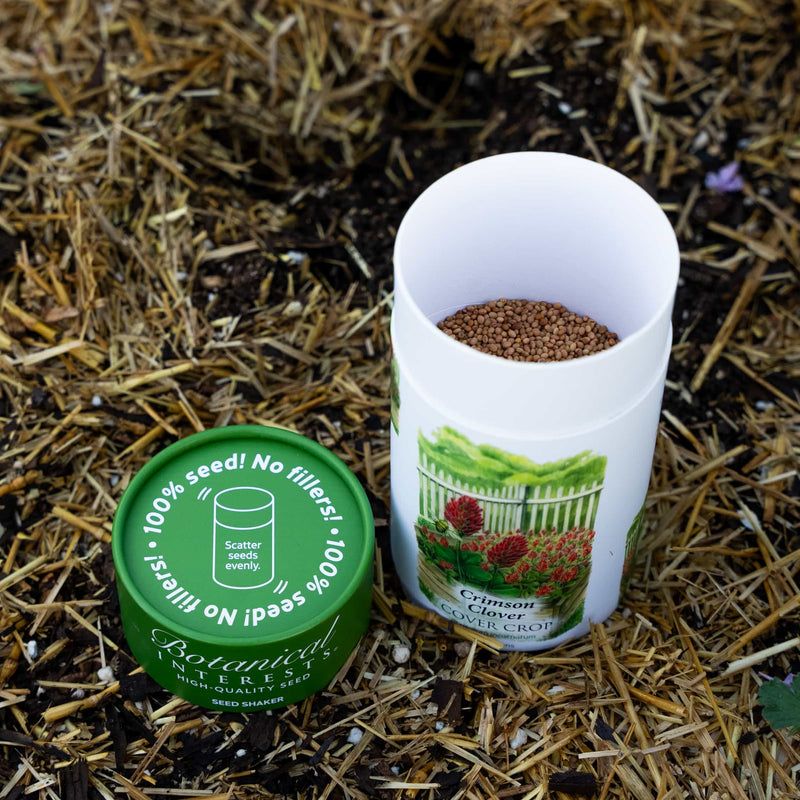
Crimson clover seed is small, and small seed punishes a rough or cloddy seedbed more than most gardeners expect. Before you open the bag, the bed needs to be cleared of old crop debris and any weeds that have moved in since summer.
Weeds that germinate alongside clover seedlings will compete for light and moisture right when the young plants are most vulnerable.
Once the bed is cleared, loosen the top two to three inches of soil with a fork or a shallow pass of a hoe. The goal is a firm, relatively smooth surface with no large clods.
You do not need to turn the bed deeply; you just need the top layer to be loose enough for seed to make contact with moist soil particles. NC State’s cover-crop guidance notes that drilling into a prepared seedbed produces the most uniform stand, but for a backyard bed, careful broadcasting followed by light raking achieves similar results when the surface is properly smoothed first.
Broadcast the seed at one-half to one pound per 1,000 square feet, which works out to roughly one-fifth to one-third of an ounce per 100 square feet. NC State’s organic-gardening handbook gives this rate specifically for residential gardens.
After broadcasting, rake lightly to work the seed into the top quarter to one-half inch of soil. Do not bury it deeper; the seed is too small to push through more than a half-inch of soil reliably.
Moisture is the variable most gardeners underestimate after sowing. Keep the seed zone consistently moist from the day you sow until the seedlings are up and growing on their own, typically seven to fourteen days depending on soil temperature.
If you sow and then leave for a week without rain, you may return to a bed of dry seed that has not moved. A light daily watering or a brief run of drip irrigation during that first stretch makes the difference between a dense, soil-covering stand and a patchy one that lets weeds fill the gaps.
No seeding method guarantees a perfect stand, but a prepared surface, correct depth, and consistent early moisture get you as close as the site allows.
Roots, residue, and nitrogen create a gradual soil payoff
Soil does not transform in a single season, and crimson clover will not hand you crumbly, perfectly structured beds by April regardless of how well the stand establishes. What a healthy cover can do is set up a series of gradual improvements that compound over repeated seasons of good management.
The most immediate benefit is physical protection. A thick canopy of clover leaves absorbs the energy of winter raindrops before they can break apart surface aggregates and crust the soil.
USDA NRCS cover-crop research identifies erosion control and improved water infiltration as consistent cover-crop benefits, driven partly by this surface protection and partly by the root channels that carry water deeper into the profile. When roots die and decompose, those channels persist long enough to improve drainage and aeration in the upper soil layer.
Organic residues are the second piece. As crimson clover biomass breaks down after termination, it feeds bacteria, fungi, and other soil organisms.
Those organisms produce compounds that help bind soil particles into aggregates, which is what gives healthy garden soil its loose, workable feel over time. NC State’s soil-health guidance is candid that measurable improvements in aggregate stability from a single season of cover cropping are not guaranteed, and that available soil tests may not reliably detect management differences in North Carolina soils within a short time frame.
Nitrogen fixation is the benefit most gardeners find exciting, and it is real, but the numbers need context. NC State’s cover-crop guide reports a planning range of roughly 60 to 75 pounds of nitrogen per acre for well-established crimson clover stands, with broader potential of 50 to 150 pounds per acre depending on stand density, biomass, soil, and weather.
Those are farm-scale figures measured under agricultural conditions. A thin stand in a shaded backyard bed will contribute far less.
Treat any nitrogen from crimson clover as a supplement to your existing fertility program, not a replacement. NC State’s soil-testing guide recommends testing for pH and nutrients before each growing season; a cover crop does not change that need.
Choose the crop that matches the bed

Crimson clover earns its reputation in many North Carolina beds, but a few site conditions can push you toward a different choice or a blend. Drainage is the most important factor to check before you sow.
Crimson clover performs best on well-drained soil. NC State’s winter cover-crop guide reports poor productivity for crimson clover on poorly drained soils in some trials.
If your bed sits in a low spot that stays soggy after rain, or if the soil is heavy clay that drains slowly, the stand may thin out or fail before it delivers meaningful soil benefits. In those situations, hairy vetch is worth considering because it tolerates a wider range of drainage conditions and provides similar nitrogen benefits, though it can be harder to terminate cleanly than crimson clover.
When drainage is adequate, the next question is what you want the cover to accomplish. Crimson clover decomposes relatively quickly in spring, releases its nitrogen in a form that becomes available to vegetables within a few weeks of termination, and does not leave the tough, persistent residue that can complicate tillage.
Cereal rye does the opposite: it produces dense, fibrous biomass that covers the soil surface more completely through the coldest months and suppresses winter weeds more aggressively, but mature rye residue has a high carbon-to-nitrogen ratio and can temporarily tie up soil nitrogen after incorporation. Penn State Extension’s cover-crop nitrogen guidance flags this trade-off as a practical reason to think carefully about timing and residue management when using grass covers before a nitrogen-hungry vegetable crop.
A crimson clover and grass mix can give you both functions in a single sowing. NC State research on legume and small-grain cover-crop mixtures supports pairing crimson clover with cereal rye, wheat, or oats to combine the legume’s nitrogen contribution with the grass’s stronger winter ground cover.
For most residential beds in the Piedmont or Coastal Plain with decent drainage, straight crimson clover is a practical starting point. Add a grass if your bed is prone to winter weeds or if you want more complete coverage during cold spells.
Match the crop to the bed rather than treating any single option as the automatic right answer.
Spring termination determines the result
Everything the cover crop accomplished over winter can be undone by a poor finish in spring. Terminating at the right time, in the right way, and on soil that is dry enough to work is as important as the fall sowing itself.
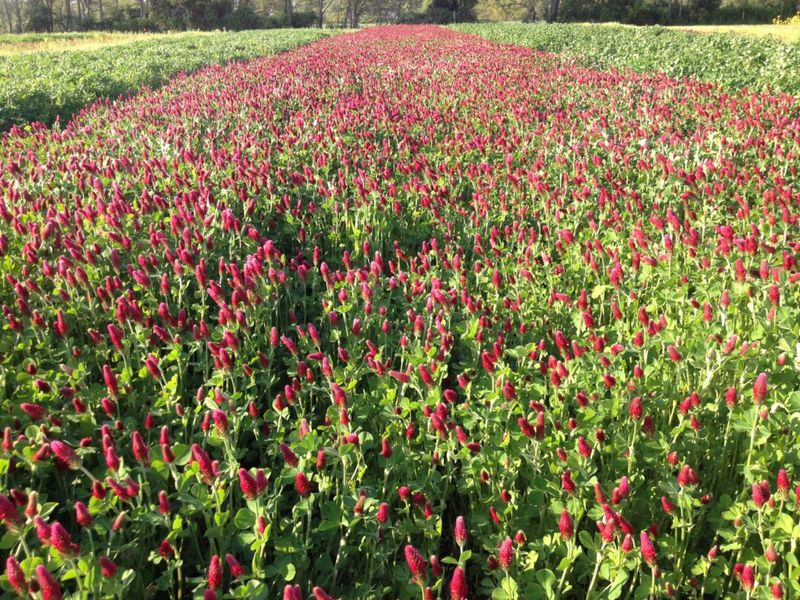
Timing benchmarks from NC State’s winter cover-crop guide put the target termination date at around April 1 for eastern North Carolina and mid- to late April for the Piedmont and mountains. Those dates assume you want enough biomass to have built up before you cut, but not so much that the clover has flowered and begun setting viable seed.
Adjust your actual date based on what you see: if the plant is shooting up flower stalks faster than expected in a warm spring, terminate earlier. If growth has been slow after a cold stretch, give it another week before you cut.
Home gardeners can mow, cut with a string trimmer, or shallowly incorporate crimson clover. Mowing and leaving the residue on the surface works well if you plan to transplant through the mulch layer or rake it aside before direct seeding.
Shallow incorporation mixes the residue into the top few inches of soil, where it decomposes faster. Either method works, but the choice should match your next crop’s planting needs.
Seed development is the line you must not cross if you want to avoid a reseeding problem. University of Minnesota Extension’s cover-crop selection guide notes that crimson clover can become weedy when allowed to set and drop viable seed, which means a bed you intended to plant with tomatoes could be fighting clover the following fall instead.
Terminate at or before early bloom if you do not want self-seeding.
Wet soil is a serious caution. NC State’s soils handbook warns that working wet soil compacts it and damages the structure you spent the winter trying to build.
Wait for the bed to drain and firm up before you use any tool that presses into the surface.
After incorporating a substantial amount of green residue, plan to wait roughly two to three weeks before direct seeding or transplanting into that bed. Oregon State Extension’s home-garden guide and Minnesota Extension’s spring cover-crop management guidance both flag this waiting period as important because decomposing residue can temporarily compete with germinating seeds for oxygen and nitrogen.
A short wait costs little and protects the planting you have been building toward since fall.
Treat a fall stand as one step in long-term soil care
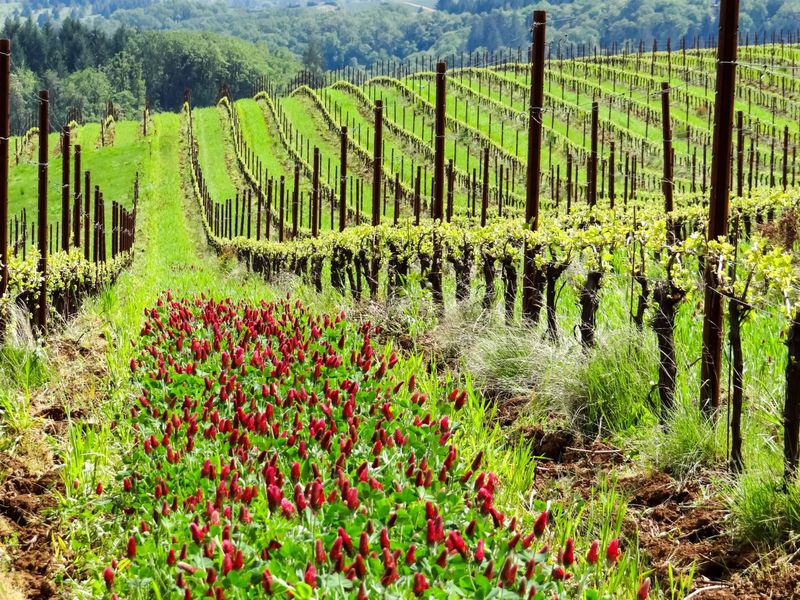
A single season of crimson clover will not rescue a neglected bed or replace years of soil-building work. What it can do is keep an idle bed productive through the winter months, protect the surface from erosion, feed the soil biology, and contribute some nitrogen to your next vegetable crop when you manage the finish correctly.
The results you get will reflect the choices you make: sowing within the right regional window, preparing a seedbed that gives the small seed a fair start, maintaining moisture through early establishment, and terminating before the plant seeds itself or the soil gets too wet to work. NC State’s cover-crop research supports crimson clover as a reliable tool in this rotation when those conditions are met, and less reliable when they are not.
Soil testing stays separate from this work. NC State’s soil-testing guidance recommends checking pH and nutrients each season, and a cover crop does not substitute for that information.
Crimson clover fits best as one repeatable piece of a broader management approach that also includes appropriate bed preparation, sound crop selection, and consistent follow-through. NC State’s soil-health overview makes clear that lasting improvement comes from repeated good decisions, not a single winter’s worth of cover.
The quiet work a well-managed stand does underground is real, but it pays out slowly, season by season, to gardeners who keep showing up.