
The One Thing North Carolina Confederate Jasmine Needs Before Fall Or Next Spring’s Bloom Never Fills In
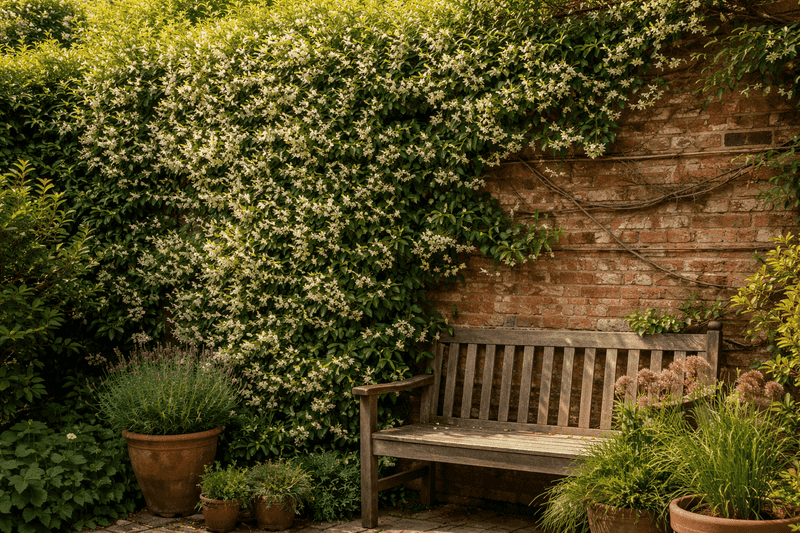
Confederate jasmine fills fences and trellises across North Carolina with creamy white flowers and a scent that stops people mid-stride every late spring. If last season’s bloom felt thin or patchy, it’s tempting to reach for a quick fix before fall arrives.
The truth is that no single product or treatment guarantees a fuller display, and chasing that promise can actually make things worse. What the vine needs is a honest look at what’s actually holding it back.
No Single Fall Treatment Guarantees a Full Bloom
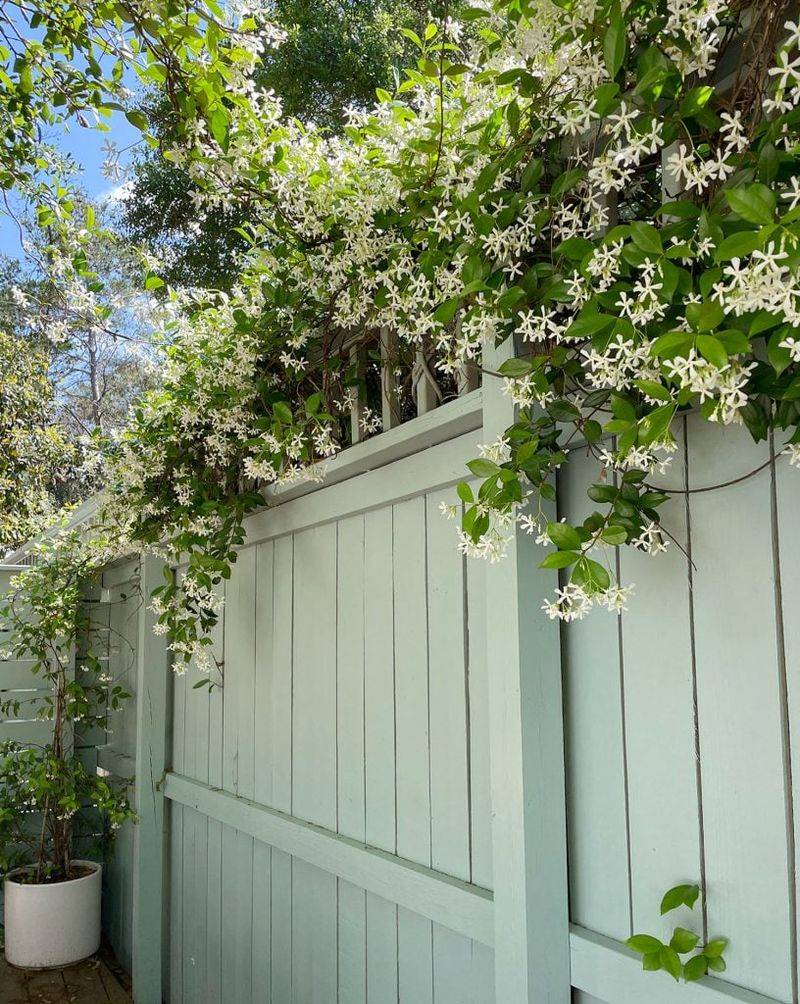
Confederate jasmine, known botanically as Trachelospermum jasminoides, is a late-spring and summer bloomer. Any care task you do before fall is preparation for the next growing season, not a trigger for immediate flowers.
Fall is not a deadline to beat; it is a reasonable window to correct whatever is actually limiting the vine’s performance.
Gardening articles sometimes promise that one fertilizer, one booster, or one treatment applied before a certain date will guarantee a fuller bloom the following spring. NC State’s plant profile for Confederate jasmine does not establish any mandatory pre-fall treatment, and no authoritative source supports the claim that missing a single application will cause next spring’s bloom to fail.
That either-or framing is not how this vine works.
What sources do support is a diagnosis-first approach. Poor flowering has several possible causes: too much shade, inadequate drainage, drought stress, unsuitable soil pH or fertility, winter injury at colder sites, or pruning at the wrong time.
Identifying the actual limiting factor is the step that matters most.
The sections that follow walk through each of those conditions in order. Before buying anything or cutting anything, run through the checklist.
NC State’s woody ornamentals guidance notes that lack of fertilizer is rarely the sole cause of poor growth, and that excess fertilizer can worsen plant problems rather than solve them. Starting with an accurate diagnosis protects both the vine and your time.
Check Light, Drainage, and Winter Exposure First
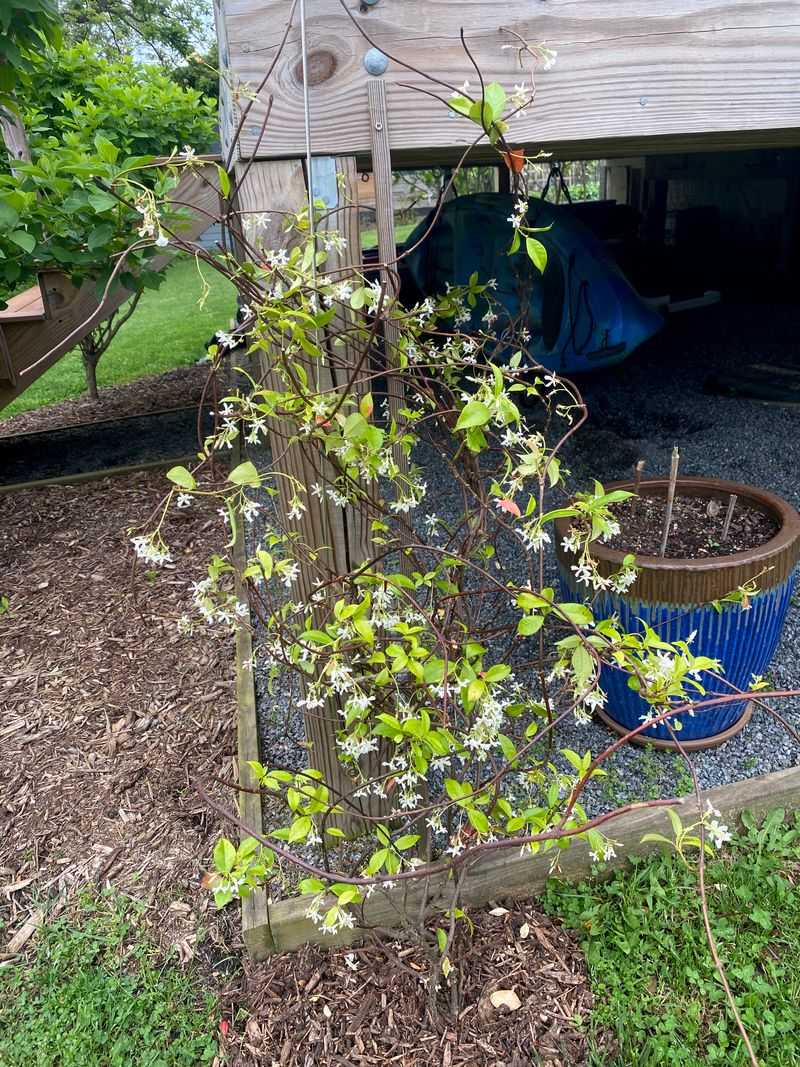
Before purchasing fertilizer or scheduling a pruning session, walk the planting site and look at three things: how much direct sun the vine receives, how water moves through and away from the root zone, and whether the location exposes the plant to harsh winter conditions. These factors shape flowering more reliably than any product applied in fall.
Sun exposure is one of the clearest predictors of bloom density. UF/IFAS guidance on star jasmine confirms that plants grown in full sun produce the most flowers.
Confederate jasmine tolerates partial shade, but a vine tucked under a large tree canopy or against a north-facing wall may put out plenty of foliage while producing only scattered blooms. If the support receives fewer than six hours of direct sun daily during the growing season, the light itself may be the limiting factor, and no amount of fertilizer will fully compensate for it.
Drainage deserves equal attention. Soggy or compacted soil restricts root function and can mimic drought stress even when rainfall is adequate.
Check whether water pools near the base of the vine after rain or irrigation. Compacted clay soil, common across much of the Piedmont, can prevent roots from establishing the depth and spread the vine needs to support a heavy spring bloom.
Improving drainage or loosening compacted soil around the root zone is a more productive fall task than feeding a plant whose roots cannot function properly.
Regional performance is also worth considering honestly. NC State lists Confederate jasmine primarily for the Coastal Plain and Piedmont, within hardiness zones 8a through 10b.
Gardeners in the Blue Ridge or at higher elevations may find that winter cold, wind exposure, or late frosts limit the vine’s performance in ways that site adjustments alone cannot fully overcome. A sheltered microclimate, such as a south-facing wall that holds heat, can extend reliable performance further into the foothills, but growers at colder mountain sites should weigh cultivar hardiness and winter protection before assuming the vine will perform like one in Raleigh or Wilmington.
Correcting a shade or drainage problem before fall gives the root system the best possible footing heading into the next growing season, which is the realistic goal of any pre-fall care effort.
Use a Soil Test Before Choosing Fertilizer
A soil test is a decision tool, not a seasonal ritual every gardener must complete each fall. Its value is specific: it tells you what the pH is, which nutrients are present at what levels, and whether a fertilizer application is actually warranted.
Without that information, choosing a fertilizer product and rate is guesswork, and guesswork with fertilizer can harm a plant rather than help it.
NC State’s guide to soil testing explains that testing is the reliable way to determine pH, nutrient availability, and fertilizer need before making any application. For Confederate jasmine, the practical rule is straightforward: test when fertility or pH is in doubt, when you are considering a fertilizer application, or when the vine has been underperforming for more than one season without an obvious cause.
If the soil has been tested recently and the results showed adequate fertility, another test may not be necessary before this fall.
Sampling an established woody vine correctly improves the accuracy of the results. Collect soil from multiple spots within the root zone rather than a single location.
Aim for a depth of roughly 6 to 10 inches, which is where the active feeder roots of an established vine spend most of their time. Avoid areas that received fertilizer or lime recently, because those spots will skew the reading.
Mix the samples together, let the combined soil dry if it is wet, and submit it according to the lab’s instructions.
North Carolina residents can submit samples to the NCDA&CS soil testing lab. Testing is free outside the annual peak season.
NCDA&CS notes that a $5 per-sample fee is scheduled beginning December 1, 2026 during the peak season window, so submitting samples before that date avoids the charge if you are planning ahead. The lab’s recommendation will specify product type, rate, and timing, which is more reliable than selecting a fertilizer based on the label’s marketing claims alone.
Once you have results, use them alongside the product label to make the actual application decision. NC State’s fertilizing guide for trees and shrubs is clear that product selection and rate should follow the soil-test recommendation and the plant’s demonstrated need, not a generic seasonal schedule.
Avoid Turning Fertilizer Into a Foliage Stimulator
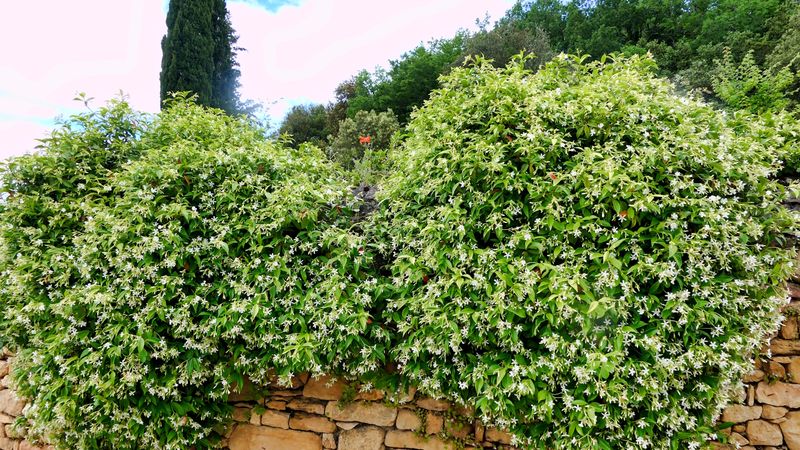
Sparse flowering is frustrating, and fertilizer feels like an obvious solution. The problem is that applying fertilizer, especially a high-nitrogen product, without evidence of a nutrient deficiency is more likely to produce a wall of dark green leaves than a heavier bloom.
Understanding why that happens makes it easier to resist the impulse.
Nitrogen drives vegetative growth. When a plant receives more than it needs, it channels that energy into new shoots and foliage rather than reproductive effort.
Those fast-growing shoots are often softer and more vulnerable to cold or disease than growth produced under normal conditions. NC State’s woody ornamentals handbook warns that excess fertilizer can produce excessive vegetative growth, increase pruning demands, promote disease problems, and even injure the plant.
Adding more nitrogen to a vine that is already growing vigorously will not correct a bloom problem rooted in shade, drainage, or pruning timing.
High-phosphorus “bloom booster” products are marketed as a way to push more flowers, but that claim is only valid when soil phosphorus is actually deficient. Applying phosphorus to soil that already has adequate levels does not improve flowering and can contribute to runoff problems.
The soil test tells you whether phosphorus is the gap; without that data, a bloom booster is an expensive guess.
The guidance on fall fertilizer timing is not uniform across sources. NC State’s newer tree and shrub fertilizing guide cautions against quick-release fertilizer between leaf drop and budbreak, while broader woody-plant guidance notes that established plants can receive carefully timed fall feeding after the first frost when roots remain active.
The Confederate jasmine plant profile specifically points to spring as the time to fertilize if soil fertility is inadequate, not fall. The safer path is to avoid any fall application made simply to stimulate growth, and to reserve spring feeding for situations where a soil test confirms a genuine need.
When a soil-test-supported application is justified, broadcast the fertilizer evenly across the root zone according to the label rate. Keep dry granules off foliage and stems, water the material in after application, and do not concentrate product in a single spot.
These placement steps reduce the risk of root injury and ensure the nutrients reach where they are needed.
Resolve Drought Stress Before Addressing Fertility
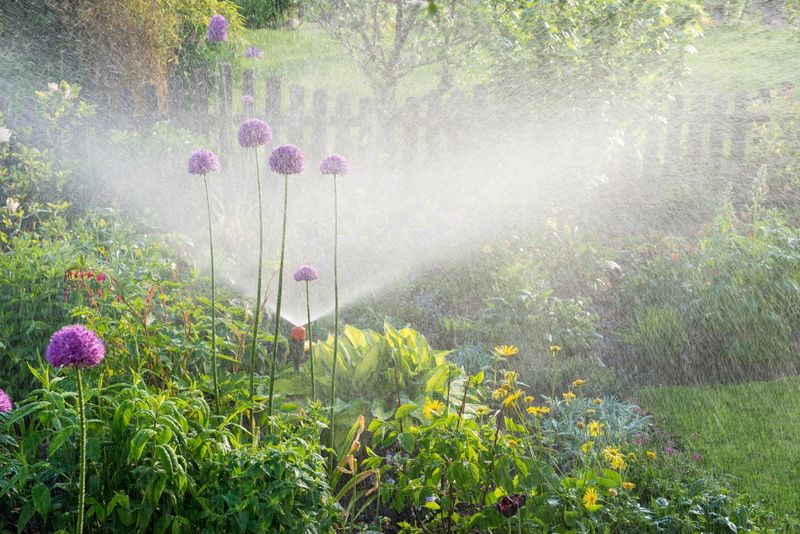
A vine that has been through a dry summer does not need fertilizer before it needs water. Drought stress and nutrient deficiency can look similar from a distance, producing weak growth, reduced flowering, and a generally tired appearance.
Treating drought stress as a fertility problem is one of the more common and costly mistakes a gardener can make heading into fall.
NC State’s woody ornamentals guidance is direct on this point: applying fertilizer to drought-stressed plants encourages water-demanding new growth and can injure roots that are already under stress. If the soil around the vine’s base is dry, hard, or pulling away from the root zone, correcting that moisture deficit is the priority.
Fertilizer applied to a thirsty vine in dry soil risks burning feeder roots rather than feeding them.
Checking soil moisture is straightforward. Push a finger or a screwdriver several inches into the root zone and note whether the soil feels dry, moist, or wet at depth.
Surface soil dries quickly, so surface appearance alone is not a reliable guide. Confederate jasmine performs best in well-drained soil with consistent moisture, meaning the goal is adequate root-zone hydration without prolonged saturation.
Slow, deep watering that reaches the active root zone is more effective than frequent shallow applications that wet only the top inch or two.
Once moisture stress is corrected and the vine has had time to recover, revisit the fertility question using the soil test results. A plant that responds well to improved watering alone was probably drought-stressed rather than nutrient-deficient, and that distinction changes what you do next.
Avoid setting a fixed watering schedule based on the calendar; soil type, recent rainfall, sun exposure, and the vine’s root depth all influence how quickly the root zone dries out at any given site.
Time Pruning to Protect the Next Flowering Display
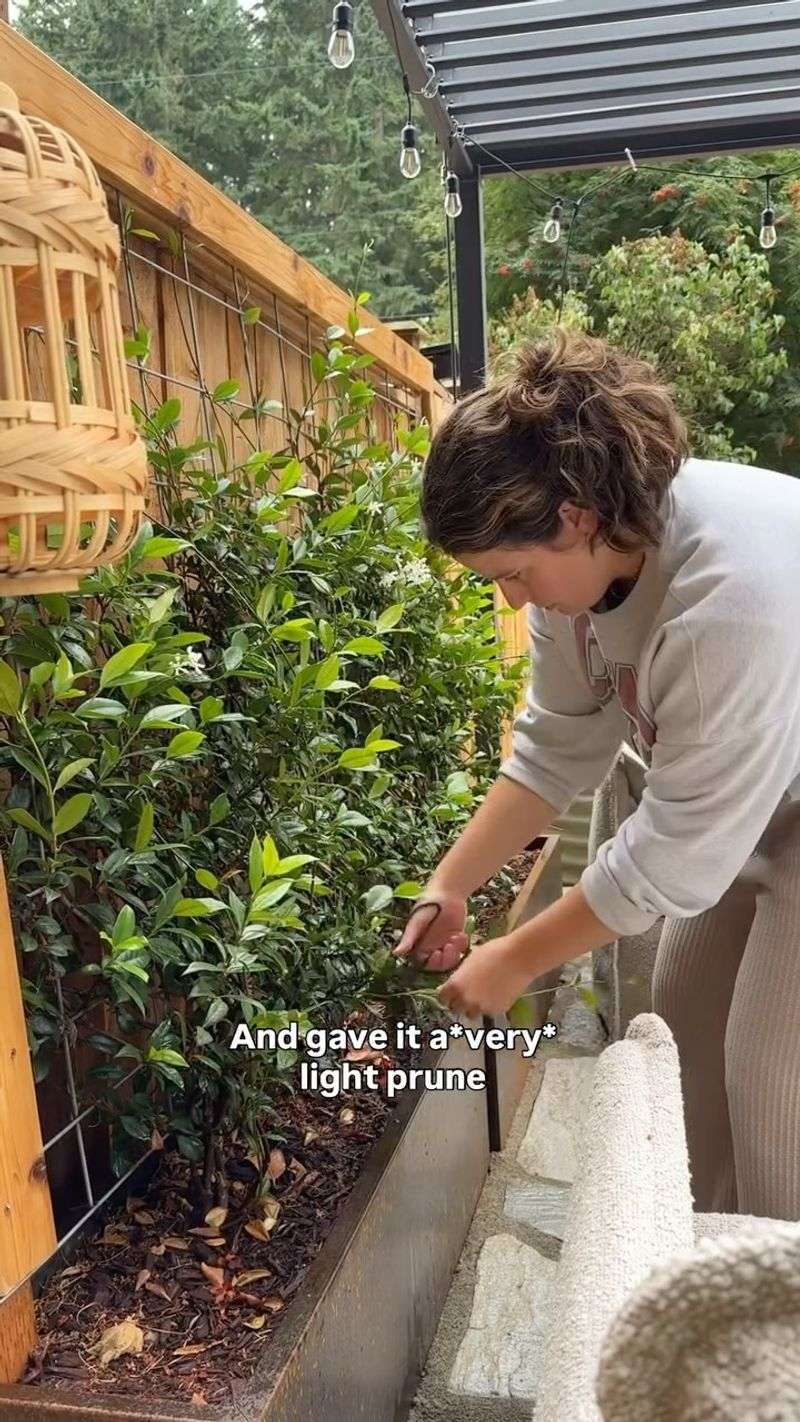
Grabbing the pruners in late fall and cutting the vine back hard is one of the most reliable ways to reduce next spring’s flowering. Confederate jasmine blooms mainly in late spring and into summer, and the growth that carries those flowers develops during the current season.
Remove too much of that growth at the wrong time and you remove the bloom with it.
NC State’s pruning guide for ornamental plants classifies star jasmine among summer-blooming vines and recommends pruning before new growth begins, while the plant profile advises pruning after flowering to keep the vine within its space. The practical lesson from both sources is the same: complete major shaping after the main bloom period, or early enough before the next flush of growth that the vine has time to recover.
Avoid heavy pruning immediately before the expected flowering period.
There is a meaningful difference between selective training and aggressive reshaping. RHS guidance on Trachelospermum notes that the vine can reach substantial size and may need regular management to stay within its allotted space.
Removing stems that are growing out of bounds, redirecting growth onto the support, and clearing dead or damaged wood are reasonable tasks at almost any time of year. Cutting the vine back by a third or more in late fall is a different matter and carries a real risk of reducing next season’s display.
Handling precautions matter with this plant. NC State’s plant profile flags Confederate jasmine as poisonous and notes that it produces a sticky milky latex when stems are cut.
Wear gloves every time you prune, and wash your hands after the work is done. Clean your pruning tools with a damp cloth or tool-cleaning solution after each session to remove the sap buildup, which can gum up the blades and transfer between plants.
Keep pruned stems and clippings away from children and pets, and dispose of them rather than leaving them accessible on the ground.
Match the Before-Fall Action to the Diagnosis
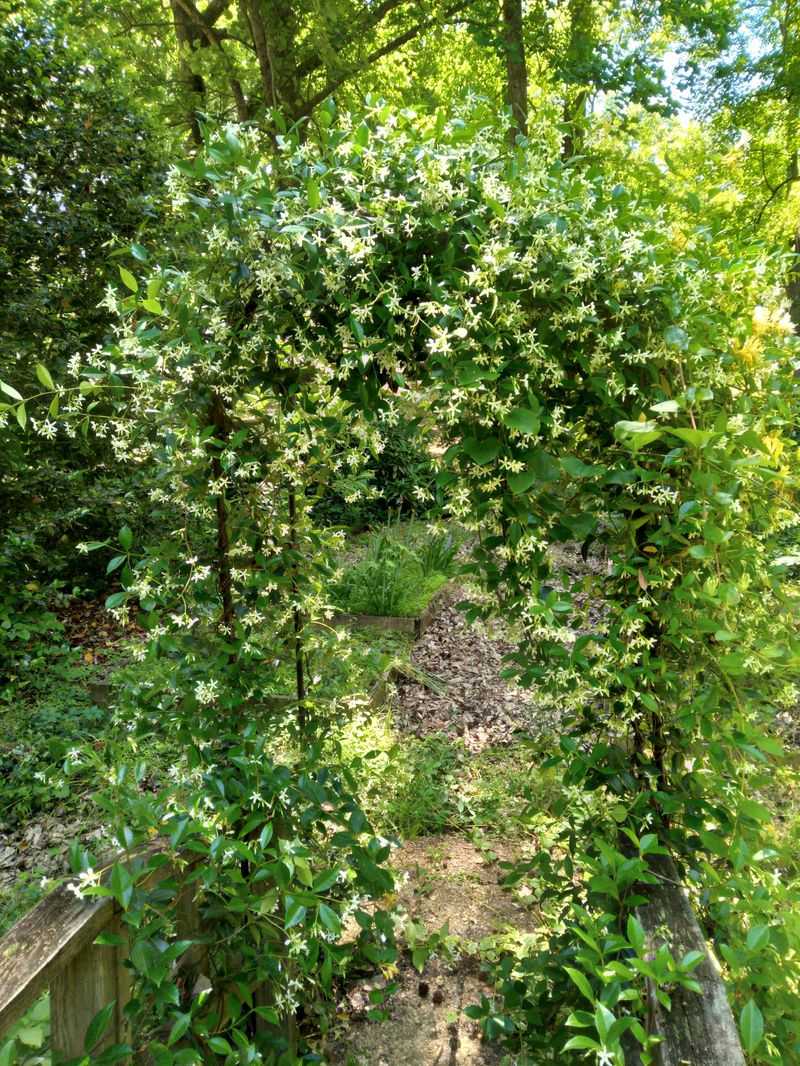
Running through a quick yard check before fall gives you a clear picture of what, if anything, actually needs to change. Start by confirming the plant’s identity.
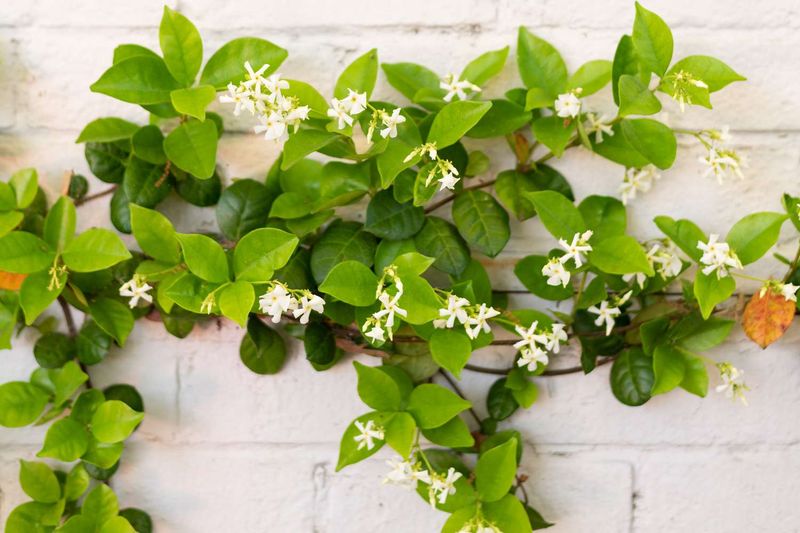
Confederate jasmine, Trachelospermum jasminoidesGelsemium sempervirens, produces white star-shaped flowers with a strong fragrance in late spring and summer. It is sometimes confused with Carolina jessamine (), a yellow-flowering native vine with a different bloom time and different care needs.
Getting the identification right before applying any treatment matters.
Next, note the vine’s bloom and pruning history from the past season. Did it flower heavily and then get cut back hard in summer or early fall?
Did it miss a season of significant pruning while also producing sparse flowers? Those patterns point in different directions.
Then inspect the support and sun exposure. Count the hours of direct sun the planting receives on a typical clear day during the growing season, and check whether the support allows the vine to spread evenly or is forcing it into a cramped position.
Assess moisture and drainage at the root zone, as described in the drought-stress section. Look for signs of cold or frost damage on stems and leaves, particularly if the planting is at a higher elevation or in an exposed location.
NC State notes that Confederate jasmine is best suited to the Coastal Plain and Piedmont, so Blue Ridge growers should factor winter hardiness into any diagnosis.
If fertility or pH is uncertain after this review, or if you are considering a fertilizer application, collect a soil sample using the method described in the soil-testing section and submit it to the lab. NC State’s soil testing guide confirms that the results will direct both product choice and rate more accurately than any label claim.
Then connect each finding to a proportionate response: improve sun access where possible, correct drainage, resolve moisture stress, fertilize only when the test supports it, and defer heavy pruning to the appropriate post-bloom window. NC State’s woody ornamentals handbook reinforces that correcting the actual limiting condition is the reliable path forward, while adding treatments without a clear diagnosis risks compounding the problem.
The NC State pruning guide supports timing major cuts around the bloom cycle rather than the calendar season alone.
Prepare for Fall Without Chasing a Deadline
Heading into fall with an accurate diagnosis is more useful than rushing to apply a product before an arbitrary date. Confederate jasmine blooms in late spring and summer, so fall care is preparation for the next cycle, and realistic expectations about that timeline help avoid unnecessary treatments.
Correct any moisture or drainage problems you found during the yard check. If fertility or pH is in doubt, or if you plan to fertilize, submit a soil sample and follow the results.
Testing before fertilizing is the step that turns a guess into a decision. Avoid late-season high-nitrogen applications made simply to stimulate growth, and hold off on heavy pruning until after next year’s main flowering period.
Fertilizer applied without a demonstrated need can favor foliage over flowers and add stress rather than relieve it.
The practical choice this fall is straightforward: identify the condition that is actually limiting the vine and correct that one thing, or step back and avoid adding an unnecessary treatment to a plant that may simply need time and better growing conditions. A vine that gets the right light, adequate moisture, and well-timed pruning will fill in on its own schedule.