
The North Carolina Native Border Plant That Defines A Walkway For Years Without Ever Being Edged
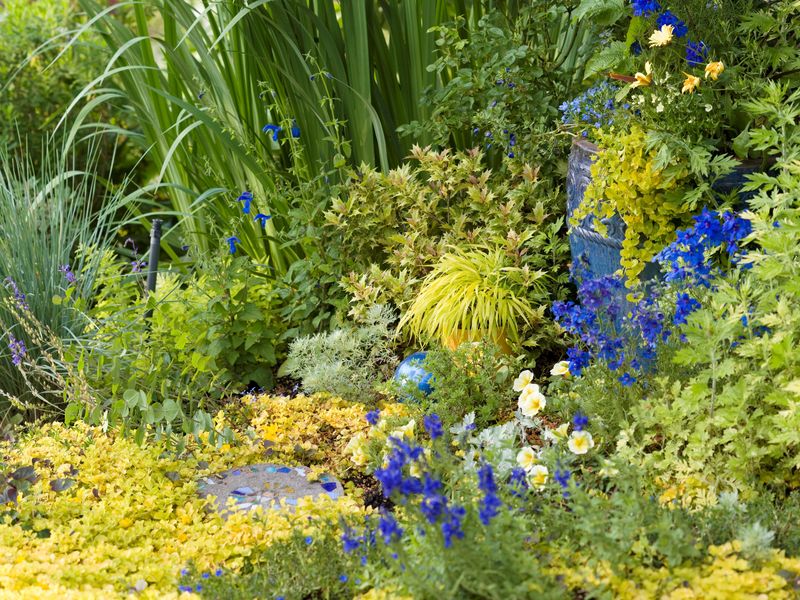
Somewhere between the hardware store’s plastic edging rolls and the weekly lawn trimmer is a plant most North Carolina homeowners have never tried beside their front walk. Green-and-gold, a low native ground cover, spreads into a tidy mat that can visually separate a shaded path from the surrounding bed without constant fussing.
The idea is appealing, and the plant is genuinely worth knowing, but the full story is more nuanced than any headline can capture. What follows is an honest look at what green-and-gold can and cannot do for a North Carolina walkway.
Green-and-gold fits the idea—but not the absolute promise
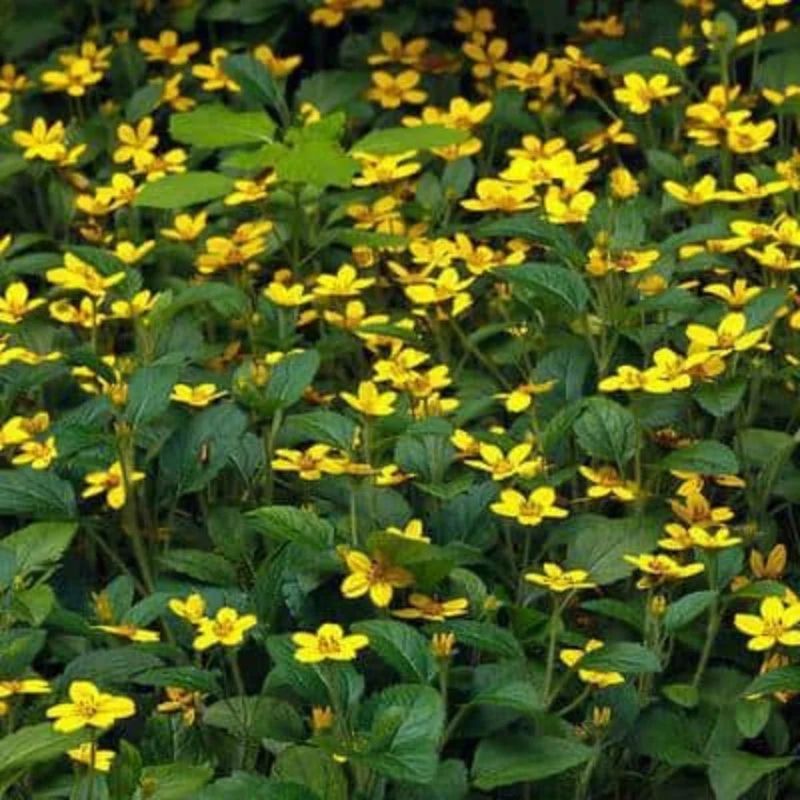
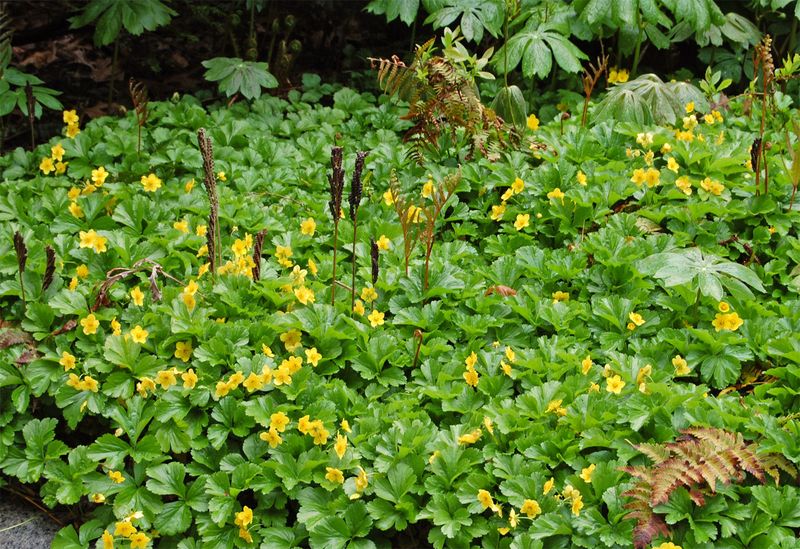
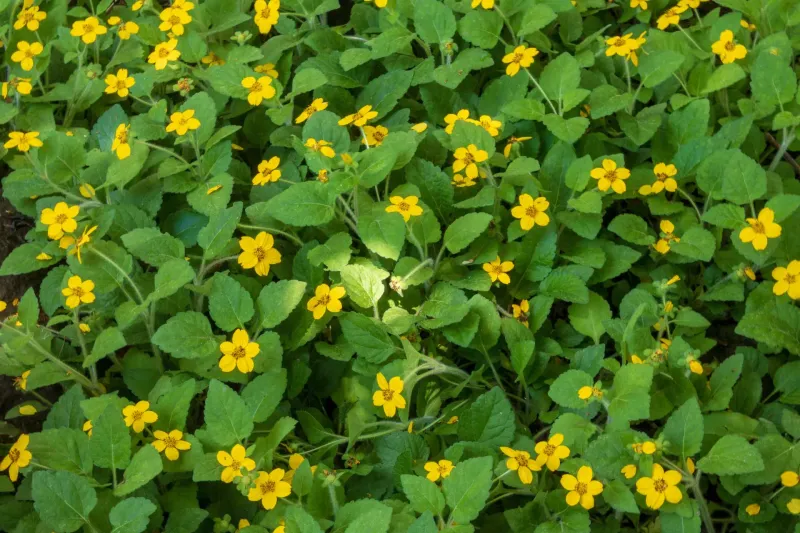
Chrysogonum virginianum, known as green-and-gold, is a native perennial ground cover found across North Carolina’s Coastal Plain, Piedmont, and mountain regions. NC State Extension’s plant profile describes it as a low-growing, semi-evergreen perennial that forms an easily controlled foliage mat roughly 2 inches tall and spreads 18 inches or more through rhizomes.
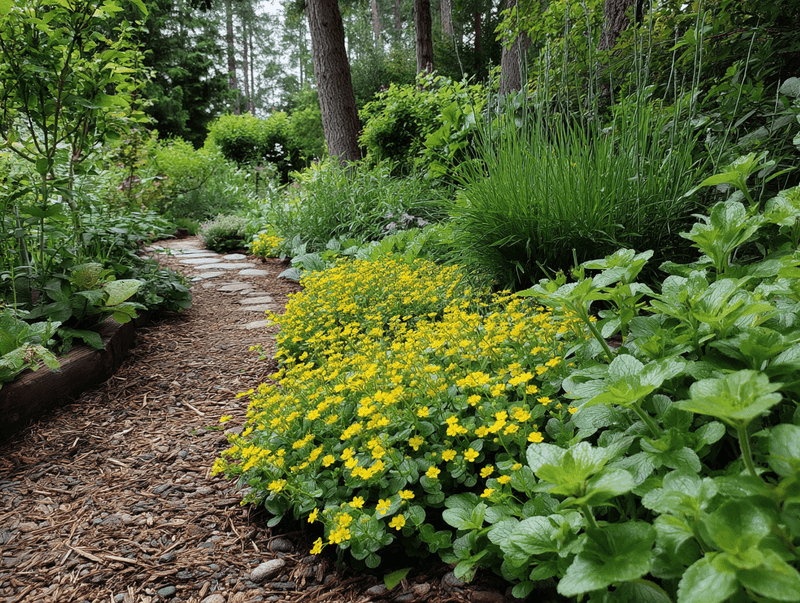
That profile also specifically recommends it as edging for woodland paths and shaded border fronts, which is exactly the application this premise describes.
Those traits make it a plausible living walkway border: the foliage stays low, the mat spreads gradually to fill a narrow strip, and the plant is native to the state rather than requiring you to reach for something imported. For a homeowner with a shaded or partly shaded path and reasonably moist, well-drained soil, it is a strong candidate worth serious consideration.
What the title gets wrong is the word “never.” No authoritative source documents a multi-year trial showing that green-and-gold requires zero edge correction over an extended period. NC State rates its maintenance as low, not absent.
The plant’s rhizomatous habit can spread beyond a formal line over time, flowering stems rise above the foliage mat, and spent stems may need occasional removal for a tidy appearance. Calling it a living border that may reduce routine correction in the right site is accurate.
Promising it will define a walkway for years without ever needing any attention is not a claim the available evidence supports.
Treat green-and-gold as a strong site-specific option rather than a universal solution. The rest of this guide will help you decide whether your yard’s light, moisture, and soil conditions actually match what the plant needs to perform well.
The August test depends on shade and moisture
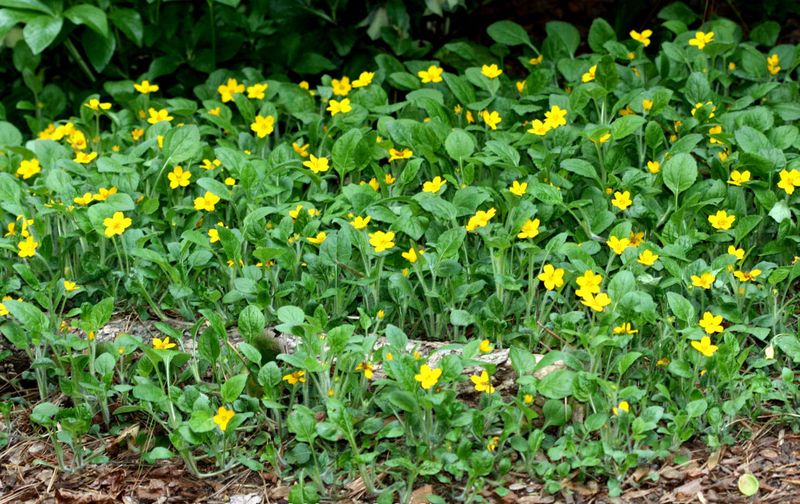
One of the most important corrections to the original premise involves summer performance. Green-and-gold can persist as foliage through warm months, but that is a different thing from thriving or blooming through August heat.
The plant’s preferred habitat is part shade to full shade with moist, humus-rich, well-drained, and slightly acidic soil. Full sun is only appropriate when the ground stays consistently moist, a condition that is difficult to guarantee beside pavement in a North Carolina summer.
Flowering tells the clearest story. NC State’s detailed plant listing places the bloom period from roughly March through June, with flowering often becoming sparse or stopping entirely during hot summer weather.
A light rebloom is possible in fall when temperatures drop. So while the foliage mat may remain green through July and August in a shaded, reasonably moist bed, the cheerful yellow flowers that make the plant recognizable are largely a spring feature.
Exposed sites beside concrete or asphalt are a particular problem. Pavement absorbs heat during the day and radiates it back at night, raising soil and air temperatures well above what a shaded woodland plant tolerates comfortably.
South-facing walls, open driveways, and any location that collects reflected heat from a hard surface are poor matches for green-and-gold, regardless of how much water you apply.
Dry soil compounds the difficulty. NC State’s native plants handbook makes clear that native status does not protect a plant from site conditions that fall outside its natural range.
A green-and-gold planting beside a sunny, heat-radiating walkway is likely to struggle, even if the plant thrives beautifully fifty feet away under a canopy of oaks. Matching the plant to the microclimate is the real work, and shade plus moisture are the two non-negotiable requirements for summer success.
A low mat can define a walkway without creating a permanent line
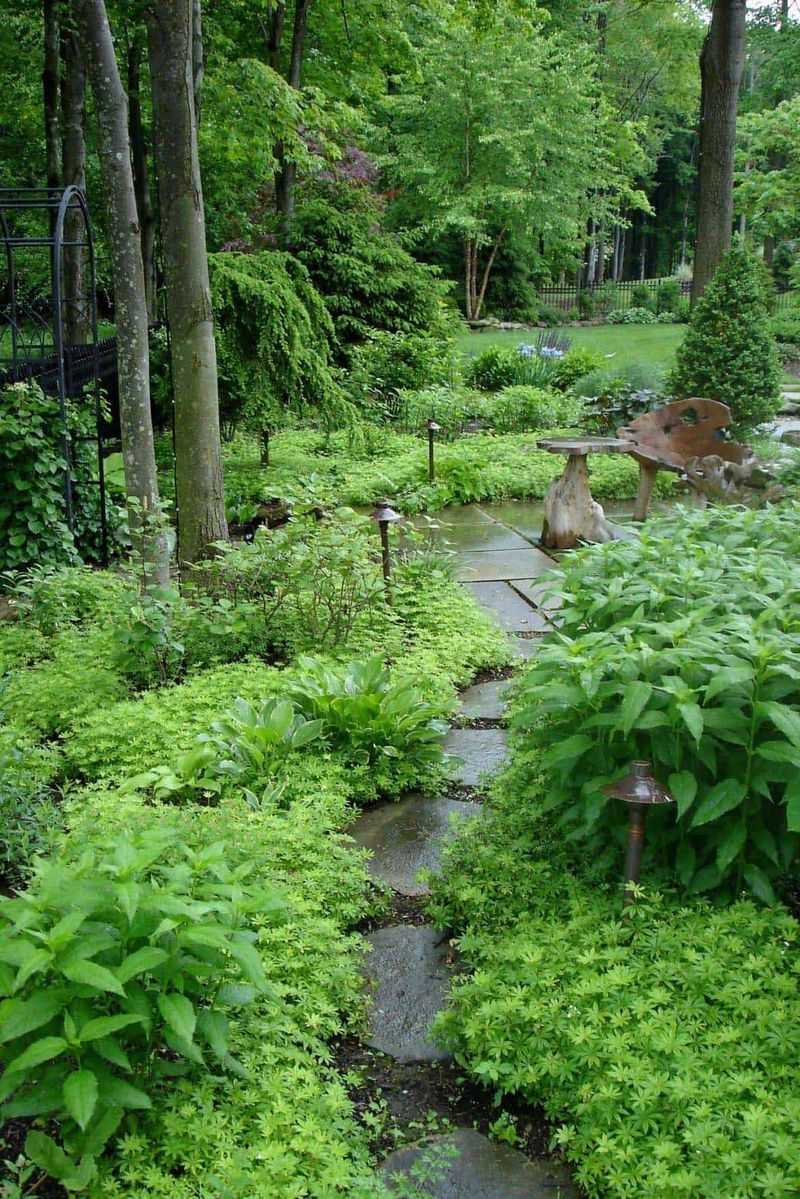
What green-and-gold actually offers beside a walkway is a design effect, not a guaranteed engineering outcome. The foliage sits 1 to 2 inches tall, which is low enough that it reads as a distinct horizontal plane when placed next to a raised walkway surface.
That visual contrast can clearly signal where the path ends and the planting begins, giving the border a defined, intentional look without requiring plastic or metal edging to hold the line.
The spreading habit is part of the appeal, but it also sets realistic expectations. NC State notes a typical spread of 1 to 2 feet through rhizomes, and the mat fills in gradually at a medium growth rate.
Over several seasons, that spread can soften the boundary rather than sharpen it. A perfectly geometric edge requires a trench, a buried barrier, or occasional hand trimming to stay crisp.
Green-and-gold can complement any of those approaches, but it does not replace them where formal geometry matters.
Flowering stems add another variable. While the foliage stays at 1 to 2 inches, bloom stalks can rise 8 to 10 inches above the mat during the spring peak.
Those stems are attractive, but they temporarily change the silhouette of the border. Removing spent flower stems keeps the planting tidy if a low, uniform edge is the goal.
NC State’s native plants guidance also cautions that paths or stepping stones should run through ground-cover areas to prevent damage from foot traffic. Green-and-gold is a border plant, not a walkable surface.
Place it alongside the path and treat it as a living frame, understanding that occasional hand cleanup is part of keeping that frame looking sharp.
Match the plant to the site before you buy it
Before buying a single plant, walk the length of your intended border at different times of day and honestly assess what you see. How many hours of direct sun does the strip receive?
Does water pool there after rain, or does the soil dry out quickly? Is the ground compacted from construction, foot traffic, or heavy clay?
Those answers will tell you more about whether green-and-gold belongs there than any catalog description.
Light is the first filter. Part shade to full shade is the target range.
If the walkway runs along the north or east side of the house, under a canopy of mature trees, or in the shadow of a fence for most of the afternoon, green-and-gold is worth serious consideration. If it runs along a south-facing wall or an open driveway with no overhead shade, a different plant or a different approach is the better call.
Moisture and drainage come next. The plant wants consistently moist but well-drained soil.
Soggy ground that stays wet after rain is as problematic as bone-dry soil beside hot pavement. Check whether the area drains within a day or two of a heavy rain.
NC State’s native plants handbook recommends improving the entire planting area with a 1- to 3-inch layer of compost worked into the soil, rather than amending only individual planting holes, which gives roots a more uniform environment to grow into. A soil test through your local NC Cooperative Extension office can identify pH and nutrient gaps before you plant.
NC State’s landscape design handbook reinforces right-plant, right-place selection as the foundation of low-maintenance gardening. Always buy nursery-grown green-and-gold from a reputable native plant nursery.
Collecting plants from natural areas can harm wild populations and may violate North Carolina plant-protection rules. Position the border strip beside the walkway, not beneath it, so the mat grows into open bed space rather than onto the path surface.
Establishment care determines how well the border fills in
New green-and-gold plants need consistent moisture while their roots settle in. For the first few weeks after planting, water thoroughly every few days, adjusting for rainfall.
During hot, dry stretches, supplemental irrigation may still be necessary even after the initial establishment window has passed. Native status does not make a plant drought-proof from day one, and skipping early watering is one of the most common reasons new plantings fail to fill in as expected.
Mulch does a lot of the supporting work during establishment. NC State recommends a 2- to 3-inch layer of mulch to conserve soil moisture, moderate temperature swings, slow weed germination, and gradually add organic matter as it breaks down.
Apply it around new plants but keep it a few inches away from the crowns to avoid rot. Shredded leaves work well and are often free if you have deciduous trees on the property.
Expect a medium pace of spread, not a rapid transformation. NC State describes green-and-gold’s growth rate as medium, and actual fill speed depends on the size of the plants you start with, how closely you space them, the quality of the soil, available moisture, and light levels.
A border planted with small plugs spaced 12 inches apart in amended soil will fill differently than one planted with larger divisions at 18 inches in unamended clay. Plan for the mat to take more than one growing season to close in fully.
While the planting is still filling, weeds will take advantage of bare patches between plants. Mulch reduces that pressure but does not eliminate it.
Pull weeds by hand or use a narrow hoe carefully between plants to avoid disturbing shallow rhizomes. Once the mat closes, maintenance drops noticeably, but the establishment period requires active attention.
Compare the maintenance tradeoffs honestly
“Store-bought edging” covers two different things, and mixing them up leads to unrealistic comparisons. Plastic or metal landscape edging is a physical barrier installed in the ground to retain mulch, gravel, or soil and to keep turf from creeping into a bed.
A living plant border does none of that. Green-and-gold cannot physically hold back mulch or soil, and it does not form a root barrier that stops grass rhizomes.
Those are jobs for structural edging, and no native ground cover replaces them where that function is genuinely needed.
The other meaning of “edging” is the maintenance task of recutting a lawn boundary to keep grass from encroaching on a bed. Kansas State Extension guidance on lawn edging notes that a simple cut edge may need to be recut once or twice during the growing season, depending on turf type and conditions.
That is already far less frequent than the premise implies. At the same time, North Carolina state grounds maintenance specifications show that professional landscape service standards can call for more frequent edging depending on turf growth, rainfall, and the required appearance standard.
Frequency is not a fixed number.
Where green-and-gold offers a genuine practical benefit is in a shaded bed where the low mat covers the soil surface and reduces the bare ground that grass would otherwise colonize. In that specific situation, a well-established planting may reduce how often you need to recut the bed boundary.
That is a reasonable expectation for a suitable site, not a guaranteed outcome for every yard.
What the sources do not provide is a head-to-head comparison showing that green-and-gold saves more labor, lasts longer, or costs less than commercial edging options across a range of sites. The honest summary: green-and-gold may reduce routine correction in the right shaded bed, and it adds ecological value that plastic edging cannot.
But it is not a replacement for structural edging where physical retention or a formal crisp line is the actual requirement.
Use green-and-gold when the site—not the headline—supports it
A shaded or partly shaded walkway with reasonably moist, well-drained soil is where green-and-gold earns its reputation. If those conditions match a strip beside your path, the plant offers a low semi-evergreen mat, modest wildlife value for bees, butterflies, and songbirds, and a native presence that fits North Carolina’s ecology from the coast to the mountains.
NC State’s plant profile specifically recommends it for woodland paths and shaded border fronts, and that recommendation holds when the site actually matches.
For exposed, dry, or high-heat locations beside concrete or asphalt, a different approach makes more sense. Consider other shade-tolerant natives better suited to drier conditions, add structural edging to retain material, or redesign the bed to reduce pavement heat and improve moisture retention.
NC State’s landscape design guidance frames right-plant, right-place selection as the foundation of a successful low-maintenance landscape, and that principle applies whether you are choosing a native or a nonnative plant.
Heavily formal lines that must stay crisp year-round, or beds that need to physically retain mulch or gravel, call for structural edging in addition to or instead of a living border. NC State’s native plants handbook is candid that native plantings still require establishment care and ongoing attention.
Green-and-gold may reduce how often you correct the bed boundary in the right site, but it will not deliver an edge that never needs any attention at all. Choose it because your conditions suit it, and it will likely reward you with years of low-fuss, ecologically useful ground cover.
That is a solid reason to plant it, and it does not need an overstated headline to make the case.