
If You Want More Cardinals Blazing Red In Your Yard, Here Are 13 Native Berry Shrubs That Fuel Their Color
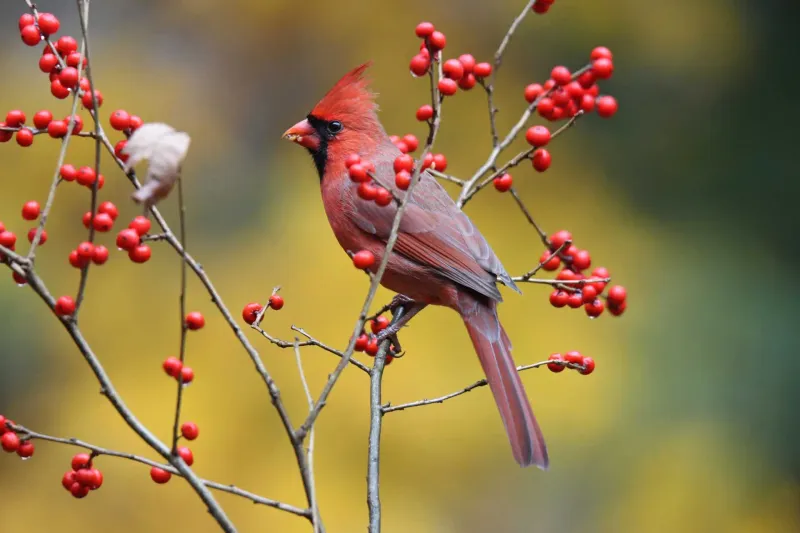
That fiery red on a male cardinal is not just for show, and it does not come from nowhere. Cardinals cannot make their own red pigment, so their color comes straight from the berries they eat.
Plant the right native shrubs and you feed the very pigments that keep those feathers glowing. Here are 13 native berry shrubs that pull cardinals in and keep their color bright all year.
1. Dogwood (Cornus spp.)
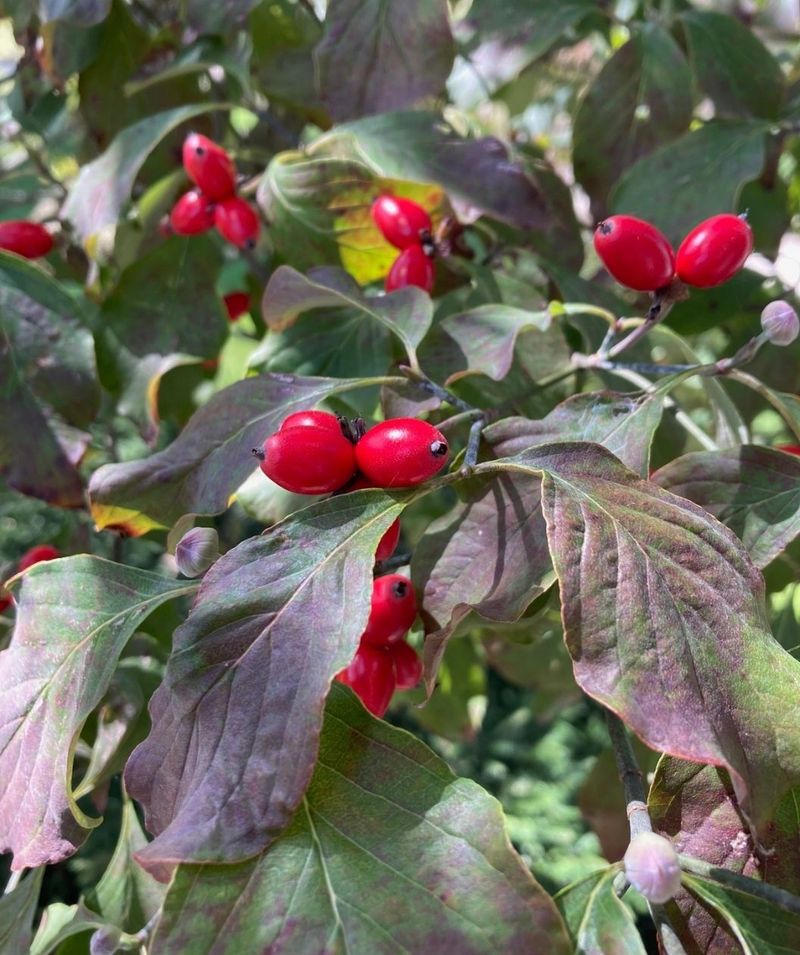
Few shrubs pull double duty like dogwood, offering spring flowers and fat-packed berries that cardinals treat like fuel. The fruit is loaded with carotenoids, the exact pigments a male cardinal needs to stay blazing red.
Timing is part of the magic here. Dogwood berries ripen right around migration and breeding season, so birds get a nutrient boost when they need it most.
Many species exist, so pick one native to your region for the best results. Most dogwoods are happy in well-drained soil and handle full sun to partial shade without complaint, which makes them an easy win for beginners.
2. Sumac (Rhus spp.)
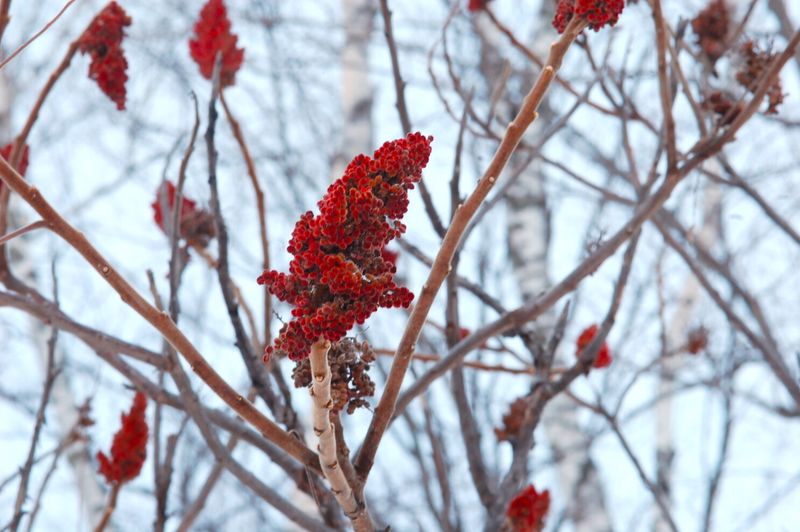
When winter strips the landscape bare, sumac keeps its fuzzy red berry clusters standing tall like little torches. Those cones cling to the branches for months, giving cardinals a reliable meal when almost everything else has vanished.
Staghorn Sumac is a standout, with carotenoid-rich fruit that lasts deep into the cold season. Birds lean on it hard during those lean weeks.
If you tend to forget about your plants, sumac forgives you. It shrugs off drought and adapts to a wide range of conditions, making it one of the most low-maintenance choices on this whole list.
3. Serviceberry (Amelanchier spp.)
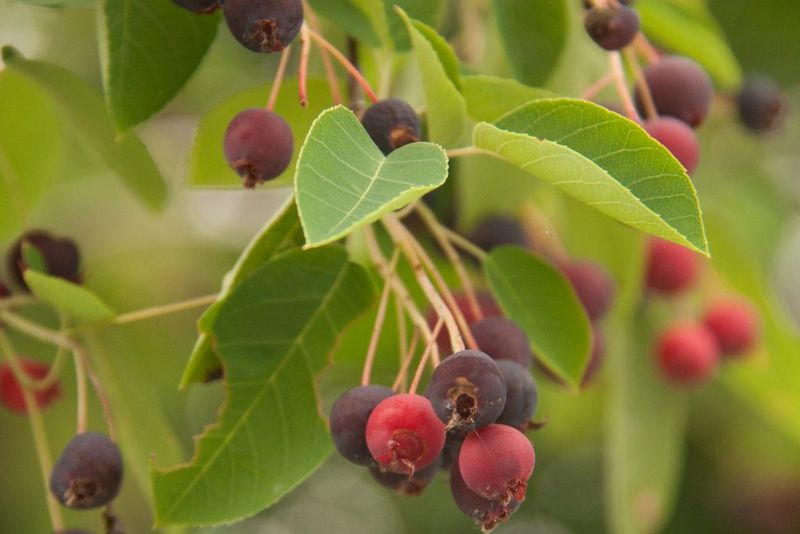
Early summer is when serviceberry throws its party, and cardinals show up right on time. The sweet red-purple berries ripen while other fruit is still weeks away, so this shrub becomes a hot spot for songbirds.
Cedar waxwings and other birds crowd in too, which means you get a lively show just outside your window. The berries are genuinely nutritious, not just filler.
Want heavy fruit? Give serviceberry a spot with full sun, though it will handle a little shade.
Moist, well-draining soil keeps it producing those berries year after year.
4. Winterberry Holly (Ilex verticillata)
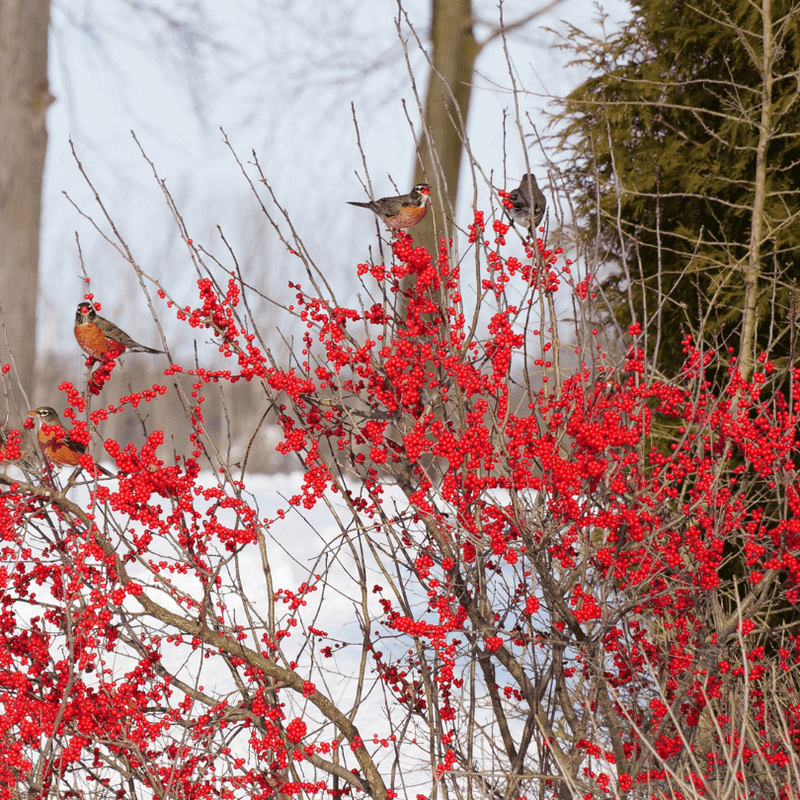
Picture bare branches glowing with bright red berries against fresh snow, and a cardinal landing right in the middle of it. That is winterberry holly, a deciduous holly that holds its fruit long after the leaves drop.
The payoff is a lifeline for cardinals in the dead of winter, when food is scarce and every calorie counts.
Here is the catch you cannot skip: winterberry is dioecious, so you must plant both a male and a female within about 50 feet of each other or you get zero berries. Give them acidic, moist, well-drained soil and 6 to 8 hours of sun for a truly loaded display.
5. Arrowwood Viburnum (Viburnum dentatum)
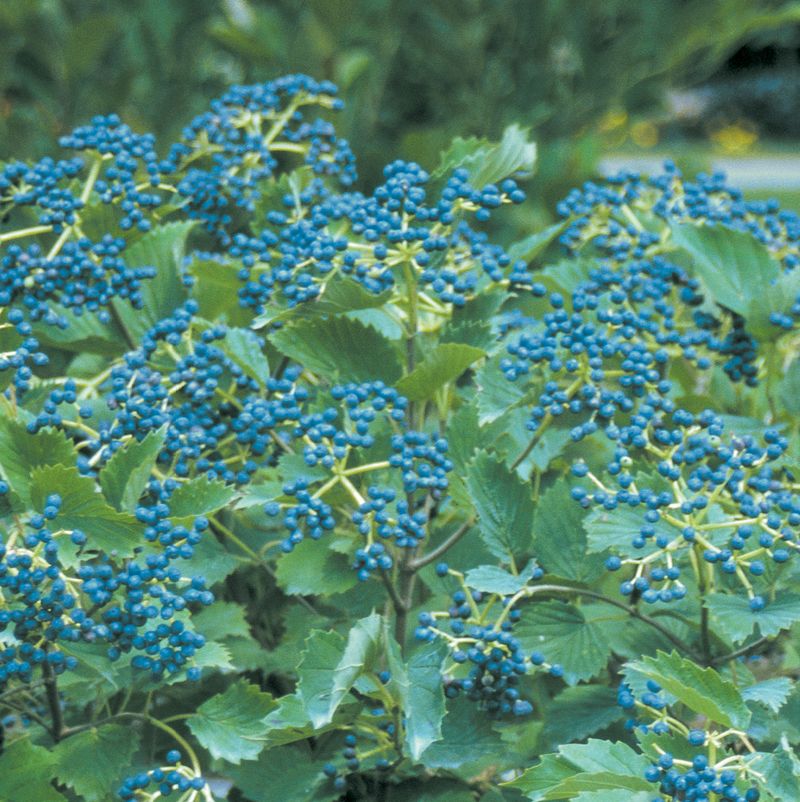
Cardinals want more than food, and arrowwood viburnum gives them the whole package. Its clusters of blue-black berries ripen in fall and rank among the favorites of many songbirds.
The dense growth also matters. Thick branches make excellent nesting cover and a safe hideout from hawks and neighborhood cats.
Adaptable is the word here. Arrowwood grows well from full sun to part shade in well-drained soil, and it tolerates moisture just fine.
Planting a compatible variety nearby can boost fruit production if you want a bumper crop.
6. Elderberry (Sambucus canadensis)
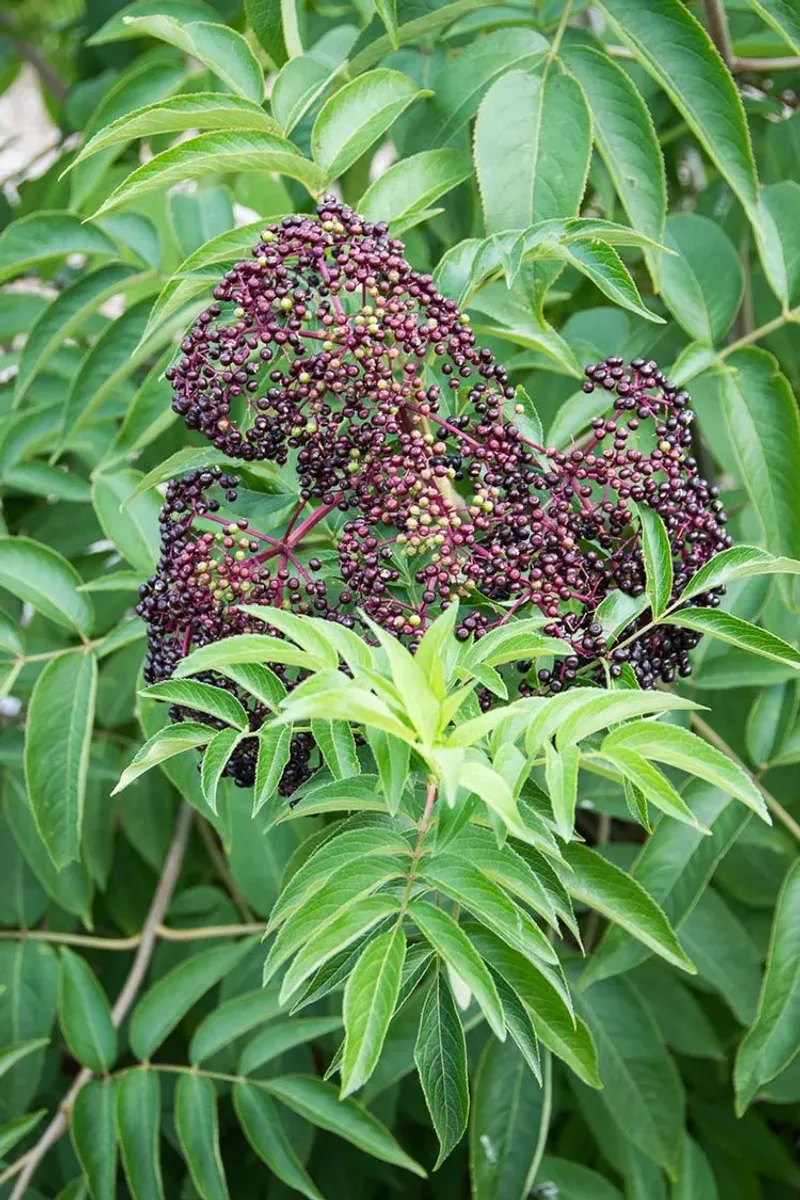
Fast-growing and generous, elderberry practically hands out food. By late summer into early fall, it hangs heavy with big clusters of dark purple berries that cardinals cannot resist.
The fruit is packed with nutrients, which is exactly what fruit-eating birds are after as they prepare for the seasons ahead.
Give it full sun to partial shade and rich, moist soil, and it will reward you fast. Elderberry spreads by suckers into dense thickets, and those thickets do triple duty as feeding grounds, nesting sites, and shelter.
7. Red Chokeberry (Aronia arbutifolia)
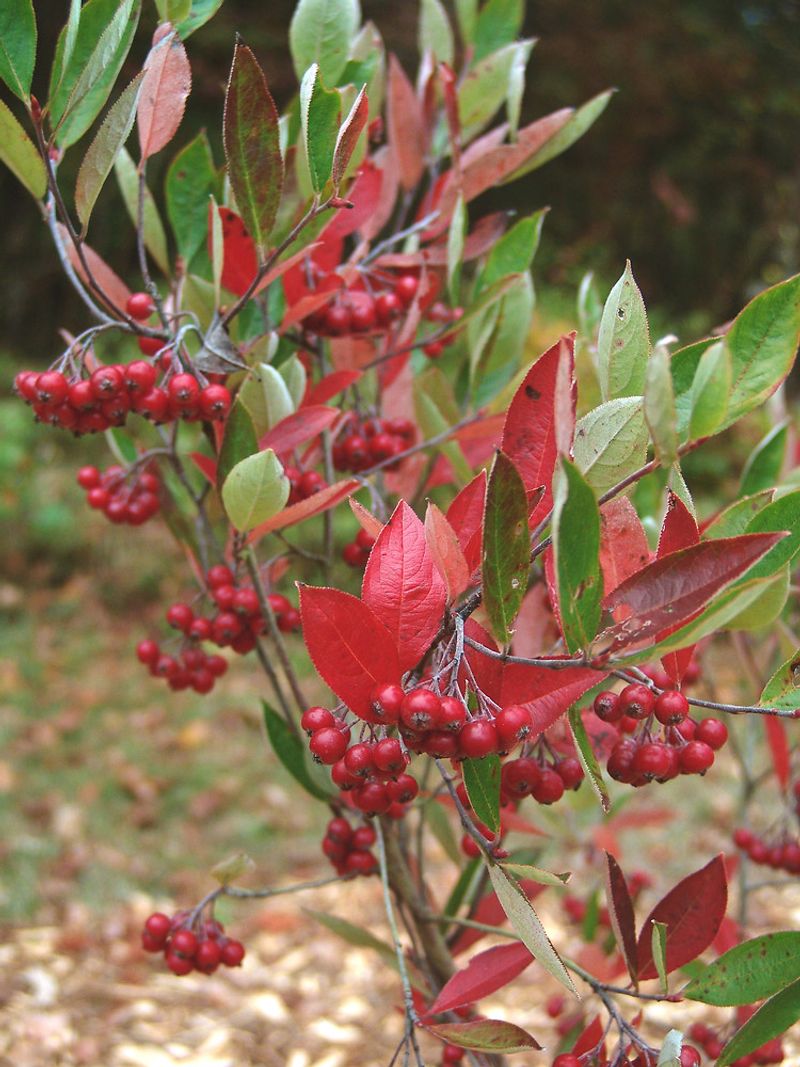
Glossy red berries and blazing bronze-red fall leaves make red chokeberry a showpiece before the birds even arrive. The berries ripen in summer and often hang on through winter, stretching the feeding window long.
That persistence is the secret weapon. Cardinals can return to the same plant month after month as other food sources dry up.
Toughness is where this shrub really shines. It handles wet soil, dry soil, and heavy clay without missing a beat, and it performs best in full to part sun.
If your yard has a problem corner, this multi-stemmed shrub might be the fix.
8. American Beautyberry (Callicarpa americana)
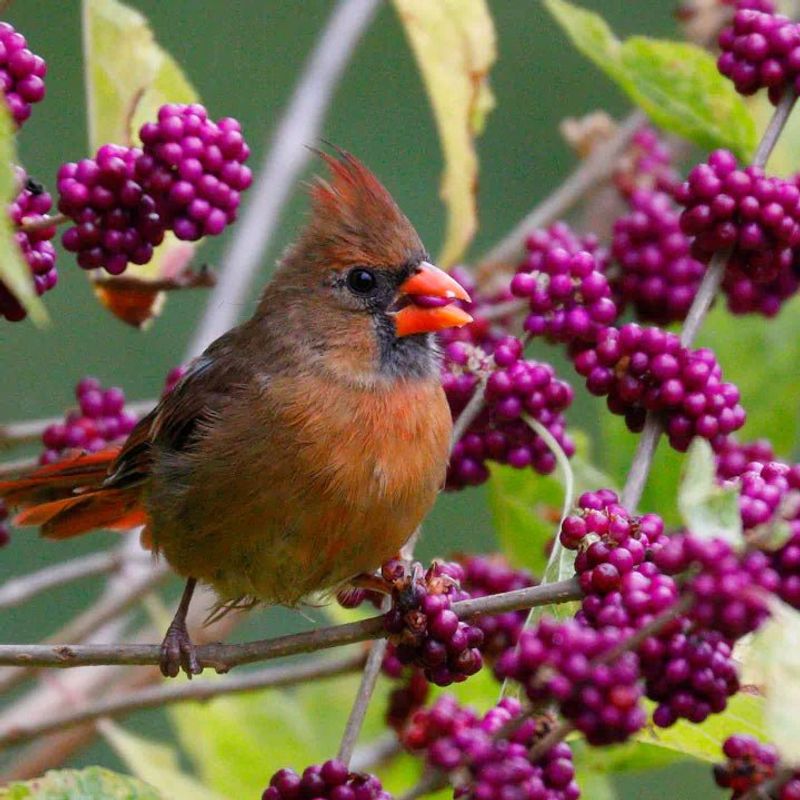
You will do a double take the first time you see American beautyberry. Its arching branches are ringed with clusters of electric purple berries so bright they almost look fake.
Beyond the eye candy, those berries feed cardinals and mockingbirds through late fall and winter, when the pantry is running low.
Care could not be simpler. Give it full sun to partial shade and it stays low-maintenance once its roots settle in.
Consider it a shrub that earns its keep as both a feeder and a conversation piece.
9. Spicebush (Lindera benzoin)
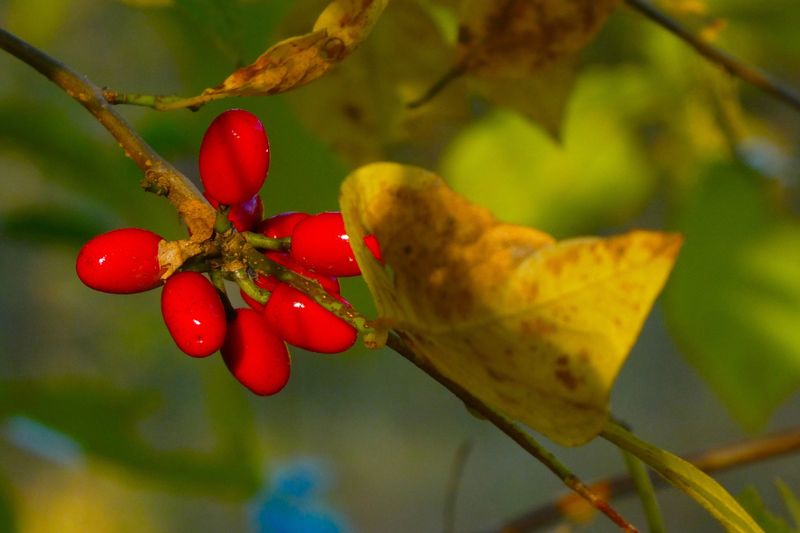
Tucked into the shade of the woods, spicebush quietly produces some of the richest fuel a cardinal can find. Its bright red fall berries are loaded with fat, delivering high-energy nutrition right when migrating and resident birds need it.
Crush a leaf and you will catch its spicy scent, a bonus that also makes it a host plant for swallowtail butterflies.
Shade lovers, rejoice. Spicebush thrives in partial shade with moist, well-drained soil, which makes it perfect for that woodland edge where sun-loving shrubs sulk.
10. Highbush Blueberry (Vaccinium corymbosum)
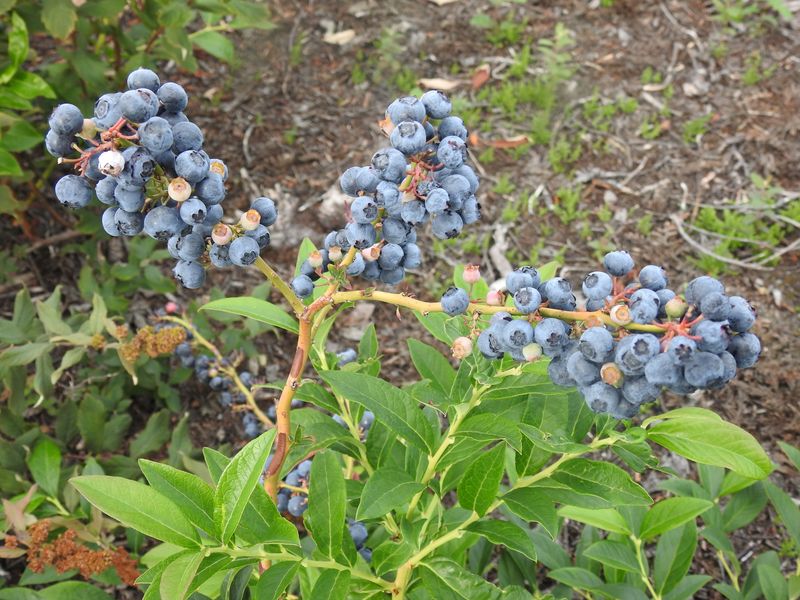
Everyone knows blueberries for the breakfast bowl, but over 90 species of birds know them as a feast. Cardinals happily join the crowd, and the berries carry carotenoids along with all that nutrition.
You get to share the harvest, which is a nice perk of planting them.
The one rule you cannot ignore is soil acidity. Blueberries want an acidic pH around 5.0, plus full sun and steady moisture, to produce well.
Plant a couple of different cultivars near each other and you will see the yield jump for you and the birds alike.
11. Nannyberry (Viburnum lentago)
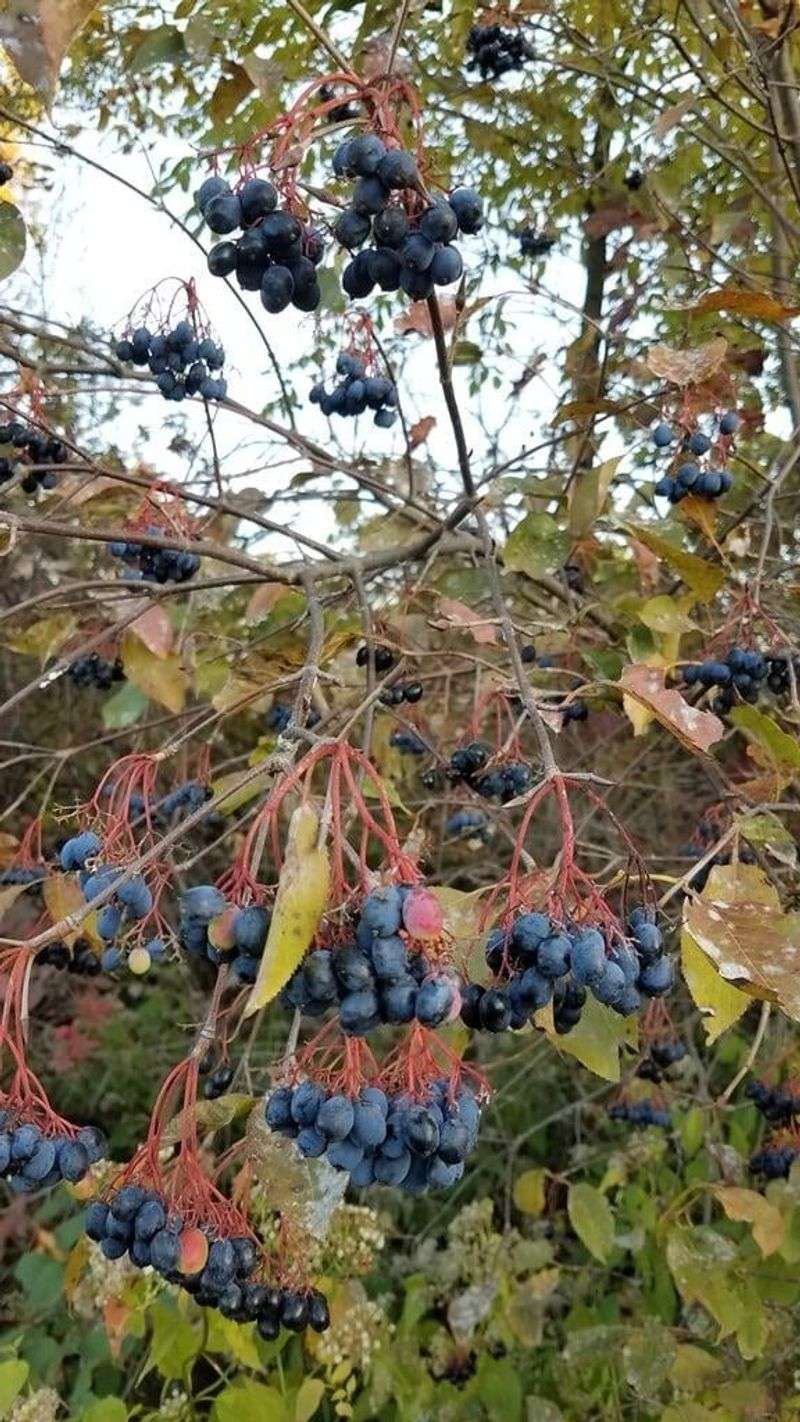
Growing tall enough to blur the line between shrub and small tree, nannyberry offers cardinals both a diner and a home. Its blue-black fruit ripens in late summer and clings on into winter, extending the buffet.
The dense branching is a gift for nesting birds looking for a sheltered, protected spot to raise their young.
Flexibility makes it easy to place. Nannyberry grows in full sun to partial shade across many soil types, favoring medium to moist, well-drained ground.
Set out more than one and you will get a noticeably heavier crop of fruit.
12. American Holly (Ilex opaca)
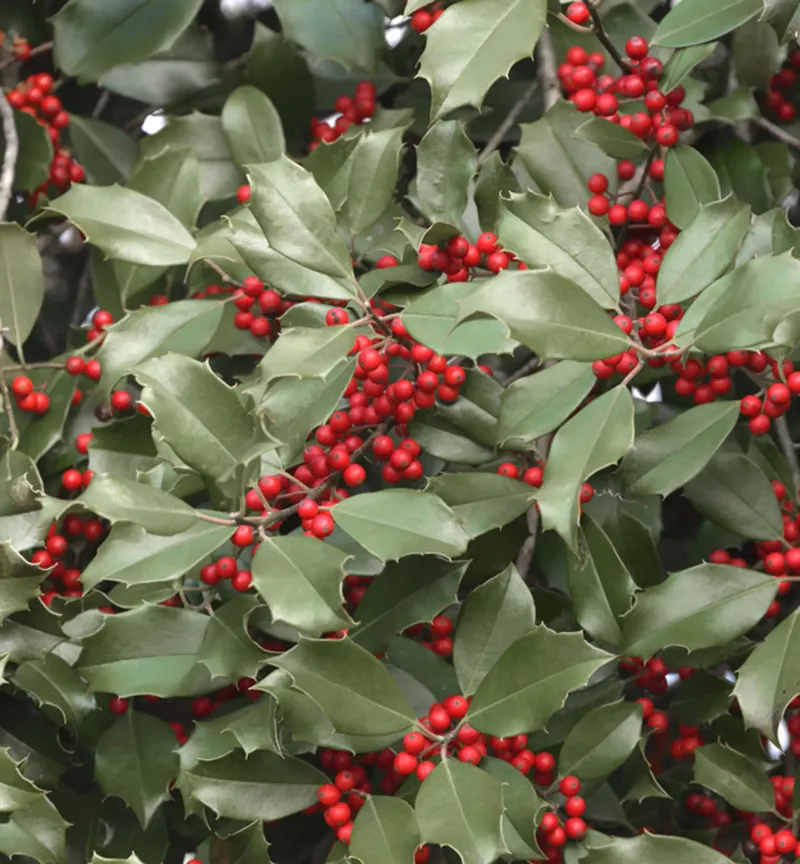
Nothing says winter cardinal quite like a red bird sitting in glossy green holly dotted with red berries. American holly stays evergreen, so it delivers food and cover at the same time when the rest of the yard has gone bare.
Those bright red berries are a critical winter food, and the dense foliage doubles as year-round shelter from wind and predators.
Keep it in moist, well-drained soil and it asks little of you. Just remember it works like winterberry: you need both a male and a female plant for the female to fruit.
13. Wild Grape (Vitis spp.)
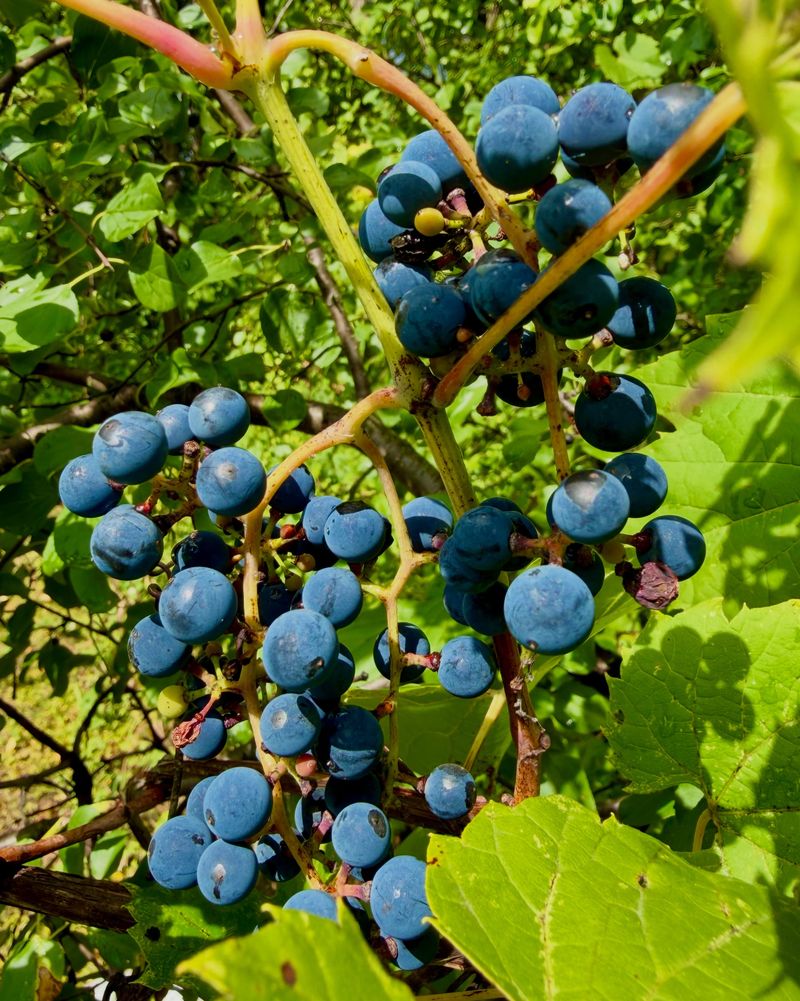
Climbing along fences and arbors, native wild grape sneaks a serious carotenoid source into your yard. Vines like Vitis riparia produce pigment-rich fruit that cardinals eat heavily in fall.
Here is why the timing is perfect: fall is the molt window, when cardinals grow new feathers and lock in their color. Eat the right fruit then, and the red comes in strong.
Wild grape adapts to many soils and prefers full sun. As a vine, it needs sturdy support like a trellis, arbor, or fence to climb and fruit well, so give it something to grab and let it run.