
If You’ve Only Ever Snacked On Prunes, Here’s The Quiet Job They’re Doing Inside Your Body
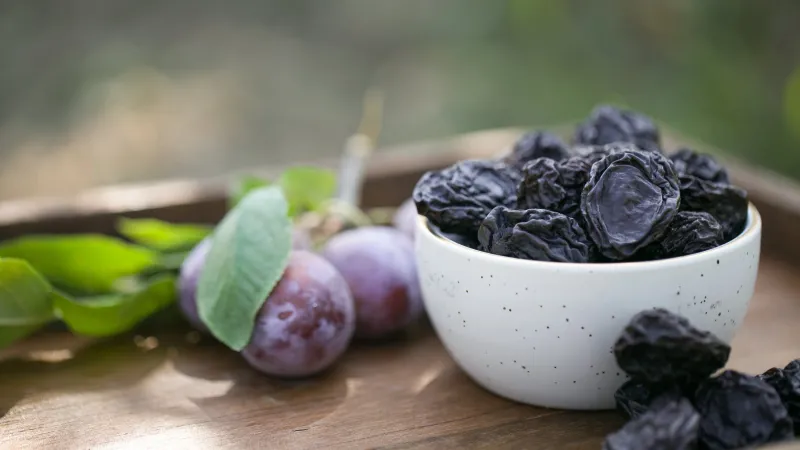
Prunes have a reputation that mostly involves grandmothers and long car trips, but the science behind this wrinkled little fruit is more interesting than the jokes suggest. Inside your body, a handful of prunes quietly gets to work on something most people care about but rarely talk about: keeping the digestive tract moving.
Researchers have run real clinical trials on this, and the results are specific enough to be worth understanding. Whether you eat prunes out of habit or curiosity, knowing what they actually do, and what they do not do, changes how you think about them.
The quiet job is supporting bowel function
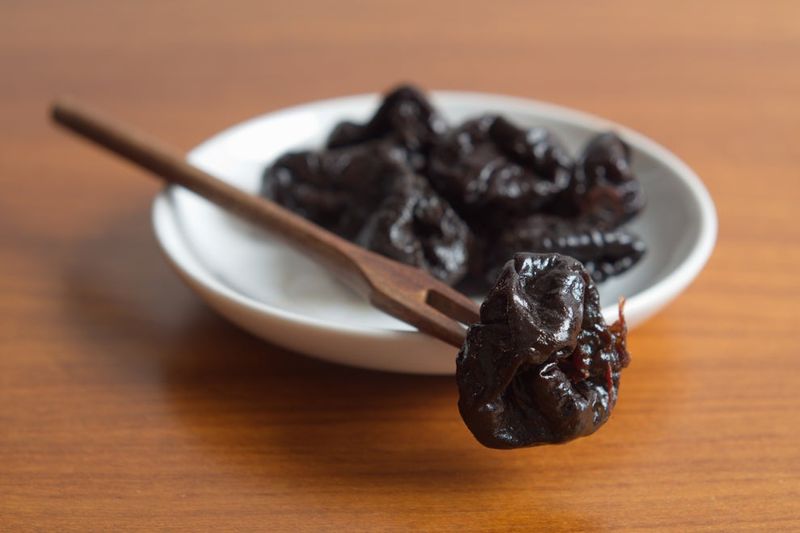
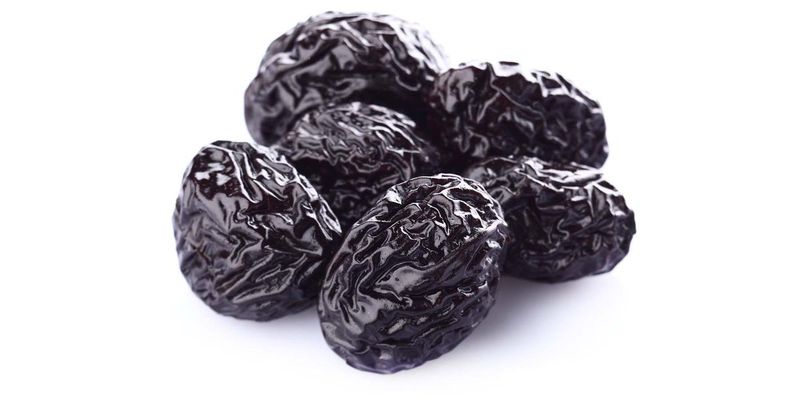
Prunes are simply dried plums, and the strongest everyday case for eating them comes not from anti-aging promises but from the digestive tract. Human trials have measured specific outcomes: improved stool consistency and, for some adults, increases in stool weight, bowel-movement frequency, or complete spontaneous bowel movements.
Those are the findings the research actually supports.
Three randomized trials give the clearest picture. One study in adults with constipation found that 50 grams of prunes twice daily improved complete spontaneous bowel movements and stool consistency compared with psyllium.
A four-week trial using 80 or 120 grams of prunes daily found increased stool weight and, at the lower dose, increased stool frequency. A U.S. comparison trial placed prunes alongside kiwi and psyllium as one reasonable food-based option in adults with chronic constipation.
What the research does not show is that prunes flush toxins, detoxify the body, cleanse the colon, or remove some imagined buildup of waste. Those phrases describe things that do not happen, at least not because of prunes.
The bowel effect is real and measurable; the detox language is not.
Prunes also do not work the same way for everyone. Gas and bloating were more common with prunes than with the control in at least one trial, and whole-gut transit time did not change in another.
The evidence points to a useful but specific role, and that specificity is actually what makes it credible.
Why a dried plum can affect the intestine
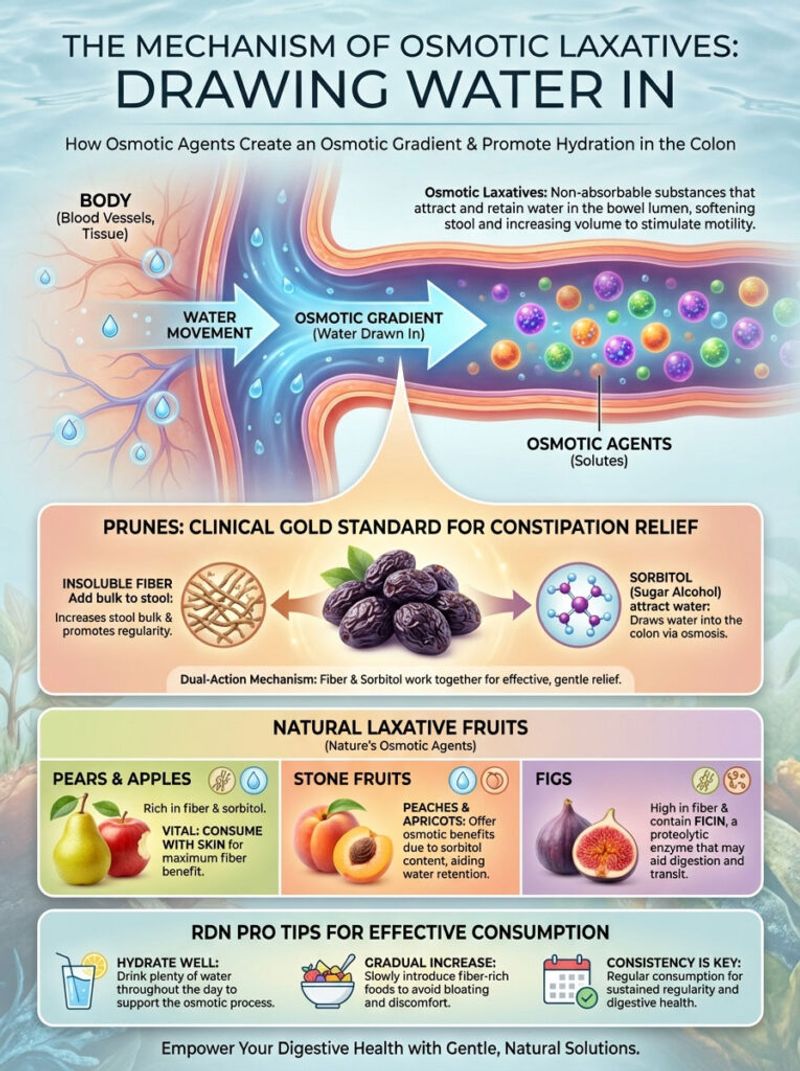
Two ingredients inside a prune do most of the work, and understanding them helps explain both the benefit and the side effects. Sorbitol is a naturally occurring sugar alcohol that the small intestine absorbs poorly.
Because it passes largely unabsorbed, it exerts an osmotic effect, meaning it draws water into the intestinal space. More water in the stool generally means softer, heavier stool.
Fiber works differently. Rather than pulling water in, it adds physical bulk to stool as it passes through the large intestine.
Research reviewing the components of prunes identifies both fiber and sorbitol as key contributors to the bowel effect, with fiber providing structural bulk and sorbitol contributing the water-drawing action.
A proposed mechanism is not a guarantee. The osmotic action of sorbitol is a well-described biological process, but whether any individual person experiences a noticeable change in stool depends on how much they eat, how their gut responds, and what else they are consuming.
The same properties that soften stool in one person can cause cramping, loose stools, or diarrhea in another, particularly at larger amounts.
Prunes also contain phenolic compounds, which some researchers have suggested may play a role in gut motility. Studies examining prune phenolics have explored this possibility, but their contribution to laxation is less firmly established than the roles of fiber and sorbitol.
Treating phenolics as a secondary player is the more accurate read of the current evidence. The gas and bloating that some people notice after eating prunes come from the same source: poorly absorbed sorbitol and fermentable fiber reaching the large intestine, where gut bacteria break them down and produce gas as a byproduct.
What the constipation trials actually found
Three human trials form the core of what researchers actually know about prunes and constipation, and reading them together gives a more honest picture than any single headline.
The first trial enrolled adults with constipation and compared 50 grams of prunes twice daily (100 grams total) against psyllium. Prunes outperformed psyllium on complete spontaneous bowel movements and stool consistency over three weeks.
That sounds like a clear win, but the study was small and the participants were predominantly women, so generalizing broadly requires caution.
The second study ran for four weeks and tested 80 or 120 grams of prunes daily against a control in adults with infrequent bowel habits. Both doses increased stool weight.
The lower 80-gram dose also increased stool frequency. Notably, whole-gut transit time did not change in either prune group, and flatulence was more common with prunes than with the control.
Softer, heavier stool without faster transit is a real finding, but it is not the same as a complete solution to constipation.
The third comparison, a U.S. trial studying 100 grams of prunes daily for four weeks alongside kiwi and psyllium, found that prunes held their own as a food-based option. None of the three was dramatically superior; each worked through a somewhat different mechanism.
Across all three studies, the doses ranged from 80 to 120 grams per day. That is roughly 10 to 15 prunes depending on size, not the casual handful most people eat as a snack.
These are research-sized portions used to produce measurable effects in people with defined constipation or infrequent bowel habits. They are not automatic recommendations for everyday use, and they do not mean that eating more prunes always produces better outcomes.
The evidence supports prunes as one reasonable food-based option, not a universally superior treatment for every gut situation.
The cellular-ally idea remains a metaphor
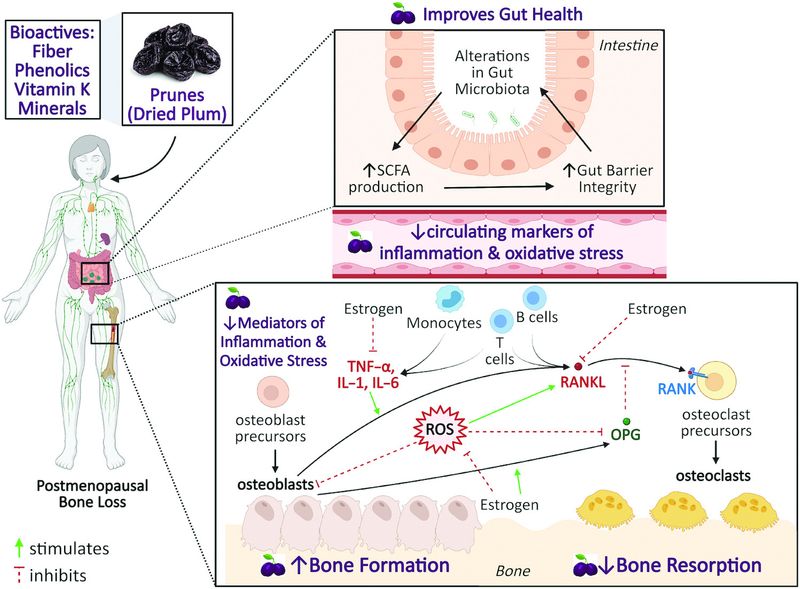
Calling prunes a “cellular ally” makes for a compelling headline, and it is not entirely invented. Prunes do contain polyphenols, and polyphenols are compounds that show antioxidant activity in laboratory settings.
The problem is the distance between a test-tube result and a proven clinical effect in a living person.
The National Center for Complementary and Integrative Health is direct on this point: antioxidant activity measured in a lab does not automatically translate into health protection in humans. Total antioxidant capacity tests and radical-scavenging assays measure chemical reactions in controlled conditions.
Broader reviews of dietary antioxidants have reinforced the same caution: food antioxidant scores do not reliably predict clinical outcomes.
Human inflammation data on prunes follows a similarly mixed pattern. A 2024 secondary analysis found lower inflammatory cytokine secretion from stimulated immune cells and fewer activated circulating monocytes in some prune groups.
Those are specific biomarker changes worth noting. What the same study did not find: changes in hs-CRP, total antioxidant capacity, or 8-isoprostane, which are the markers researchers often use as broader signals of systemic inflammation or oxidative stress.
Biomarker shifts in stimulated cells are not proof that prunes prevent inflammatory disease, slow cellular aging, or repair damage inside the body. Current evidence does not establish that ordinary prune snacking broadly protects cells, produces anti-aging effects, or prevents disease.
The metaphor of a cellular ally is a useful way to describe the fact that prunes contain compounds your body can use. Treating it as a medical conclusion is a step the research has not yet earned.
Other benefits look promising but remain limited
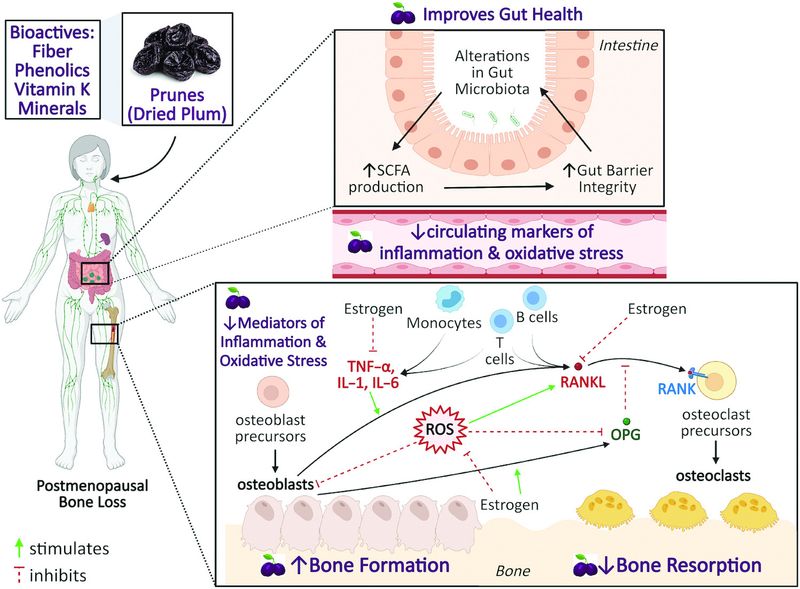
Beyond the gut, the most discussed area of prune research involves bones, and the findings are genuinely interesting without being conclusive. Most studies have enrolled postmenopausal women and used daily amounts of 50 to 100 grams for six to twelve months.
Several came from overlapping research groups, which adds a layer of context when reading the results.
A 2026 systematic review described the skeletal evidence as preliminary and modest. It found borderline significance at the lumbar spine, high heterogeneity across studies, and no significant differences at other individual bone sites.
That is a careful way of saying the signal exists but is not yet strong or consistent enough to support broad recommendations. A 12-month trial in postmenopausal women reported preservation of cortical bone density and estimated tibial strength, which is an encouraging finding.
Preservation of bone density in one region in one population over one year is not the same as proof that prunes prevent fractures or treat osteoporosis.
Cardiometabolic findings are even more inconsistent. A small trial in postmenopausal women reported within-group improvements in some cholesterol, antioxidant, and inflammatory measures.
Within-group changes mean participants improved compared with their own starting point, not necessarily compared with a control group, which limits how much weight those numbers can carry.
A separate direction of evidence adds a cautionary note. A randomized trial of a large mixed-dried-fruit portion found no improvement in cardiometabolic risk factors and actually observed increases in fasting glucose and LDL cholesterol relative to baseline or control.
That outcome does not apply directly to prunes alone, but it reinforces why large portions of concentrated dried fruit should not be assumed beneficial for metabolic markers. Biomarker findings in specific subgroups are worth watching as research develops; they are not yet a basis for claiming that prunes lower cholesterol, blood sugar, or inflammation in the general population.
Their nutrients do ordinary useful work
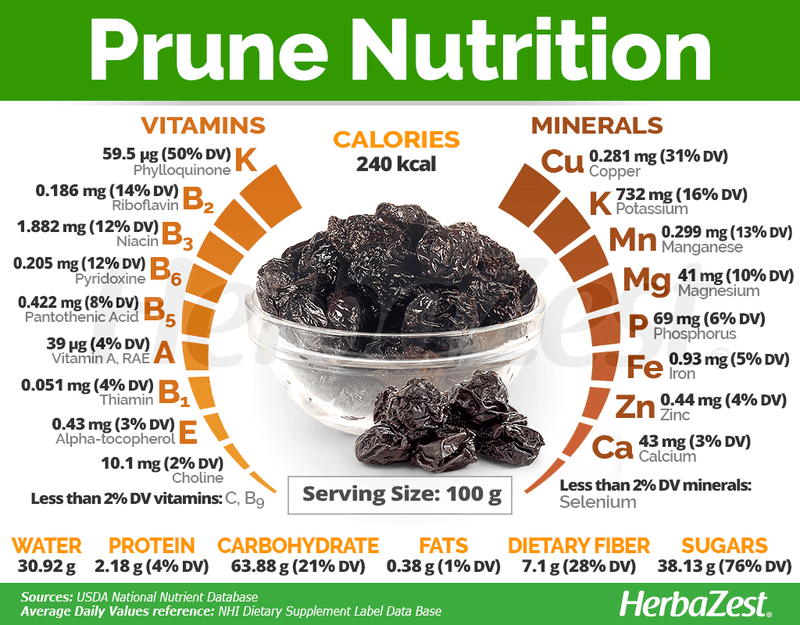
Strip away the health-halo language and prunes are still a nutritionally solid food. USDA data for dried plums puts the per-100-gram amounts at approximately 240 calories, 63.9 grams of carbohydrate, 7.1 grams of fiber, and 732 milligrams of potassium.
Those numbers shift depending on the brand and how the fruit was processed, so checking the product label always gives a more accurate picture for a specific bag.
Dietary fiber supports stool bulk and feeds beneficial bacteria in the large intestine. Potassium, according to the NIH Office of Dietary Supplements, supports normal muscle contraction and nerve signaling throughout the body.
Vitamin K plays a role in blood clotting and normal bone physiology. These are standard nutrient functions, not special properties unique to prunes.
One practical wrinkle worth knowing: drying removes most of a plum’s water, which concentrates everything else. Nutritional reviews of prunes note that a small number of prunes can pack a meaningful amount of carbohydrate into a portion that does not feel large.
That concentration is part of what makes prunes useful for fiber and potassium, but it also means the calories and carbohydrates add up faster than they would with fresh fruit. Supplying these nutrients is a real contribution; it is not the same as claiming that prunes alone prevent cardiovascular disease, osteoporosis, or any other condition.
Start with a small portion, not a study-sized dose
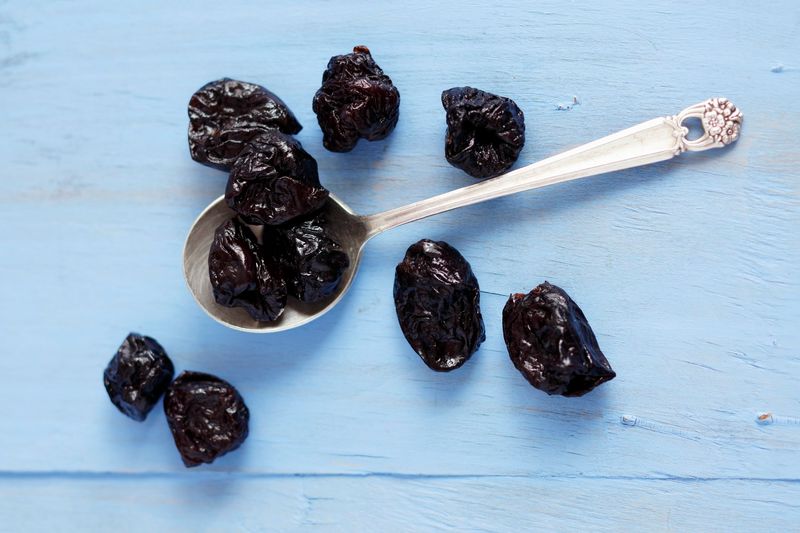
Research doses of 80 to 120 grams of prunes per day are not automatic everyday recommendations. Those amounts were chosen to produce measurable effects in clinical trials involving people with defined constipation or infrequent bowel habits.
Jumping straight to that range without building tolerance first is a reliable way to end up with gas, bloating, or loose stools.
A more practical starting point is a small portion selected by weight or by the product label rather than by piece count, since prunes vary considerably in size between brands. If four to six prunes serves as a rough mental anchor, treat it as a practical approximation rather than a clinically validated serving.
General fiber guidance from MedlinePlus recommends increasing fiber gradually and maintaining adequate fluid intake, both of which apply directly to adding prunes to the diet. Bowel-function guidance similarly emphasizes gradual increases and consistent hydration unless a clinician has advised fluid restriction.
Fiber research consistently supports the idea that slow, steady increases produce better tolerance than a sudden jump. The same logic applies to sorbitol-containing foods: the gut adapts more smoothly when the change is incremental.
Plain or unsweetened prunes are the better default. Some products add sugar or syrup, which changes the carbohydrate content meaningfully.
Checking the ingredient list takes about ten seconds and reveals whether you are buying a minimally processed dried fruit or something closer to candy. Reading fruit labels carefully matters especially for anyone watching carbohydrate intake.
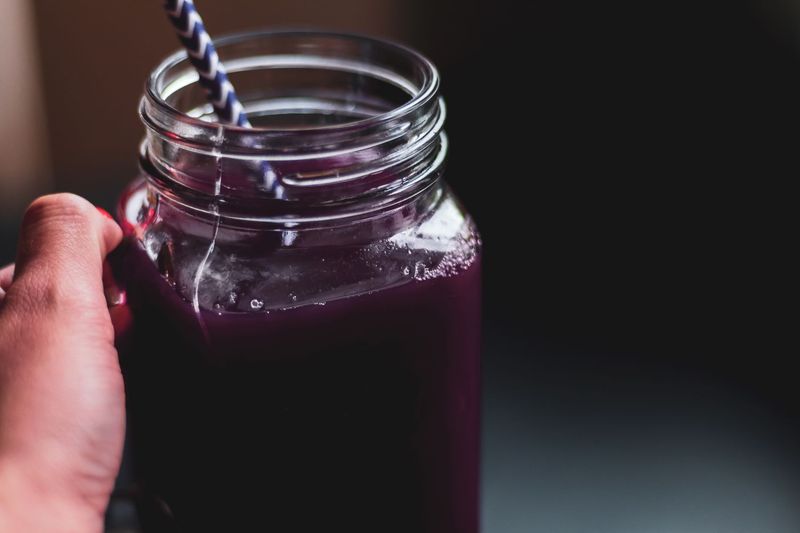
Prune juice is a separate product worth treating differently. It may retain sorbitol, which preserves some of the osmotic effect, but Mayo Clinic notes that juice generally provides less fiber than whole fruit.
USDA fruit component data reflects the same distinction. If fiber is part of the reason you are reaching for prunes, the whole fruit is the better choice.
Know when prunes need individualized caution
For most healthy adults, a small portion of prunes is a low-risk addition to the diet. For certain groups, though, the same properties that make prunes useful in one context create real considerations in another.
People with irritable bowel syndrome or sorbitol sensitivity are the clearest example. Prunes are high in sorbitol and classified as high-FODMAP at typical serving sizes.
Monash University’s FODMAP guidance lists prunes among higher-polyol foods, and their polyol explainer describes how poorly absorbed sugar alcohols can trigger gas, bloating, cramping, and diarrhea in sensitive guts. Low-FODMAP guidance is meant to be individualized and time-limited rather than a permanent ban on all high-FODMAP foods.
For people with diabetes or prediabetes, prunes count as carbohydrate and their concentrated form makes it easy to eat more than intended. The American Diabetes Association’s fruit guidance emphasizes reading labels and minding portion size.
CDC guidance on carbohydrate choices reinforces that dried fruit requires the same attention as other carbohydrate sources, not special treatment in either direction.
Potassium is where chronic kidney disease changes the picture significantly. NIDDK guidance for adults with CKD and hemodialysis nutrition guidance both list prunes and prune juice among higher-potassium choices that require individualized advice.
People on potassium-restricted diets should not assume that a food marketed as healthy is unrestricted for them.
For anyone taking warfarin, the vitamin K in prunes matters less as an absolute limit and more as a consistency issue. NIH vitamin K guidance explains that the goal is stable intake rather than elimination, and ODS frequently asked questions reinforce that large swings in vitamin K intake are the concern, not moderate regular consumption.
Discussing any significant dietary change with the prescribing clinician is the right step.
Finally, some constipation symptoms require a doctor’s evaluation rather than more prunes. MedlinePlus and Mayo Clinic’s gut health guidance both flag rectal bleeding, unexplained weight loss, vomiting, severe abdominal pain, marked bloating, and suspected obstruction as symptoms that call for medical attention, not escalating dietary fiber.
The useful takeaway stays modest
Prunes are not secret detox agents, and the research does not support treating them as proven cellular repair workers. They are a concentrated dried fruit whose fiber and sorbitol may support specific bowel outcomes in some adults, while their nutrients, including potassium, fiber, and vitamin K, serve normal physiological roles that the body relies on daily.
The constipation trials and stool-weight studies give prunes a credible, specific claim. Broader promises about cellular protection, inflammation, or bone health remain preliminary and should be held loosely until larger, more diverse trials say otherwise.
Antioxidant research cautions apply here as much as anywhere: laboratory activity is not the same as clinical benefit.
The practical rule is straightforward: start with a small portion, monitor how your gut responds, increase gradually only if tolerated, and seek medical evaluation if constipation is persistent or comes with alarming symptoms. A food this ordinary doing something this specific is, honestly, more interesting than any detox claim could ever be.