
If You Keep Yanking Dandelions From Your Lawn, Here’s The Free Medicine Their Deep Taproots Are Quietly Mining For You

Most people see a dandelion and reach for a trowel or a bottle of weed killer, but before you do that again, it helps to know what you are actually pulling up. Common dandelion is an edible plant whose leaves, flowers, and roots have been eaten for centuries, and its roots contain a type of fiber called inulin that researchers study as a prebiotic candidate.
That does not make your lawn a medicine cabinet, and it definitely does not mean every yellow-flowered weed is safe to eat. What it does mean is that the plant is more interesting than its reputation suggests, and understanding what it actually offers, and what it does not, is worth a few minutes of your time.
Dandelion is food, not free medicine
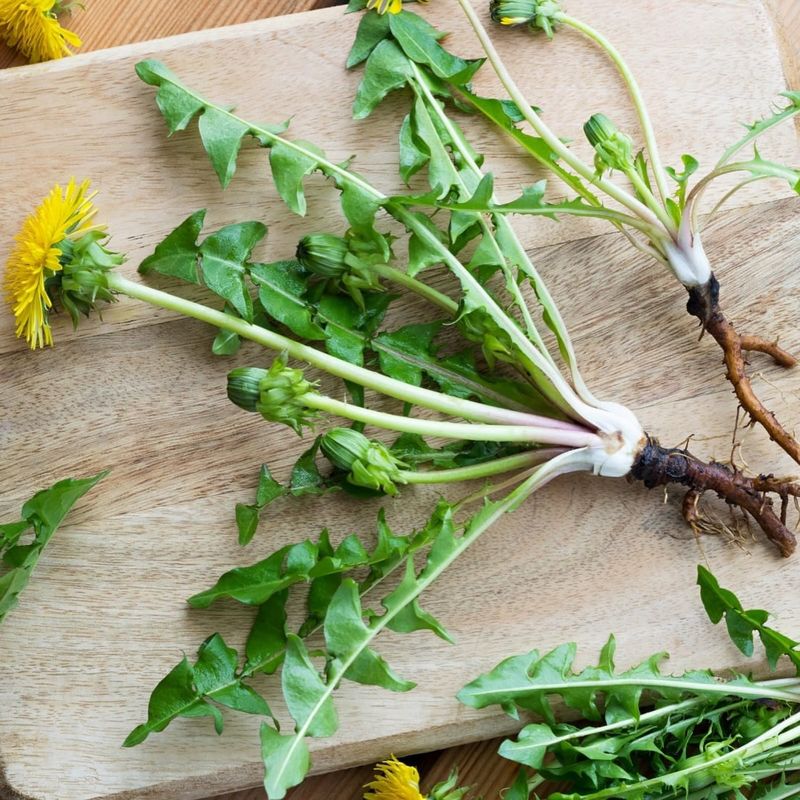
Calling a dandelion free medicine sets up an expectation that the plant cannot meet. Common dandelion (Taraxacum officinale) has been eaten across cultures for a very long time, and Utah State University Extension’s urban edibles guide confirms that the leaves, flowers, and roots are all edible parts of the plant.
That is a meaningful fact, but it is a food fact, not a medical one.
The National Center for Complementary and Integrative Health is straightforward on this point: NCCIH reports very little human research on dandelion and no compelling scientific evidence that it treats any health condition. Traditional and commercial uses exist, and some people take dandelion supplements or drink root tea for various reasons.
None of that history converts a lawn weed into a proven remedy, and framing it as free medicine skips over the distinction between traditional use and demonstrated clinical effect.
What the evidence does support is narrower and more honest. Dandelion leaves contain dietary fiber and minerals.
The roots contain inulin-type fructans, a class of nondigestible carbohydrates that researchers study for their potential prebiotic effects on gut bacteria. Those are real food compounds worth knowing about, and the sections ahead explain what they do and do not mean for your diet.
A lawn is not a supplement store, though. Nutrient levels in any plant vary with soil quality, plant age, season, and growing conditions.
A dandelion growing in poor suburban soil after a dry summer is not the same as one analyzed in a laboratory study. Treating the plant as food, with appropriate caution about where it grew and how it was prepared, is the accurate frame.
Treating it as medicine without a diagnosis, a dose, or clinical evidence behind it is a different thing entirely, and this article will not do that.
What the taproot actually does underground
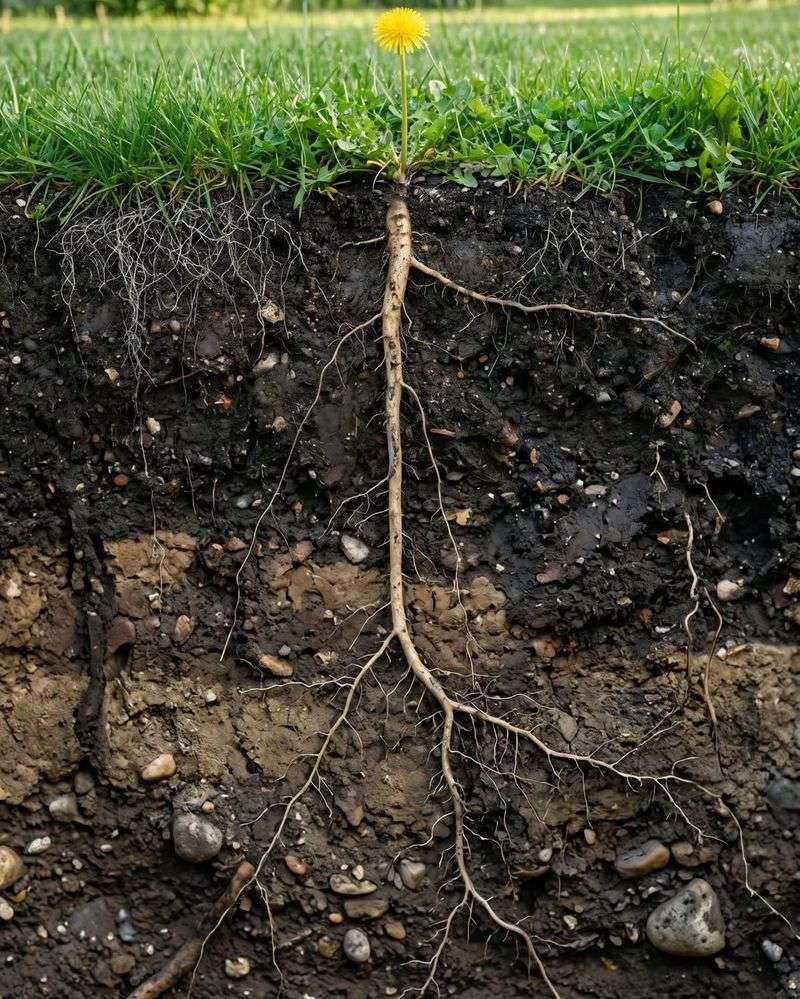
Dandelions survive mowing because the part that matters most is underground. The taproot can reach six to eighteen inches into the soil, which means a mower blade cutting the leaves and stem at ground level barely inconveniences the plant.
University of Minnesota Extension notes that dandelions regrow readily from their roots after mowing or cutting, which is exactly why repeated mowing alone rarely eliminates them from a lawn.
Pulling the root is more effective at removal, but it comes with a catch. USU Extension’s pest guide explains that dandelion can regenerate from root fragments as short as an inch left in the soil.
Incomplete pulling can therefore worsen the weed problem rather than solve it. Removing the root cleanly generally kills that individual plant, so the idea that you can harvest the same root repeatedly without consequence does not hold up in practice.
Extension sources describe the taproot’s depth as contributing to soil aeration and to some degree of nutrient cycling, since the plant draws minerals up from deeper layers. That ecological observation has been amplified into a claim that dandelions enrich the soil or mine minerals specifically for human benefit, and the leap is not supported.
Research on plants growing near roads or in urban environments shows that mineral content in plant tissue reflects whatever the surrounding soil contains, including heavy metals and contaminants found in roadside soils. The root absorbs what is available, beneficial or not.
Mowing, meanwhile, does not deliver root nutrients to the person pushing the mower. The inulin and other compounds stored in the root stay in the root until the root is harvested, prepared, and eaten.
Watching dandelions reappear after every mow is a reminder of how effective their underground storage system is, not a mechanism by which their nutrients reach you.
The root contains a prebiotic candidate
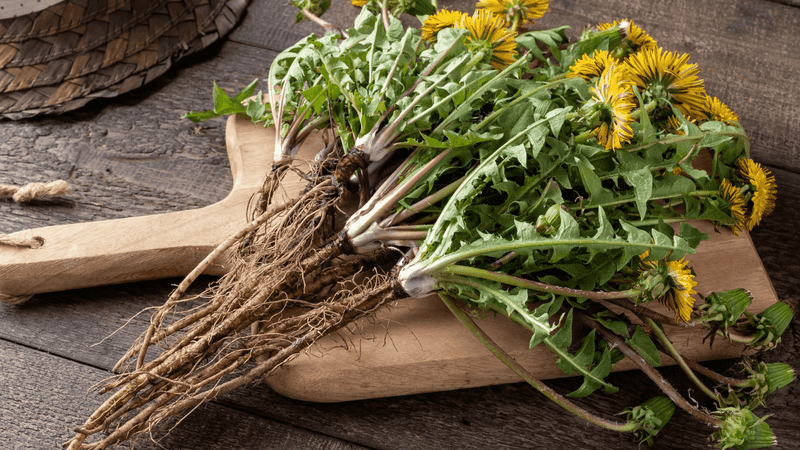
Dandelion roots have attracted genuine scientific interest, and the reason is inulin. Inulin belongs to a family of nondigestible carbohydrates called fructans, and the human digestive system cannot break them down in the small intestine.
They travel intact to the colon, where gut bacteria ferment them. A recent laboratory study of dandelion root composition found total fructans at roughly 25 percent of dry weight in the tested material, with inulin representing the largest identified fraction.
That is a meaningful concentration, but it is a result from a specific laboratory sample, not a guaranteed value for a fresh root growing in a residential lawn, where plant age, soil type, season, and growing conditions all shift the numbers.
The word prebiotic gets used loosely, so precision matters here. A substrate qualifies as a prebiotic when it is selectively used by host microorganisms in a way that produces a health benefit, not simply when it can be fermented.
Current prebiotic research applies that standard rigorously, and meeting it requires more evidence than showing that bacteria can consume a compound. Fermentability is the starting point, not the finish line.
Human research on inulin-type fructans, studied mostly as purified or standardized commercial ingredients, has reported increases in certain beneficial bacterial groups, improved bowel regularity in some populations, and enhanced calcium or magnesium absorption in some studies. Reviews of fructan research consistently note that results depend on dose, fructan chain length, an individual’s baseline microbiota, and overall diet.
The findings from those purified-inulin studies cannot be transferred directly to an unspecified serving of whole dandelion root dug from a lawn.
That gap between purified-ingredient research and whole-food outcomes matters practically. If you eat a small amount of dandelion root as food, you are getting a variable quantity of fructans alongside other plant compounds, water, and fiber.
That is different from taking a measured dose of pharmaceutical-grade inulin in a clinical trial. The root is interesting as a food source of these compounds.
Treating it as a substitute for a tested prebiotic supplement requires evidence that does not yet exist for whole dandelion.
Leaves offer a more ordinary vegetable payoff
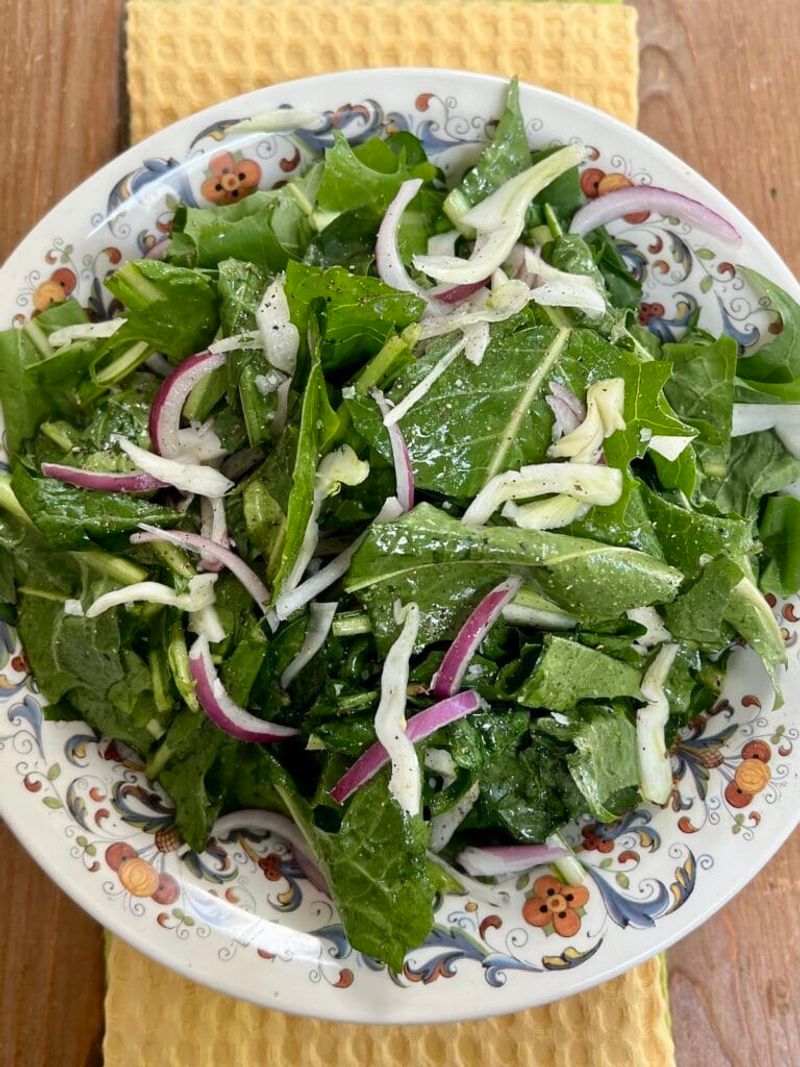
While the root gets most of the attention for its fructan content, the leaves are the part most people can use most easily. Young dandelion leaves can be treated like any bitter salad green, and Penn State Extension’s guide to bitter vegetables points out that blanching or cooking reduces the sharpness considerably, making them more approachable for people who find raw dandelion too strong.
Published analyses have found dietary fiber, iron, manganese, calcium, magnesium, and potassium in dandelion leaf samples. One nutrient study reported approximately 3.7 grams of fiber per 100 grams of fresh leaves and identified iron and manganese as notable minerals.
A separate compositional analysis reported different values for calcium, iron, magnesium, and potassium, illustrating how much published numbers can shift between samples. Soil type, geographic location, plant age, and the laboratory methods used all influence what ends up in the data.
Those variations are worth taking seriously before treating any single nutrient figure as a reliable target. A dandelion leaf grown in mineral-rich garden soil after a wet spring will not have the same profile as one growing in compacted clay near a driveway.
Research on plants in urban environments shows that soil contamination can alter what a plant takes up, meaning the mineral story cuts both ways.
Beyond contamination concerns, the presence of a mineral in plant tissue does not automatically mean your body absorbs a useful amount of it. Bioavailability depends on the form the mineral takes, what else you eat alongside it, and your individual digestive chemistry.
A serving of dandelion leaves can contribute fiber and some minerals to a varied diet, the same way other leafy greens do, without being a concentrated supplement or a guaranteed nutritional upgrade. Young leaves harvested in spring before the plant flowers tend to be the most palatable choice, and they pair well with other salad greens or lightly sauteed with garlic the same way you might prepare spinach or arugula.
Only an intentionally safe lawn is a food source
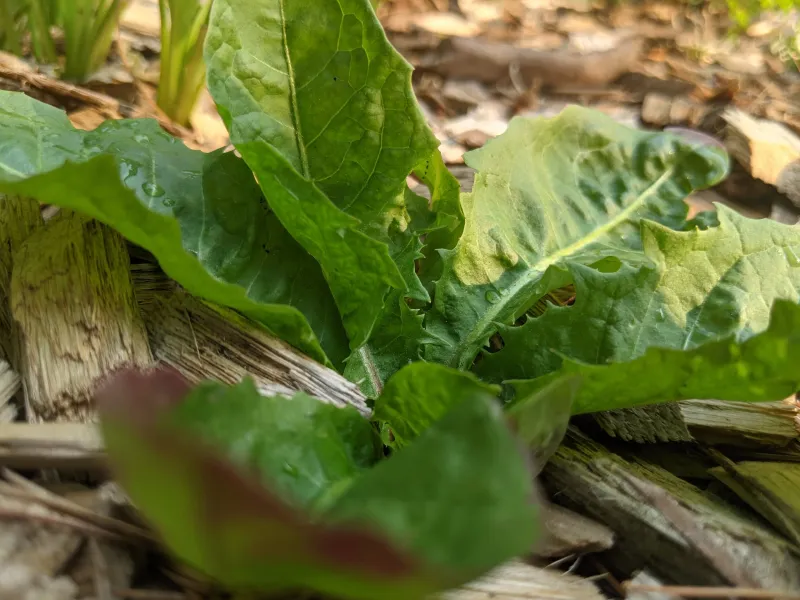
Before any discussion of how to prepare dandelions, there is a go/no-go check that matters more than any recipe. The single most important question is not whether dandelions are edible in general.
The question is whether the specific plants on your specific lawn are safe to eat. For many residential lawns, the honest answer is no, and no amount of washing changes that.
USU Extension’s urban edibles guidance is direct: edible weeds must be correctly identified and must be free of pesticides. That second requirement eliminates most conventional lawns immediately.
Herbicides, weed-and-feed combination products, insecticides, and pre-emergent treatments are all commonly applied to residential turf, and dandelions are a primary target of many of them.
Pesticide labels are legally binding documents that specify exactly where and how a product may be used. The EPA explains that a product may only be used on the crops or sites listed on its label, and EPA labeling guidance reinforces that label requirements are enforceable under federal law.
A lawn herbicide label almost certainly does not list its treated plants as food crops, which means plants from that lawn are not approved for consumption under the terms of the product’s registration.
Drift is another concern that extends beyond your own yard. The National Pesticide Information Center notes that avoiding consumption is the only way to completely eliminate ingestion risk when contamination is uncertain.
Herbicide and insecticide particles can travel from neighboring properties, and there is no reliable visual test for whether a plant has been exposed. Washing removes surface dirt and some residues, but it cannot remove systemic pesticides that the plant has already absorbed through its roots or leaves.
Road runoff, heavy vehicle traffic nearby, animal waste, and uncertain soil history all add to the exclusion list. ATSDR environmental health guidance recognizes that urban soils near roads and industrial areas can carry contaminants that transfer to plants.
If you cannot confirm with confidence that a patch of ground has been intentionally kept free of chemicals, animal contamination, and runoff for a meaningful period, the safe call is to leave those dandelions alone as food and remove them as weeds instead.
Start with a small serving, not a concentrated dose
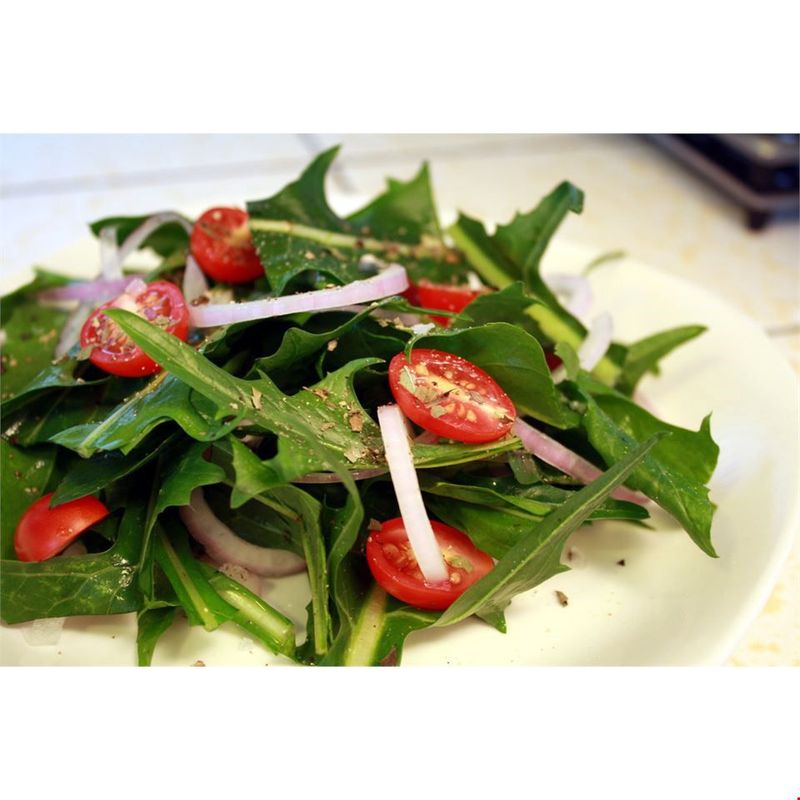
Assuming you have confirmed that your dandelions grew in an intentionally untreated area and you have positively identified the plant, the next step is to start small. Young leaves are the easiest entry point.
They can be washed and added raw to a salad alongside milder greens, or lightly sauteed with olive oil and garlic the way you might handle Swiss chard. USU Extension confirms dandelion leaves as edible, and Penn State Extension’s bitter-vegetable guide suggests that blanching or brief cooking takes the sharpest edge off the flavor for people who find it overpowering raw.
Roots can be used in food preparations too, including as an infusion sometimes called dandelion root tea. A strained tea is worth distinguishing from eating the root directly.
Straining removes much of the root’s insoluble fiber and solid plant material, so the infusion is not nutritionally equivalent to consuming the whole root. If the fiber content is what interests you, eating a small amount of prepared root is more relevant than drinking a strained liquid.
Root powders, concentrated extracts, and large quantities of any dandelion preparation are a different category from ordinary food use, and the research on fructan tolerance gives a practical reason for caution. A dose-ranging trial on fructan tolerance found that gastrointestinal symptoms tended to increase with intake, with more significant effects appearing at 20 grams per day for one preparation.
A review of fructan and digestive tolerance reinforces that individual responses vary considerably. Starting with a modest food portion and paying attention to how your body responds is more practical than working toward a target dose, because there is no established medicinal dose for whole dandelion and more is not automatically better.
Who should use caution with concentrated dandelion products?
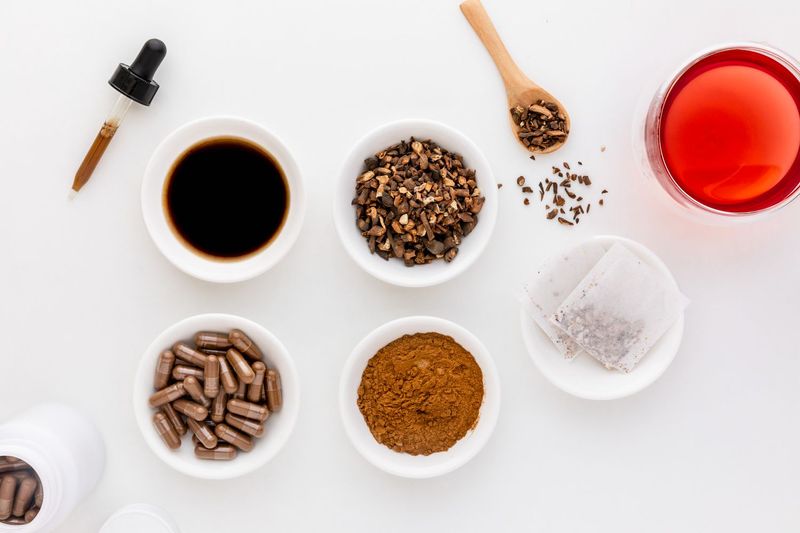
Ordinary food amounts of dandelion, a handful of leaves in a salad or a small serving of cooked greens, are considered likely safe by NCCIH for most people. Concentrated products are a separate matter, and several groups of people should speak with a healthcare provider before using dandelion supplements, root powders, or extracts in any significant quantity.
NCCIH identifies potential theoretical interactions between dandelion products and diabetes medications, anticoagulant or antiplatelet drugs, and diuretics. People who are pregnant or breastfeeding face additional uncertainty because less is known about the effects of concentrated dandelion in those situations.
These are not reasons to avoid a dandelion leaf in a salad, but they are reasons to be cautious with supplements, teas made from large amounts of root, or any preparation taken regularly in a concentrated form.
Inulin-type fructans, the compounds that make dandelion root scientifically interesting, also come with a well-documented digestive trade-off. Fermentation by gut bacteria produces gas as a byproduct, and for some people that means bloating, abdominal discomfort, or changes in bowel habits.
Research on fructan dose and tolerance confirms that these symptoms tend to scale with the amount consumed. People with irritable bowel syndrome or sensitivity to fermentable carbohydrates, a group sometimes following a low-FODMAP approach, may react poorly to inulin-containing foods.
IFFGD guidance on fiber and IBS notes that not all fiber types suit all digestive systems, and fructans specifically are among the fermentable carbohydrates that can trigger symptoms in sensitive individuals.
Allergy is another real consideration. Dandelion belongs to the Asteraceae family, and people who react to related plants, including ragweed, chrysanthemums, marigolds, and daisies, may also react to dandelion.
A skin or mouth reaction after first contact with dandelion is a reason to stop and check with an allergist rather than continue experimenting. The prebiotic potential of the root does not outweigh an allergic response, and the two concerns are entirely separate from each other.
The useful reframe is smaller than the headline
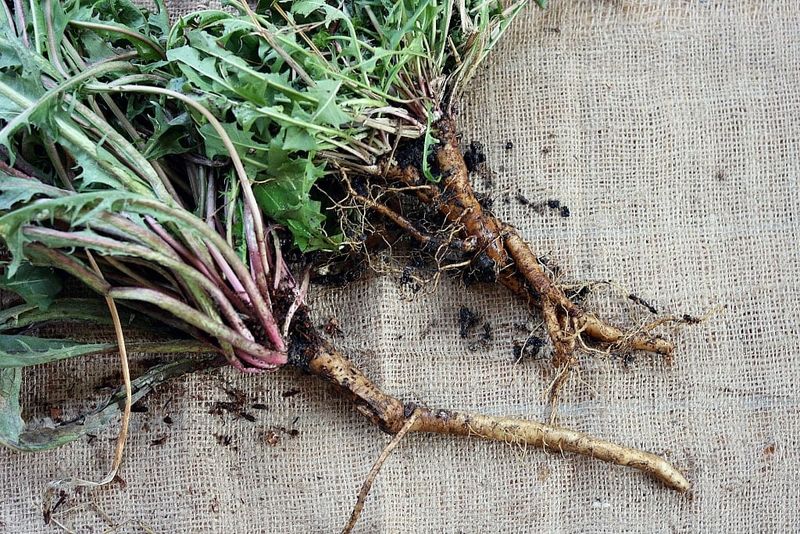
An untreated, correctly identified dandelion can be approached as a free edible plant with variable fiber, minerals, and potentially prebiotic root fructans. That is the accurate version of the headline’s claim, and it is genuinely useful.
It is not medicine, a guaranteed mineral supplement, or a regenerating harvest you can return to season after season from the same root.
The sequence worth remembering is straightforward. Verify the plant before you pick it.
Verify the lawn’s chemical history before you eat anything from it. When contamination is uncertain, the National Pesticide Information Center is clear that avoiding consumption is the only way to eliminate the risk.
If the lawn passes both checks, choose leaves for everyday cooking or the root for occasional food preparations, start with a modest amount, and stop if your body reacts.
Deciding to remove dandelions from your lawn and deciding whether to eat them are two completely separate choices. NCCIH’s summary and university extension foraging guidance both point toward the same conclusion: dandelion is an interesting edible plant with real food compounds, and the most useful thing you can do with that information is apply it carefully rather than enthusiastically.
The weed you have been pulling may be worth a second look, just not the look the headline promised.