
If Your Hydrangeas Refuse To Bloom, Here Are 5 Kitchen-Cupboard Fixes That Wake Them Back Up
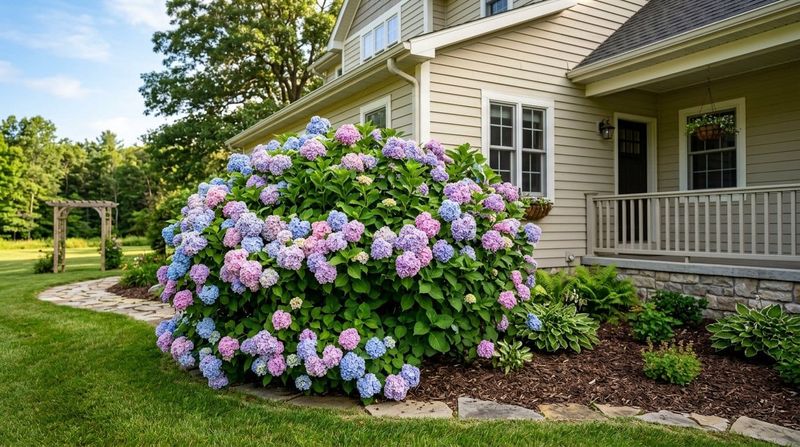
Nothing feels worse than a healthy-looking hydrangea that just sits there covered in leaves and no flowers. Before you spend money on fancy products, take a peek inside your kitchen cupboard, because a few everyday items can gently nudge your plant back into bloom.
Each of these fixes targets a different reason your hydrangea might be sulking, from soil that is too alkaline to a quiet nutrient shortage. Here are five simple rescues you can try today.
1. Coffee Grounds for Soil Acidity and Nutrients
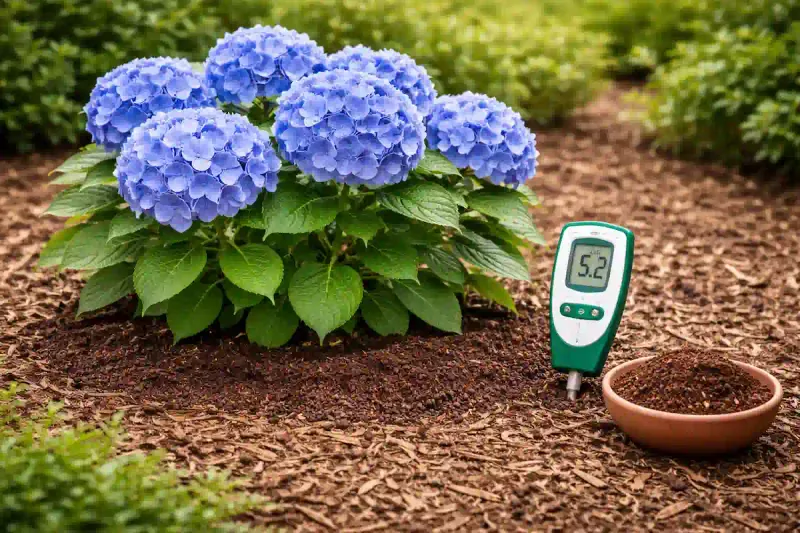
That leftover pot of coffee you were about to rinse down the drain? Your hydrangea would love a word.
Used grounds are mildly acidic, and for the classic bigleaf hydrangea (Hydrangea macrophylla), lowering soil pH is often the secret to unlocking those dreamy blue blooms.
The perk goes beyond color. Coffee grounds slowly feed the soil with nitrogen, phosphorus, and potassium, which supports strong roots and fuller flower heads.
They also loosen up the dirt and help it hold moisture, so your plant stays happier between waterings.
Keep it light. Sprinkle a thin layer, about half an inch, of dried used grounds around the base, or toss them into your compost pile first.
Thick, wet clumps can mat down and block air from reaching the roots, which does more harm than good. One honest note: if your soil is stubbornly alkaline, coffee alone may not swing the pH much, so treat it as a gentle nudge rather than a magic switch.
2. Eggshells for Calcium and Pink Blooms
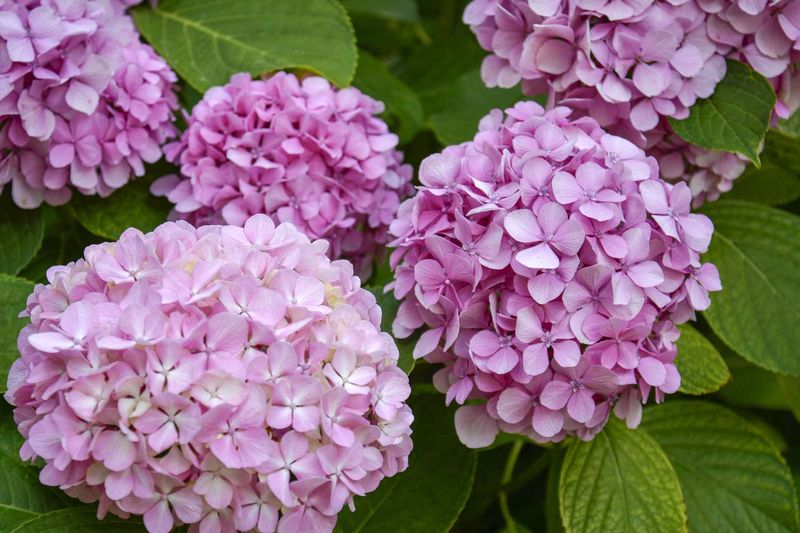
If you dream of soft pink and rosy-red hydrangeas, your breakfast trash holds a quiet helper. Eggshells are mostly calcium carbonate, the same stuff used to sweeten sour soil, and raising the pH is exactly what bigleaf hydrangeas need to turn pink instead of blue.
Calcium does double duty here. It strengthens the plant’s cell walls, which means sturdier stems that can actually hold up those big, heavy flower heads instead of flopping over after a rain.
To prep them, rinse your shells, bake them at 250 degrees Fahrenheit for about 20 minutes to sterilize, then crush them into a fine powder. Scatter the powder around the base of the plant.
Patience is the catch, since eggshells break down slowly, so you may need to reapply through the growing season before you see the color shift you are after.
3. Vinegar for Acidifying Soil and Blue Blooms
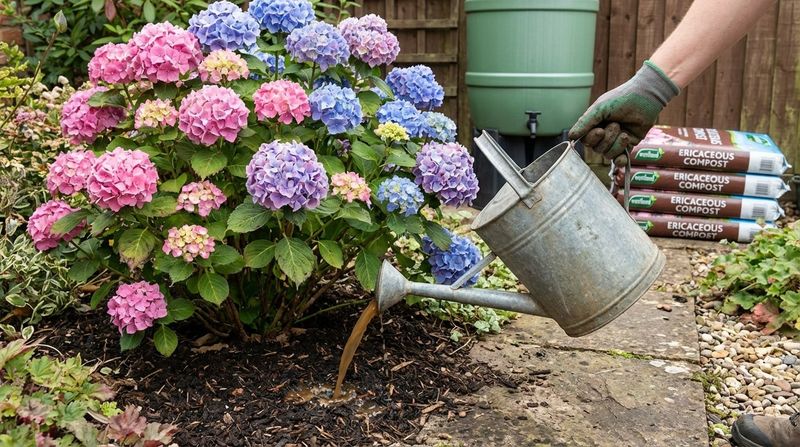
Want faster results than coffee grounds can deliver? A splash of vinegar might be your shortcut to blue.
Both apple cider and white vinegar are acidic, and diluting them into your watering routine can pull the soil pH down where bigleaf hydrangeas turn that gorgeous ocean-blue shade.
Getting the recipe right matters. Mix 1 cup of apple cider vinegar (usually around 5 to 6 percent acidity) into 1 gallon of water.
White vinegar can run stronger, up to 10 percent, so measure carefully and dilute well before it ever touches your plant.
Pour the solution around the base, keeping it off the leaves and stems where it can cause burn. Repeat every couple of weeks until the color looks right, then ease off.
A word of caution: vinegar is powerful stuff, and too much acidity can damage the roots, so always go sparingly and diluted.
4. Epsom Salt for Magnesium Deficiency
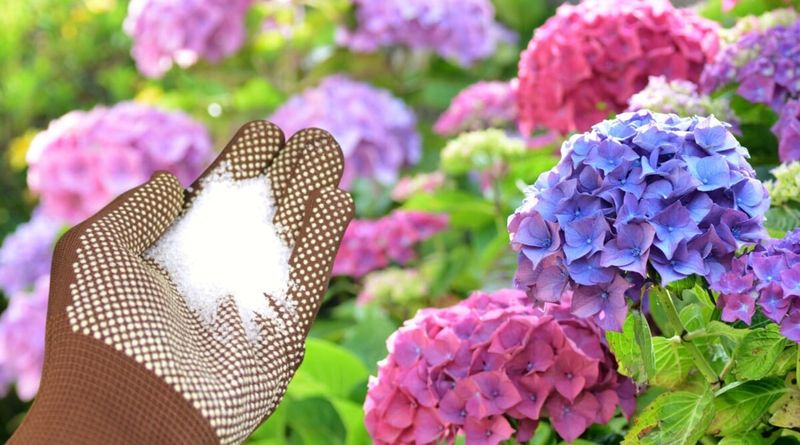
Yellowing leaves with green veins, and blooms that never quite pop? Your hydrangea might be quietly short on magnesium, and Epsom salt (which is really just magnesium sulfate) can step in.
Magnesium is a big deal because it helps the plant make chlorophyll, the green pigment that powers photosynthesis. More efficient photosynthesis means more stored energy, healthier growth, and a better shot at vibrant flowers.
The recipe is simple: dissolve 1 tablespoon of Epsom salt into 1 gallon of water, then apply it to the soil around the plant every 2 to 4 weeks, keeping it off the foliage. Here is the important part, though.
Only reach for Epsom salt if you actually suspect a magnesium deficiency, because piling it on when the soil already has plenty can throw off the balance of other nutrients and cause new problems.
5. Banana Peels for Potassium Power
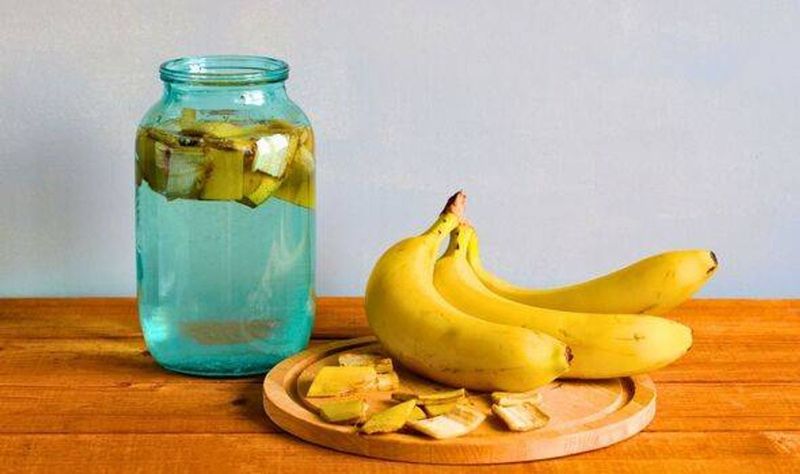
Don’t toss that banana peel just yet, because it might be exactly what your buds have been waiting for. Peels are loaded with potassium, the nutrient that fires up bud formation, pushes bloom development along, and deepens flower color.
Potassium also helps your hydrangea manage water, which makes it tougher during those brutal hot, dry summer stretches. A plant that can hold its cool is a plant that keeps flowering when others wilt.
Chop the peels and work them into the soil around the base on a regular basis, and they will break down into a steady, slow-release supply. Timing tip: laying them down in late winter means the potassium is ready and waiting as your hydrangea wakes from dormancy and starts putting on new growth.
It is one of the easiest habits to build, since you are basically feeding your plant with something you were going to throw away anyway.