
If Your Backyard Feels Flat And Bare, Here’s How A Plain Privacy Fence Turns Into A Birdhouse Garden
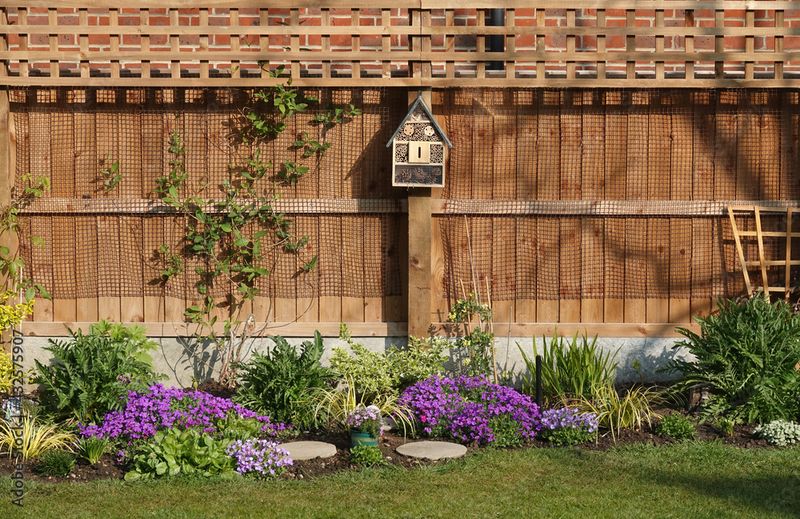
A bare wooden privacy fence can feel like a dead end in the backyard, but it doesn’t have to stay that way. With some thoughtful planting and a few smart additions, that flat backdrop can anchor a garden that draws birds through every season.
The fence itself won’t bring birds in, but what you grow in front of it absolutely can. Here’s a practical guide to making that happen without a costly overhaul.
The Fence Is a Backdrop, Not the Bird Magnet
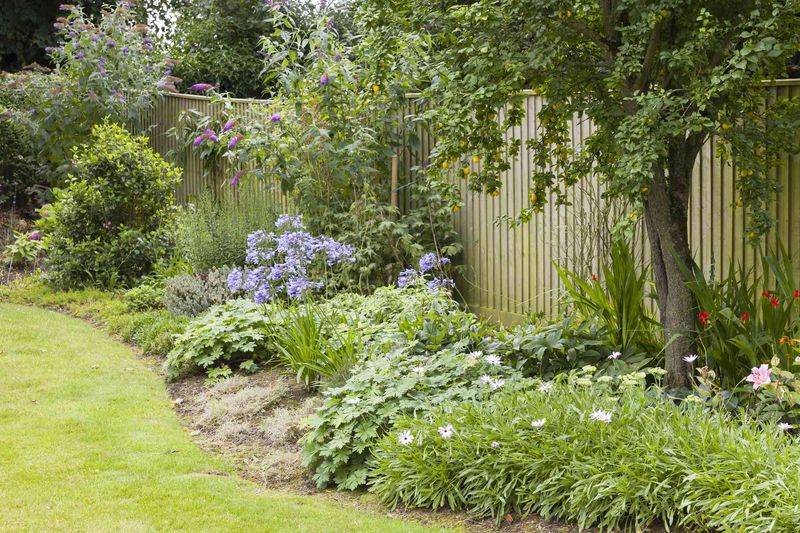
Plenty of backyard gardeners look at a blank wooden fence and picture birds perching along the top, but the wood itself isn’t what brings them in. Birds need food, water, cover, and nesting opportunities.
The fence is a structure, not a habitat, and treating it as a backdrop rather than the attraction is the most honest starting point for this kind of project.
Residential yards can genuinely support meaningful bird habitat, though. USDA Forest Service research on urban vegetation and wildlife supports the idea that greater vegetation diversity and structural complexity are associated with more wildlife value in residential settings.
That’s encouraging news for anyone starting with a flat, bare lot, because the fence gives you an instant vertical edge to build against.
The goal is to use the fence line as the rear wall of a planted border, with layers of vegetation in front of it that supply varied food sources and shelter. A single row of flowering annuals pressed against the boards won’t do much.
A thoughtfully arranged planting that mixes heights, plant types, and seasonal interest is a different story entirely.
Setting realistic expectations matters here. Audubon’s guidance on bird-friendly yards makes clear that combining food, cover, water, and nesting opportunities is what makes a yard useful to birds, not any single feature.
The fence can help define a planting area and provide a visual anchor, but the habitat features you add around it do the actual work. Think of the fence as the frame and the plants, water, and nest boxes as the picture.
Build Layers Instead of a Single Row of Flowers
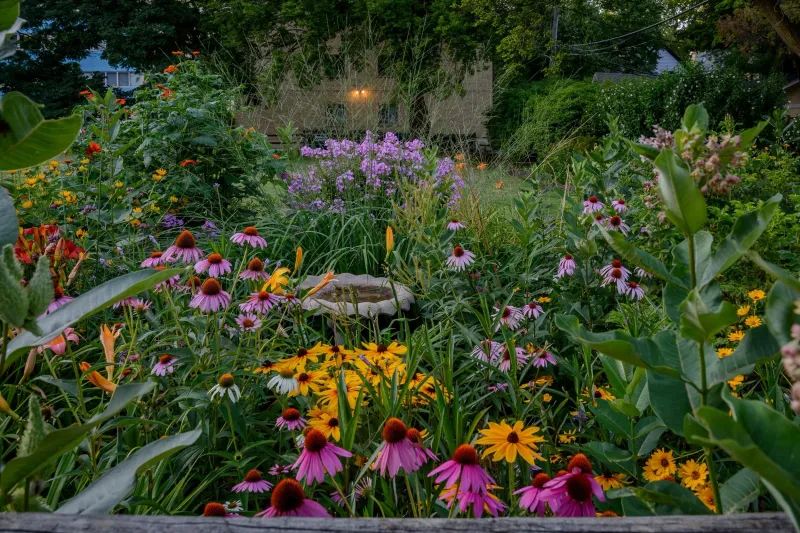
A single row of marigolds or zinnias pressed against the fence boards looks tidy, but it gives birds almost nothing to work with. Layering is what changes that.
Picture the fence as the tallest point and work forward: taller native shrubs or a small native tree close to the fence, mid-height native perennials in front of those, a vine or two on a trellis or wire support, and some manageable ground-level cover or leaf litter at the very front edge.
Audubon recommends layering habitat precisely because different bird species use different heights and structures. A song sparrow foraging through low leaf litter has different needs than a catbird tucked into a mid-height shrub or a wren probing a vine tangle.
Giving the border multiple levels means more species can find something useful there.
The most important decision in this layer plan is choosing locally native plants rather than picking from a national “best birds” shopping list. Audubon’s native plant database lets you search by zip code to find plants suited to your specific region, climate, and soil.
A native that thrives in the mid-Atlantic may not suit the Pacific Northwest, and vice versa. Your local cooperative extension office is another reliable source for regionally appropriate choices.
Visual fullness and genuine habitat aren’t the same thing. A border that looks lush from the patio may still be made up mostly of plants that offer little food or shelter to local birds.
When selecting plants for each layer, ask whether each one supplies insects, seeds, berries, nectar, nesting structure, or cover, because birds need a mix of those resources across the season, not just a pretty display in June.
Make the Border Useful After the Flowers Fade
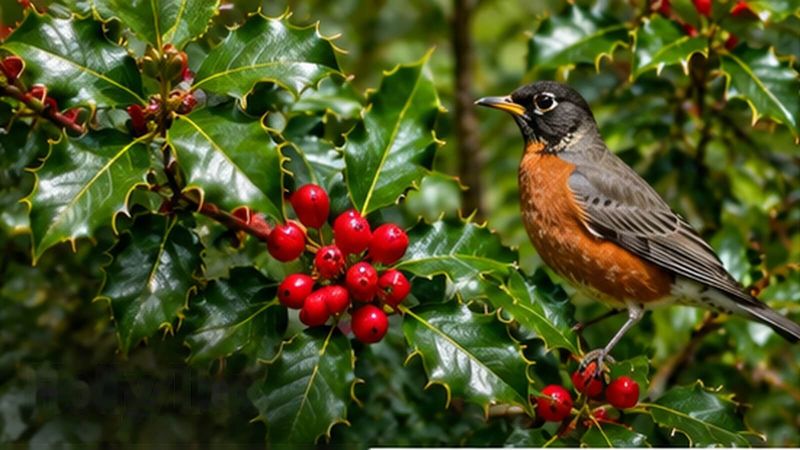
Most fence gardens look great in June and July, then turn into a brown tangle by September. Keeping the border useful after peak bloom takes some planning up front, but the approach is straightforward.
Start by resisting the urge to cut everything back the moment flowers drop. Leaving appropriate seed-producing plants standing gives birds a food source through fall and into winter, and Audubon specifically recommends leaving suitable seedheads rather than clearing the garden on a tidy schedule.
Berry-producing shrubs suited to your region add another layer of late-season interest. Audubon highlights native options such as dogwood, holly, juniper, hawthorn, arrowwood, sumac, beautyberry, and native trumpet honeysuckle as examples worth considering, but not every plant on that list grows well in every state.
Some, including certain hollies, require both male and female plants to produce fruit, so check the requirements before you buy. Fruit persistence also varies: some berries drop early, others hang on through cold months, and bird preferences differ by species and location.
Evergreen plants where conditions allow give the border structure and visual weight when everything else goes dormant. A native juniper or holly near the fence line can make the whole planting feel purposeful in January rather than abandoned.
One piece of the puzzle that often gets skipped is the insect connection. Many backyard birds feed nestlings almost entirely on insects, particularly caterpillars and other soft-bodied arthropods.
Native plants support those insect communities in ways that most non-native ornamentals don’t, which is why USDA research on residential plantings and bird communities consistently points toward native vegetation as the more valuable choice. The border shouldn’t be treated as a flower-and-seed display only; the insects it supports may matter just as much to nesting birds as the berries or seeds it eventually produces.
A Nest Box Needs Its Own Safety Plan
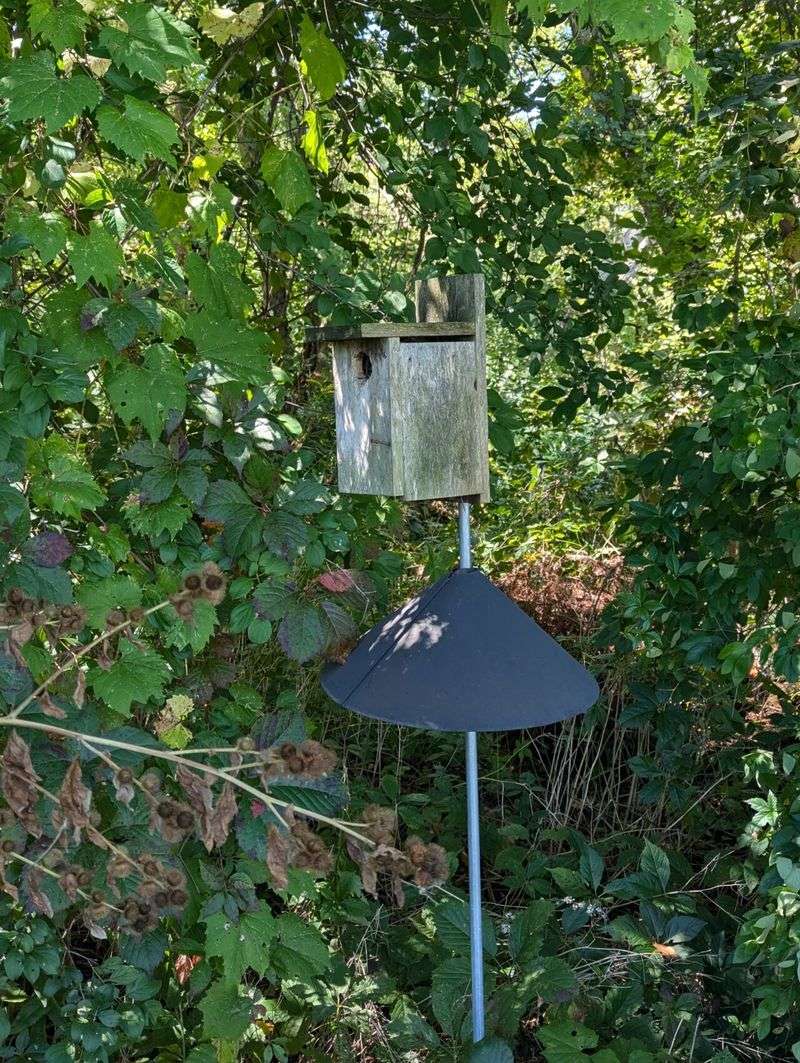
Hanging a few decorative birdhouses on the fence boards is the most common version of the birdhouse garden idea, and it’s also where the most misunderstandings happen. A decorative birdhouse is not automatically a functional nest box.
Most birds do not use nest boxes at all. Cavity-nesting species, including house wrens, chickadees, bluebirds, tree swallows, and certain woodpeckers, are the ones that will consider a box, and even they won’t use one that doesn’t meet their specific requirements.
NestWatch’s guidance on functional nest boxes covers the basics: the entrance-hole diameter, interior dimensions, ventilation, drainage, a rough interior surface below the hole, and a way to open the box for inspection and cleaning. There is no universal birdhouse design.
A 1-inch hole suits house wrens; chickadees and nuthatches need slightly larger openings; bluebirds need a larger hole still. Using the wrong size can either exclude the target species or invite competitors and predators into the box.
The safety question around fence mounting deserves a direct answer. A wooden fence, a nearby shrub, or an overhanging branch can give cats, raccoons, squirrels, and snakes a route straight to the box.
University of California Agriculture and Natural Resources guidance specifically states that mounting a box on a smooth pole with a predator baffle is safer than attaching it to a fence. University of Arkansas Extension echoes that guidance, recommending freestanding pole placement away from structures that predators can use as a launch point.
Place the pole in front of or beside the fence so the fence serves as a visual backdrop rather than a climbing aid. Skip the external perch; perches give predators and competing birds a convenient foothold.
Install the box before the local nesting season, but keep expectations realistic. NestWatch notes that birds may take time to discover a new box, and a correctly installed, species-appropriate box can still go unused if the surrounding habitat doesn’t match what the target species needs.
Oregon State University Extension reinforces this point: habitat suitability around the box matters as much as the box itself.
Water Helps, but Only When You Maintain It
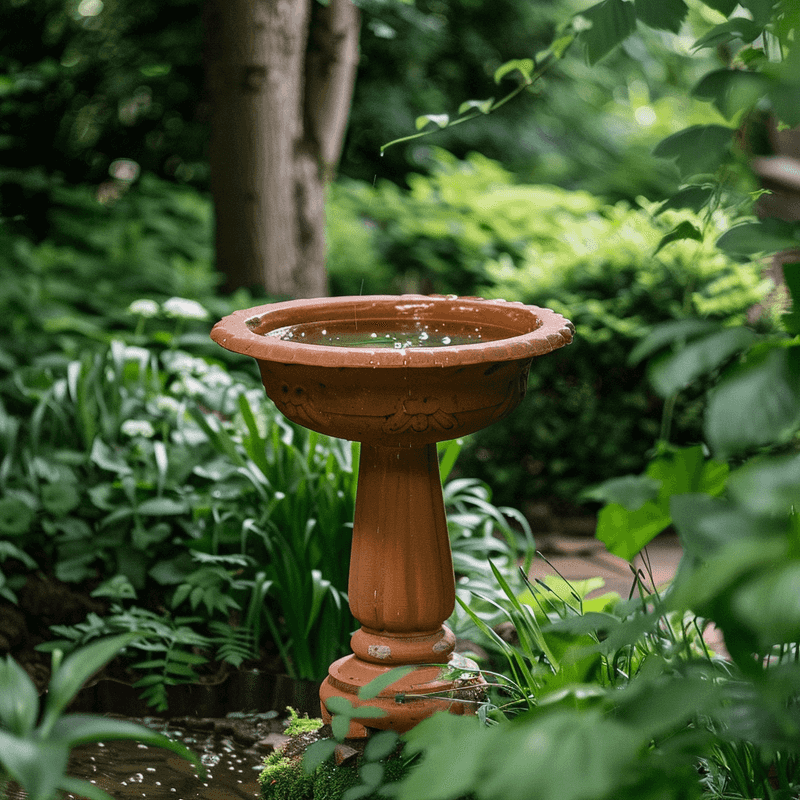
A birdbath can be one of the most consistently useful features in a fence garden, often more reliable than seasonal flowers or fruit for drawing birds in. The setup doesn’t have to be elaborate.
Penn State Extension recommends a shallow, nonslip basin no more than about 3 inches deep at its deepest point, so smaller birds can wade in without risk. A rough or textured surface helps birds keep their footing.
Maintenance is the part that most people underestimate. Stagnant water breeds mosquitoes and can harbor bacteria that harm birds.
USGS advises emptying and cleaning birdbaths at least once a week to reduce mosquito-breeding risk and protect bird health. That means scrubbing the basin, rinsing it thoroughly, and refilling with fresh water on a regular schedule, not just topping it off when it looks low.
Pesticide and herbicide use connects directly to this maintenance rule. NestWatch warns that pesticides and herbicides can harm birds and reduce insect populations that cavity-nesting species depend on to feed their young.
Routine chemical use around a fence garden undercuts the habitat you’re trying to build, including the insects that make native plants so valuable in the first place. If pest or weed pressure becomes a problem, look for targeted, non-chemical approaches before reaching for a sprayer.
Keep the Fence Garden From Creating New Problems
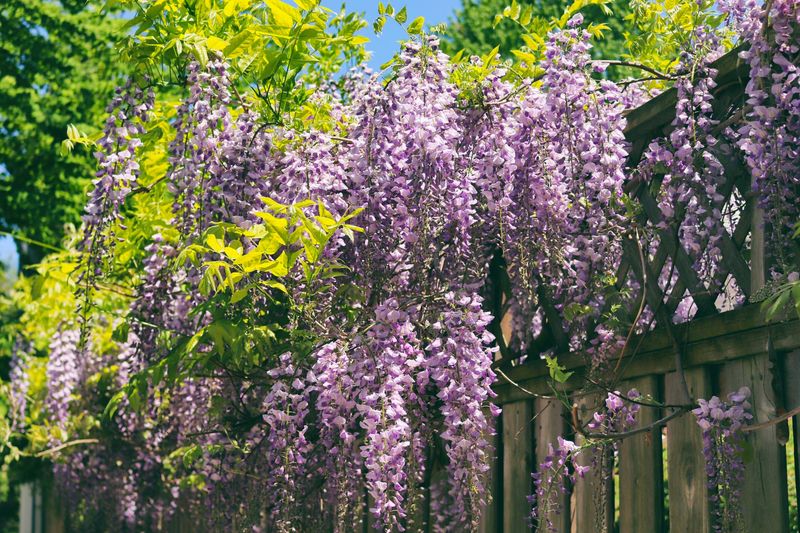
A well-planted fence border can create risks alongside its benefits if a few common mistakes aren’t addressed. Vines are one of the first things to think through carefully.
Perennial vines can screen an unattractive fence and provide nesting cover or fruit, but some species become aggressive spreaders that are difficult to remove once established. Penn State Extension notes that some perennial vines become difficult to control and may damage adjacent structures or spread into natural areas.
Always use a trellis, wires, or other support rather than letting a vine attach directly to the fence boards, and choose non-invasive species suited to your region.
Oriental bittersweet is a well-known example of what to avoid. Penn State Extension identifies oriental bittersweet as an invasive vine that can girdle trees and shrubs and spread aggressively through bird-dispersed seeds.
Birds eat the fruit, which is precisely how invasive plants like this one travel into natural areas. Choosing a regionally native vine eliminates that risk while still giving you the screening and habitat value you’re after.
Dense plantings near a nest box can also create problems. Vegetation that looks like protective cover from the outside may give cats, raccoons, or other predators a concealed approach route.
Keep the area around a nest box pole clear enough that approaching predators are visible, and manage any shrub or vine growth that starts creeping toward the pole.
Windows are a hazard that often goes unaddressed until a bird strikes one. The U.S.
Fish and Wildlife Service identifies residential glass as a major collision hazard, especially when windows reflect vegetation or sky. Adding a birdbath, feeder, or dense planting near a window can increase strike risk rather than reduce it.
FWS guidance on preventing bird-glass collisions recommends exterior screens, external window markers spaced closely enough to break up reflections, or other bird-safe treatments. Optimizing a setup purely for your viewing angle without addressing the glass is a trade-off that birds pay for.
Let the Fence Anchor a Living Habitat
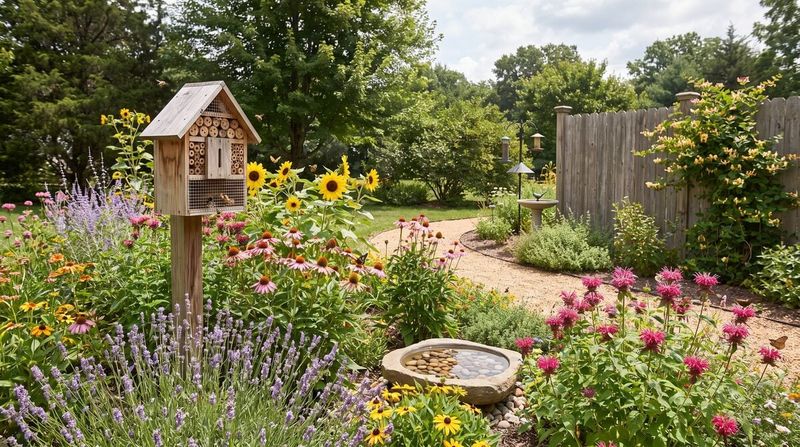
A plain privacy fence becomes genuinely useful when you stop expecting the wood to do the work and start building habitat in front of it. Use the fence as a backdrop and visual boundary, then fill the border with locally native plants arranged in layers, taller shrubs or small trees near the boards, mid-height perennials in the middle, appropriate vines on a trellis, and manageable ground cover at the front edge.
Leave suitable seedheads standing after bloom, select regionally appropriate berry-producing plants with realistic expectations about fruit persistence, and keep evergreen cover where your climate allows. Add a shallow, nonslip birdbath and commit to cleaning it weekly.
Audubon’s framework for bird-friendly yards ties all of these elements together: food, cover, water, and nesting opportunity working as a system rather than as individual decorative choices.
If a nest box fits your goals, treat it as a separate safety project. Match the design to a target cavity-nesting species, mount it on a smooth pole with a predator guard positioned in front of or beside the fence, and plan for annual cleaning.
NestWatch is clear that occupancy is never guaranteed, but a correctly installed, species-appropriate box in suitable habitat gives birds a real option rather than just a decorative gesture. Research on urban habitat complexity consistently points the same direction: the habitat does the work, not any single feature.
A fence that anchors a layered, well-maintained planting earns its place in the yard even on a gray January morning when nothing is blooming.