
If Your Spider Plant Sits By A Dusty Window, Here’s The Two-Job Air Cleanup It Runs Without A Filter
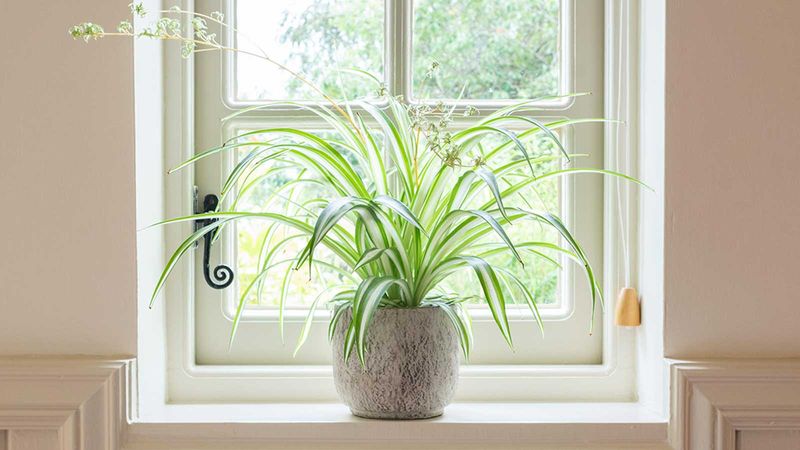
Spider plants are one of the most popular houseplants in the US, and plenty of people keep them near a window hoping they are quietly cleaning the air. The idea that a single potted plant can trap dust and break down household chemicals without any filter sounds almost too good to be true.
Spoiler: it mostly is, but the real story of what a spider plant actually does is still worth knowing.
Dust on the leaves proves deposition, not purification
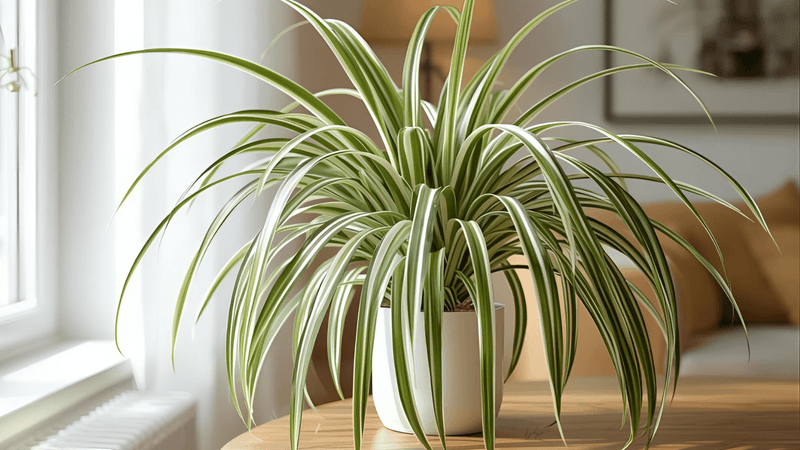
A published study placed spider plants (Chlorophytum comosum) in five occupied indoor rooms and measured what accumulated on the foliage over two months. That particulate matter study found that particles did collect on the leaves, including both surface-deposited material and particles associated with the leaf waxes themselves.
The total amount varied from room to room, which already tells you that the effect is inconsistent and environment-dependent.
Here is the part that often gets lost in plant-enthusiast retellings: the researchers measured what landed on the leaves, not whether airborne particle levels across the room dropped. Those are two very different things.
A surface can collect dust the same way a bookshelf or a picture frame does, without doing anything meaningful to the concentration of particles floating through the air you breathe.
Think of it this way. If you set a sticky piece of tape on a table in a dusty room, it would collect particles too.
That would not make the tape an air purifier. The spider plant has the advantage of being alive and having a larger, more complex surface, but the principle holds: deposition on a surface is not the same as filtration of a room.
The study did not report a clinically or practically important reduction in whole-room particle concentration. No health benefit was demonstrated from the accumulation observed.
So while it is accurate to say that spider-plant leaves can collect some indoor particulate matter, it is a significant overstatement to call that a two-job air cleanup or to suggest the plant is scrubbing the air in any meaningful sense. The leaves are collecting what settles on them, not actively drawing room air through a cleaning process.
The leaf’s ridges may help particles stick
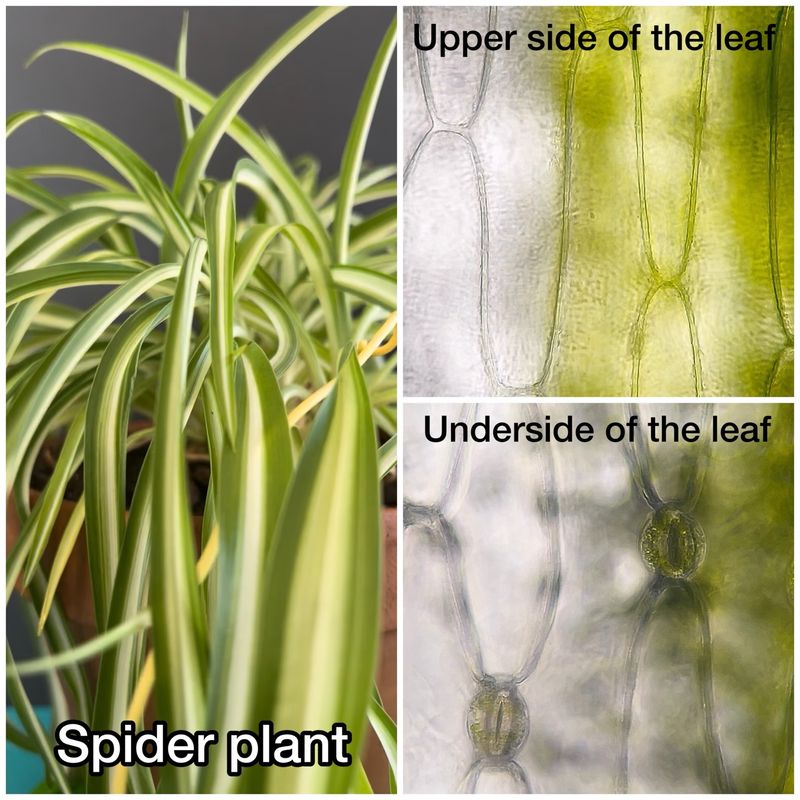
One reason spider-plant leaves tend to hold onto dust rather than letting it slide off comes down to surface texture. A study examining spider-plant foliage in a modular living-wall system described the leaf surface as undulating, ridged, and marked by shallow grooves.
That kind of irregular topography gives airborne particles more places to catch and cling compared with a perfectly smooth surface.
Leaf wax also plays a role. The waxy coating on many plant leaves has a slightly tacky quality at a microscopic level, and when you combine that with a grooved surface, you get a better net for catching particles that happen to drift close enough to land.
It is a physical and chemical interaction, not an active pumping or filtering mechanism.
What the study does not do is isolate ridges as the single dominant reason particles accumulate, or calculate how much cleaner a room becomes because of them. A living-wall installation with many plants packed together is also a very different system from one pot sitting on a windowsill.
The scale, airflow patterns, and total leaf area are incomparable.
So the texture observation is genuinely interesting as plant biology, and it helps explain why a visibly dusty spider plant is not surprising. Particles that drift near the leaves and make contact are more likely to stick than to bounce off.
But “more likely to stick when contacted” is a far cry from “actively removes particles from room air.” One pot cannot intercept enough of the particles circulating through a normal room to make a measurable difference in air quality, regardless of how well-textured its leaves happen to be.
The root zone addresses a different pollutant problem
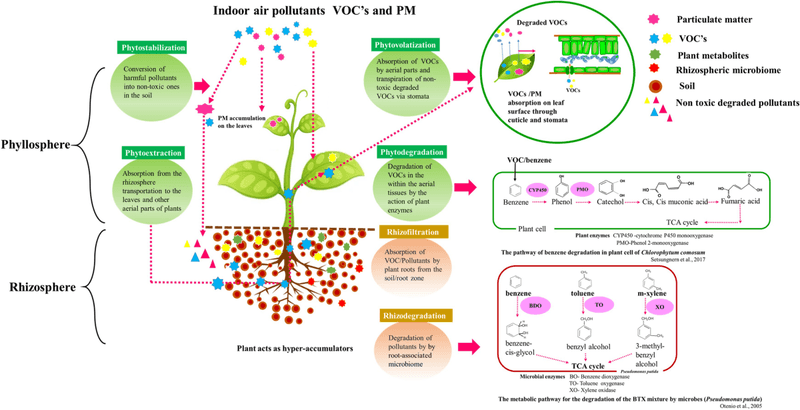
Leaf deposition and root-zone biology are two separate conversations, and conflating them is one of the main ways the air-cleaning claim gets inflated. Volatile organic compounds, or VOCs, are gases, not particles.
Formaldehyde, benzene, and similar compounds float through indoor air in a completely different physical form than dust or PM2.5, and they require different mechanisms to be removed.
A systematic review of indoor plant air-quality studies confirmed that leaves, roots, potting media, and associated microorganisms can each contribute to pollutant removal in experimental phytoremediation setups. The root zone in particular hosts communities of bacteria and fungi that can metabolize certain VOCs, essentially using the compounds as a food or carbon source under the right conditions.
The qualifications here are important. The pollutant type matters enormously.
Some VOCs are more readily broken down by soil microbes than others, and the microbial community in your pot depends on what you planted in, how you water, what the humidity is, and what chemicals have been present over time. Light levels affect plant metabolism, which in turn affects what the roots exude into the soil, which shapes which microbes thrive.
None of this is a switch you flip by buying a spider plant.
Even in studies that show root-microbe VOC activity, the rates measured in a single passive pot are small. The biology is real, but calling it a reliable household service that meaningfully lowers your indoor VOC levels goes well beyond what the evidence supports.
Root-zone microbial activity is a plausible contributor under the right experimental conditions, not a guaranteed feature of every spider plant sitting in a corner.
Why a passive pot is not a room filter
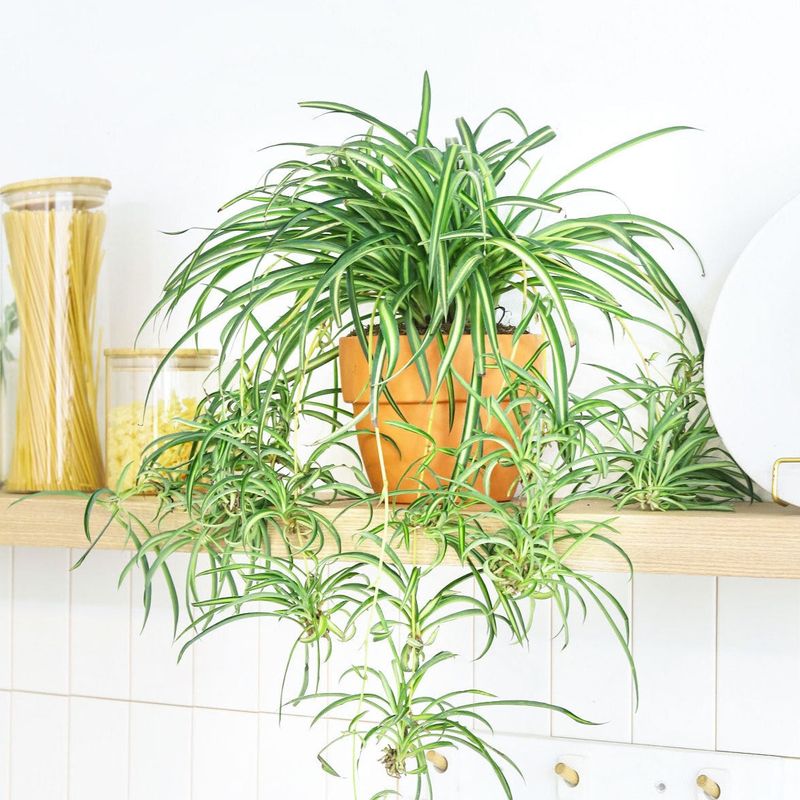
Scale is the argument that most definitively ends the “spider plant as air purifier” claim. A peer-reviewed analysis by Cummings and Waring, published through Drexel University, calculated that ordinary potted plants would require roughly 10 to 1,000 plants per square meter of floor area to match the VOC removal that typical outdoor-air exchange already provides in a home.
That range is not a planting recommendation. It is a way of showing that the math does not work in favor of the windowsill pot.
The core problem is contact rate. For a plant to remove a pollutant from room air, the pollutant has to actually reach the plant’s leaves or roots.
In a normal occupied room, air circulates slowly and unevenly. Most of the air in the room never comes close enough to the plant’s leaf surface or root zone for any uptake to occur.
A passive pot cannot draw air toward itself the way a fan-equipped air cleaner does.
Controlled experiments that show impressive plant-based pollutant removal typically use sealed chambers, very high initial pollutant concentrations, minimal air exchange, and relatively large plant-to-air-volume ratios. None of those conditions match a living room, bedroom, or kitchen with normal ventilation and typical indoor pollution sources.
Translating a sealed-chamber result to a real home requires adjustments that almost always shrink the expected benefit to something unmeasurable.
A single spider plant in a pot may occupy a few hundred square centimeters of leaf area. A typical US bedroom has 10 to 15 square meters of floor space and several times that in air volume.
The ratio of active leaf surface to room air is simply too small for the plant to function as a meaningful filter, regardless of how capable its biology might be at the cellular level.
Engineered botanical filters change the comparison
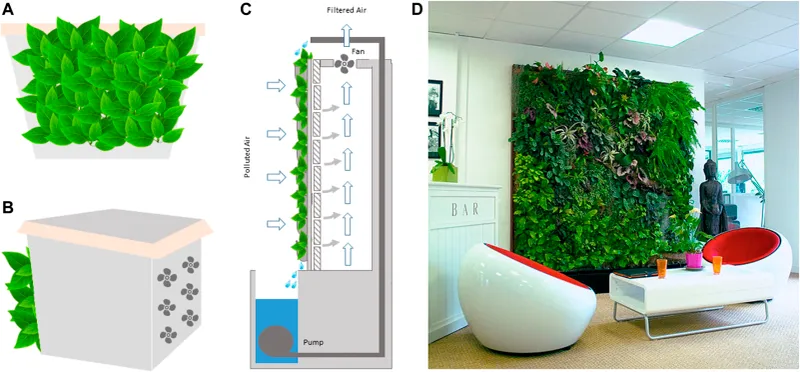
Some of the most compelling plant-based air-cleaning results in the scientific literature come from systems that look nothing like a decorative pot on a windowsill. Active indoor biofilters use fans or water-circulation pumps to move contaminated air directly through a root substrate, dramatically increasing the contact between pollutants and the microorganisms living in the media.
Research on indoor biofilter bacterial communities shows that the root-zone microbial populations in these forced-air systems are shaped by ongoing exposure to airborne chemicals, suggesting the systems do engage in active pollutant processing.
The critical difference from a passive pot is the word “forced.” When a fan pushes room air through a moist root medium at a controlled rate, the pollutant molecules have no choice but to spend time in close contact with the microbial community. That is biofiltration in an engineering sense, comparable in principle to industrial odor-control systems.
The plant provides the root substrate and the biological community; the mechanical airflow does the work of bringing pollutants to them.
Remove the fan, and you are back to hoping that diffusion and slow air currents happen to carry enough pollutant molecules to the roots of one pot to make a difference. They generally do not, at least not at rates that compete with normal ventilation or a portable air cleaner.
Early NASA research, conducted in small sealed test chambers, demonstrated that plants could reduce VOC concentrations under those controlled conditions. Those NASA chamber studies used minimal air exchange and concentrated pollutant loads that are not representative of a typical occupied home.
The findings were real within those parameters, but they were never designed to predict what one plant does in a ventilated living room, and they should not be used that way.
Care for the spider plant as a plant
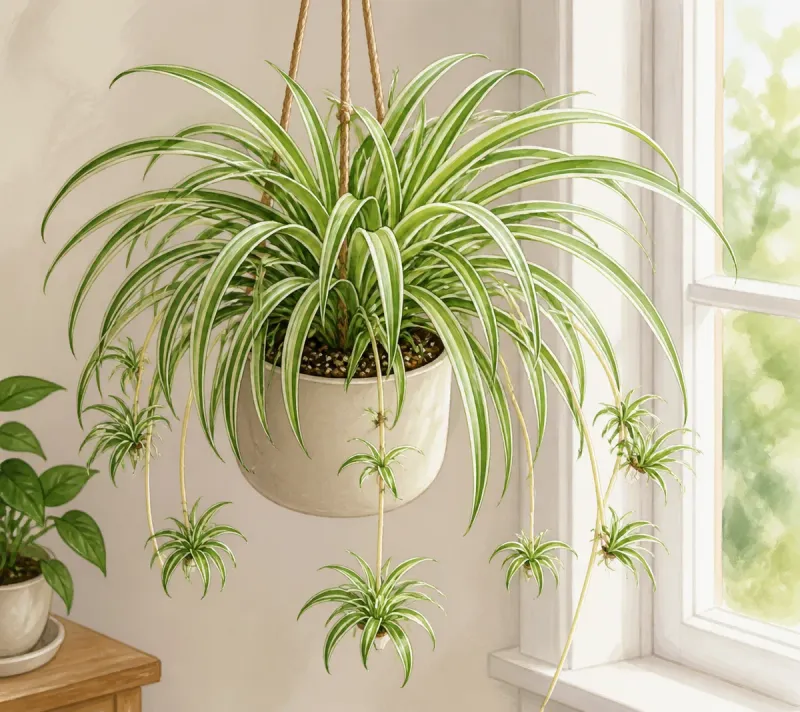
Keeping a spider plant healthy is genuinely straightforward, and that ease is one of the real reasons to own one. North Carolina Extension guidance recommends bright to medium indirect light, and University of Wisconsin-Madison Extension advises letting the soil dry out slightly between thorough waterings, combined with a well-draining potting mix.
Overwatering is one of the most common ways to damage the plant, so erring toward dryness between waterings keeps the roots healthier than keeping the soil constantly moist.
A dusty window can work as a placement, but it comes with some caveats worth knowing. Depending on the window’s orientation and the time of year, direct midday sun can scorch spider-plant foliage, showing up as pale or brown patches along the leaf edges or tips.
A sheer curtain or a spot a foot or two back from the glass can soften the light enough to avoid damage while still giving the plant what it needs. North- or east-facing windows tend to be gentler than south- or west-facing ones in summer.
Windows also introduce variables beyond light. Drafts from gaps in the frame, cold radiating off the glass in winter, or outdoor pollutants drifting in on breezy days are all worth considering.
None of these make a window a bad location automatically, but the idea that placing a spider plant beside a dusty window is a validated air-cleaning strategy does not hold up. The window is just a light source, and a somewhat variable one at that.
Good care keeps the plant alive and looking attractive. That is the honest goal.
A healthy plant with clean, uncrowded foliage simply looks better and is easier to maintain than a neglected one, regardless of what it does or does not do for your room’s air.
Wipe the foliage, then address the pollution source
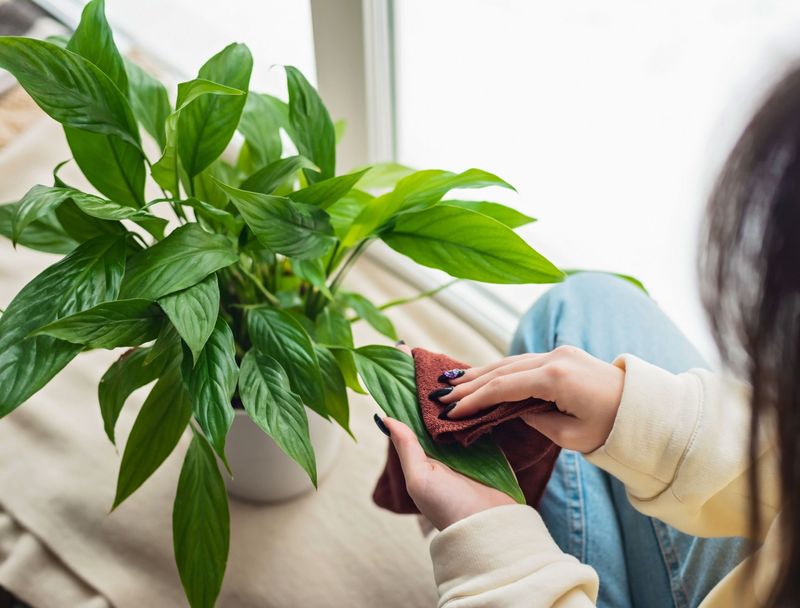
Removing visible dust from spider-plant leaves is reasonable plant maintenance. Dust buildup can block some light from reaching the leaf surface, and a clean plant simply looks better on a shelf or windowsill.
A soft damp cloth or a gentle rinse under a lukewarm faucet works well without damaging the foliage. The room-based particulate study does confirm that particles accumulate on leaves, so wiping them periodically makes sense from a basic upkeep standpoint.
What wiping the leaves does not do is produce a measurable improvement in room air quality or deliver a health benefit. The dust that was on the leaf was already deposited there.
Removing it from the leaf puts it back into the environment unless you rinse or dispose of the cloth carefully. The room air itself is not noticeably cleaner afterward.
For genuinely cleaner indoor air, the hierarchy that EPA recommends starts with source control. Reducing or eliminating what produces the pollutant in the first place, whether that is an unvented combustion appliance, a leaky exhaust fan, off-gassing furniture, or tracked-in outdoor particles, is more effective than any after-the-fact removal strategy.
EPA’s guide to air cleaners places ventilation second, noting that bringing in clean outdoor air when conditions allow dilutes indoor pollutants. Filtration comes third, and the right device depends on the pollutant: a portable cleaner with a HEPA filter rated for the room’s square footage addresses fine particles, while gases and VOCs require an activated-carbon or other adsorbent-based device, because particle filters are not designed to capture gases.
For smoke from wildfires, mold, combustion pollutants from gas stoves or attached garages, or serious allergy concerns, a spider plant offers no meaningful protection. These situations call for source control, improved ventilation, appropriate respirators if exposure is acute, and properly selected filtration equipment.
A plant is not a substitute for any of those responses.
The spider plant is a small participant, not an air-cleaning system
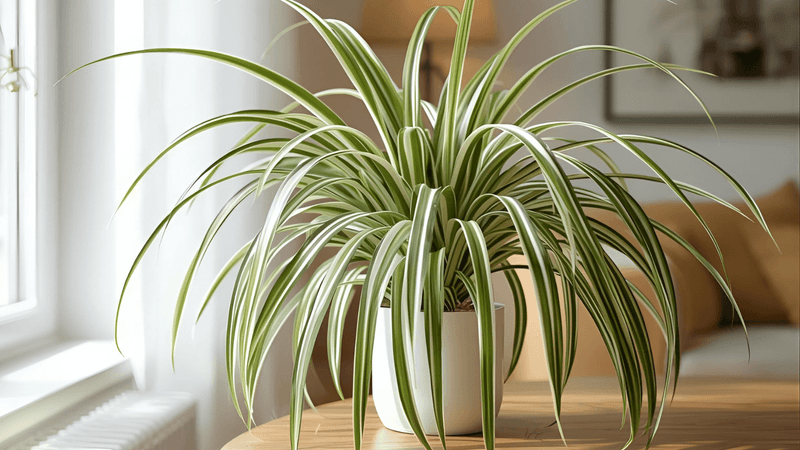
Settling the two-job claim comes down to being honest about what the evidence actually shows versus what sounds appealing. Spider-plant leaves can collect some deposited particles, and root-zone microorganisms may process certain VOCs under experimental conditions.
Both of those things are true. Neither of them adds up to a practical room-scale air-cleaning system.
A peer-reviewed analysis of potted-plant VOC removal makes the scale problem clear, and EPA’s practical guidance on indoor air quality points consistently toward source control, ventilation, and appropriately matched filtration when cleaner air genuinely matters. A spider plant does not appear on that list of effective interventions, and for good reason.
Enjoy the plant. Water it correctly, give it decent indirect light, wipe the leaves when they get dusty, and let it produce its cheerful cascading runners.
Those are all worthwhile reasons to keep one around. Just do not rely on it to protect your household’s air in any situation where the air quality actually matters for health.
A spider plant is a pleasant, low-maintenance houseplant with some minor incidental interactions with indoor pollutants, and that is genuinely enough.