
If You Water Your Garden At The Wrong Hour, Here’s The Simple Schedule That Keeps Every Plant Healthier
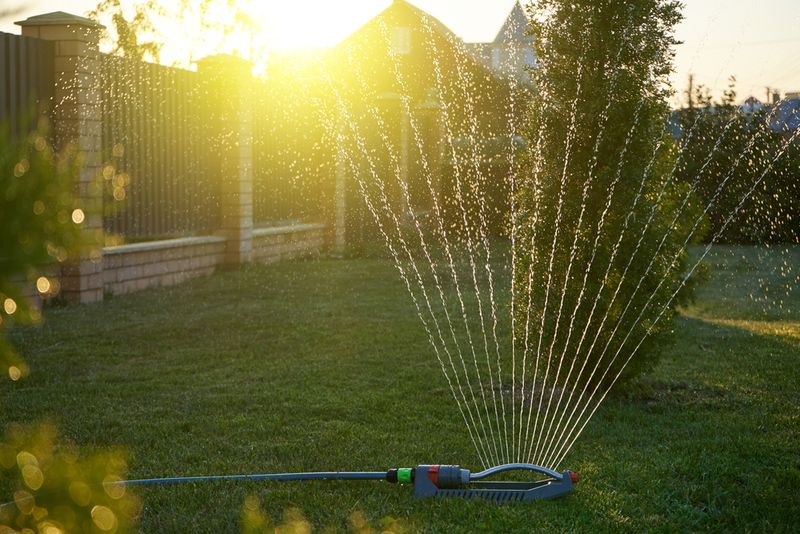
Most gardeners have heard that watering at the wrong time can hurt their plants, but the truth is a lot less scary than that. There is no single hour that automatically damages every garden, and the best schedule depends more on how you water than when the clock says.
That said, early morning is a solid starting point for most backyard gardens, and understanding why can help you make smarter choices all season long.
Early morning is the best general starting point
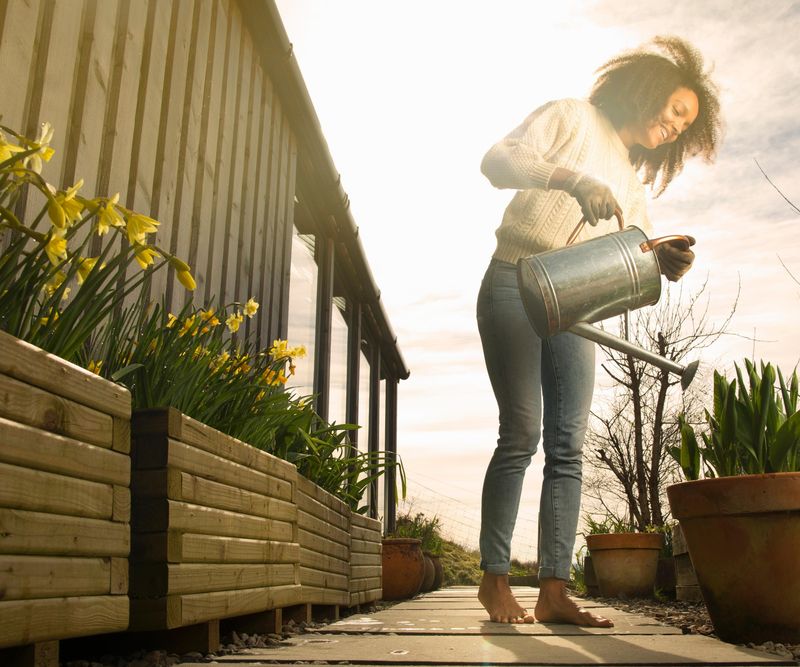
No single hour is universally dangerous for every plant in every garden. That said, early morning, roughly 4 to 9 a.m. and often narrowed to about 5 to 9 a.m. in many extension recommendations, is a genuinely useful default for most U.S. backyard gardeners.
University of Minnesota Extension guidance on watering wisely points to early morning as a preferred window because temperatures are lower, wind tends to be calmer, and water applied to the soil has a better chance of soaking in rather than evaporating.
When a sprinkler or hose wets the leaves, morning timing gives foliage a chance to dry out before nightfall. Prolonged leaf wetness overnight can create conditions that favor fungal diseases, particularly on plants that are already prone to them.
Getting the water on early shifts that risk in your favor without requiring you to wake up at sunrise or stick to a rigid schedule.
Morning watering is a starting point, not a rule carved in stone. A range of 4 to 9 a.m. gives you real flexibility, and a few minutes of adjustment either way will not harm your garden.
The recommendation is especially relevant when you are using a sprinkler or a hand-held hose that sprays the canopy. For gardeners who deliver water directly to the soil, the timing window becomes more flexible, which the next section covers in more detail.
Think of early morning as the path of least resistance. It lines up with cooler temperatures, lighter evaporation, and a full day ahead for any wet foliage to dry.
Those are practical advantages, not guarantees, and they apply most clearly when overhead irrigation is part of your routine.
The delivery method can matter more than the clock
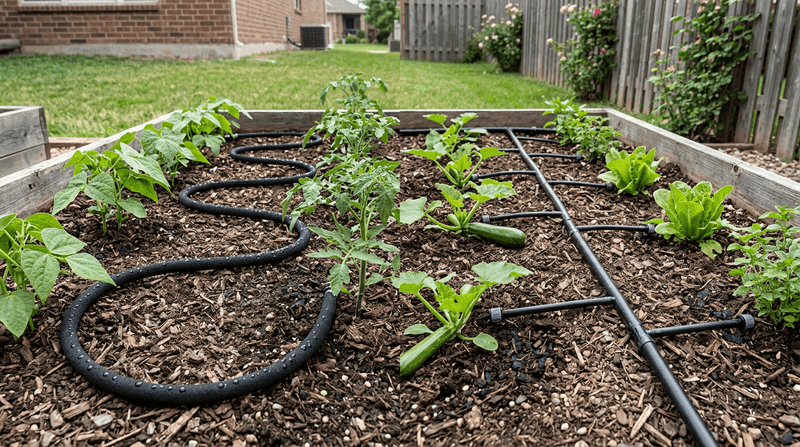
How water reaches your plants can be more important than what time it arrives. Overhead sprinklers and handheld hoses that spray across leaves carry a different set of tradeoffs than drip lines, soaker hoses, or careful hand watering aimed at the soil surface.
When water bypasses the foliage entirely, many of the timing concerns that come with overhead irrigation simply matter less.
Penn State Extension research on drip irrigation timing notes that efficiency differences between morning and afternoon application may not be substantial for drip systems. The stronger case for morning watering is built around overhead irrigation, where wet leaves and prolonged canopy moisture create a more variable situation.
Root-zone delivery sidesteps that concern almost entirely.
Drip lines and soaker hoses also lose less water to wind and evaporation because the water goes straight to where roots can use it. UMN Extension recommends watering the root zone rather than the foliage whenever the option exists, and that advice holds regardless of whether you are using a drip system, a soaker hose, or a wand held low to the ground.
Evening watering is not automatically a mistake. If your drip system runs at 6 p.m. or you hand-water carefully at the base of your plants without soaking the leaves, the timing concern shrinks considerably.
The stronger caution applies to leaving disease-prone foliage wet overnight, not to the clock reading alone. Choosing a delivery method that keeps leaves dry gives you more scheduling freedom and often uses water more efficiently at the same time.
Check the root zone before you water again
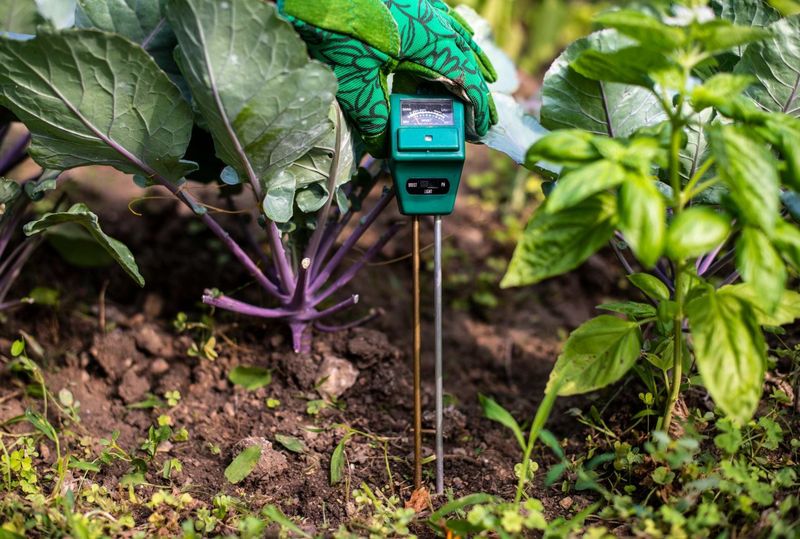
Watering on a fixed calendar, say every Tuesday and Friday regardless of conditions, is one of the most common ways gardeners either overwater or underwater their plants. Soil moisture is a far more reliable guide than the date.
Before you water again, push a finger or a small trowel a few inches into the root zone and feel whether the soil is still cool and damp or whether it has dried out enough to need a refill.
UGA Cooperative Extension best management practices recommend moistening roughly the upper 6 to 8 inches of soil for established flowers and vegetables as a general starting point. That depth is not universal.
Sandy soils drain faster, clay soils hold water longer, and plants at different growth stages have root systems that reach different depths. Use the 6-to-8-inch figure as a practical guide, not a fixed target for every situation.
UMN Extension guidance on established trees and shrubs recommends checking soil moisture 6 to 9 inches down for larger woody plants, while smaller garden plants generally benefit from a check at least 2 inches deep before watering resumes. The principle is the same: confirm that the root zone actually needs water before you add more.
Frequent shallow watering can work against you over time. When only the top inch or two of soil gets wet on each pass, roots tend to stay near the surface where they are more exposed to heat and drying.
Slower, more thorough watering encourages roots to follow moisture deeper into the soil, which generally supports stronger, more resilient plants.
There is one important limit to thorough watering: soil that cannot drain well. UGA Extension water-wise irrigation guidance cautions that excess water in poorly drained soil can push air out of the root zone, encourage root disease, leach nutrients, and cause runoff.
On clay soil, slopes, or compacted ground, consider breaking a single watering session into shorter cycles with rest periods in between so water infiltrates instead of running off the surface.
Containers and new plantings need more frequent checks
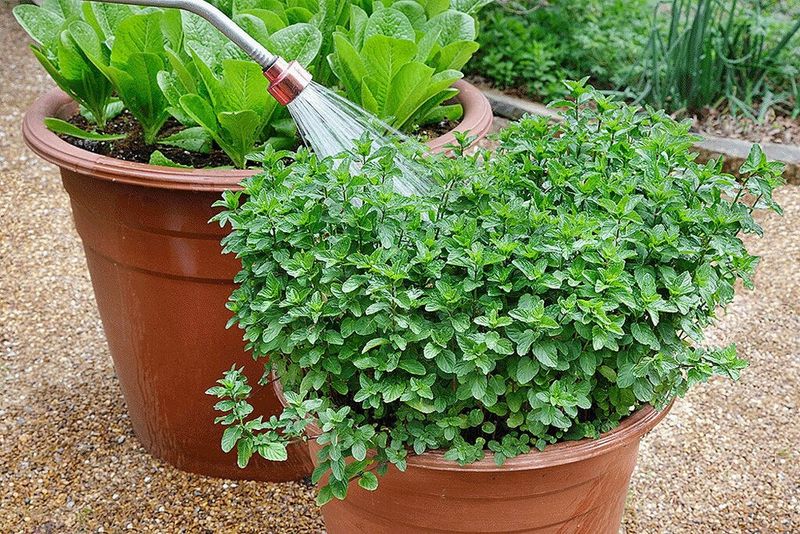
Established in-ground plants have root systems that reach into a larger volume of soil, which buffers them against drying out quickly. Containers, seedlings, and newly planted specimens do not have that buffer, and they can shift from moist to dangerously dry in a matter of hours on a hot or windy day.
The morning default still applies, but these plants need more frequent attention than a once-a-day check.
University of Missouri Extension vegetable gardening guidance notes that containers may need daily or even twice-daily watering during very hot, dry stretches. New transplants and seedlings also need consistent moisture while they are establishing roots, even if the surrounding soil looks fine.
A quick check of the top inch of soil in the morning and again in the afternoon is a reasonable habit during summer heat.
When watering containers, apply enough water that it drains freely from the drainage holes at the bottom. That confirms you have moistened the entire root ball rather than just the surface.
UGA Cooperative Extension guidance on geraniums advises watering thoroughly as the soil dries, while keeping saucers from holding standing water for extended periods. A saucer full of water that sits for hours can saturate the lower portion of the pot and increase the risk of root rot.
Mulch is one of the most practical tools for reducing how often you need to check. A layer of roughly 2 to 4 inches of organic mulch over garden beds helps slow evaporation, moderate soil temperature, and reduce runoff, according to EPA WaterSense landscaping guidance.
Keep mulch a few inches away from plant stems and crowns so moisture does not collect against them and invite rot or disease.
When should you break the morning routine?
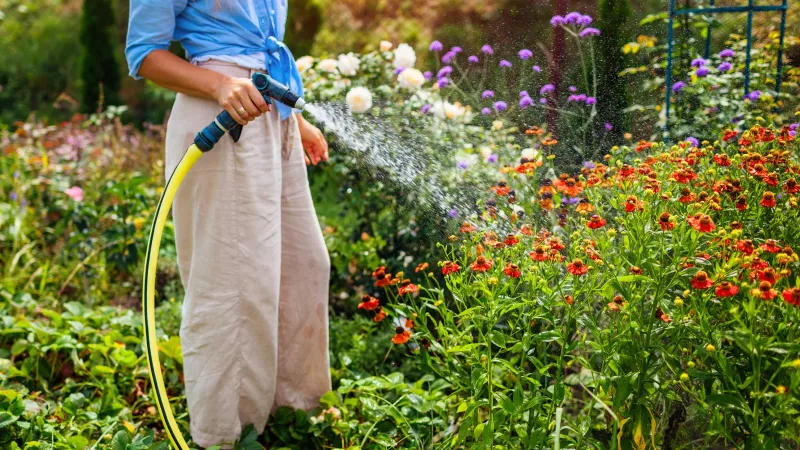
Morning is a good default, not a rule that should override common sense. There are several situations where watering later in the day, or even at night, is the right call and will not harm your garden.
Late afternoon or early evening watering is a reasonable backup, particularly during heat waves, as long as the water goes to the soil rather than the foliage, or as long as leaves have time to dry before temperatures drop overnight. Penn State Extension hot-weather watering guidance makes clear that a plant showing genuine stress with dry soil should receive water when it needs it, not when the schedule says so.
Making a thirsty plant wait until the next morning can cause more damage than the timing concern you are trying to avoid.
Colorado State University Extension guidance on efficient watering allows nighttime or late-evening irrigation for some landscapes, particularly when water is directed to the soil rather than sprayed across the canopy. The concern with nighttime watering is not the hour itself but whether disease-prone foliage stays wet for an extended period in low-light, high-humidity conditions.
If your system keeps leaves dry, the timing worry largely disappears.
Routine midday watering with a sprinkler is the one pattern worth avoiding as a habit. Heat, direct sun, and wind during the middle of the day can increase evaporation before water reaches the root zone, and UMN Extension notes that a plant wilting at noon with adequately moist soil may simply be responding to heat and wind stress rather than drought.
Check the soil before adding more water. Wilting alone is not proof of thirst; it can also signal overwatering, root damage, disease, or pest pressure, all of which more water will not fix.
Plant examples reveal what timing can and cannot fix
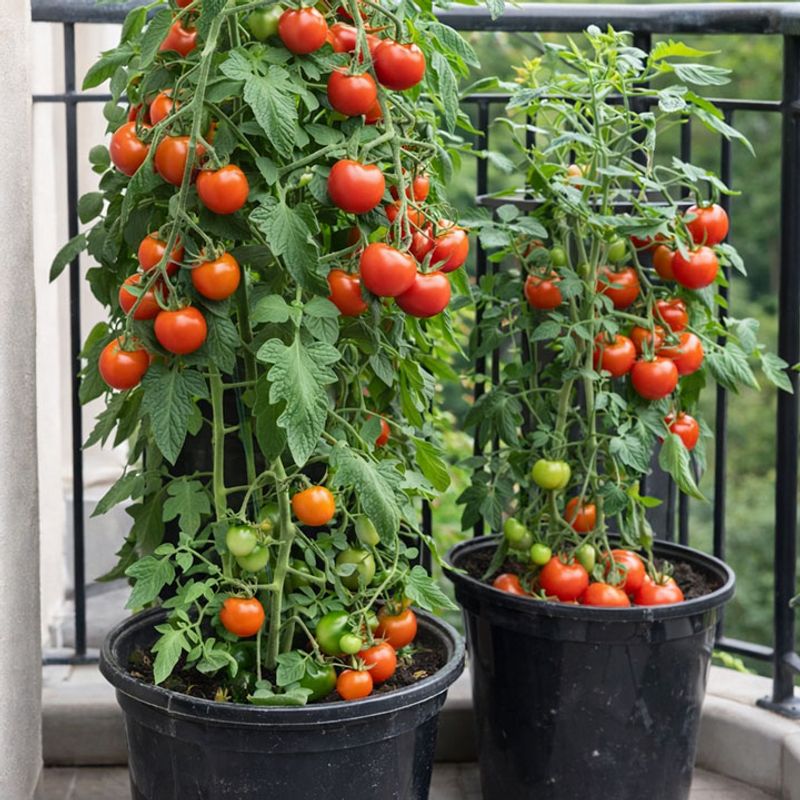
Concrete plant examples make the timing principles easier to apply in a real garden. Three widely grown plants, tomatoes, geraniums, and clematis, illustrate both what good watering habits can support and what they cannot fix on their own.
Tomatoes are among the most foliage-disease-prone plants in a typical backyard garden. Water splashing onto leaves during irrigation can carry soil-borne pathogens into the canopy, and prolonged leaf wetness gives those pathogens a better environment to establish.
UMN Extension guidance on tomato leaf mold emphasizes watering at the base of the plant and keeping foliage as dry as possible. Morning timing helps when overhead irrigation is unavoidable, because leaves have the rest of the day to dry.
Switching to drip or a soaker hose removes much of the timing pressure entirely. Correct watering reduces disease risk; it does not eliminate it, and it cannot cure an infection already underway.
UGA Extension guidance on geraniums recommends watering thoroughly as the soil dries out, avoiding letting the plant wilt, and watering early enough for leaves and blooms to dry before nightfall. Geraniums grown in containers are especially sensitive to standing water, so drainage matters as much as timing.
Proper watering supports plant health, but bloom performance also depends on light, temperature, fertilization, and cultivar, not the clock alone.
Clematis is a different case. University of Illinois Extension clematis guidance describes a preference for cool, consistently moist, well-drained soil.
Mulching the root zone helps keep it cooler and more stable between waterings. Timing adjustments can support those conditions, but they cannot compensate for a planting site with poor drainage or soil that stays waterlogged.
Choosing the right spot and amending the soil if needed matters more than finding the perfect hour to water.
Use this flexible watering checklist this week
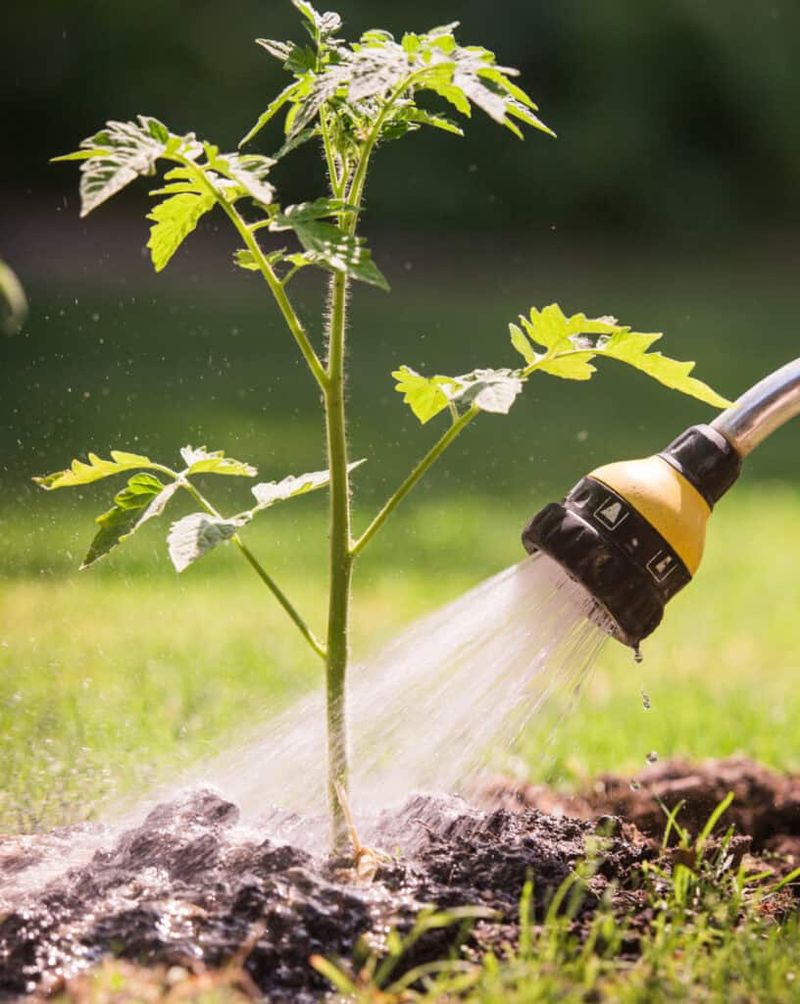
Putting the guidance into practice does not require a complicated system. A short sequence of checks before and after each watering session covers most of what you need.
Start by probing the soil a few inches down. If the root zone feels cool and moist, hold off.
If it is dry, water slowly at the base of the plant and give it enough time to soak in rather than run off.
Choose early morning when your schedule allows, especially if you are using a sprinkler or a hose that wets the leaves. After heavy rain, check the soil anyway.
Penn State Extension watering myths guidance points out that a downpour does not always saturate the root zone, because runoff can leave soil surprisingly dry a few inches down. Do not assume rainfall eliminated the need to water without confirming it.
Use the EPA WaterSense water budget tool or your local extension service to calibrate timing and frequency to your actual climate and soil rather than a fixed national schedule. Local heat, humidity, and rainfall patterns vary enough across the U.S. that national advice is always a starting point.
Missouri Extension vegetable gardening guidance reinforces that plant type, soil, and weather all shape how often and how much to water.
The right order of priorities is straightforward: check the soil first, deliver water to the root zone whenever possible, default to early morning when overhead irrigation is involved, and water a stressed plant when it needs it rather than when the clock says so. Soil condition and delivery method carry more weight than timing alone, and a flexible routine built around those two factors will serve your garden better than any rigid schedule.