
The North Carolina Native You Plant Along Fence Lines This Fall That Feeds Birds For Years
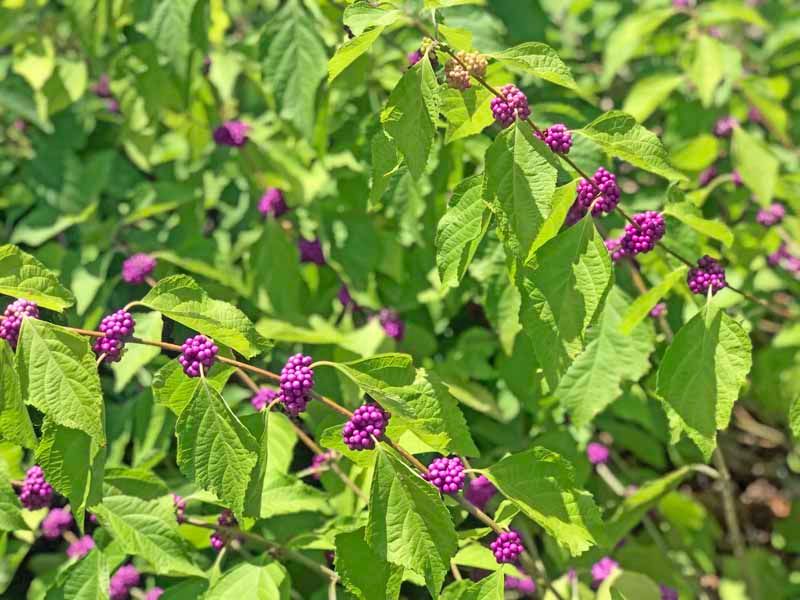
Most fence lines in North Carolina sit bare and unused, doing nothing for the birds and wildlife that pass through your yard each season. American beautyberry, a native shrub called Callicarpa americana, can change that with clusters of vivid purple fruit that songbirds return to eat from late summer through fall.
Planted this fall along the right boundary, it can produce that fruit crop again and again as the plant matures. Getting the site, the species, and the care right makes all the difference between a thriving wildlife shrub and one that struggles to fruit at all.
American beautyberry can suit the right North Carolina fence line
Not every native shrub belongs along every fence, but American beautyberry, botanical name Callicarpa americana, earns a serious look for the right North Carolina boundary. N.C.
State Extension lists it as a native plant found across the Coastal Plain, Piedmont, and Mountains, so it has a track record in all three of the state’s main growing regions rather than just one corner of it.
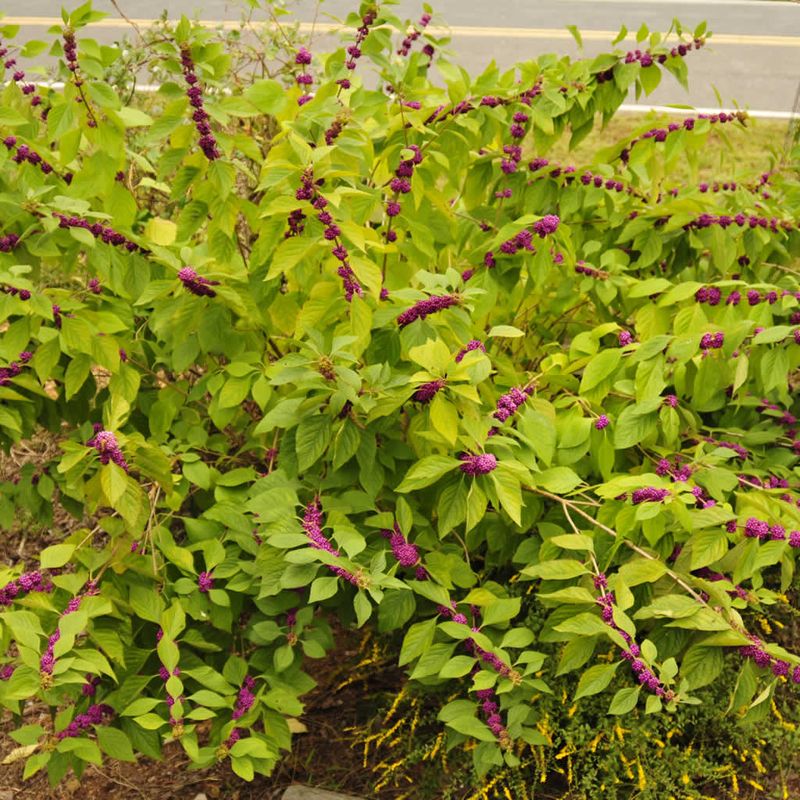
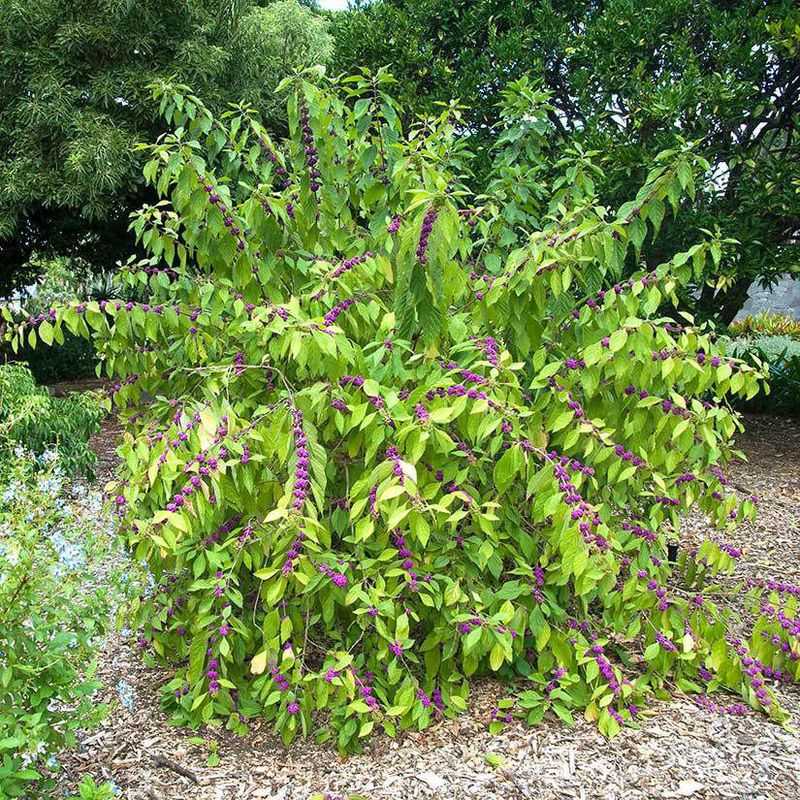
The shrub is deciduous, meaning it drops its leaves in winter, and it grows with an open, arching habit that reads as relaxed and naturalistic rather than formal. At maturity it typically reaches three to eight feet tall and three to six feet wide, though site conditions, pruning, and rainfall can push those numbers in either direction.
That size puts it in a practical range for a residential fence line where you want presence without a plant that swallows the yard.
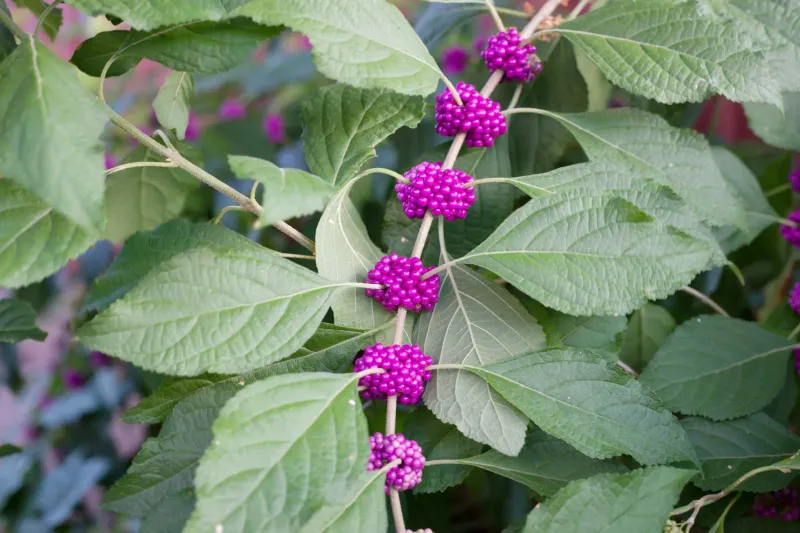
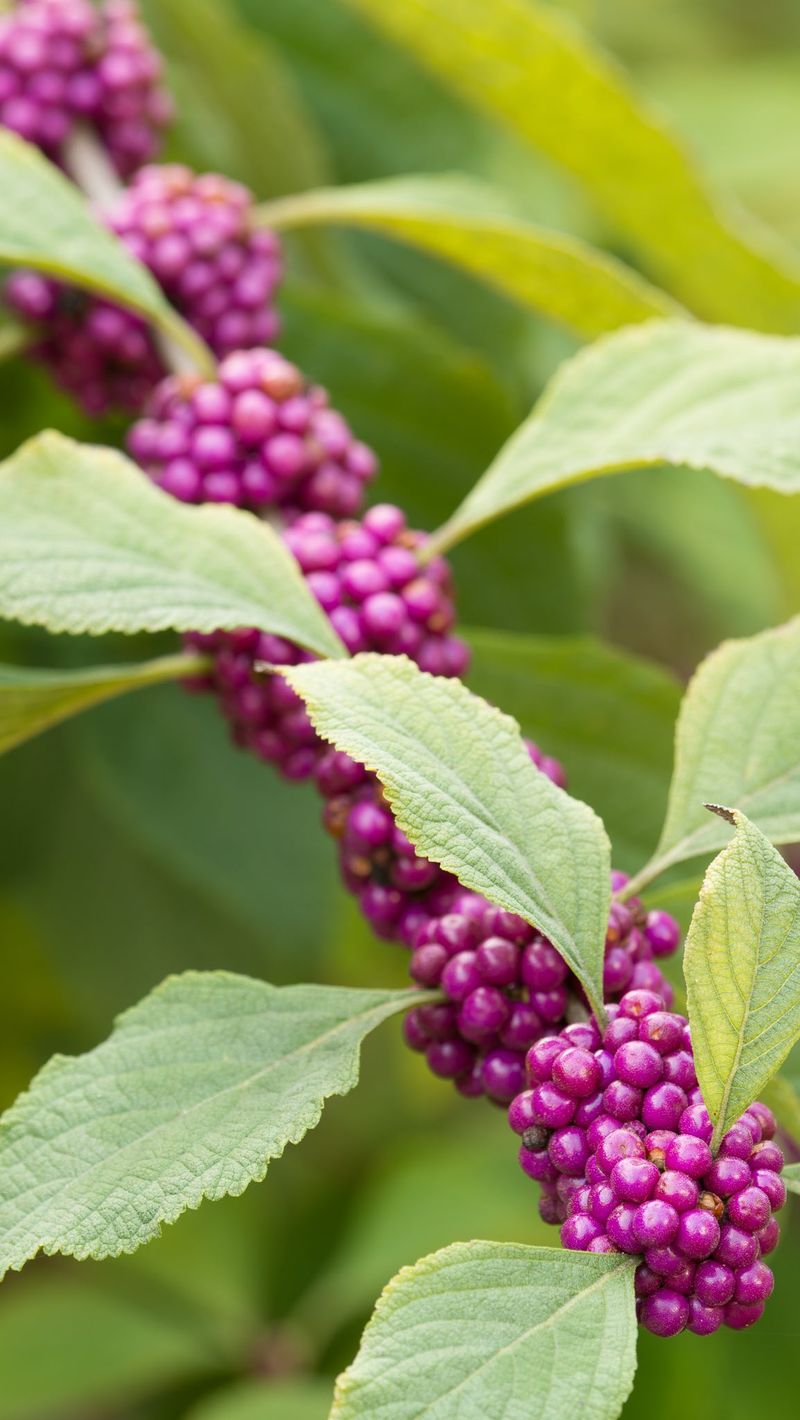
What makes it worth planting along a boundary is the fruit. Starting in late summer and running through fall, the canes develop tight clusters of small, metallic-purple berries that are striking enough to stop people mid-step.
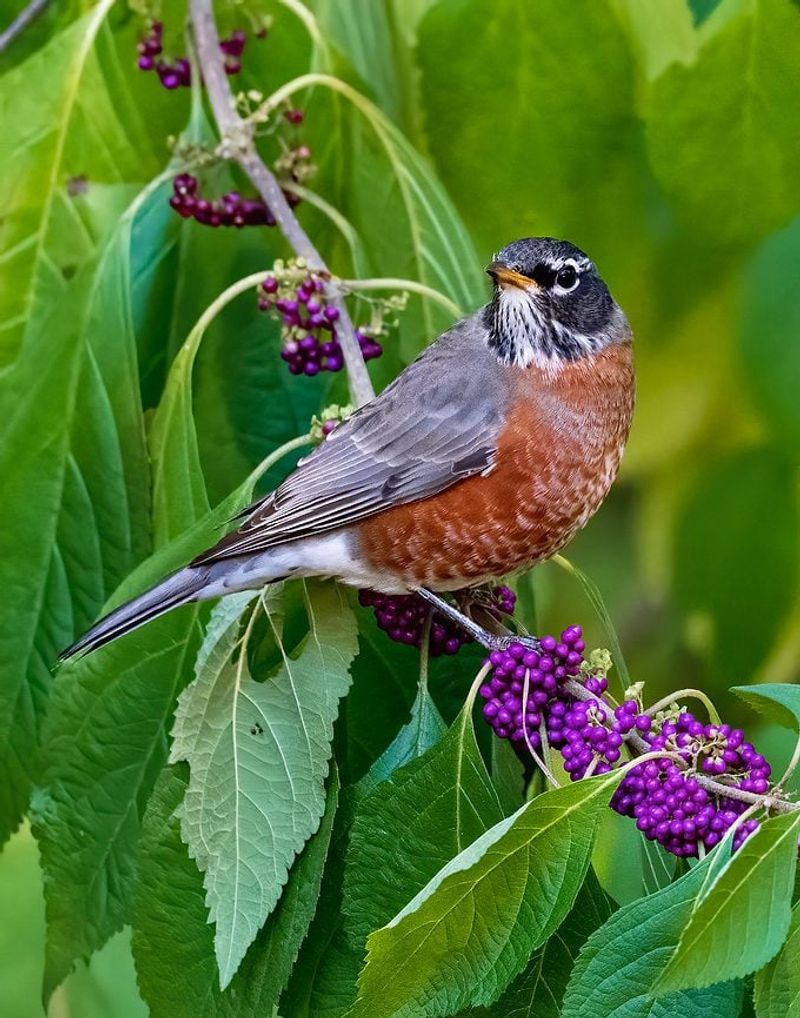
Birds including American robins, brown thrashers, purple finches, and eastern towhees are documented eating the berries, and foxes, opossums, raccoons, and squirrels use them as well.
The recommendation here is not that every fence line needs one, or that a single plant will reliably feed wildlife for decades without any effort. American beautyberry is a perennial that, once established in a suitable spot, can produce a recurring seasonal fruit crop.
That is a meaningful and useful thing, but it comes with honest conditions about site, care, and realistic expectations that the rest of this article addresses directly.
One more identity note before buying anything: the common name “beautyberry” is shared by nonnative species. Purple beautyberry (Callicarpa dichotoma), for example, is a separate Asian species sometimes sold at North Carolina nurseries.
Ask for the botanical name Callicarpa americana specifically to make sure you are planting the native.
A loose border makes the shrub’s natural shape useful
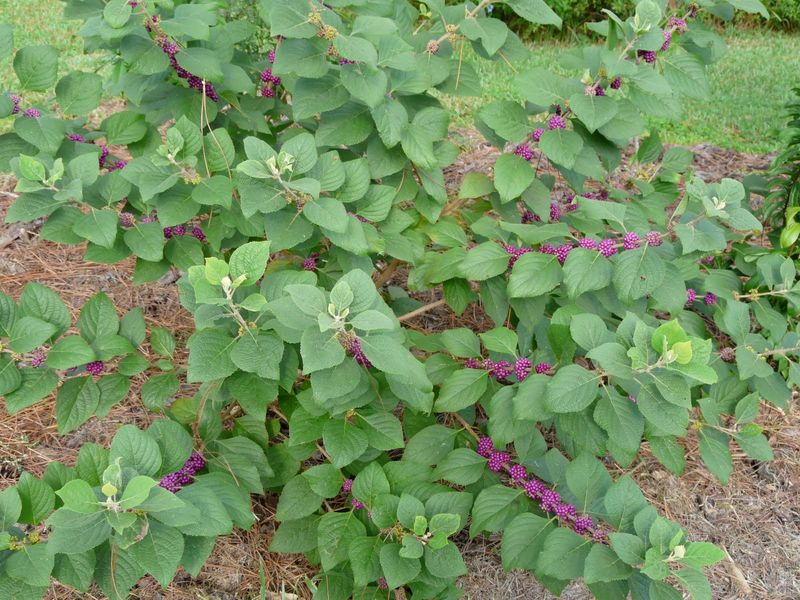
Forcing American beautyberry into a tightly clipped formal hedge works against everything the plant does naturally. Its growth habit is open and arching, with long canes that sweep outward and downward as they mature, giving the plant a loose, layered silhouette that looks at home along a field edge or a backyard boundary but looks awkward when sheared into a rigid wall.
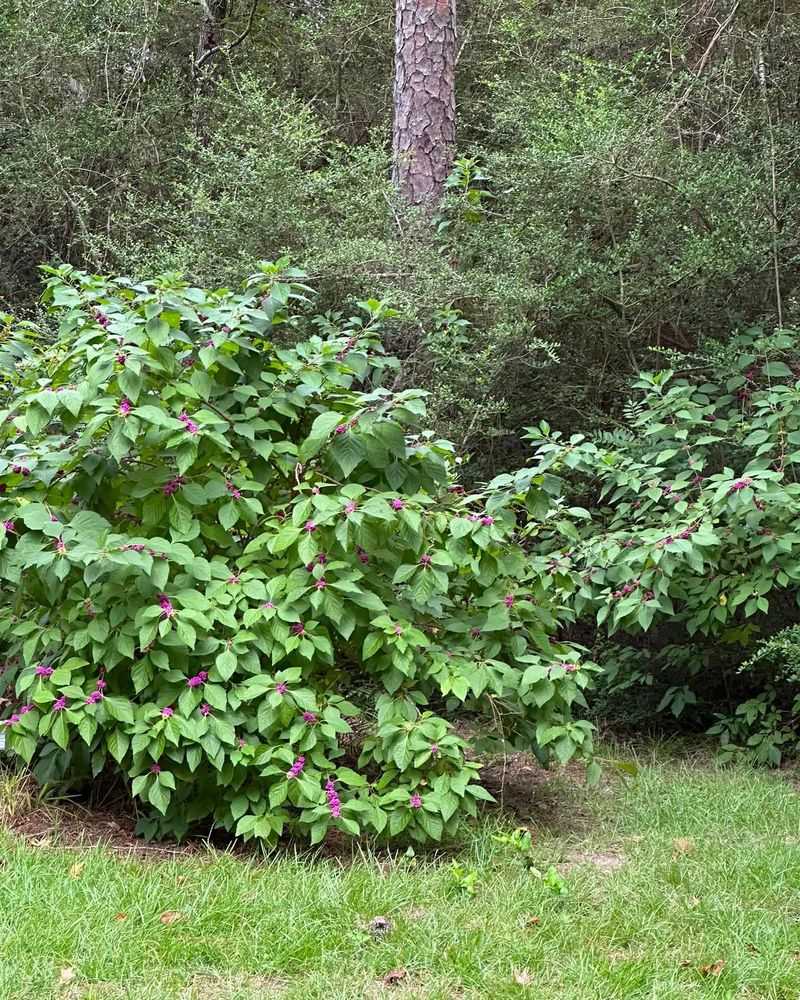
N.C. State Extension describes the shrub as naturally occurring in open woods, thickets, meadows, and pond margins, which are all edge habitats where plants sprawl a bit, grow unevenly, and mix with other vegetation.
That ecological background tells you something useful about where it fits in a yard: along a property line that backs up to a lawn, a meadow strip, or a partially wooded area, rather than in a spot where tidiness is the first priority.
The mature size range of three to eight feet tall and three to six feet wide means individual plants take up real horizontal space. A cane that arches out four feet from the crown is not a problem in a naturalized planting, but it becomes one if the shrub is jammed into a two-foot-wide strip between a fence and a sidewalk.
Plan for the width the plant actually needs, not the width it has when you pull it out of the nursery pot.
That open form is also part of what makes the fruit display so visible. When the berry clusters develop along arching stems in late summer, they hang in the open rather than hiding behind dense foliage, which means birds can spot them easily and you can enjoy the display from a distance.
A naturalized fence-line grouping that is allowed to spread and arch gives the plant room to do exactly what it is designed to do, both visually and ecologically.
Choose the fence-line site before you buy
Buying the plant before checking the site is one of the most common reasons a promising native ends up underperforming. For American beautyberry, a few specific conditions matter more than anything else, and they are worth verifying before you load a shrub into the car.
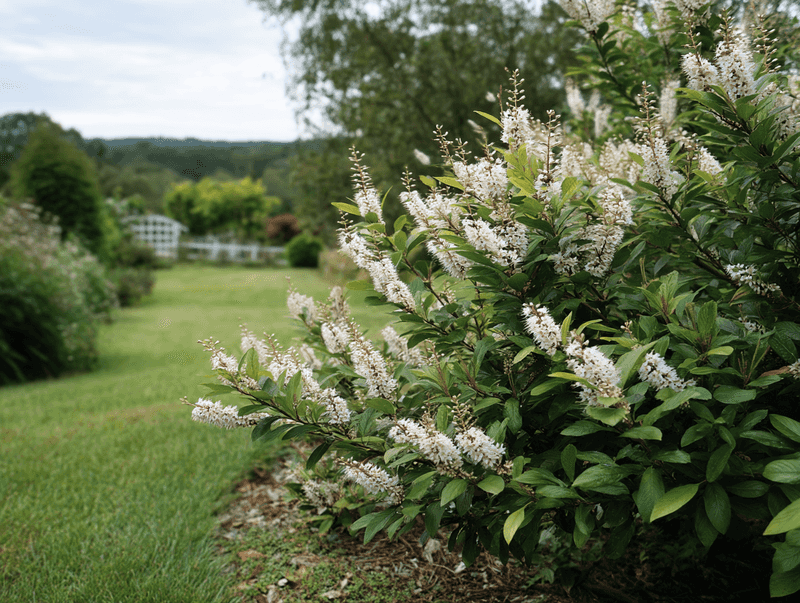
Light is the first check. The shrub performs in full sun to partial shade, but deep shade is a poor match and will reduce both growth and fruit production.
A fence line that gets direct sun for at least four to six hours a day, or one that sits at the edge of a tree canopy where light filters through in the afternoon, gives the plant what it needs. A strip that runs under a dense canopy of mature oaks or cedars with little sky overhead is not the right spot.
Drainage is the second check. American beautyberry tolerates clay, loam, and sandy soils, which covers most North Carolina fence lines across all three regions, but it still needs reasonably good drainage.
A low spot that holds standing water after rain for more than a day or two will stress the roots over time. Walk the fence line after a hard rain and note where water pools before committing to a planting location.
Think about what the fence line adjoins. A boundary beside a sunny lawn, an unmowed meadow strip, or an open woodland edge is a better ecological fit than a fence running beside a dense hedgerow or a paved surface that absorbs heat.
N.C. State Extension guidance on managing urban habitats for birds supports placing native fruiting shrubs at habitat edges where birds already move between open areas and woody cover.
Spacing also affects fruit production. N.C.
State notes that several plants of the same species planted near each other may produce more fruit than a single isolated shrub. If the fence line has room for two or three beautyberries spaced roughly four to six feet apart, that grouping is likely to produce a more consistent display than one plant standing alone, though fruiting is still not guaranteed every year regardless of how many plants you put in.
Fall planting starts establishment but does not eliminate follow-up care
Fall has a practical advantage for planting woody shrubs in North Carolina. Cooler air temperatures reduce the demand on a plant’s top growth while the soil stays warm enough for roots to keep growing, which means a fall-planted beautyberry can put energy into establishing its root system before it has to push new leaves and stems in spring.
That head start matters, but it does not mean the plant takes care of itself from the moment you set it in the ground.
Start with a hole roughly two to three times the width of the root ball and no deeper than the ball itself. N.C.
State Extension planting guidance recommends setting the root ball at the same depth at which it grew in its container, not deeper. Planting too deep buries the root flare, which can slowly suffocate the plant and invite rot.
If the surrounding soil is compacted clay, loosen the sides of the hole to help roots spread outward.
Backfill with the native soil you removed rather than amended fill, water the hole thoroughly as you backfill in layers to eliminate air pockets, and water again immediately after planting. The Extension Gardener Handbook on woody ornamentals recommends applying a two to three inch layer of organic mulch over the root zone to conserve moisture and moderate soil temperature, but the mulch should stop a few inches short of the stems.
Piling mulch against the base of the shrub traps moisture at the crown and can encourage disease and pest problems over time.
If fall turns dry, as it sometimes does in the North Carolina Piedmont and Coastal Plain, the plant will need supplemental water even as temperatures drop. Roots that go into winter without adequate moisture are more vulnerable to stress the following spring.
Plan to check soil moisture regularly through the first several weeks after planting rather than assuming fall rains will handle it.
Establishment care determines how low-maintenance the planting becomes
American beautyberry can become a relatively low-effort plant after it establishes, but that outcome depends on what you do in the first season. Skip the irrigation and weed control early on, and the shrub may limp along for years without ever producing the kind of fruit display that makes it worth planting.
N.C. State Extension general guidance recommends regular irrigation for roughly the first three months after planting, adjusted for rainfall, soil type, slope, and weather.
In practical terms, that means checking the soil at root depth every few days and watering when the top inch or two is dry, rather than following a fixed schedule. A beautyberry planted in sandy Coastal Plain soil will dry out faster than one planted in Piedmont clay, so the schedule needs to match the site.
Weed competition around a newly planted shrub is easy to underestimate. Grass and weeds growing right up to the stem compete directly for the water and nutrients the plant needs during establishment.
A two to three inch layer of organic mulch, such as shredded hardwood or pine bark, over the root zone suppresses that competition and slows moisture loss from the soil surface. The Extension Gardener Handbook on woody ornamentals notes that excessive mulch piled against stems can restrict water and oxygen movement and encourage root problems, so keep it pulled back from the base of the plant.
Pruning timing is where a lot of homeowners accidentally reduce their fruit crop. American beautyberry flowers and fruits on new growth produced in the current season, which means that late-winter pruning, before new growth begins, is the correct window.
N.C. State recommends cutting the shrub back to about one foot above the ground in late winter if a fuller, more compact plant is the goal.
Lighter pruning is also an option if you want to maintain more height. Pruning in late spring or summer, however, removes the new wood that would have produced fruit that fall, so timing matters more than most people expect.
Once established, the shrub is more forgiving. Rainfall handles most of its water needs in a normal North Carolina year, and the annual late-winter pruning cycle becomes a quick and predictable task rather than a major project.
The bird benefit arrives as a seasonal fruit crop
The berry display on a healthy American beautyberry is hard to miss. The clusters press tightly against the stems in bands of metallic violet-purple that look almost artificial against the fading green of late summer foliage.
That timing, from roughly August through November, lands when a lot of other native fruit sources have already peaked, which is part of what makes the plant useful in a bird-friendly landscape.
N.C. State Extension documents American robins, brown thrashers, purple finches, and eastern towhees as birds that eat the berries, and the fruit is also taken by foxes, opossums, raccoons, and squirrels.
Some fruit may persist into early winter depending on weather, how much competition exists from other food sources, and how heavily birds are working the plant in a given year.
Persistence into winter does not mean birds are ignoring the berries. N.C.
State Extension notes that birds may not consume beautyberry fruit immediately when other food sources are available, so a plant still holding berries in December may simply reflect that birds have had plenty to eat elsewhere rather than a lack of interest in the fruit. When other options thin out, those remaining clusters tend to disappear quickly.
A single shrub can produce a noticeable display in a good year, but N.C. State specifically notes that several plants placed near each other may produce more fruit overall.
A small group of two or three beautyberries spaced along a fence line gives birds more to work with and creates a more consistent visual display than one isolated plant. Even with a group, fruiting will vary from year to year based on weather during flowering, plant health, pruning history, and competition from other vegetation, so expecting a reliable heavy crop every single fall sets the bar too high.
What you can reasonably expect from a well-sited, established planting is a recurring seasonal fruit crop that shows up most years in some form, available to birds and wildlife during a stretch of fall when that food genuinely matters.
Avoid turning a useful shrub into unsafe or unsupported advice
American beautyberry is genuinely useful, but a few claims that circulate about it are either overstated or flat-out wrong, and acting on them can lead to real problems.
Start with deer. N.C.
State Extension reports that deer browse beautyberry foliage and consume the fruit, so the plant should not be treated as a deer-resistant barrier or a reliable deer-proof choice. In a yard with significant deer pressure, the shrub may need protection while it establishes, and fruit that you were counting on for birds may disappear to deer before songbirds get to it.
The tick repellent claim deserves a careful look. Laboratory researchers have isolated terpenoid compounds from beautyberry leaves that showed mosquito-deterrent activity in controlled testing, and USDA researchers later examined whether similar compounds might deter ticks as well.
Those findings are interesting as preliminary science. They do not establish that a living beautyberry shrub planted in your yard reduces tick populations, prevents tick bites, or functions as a residential tick-control measure.
CDC reviews describe evidence for plant-based landscaping as a stand-alone tick control as limited, and CDC guidance on residential tick management directs homeowners toward labeled pesticides and personal protective measures rather than yard plants. Crushing leaves and rubbing them on your skin is not a validated repellent method and should not replace EPA-registered products or standard tick precautions such as long clothing, checking for ticks after outdoor time, and prompt removal.
On edibility: the fruit of confirmed, correctly identified Callicarpa americana is listed as edible but bland, and more commonly used for jelly than eaten fresh. The problem is that other purple-berried plants grow in North Carolina yards and woodland edges, and some of them are toxic.
Poison Control notes that pokeberries are frequently mistaken for edible fruits by appearance alone. Never eat purple berries based on color or a photograph.
Finally, one beautyberry planting cannot cover all of a bird’s habitat needs. UGA Cooperative Extension guidance on attracting birds explains that wildlife-friendly landscapes require cover, nesting structure, water, and food available across multiple seasons, not just one fruiting shrub in the fall.
Use beautyberry as one durable part of a wildlife-friendly boundary
The most honest version of this recommendation is also the most useful one. Confirm the botanical name Callicarpa americana before you buy, check that your fence line gets adequate light and drains reasonably well, give each plant enough room to arch and spread, water it through the first several months, and prune it in late winter when the time comes.
N.C. State Extension confirms this species is suited to all three of North Carolina’s major regions and can produce recurring seasonal fruit that birds genuinely use.
What the planting will not do is guarantee a heavy fruit crop every fall, keep deer out, control ticks, or replace the broader mix of cover, water, nesting structure, and year-round food that birds need. N.C.
State Extension guidance on backyard bird habitat frames beautyberry as one element within a broader native planting strategy, and UGA Cooperative Extension reinforces that mixed native plantings support more habitat functions than a single-species row.
Treated as one durable piece of a larger plan, American beautyberry earns its place along a North Carolina fence line. A well-sited group that comes back year after year, fills out after late-winter pruning, and lights up in late summer with clusters of purple fruit is a genuinely good addition to a wildlife-friendly yard – not magic, but quietly dependable.