
If Your Poinsettia Drops Its Leaves Every Fall, Here’s The Light-And-Dark Reset That Colors It Back Up Before The Holidays

Plenty of gardeners keep a poinsettia alive well past December, only to wonder each fall why the plant looks bare and green instead of festive. The good news is that a healthy surviving poinsettia can often develop those colorful bracts again with a straightforward light-and-dark routine you can manage at home.
Before you start, though, it helps to know what leaf loss actually means, what the darkness is really doing, and what a realistic holiday result looks like.
Leaf Drop Does Not Tell You to Start a Dark Treatment
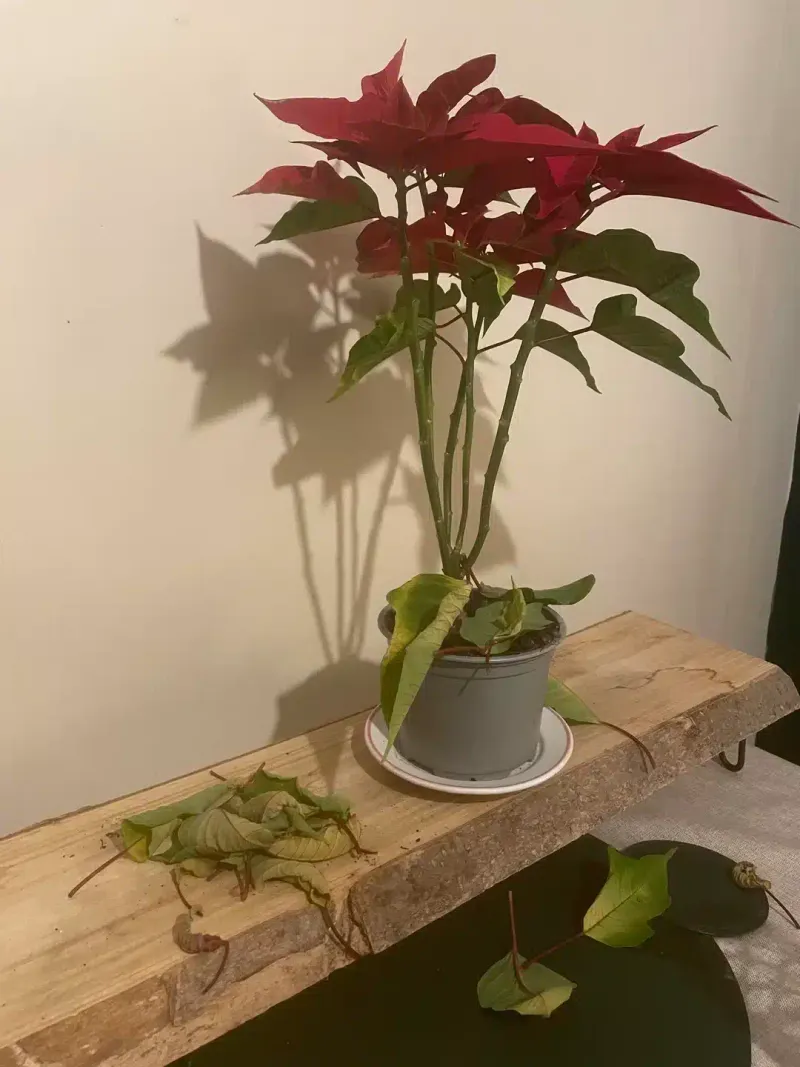
Losing leaves on a poinsettia is worrying, but it is not a built-in signal that the plant needs to go into a dark closet. Iowa State University Extension guidance points to improper watering, cold exposure, drafts, excessive heat, low light, temperature swings, and root problems as the most common causes of leaf drop.
Darkness is for triggering flowering and colored-bract development, not for rescuing a plant that is shedding leaves from stress.
If your plant is dropping leaves right now, check the basics first. Is the soil soggy or bone dry?
Is the pot sitting near a cold window, a heating vent, or an exterior door that lets in cold air? University of Delaware Cooperative Extension notes that even brief cold drafts can trigger rapid leaf loss, so location matters as much as watering.
Fix those conditions before you attempt any fall flowering routine.
Once you are satisfied the plant is stable and actively growing, it is worth understanding what you are actually trying to color up. University of Florida IFAS explains that the showy red, pink, white, or patterned portions of a poinsettia are bracts, which are modified leaves, not the true flowers.
The real flowers are the small, often yellow, structures clustered at the center of those bracts. The fall light-dark routine encourages the plant to initiate flowering and develop new colored bracts; it does not restore the green leaves that already fell or revive a plant that is in serious decline.
A quick health check before October: the stems should be firm and green, new growth should be present or recently completed, and the root system should not smell sour or feel waterlogged. A plant that passes that basic check is a reasonable candidate for the fall rebloom routine described in the sections below.
Long Nights Trigger Bracts, Not Green Leaves Turning Red
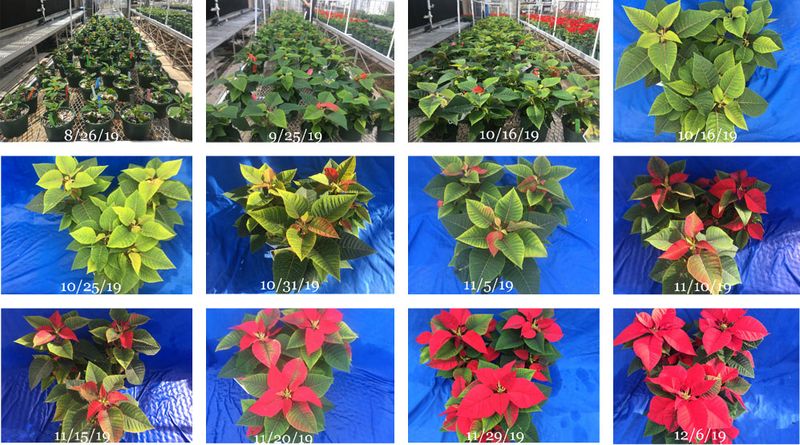
Poinsettias are often labeled short-day plants, which can make it sound like they just need dimmer conditions or less sunshine. The practical reality is more specific: the plant initiates flowering in response to long, uninterrupted nights, and the length of those dark periods is what matters most.
University of Georgia Cooperative Extension production guidance identifies roughly 11 hours and 45 minutes of uninterrupted darkness as sufficient to initiate flowering in many cultivars, while longer dark periods of 14 hours or more promote faster initiation and development.
For home gardeners, the conservative and widely recommended target is about 14 hours of complete darkness every night. That darkness triggers a chain of events inside the plant that eventually leads to flowering, and as those flowers develop, new bracts form and take on color.
Darkness does not convert existing green leaves into red ones; it sets the flowering process in motion so that new bract tissue develops with pigmentation.
Texas A&M AgriLife Extension notes that cultivar differences are real: some varieties respond to shorter dark periods, while others need longer or more consistent treatment before they show visible color. Temperature during the dark period also affects how quickly the response appears.
That variability means a schedule that works well for one plant may produce color a week earlier or later in another variety grown in the same house.
One point that cannot be overstated: the plant still needs bright daytime light. Keeping it dim or dark around the clock weakens growth and prevents normal bract development.
The routine is bright days followed by reliably long, lightproof nights, not continuous shade. Think of it as two distinct jobs running in parallel, each one necessary for the other to pay off.
Build Plant Strength Before the Fall Routine
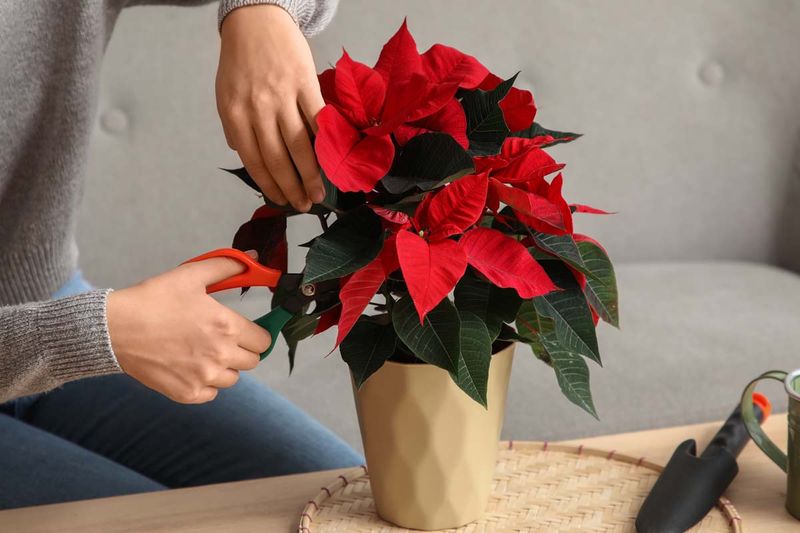
The fall light-dark routine works best on a plant that has had a full growing season of good care behind it. University of Maryland Extension recommends cutting the plant back after it finishes its post-holiday display, typically in late winter or early spring, to encourage compact new growth.
Leave several inches of stem on each branch so the plant has energy reserves to push fresh shoots.
Through late winter and spring, keep the plant in the brightest natural light available indoors. Once your local frost danger has passed, moving it outside to a sheltered spot with morning sun and afternoon shade gives it a real growth boost.
Acclimate it gradually over a week or two rather than moving it from a dim room straight into full outdoor sun, which can scorch the foliage. University of Illinois Extension suggests keeping it outdoors through summer while continuing to water and fertilize regularly.
During summer, new stems will grow long and lanky if left alone. Pinching the tips of new growth encourages branching and a fuller shape.
Each pinch removes the growing tip, prompting two or more side shoots to develop in its place. The key deadline: pinching must stop by early September at the latest, and some guidance recommends stopping even earlier, because any pruning done after that point removes the very growth that will carry next season’s bracts.
Virginia Cooperative Extension reinforces that this year-round preparation supports the fall treatment but cannot replace it. A well-grown plant going into October is simply a better candidate for producing holiday color than one that has been neglected, root-bound, or repeatedly stressed.
Bring the plant back indoors before nighttime temperatures drop below about 55 degrees Fahrenheit, since cold damage can set back a plant right before the critical treatment window opens.
Start With Bright Days and Long Nights

Timing the start of the dark routine is the part that trips up most home gardeners. Mississippi State University Extension recommends beginning around October 1 when Christmas color is the goal, while some other university sources use mid- to late October as their starting point, particularly in regions where natural fall nights are already long.
The right date for your plant depends on cultivar, your latitude, indoor temperatures, and exactly when you want the bracts at their best.
The core routine is straightforward: bright natural light during the day, followed by at least 14 hours of complete darkness every night. A practical example from University of Florida IFAS is bright light from approximately 8 a.m. to 6 p.m., then darkness from 6 p.m. until 8 a.m. the following morning.
That gives 10 hours of light and 14 hours of darkness, which meets the conservative home-gardening threshold.
Oregon State University Extension describes the treatment duration as roughly 6 to 8 weeks, continuing until the bracts show clear color development. You may also see references to a broader 6 to 10 week window; treat that as a range rather than a strict deadline, since cultivar differences and temperature can push results earlier or later.
Once color is clearly developing in the bracts, the plant no longer needs the strict dark schedule and can return to normal bright-light conditions.
South Dakota State University Extension notes that the daytime light portion of this routine is not optional. The plant needs photosynthesis to fuel bract development, so a south- or west-facing window that receives several hours of direct sun is a better choice than a dim interior spot.
If natural light is limited in your home, a grow light used during the designated daytime hours can help bridge the gap. University of Maryland Extension emphasizes that consistent execution of both the light and dark phases, day after day, produces better results than an inconsistent schedule.
Make the Dark Period Reliable Without Hiding the Plant All Day
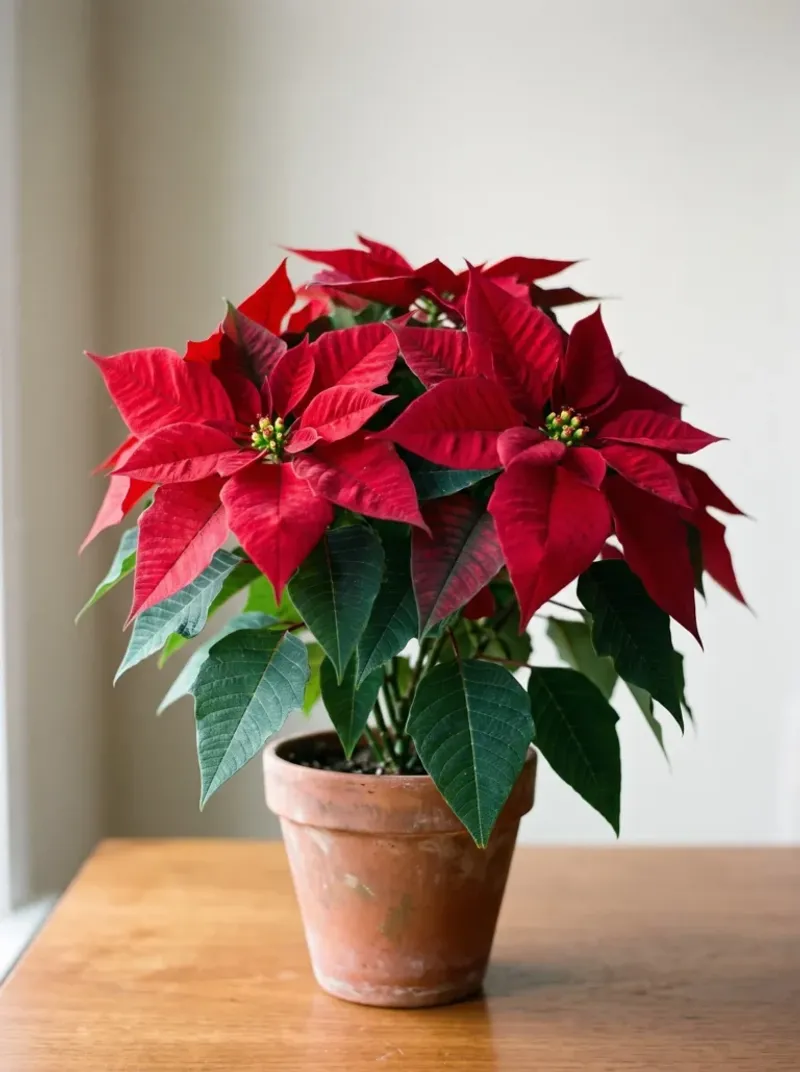
Getting 14 hours of genuine darkness every night is harder than it sounds in most homes. University of Maryland Extension specifically calls out room lamps, streetlights shining through windows, flashlights, and light leaking around the edges of a loosely draped covering as common sources of interruption.
A lightproof closet with no gap under the door or an opaque cardboard box that fits snugly over the entire plant is more reliable than a sheet or a black trash bag that lets in light at the edges.
Mississippi State University Extension points out that repeated or substantial light exposure during the dark period can delay or prevent flowering. That said, one accidental light exposure on a single night does not automatically end the attempt.
If you forget one evening and the kitchen light was on near the plant for an hour, simply resume the routine the next night. The concern is consistent, repeated interruption across many nights, not a single lapse.
Equally important: do not leave the plant in darkness around the clock. University of Missouri Extension warns that keeping a poinsettia in continuous darkness weakens the plant and defeats the purpose of the treatment.
The bright daytime window is essential, not optional.
Once you start seeing the bracts develop clear, consistent color, the strict dark schedule is no longer needed. Oregon State University Extension confirms that at that point the plant can return to normal bright-light houseplant conditions, placed wherever it will get the most natural light indoors.
From there, regular care maintains the display through the holiday season.
Prevent Water and Temperature Stress From Causing More Leaf Loss
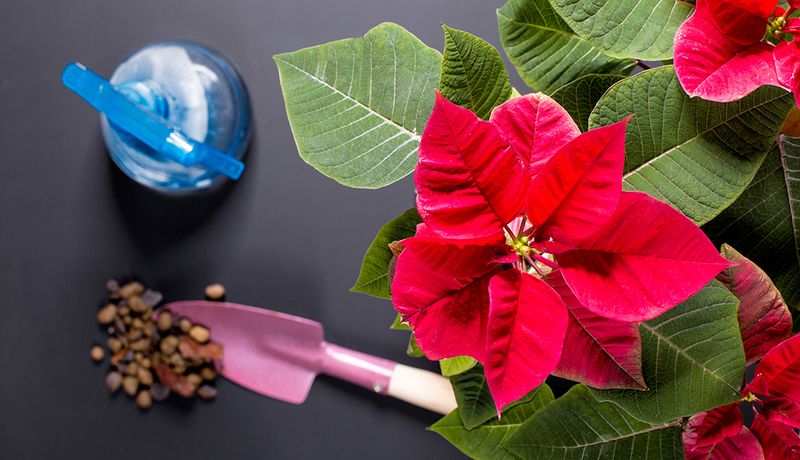
Running the dark routine while neglecting basic care is a common reason home rebloom attempts fall short. Water management during this period follows the same principle as the rest of the year: check the soil surface with your finger, and water when the top inch feels dry.
Iowa State University Extension identifies both drought stress and overwatering as causes of leaf drop, so erring toward a fixed weekly schedule in either direction is riskier than checking soil moisture directly each time.
When you do water, water thoroughly until water runs freely from the drainage holes, then stop. University of Delaware Cooperative Extension advises never letting the pot sit in standing water, since roots left in waterlogged soil can develop rot.
If your poinsettia is still wrapped in decorative foil from the store, check whether the foil covers the drainage holes at the bottom. If it does, remove the foil or pierce it to allow drainage, and empty any water that collects in the foil or the saucer after each watering session.
Temperature control matters just as much during the dark-treatment weeks as it does the rest of the year. NC State Extension recommends keeping daytime temperatures around 60 to 70 degrees Fahrenheit and nighttime temperatures in the mid-50s to mid-60s range.
Temperatures that drop below about 50 to 55 degrees Fahrenheit can cause damage and accelerate leaf loss, so avoid placing the plant near a cold exterior window during the night hours when it is sitting in its dark spot.
University of Illinois Extension adds that heating vents, hot air registers, and drafts from frequently opened doors are equally harmful. A closet that stays consistently warm and dark is often a better choice than a back bedroom that gets cold at night or a spot near an exterior wall.
Keeping temperatures steady removes one more variable that could delay or disrupt the flowering response you are working toward.
Set a Realistic Goal for Holiday Color
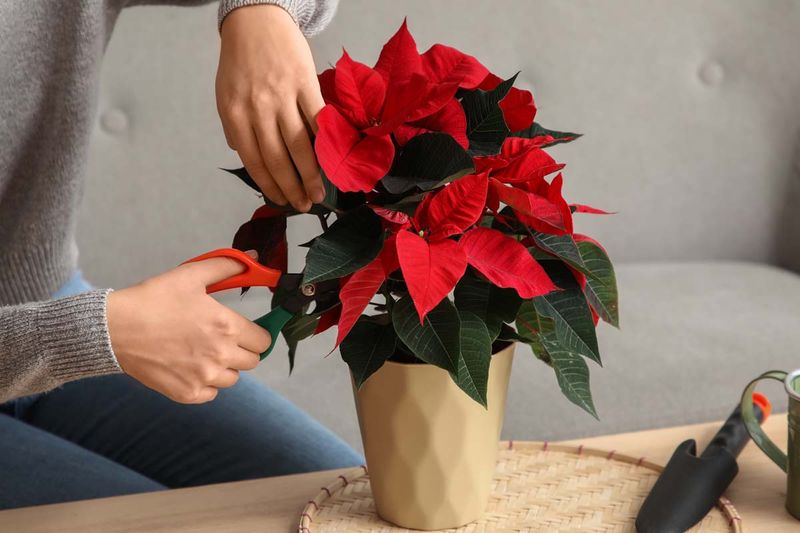
A healthy poinsettia that receives consistent bright days and reliably dark nights has a real chance of producing colored bracts in time for the holidays. University of Maryland Extension and University of Missouri Extension both note that home-grown rebloomed poinsettias are commonly taller, less compact, and less densely colored than the plants sold in stores each November.
Commercial growers use controlled environments, specific cultivars, and precise timing that are difficult to replicate on a windowsill. Frame your goal as new bract color rather than a store-bought shape.
Several factors can shift the timing or reduce the result even when the routine is followed carefully. Texas A&M AgriLife Extension identifies cultivar differences, temperature fluctuations, latitude, plant health, pruning dates, and any interruptions to the dark period as variables that affect when and how fully bracts color up.
Starting on October 1 is a practical rule of thumb, not a guarantee that bracts will be fully colored by December 25. Virginia Cooperative Extension is candid that even successful home rebloom attempts often look different from the full, symmetrical plants on store shelves.
One more practical note on safety: poinsettias are not considered deadly poisonous, but Utah Poison Control guidance confirms that the milky sap can irritate skin and that ingestion may cause mouth or stomach irritation. Children and pets should not be allowed to chew the plant or play with broken stems.
Judge your success by whether new bract color appears, not by whether the plant looks like it came from a greenhouse. A home-grown holiday poinsettia with any genuine color is a quiet achievement worth appreciating on its own terms.