
If Lavender Grows On Your Windowsill, The 54% Cortisol Claim Does Not Hold Up – Here Is What The Research Actually Shows
A headline promising that one whiff of windowsill lavender drops your cortisol by 54% sounds almost too good to be true – and it is. That number comes from a very specific lab study that has nothing to do with leaning over a potted plant on a sunny ledge.
Understanding where the figure actually comes from, what lavender research genuinely shows, and how to keep a healthy plant on your windowsill is far more useful than chasing a statistic that was never meant to apply to you.
The 54% figure came from a very different lavender product
Before accepting any dramatic percentage tied to lavender, it helps to trace the number back to its source. The 54% cortisol reduction that circulates online did not come from anyone leaning over a potted plant and taking a deep breath.
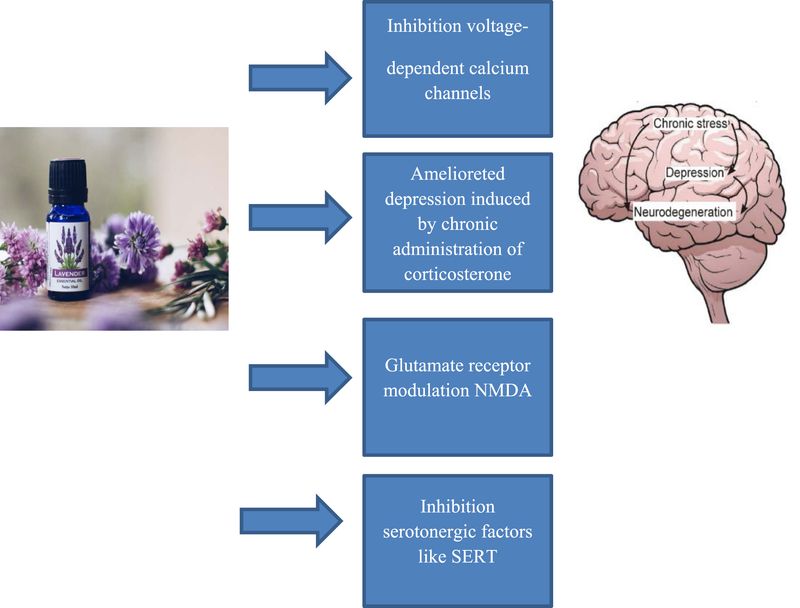
It came from a 2020 randomized controlled trial that tested a commercial intranasal product containing a blend of lavender, French lavender, and fennel essential oils.
Participants in that trial used the product once daily for three full months. The 54% reduction in salivary cortisol was recorded in one of the treatment groups at the end of that three-month period, not after a single brief exposure.
The study was measuring the cumulative effect of a standardized, measured dose delivered directly into the nasal cavity every day for twelve weeks.
Just as telling is what the trial did not find. Researchers observed no statistically significant differences between groups in perceived stress scores or overall quality of life.
That means even within the controlled conditions of the trial, the cortisol change did not translate into participants feeling meaningfully less stressed or reporting better wellbeing. A single number pulled from one treatment arm of a long-term pharmaceutical-style intervention cannot be transferred to a live plant sitting on a kitchen windowsill.
The product tested was also a blend – lavender alone was not the active ingredient. Attributing the result to a single whiff of a single species misrepresents the study on at least three counts: the exposure method, the duration, and the composition.
Correcting the premise is not a minor technicality; it changes the entire meaning of the claim. No located study has directly tested whether smelling an ordinary potted lavender plant causes any measurable cortisol change at all.
What lavender aroma studies actually measured
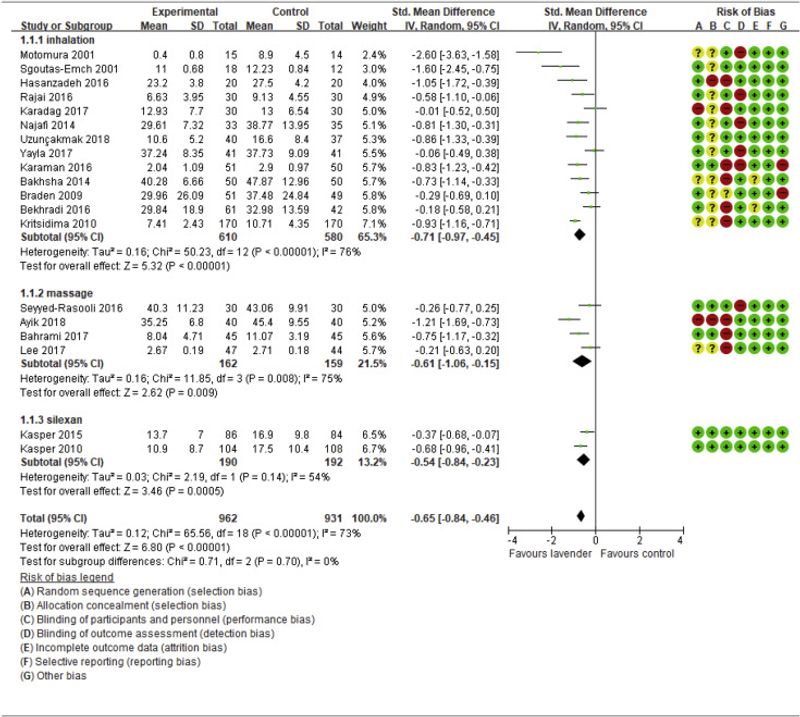
Setting aside the 54% figure, a fair question remains: does prepared lavender aroma do anything measurable at all? The honest answer is that the research is mixed, and the outcomes vary enough that no single conclusion covers all the studies.
A small 2008 experiment asked participants to complete a stressful arithmetic task while exposed to lavender essential-oil aroma. That study found a reduction in salivary chromogranin A – a different stress marker – but no statistically significant change in cortisol.
Chromogranin A and cortisol reflect different aspects of the stress response, so finding one without the other matters.
A 2011 study took a similar approach and found no comparable change in either cortisol or chromogranin A after ten minutes of lavender exposure. In that experiment, peppermint – not lavender – produced the significant cortisol decrease.
A 2016 randomized study comparing lavender aroma, coconut aroma, and water found no significant lavender effect on cortisol, though it reported some post-stress working-memory improvements.
One outlier worth addressing is a small clinical trial in open-heart-surgery candidates that reported a large cortisol reduction after twenty minutes of lavender essence inhalation. That study involved a highly specific clinical population under acute surgical stress, used a small sample, and relied on methods that make it very hard to apply the finding to someone sitting at home near a plant.
The population, the setting, and the stress level are simply too different.
The National Center for Complementary and Integrative Health describes the evidence for lavender aromatherapy as unclear and notes that many studies are small or have methodological weaknesses. The narrowest defensible conclusion is that prepared lavender aroma may affect some people or some stress-related outcomes in some contexts – but the cortisol effect remains genuinely uncertain, and results vary by population, method, and outcome measure.
A potted plant is not a measured dose of essential oil
Even if the aroma studies showed consistent cortisol reductions – which they do not – a crucial gap would still separate those findings from a plant on your windowsill. Every study that produced a measurable result used a controlled delivery method: an olfactometer, a diffuser, a prepared fragrance strip, an essential-oil-soaked pad, or an intranasal product.
Each of those methods delivers a specific, reproducible concentration of volatile compounds to a participant’s nose.
A living lavender plant does not work that way. The amount of scent a potted plant releases depends on the species, the cultivar, the plant’s age and health, the temperature, the airflow in the room, how close you are to the plant, and how long you stand near it.
NCCIH’s review of lavender focuses on prepared aromatherapy exposures precisely because those are what the studies tested. An ordinary potted plant is not a standardized aromatherapy delivery device.
The phrase “a single whiff” makes the problem even sharper. Research exposure durations ranged widely across the available studies: roughly five to ten minutes in some experiments, ten minutes in another, ninety minutes of sleep in a pilot study, and three months of daily use in the intranasal trial.
There is no defined research protocol for “one whiff,” no established dose, and no study that tested brief casual exposure to a live plant and then measured cortisol.
A related point concerns lavender inhalation studies that used much longer or repeated exposures to achieve their results. Borrowing those outcomes and attaching them to a momentary smell from a windowsill plant skips over the entire question of whether the exposure is remotely comparable.
No located study has directly tested ordinary windowsill-grown lavender as the exposure, full stop.
Cortisol and calm are related but not interchangeable
Feeling calmer after sitting near a plant you find pleasant is a real experience, but it is not the same thing as showing a measurable drop in cortisol. Studies on lavender and stress have used a wide range of outcome measures: salivary cortisol, chromogranin A, alpha-amylase, blood pressure, heart rate variability, sleep quality, anxiety questionnaires, and mood scales.
These outcomes do not always move in the same direction at the same time.
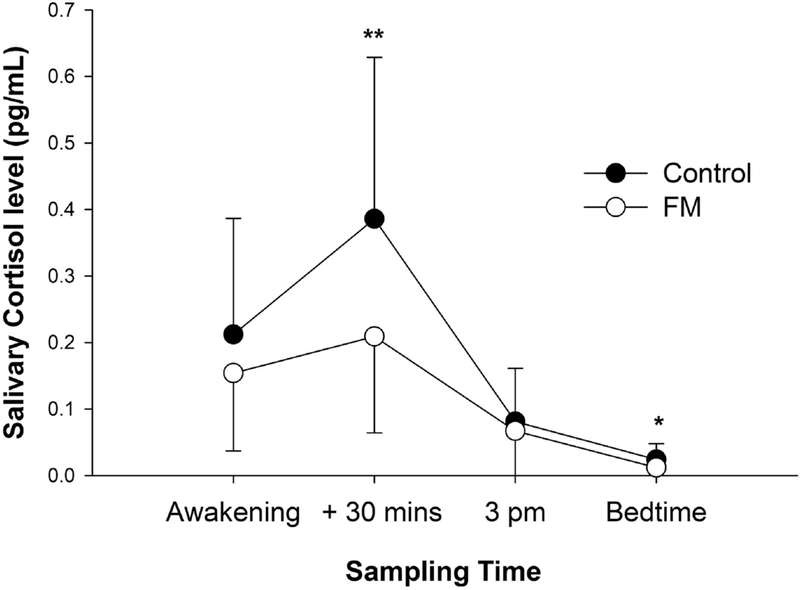
Salivary cortisol reflects the amount of free cortisol circulating in the body and is a useful, non-invasive measure, but results depend heavily on the time of day the sample is taken, how recently the person woke up, what stress procedure was used in the study, whether the participant takes medications, and which assay method the lab used. NCCIH notes that small study sizes and variable methods make it hard to compare results across trials.
A percentage change found in one study’s treatment arm is not a universal human response.
Context and timing can actually flip the direction of the effect. One sleep study found that lavender exposure was associated with a higher cortisol awakening response compared to control or jasmine conditions – meaning cortisol was elevated, not reduced, in the lavender group after sleep.
That does not make lavender harmful, but it illustrates that the direction and size of any effect depend on when and how the exposure happens.
Researchers studying lavender’s effects track many biological markers together because stress physiology involves multiple overlapping systems, and a change in one marker does not guarantee a change in the others. Beyond that, a short-term cortisol dip is not automatically a health benefit.
Cortisol is a normal, necessary hormone that supports energy, immune function, and the body’s response to real demands. Treating any reduction as inherently good oversimplifies a complex system.
The 2008 arithmetic-stress study found a chromogranin A change without a cortisol change, which is a good example of why outcome choice matters when reading these headlines.
Can lavender thrive on your windowsill?
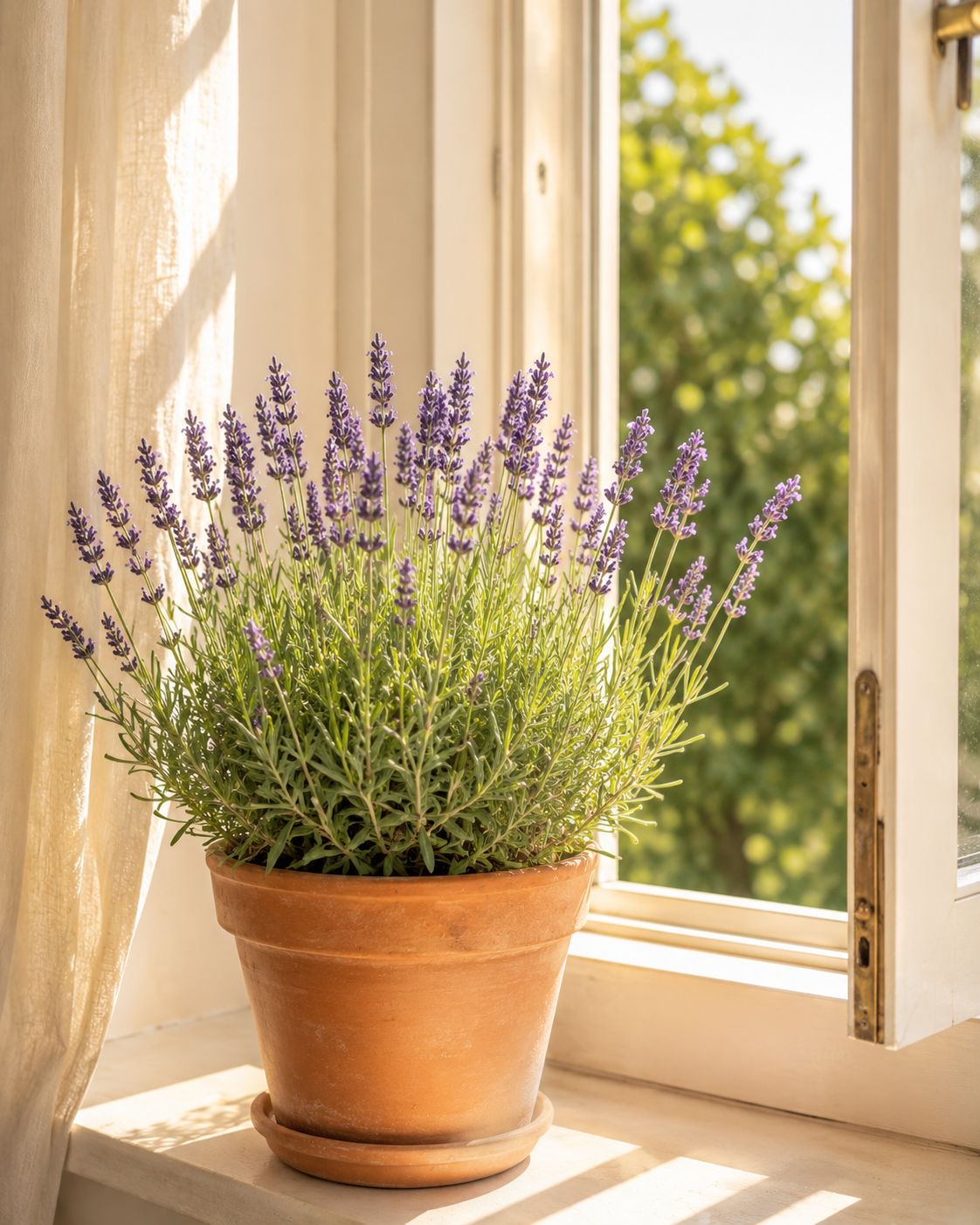
Shifting from the science to the plant itself, lavender is genuinely worth growing indoors if you can meet its core requirements. The challenge is that a typical indoor windowsill often falls short on at least one of them.
University Extension guidance recommends at least six to eight hours of direct sunlight daily for lavender to stay healthy, which rules out dim corners, north-facing windows, and any spot shaded by overhangs or neighboring buildings.
Drainage matters just as much as light. Lavender evolved in Mediterranean hillsides with fast-draining, lean soil, and it does not tolerate sitting in wet growing medium.
The Royal Horticultural Society recommends gritty, well-drained compost and a container with large drainage holes. A pot without holes, or one sitting in a saucer full of water, creates the exact conditions that lead to root rot.
University of Delaware Extension also emphasizes sharp drainage as a primary factor in container success.
Cultivar choice makes a real difference indoors. English lavender (Lavandula angustifolia) is generally the most cold-hardy and the most forgiving for indoor overwintering in colder US climates.
University of Illinois Extension notes that French lavender (L. dentata) and Spanish lavender (L. stoechas) are less cold-tolerant but sometimes more compact. Hybrid lavandins tend to be larger and are often better suited to outdoor containers than a modest windowsill.
Picking the right type for your climate and available light is more important than any care tip applied to the wrong plant.
Airflow is the factor most often overlooked indoors. Still, humid air increases the risk of fungal problems and makes it harder for the plant to stay dry between waterings.
A gentle fan or a window that opens regularly helps. Warm, humid regions of the US face a tougher challenge than drier ones, and a plant that thrives in a dry, sunny apartment may struggle in a muggy coastal kitchen.
The simplest lavender rescue starts with light and drainage
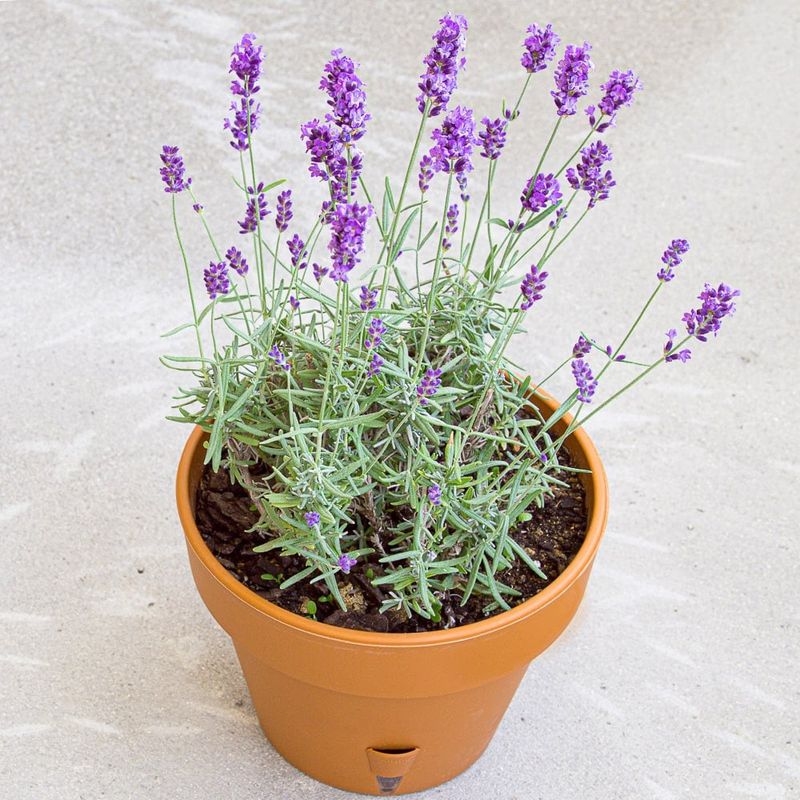
When a windowsill lavender starts declining, the instinct is often to water it more or move it to a shadier spot to “rest.” Both responses usually make things worse. The right starting point is a checklist, not a watering can.
Check direct light first. If the plant is not getting six or more hours of sun hitting the leaves directly, move it to the brightest window available before changing anything else.
University of Illinois Extension identifies insufficient light as a primary reason lavender fails indoors. Next, flip the pot and confirm there are actual drainage holes.
If water cannot escape freely, no watering technique will save the roots from eventually rotting.
Probe the soil before adding any water. Lavender prefers to dry out somewhat between waterings, and soggy growing medium is a more common killer than dry medium.
Iowa State University Extension notes that established lavender tolerates relatively dry conditions and that overwatering is a recurring cause of decline. When the top inch or two of the growing medium feels dry, water thoroughly until water flows freely from the drainage holes, then let the pot dry again before the next watering.
Never leave the pot standing in a saucer of water.
The exact watering schedule is not a fixed number of days. Container care guidance from Iowa State makes clear that pot size, light level, temperature, humidity, and the growing medium all affect how quickly the soil dries.
A small terracotta pot in a hot, sunny window dries faster than a large plastic pot in lower light.
Fertilizer is rarely the answer for a struggling lavender. Florida Extension guidance notes that lavender generally needs little fertilizer, and excess nitrogen produces soft, leafy growth at the expense of flowers and fragrance.
If the plant is pale and leggy, more light is almost always the fix before adding nutrients. Address light, drainage, and moisture first, then reassess airflow and cultivar suitability before reaching for any product.
Treat the scent as personal enjoyment, not a cortisol treatment
Growing lavender near a window you pass every morning can be a genuinely pleasant part of a daily routine. Some people find the scent agreeable, and that personal enjoyment is real and worth having.
What it is not is a measured hormone intervention or a substitute for clinical care when stress is persistent or serious.
NCCIH advises that aromatherapy may cause headache or coughing in some people, and that anyone who notices these symptoms should stop exposure. Sensitivities to strong scents are common and vary from person to person.
If the plant’s fragrance causes irritation, sneezing, or a headache, moving it to a less central location or choosing a lower-fragrance cultivar is a reasonable adjustment.
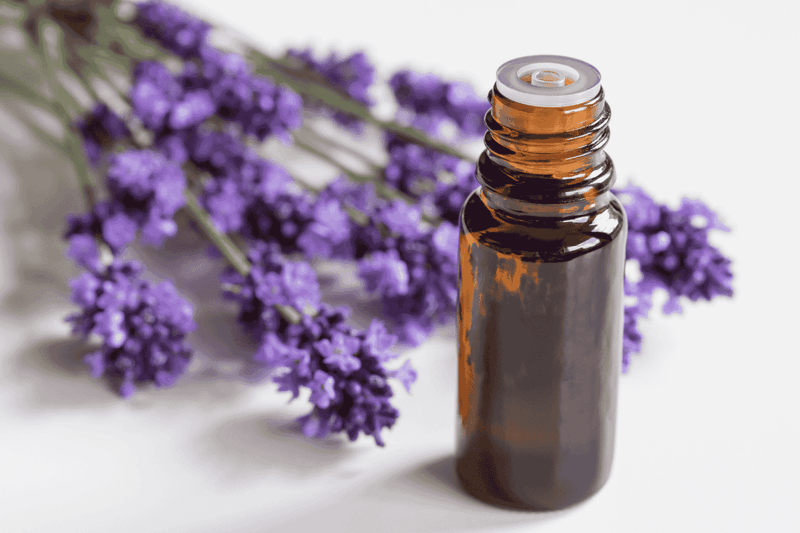
The plant and its concentrated essential oil are two very different things with different safety profiles. Lavender essential oil should not be swallowed.
MedlinePlus notes that lavender oil ingestion can cause poisoning, with symptoms including nausea, vomiting, and central nervous system effects. Poison Control confirms that concentrated lavender oil can irritate skin and eyes and should not be applied undiluted.
Anyone taking prescription medications should ask a pharmacist or physician before using lavender essential-oil products, because herbal-oil interactions are possible even when the product seems natural.
Pregnancy and breastfeeding are situations where caution is especially warranted. NCCIH notes that safety evidence for lavender inhalation and essential-oil use during those periods is limited, and the absence of evidence of harm is not the same as evidence of safety.
Presenting lavender as universally risk-free for pregnant or nursing people goes beyond what the current data support.
Households with dogs, cats, or horses face an additional concern. The ASPCA lists common lavender as toxic to dogs, cats, and horses, with nausea, vomiting, and loss of appetite among the reported signs.
Keep plants out of reach of any pet that might chew on the stems or leaves.
The useful takeaway is a healthy plant, not a 54% promise
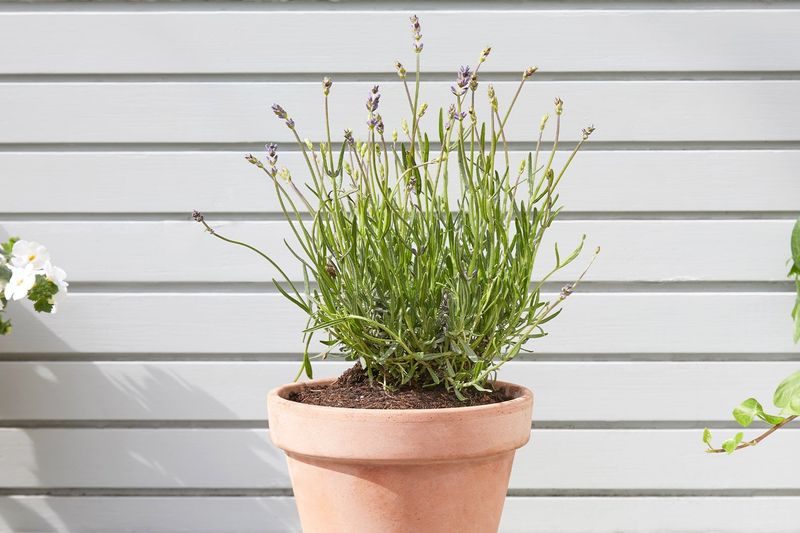
No study has shown that smelling a live lavender plant on a windowsill triggers a 54% drop in cortisol from a single whiff. That number came from a three-month trial of a commercial intranasal blend, tested in a specific population, using a controlled dose delivered daily.
It does not transfer to a casual encounter with a potted plant.
The broader evidence on lavender aromatherapy and cortisol remains mixed and unclear, with some studies finding changes in other stress markers and several finding no significant cortisol effect from prepared lavender aroma at all. A potted plant is even further removed from those controlled exposures than a diffuser or essential-oil pad.
The practical decision rule is straightforward. Provide strong, direct light for at least six hours a day, use a pot with real drainage holes and fast-draining growing medium, water only when the soil has dried somewhat, and make sure air can move around the plant.
Choose a cultivar suited to your climate. If you enjoy the scent, treat that enjoyment as a personal sensory preference rather than evidence of hormone control.
For persistent stress, anxiety, or sleep problems, a conversation with a health professional will accomplish more than any windowsill plant. A healthy lavender plant is worth growing on its own terms – it just happens to be a plant, not a pharmacy.