
If You Water Your Garden Straight From The Rain Barrel, Here’s The Debris-Reduction Treatment Train That Strains Out Leaves, Insects, And Some Suspended Sediment
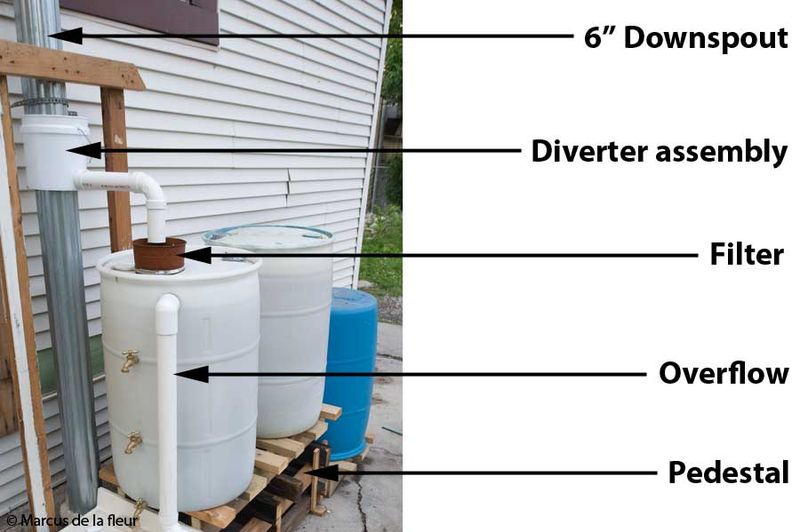
A rain barrel is one of the simplest ways to save water and cut your outdoor water bill, but what comes off your roof is not as clean as it looks. Leaves, insect parts, bird droppings, and fine grit travel down your gutters and straight into storage, where they can clog drip emitters, gum up hose fittings, and settle into a layer of sludge at the bottom of your barrel.
The good news is that a series of separate controls, placed at the right spots along the water’s path, can cut down on that debris load and keep your ornamental garden irrigation running more smoothly. This guide walks through each control honestly, including what it can and cannot do.
Replace the five-layer promise with a debris-reduction plan
No simple homemade stack can strain out every leaf, every speck, every germ, or every dissolved chemical from rainwater. That is not a knock on DIY ingenuity; it is just how filtration physics work.
Screens stop things larger than their mesh openings, sand traps some suspended particles, and a sediment cartridge captures material down to its rated pore size, but none of those steps touches dissolved metals, pesticides, bacteria, or viruses. CDC guidance on rainwater collection is direct: rainwater can contain germs and chemicals even when it looks perfectly clear.
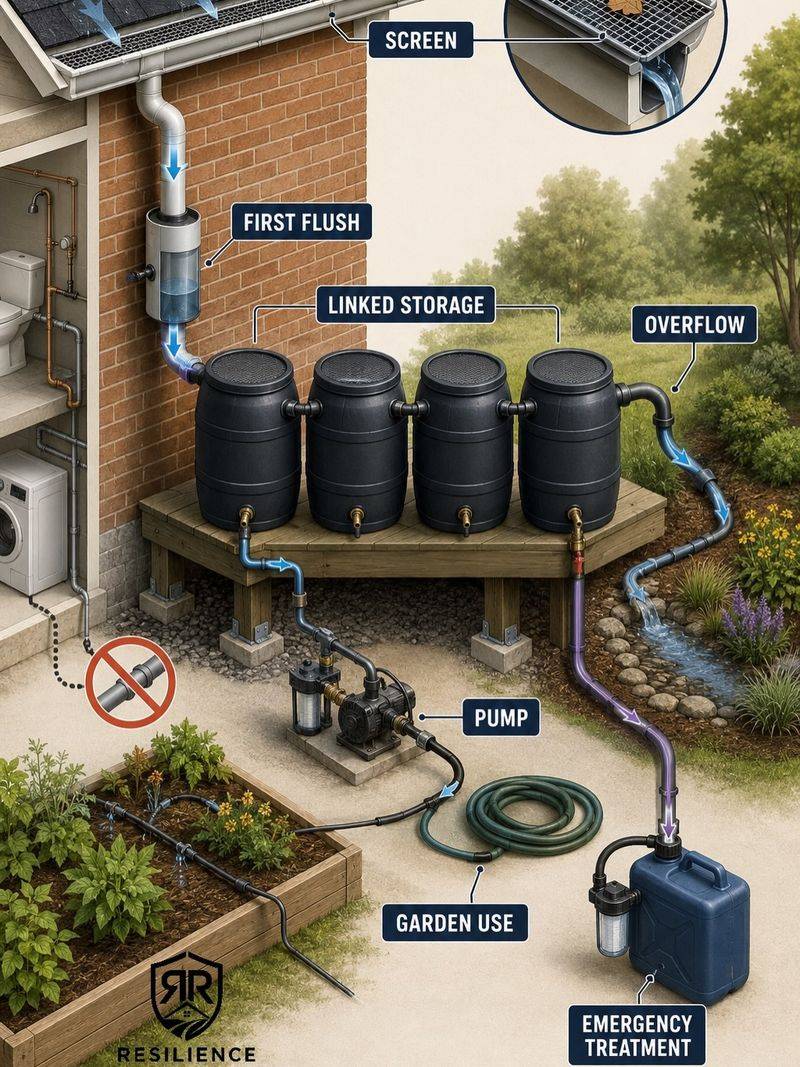
The more defensible goal is a debris-reduction treatment train, meaning a series of separate controls that each tackle a different part of the problem. Roof and gutter screening blocks coarse material before it enters the downspout.
A first-flush diverter shunts away the dirtiest initial runoff after a dry spell. Covered storage with a screened opening keeps new debris and mosquitoes out while the water sits.
And, depending on your irrigation equipment, a suitably rated sediment filter at the outlet protects pumps, hoses, and drip emitters from fine particles that survive the earlier steps. Oregon State University Extension’s rainwater harvesting guide describes this kind of layered collection approach for garden irrigation use.
How many of those controls you need, and exactly where you place them, depends on your roof area, tree cover, debris load, climate, and the irrigation equipment downstream. A gardener with a metal roof, minimal tree cover, and a soaker hose needs a different setup than someone with asphalt shingles under a oak canopy feeding a drip system.
The useful outcome is less debris, fewer irrigation clogs, and more usable water for ornamental plants, not universally clean or potable water.
Block large debris at the roof and gutter inlet
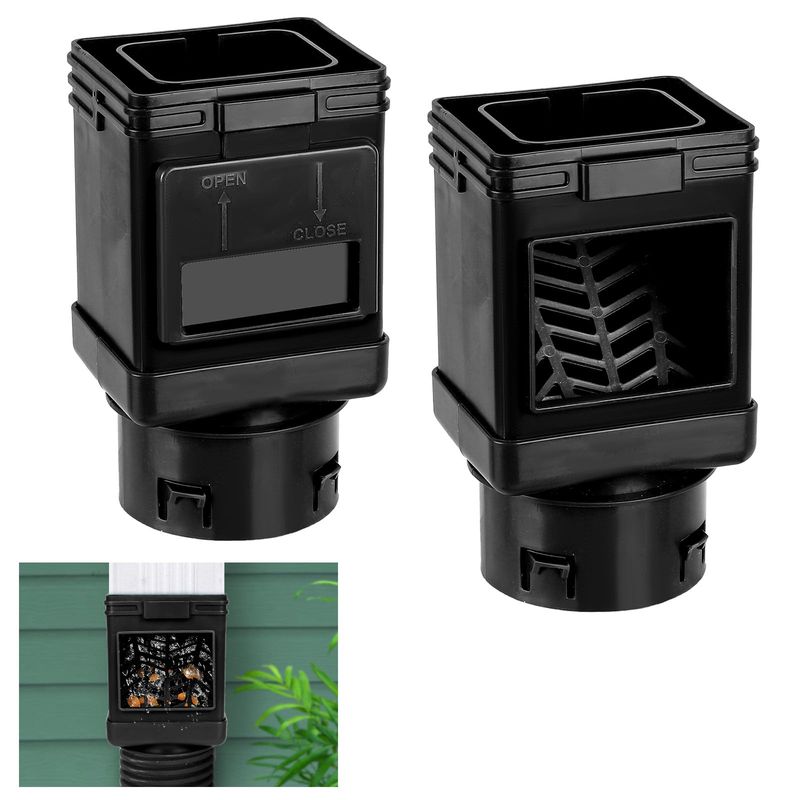
Leaves, sticks, insect bodies, and the occasional small animal can all travel down a residential downspout if nothing stops them at the top. An inlet screen, fitted where the downspout connects to your collection diverter or barrel lid, acts as a coarse barrier that intercepts that material before it reaches storage.
University of Minnesota Extension’s rain barrel guidance specifically calls out screens as a way to keep out leaves, sticks, insects, and small animals while reducing clogging.
Worth being clear about what this screen does not do: it is a coarse physical barrier, not a fine filter. Fine silt, dissolved roof chemicals, and microscopic particles pass right through it.
The screen’s job is to keep the barrel from turning into a leaf pile and to reduce the coarser material that would otherwise settle into sludge. That is a practical, meaningful benefit, but it is a different thing from filtration or purification.
Regular inspection and cleaning are not optional extras; they are part of the system. Leaves and organic matter that pile up on the screen surface can restrict water flow during a rain event, meaning your barrel fills more slowly or not at all.
Wet, decomposing organic material on a screen can also harbor bacteria and other contaminants, which defeats part of the purpose. Check the screen after every significant storm, clear it out, and look for tears or gaps where debris could bypass it.
A screen that is intact and clean earns its place in the setup; one that is clogged or torn is little more than decoration.
Send the dirtiest first runoff away from storage
After a dry period, your roof accumulates dust, pollen, bird droppings, decomposed organic matter, and airborne particles from traffic or nearby agriculture. When rain finally arrives, that first wave of runoff is the most concentrated.
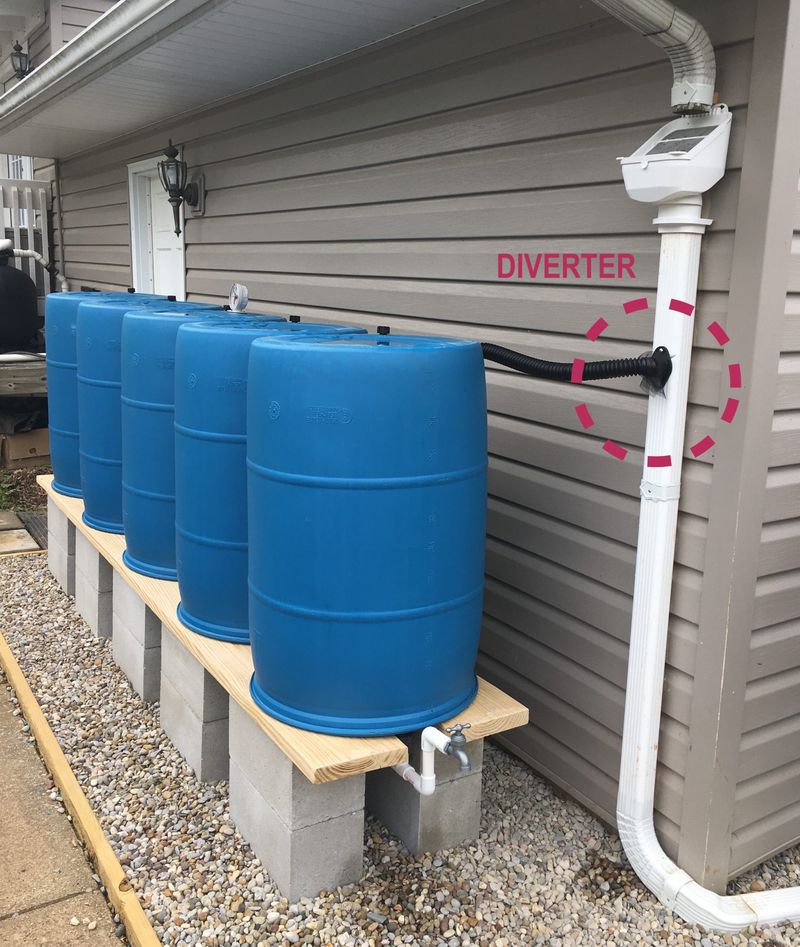
Routing it away from your barrel before the cleaner water behind it enters storage is the job of a first-flush diverter, and it is a meaningfully different control from the inlet screen or any downstream filter.
EPA-indexed research on the first-flush effect in roof-based rainwater harvesting found detectable trace contaminants in roof runoff and reported that first-flush diversion can improve overall water quality, while also emphasizing that results vary by site. Runoff quality shifts with roof type, tree canopy, traffic patterns, wildfire smoke, industrial neighbors, bird activity, and how long the dry period lasted.
A single universal volume to divert does not fit every home.
Sizing your diverter to your specific situation matters more than following a generic number. A larger roof, heavier tree cover, or a long dry stretch typically calls for diverting more of that initial flow.
Oregon State Extension’s rainwater harvesting materials discuss sizing and placement in the context of local conditions, which is the right framing. A slow-draining standpipe, a tipping bucket, or a float-valve design can all accomplish the diversion; the key is that the volume you divert actually accounts for the debris your roof collects between rain events.
First-flush diversion reduces the pollutant load entering storage, but it does not purify the water that follows. Bacteria, dissolved chemicals, and fine particles can still be present in the post-flush flow.
Think of it as cutting off the dirtiest portion of the runoff, not as a treatment step that makes the rest safe or clean.
Add a rated sediment filter only where the equipment needs one
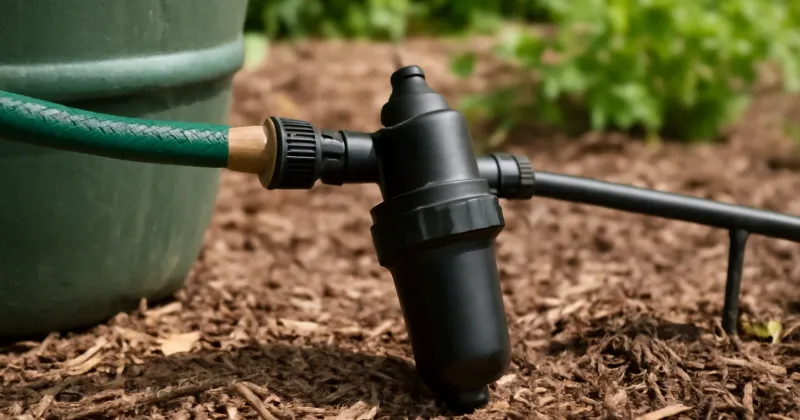
Coarse screening and first-flush diversion handle a lot of visible debris, but fine suspended particles, silt, and small organic fragments can still make it into the barrel and travel downstream when you open the tap. For a standard garden hose and sprinkler, that level of sediment is rarely a problem.
For a drip irrigation system, it can be a slow-motion disaster: emitters clog at very small particle sizes, flow rates drop, and plants on the far end of the line get less water than those at the head.
This is where a rated sediment filter earns its place, specifically at the point where the irrigation equipment needs protection. Oregon State University Extension’s rainwater harvesting guide describes a roughly 30-micron roof-washer filter for removing fine debris before storage or pumping.
That figure is a practical example for a particular use, not a universal specification. Your drip emitters, pump, or pressure regulator may have their own recommended filtration requirements, and matching the filter to those specs is more important than hitting any single pore-size number.
Screen filters, disk filters, and media filters each have different strengths. Screen and disk types are straightforward to clean by backflushing or disassembly.
A sand or gravel column built at home may trap some particles, but it carries no automatic performance rating: its actual pore-size behavior, flow rate, and clogging pattern depend on the media, construction, depth, and maintenance. Penn State Extension’s drip irrigation guidance underscores the importance of properly sized and maintained filtration ahead of drip systems to prevent emitter failure.
A homemade gravel-and-sand column does not establish microbial or chemical safety regardless of how many layers it contains. If you are using a DIY media filter, treat it as a sediment trap only, not as a purifier.
A manufactured filter with a stated micron rating gives you more predictable performance and easier maintenance. Place the filter before storage if your goal is protecting the barrel, or at the outlet if your goal is protecting the irrigation equipment, and follow the manufacturer’s cleaning schedule rather than guessing.
Treat the barrel as protected storage, not as a purifier
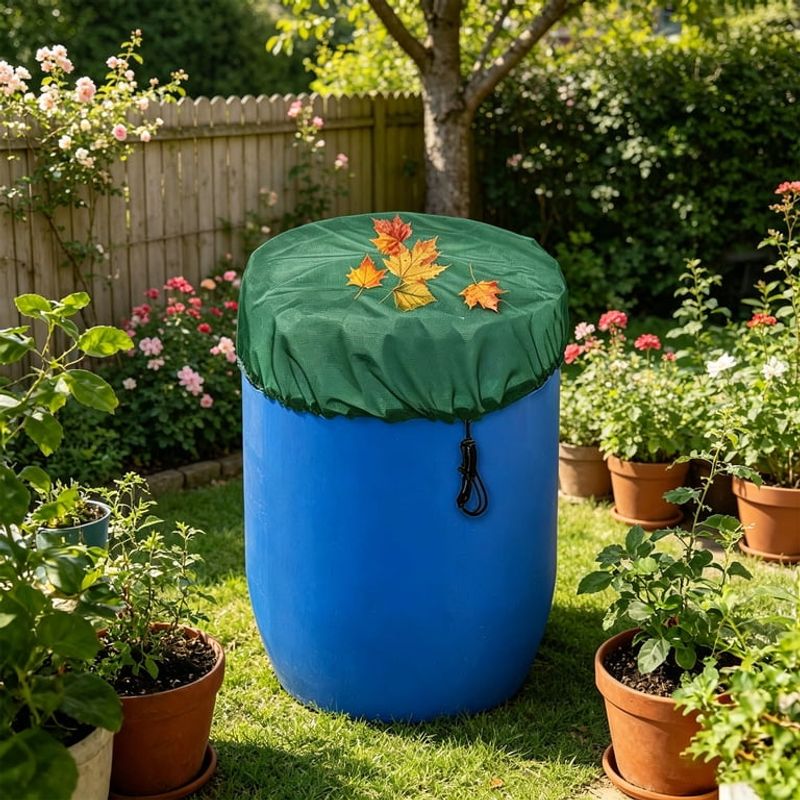
Once water is inside the barrel, the barrel itself becomes part of the system. A barrel left open or loosely covered collects fresh leaves, insects, and bird droppings between rain events, undoing some of the work the inlet screen and first-flush diverter already did.
A tight-fitting lid with screened openings at the inlet and overflow port keeps new debris out and, critically, prevents mosquitoes from using the standing water as a breeding site.
CDC’s rainwater collection health overview recommends using a screen over the barrel opening or emptying the barrel at least every 10 days to interrupt the mosquito breeding cycle. That 10-day figure is a baseline; if your barrel empties faster because you water frequently, or if your climate runs hot and dry, you may not need to worry about stagnation.
If the barrel sits mostly full for weeks during a cool, rainy stretch, more frequent checks are worth the time.
Covered storage does not remove contaminants that arrived with the water. Bacteria, fine silt, dissolved roof chemicals, and other materials that made it past the earlier controls are still in there.
The cover’s job is to prevent new contamination and to limit the conditions that allow mosquitoes, algae, and stagnant-water problems to develop. That is a realistic and useful function, but calling the barrel a purifier or a final treatment step would overstate it considerably.
Light exposure also matters. A barrel placed in full sun can warm up quickly, encouraging algae growth inside.
An opaque barrel or a shaded location slows that process. Check the overflow port and any vents periodically to make sure screens are intact and have not been displaced by debris or a heavy rain event.
Use the water at the soil line for ornamental plants
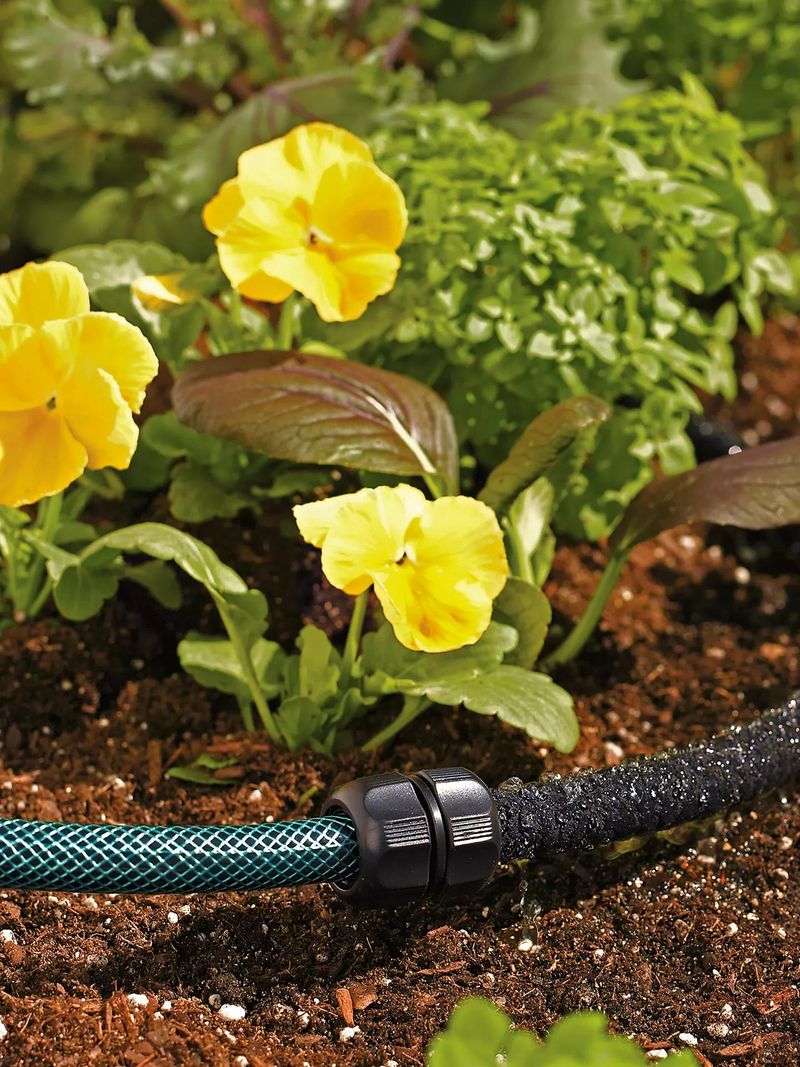
Flowers, shrubs, and other ornamental plants are the most straightforward use for rain-barrel water that has gone through a debris-reduction setup. Hydrangeas, petunias, clematis, and geraniums are all reasonable candidates, not because filtered rain-barrel water offers them special benefits compared to tap water, but because these plants are not going to be eaten and the water is applied at the soil level where contact with the plant is limited.
University of Minnesota Extension identifies flowers, shrubs, and indoor plants as lower-risk uses for untreated rain-barrel water, in contrast to edible crops.
How you apply the water matters as much as which plants you choose. Hand watering at the base of the plant, drip irrigation, soaker hoses, and low-flow emitters all direct water to the root zone without throwing it onto leaves, stems, or flowers.
Overhead watering from a sprinkler or a high-arc hose nozzle does the opposite: it wets foliage, encourages leaf-spot and fungal disease, and can move soil particles, including anything in the water, onto plant surfaces. For ornamental plants, the goal is to get water to the roots efficiently, and soil-level application does that better regardless of the water source.
Edible crops are a different conversation. Untreated rain-barrel water should not contact the harvestable parts of vegetables, greens, herbs, strawberries, or similar crops.
Penn State Extension’s guidance on safe agricultural water use reinforces that water quality and application method both affect food safety risk. A trellised tomato or a tall bean plant is sometimes cited as a qualified exception, where careful base watering can avoid the fruit entirely, but that requires deliberate technique and is not a blanket clearance for using rain-barrel water throughout the food garden.
Keeping the application at the soil line also reduces the chance of splashing soil, and whatever is in it, back up onto lower foliage. That benefit applies to ornamental plants too, even when the primary concern is just keeping the garden looking good and the irrigation equipment running cleanly.
Maintain every barrier and clear accumulated sediment
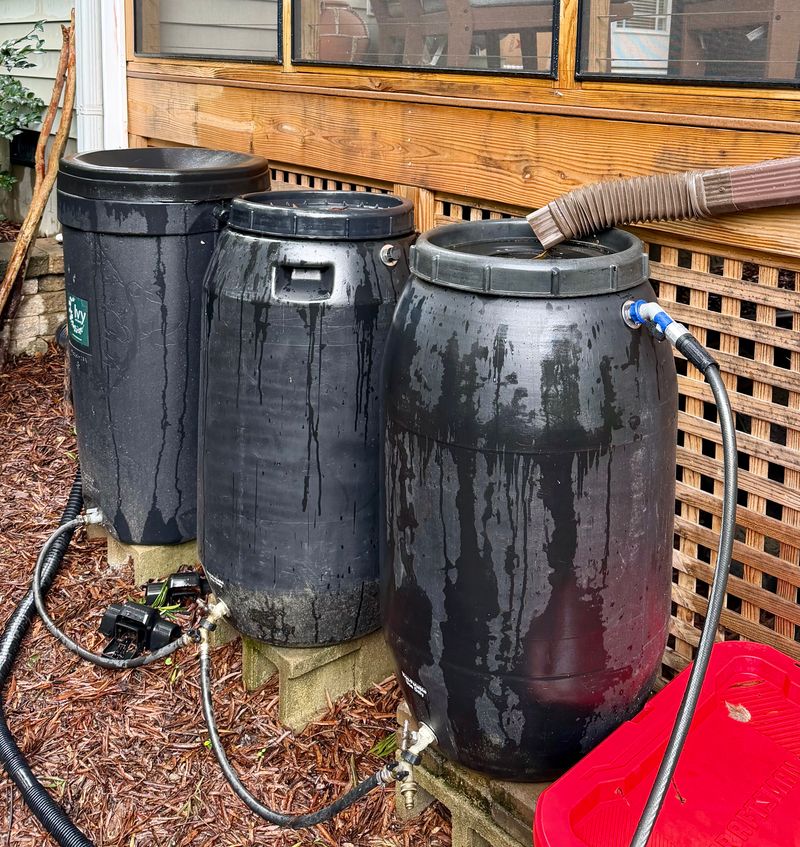
A debris-reduction setup that nobody maintains eventually stops working. Screens clog with leaf fragments and silt until water can barely pass through them.
A first-flush standpipe that never gets emptied fills with accumulated muck and loses its capacity to divert the next storm’s dirty runoff. A sediment filter cartridge that is left in place past its service life can restrict flow so much that the pressure drop defeats the purpose of having a pump or a gravity-fed system at all.
Inlet screens need attention after every significant storm, especially if your yard has trees nearby. Pull the screen, rinse it, check for tears, and reinstall it before the next rain.
Organic matter that sits wet on a screen breaks down and can contribute to the very contamination you are trying to limit. Hoses, connectors, and the overflow port are worth a visual check at the same time; a cracked fitting or a displaced screen on the overflow can let insects in without you noticing.
University of Minnesota Extension recommends draining the barrel at least once a season, removing sediment and debris from the bottom, scrubbing the interior with a mild detergent, and rinsing thoroughly before refilling. In climates with hard freezes, draining and disconnecting the barrel before the first frost protects both the barrel and any attached plumbing from cracking.
Sediment filter cartridges or screen elements should be serviced based on condition and flow performance rather than on a fixed calendar date. A filter in a system that collects from a heavily treed roof in a wet climate may need cleaning every few weeks; the same filter type on a clean metal roof in a dry region might go a full season.
Watch for reduced flow at the outlet as a practical signal that the filter element needs attention. CDC also notes that stagnant water and organic buildup can support mosquito breeding and other biological activity, which is one more reason to keep the system moving and the barrel clean rather than treating it as a set-and-forget installation.
Know what the setup cannot remove or guarantee
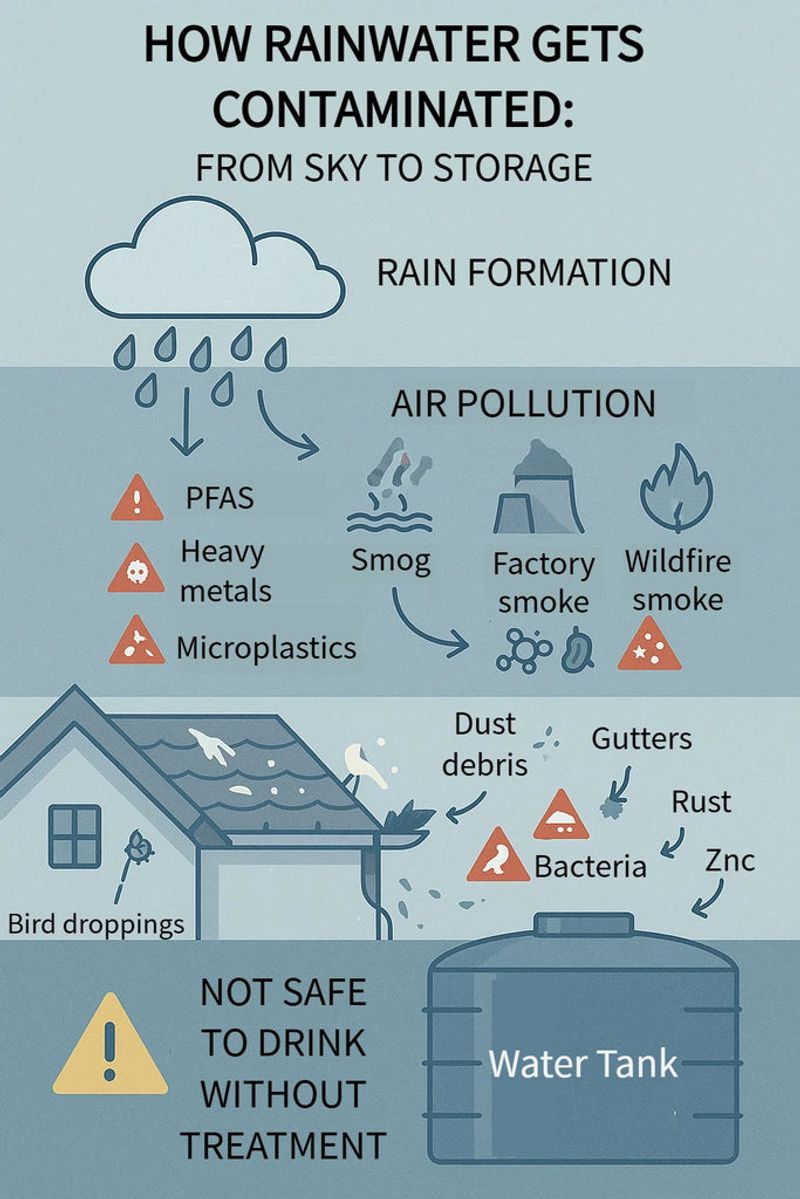
Physical filtration removes particles according to the design of the filter: its mesh size, pore size, media depth, and flow rate. Screens stop what is larger than their openings.
A sediment cartridge rated at 30 microns captures particles at or above that size under ideal conditions. Neither step removes bacteria, viruses, parasites, dissolved metals, pesticides, herbicides, or other chemicals, and a DIY media column has no validated performance rating at all.
CDC states plainly that rainwater can contain germs and chemicals even when it looks clean, and that roof materials, gutters, and pipes can contribute lead, copper, and other contaminants.
Local surroundings shape runoff quality in ways that no filter placement can fully anticipate. Air pollution, wildfire smoke, traffic-related deposition, agricultural or industrial neighbors, bird activity, and the roofing material itself all affect what ends up in the barrel.
NSF’s rainwater collection consumer guidance recommends choosing collection and storage materials tested for rainwater contact where higher water quality is needed, which is worth considering if your roof or gutters include older materials or coatings of unknown composition.
Rainwater collection is also regulated differently across states. Some states restrict or require permits for collection; others actively encourage it.
Checking with your state environmental or health agency before building a system is a practical first step, not a bureaucratic one.
University of Minnesota Extension sums up the practical position well: rain-barrel water is appropriate for ornamental plants and lower-risk garden uses, not as a substitute for treated water on edible crops. The honest payoff from a well-maintained debris-reduction setup is less clogging, cleaner handling, and more usable water for your flower beds and shrubs.
That is a real, worthwhile gain. It is just not the same thing as clean water, and a garden that runs well on honest expectations lasts longer than one built on promises the equipment cannot keep.