
The One Thing North Carolina Container Plants Need Before The First Cold Snap Or They Quietly Decline All Winter
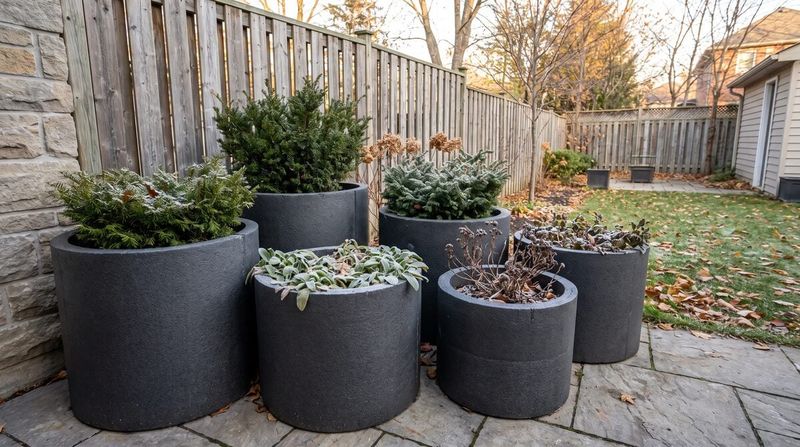
Fall in North Carolina sneaks up fast, and container plants are the first to suffer when gardeners are caught off guard. Unlike plants growing in the ground, potted shrubs and perennials have their roots wrapped in a small volume of mix that can dry out or freeze solid with almost no warning.
For many outdoor containers, especially evergreen shrubs and evergreen or semi-evergreen perennials, checking and correcting potting mix moisture before freezing weather arrives is one of the most useful things you can do right now. This guide walks you through exactly how to do that, and how to match the rest of your winter plan to the specific plants and conditions you are actually dealing with.
Container roots face winter from every side
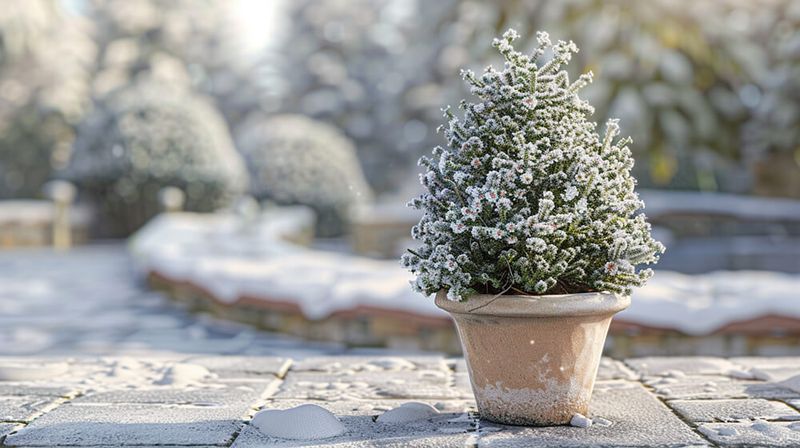
Outdoor containers create a winter problem that most gardeners do not think about until they see damage: the root ball has almost no protection from the cold surrounding it. A plant growing in the ground benefits from the insulating mass of soil on all sides, which buffers temperature swings and holds moisture longer.
A pot, by contrast, exposes the root ball to cold air on every side, front, back, and bottom, so temperatures inside a small or thin-walled container can drop close to the air temperature far faster than landscape soil ever would.
NC State Extension’s guidance on preparing plants for winter identifies two primary winter threats for container plants: winter desiccation and inadequate root hardiness. Desiccation happens when evergreen or semi-evergreen foliage keeps losing water through its leaves during cold, sunny, or windy weather, while roots in a dry or frozen root ball cannot replace that water fast enough.
The result is browning, leaf scorch, or dieback that looks like freeze damage but is actually drought stress playing out in slow motion through the coldest months.
The plants most vulnerable to this pattern are evergreen shrubs and evergreen or semi-evergreen perennials: hollies, boxwoods, camellias, azaleas, ivy, and similar plants that never fully drop their leaves. Illinois Extension’s overwintering container guidance specifically names these plants as the clearest moisture priorities going into winter, because their foliage remains active even when growth has slowed.
Dormant deciduous plants, succulents, and tender tropicals face different challenges and need different handling, which later sections address directly. For now, the key point is this: checking potting mix moisture is an important first step for many outdoor containers, but it is a first check, not a universal cure.
A moist root ball reduces winter water stress; it does not make a cold-sensitive plant cold-hardy or substitute for moving a tender plant to shelter.
Check and water a dry root ball before freezing weather
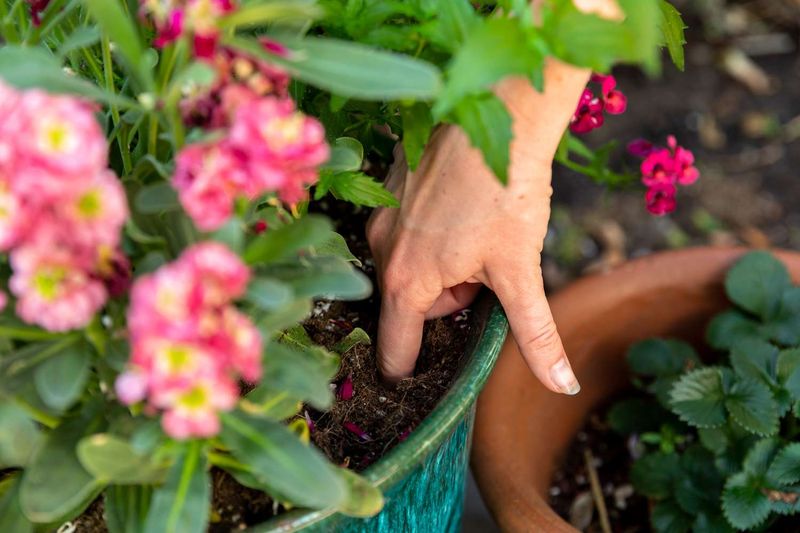
Before any forecasted freeze, the first practical step is simple: push your finger or a wooden skewer about two inches into the potting mix. If it comes out dry or barely damp, the container needs water.
If it comes out with moist mix clinging to it, leave it alone. Watering a container that is already adequately moist before a freeze does nothing useful and can create waterlogged conditions that deprive roots of oxygen.
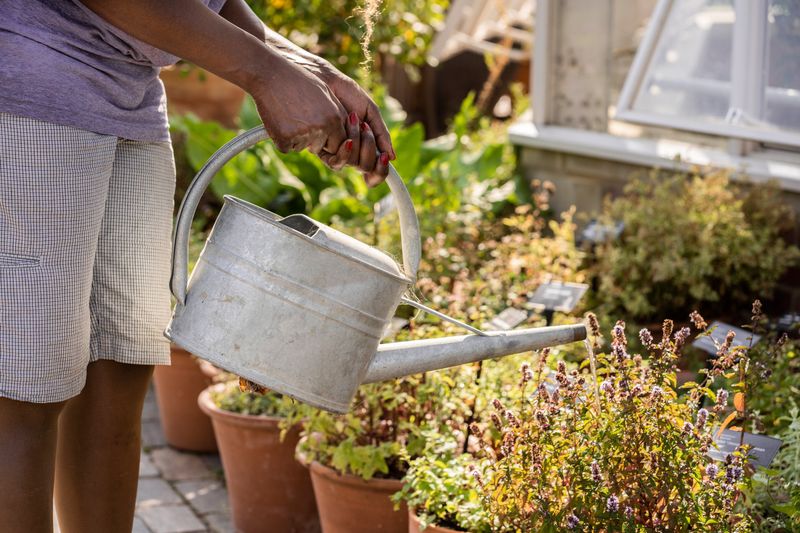
When the mix is dry enough to need it, water slowly and thoroughly until you see water running freely from the drainage holes. That runoff confirms the entire root ball has been moistened, not just the top inch or two.
The NC State Extension Gardener Handbook’s container chapter recommends watering container plants thoroughly and not allowing containers to dry out completely, because a dry root ball going into a freeze is far more vulnerable to desiccation injury than one that is adequately moist. After watering, let the excess drain completely before covering the pot or moving it to a closed space.
Evergreen shrubs and evergreen or semi-evergreen perennials deserve the most attention here because their leaves continue losing water even during cold weather. A boxwood, holly, or camellia sitting in dry potting mix when a hard freeze arrives is set up for winter burn regardless of how well-established it looks.
Dormant deciduous plants have less urgent need because they are not actively losing water through foliage, but it is still worth a quick moisture check before an extended cold period.
One important distinction: this is ordinary root-ball watering, not freeze irrigation. NC State’s nursery winter preparation guidance describes continuous overhead irrigation as a specialized commercial technique that must begin before temperatures hit 32 degrees and run through the warming hours of the next morning.
Stopping too early can actually increase damage, and the ice load can break branches. Home gardeners should not attempt to run a hose or sprinkler overnight as a freeze-protection measure.
Moistening a dry root ball before cold weather is the appropriate goal for most residential containers.
Monitor moisture throughout winter
Getting moisture right before the first freeze is only the beginning. Container plants, especially evergreens, need ongoing attention through the entire winter because prolonged cold, sunny skies, and dry winds keep pulling water out of foliage even when temperatures are well below freezing.
A pot that was adequately moist in October can become critically dry by January if no one checks it.
The practical rule is straightforward: check the potting mix regularly, and water only when it has dried enough to need it. NC State Extension’s container gardening handbook advises watering during winter when prolonged cold, sunny, or windy conditions increase moisture loss, but only when the mix is actually dry.
When you do water, choose a time when temperatures are above freezing, ideally in the morning or midday, so the foliage surface and the top of the mix have time to dry before the next cold night. Never water frozen media or a container sitting on ice.
The opposite extreme is just as damaging. Keeping a container constantly saturated through winter deprives roots of oxygen and sets the stage for root rot and disease.
Roots sitting in waterlogged mix during cold weather are under double stress: low oxygen and low temperatures together can kill root tissue faster than either condition alone. Good drainage is not optional; it is part of the system.
The right rhythm varies by plant type, pot size, exposure, and weather. A large glazed ceramic pot in a sheltered spot against the house wall will hold moisture far longer than a small terracotta pot sitting exposed on a deck railing.
Check the actual mix, not the surface appearance, because the top half-inch can look dry while adequate moisture sits below. Building a habit of checking every week or two during dry or windy cold spells, rather than following a fixed calendar schedule, is the most reliable way to keep roots healthy through a North Carolina winter.
Use the local North Carolina freeze forecast
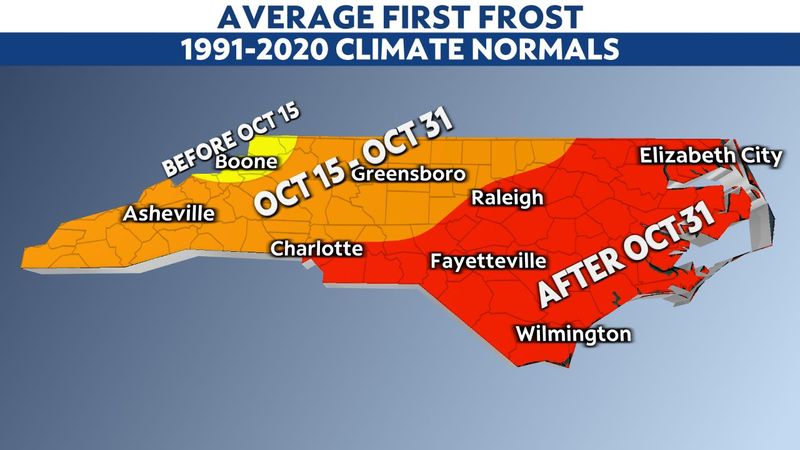
North Carolina is not one climate, and treating it as one is how container plants get caught unprepared. The mountains and upper Blue Ridge can see first freezes in early October, while parts of the Coastal Plain may not hit a hard freeze until late November or even December.
The Piedmont falls somewhere in between, but local elevation, urban heat, and proximity to water all shift those dates further. A single statewide deadline for protecting containers is not useful guidance.
The NC State Climate Office Freeze Date Explorer lets you look up location-specific freeze probability data using 32 degrees Fahrenheit as the standard freeze threshold. That tool is far more useful than a regional average because it reflects the actual temperature history at or near your location.
Bookmark it and check it each fall before the cold pattern shifts.
Understanding the difference between forecast terms also matters for timing your response. Frost advisories typically apply when temperatures are expected to be near 36 degrees Fahrenheit and can damage sensitive plants.
A freeze warning means temperatures at or below 32 degrees are forecast, which is the threshold where water in plant tissue begins to freeze. A hard freeze warning, usually near 28 degrees Fahrenheit, indicates conditions that can kill or severely damage most unprotected container plants and their root balls.
The National Weather Service Raleigh frost and freeze maps break down these thresholds visually for the region.
Match the forecast to your specific plant’s cold tolerance, not just a calendar date. A camellia rated to 10 degrees Fahrenheit needs different preparation than a tropical mandevilla that starts showing stress below 50 degrees.
Check the forecast, know your plant’s limits, and act before the temperature crosses that threshold rather than after.
Protect the container after you correct the moisture
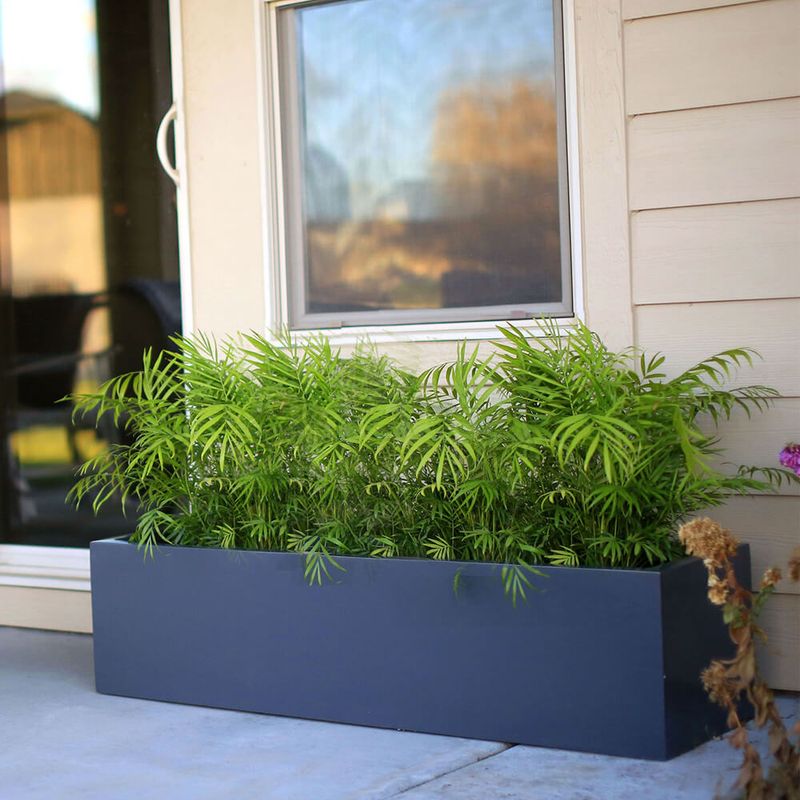
Correcting moisture is the first step; reducing cold exposure is what follows immediately after. A moist root ball still sitting in an exposed terracotta pot on a north-facing deck is in a far weaker position than the same plant moved against a south-facing house wall or into a sheltered corner.
The wall radiates a small amount of stored heat, blocks wind, and reduces the number of sides from which cold air can reach the container.
For plants that can be moved, the options range from a covered porch or deck, to a garage, shed, cold frame, or unheated sunroom. Even an unheated garage stays several degrees warmer than outdoor air on most winter nights, which can be enough to keep a marginally hardy root ball from reaching lethal temperatures.
NC State Extension’s container gardening resource recommends moving tender or vulnerable plants to protected locations before damaging temperatures arrive, rather than waiting to see how they respond to the first hard freeze.
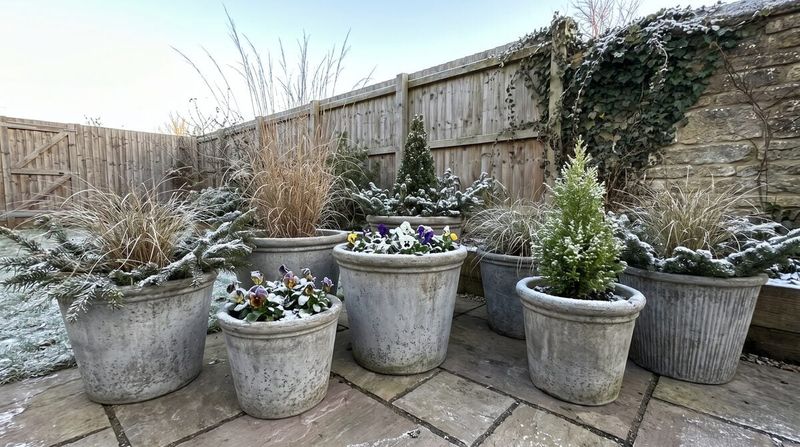
For containers too large or heavy to move, grouping is the next best option. Cluster pots together so they share mass and block wind from reaching each other’s sides.
Then insulate the containers themselves, not just the foliage above them. Wrap individual pots with bubble wrap, foam pipe insulation, burlap, or old blankets secured with twine.
Pack the spaces between grouped containers with straw, shredded leaves, or other loose insulating material. Leave the drainage holes clear and make sure you can still access the mix to check moisture.
Covering only the foliage and leaving the root ball exposed is a common and costly mistake. NC State’s nursery winter preparation guidance specifically notes that container roots are exposed to temperature extremes on multiple sides and need more protection than landscape roots do.
A frost cloth over the top of a pot does almost nothing for the root zone. Protect the container itself, maintain drainage, and plan to remove or ventilate covers when temperatures rise back above freezing during the day.
Match winter care to the plant
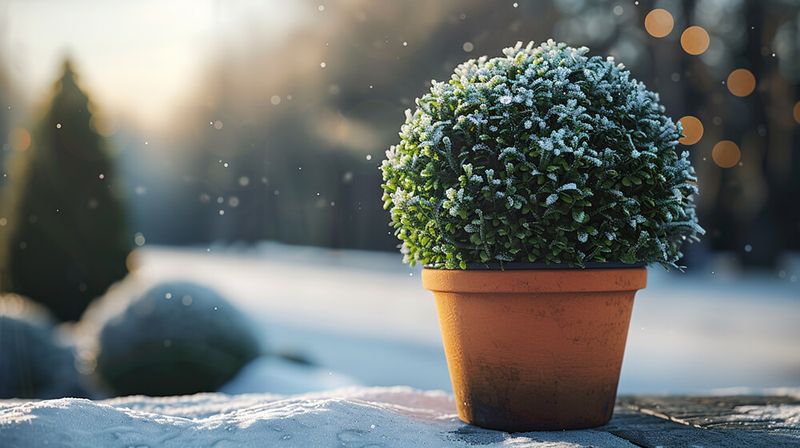
Not every container on your patio needs the same treatment, and applying the moisture-first approach universally can cause as much harm as ignoring it. The plant in the pot determines what winter care actually looks like.
Evergreen shrubs and evergreen or semi-evergreen perennials, including hollies, boxwoods, camellias, azaleas, hellebores, and ivy, are the clearest candidates for regular winter moisture monitoring. Their foliage stays active through cold months, meaning they continue losing water even when growth has stopped.
Illinois Extension’s overwintering container guide identifies these plants as the priority group for pre-winter watering and ongoing moisture checks precisely because of that continued water loss risk.
Dormant deciduous perennials and shrubs, plants that have dropped their leaves and shut down active growth, generally need less frequent watering through winter. The root ball should not be allowed to dry out completely, but these plants are not losing water through foliage, so the urgency and frequency of checks is lower.
A light moisture check every few weeks during dry spells is usually enough.
Succulents and cacti need substantially less water than any of the above. In winter, most succulents and cacti are dormant and highly susceptible to root rot if kept moist.
Water them sparingly, only when the mix has become quite dry, and make sure drainage is excellent. Illinois Extension’s guide to bringing container plants in for winter distinguishes succulents clearly from moisture-dependent evergreens for this reason.
Tender tropicals, including mandevillas, elephant ears, bougainvillea, and most houseplants grown outdoors in summer, may need to come inside before nighttime temperatures drop into the range that causes chilling injury, which for some species is well above freezing. NC State Extension states that houseplants cannot survive outdoors through a North Carolina winter, and moist potting mix does not change that reality.
Finally, avoid applying nitrogen fertilizer in late fall as a general winter-protection strategy. Excess nitrogen can push tender new growth right before a freeze, leaving soft tissue that is far more vulnerable to cold injury than hardened stems would be.
Moisture starts the plan; protection finishes it
A reliable winter routine for container plants follows a short sequence, and it starts with a moisture check, not a calendar date. Press your finger into the potting mix.
If it is dry, water thoroughly and let it drain completely before covering or moving the pot. If it is already moist, leave it alone and move to the next step.
Next, check the local forecast using a tool like the NC State Climate Office Freeze Date Explorer and compare the expected low against your specific plant’s cold tolerance. NC State Extension’s winter preparation guidance and the NC State container gardening handbook both point to plant type, root exposure, and actual forecast conditions as the factors that determine how much protection is needed.
Move tender plants indoors before damaging temperatures arrive. Group and insulate hardy containers, focusing on protecting the root ball rather than just draping fabric over the top.
A moist root ball going into winter reduces the risk of desiccation and winter drought stress for many evergreen and semi-evergreen plants. That is real and worth doing.
But adequate moisture cannot replace a sheltered location for a tender plant, and it cannot prevent root injury when temperatures drop below what a species can tolerate in a container. Keep checking moisture through winter, water only when the mix is dry enough to need it, and adjust protection as the season’s weather shifts.
The plants that come through best are the ones whose roots were neither parched nor frozen solid.