
If Your Lilac Blooms Only At The Top Where You Can Barely See Them, Here’s The Reset That Brings Flowers Back To Eye Level
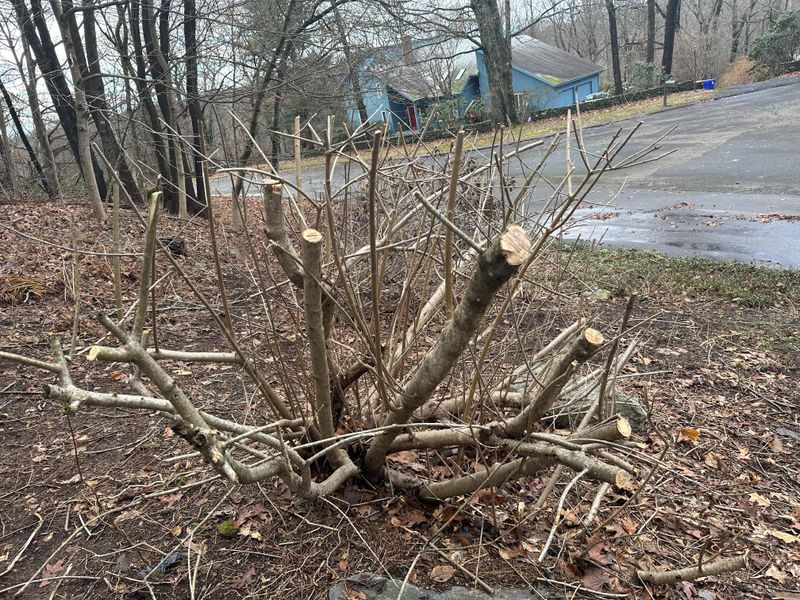
Watching your lilac bloom every spring is wonderful until you realize the flowers are all happening ten feet above your head where you can barely smell them. That top-heavy pattern is one of the most common frustrations for gardeners with an older shrub, and the good news is that it often signals a fixable structural problem rather than a dying plant.
A carefully timed pruning reset can gradually rebuild the framework from the ground up, making flowers easier to reach and enjoy over the coming seasons.
Top-heavy blooms usually signal a framework problem, not a canopy-height problem
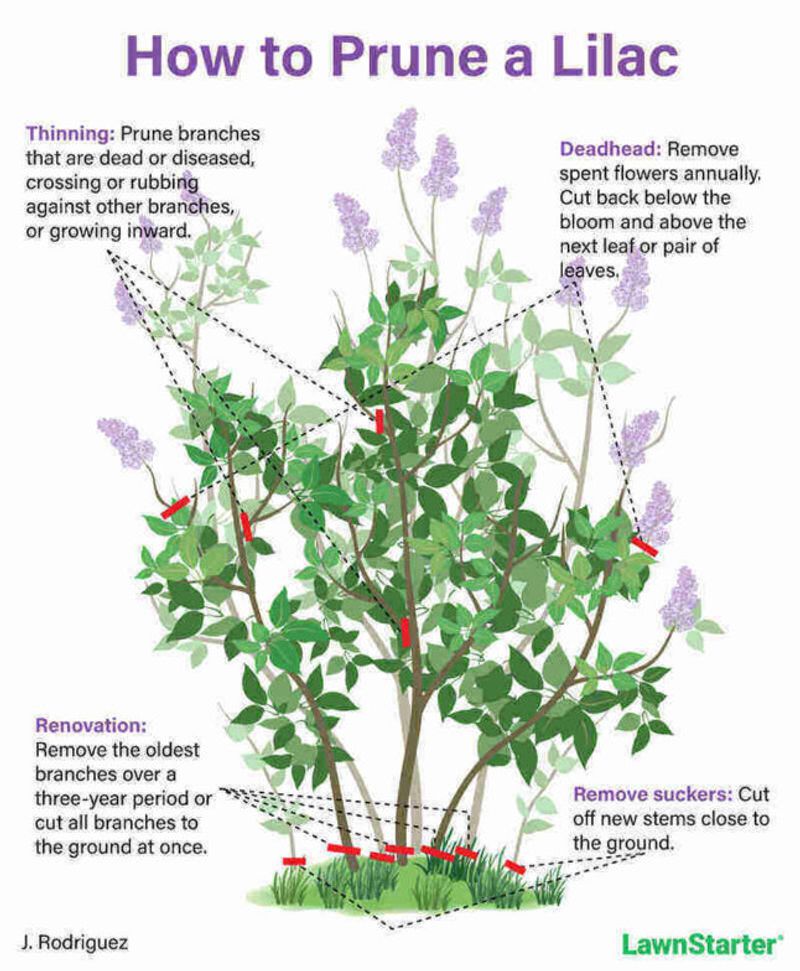
An old lilac can quietly outgrow itself over many years, and the result looks familiar to a lot of gardeners: bare, woody stems at the bottom, a tangle of older canes in the middle, and all the flowers crowded up near the tips where the newest growth lives. Illinois Extension’s guidance on shrub blooming patterns explains that as lilacs age, older stems lose vigor and flowering shifts toward the more productive newer growth near the ends of tall canes.
Lower branches thin out not because something went wrong overnight, but because the plant’s energy has gradually migrated upward.
This pattern is suggestive of an overgrown framework, but it is not a firm diagnosis on its own. Shade, soil problems, pests, and disease can produce similar results, so the framework explanation is a starting point rather than a certainty.
What matters practically is understanding what kind of fix actually addresses the problem.
Cutting the canopy shorter, the way you might trim a hedge, does not solve it. Heading cuts shorten the existing canes but leave the same old woody structure in place, and Penn State Extension’s pruning guidance notes that shearing produces dense outer growth that shades the interior even more.
The real reset works from the bottom: removing the oldest stems at ground level encourages new shoots to grow up from the base, which is where a younger, lower framework begins.
Oregon State Extension’s lilac care advice frames this as renewing the base rather than cutting the top back. Over several years, that younger base can support foliage and eventually flowers lower on the shrub.
That is a realistic long-term possibility, not a promise of eye-level blooms by next spring.
Check light, soil, age, and plant health before pruning
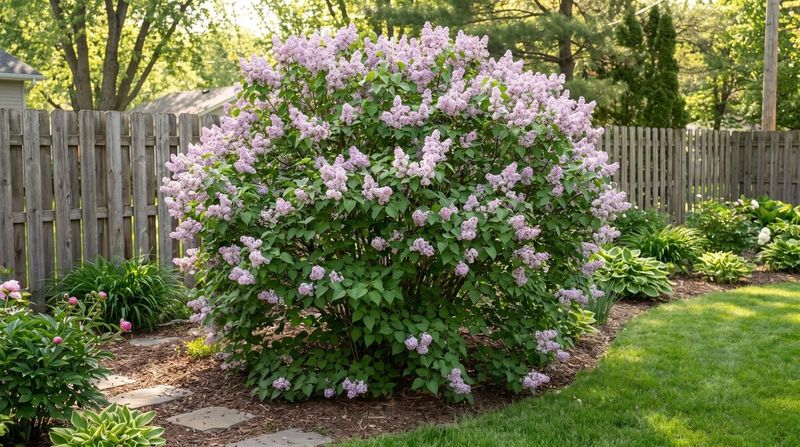
Before picking up a pruning saw, spend ten minutes walking around the shrub and honestly assessing its situation. Pruning an old framework is real work, and if a different problem is driving the poor flowering, structural cuts alone will not fix it.
Start with sunlight. Iowa State Extension’s lilac flowering guidance recommends at least six hours of direct sun daily, with some sources suggesting six to eight hours for reliable blooming.
If a nearby tree has grown up and now casts shade over the shrub for much of the day, reducing that shade may matter more than any pruning you do to the lilac itself. Fertilizer is another common culprit.
Lawn fertilizer applied near the shrub can introduce excess nitrogen, which pushes leafy growth at the expense of flowers. Lilacs generally need very little fertilizer, and adding more without knowing the soil’s condition can make poor flowering worse rather than better.
Soil moisture matters too. Established lilacs prefer well-drained ground and benefit from watering during dry spells, but persistently soggy soil stresses the roots and can contribute to weak growth and dieback.
Check whether water pools near the base after rain.
Age and cultivar are worth considering before assuming the shrub needs aggressive intervention. A young common or French hybrid lilac may naturally take five or more years to flower well.
Dwarf Korean lilacs and cultivars like ‘Miss Kim’ often bloom at a younger age and stay more compact. If the plant is relatively young, patience may serve better than a hard reset.
Finally, look at the stems themselves. University of Maryland Extension’s lilac problem guide describes what borer damage, blight, and freeze injury look like.
Small holes in the bark, sunken cankers, blackened or water-soaked stem tissue, and large sections of dead wood all require a different response than simple age-related legginess. Bare lower branches on an old shrub are common and normal; dead stems with visible damage are a separate concern that needs diagnosis before you start cutting.
Prune after flowering when you want to preserve next year’s buds
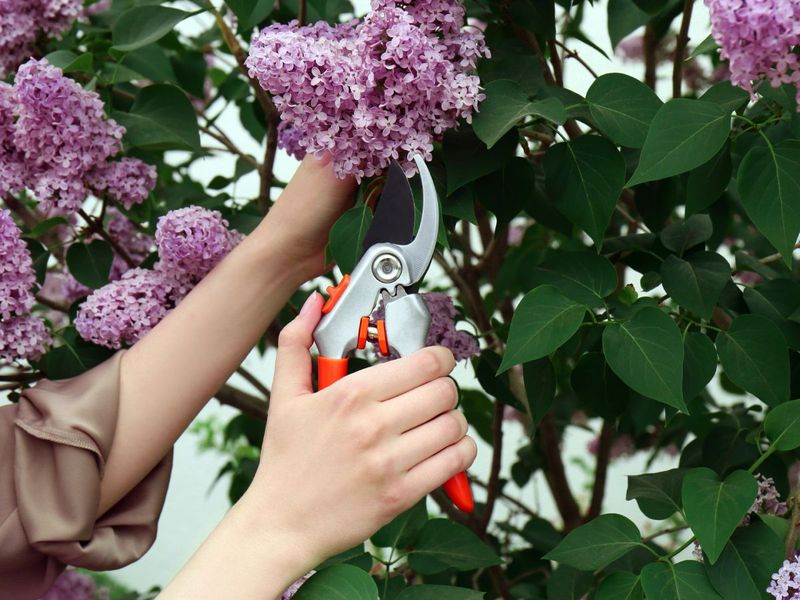
Lilacs bloom on old wood. That phrase has real consequences for when you prune.
The buds that will open next spring are already forming on this year’s new growth during summer and early fall, which means any pruning done in late summer, fall, winter, or early spring has a good chance of removing those buds before they ever open. UNH Extension’s springtime pruning guidance makes this timing explicit: prune right after flowering to protect next year’s display.
In practice, that window is short but easy to hit. When the last flowers fade and the petals begin to drop, that is the moment to act.
You can remove the spent flower clusters first if you want to tidy the shrub and reduce seed formation, then move on to structural cuts. Oregon State Extension recommends removing dead, damaged, crossing, weak, and very old stems as part of this post-bloom session, which keeps the work focused and purposeful rather than reactive.
A different timing exists for severe rejuvenation: late winter or early spring, just before growth resumes. That schedule is sometimes suggested for drastic cutbacks because the plant’s structure is easy to see without leaves.
The trade-off is clear, though: you will lose that season’s flowers. These two timings serve different goals, and choosing between them means deciding whether preserving some spring bloom matters more than faster structural renewal.
Whatever timing you choose, tool hygiene affects the outcome. Use a sharp pruning saw on stems thicker than about an inch, and make clean removal cuts at the base without leaving long stubs.
University of Maryland Extension recommends sanitizing tools between plants, particularly when cutting out diseased wood, to avoid spreading pathogens from one stem to the next.
Use staged renewal to rebuild the shrub from the ground up
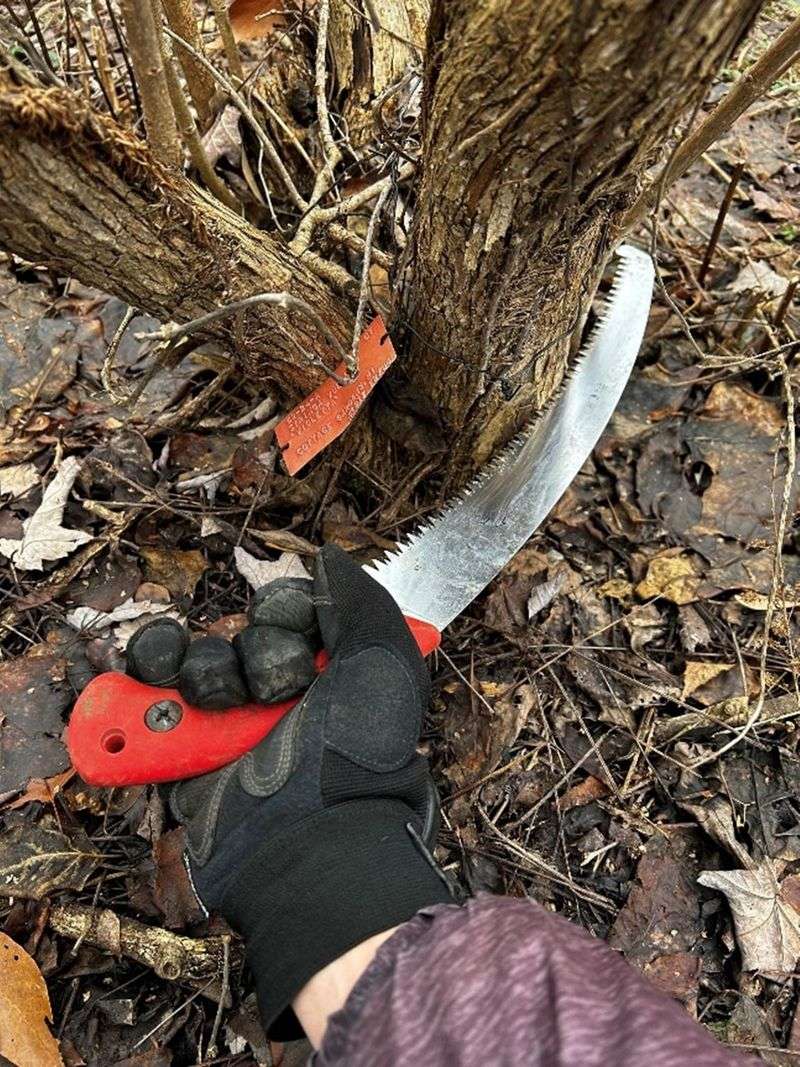
Staged renewal is the preferred reset for most mature, leggy lilacs, and the method is more straightforward than it sounds. After the flowers fade, walk around the shrub and identify the oldest, thickest stems.
These are typically the ones with the roughest, most furrowed bark, the greatest diameter, and the least productive side growth. Also flag any stems that are dead, crossing, rubbing, crowded toward the center, or growing in an awkward direction.
From that group, remove roughly one-third of the oldest and most problematic stems by cutting them completely at ground level. Oregon State Extension’s lilac pruning recommendations describe this one-third-per-year approach as a practical way to open the shrub gradually while keeping younger, vigorous, well-placed stems intact.
Those younger stems continue to flower during the renewal process, so you are not trading all of your blooms for structure at once.
Repeat the process after flowering in the following year, targeting the next group of old, unproductive, or poorly placed stems. By the third year, you will have cycled through most of the aging framework and replaced it with younger growth.
Throughout this process, keep stems that are well spaced, oriented toward the outside of the shrub, and free of damage.
Ground-level removal cuts open the center of the shrub to light and air, which is exactly what encourages new shoots to emerge from the base. Penn State Extension explains why topping every tall cane at the same height does the opposite: heading cuts leave the old woody framework in place and stimulate a flush of dense outer growth that shades the interior even more heavily.
The base stays bare, the top gets bushier, and the problem compounds rather than resolves. Removing stems at the ground is slower work, but it is the cut that actually changes the structure.
Reserve a full rejuvenation cut for suitable, severely overgrown lilacs
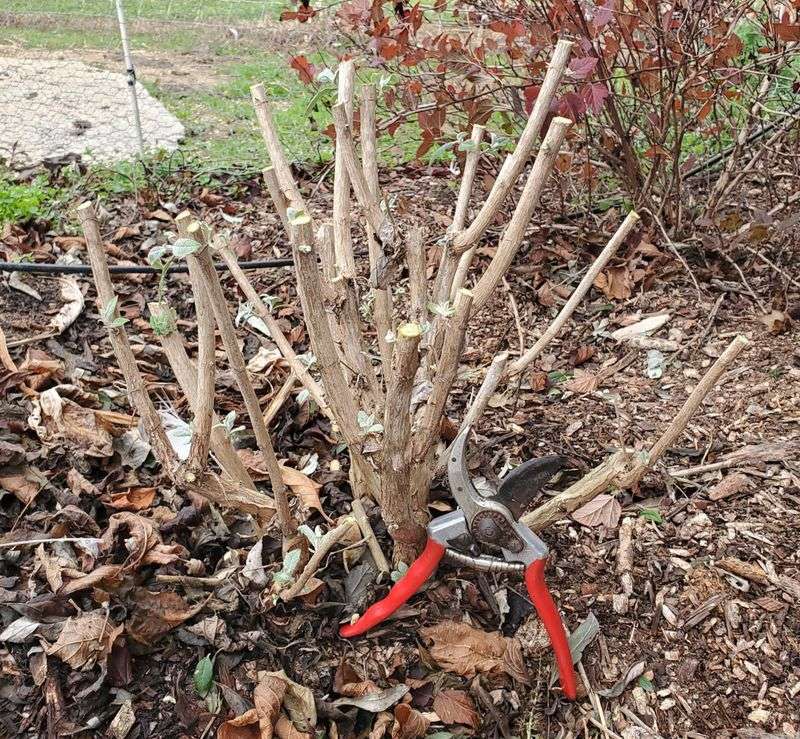
Some lilacs have been neglected for so long that staged renewal feels inadequate to the scale of the problem. For a genuinely massive, healthy shrub with a dense tangle of old canes, cutting the plant nearly to the ground or to a very low framework is an option.
Iowa State Extension’s guide to pruning large overgrown shrubs describes this approach as a way to encourage vigorous new growth from the base when the existing structure has become too crowded and unproductive to renew gradually.
The trade-off needs to be stated plainly. A full rejuvenation cut will eliminate or greatly reduce the next season’s flowers, because the buds that would have opened were on the wood you just removed.
Virginia Tech Extension’s lilac publication notes that substantial flowering after this treatment can take several years to return, and some sources report that a lilac may need three to five years before it blooms well again. Anyone choosing this route should go in expecting a multi-season gap, not a quick turnaround.
There is a critical check to make before cutting anything to the ground: determine whether the shrub is growing on its own roots or grafted onto a rootstock. Colorado State Extension’s pruning guidance warns specifically that cutting a grafted named cultivar to the ground can cause the regrowth to come from the common lilac rootstock rather than the selected variety.
Look for a graft union near the base of the plant, a slight swelling or change in bark texture where two different stems were joined. If you find one, a full cutback is not safe for preserving the cultivar.
Also consider the overall condition of the plant honestly. A lilac with extensive dead wood, heavy pest damage, or widespread disease may not respond reliably to rejuvenation.
Colorado State Extension cautions that severely compromised shrubs may be better replaced than cut back. If the shrub’s health is genuinely uncertain, a local cooperative extension office or a certified arborist can help you assess whether renewal is realistic.
Thin and train the new basal shoots as they emerge
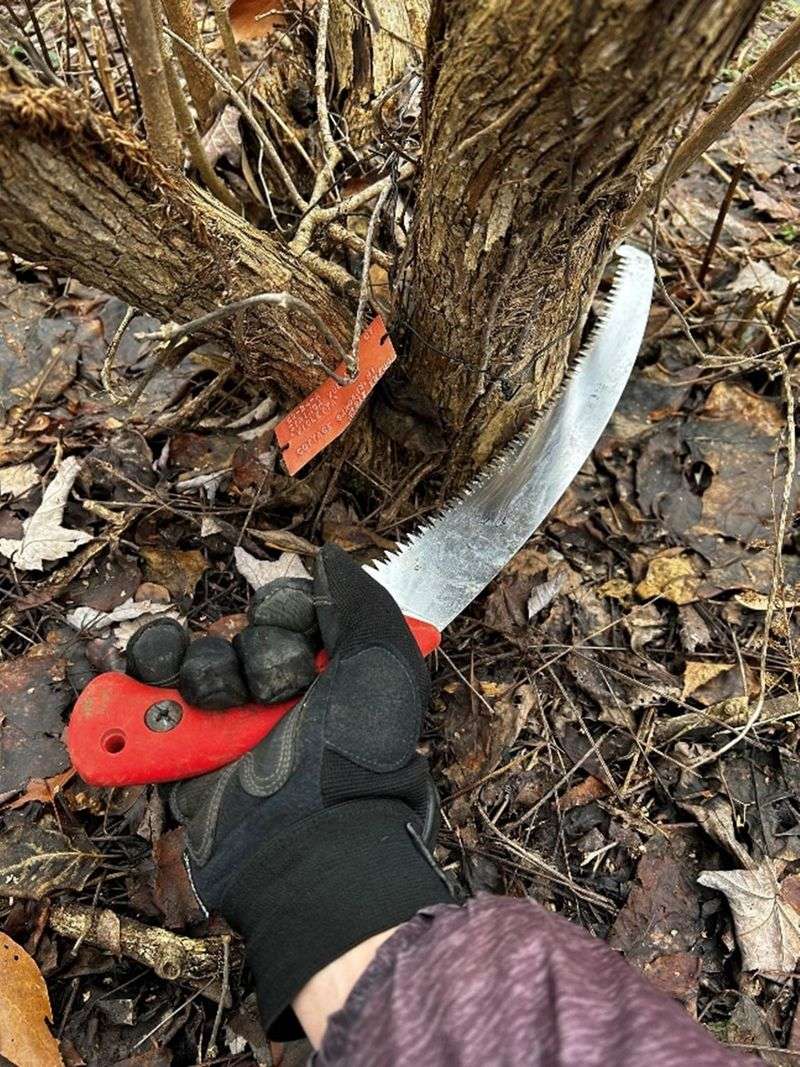
New shoots emerging from the base after renewal pruning are encouraging, but they need attention to become useful. Left on their own, basal shoots grow in a dense, tangled cluster that recreates the overcrowding problem you just cut away.
Selective thinning during the growing season turns that raw regrowth into the beginning of a real framework.
Look for shoots that are growing upright, well spaced from their neighbors, and oriented toward the outside of the shrub where they will receive the most light. Keep the strongest candidates and remove the rest by cutting them at the base.
Penn State Extension’s shrub pruning advice emphasizes selecting for well-placed stems rather than simply keeping the tallest or most vigorous ones, because placement determines whether the future framework will be open and productive or crowded again within a few years.
Oregon State Extension reinforces that the goal during this phase is developing a balanced structure, not rushing height. Shoots that are crossing, rubbing, growing toward the center, or competing directly with a well-placed neighbor should come out early, while they are still easy to remove.
Supporting conditions matter during recovery. Iowa State Extension notes that lilacs need consistent moisture during dry periods but perform poorly in persistently wet soil.
Water during drought, keep the area around the base free of competing grass and weeds, and hold off on high-nitrogen fertilizer, which will push leafy growth at the expense of the flower buds you are working to develop. The height and bloom distribution of the renewed shrub will sort itself out over multiple seasons, not in a single summer.
Expect a younger framework, not an instant eye-level bouquet
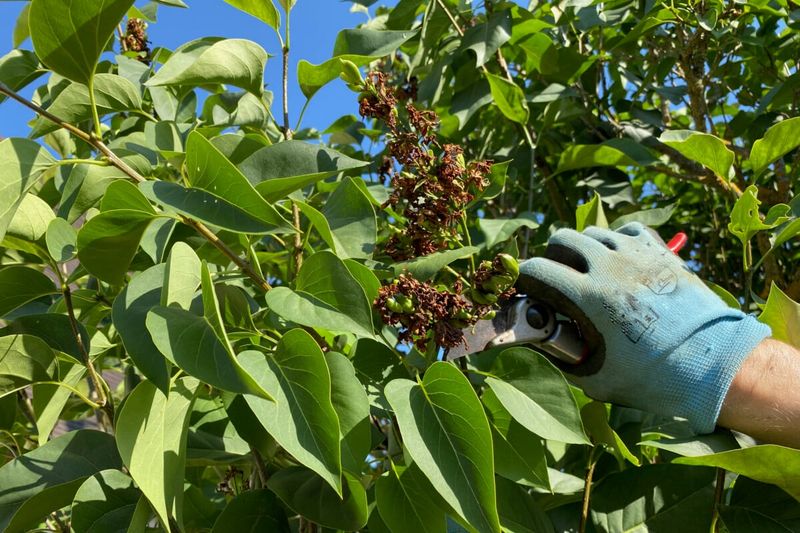
Pulling all of this together into a practical decision is straightforward once the expectations are honest. First, verify the cause: check sun exposure, soil conditions, fertilizer history, and the health of the stems before assuming an overgrown framework is the only problem.
If the diagnosis points to an aging, leggy structure on an otherwise healthy shrub, post-bloom pruning is the right next step.
For most mature lilacs, staged renewal is the safer path. Remove about one-third of the oldest stems at ground level right after flowering, preserve the younger and better-placed canes, and repeat over the following years.
Oregon State Extension’s approach to lilac renewal keeps some flowers coming each season while the framework gradually changes. Reserve a near-ground rejuvenation cut for a healthy, severely overgrown shrub where you are prepared to accept reduced or absent flowering for potentially several years, as Iowa State Extension’s overgrown shrub guidance makes clear.
No pruning method guarantees flowers at a specific height or on a fixed timetable. New basal shoots need thinning, training, and time before they carry reliable blooms, and cultivar, light levels, weather, and plant health all influence the pace of recovery.
Penn State Extension frames the realistic payoff well: the goal is a younger, more open framework with better long-term structure. A shrub with that kind of foundation is simply a better-positioned plant, one that may eventually put flowers where you can actually enjoy them.