
Deer Keep Skirting The Edge Of Your North Carolina Yard Because These Native Plants May Make It Less Appealing
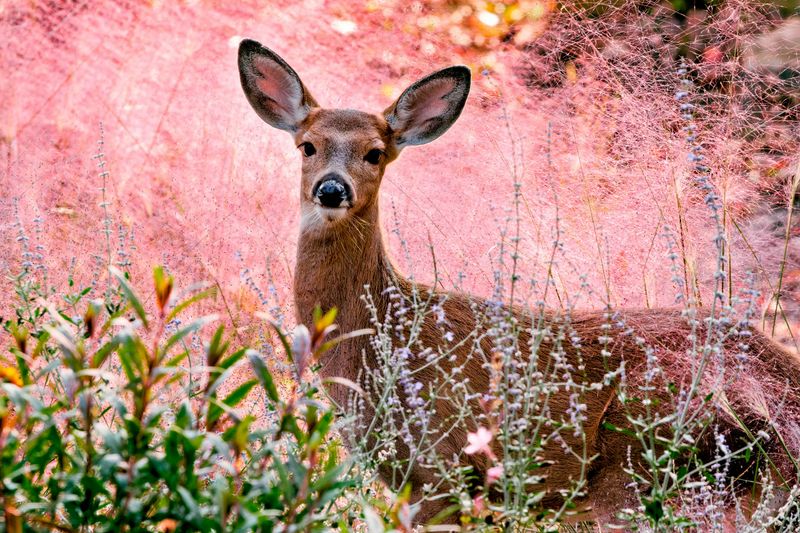
Watching deer trace the same line along your yard’s edge and then walk away can feel like a small victory, but the reason behind it is probably more complicated than it looks. Deer movement depends on food availability, cover, season, herd density, and learned routes, so a border that seems to hold them off one week may not hold the next.
Still, there is something useful in that pattern: it points toward a planting strategy that may make your yard edge less rewarding browse, even if it cannot guarantee deer stay out for good.
A Skirted Yard Edge Offers a Clue, Not a Diagnosis
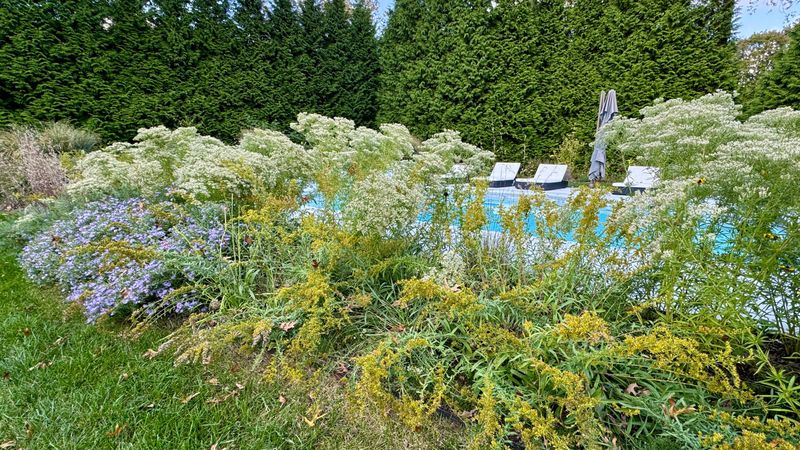
Deer tracing the perimeter of a yard without stepping in can look like proof that the plants are working. That reading is tempting, but it gives the border more credit than the evidence supports.
NC State’s wildlife extension handbook notes that deer behavior reflects a mix of food availability, cover, season, herd density, and learned feeding routes, none of which a homeowner can fully see from the back window.
A yard that backs up to woods or dense cover faces more browsing exposure than an isolated suburban lot, regardless of what is planted along the edge. Deer feed primarily around dawn, dusk, and at night, and they tend to return to routes that have been rewarding before.
If a neighboring yard offers easier food, your border may simply be getting bypassed rather than repelled.
That does not make the observation worthless. University of Georgia Extension’s guide to deer-tolerant ornamentals frames the practical goal clearly: the aim is to make a planting less rewarding, not to construct an invisible wall.
Treating the skirted edge as a reasonable starting hypothesis, rather than a confirmed diagnosis, keeps expectations honest.
The useful takeaway is that you can test a lower-browsing planting strategy along a vulnerable edge without claiming that one border explains every deer’s movement. Choose plants that deer tend to sample less often, match them to your site, and protect new growth while it establishes.
Whether deer avoid the area because of the plants, a neighbor’s garden, or a shift in their usual route, you will still end up with a more resilient yard.
Why Some Plants Become Less Rewarding Browse
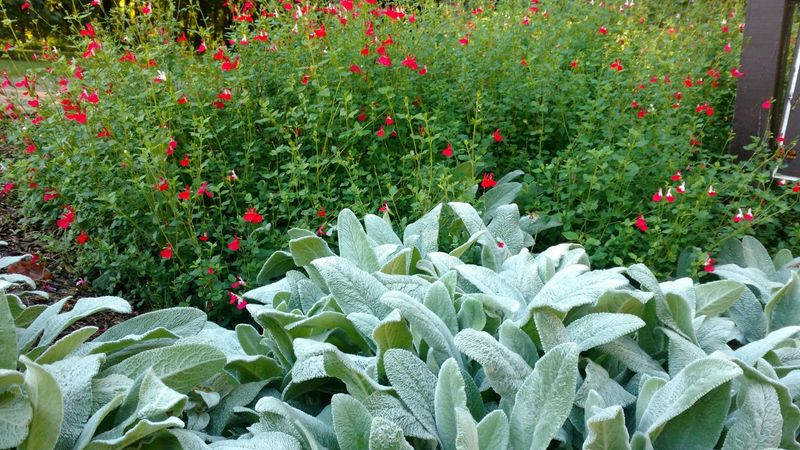
Deer are selective feeders, and certain plant traits make a stem or leaf less worth the effort. Plants with bitter or toxic compounds, strong or unfamiliar aromas, rough or hairy foliage, and tough or leathery textures tend to rank lower on a deer’s list of preferred food sources.
NC State’s wildlife handbook describes these physical and chemical characteristics as the main reasons some plants receive less browsing pressure than others.
Lower preference does not mean guaranteed avoidance. A plant that deer rarely touch during a mild fall with abundant mast may be sampled regularly during a dry summer or a winter with poor food supplies.
Drought, pregnancy, high deer density, and poor acorn or berry crops can all push deer toward plants they would normally pass up. The UGA deer-tolerant ornamentals guide makes the distinction plain: a plant rated as less preferred under normal conditions can still be browsed heavily when deer are hungry enough.
Reading plant appearance alone will not tell you how your specific deer herd will respond. A shrub with aromatic foliage might deter deer in one neighborhood and be ignored as a deterrent in another where the local herd has grown accustomed to it.
The practical value of knowing which traits reduce palatability is that it helps you choose candidates with a track record of lower damage, not that it lets you predict any individual deer’s behavior.
NC State’s native plants handbook reinforces that even plants listed as deer-resistant can be browsed in areas with high deer populations, citing phlox and Virginia sweetspire as examples of natives that get hit hard in heavily pressured yards. Knowing why some plants are less rewarding helps you build a smarter border, but the deer always get a vote.
North Carolina Natives to Consider for Different Layers
Several North Carolina natives have a documented track record of receiving less deer damage than many popular garden plants. None of them is deer-proof, and each one has specific site requirements that determine whether it will thrive long enough to do any good.
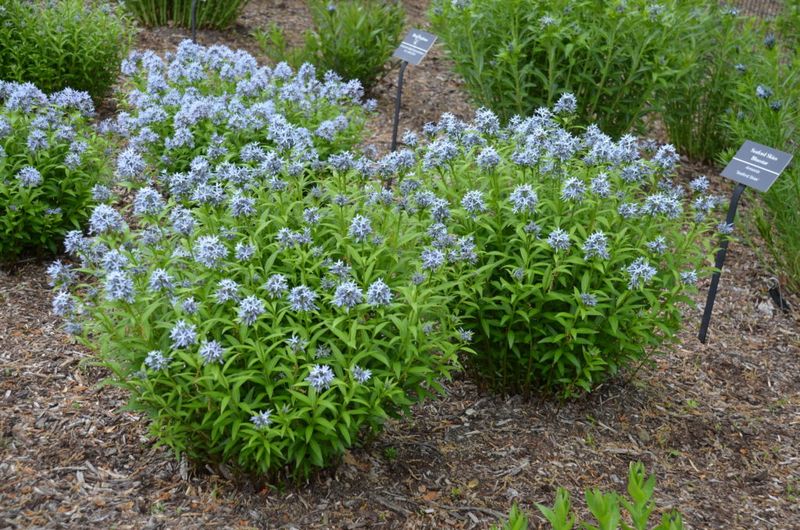
Eastern bluestar (Amsonia tabernaemontana) is one of the stronger candidates. NC State’s plant profile attributes its lower deer preference partly to a toxic white latex in the foliage, which makes the plant unpalatable enough that deer tend to move on.
It grows well in full sun to partial shade and prefers moist to occasionally wet, well-drained soil across the Coastal Plain, Piedmont, and mountains. Eastern bluestar is a plant deer are less likely to eat, not simply one that recovers after being browsed.
Green-and-gold (Chrysogonum virginianum) fills the groundcover layer in shaded or partially shaded spots. NC State rates it as moderately resistant to deer damage, which means damage is possible but tends to be lighter than on more preferred groundcovers.
Its low mat habit makes it useful under shrubs or along shaded edges where taller plants would not suit the space.
Winterberry holly (Ilex verticillata) brings shrub structure and winter fruit to moist, acidic sites. NC State describes it as resistant to deer foraging, but the plant has non-negotiable requirements: consistently moist, acidic, well-drained soil, and separate male and female plants if you want the berries that birds depend on in winter.
Skip it if your site is dry or alkaline.
Southern arrowwood (Viburnum dentatum) is a mid-size native shrub with documented deer resistance. NC State’s profile notes its value to pollinators and birds alongside its lower deer preference, which makes it a productive choice for a border layer that serves multiple purposes beyond just reducing browsing.
Native buckeyes round out the taller shrub or small tree layer. NC State’s native plants handbook lists buckeyes among plants deer tend to avoid unless they are very hungry, placing them in the same conditional category as the others: useful under normal pressure, but not a guarantee when food is scarce.
Match the Border to the Yard You Actually Have
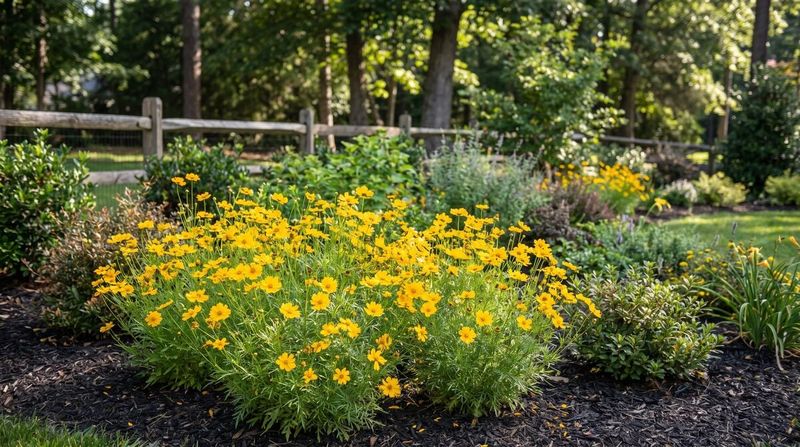
Choosing plants with a lower deer-damage record only helps if those plants can actually survive in your yard. A native that thrives in the mountain cove forests of Buncombe County may perform poorly in a hot, dry Piedmont clay, and a Coastal Plain species adapted to sandy, acidic soils may struggle at elevation.
NC State’s native plants handbook is clear that North Carolina natives are not interchangeable across regions: soil moisture, drainage, light, mature size, and growth habit all determine whether a plant will establish and persist.
Start by identifying your region and then your specific microsite. A yard edge in full sun with well-drained clay calls for different plants than a shaded border over a wet swale.
Eastern bluestar handles moist, well-drained soil from the coast to the mountains, while winterberry holly needs consistently moist, acidic conditions and should not be placed on a dry slope regardless of its deer-resistance rating. Green-and-gold suits shaded or partially shaded spots but may thin out in full sun.
Southern arrowwood is more adaptable across light and moisture conditions, which is part of what makes it a practical choice for mixed borders.
Proximity to woods matters too. NC State’s landscaping for wildlife guide and the wildlife handbook both note that yard edges beside forest or dense cover typically face higher browsing pressure than plantings in open suburban settings.
A border at a woodland edge may need stronger protection measures during establishment, even when the plants chosen have good deer-tolerance records.
Matching plant to site also affects long-term maintenance. A stressed plant growing outside its preferred conditions is more likely to produce weak new growth, which tends to be more attractive to deer than the tough, mature foliage of a well-established specimen.
NC State’s wildlife handbook notes that a poorly matched plant cannot provide a durable border, making site selection as important as species selection from the start.
Build Wildlife Value Without Promising Deer Protection
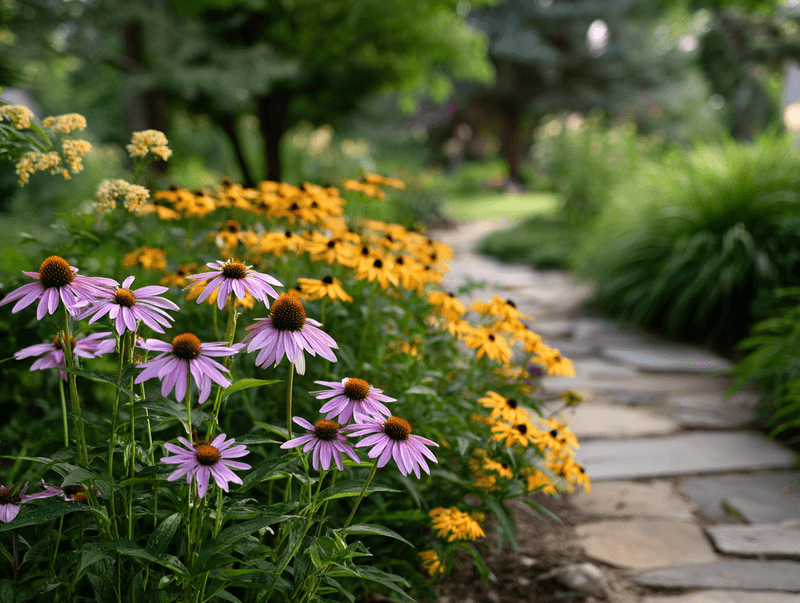
A yard planted with diverse, site-adapted natives offers real benefits to pollinators, birds, and other wildlife regardless of what it does or does not do for deer browsing. NC State’s landscaping for wildlife guide recommends mixing plant layers, including groundcovers, herbaceous perennials, and shrubs, to provide food sources and shelter across seasons.
That layered approach is good stewardship; it just should not be sold as a superior deer-deterrent strategy compared to a simpler planting.
Being native to North Carolina does not make a plant deer-resistant. The ecological case for natives, supporting regional insects, birds, and food webs, is a separate argument from deer preference.
NC Wildlife’s suburban backyard habitat guidance encourages native plantings for wildlife support without suggesting that nativeness confers browsing protection. Some beloved natives, including garden phlox and Virginia sweetspire, are browsed heavily in areas with high deer populations, as NC State’s native plants handbook specifically notes.
Diversity in a planting supports wildlife by spreading food and cover across multiple species and bloom times. If one plant in the mix gets browsed, others can continue providing habitat value.
That resilience is worth pursuing, but framing it as a deer-deterrence technique sets up a false expectation: deer do not stop eating a border because it contains many species.
Keep invasive plants out of the strategy entirely. Japanese honeysuckle, autumn olive, Chinese privet, English ivy, and Asian wisterias are among the introduced species that NC State identifies as invasive or problematic in North Carolina forests and yards.
Replacing them with natives improves habitat for the wildlife you want to support, and NC Wildlife’s habitat resources reinforce that invasive removal is a foundational step in any stewardship planting, not an optional add-on.
Protect New Plantings Before They Can Stand Up to Browsing
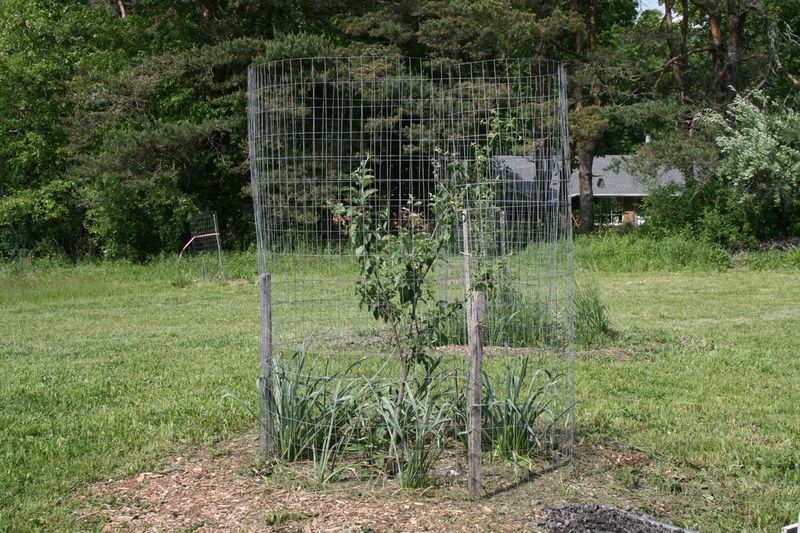
Tender new growth is often more attractive to deer than the mature foliage of the same plant. A shrub that deer rarely sample once it is established may get clipped repeatedly during its first season in the ground, when its stems are soft and its root system is too shallow to support regrowth after repeated damage.
NC State’s wildlife handbook is direct about this: recently planted beds may need cages, mesh, or temporary fencing even when the mature plant is considered deer-tolerant.
Repellents can help during establishment if they are used correctly. Apply them before deer establish a feeding habit at the site, because once deer learn that a spot offers food, repellents have a harder job.
Reapply after rain and whenever significant new growth appears, since new tissue is not covered by the previous application. UGA Extension’s deer-tolerant ornamentals guide emphasizes that repellent effectiveness depends heavily on weather, deer appetite, and consistent reapplication timing.
Always follow the product label, especially around edible plants, children, and pets.
Two approaches that should be avoided entirely: human hair and mothballs. NC State states there is no scientific evidence that human hair reliably deters deer, and its effectiveness is inconsistent at best.
Mothballs are a more serious concern. EPA pesticide label guidance and EPA consumer safety resources make clear that using mothballs at fence lines or other outdoor sites not specified on the label is unlawful.
The National Pesticide Information Center also notes that mothballs pose inhalation and poisoning risks to people, pets, and wildlife.
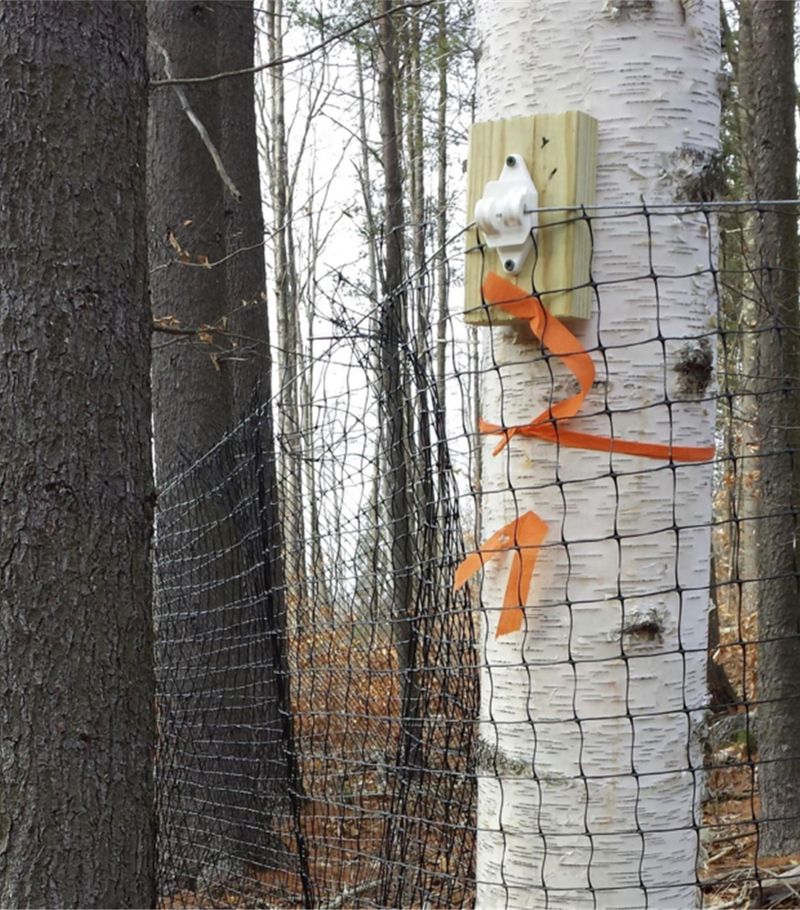
For long-term, dependable exclusion of a high-value planting, fencing is more reliable than any repellent or plant selection strategy. NC Wildlife’s fencing guidance states that a deer-proof fence generally needs to be at least 8 feet high and made from strong, difficult-to-penetrate material.
Missouri Extension’s deer management guide echoes that shorter fences may reduce damage around small beds or individual plants but do not provide dependable full exclusion across a yard perimeter.
Judge Success by Reduced Damage, Not Deer Absence
A realistic measure of progress after planting a less-preferred native border is whether browsing decreases over time, not whether deer stop appearing in the yard. Deer may still pass through, sniff around, and occasionally sample plants they normally avoid.
NC State’s wildlife handbook notes that deer pressure changes with drought, poor mast crops, winter scarcity, pregnancy, and local deer density, so a border that holds well in October may face heavier sampling in February.
Two hollies worth a careful look when evaluating plant choices: inkberry (Ilex glabra) and possumhaw (Ilex decidua). Inkberry appears on general lists of plants deer tend to avoid, but NC State’s plant-specific inkberry profile notes that its leaves are eaten by white-tailed deer and rabbits, a qualification that makes calling it reliably deer-resistant an overstatement.
Possumhaw is worth noting for a different reason: NC State’s possumhaw profile says its fruit attracts deer alongside birds and other wildlife, so planting it specifically to reduce deer visits near a vulnerable area can work against you.
When damage keeps escalating despite plant selection, establishment protection, and repellents, stronger exclusion is the next step. Serious or persistent problems are best directed to the NC Wildlife Resources Commission or a certified Wildlife Control Agent, since permits may be required for deer removal and trapping or relocating deer on your own is not a legal or practical homeowner solution.
A native border that reduces browsing pressure, even partially, is still a yard that works harder for wildlife and requires less replanting each spring.