
A Box Turtle Digging In Your North Carolina Fall Garden Is Getting Ready To Overwinter Right There
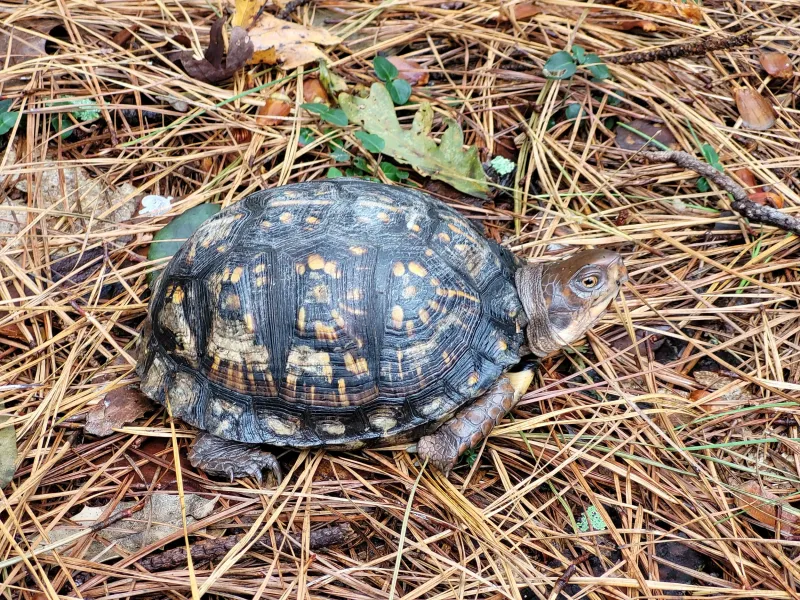
Spotting a box turtle scratching and digging in your fall garden can stop you in your tracks, and it should. That behavior may mean the turtle is searching for a place to wait out the winter right in your backyard.
Before you grab a shovel, move the turtle, or keep raking leaves over that patch, there are a few things worth knowing about what is actually happening and how to help without making things worse.
Why the digging may be winter-shelter preparation
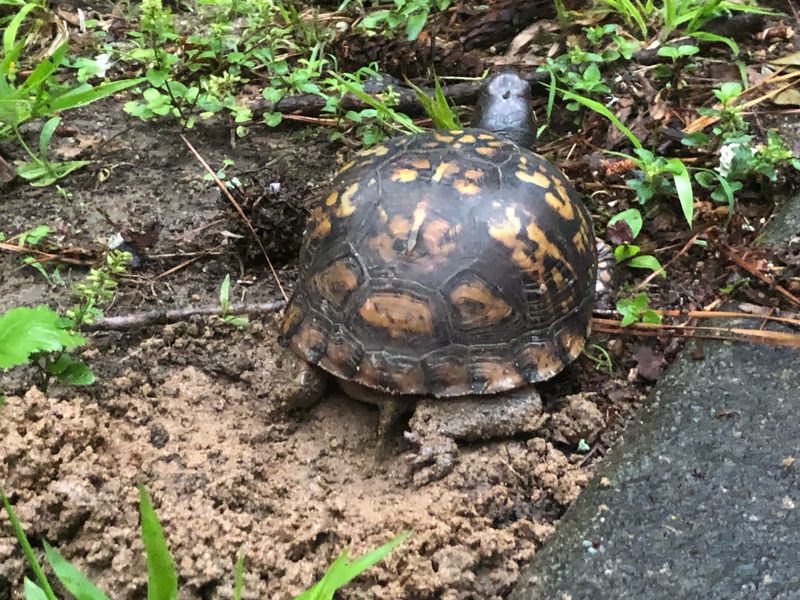
Finding a box turtle nosing into the soil of your fall garden is a genuinely interesting moment, and the most honest thing to say about it is this: the turtle may be preparing an overwintering refuge, but one look at a digging turtle cannot prove that is its plan or guarantee it will stay in that exact spot through February. Treat the site as potentially important and leave it alone, but hold off on assuming you have mapped out the turtle’s entire winter.
Eastern box turtles generally become dormant during the colder months, settling into soil, leaf litter, or other sheltered spots as temperatures drop. The U.S.
Forest Service species review for eastern box turtles describes winter dormancy beginning roughly in October or November, with emergence returning around March, while noting that weather variation shifts those windows considerably. Reptile dormancy is sometimes called brumation rather than hibernation, and the distinction matters: box turtles do not enter the deep, unresponsive sleep that a bear or groundhog does.
They can rouse during warm spells and may adjust their position as conditions change.
Box turtles also dig for reasons other than overwintering. They make shallow forms for daytime rest, seek moist soil during dry or hot stretches, and occasionally dig for nighttime shelter with no intention of staying put.
So while late-fall digging is consistent with winter-shelter preparation, it is not a guaranteed signal of that purpose. The practical takeaway is straightforward: NC Wildlife’s eastern box turtle profile supports leaving the animal and its immediate surroundings undisturbed, and that advice holds whether or not the turtle ends up spending the whole winter there.
North Carolina weather makes the timing variable
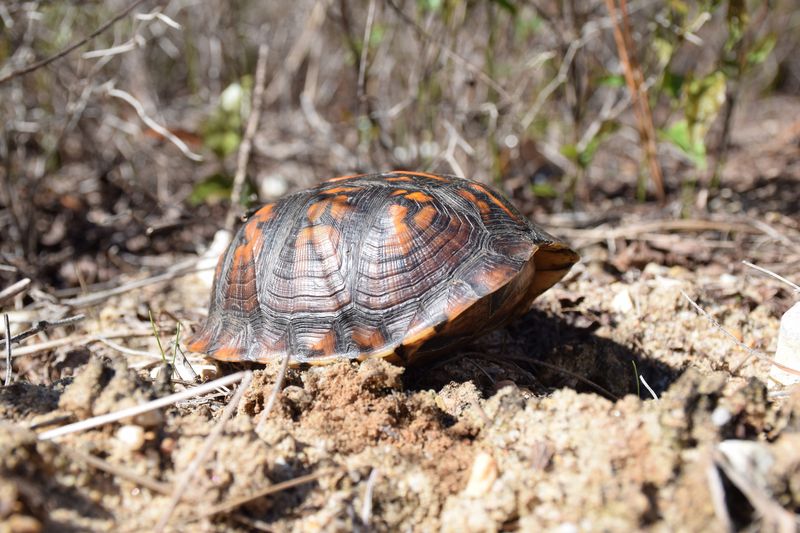
Eastern box turtles live across all of North Carolina, from the sandy Coastal Plain through the rolling Piedmont and into the cooler hollows of the Blue Ridge. NC Parks’ reptile checklist confirms the species throughout the state, using hardwood forests, floodplains, open fields, shrublands, pine stands, and human neighborhoods alike.
A garden, whether it is tucked behind a Raleigh bungalow or edging a mountain property in Watauga County, sits well within a box turtle’s normal range.
The broad October-to-November window for the shift toward winter dormancy is a starting point, not a hard rule. A warm stretch in late October can keep turtles active in the Piedmont long after a mountain turtle has settled in for the season.
Conversely, an early cold snap in the mountains can push the timeline forward by several weeks. NC Wildlife’s species profile notes that activity is tied closely to temperature and that turtles have been documented in every month of the year across the state, which means “fall” describes a tendency, not a precise biological switch that flips on a calendar date.
The Coastal Plain’s milder winters mean a turtle there may remain active or semi-active longer than one in the mountains, where hard frosts arrive earlier and the soil freezes more deeply. The Forest Service species review emphasizes that weather-related variation is the norm rather than the exception.
For a North Carolina homeowner, the useful takeaway is that a turtle digging in September in the mountains and one digging in November on the Coastal Plain may both be responding to the same seasonal cue, just on different local schedules. Fall gives you a helpful clue that shelter-seeking is plausible, but the turtle’s behavior and the local weather are better guides than the date on the calendar.
Places a box turtle may use for winter shelter
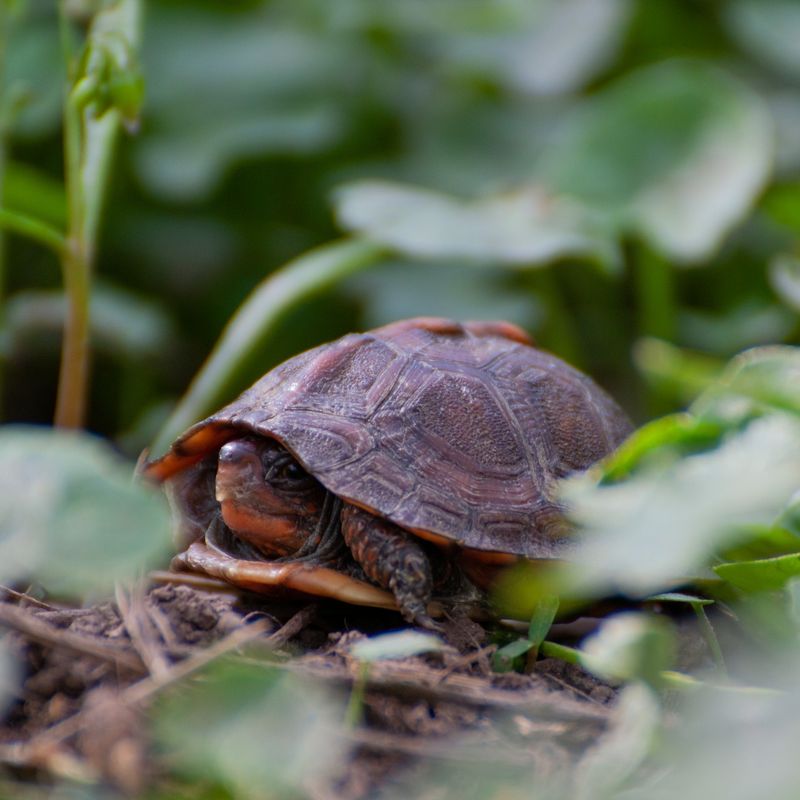
Box turtles are not particularly picky about the exact structure of their winter shelter, but they do need certain conditions: soft substrate they can work into, protection from freezing temperatures, and enough moisture to prevent desiccation. The Forest Service review describes a range of overwintering sites that includes loose soil, deep leaf litter, natural depressions in the ground, stump hollows, root masses, thick brush, woody debris piles, and existing burrows dug by other animals.
A garden often has several of these features within a few feet of each other, which is part of why turtles turn up in yards at all.
The depth at which a turtle settles varies widely and should not be thought of as fixed. Some individuals rest just below the surface under a thick mat of leaves, while others work their way deeper as temperatures fall further.
A turtle may start shallow and dig progressively deeper over several weeks as winter tightens its grip. Expecting a single universal burrow depth would be misleading; the turtle adjusts to what the local soil and weather demand.
Recognizing the full microhabitat worth protecting is just as important as noting where the turtle is sitting right now. The animal itself, the loosened soil around it, and all the surrounding cover matter.
A leaf pile two feet away may be what keeps that patch from freezing. A mossy log nearby may have created the depression the turtle is using.
Woody debris and root masses are not yard clutter in this context; they are structural components of the shelter. Protecting the turtle means protecting that whole small patch, not just the square foot directly beneath it.
A fall digging site is not automatically a nest
Not every patch of disturbed soil in a fall garden has the same story behind it. Box turtles dig for several different reasons, and sorting out the possibilities helps you respond appropriately rather than either ignoring something important or overreacting to something ordinary.
The most common non-overwintering explanations for digging include making a shallow form for a few hours of daytime rest and pressing into moist soil during a dry stretch to rehydrate. Both behaviors look like digging from a distance and can happen at any time of year.
Nesting is the other possibility that sometimes comes to mind, but the calendar makes it far less likely in late fall. The Forest Service review and NC Wildlife’s eastern box turtle page both place the typical nesting window from May through July in North Carolina.
A turtle digging in September, October, or November is operating well outside that normal nesting period, which makes shelter-seeking a more plausible explanation. That said, season alone is not a definitive answer; the behavior, the depth of the digging, and the time of day can all offer additional clues, even if none of them is conclusive on its own.
One situation that warrants extra caution is a disturbed patch of bare soil that you did not see a turtle create. Late-laid eggs or hatchlings can overwinter inside a nest through the winter, buried and invisible from above.
Excavating a suspicious patch to see what is there can damage eggs or injure hatchlings. Leave undisturbed any patch of bare or loosely turned soil you find in the fall garden, regardless of whether you saw a turtle working on it.
NC Wildlife is clear that disturbing eggs can cause harm, and that protective mesh over a confirmed nest must be temporary and checked daily so hatchlings are never trapped.
Leave the turtle’s existing microhabitat intact
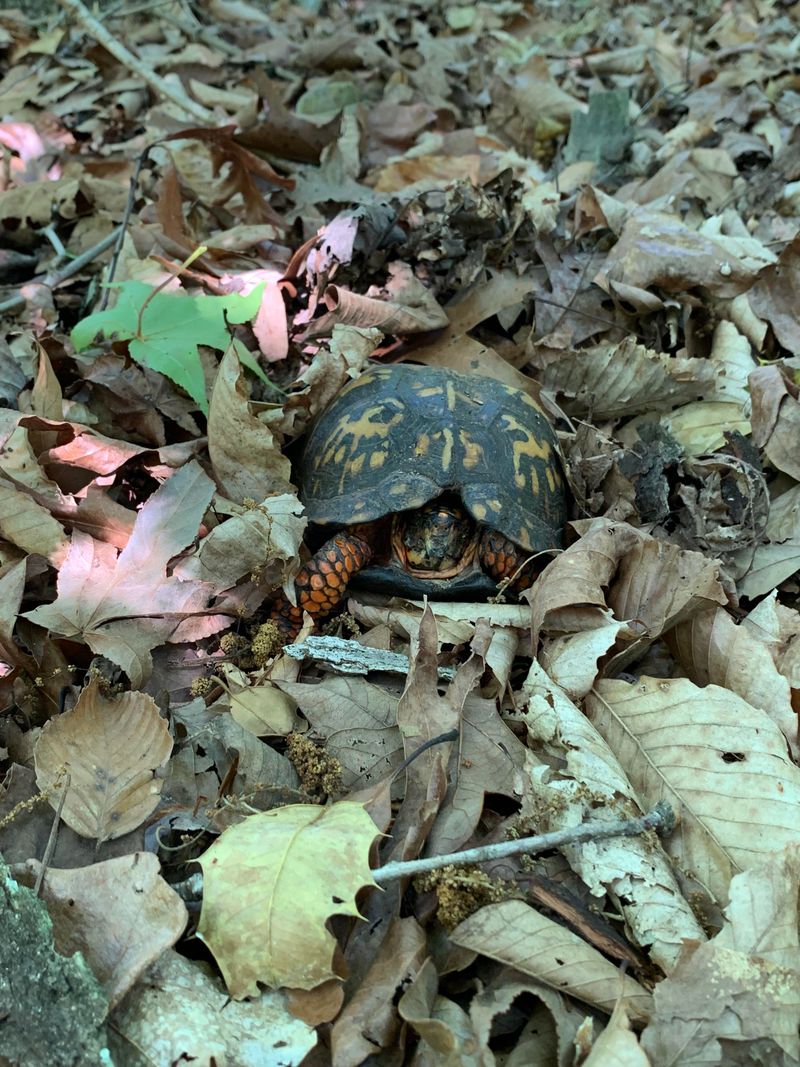
The clearest, most practical thing a homeowner can do when a box turtle turns up digging in the fall garden is also the simplest: stop doing things near that spot. Do not dig up the area to check on the turtle.
Do not pick the turtle up and move it to what looks like a better location. Do not landscape through the patch, transplant nearby shrubs, or pull roots in the surrounding few feet.
Each of those actions disrupts conditions the turtle may be relying on, whether or not it ends up spending the entire winter there.
NC State Extension’s guide to backyard reptiles and amphibians recommends reducing mowing, leaving natural areas, and giving wildlife room to use the habitat they select. The existing leaf litter around the digging site is doing real work: it insulates the soil, holds moisture, and provides the loose, layered cover a turtle can work into.
Woody debris nearby creates shelter structure. Roots and natural depressions anchor the microhabitat.
None of that needs your help to function; it just needs you to leave it alone.
A common impulse is to add a thick pile of fresh leaves directly on top of the turtle to help it stay warm. Skip that.
Piling material on the animal can disturb it and is not necessary; the turtle will use the cover that is already there. The Forest Service review supports protecting the microhabitat as a whole rather than intervening with the animal directly.
If fall yard work is on your schedule, postpone anything planned for the area around the digging site until you have not seen the turtle for a couple of weeks and temperatures suggest it has settled in for the season. Preserving that quiet patch costs you very little and gives the turtle the conditions it chose for itself.
Keep mowing, burning, and pets away
Leaving the microhabitat physically intact is the foundation, but a few specific yard activities can cause harm even without anyone touching the turtle directly. Lawn equipment is one of the clearest hazards.
A mower run over a turtle that is resting just below a leaf mat or barely below the soil surface can cause serious injury. The Forest Service review identifies mowing equipment and land clearing as significant threats to box turtles, and that risk does not disappear once the weather cools.
Keep mowers, string trimmers, and any heavy digging or grading equipment away from the suspected shelter area through the winter and into early spring, when the turtle may still be in or near the same spot.
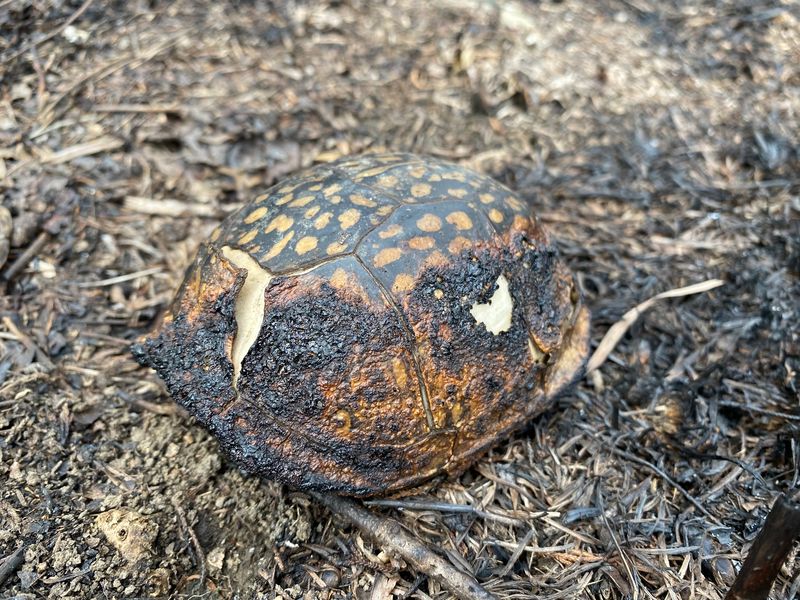
Burning is a more serious concern. USGS research on the direct and indirect effects of fire on eastern box turtles found that fire can directly kill or injure box turtles and that turtles exposed to prescribed fire had lower annual survival rates.
Fire-related mortality in that research occurred during both the active season and in September and October, which overlaps with the period when turtles are settling into or moving toward winter shelters. Do not burn brush piles, leaf accumulations, or garden debris near a suspected overwintering site.
That caution applies through late fall, not only in summer. The evidence is specific to the conditions studied; not every fire situation carries an identical documented risk, but the practical advice for a backyard brush pile near a known turtle is to leave it unburned.
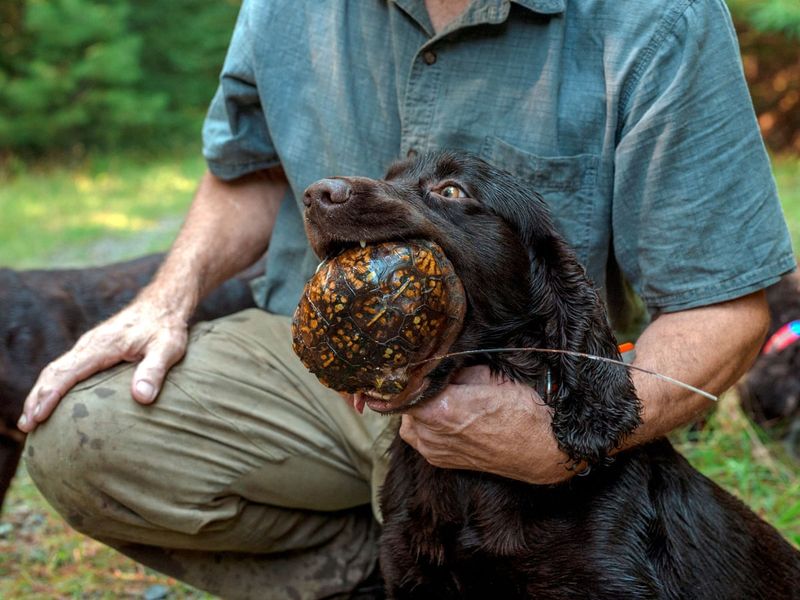
NC State Extension specifically advises controlling household pets because dogs can disturb leaf cover and wildlife habitat. A dog nosing through a leaf pile or digging near a suspected shelter can injure the turtle, scatter its cover, or simply stress it enough to cause it to abandon a carefully selected site.
Keep dogs on a leash or out of the garden area entirely until you are confident the turtle has moved on or is safely dormant well below the surface.
Intervene only for a clear emergency
The leave-it-alone rule covers the vast majority of box turtle encounters in a fall garden, but there are two genuine exceptions where some action is warranted. Knowing the difference between those emergencies and ordinary turtle behavior keeps you from intervening when it is unnecessary and from hesitating when it actually matters.
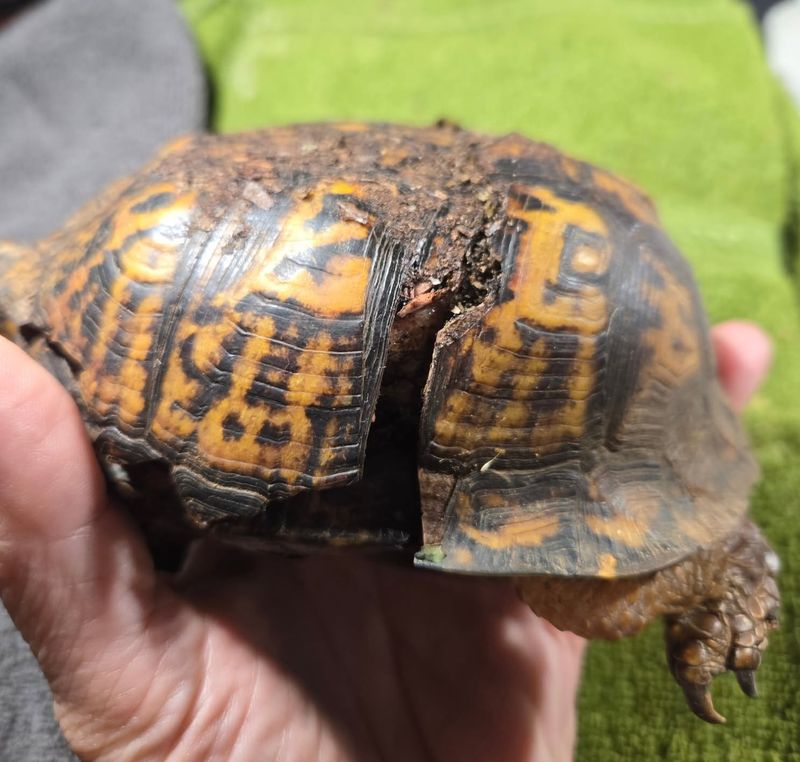
A turtle with a visibly cracked shell, active bleeding, or another obvious serious injury needs professional help, not home care. NC Wildlife’s eastern box turtle page directs people with injured turtles to contact a North Carolina licensed wildlife or reptile rehabilitator rather than attempting treatment at home or keeping the animal indoors.
Taking an injured turtle home without that expertise risks making the injury worse. NC Wildlife’s injured and orphaned wildlife resource can help you locate a licensed rehabilitator near you.
The second exception is a turtle sitting in immediate road danger, such as in an active travel lane. Moving it is appropriate in that situation, but the move should be as small as possible: ideally less than 50 feet, and only to the side of the road toward which the turtle was already traveling.
Box turtles have strong homing instincts and a well-established home range. Moving one to a “better” habitat across town or even across the neighborhood disrupts that range and causes real harm.
A healthy turtle digging in your garden is not in road danger and does not qualify for relocation. Leave it where it chose to be.
Protect the quiet patch and let the turtle choose
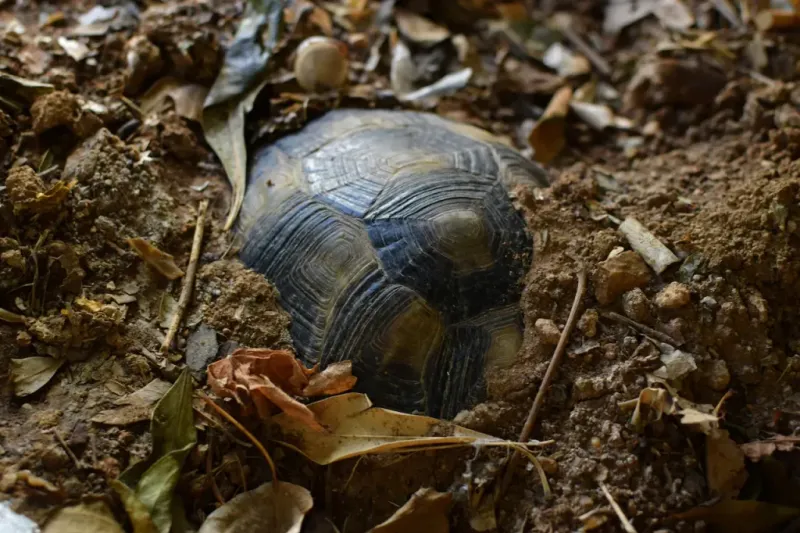
Late-fall digging in your North Carolina garden may well mark a box turtle preparing for winter dormancy, but no single observation can confirm the turtle’s plan or tell you exactly where it will spend the next several months. The Forest Service species review makes clear that overwintering sites, depths, and timing all vary with conditions, and that turtles may adjust their position as temperatures and moisture shift through the season.
The practical response stays the same regardless of that uncertainty: preserve existing leaf litter and woody debris, keep mowers, fire, and pets away from the area, and avoid any digging or landscaping through the suspected shelter. NC State Extension’s backyard wildlife guidance reinforces that leaving natural areas undisturbed is one of the most effective things a homeowner can do for native wildlife.
The turtle found that patch on its own. Doing less is the most powerful thing you can do for it.