
A Woodpecker Keeps Drumming On One North Carolina Tree Because The Bugs Inside Are Feeding It
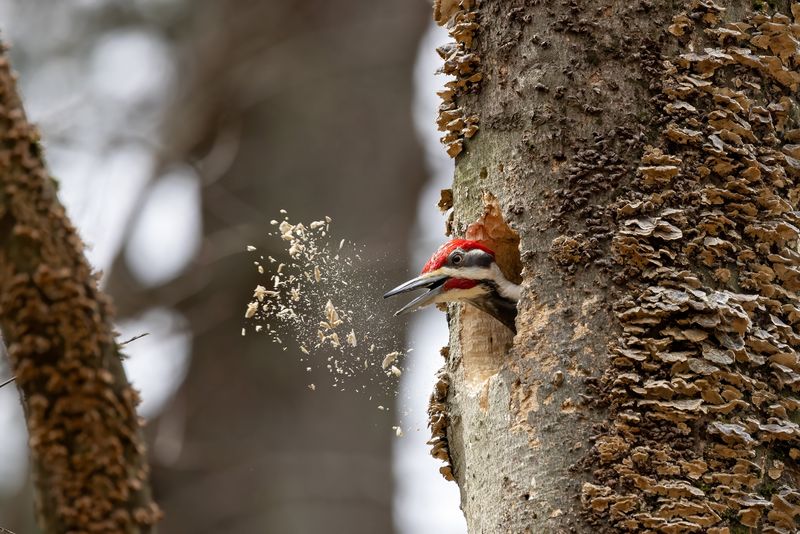
Spotting a woodpecker return to the same backyard tree again and again is one of those yard moments that makes you stop and wonder what is going on beneath the bark. The bird may be finding insects, tapping for sap, or simply using a branch that produces a sound it likes.
Whatever the reason, repeated visits are worth paying attention to, because they can point you toward things about your tree’s health that are hard to see any other way.
Repeated visits are a clue, not a diagnosis
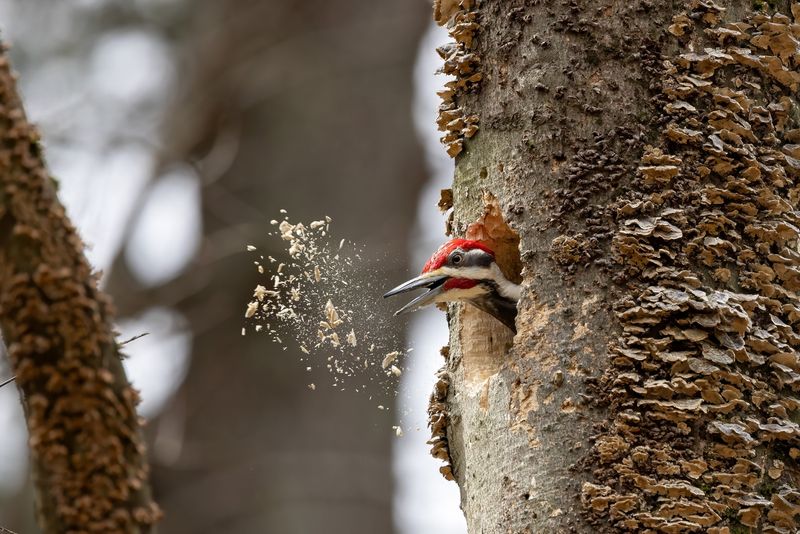
Watching a woodpecker return to the same spot on your tree day after day can feel like the bird is telling you something urgent. The truth is more complicated, and a little more interesting.
Repeated foraging visits do mean the bird has found something worth coming back for, but that something is not necessarily a hidden infestation or a tree on its way out.
Possible reasons include insects beneath the bark or inside the wood, surface prey such as ants or caterpillars, sap, decaying wood that is easy to excavate, a suitable nesting or roosting cavity, or simply a branch that offers good territorial visibility. A research review of bark-foraging woodpeckers in North America found a positive relationship between woodpecker use and boring beetle activity, while also noting that tree species, tree condition, anatomy, season, and surrounding habitat all shape which trees birds choose.
Larger trunks, mid-trunk sections, and dead or deteriorating wood tend to attract more attention, but a healthy tree is not off the menu.
One detail worth keeping in mind: the bird may be revealing a condition that was already there before it arrived. Insects, drought stress, storm damage, or early decay can weaken a tree long before a woodpecker shows up.
The bird’s arrival exposes the situation rather than creating it.
The NC State Extension wildlife handbook lists insects, sap, nesting, and roosting among the reasons woodpeckers use particular trees, reinforcing that no single explanation covers every case. Treat repeated visits as a prompt to look more carefully at the tree, not as a verdict on its health or a signal to act immediately.
Separate communication drumming from feeding
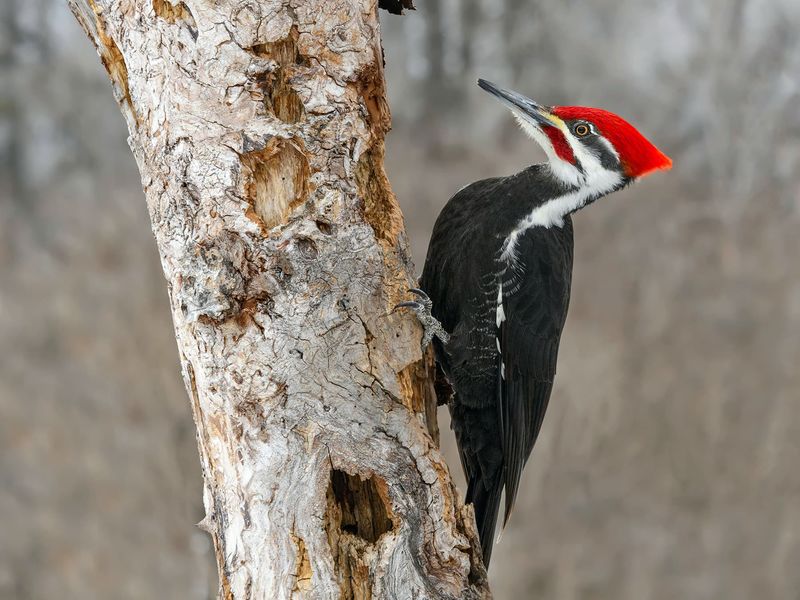
Before you interpret what a woodpecker is doing to your tree, watch the bird itself for a few minutes. The way it moves and strikes tells you more than the holes it leaves behind.
Rapid, loud, extended bursts of strikes on a resonant trunk or branch are almost always communication, not foraging. Cornell Lab of Ornithology describes woodpecker drumming as a fast, evenly spaced rattling sound used to establish territory or attract a mate, typically produced on the most resonant surface the bird can find.
A hollow limb, a metal utility box, or a section of bark over a cavity can all serve that purpose. If the tree just happens to produce a satisfying sound, the bird may return to that exact spot repeatedly with no insect reward involved.
Feeding behavior looks and sounds different. A woodpecker searching for prey tends to move more slowly across the bark, pausing to listen or probe before striking.
The pecks are quieter, more deliberate, and often clustered in a small area where the bird has detected something. You may see it cock its head sideways, tap lightly, then dig in with more force once it locates a target.
Timing and season offer additional clues. Communication drumming peaks in late winter and early spring when birds are establishing territories and finding mates.
Foraging activity, on the other hand, tends to be spread across the year and follows food availability. If the drumming is happening in February or March and the bird moves on quickly after each burst, communication is the more likely explanation than a bark full of insects.
Read the damage pattern without overdiagnosing it
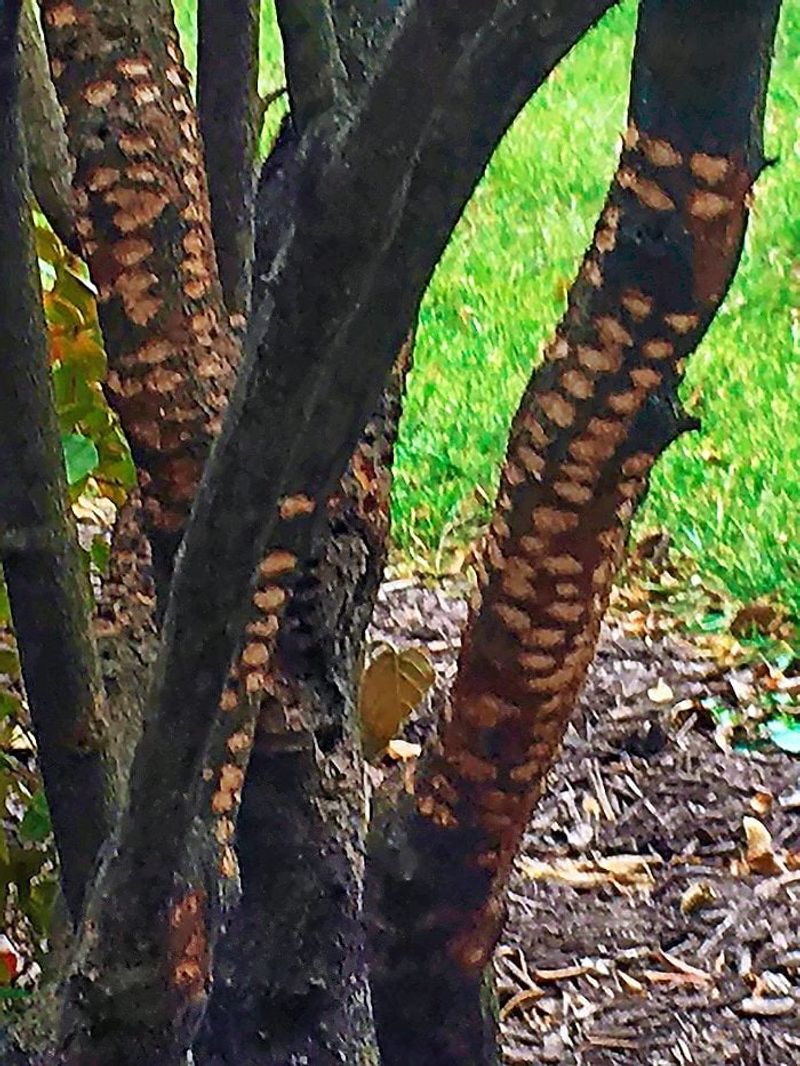
The marks a woodpecker leaves are not all the same, and matching the pattern to the bird’s behavior is one of the most useful things you can do before drawing any conclusions about your tree’s condition.
Ragged, irregular bark removal paired with shallow probing and scattered holes typically points to active foraging. The bird has been working the surface and just below it, looking for prey that is accessible without deep excavation.
Purdue Extension’s woodpecker damage guide describes this kind of surface-level pecking as a common sign of insect-hunting rather than deep structural damage to the tree.
Neat, closely spaced horizontal rows of small holes arranged in a grid or ring pattern are the signature of the yellow-bellied sapsucker, a migratory woodpecker that winters across much of North Carolina. Those orderly wells are made to collect sap and the insects attracted to it, not to excavate boring beetles from deep wood.
University of Minnesota Extension’s tree damage diagnostic tool distinguishes sapsucker patterning from other woodpecker damage based on the regularity and shallowness of the holes.
Large, elongated rectangular or oval excavations, often several inches deep, are associated with pileated woodpeckers, North Carolina’s largest woodpecker species. These birds dig aggressively into softened or decaying wood to reach carpenter ant colonies or other insects living inside.
Extension diagnostics for pine damage note that this kind of deep excavation generally indicates wood that is already compromised rather than sound heartwood being opened up for the first time.
Round, smooth-edged cavities of three inches or more in diameter are more likely nest or roost holes than feeding sites. Photograph what you see from the ground, note the location on the trunk, and compare it with the patterns above before reaching any conclusion.
Do not peel back bark or drill into the trunk to investigate further.
Check an ash tree for emerald ash borer clues
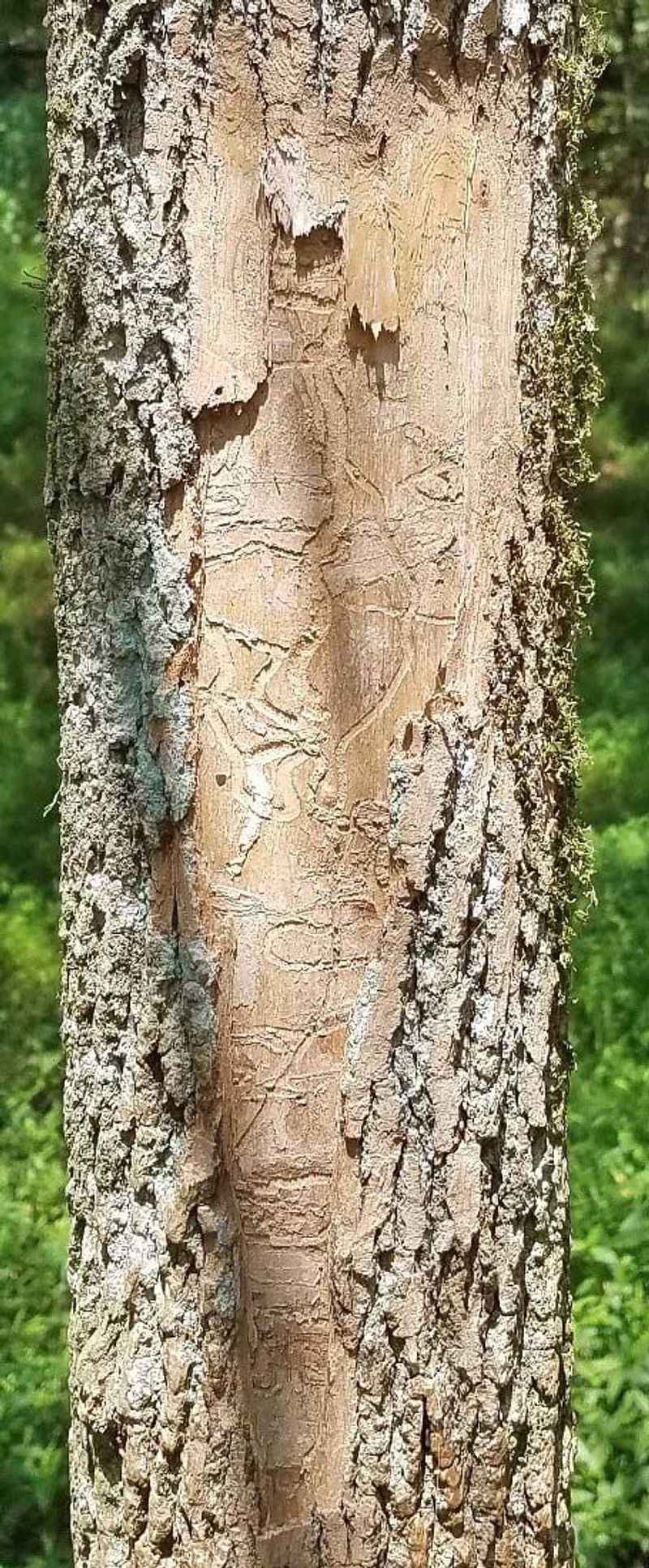
Ash trees across North Carolina face a genuine and serious threat from the emerald ash borer, a destructive invasive beetle that has spread through much of the state. Woodpecker activity on an ash can be an early signal worth following up on, but it has to be read alongside other evidence before it means anything specific.
Start by confirming the tree is actually an ash. Ash trees have opposite, compound leaves with five to eleven leaflets, a distinctive diamond-patterned gray bark on mature trees, and a single-winged seed called a samara.
If the tree is not an ash, emerald ash borer is not a relevant concern regardless of woodpecker activity.
When the host is confirmed as ash, NC State Extension’s emerald ash borer page identifies a cluster of associated symptoms to look for together: woodpecker flecking of the outer bark, thinning or yellowing foliage in the upper canopy, branch dieback beginning at the crown, vertical splits in the bark, serpentine galleries visible beneath loose bark, and small D-shaped exit holes roughly one-eighth of an inch wide. No single symptom confirms the pest.
Woodpecker flecking alone, without at least some of the others, is not a diagnosis.
The NC Forest Service Forest Health Handbook describes additional tree stress signs such as unusual sprouting from the base or trunk, which can appear on ash as the tree attempts to compensate for crown loss. These epicormic sprouts, combined with the symptoms above, strengthen the case for a professional look.
You may also encounter pitch tubes on other tree species – small, hardened masses of resin pushed out through bark. These are context-dependent signs tied to particular resin-producing hosts such as pines and their associated bark beetles, not a general woodpecker warning and not a sign of emerald ash borer.
Identifying the tree and the likely pest correctly matters before any treatment decision is made. NC State Extension’s insect management guidance recommends professional or extension-assisted identification before applying any treatment, because effective options, timing, and product choice depend entirely on the pest involved.
Sapsucker wells do not automatically mean a sick tree
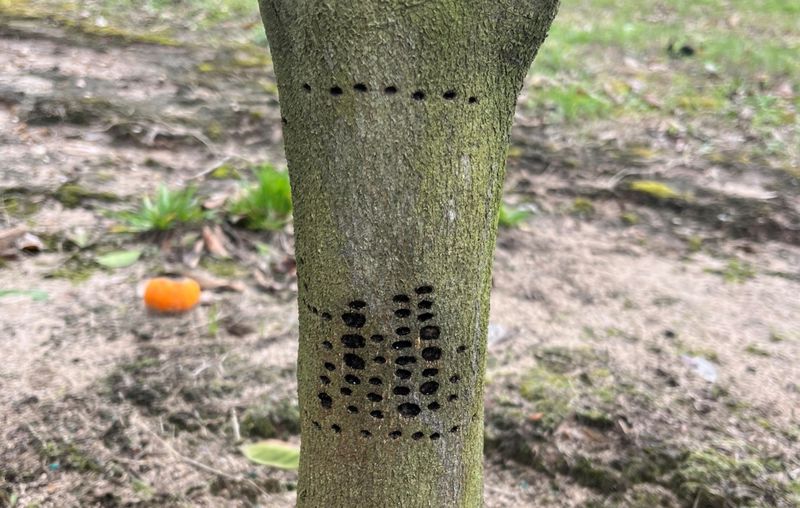
Yellow-bellied sapsuckers are easy to misread. Their work looks deliberate and extensive, and homeowners who find those neat rows of holes often assume something is seriously wrong with the tree.
Usually, that assumption needs a closer look before it sticks.
Sapsuckers are woodpeckers that have developed a specialized feeding strategy: they drill shallow wells into living trees, wait for sap to flow, and return to lap up both the sap and the insects it attracts. Mississippi State University Extension’s guide to sapsucker damage explains that the birds often favor healthy, vigorous trees with high sugar content in their sap, which means their presence can actually reflect a tree that is doing well rather than one that is struggling.
The NC State Extension wildlife handbook notes that sapsuckers use a wide range of tree species in North Carolina, including birches, maples, and ornamental fruit trees, and that the orderly sap wells are characteristic enough to identify the bird without ever seeing it in person. Orderly horizontal rows, shallow depth, and sap staining around the holes are the hallmarks.
Extensive or repeated girdling of the same tree over multiple seasons can injure bark tissue and create openings for secondary infection, particularly on thinner-barked species. That is a genuine concern if the damage encircles the trunk completely or returns year after year in the same location.
Penn State Extension’s woodpecker resource distinguishes between cosmetic sapsucker damage and the rarer cases where repeated girdling becomes a tree health issue worth monitoring. For most homeowners, a single season of sapsucker activity on a structurally sound tree does not require intervention.
Inspect the whole tree and the targets beneath it
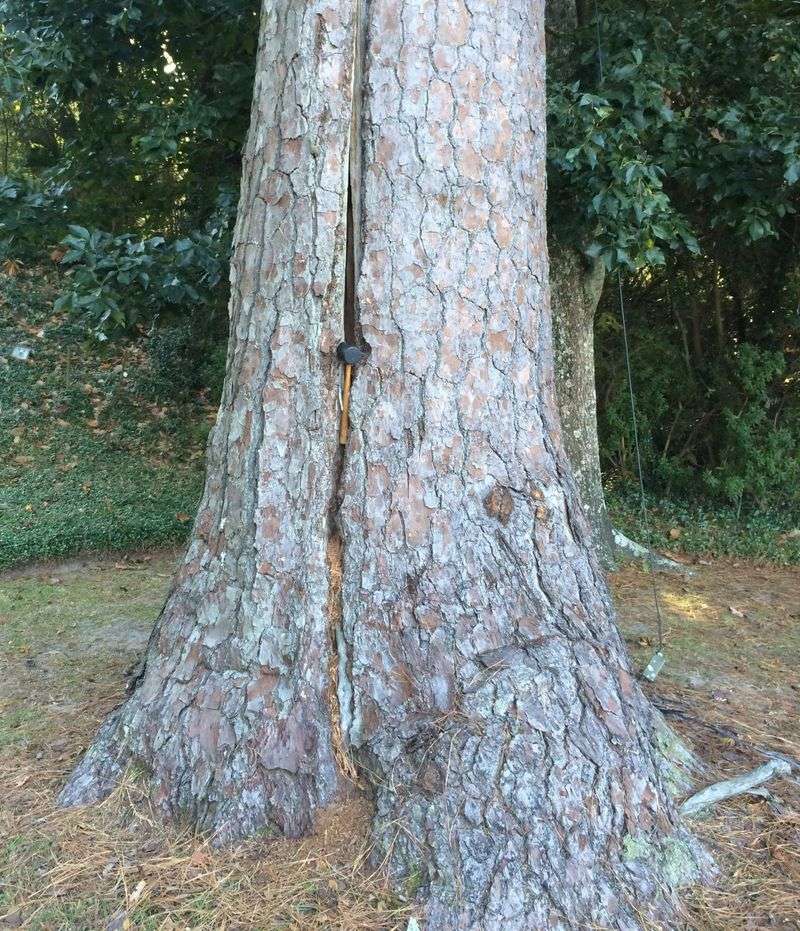
Once you have watched the bird and noted the damage pattern, shift your attention to the tree itself. A ground-level walk-around takes about ten minutes and can reveal a lot without touching the bark or disturbing anything.
Work from the top down. Scan the canopy for thinning foliage, dead branches, or sections where leaves are discolored or absent when the rest of the tree looks full.
Move down to the main trunk and look for vertical cracks, areas where bark has separated or is peeling away on its own, unusual swellings, fungal growth such as shelf mushrooms, and any cavities or large openings. Finish at the root flare, the area where the trunk meets the ground, and check for soft spots, decay, or soil heaving that might indicate root problems below the surface.
A dead or partially decayed tree that is structurally stable and located away from buildings, driveways, play areas, and utility lines can remain a genuinely valuable part of your yard. NC State Extension’s snags and downed logs resource explains that standing dead wood, called a snag, provides nesting and roosting sites for woodpeckers, owls, bats, and other cavity-dependent wildlife.
University of Minnesota Extension’s biodiversity guide adds that even a single cavity tree can support multiple species across several years. University of Florida IFAS guidance on backyard habitat wood encourages homeowners to think of dead and decaying trees as infrastructure for wildlife rather than problems to solve.
The question that changes everything is what sits below the tree. Major dead limbs, a pronounced lean toward a structure, cracks that run through the main trunk, or cavities near the base are structural concerns that go beyond tree health and into safety.
NC State Extension’s storm-damaged tree guidance recommends a qualified arborist evaluation when a tree poses potential risk to a home, vehicle, utility line, or play area. That evaluation should drive any decision about pruning, removal, or retention, not the presence of a woodpecker alone.
Choose targeted care instead of reflexive spraying or removal
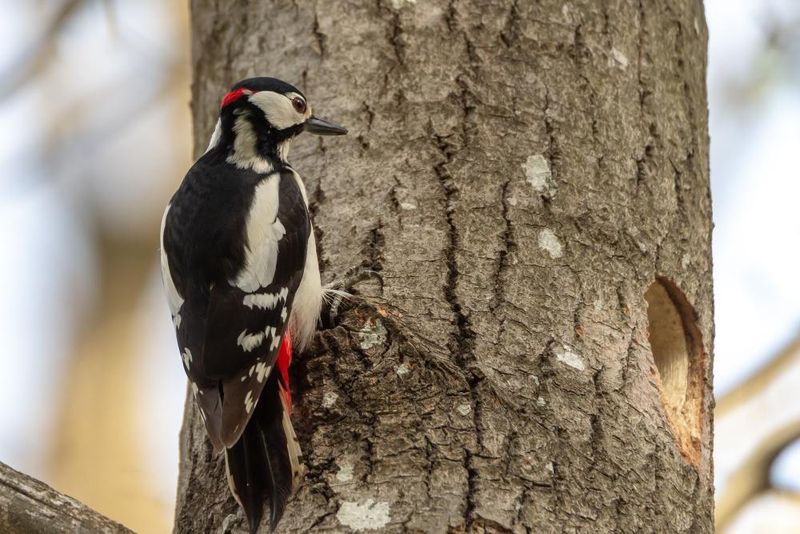
A woodpecker working your tree is not, by itself, a reason to spray anything, fill any holes, or call for removal. Getting to the right response means following an identification sequence rather than reacting to the bird.
First, confirm the tree species and the type of damage you are seeing. NC State Extension’s insect management chapter is clear that pesticide selection, application timing, and whether treatment is warranted at all depend on correctly identifying the host tree and the likely pest or disease.
Applying a broad insecticide because a woodpecker is present can kill beneficial insects, harm pollinators, affect other wildlife, and miss the actual problem entirely if the pest has not been identified. Some pests require very specific timing tied to their life cycle, meaning a poorly timed application may do little even if the product is correct.
For ash trees where emerald ash borer is a genuine concern based on the combination of symptoms described earlier, NC State’s emerald ash borer guidance outlines preventive and treatment options that should be selected with extension or arborist input, not chosen from a hardware store shelf based on the woodpecker’s activity alone. Treatment decisions for other pests follow the same logic: identify first, then act with a targeted and timed approach.
Filling woodpecker holes is not recommended as routine care. It does not address the underlying condition of the tree, and it removes potential nesting or roosting cavities that have value for wildlife.
Do not spray repellents on the tree to discourage the bird, and do not disturb an active nest. The North Carolina Wildlife Resources Commission confirms that woodpeckers are federally protected under the Migratory Bird Treaty Act and cannot be taken, harassed, or relocated without appropriate federal authorization.
Attempting relocation is both legally risky and unlikely to solve anything, since another bird will often claim the same territory.
When the tree is healthy enough to retain and is not a structural hazard, keeping it as habitat is the stewardship choice that benefits your yard’s ecosystem the most. When structural risk is present, get a qualified arborist on site.
The woodpecker showed you where to look; what you do next should be based on what you actually find. A yard that supports cavity-nesting wildlife, healthy trees, and well-timed pest management is not a yard with a woodpecker problem – it is a yard doing its job.