
A Native Shrub Nobody Talks About Feeds Chickadees And Screens Your North Carolina Property Line
If you want to soften a property line and do something good for local wildlife at the same time, common wax myrtle deserves a closer look. This fast-growing native shrub can form a dense, evergreen screen along a boundary while also hosting the kinds of insects Carolina chickadees hunt through the growing season.
It works best on the right sites in North Carolina’s eastern Piedmont and Coastal Plain, and it rewards homeowners who plan for its true mature size and plant it as part of a varied, layered border.
Meet the right shrub for the right claim
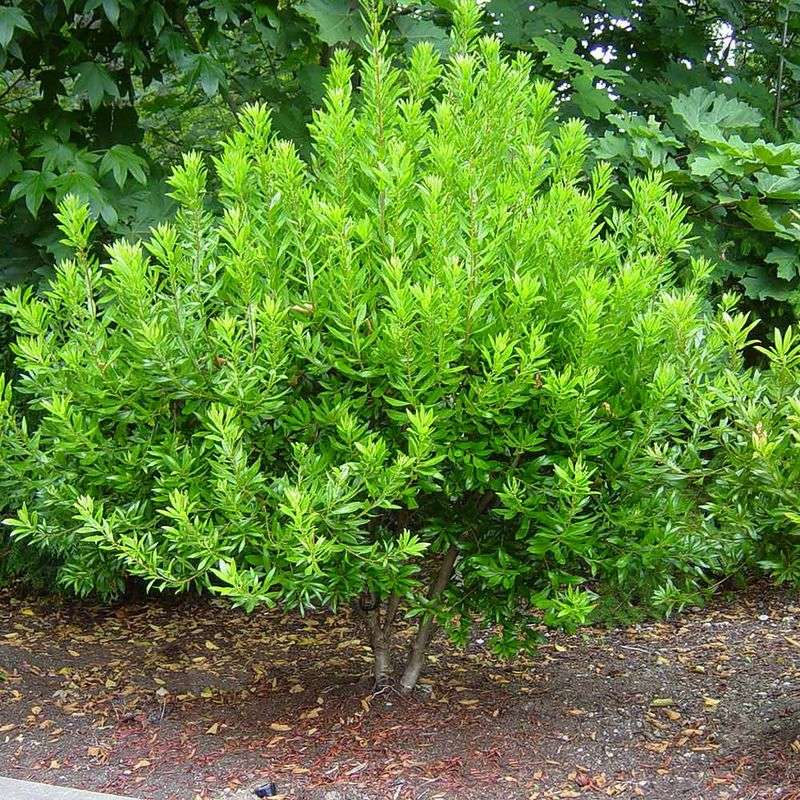
Common wax myrtle goes by the scientific name Morella ceriferaMyrica cerifera, though you will still find it sold and catalogued under its older name, , at many nurseries and in older reference guides. The two names refer to the same plant, so if a label says either one, you are looking at the same species.
Knowing both helps when you are searching a plant database or asking a nursery employee for help.
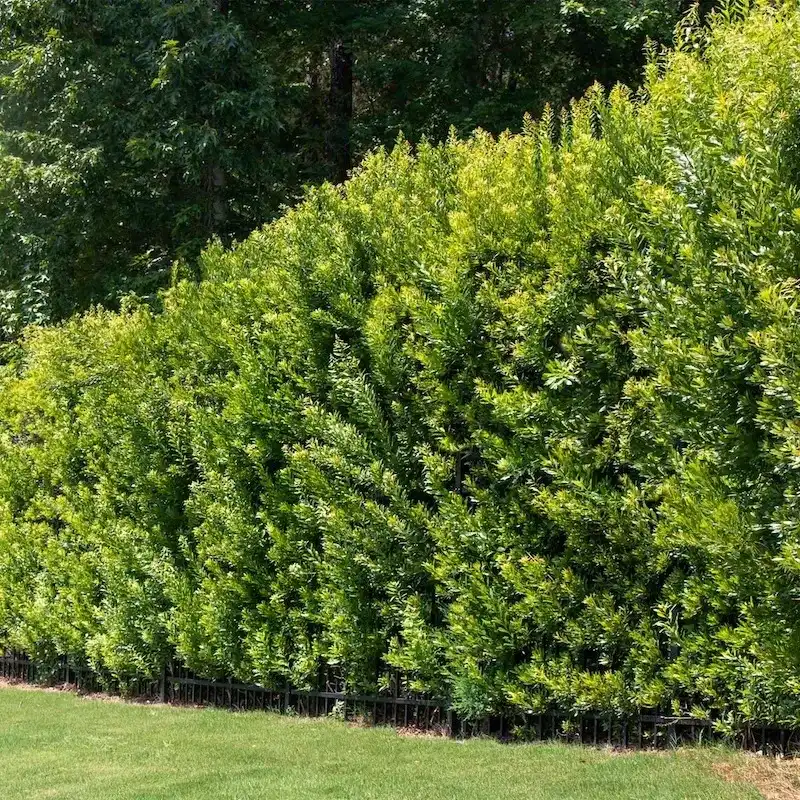
What makes this shrub worth considering along a property line is its combination of speed and density. NC State Extension’s plant profile describes wax myrtle as a broadleaf evergreen or semi-evergreen that develops rapidly and produces thick foliage capable of providing year-round cover on suitable sites.
That density is exactly what a screening plant needs to do its job.
Before you order a flat of them, though, set realistic expectations about size. The standard form of wax myrtle is not a tidy three- to five-foot hedge you can tuck close to a sidewalk.
The North Carolina Forest Service describes it as a natural privacy-barrier plant that needs substantial growing room, and the species can reach roughly 10 to 25 feet tall and 8 to 10 feet wide under favorable conditions.
Compact cultivars exist and can change those numbers, but the straight species will outgrow a small space quickly. Planning for the plant’s actual mature footprint from the start prevents the crowding problems and heavy corrective pruning that frustrate homeowners a few years after planting.
Wax myrtle earns its place as a screening candidate precisely because it grows large and fast, and that same quality demands honest site planning upfront.
How wax myrtle may help chickadees forage
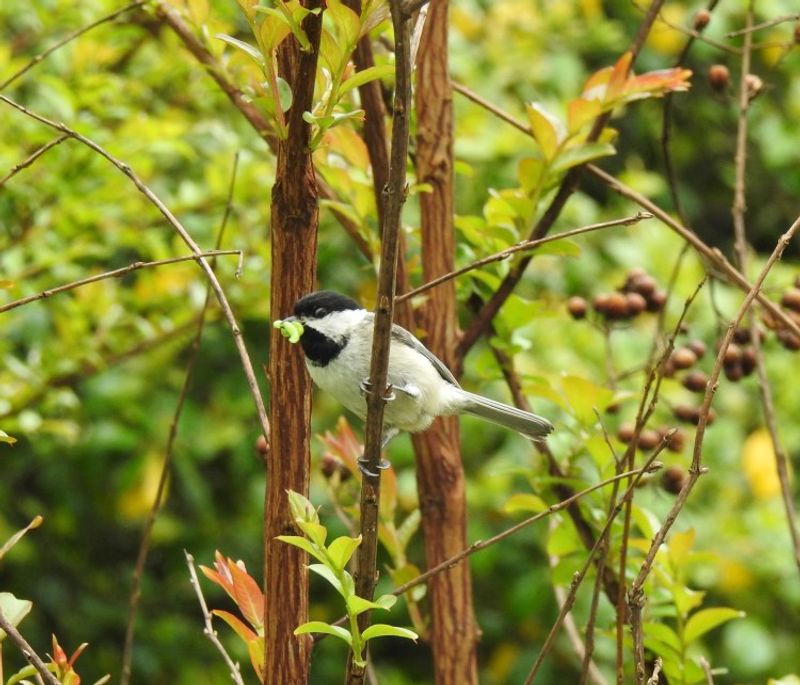
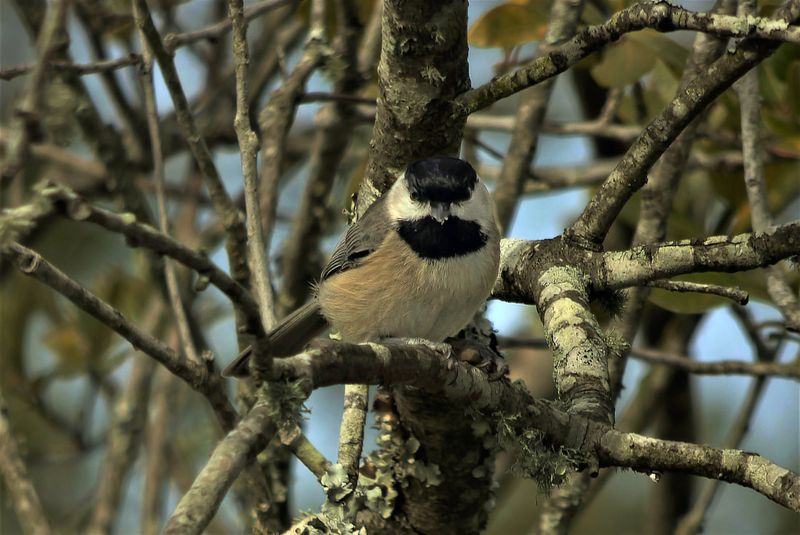
The connection between wax myrtle and Carolina chickadees runs through insects, not through the plant feeding birds directly. Wax myrtle is a documented larval host for the red-banded hairstreak butterfly, and North Carolina moth records include species whose larvae feed on Morella hosts.
Those larvae, along with other small arthropods that shelter in dense foliage, are what bring insectivorous birds into a planting.
Cornell Lab of Ornithology’s Carolina chickadee life-history account makes clear that the species eats mostly insects and spiders during the growing season, gleaning prey from foliage and bark as it moves through vegetation. A dense wax myrtle hedge gives chickadees surfaces to search, and if the plant is hosting larvae, those foraging trips can pay off.
The key word is “can”: the plant creates potential foraging habitat, not a guaranteed feeding station.
Broader native-plant research helps explain why that potential matters. Studies measuring native plant composition across residential yards found that native woody plants generally support greater caterpillar biomass than many nonnative ornamentals, and that this difference affects breeding success for insectivorous birds like chickadees.
Smithsonian Institution research on native plants and insectivorous bird habitat and a related PNAS study on nonnative plants and chickadee population growth support this principle. Those studies were conducted primarily in the Washington, D.C., region, and they measured the composition of entire yards, not the output of individual shrubs.
That distinction matters when setting expectations. No single wax myrtle hedge has been shown to rank among North Carolina’s top caterpillar-producing shrubs, and no study tested wax myrtle alone as a chickadee attractant.
What the research supports is a broader principle: yards with more diverse native vegetation tend to support more insects, and more insects give chickadees better foraging options during the season when they need them most. Wax myrtle can be one contributing piece of that picture on suitable sites, and that is a reasonable, honest claim for a well-chosen native shrub.
Check your region and growing conditions
Wax myrtle is native to North Carolina’s eastern Piedmont and Coastal Plain, and that geographic range matters before you spend money at the nursery. The NC State Extension Gardener Handbook’s native-plant table places it in those regions, not broadly across the higher mountains.
Treating it as a statewide native recommendation skips over real differences in climate, soil chemistry, and winter temperatures that affect how well the plant performs.
If your property sits in the western mountain counties, wax myrtle is not automatically the right call. NC State Extension guidance on evergreen shrubs for blocking views points mountain gardeners toward locally appropriate alternatives such as American holly, which handles colder winters and higher elevations more reliably.
Choosing a plant that fits your region means fewer failures and less replanting.
For eastern Piedmont and Coastal Plain gardeners, the North Carolina Forest Service recommends full sun or partial shade, acidic soil, and moist, well-drained ground as the preferred starting conditions. Those are the conditions under which the plant establishes most reliably and develops the dense growth that makes it useful as a screen.
After the plant is established, NC State’s plant profile notes that wax myrtle can tolerate a broader range, including some wet or dry periods. That flexibility is genuinely useful in a coastal or low-lying yard, but it does not eliminate the need for regular watering during the first one to two growing seasons while roots are getting established.
Planting into the right regional conditions and then giving the shrub consistent moisture early on gives you the best chance of the dense, healthy screen you are aiming for.
Plan the screen around mature dimensions
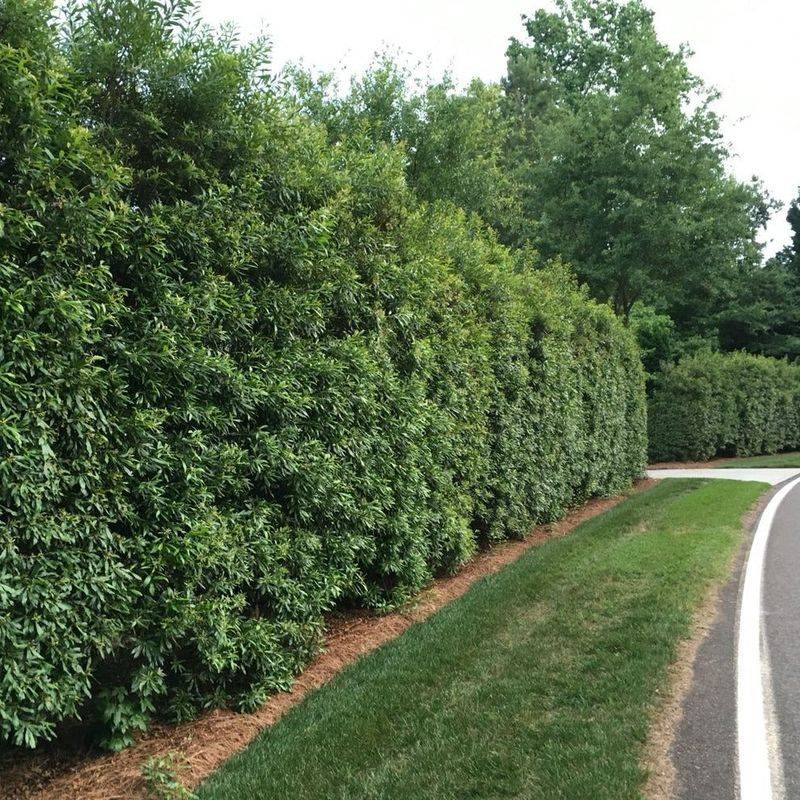
Knowing that wax myrtle can reach 10 to 25 feet tall and 8 to 10 feet wide changes how you plan a property-line planting. Start by walking the boundary and identifying exactly what you need to screen, from which direction, and at what height.
A sightline from a neighbor’s second-story deck requires a different solution than blocking headlights along a road, and the plant’s ultimate canopy determines whether it can do either job.
Check for overhead utilities, drainage easements, and structures before you mark planting spots. The North Carolina Forest Service lists wax myrtle as a natural privacy-barrier plant that needs substantial room, and a shrub allowed to reach its full spread will crowd anything planted too close to it.
Measure the available width of your planting strip and compare it honestly to the mature canopy width before deciding how many plants fit.
Spacing is where many screening projects go wrong. NC Cooperative Extension’s vegetative screening guidance recommends basing spacing on mature size rather than current nursery-pot dimensions, and it cautions against planting a single-species row at unnaturally tight intervals.
Crowded plants compete for light and water, develop weak structure, and create a fragile monoculture that can fail all at once if a pest or disease moves through.
Preserving lower branches is also part of the plan. A plant that keeps foliage close to the ground blocks views at eye level; one that has been limbed up into a small tree leaves a gap right where privacy matters most.
NC State Extension’s privacy-planting guidance reinforces that effective screening depends on planting distance, mature height, branch density, and seasonal leaf retention together. Wax myrtle is evergreen to semi-evergreen depending on site and winter conditions, so leaf retention is not guaranteed in every location or every year.
A screen that looks solid in July may thin out in January, and that variability is worth factoring into your plan before the plants go in the ground.
Build a diverse planting and establish it well
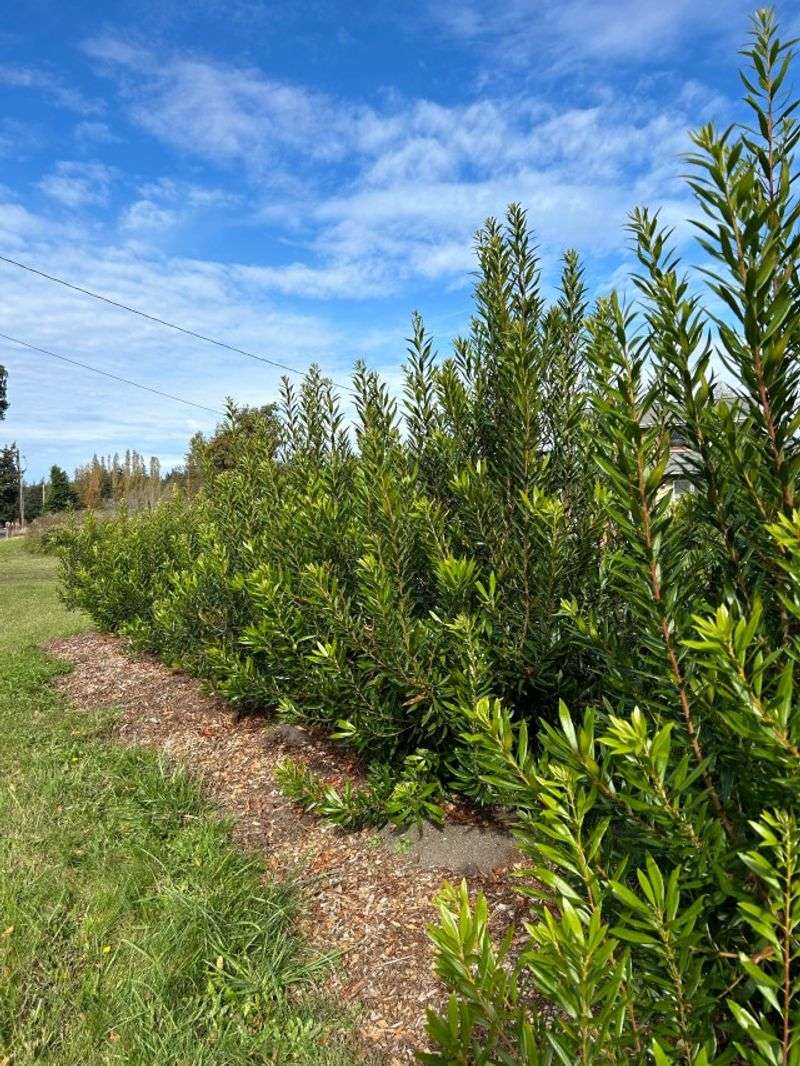
A row of nothing but wax myrtle, planted shoulder to shoulder, is a monoculture with a single point of failure. If a pest, disease, or severe weather event hits one plant hard, it can move through an entire uniform row with little resistance.
NC Cooperative Extension’s vegetative screening guidance recommends staggered, mixed plantings whenever space allows, combining species with different mature sizes to create a layered effect that is both more resilient and more visually interesting than a flat hedge.
Wax myrtle pairs well with other native species that suit your site. Eastern red cedar adds a taller, narrower evergreen form.
Inkberry holly tolerates wet spots and stays smaller. Yaupon holly handles a range of soils and also provides winter fruit.
Mixing even two or three compatible natives into the planting strip reduces the risk of losing your entire screen to a single problem and adds more insect-host variety for wildlife.
Once the plants are in the ground, establishment watering is the most important job for the first growing season or two. NC State’s wax myrtle profile describes moist, well-drained soil as the preferred condition, and a newly planted shrub has not yet developed the root system to find water on its own during dry spells.
Water deeply and consistently until the plant shows strong new growth, then gradually reduce frequency as the roots spread.
Keep lawn grass out of the planting area and apply a two- to three-inch layer of mulch over the root zone to hold moisture and moderate soil temperature. The North Carolina Forest Service and Extension guidance both caution against piling mulch directly against stems, which traps moisture and invites rot.
Pull the mulch a few inches back from the base of each plant.
One more detail worth knowing: wax myrtle is dioecious, meaning male and female flowers grow on separate plants. Only female plants produce the small blue-gray fruits, and fruit set requires pollen from a male plant nearby.
For a screen planted primarily for privacy and insect habitat, this is a secondary concern, but if you want fruit production for wildlife interest, include at least one male plant among your females. Nurseries do not always label sex, so ask before you buy.
Maintain wildlife value without creating a safety problem
Dense, fast-growing shrubs eventually need attention, and wax myrtle is no exception. The goal with a wildlife-oriented screen is selective pruning that removes crossing, dead, or problematic branches without stripping the plant of the dense foliage that provides cover and insect habitat.
NC State Extension’s pruning guidance favors preserving the plant’s natural form over heavy shearing, which stresses plants and can reduce the dense interior branching that makes wax myrtle useful for screening.
Keep lower branches intact as long as possible. Limbing up a wax myrtle to clear a sight line from below defeats the purpose of a privacy screen.
If a plant grows so large that it crowds its neighbors or a walkway, selective thinning of individual stems is more sustainable than repeated hard shearing across the top and sides.
Fire risk is a genuine concern that belongs in any honest wax myrtle recommendation. NC State Extension’s fire-resistant landscaping guidance and the NC State plant profile both assign wax myrtle a high flammability rating.
That rating means you should not automatically plant it directly against a home’s foundation, within a few feet of propane tanks or outbuildings, or anywhere that falls inside a defensible-space zone around a structure. Place it along a property boundary with adequate clearance from buildings, and consider whether your specific site and fire risk profile make it appropriate at all near structures.
For the wildlife goal to work, insect activity around the planting needs to stay intact. NC State Extension’s songbird guidance connects native plant insect production directly to bird foraging value, and that connection breaks down if broad-spectrum insecticides are applied routinely to the hedge.
Caterpillars on a native shrub are not automatically a problem to eliminate. Distinguish between normal insect use, which is part of what makes the planting valuable, and genuine plant damage or hazardous pest situations that actually require intervention.
Chickadees also need more than one shrub to thrive. Cornell Lab’s chickadee life-history account notes that the species depends on suitable nesting cavities, surrounding vegetation variety, water sources, and a broader food web across the landscape.
A wax myrtle screen can support insect foraging, but it works best as one element of a yard that also includes nesting habitat and other native plants.
Use wax myrtle as one layer of a living property line
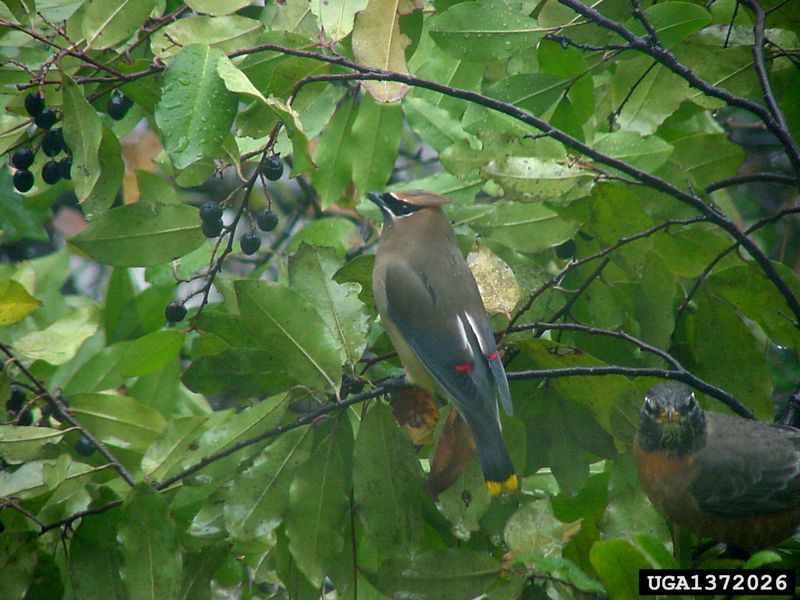
On suitable eastern Piedmont and Coastal Plain sites, common wax myrtle can combine useful property-line screening with potential insect-foraging habitat for Carolina chickadees. That is a qualified but genuinely worthwhile combination for a homeowner who wants a living boundary that does more than block a view.
NC State’s full plant profile lays out the conditions that make the recommendation responsible: adequate growing room, the right regional fit, and a site that matches the plant’s preferred soil and light requirements.
The conditions that make the recommendation responsible are not afterthoughts. Adequate room for the plant to reach its mature size, a location in the eastern Piedmont or Coastal Plain, a diverse and staggered planting with other compatible natives, careful establishment watering, and honest attention to fire risk around structures are all part of what makes wax myrtle a sound choice rather than a problem waiting to develop.
NC Cooperative Extension’s screening guidance and the NC State native-plant handbook together provide the regional and practical grounding that keeps those decisions site-specific rather than generic.
NC State’s songbird guidance frames the broader lesson well: native plants support native insects, and native insects support the birds that depend on them. One shrub contributes to that web, but the web itself is what sustains wildlife over time.
A wax myrtle screen planted with that understanding is a property-line solution and a small, durable act of yard stewardship at the same time.