
American Beautyberry: A North Carolina Native Shrub With Intriguing Lab Research and a Real Role in Your Yard Edge
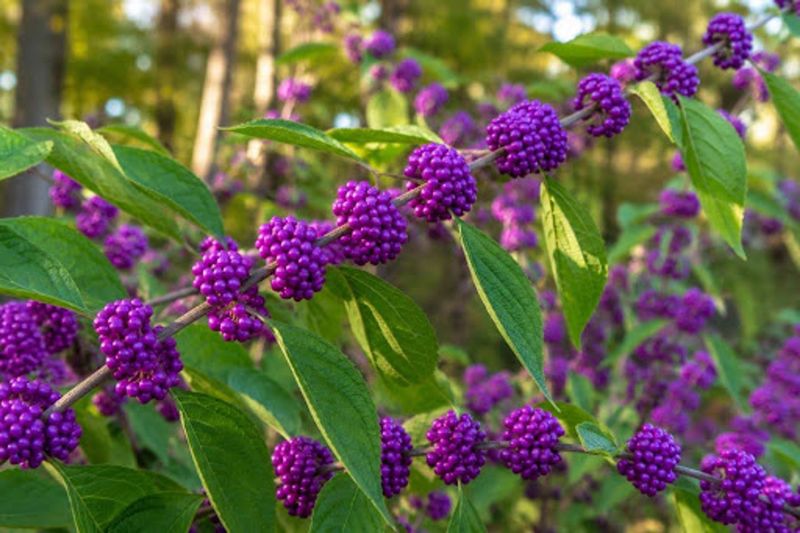
If you have ever stood at the edge of your yard where the mowed grass meets the woods and wondered what you could plant there that actually belongs in North Carolina, American beautyberry is worth knowing. This native shrub grows across the state, from the Coastal Plain to the mountains, and it carries some genuinely interesting research behind it.
But the headline promise that it makes ticks give up on your property needs a closer look before you head to the nursery. The real story is more useful, and more honest, than the click-worthy version.
The supposed groundcover is actually a native North Carolina shrub
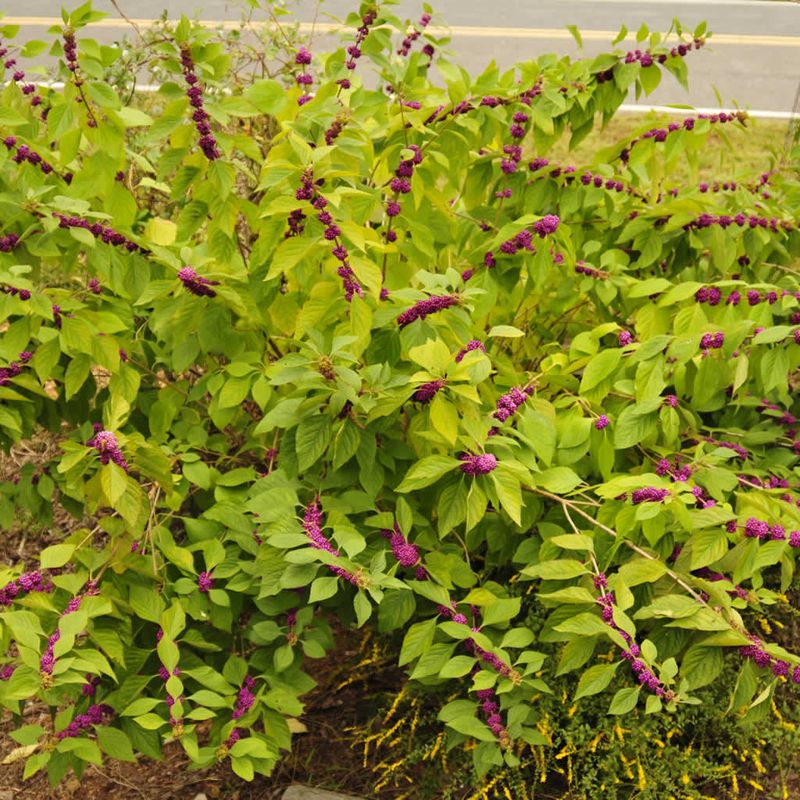
American beautyberry, known botanically as Callicarpa americana, is the plant behind the buzz. Before anything else gets said about ticks, it is worth clearing up the first thing the headline gets wrong: this is not a groundcover.
NC State’s plant database describes it as a deciduous shrub that generally reaches about 3 to 8 feet tall and 3 to 6 feet wide at maturity. That puts it firmly in shrub territory, not low-growing border coverage.
NC State lists American beautyberry as suitable for the Coastal Plain, Piedmont, and mountains, making it one of the more geographically flexible native shrubs available to North Carolina homeowners. It tolerates full sun to partial shade and handles a range of soil textures as long as drainage is reasonable.
Those traits make it adaptable whether you are gardening in the clay-heavy Piedmont, the sandier soils of the Coastal Plain, or a mountain slope with variable light.
What makes it recognizable in late summer and early fall are its berry clusters – vivid magenta-purple beads that wrap tightly around the stems from roughly August through October. Few shrubs produce that kind of color at that time of year, which is part of why it catches attention.
Its berries are also genuinely useful to wildlife: NC State’s native plant landscaping guidance notes that the fruit feeds songbirds and small mammals through the fall season.
Because the shrub grows to the size of a small car at maturity, its best landscape role is an ornamental border planting or a naturalized area set back from high-use spaces. Planting it immediately beside a patio, play area, or frequently walked path would not match its mature form.
Think of it as a back-of-border or yard-edge shrub that earns its place through seasonal color and wildlife value, not as a low mat that fills in around stepping stones.
What the tick study actually found
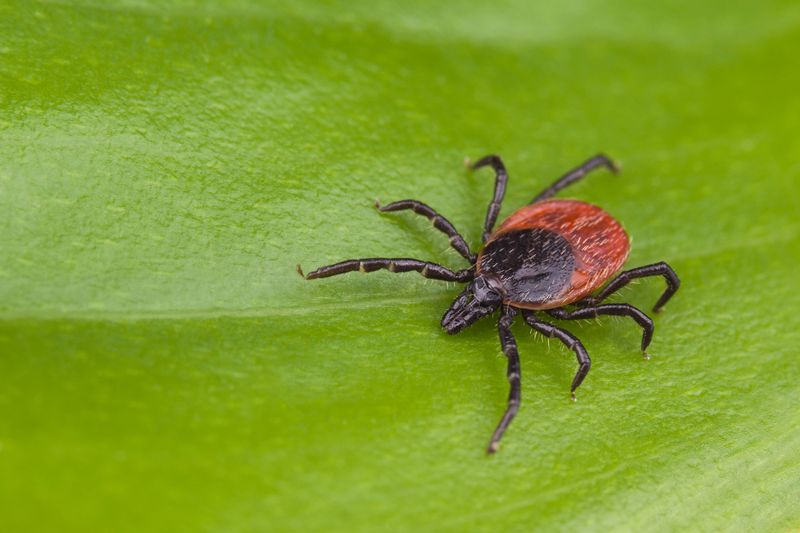
A 2007 study linked to USDA researchers is the origin of most of the beautyberry-and-ticks conversation, and the findings are genuinely interesting once you read what the scientists actually tested. The published research involved isolating specific compounds from beautyberry leaves, applying those compounds to treated cloth at high concentrations, and then running controlled laboratory bioassays to measure repellency against ticks.
That is a meaningful first step in understanding a plant’s chemistry.
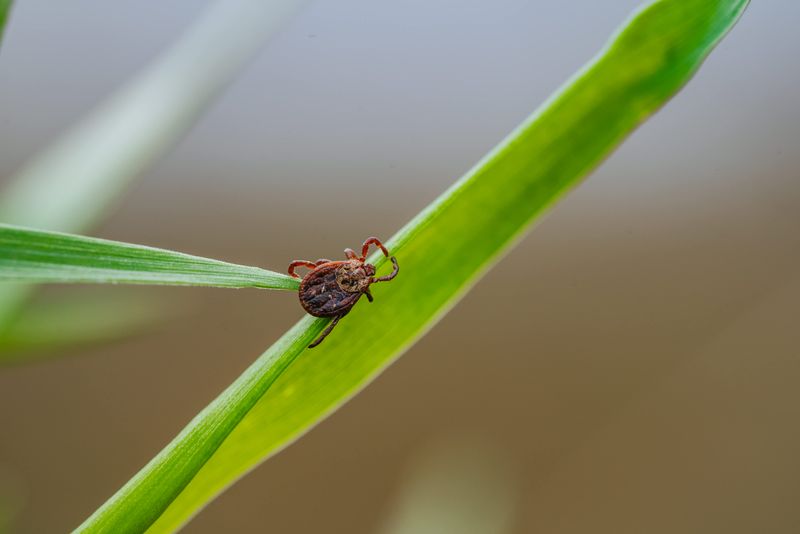
The strongest results came from tests against blacklegged tick nymphs, also known as deer tick nymphs, which are the life stage most associated with Lyme disease transmission. On treated cloth, at the concentrations used in the lab, those compounds showed notable repellency.
That is the part of the story that tends to travel well across gardening websites.
What travels less well is the result against lone star ticks. Lone star ticks are common throughout the Southeast, including large parts of North Carolina, and the same compounds performed weaker against them in the same study.
Treating the beautyberry research as a blanket tick solution ignores that distinction entirely.
The bigger limit, though, is what the study did not test. USDA’s own research summary makes clear that the work was preliminary and laboratory-based.
Researchers did not plant beautyberry shrubs in a yard and measure whether tick populations dropped. They did not test whether a living shrub releases enough of these compounds to affect ticks moving through a residential landscape.
They did not study tick bites or tick-borne disease transmission. The jump from “compounds isolated from leaves showed repellency on treated cloth” to “plant this shrub and ticks will leave your yard” is a very long leap, and the science does not make it.
American beautyberry is worth being curious about precisely because the chemistry is real. But real chemistry in a lab and reliable protection in your yard are two different things.
Why laboratory repellency does not create a tick-free border
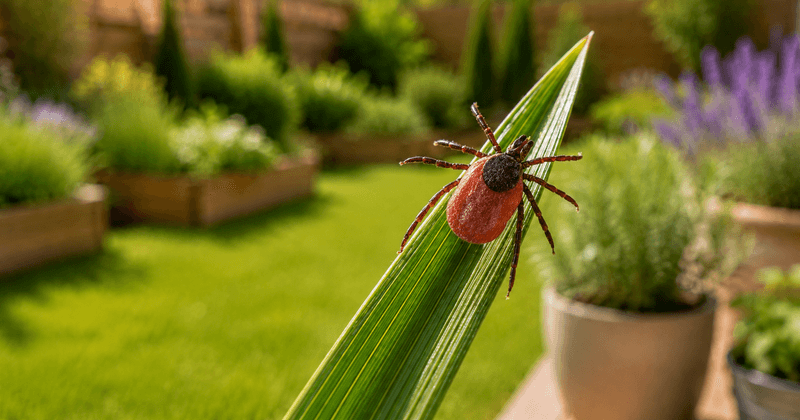
There is a gap between what a plant contains and what a growing plant does in a landscape, and that gap matters a great deal here. University Extension guidance on tick-repelling plants is direct on this point: a plant that contains pesticidal or repellent compounds does not automatically repel pests simply by growing in your yard.
The compounds in beautyberry leaves are concentrated in the leaf tissue. Releasing enough of them into the surrounding air or soil to affect ticks moving through a border requires crushing, extraction, or some other process that an intact, unpruned shrub does not perform on its own.
Tick activity in a residential landscape depends on a combination of conditions that have nothing to do with any single plant. Landscape management guidance from tick researchers points to leaf litter, tall grass, dense brush, high humidity, low sunlight, restricted airflow, and the presence of animal hosts such as deer, rodents, and birds as factors that contribute to tick-friendly conditions along yard edges.
Managing any one of those conditions can shift the habitat in a less hospitable direction for ticks. These are important landscape considerations, and no single intervention, including a beautyberry planting, replaces managing them as a whole.
CDC tick prevention guidance does not list planting any particular shrub as a tick-reduction strategy. The agency’s yard recommendations center on removing leaf litter, clearing tall grass and brush, mowing regularly, and improving the conditions that ticks find inhospitable: sunlight, airflow, and dry surfaces.
Beautyberry’s laboratory reputation is genuinely interesting, but it should not substitute for managing the conditions that actually determine whether ticks settle into your yard edge in the first place.
A cautious placement plan: keep beautyberry away from the maintained activity zone
Placing beautyberry thoughtfully in your yard is worth thinking through carefully, and the reasoning here comes from two sources: the shrub’s mature size and general tick-safe-landscaping guidance. To be clear, no one has tested beautyberry placement as a tick-control protocol in a residential setting.
What follows is a practical inference, not an established beautyberry-specific practice.
NC State’s profile of American beautyberry describes a shrub that can reach 8 feet tall with a spread of up to 6 feet. At that size, it belongs behind the maintained activity zone, not in front of it.
Planting it immediately beside a play area, a patio, a frequently used path, or the edge of a lawn where children and pets spend time would put a large, arching shrub right where you need clear sightlines, easy mowing access, and open, sunny conditions.
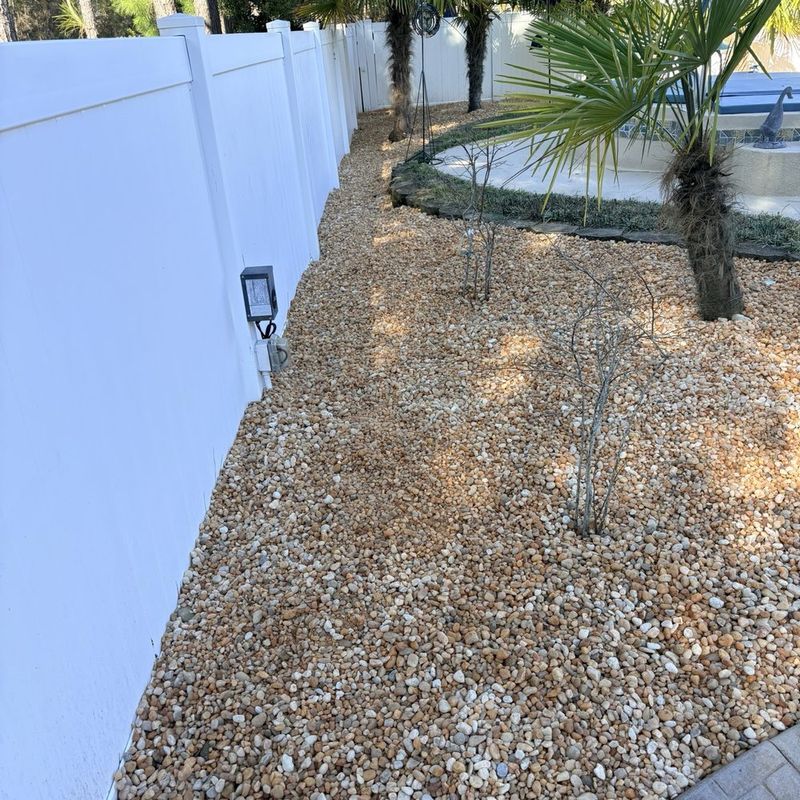
A better fit is a naturalized border or back-of-border planting set away from those high-use areas. CDC Lyme prevention guidance recommends placing a roughly 3-foot-wide barrier of wood chips or gravel between lawn areas and wooded edges.
That kind of transition strip does double duty: it signals a clear boundary between the managed yard and the wilder edge, and it creates a dry, open zone that ticks find difficult to cross. Beautyberry can sit on the far side of that strip, in the naturalized area, rather than in front of it where it would defeat the purpose.
Extension guidance on tick-safe planting also cautions against adding dense vegetation immediately beside high-use areas. Dense shrubs hold moisture, shade the ground, and provide sheltered pathways that ticks use to move from wooded edges into lawns.
Keeping the area between your activity zone and your naturalized border open, sunny, and easy to inspect is more protective than any single plant choice. Beautyberry earns its spot in the border when it is placed on the far side of that managed transition, not used as the transition itself.
Think of the layout in three layers: maintained lawn and activity areas closest to the house, a clean gravel or wood-chip strip as the transition, and the naturalized shrub border, including beautyberry, at the outer edge. That arrangement reflects how tick-safe landscaping works in practice, regardless of which shrubs you choose.
Prune the shrub for manageable growth and seasonal fruit
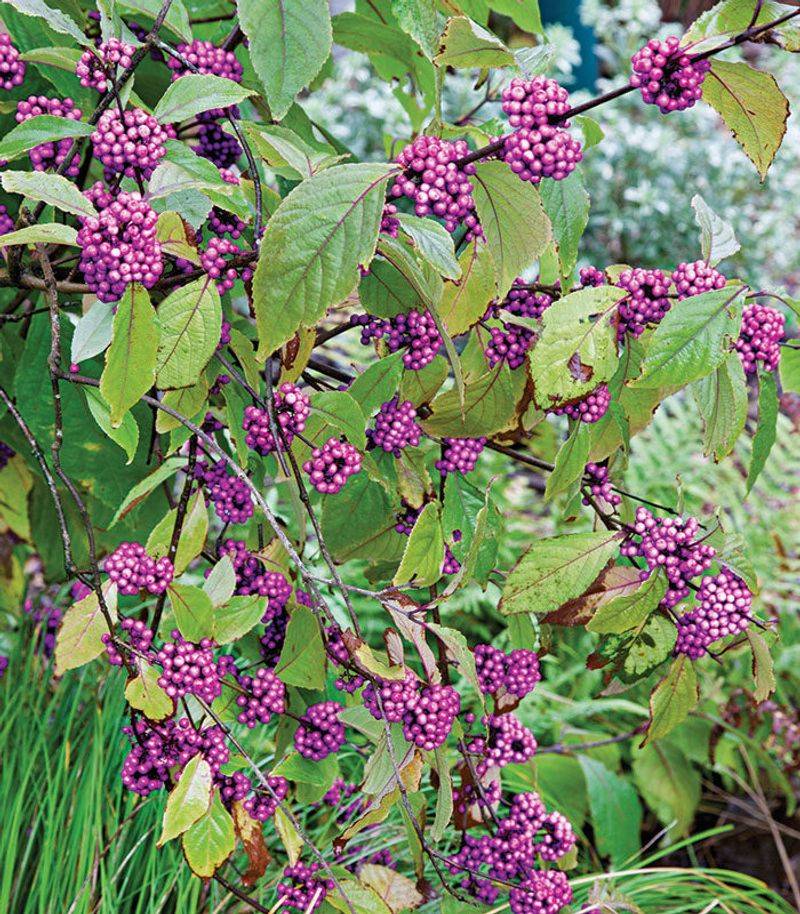
Left to its own schedule, American beautyberry can sprawl wide and tall enough to shade out its neighbors and create exactly the kind of dense, moist, low-airflow habitat that ticks find comfortable. Pruning keeps it from going that direction.
NC State’s beautyberry profile notes that flowers and fruit develop on new wood, which means late-winter or very-early-spring pruning encourages the vigorous new growth that will carry the most berries by fall. Cutting the shrub back hard before new growth begins also keeps it more compact, which makes it easier to manage as a border plant.
NC State’s pollinator garden guidance supports cutting beautyberry back significantly in late winter as a standard practice for encouraging productive new growth. You do not need to be timid with the pruners.
A well-timed cut results in a more open, upright structure through the growing season, and a shrub loaded with berry clusters by August.
Pruning alone does not reduce tick exposure, and this section is not making that claim. What it does is connect beautyberry maintenance to a broader set of yard habits that collectively matter.
Removing the leaf litter that accumulates under and around the shrub after pruning, clearing any brush that builds up at the yard edge, keeping surrounding grass short, and maintaining airflow through the border area are all practices that North Carolina health authorities recommend for reducing tick-friendly conditions in residential yards. Beautyberry maintenance fits naturally into that routine when you treat the shrub as part of a managed border, not a self-sufficient wildlife feature.
The berry crop itself is worth protecting through good pruning. Songbirds such as mockingbirds, catbirds, and robins, along with small mammals, rely on the fruit as a fall food source.
Keep the shrub productive and well-sited, and it pays a real wildlife dividend. Just keep that wildlife-friendly border separated from your most-used activity areas by the open transition strip described in the previous section.
Use beautyberry alongside a tick-conscious protection plan
Beautyberry belongs in the yard, but it does not replace the practices that actually reduce your tick exposure. Start with the yard itself.
CDC tick prevention guidance is specific: remove leaf litter regularly, clear tall grass and brush, mow frequently, and work to increase sunlight and airflow along yard edges. These steps target the conditions ticks need to survive, and no ornamental shrub substitutes for them.
Personal protection matters every time you step into a brushy or wooded area, regardless of what you have planted nearby. EPA’s repellent finder tool helps you identify registered products with tested protection times.
Use them according to the label. Wear long pants tucked into socks in high-risk areas, check yourself and your family after outdoor time, and shower within two hours of coming inside.
North Carolina health officials emphasize checking for ticks promptly and removing any attached tick as soon as it is found.
For dogs and cats, talk to your veterinarian about tick prevention products. Animals pick up ticks in yards and carry them indoors, so pet protection is part of household protection.
Do not assume that a yard with native plantings is automatically safer for pets in this regard.
One caution that comes up in the beautyberry conversation is the idea of rubbing crushed leaves on skin as a natural repellent. The USDA research that sparked interest in beautyberry was preliminary and laboratory-based.
No standardized, tested skin-repellent product made from crushed beautyberry leaves has been established as safe or effective for use on people, children, or pets. Extension guidance on botanical pesticides notes that natural and botanical substances are not automatically safe, and that plant-derived compounds can have unintended effects.
Stick with EPA-registered products used as directed. CDC Lyme prevention resources offer a straightforward checklist for personal and yard-level protection that applies whether you have beautyberry in your border or not.
Choose beautyberry for the border, not as a tick-control promise
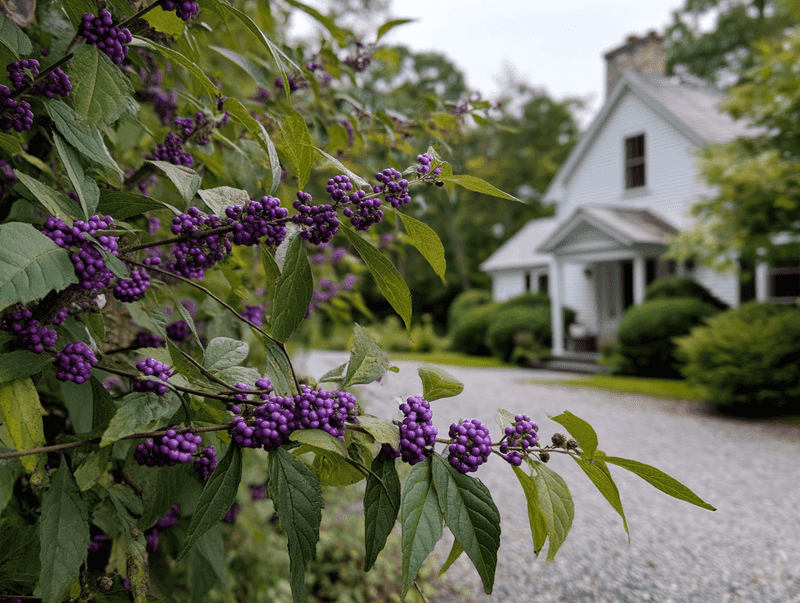
American beautyberry earns a genuine place in a North Carolina yard border on its own merits. NC State confirms it as a native species suited to all three of the state’s major regions, adaptable to a wide range of light and soil conditions, and valuable to wildlife through its fall berry crop.
Those are real, defensible reasons to plant it.
The tick angle is worth understanding accurately rather than dismissing entirely. The 2007 laboratory research showed that compounds isolated from beautyberry leaves repelled some blacklegged tick nymphs on treated cloth under controlled conditions.
That is a legitimate scientific finding. What it does not establish is that planting the shrub creates a tick-free border, drives ticks out of a residential yard, or replaces the habitat management and personal protection practices that CDC guidance recommends.
The practical decision rule is straightforward. Place beautyberry in a naturalized border or ornamental planting set back from your most-used activity areas.
Keep a maintained gravel or wood-chip transition strip between the lawn and the wilder edge. Prune the shrub on schedule, manage leaf litter around it, and continue personal tick precautions every time you or your family spend time near wooded areas.
That combination gives you a native, wildlife-supporting shrub with genuinely interesting chemistry, planted in a well-managed yard where the real tick-risk work is actually being done. A beautiful native shrub in a thoughtfully managed border is a worthwhile stewardship choice; a tick-free yard is a goal you build through habits, not a single plant.