
When A Great Horned Owl Starts Hooting Over Your North Carolina Yard, It’s Reading Your Rodent Numbers
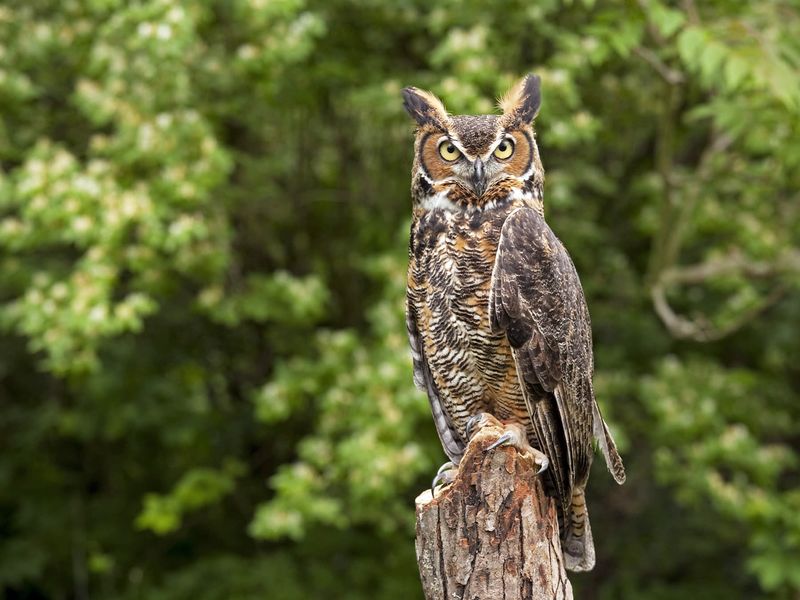
Hearing a Great Horned Owl call from a nearby tree on a quiet North Carolina night is one of those moments that stops you in your tracks. A lot of people immediately wonder if the bird showed up because the yard is overrun with mice or rats.
The truth is more interesting than that, and understanding what the hoot actually signals can help you make smarter choices for both your home and the wildlife living around it.
The hoot marks owl activity, not a mouse count
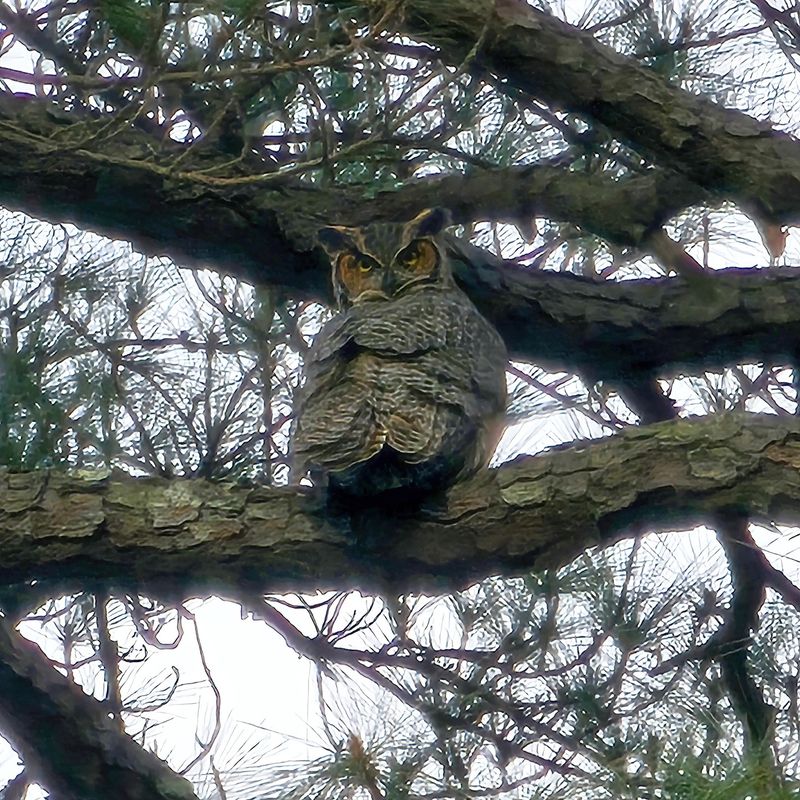
Hearing that deep, rhythmic call roll across a North Carolina yard after dark feels like a message, and in a sense it is, just not the one the title suggests. A Great Horned Owl hooting overhead most reliably means one thing: an owl is using or moving through a territory that offers something it needs.
That something could be a hunting perch, a patch of open lawn, a stand of mature trees, or proximity to a mate. What it almost certainly does not mean is that your rodent population just spiked.
Hooting in Great Horned Owls serves social and territorial purposes far more than it functions as a hunting call. Cornell Lab of Ornithology’s Great Horned Owl life history describes the species as one that defends territories aggressively with vocalizations, particularly in winter before egg-laying and again in fall when young birds disperse.
The call you hear is more likely a declaration of presence to neighboring owls or a communication with a mate than a response to a fresh wave of mice in the garden beds.
The rodent interpretation feels logical because Great Horned Owls do eat mice, rats, voles, and other small mammals. However, they are generalist predators with a wide diet that also includes birds, reptiles, insects, fish, and other locally available prey.
An owl calling over your yard is not confirming a specific prey surge; it is confirming that it finds the broader landscape worth occupying.
Treat the call as ecological context, not a diagnostic alarm. Before adjusting any pest-control practice, look for independent evidence inside and immediately around the house.
The owl gives you a reason to pay attention, not a reason to panic or to assume the worst about what is living under your porch.
Why did the calling start now?
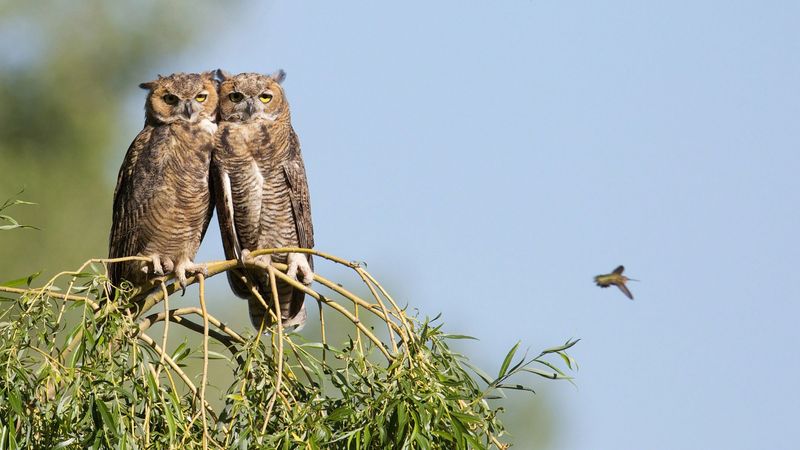
One of the most common questions homeowners ask after a few nights of owl calls is a reasonable one: why now? The yard has been there for years, so why is this bird suddenly so vocal?
The answer almost never involves a sudden change in the rodent population, and several well-documented owl behaviors explain the timing far better.
Winter is the most likely culprit if the calling started between November and February. Cornell Lab’s Great Horned Owl nest FAQ notes that hooting ramps up noticeably in winter as pairs coordinate before egg-laying, which can happen as early as January in North Carolina.
Two owls calling back and forth in the cold dark are almost certainly working out territory boundaries or reinforcing a pair bond, not cataloging your mouse supply.
Fall brings a second peak in vocal activity for a different reason. Juvenile owls that hatched the previous spring are pushed out of their parents’ territory, sometimes as early as September or October.
These young birds move through unfamiliar landscapes and call frequently as they search for unoccupied ground. A U.S.
Forest Service species review of Great Horned Owls documents this dispersal behavior and its connection to increased movement across residential areas.
There is also a simpler explanation worth considering: the owl may not be new at all. Great Horned Owls are quiet hunters that can patrol an area for months without drawing attention.
A change in wind direction, a shift to a closer perch, or the start of breeding season can make a previously silent bird suddenly audible from inside the house. A new sound is not necessarily a new animal, and a new animal is not necessarily a sign of a new food source nearby.
A North Carolina yard can offer more than rodents
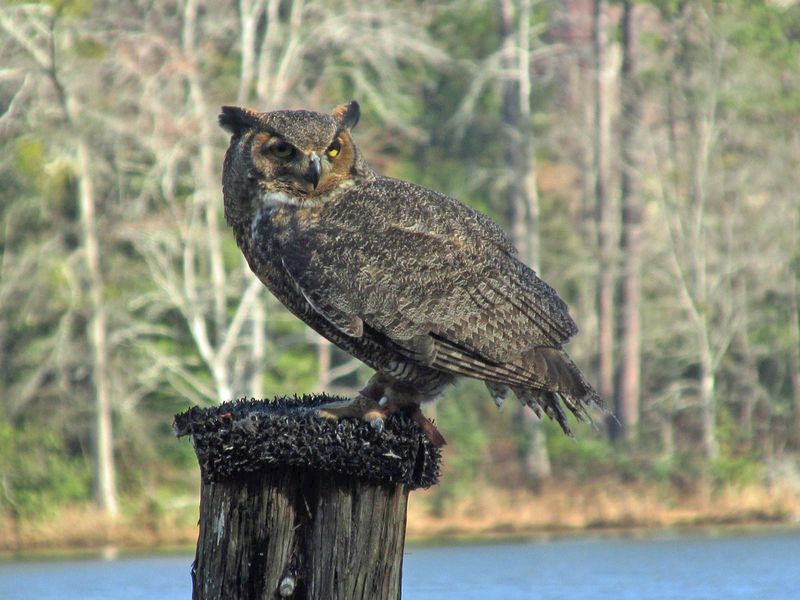
Great Horned Owls are remarkably adaptable birds, and a North Carolina yard, whether in the Piedmont, the Coastal Plain, or the Blue Ridge foothills, can provide several things they look for at once. Open lawn or garden space mimics the field-edge habitat they prefer for hunting.
Mature oaks, pines, or pecans offer elevated perches with clear sightlines. Dense shrub borders and nearby woodlots supply cover and potential nest sites.
A single residential lot rarely offers all of these features, but a neighborhood often does, and the owl’s territory can span well beyond any one backyard.
The diet of a Great Horned Owl is broad enough that rodents represent just one category on a long menu. Cornell Lab’s life history account lists mammals and birds as the largest dietary components, while also noting reptiles, amphibians, fish, and insects as regular prey.
Rabbits and squirrels are frequently taken, often in higher proportions than mice in suburban landscapes. Seeing or hearing an owl over your yard tells you nothing specific about which prey it is pursuing or which species is most available.
A U.S. Geological Survey diet study of Great Horned Owls in southwestern Idaho found notable variation in prey composition depending on local habitat conditions, reinforcing that these birds shift their hunting focus based on what is available rather than specializing on any one prey group.
A yard with rabbits, house sparrows, and cottontails may be just as attractive as one with a high vole density.
The Forest Service species review also notes that territory use, nesting density, and residency can shift in response to food and habitat conditions across a landscape. That is a useful ecological signal, but it applies to the broader area, not to a single yard measured on a single night.
The owl’s presence confirms that the surrounding landscape is worth using, and that is meaningful without being a precise count of anything.
What evidence would confirm a house problem?
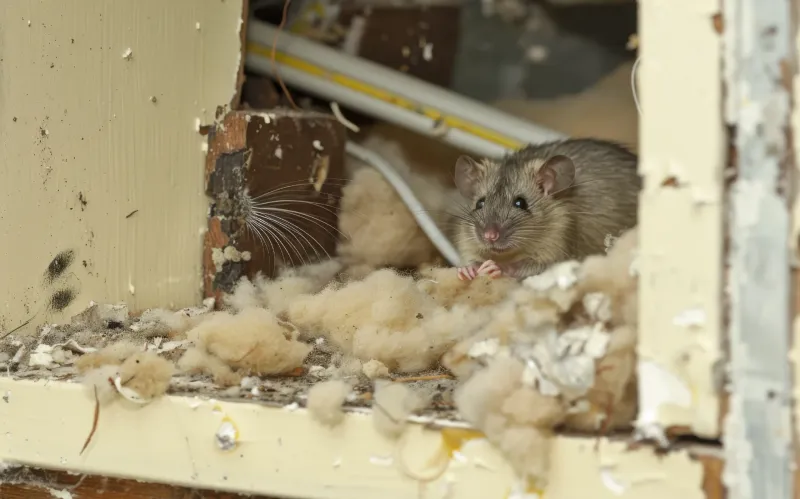
An owl’s call is a good prompt to take a closer look around the property, but the owl itself cannot tell you whether rodents have found a way inside. For that, you need physical evidence, and CDC guidance on rodent control is clear that these signs often appear before a homeowner ever sees a live rat or mouse.
The most reliable indicators of an indoor or structural rodent problem include droppings along walls or in cabinet corners, gnaw marks on food packaging or wooden surfaces, shredded material gathered into a nest in a dark corner, greasy rub marks along baseboards where rodents travel repeatedly, tracks in dusty areas, and burrows near the foundation or under a shed. Scratching or rustling sounds inside walls or ceilings at night are also worth taking seriously.
Small mammals living somewhere in the yard are a separate matter entirely. Voles tunneling through lawn, squirrels in the tree canopy, or rabbits near the garden are part of the food web that an owl finds useful.
Their presence outside does not automatically mean rodents are inside the house, and eliminating every small mammal from the yard would not protect the building if there are gaps in the foundation that anything can squeeze through.
Keep the inspection focused on the building itself: the basement, crawl space, attic, garage, utility room, and any area where food is stored. Check along the exterior for gaps around pipes, vents, and the roofline.
The owl can prompt the walk-around, but what you find during that inspection, not what you heard at midnight, should drive any decision about pest control.
Keep rodents out without turning the yard sterile
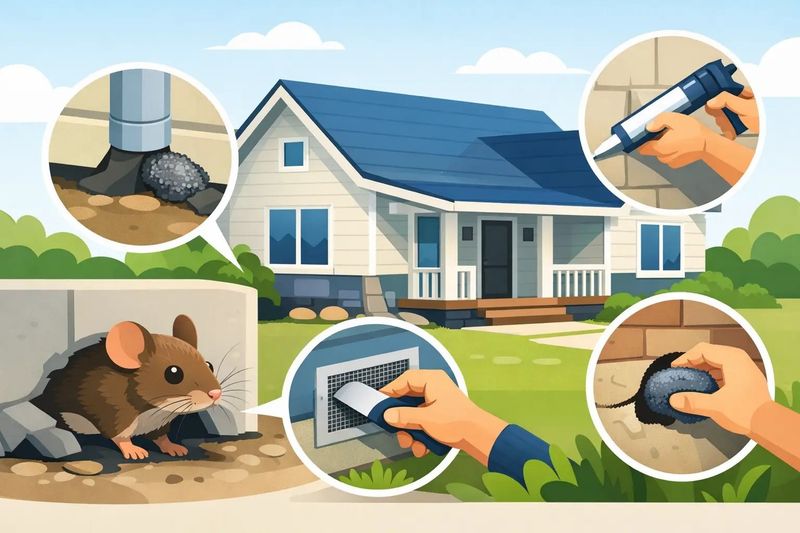
Finding actual evidence of rodents inside the house calls for a practical, proportionate response, and the goal is to secure the building without stripping the yard of the habitat that makes it worth watching at night. These two aims are compatible, and the strategy for achieving both starts with the structure itself.
Sealing entry points is the single most effective long-term measure. CDC guidance on sealing up against rodents specifies that mice can squeeze through openings as small as one-quarter inch wide, roughly the diameter of a pencil.
Work around the entire exterior: foundations, sill plates, gaps where utility lines enter the wall, dryer vents, crawl space screens, garage door seals, and any opening where a pipe passes through siding. Use hardware cloth, metal flashing, steel wool combined with caulk, or concrete patching for durable repairs.
Foam sealant alone is not enough because rodents can chew through it.
Food sources near the house are the second priority. Spilled birdseed under feeders is one of the most common attractants, and moving feeders farther from the foundation reduces the amount of seed that accumulates close to entry points.
Store birdseed, pet food, and any grain or animal feed in metal or heavy plastic containers with tight-fitting lids. Bring pet bowls inside at night and secure garbage cans with locking lids.
If rodents have already gotten inside, CDC guidance on trapping rodents recommends snap traps as the most effective and appropriate choice for residential use. Place them along walls and in dark corners where rodents travel, well out of reach of children and pets.
Glue traps and live traps are not recommended because they increase the risk of handling live or stressed animals and the diseases they may carry.
None of this requires removing brush piles, native plantings, or the edge habitat that attracts the owl. The goal is a sealed, sanitation-conscious building surrounded by a yard that can still support the food web around it.
Poison and bait can put the owl at risk
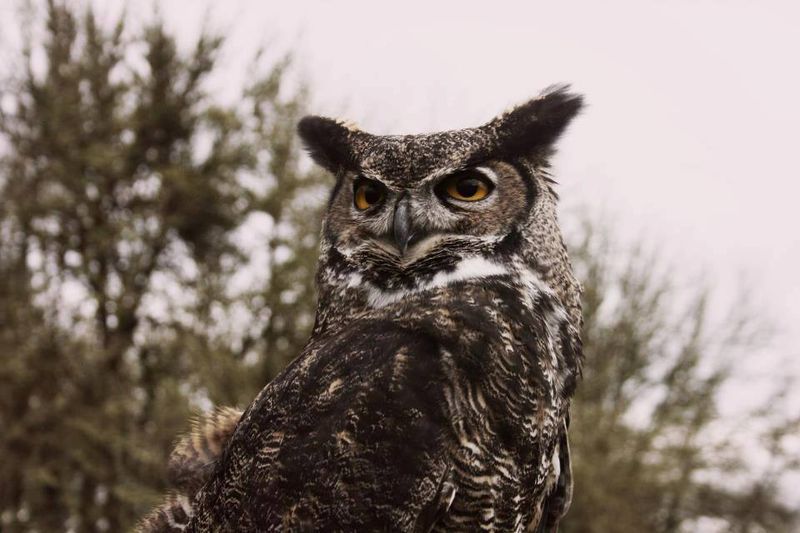
Outdoor rodenticide is one of the clearest threats to a Great Horned Owl using a residential landscape, and the mechanism is straightforward: an owl eats a rodent that has consumed poison bait, and the toxin transfers to the predator. EPA’s rodenticide pesticide safety review identifies this secondary poisoning pathway as a documented ecological risk and requires mitigation measures for non-target wildlife on product labels.
Raptors, foxes, coyotes, and domestic pets are all vulnerable through the same route.
Second-generation anticoagulant rodenticides are especially problematic because they accumulate in tissue and can persist long enough to affect any predator that consumes multiple poisoned prey animals over time. Using these products outdoors, near a yard where an owl actively hunts, creates a direct conflict between the pest-control goal and the wildlife-protection goal.
Indoor use under strict label guidelines, with bait secured in tamper-resistant stations away from children and pets, carries far lower risk to non-target species because the treated rodents are less likely to move outside and be caught by a hunting bird.
Feeding or baiting the owl directly is also something to avoid. Cornell Lab specifically warns against tossing food near roads because attracting rodents and raptors to roadside areas increases the risk of vehicle collisions.
Scattering meat scraps, dead mice, or pet food to draw the owl closer may seem harmless, but it can concentrate wildlife in places where the hazards outweigh any benefit.
The practical takeaway is simple: if indoor rodent control becomes necessary, use snap traps inside the structure and reserve any chemical approach for situations where a licensed pest control professional has assessed the risk to the surrounding environment. Keeping poison out of the yard protects the owl, the fox, the red-tailed hawk, and the neighborhood cat while still addressing the problem where it actually exists.
Safe owl habitat starts with distance and restraint
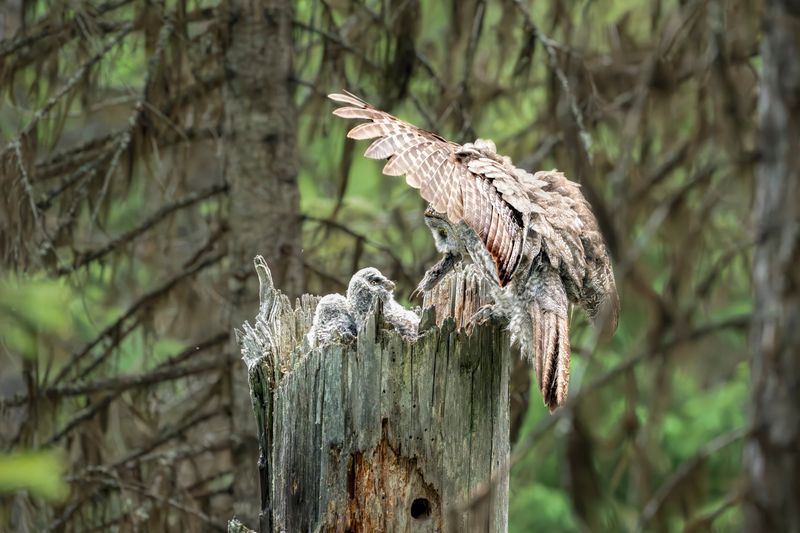
Supporting a Great Horned Owl in a North Carolina yard requires less active management than most people expect. These birds are resourceful nesters that rarely need human help finding a place to raise young.
The Forest Service species review documents that Great Horned Owls commonly take over existing hawk, crow, heron, or squirrel nests rather than building their own, and they may reuse different nest sites within the same territory across seasons. A yard with mature trees and nearby open foraging space is already offering what the bird needs.
Where safe to do so, leaving large trees standing, retaining snags or dead limbs that provide perch and cavity opportunities, and maintaining some shrub density around the yard’s edges all contribute to habitat quality without requiring any new construction. Nest boxes are not a standard recommendation for Great Horned Owls because the species adapts well to existing structures and natural cavities.
Installing one is unlikely to be harmful, but it is also not a necessary response to hearing a hoot.
Cornell Lab’s nest FAQ advises keeping a respectful distance from any suspected nest site and avoiding pruning or disturbance to nest trees during the breeding season. This is not just good manners toward the birds; it is a legal consideration.
U.S. Fish and Wildlife Service guidance on bird nests confirms that active nests containing eggs or dependent young are protected under the Migratory Bird Treaty Act, and disturbing or removing them can constitute an unlawful take regardless of where the nest is located.
If an owl appears injured, is found on the ground repeatedly, or seems trapped, the appropriate response is to contact a licensed wildlife rehabilitator rather than attempting to handle it. In North Carolina, the Wildlife Resources Commission maintains a current list of permitted wildlife rehabilitators by county; contact the Commission at ncwildlife.org or call their wildlife helpline to be directed to the nearest qualified facility before approaching any injured bird.
Read the signal, then act on evidence
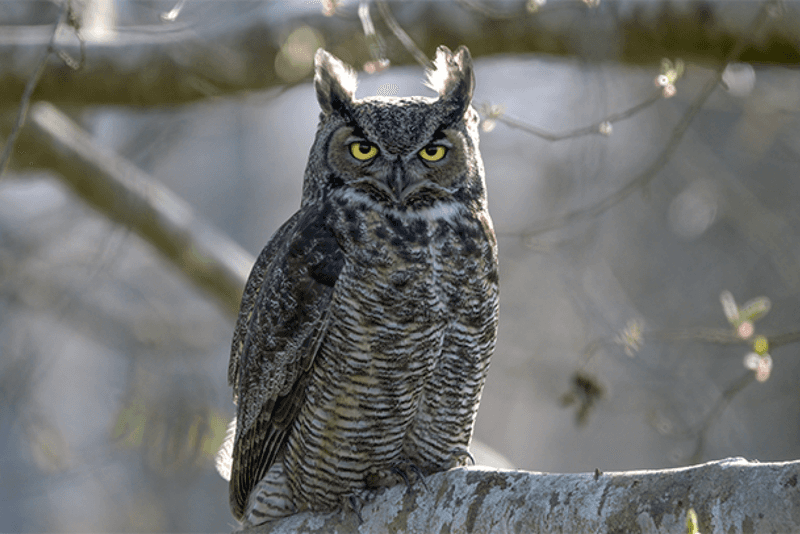
A Great Horned Owl calling over a North Carolina yard is worth savoring. Cornell Lab’s life history account describes a bird with a territory that can range from under a tenth of a square mile to more than a square mile depending on habitat and prey conditions, which means the owl you hear is likely hunting across several properties and many landscape types.
Its presence reflects something about the surrounding area’s usability, not a precise count of anything living under your porch steps.
The practical sequence from here is straightforward. Consider the season and what owl behavior it typically brings.
Look for physical evidence of rodents inside and immediately around the building before changing any pest-control approach. If signs appear, seal entry points using CDC-recommended exclusion methods, remove concentrated food sources near the house, and use snap traps indoors where needed.
Keep outdoor rodenticide out of the equation to protect the owl and every other predator in the food web.
A secured house and a yard that still supports native wildlife are not competing goals. The owl is not a problem to manage or a pest-control service to recruit; it is a neighbor with a large home range and a varied appetite.
Letting the hoot be what it actually is, a territorial call from a capable generalist predator moving through a landscape it finds worth using, turns one nighttime sound into something considerably more interesting than a rodent alarm.