
Before You Touch The Pruners This October, Here Are 7 Hydrangea Jobs That Keep Next Summer’s Buds Safe
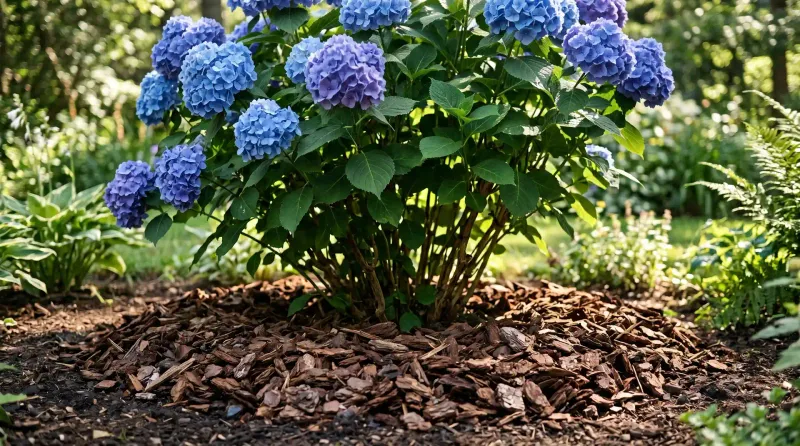
Right now, tucked inside the stems of many hydrangeas, next summer’s flowers are already waiting. One quick snip in October can wipe them out, and you won’t find out until your shrub stays green and bloomless next July.
The good news is that a few simple fall jobs can protect those hidden buds. Here are seven things to do before your pruners ever leave the shed.
1. Figure Out Which Hydrangea You Actually Have
Picture two neighbors cutting back their hydrangeas on the same October afternoon. One gets a flower show next summer, and the other gets nothing but leaves.
The difference usually comes down to the type of plant, not the gardener’s skill.
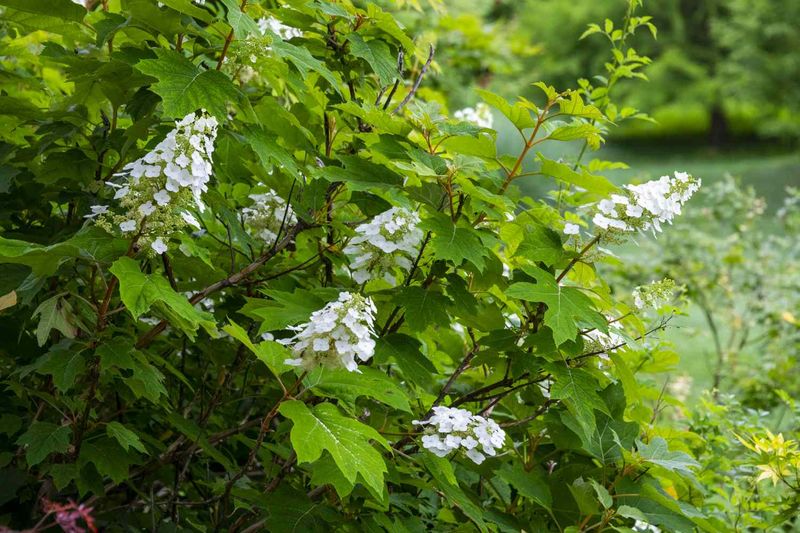
Bigleaf hydrangeas (both mophead and lacecap), oakleaf, and mountain hydrangeas bloom on old wood. That means they set next year’s flower buds on existing stems in late summer and early fall.
Panicle and smooth hydrangeas, like the popular Limelight and Annabelle, bloom on new wood that grows in spring.
Not sure which one you own? Look at the flowers.
Big round balls or flat lacy caps in blue, pink, or purple usually mean bigleaf, while cone-shaped white blooms point to panicle and large white snowballs often mean smooth hydrangea. Oakleaf types are easy to spot thanks to leaves shaped like, well, oak leaves.
Once you know your type, every other job on this list gets easier. Write the name on a plant tag or snap a photo so you never have to guess again.
2. Hold Off on Pruning Old-Wood Bloomers Until Spring
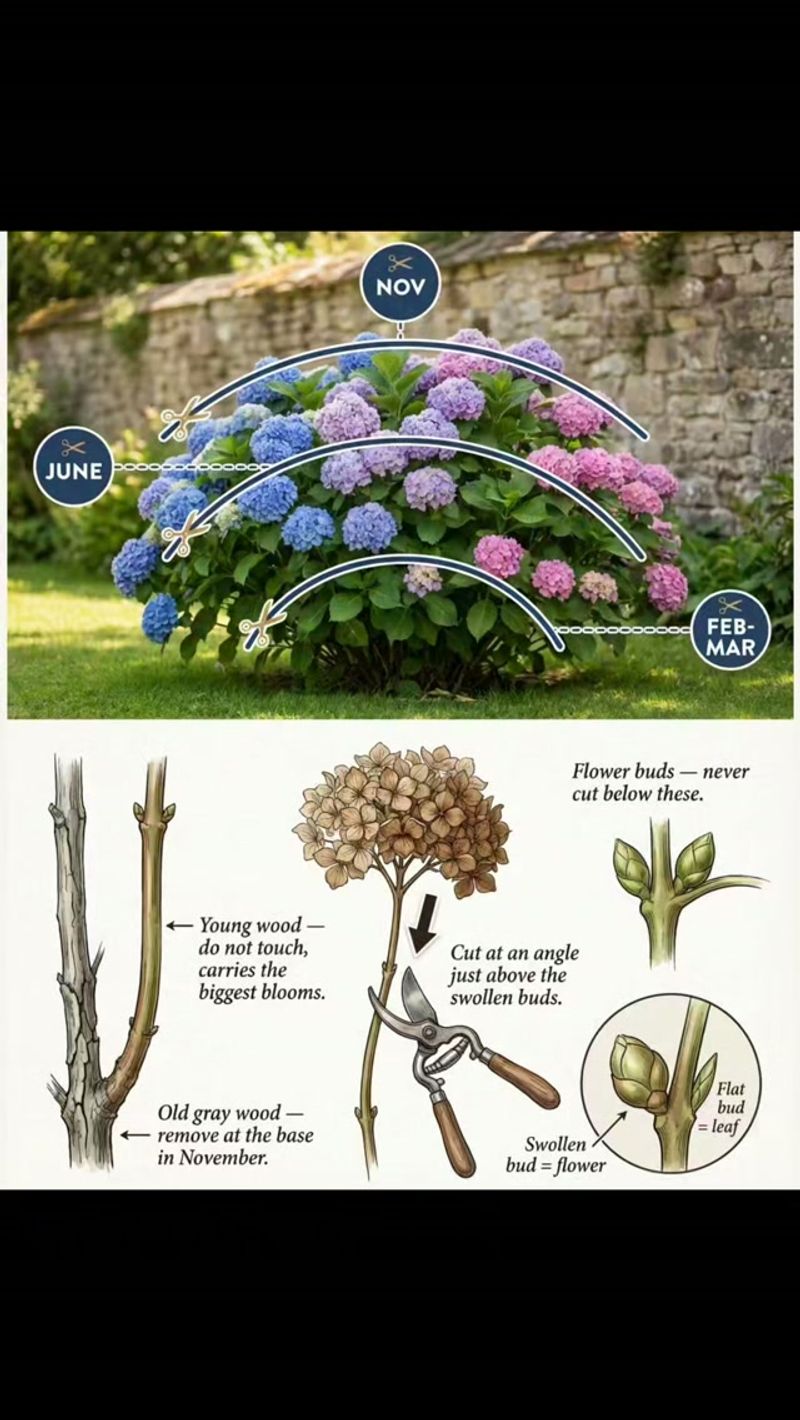
Patience is a hard sell when a shrub looks scraggly, but your bigleaf hydrangea needs it. Those fat buds at the stem tips are next summer’s blooms, already packed and ready.
Cut them off now and they’re gone for good.
For bigleaf, oakleaf, lacecap, and mountain hydrangeas, the ideal time to prune is right after they finish flowering in summer. By late October, that window has closed.
Any heavy trimming now removes flower buds that took the plant months to form.
So what can you do? Leave the stems alone for winter.
In spring, once the plant starts leafing out, you’ll clearly see which branches are dead because they stay bare and brittle. Snip those out then, and leave the living stems to flower.
New-wood types like panicle and smooth hydrangeas are more forgiving. You can trim them in late winter or early spring without losing blooms.
3. Deadhead the Faded Flowers Only
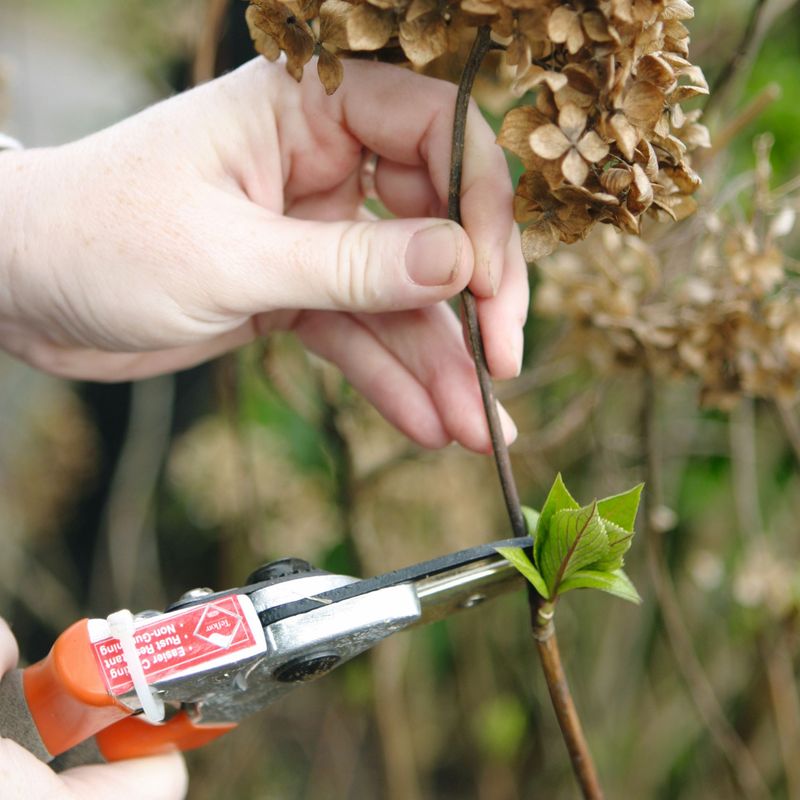
Brown, papery flower heads can make a hydrangea look tired. Removing them is fine, as long as you keep the cut small.
Think haircut trim, not buzz cut.
Snip the spent bloom just below where the flower head starts, right above the first set of healthy leaves or a visible bud. Stop there.
Going lower down the stem risks cutting off next year’s flowers on old-wood types.
Tidying up faded blooms may also help reduce fungal problems as cool, damp weather moves in. Soggy old flowers can hold moisture against the plant.
Some gardeners actually prefer leaving dried heads on bigleaf types through winter because they can offer a little extra shelter to the buds below, so either choice works if you keep the cuts shallow.
4. Spread a Thick Blanket of Mulch
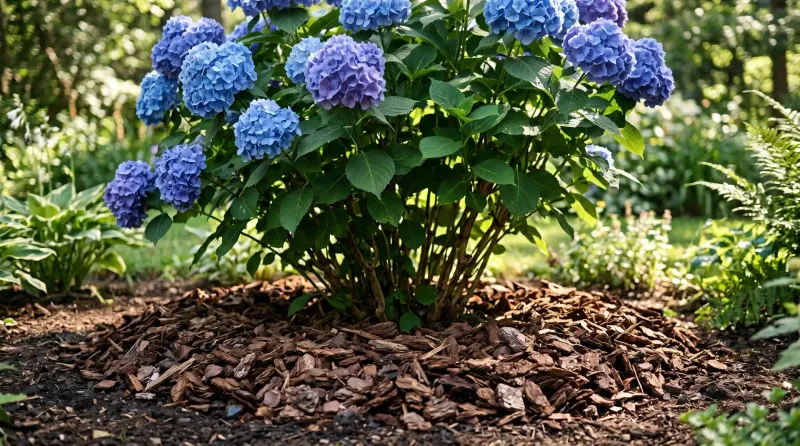
Roots don’t get much attention, but they’re what carry your hydrangea through a cold snap. A cozy layer of mulch acts like a quilt over the soil.
It keeps temperatures steady when the weather swings from mild to freezing.
Spread 2 to 3 inches of organic mulch over the root zone. Shredded bark, pine straw, and chopped leaves all work well, and those fallen leaves in your yard are free.
In USDA zone 5 or colder, you can add more, up to 5 or 6 inches, once the ground freezes.
One rule matters here. Keep the mulch pulled back a couple of inches from the stems so moisture doesn’t sit against the bark and cause rot.
A donut shape, not a volcano, is what you’re after.
5. Keep Watering Deeply Until the Ground Freezes
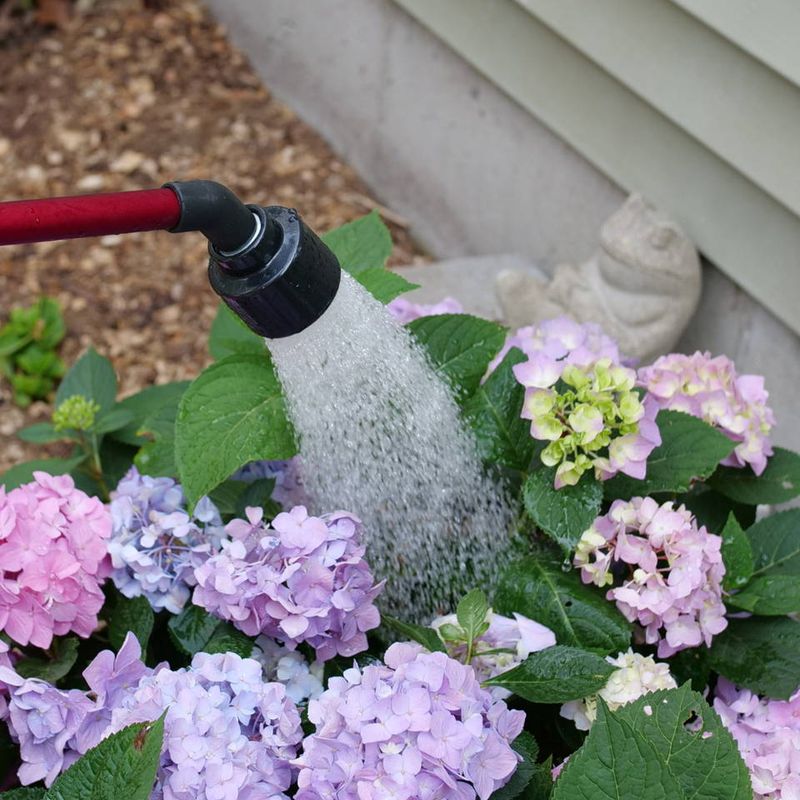
Here’s a sneaky one that trips up plenty of gardeners. Cooler air makes it feel like plants stop drinking, so the hose gets coiled up for the year.
Your hydrangea’s roots, though, are still working.
Dry fall weather can leave the soil parched right before winter. Roots that head into freezing temperatures thirsty are under more stress, and that stress can show up as dieback and weaker buds in spring.
New plantings and hydrangeas in pots are the most at risk.
During dry spells, give your shrub a slow, deep soak about once a week. Aim the water at the soil, not the leaves, and water in the morning so the plant isn’t sitting wet overnight.
Keep it up until the ground freezes solid, then you can finally put the hose away.
6. Shield Buds From Wind and Frost
Cold alone isn’t always the villain. Harsh, drying winter winds can pull moisture out of exposed buds until they shrivel.
If your bigleaf hydrangea bloomed poorly after a rough winter, this is often why.
For old-wood types in colder regions, a little armor goes a long way. Wrap the shrub loosely in burlap or a breathable plant cover.
Another trick is to set a ring of chicken wire around the plant and fill it loosely with dry leaves or straw for insulation.
A simple burlap windbreak on the windy side can also help. Some gardeners use an anti-desiccant spray to cut down on moisture loss.
Skip plastic wraps, since they trap heat and moisture, and remove any cover in spring once hard frosts are done.
7. Skip the Fall Fertilizer
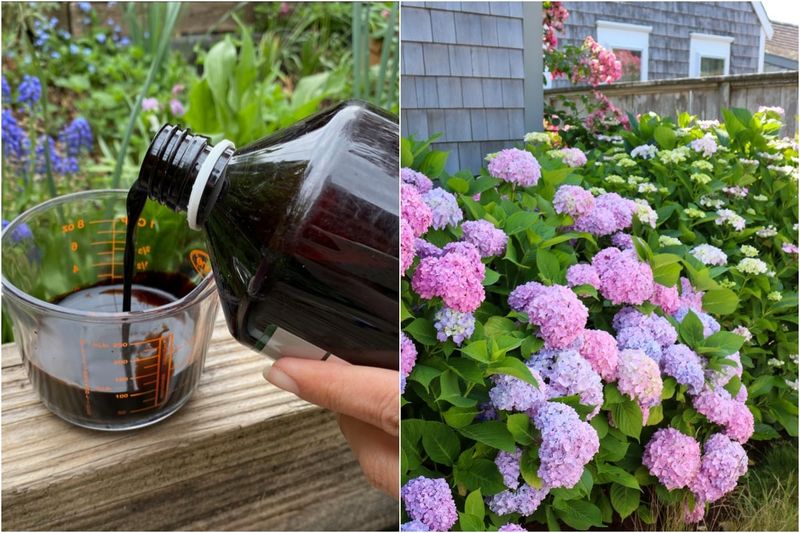
Feeding a plant feels like kindness, so this one surprises people. In fall, fertilizer can actually hurt your hydrangea.
It pushes out soft new growth at exactly the wrong moment.
That tender growth doesn’t have time to harden before freezing weather arrives. When frost hits, it can get damaged, and the plant wastes energy it would rather save for spring.
The result may be fewer blooms next summer.
Let your hydrangea slow down and go dormant naturally. Save the fertilizer for spring, when new leaves appear and the plant is ready to grow.
Sometimes the best fall care is simply leaving the bag on the shelf.