
If Your Christmas Cactus Hasn’t Set A Single Bud Yet, Here’s The October Dark-Night Reset To Try
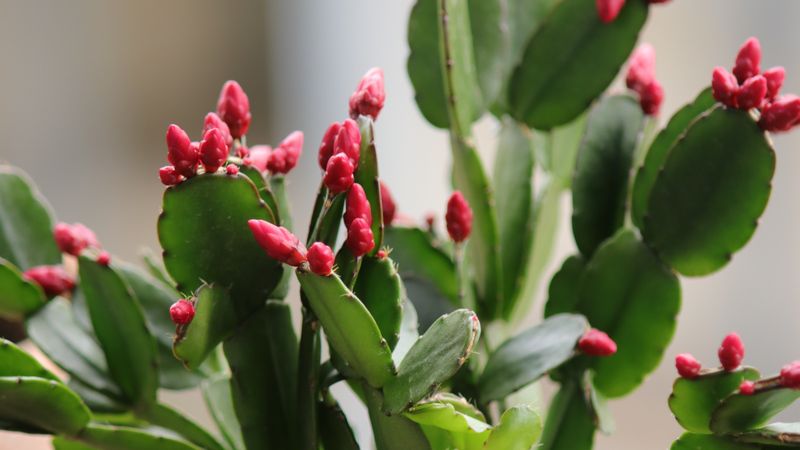
It is October, and your holiday cactus still looks like a pile of green segments with no buds in sight. That can feel scary, especially if you worked hard to save it from pale, limp stems.
The good news is that long nights, bright days, and cool air can encourage buds to form. Here is how to set up that routine without stressing the plant, and what to expect when you do.
No buds do not reveal the cause
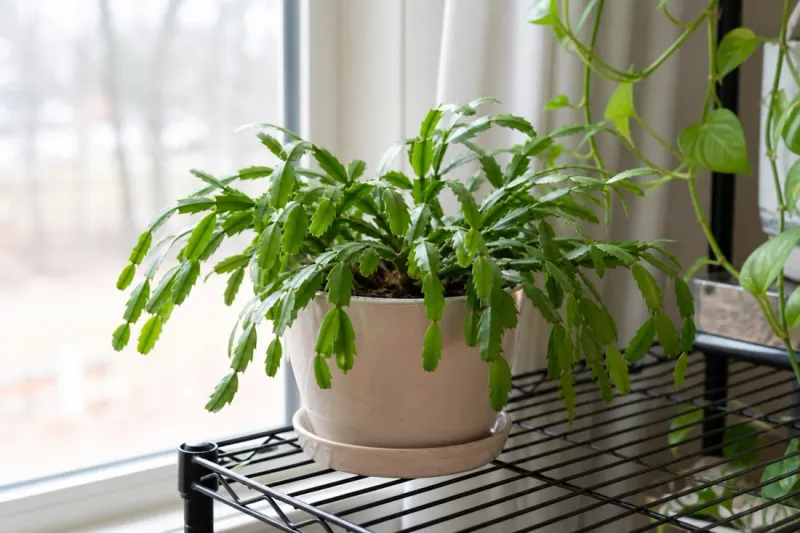
Staring at a cactus with zero buds makes it tempting to blame yourself. Missing buds can simply mean the plant has not had the right flowering cues yet, such as long nights and cool temperatures.
But the symptom alone cannot tell you what is going on.
Flowering in these plants responds to both day length and temperature, and the thresholds vary by cultivar and conditions. UMass Extension guidance for commercial growers describes this mix of light and temperature effects, and it is a helpful reminder that there is no single magic recipe.
Home conditions differ from greenhouse conditions, so results can differ too.
It also helps to keep two jobs separate. One job is encouraging flowers.
The other is troubleshooting a plant that looks pale or limp. A dark-night routine is aimed at the first job, and it will not necessarily correct stress you can already see in the stems.
Before changing anything, take a quick inventory. Check what type of holiday cactus you have, feel the soil, look at the drainage, and notice where the plant sits at night.
Illinois Extension offers clear tips on identifying and caring for these plants. Those small checks will tell you far more than the lack of buds will.
Try to think of this as encouraging, not fixing. You can improve the odds, but you cannot guarantee a result by any particular date.
The plant may not be a Christmas cactus
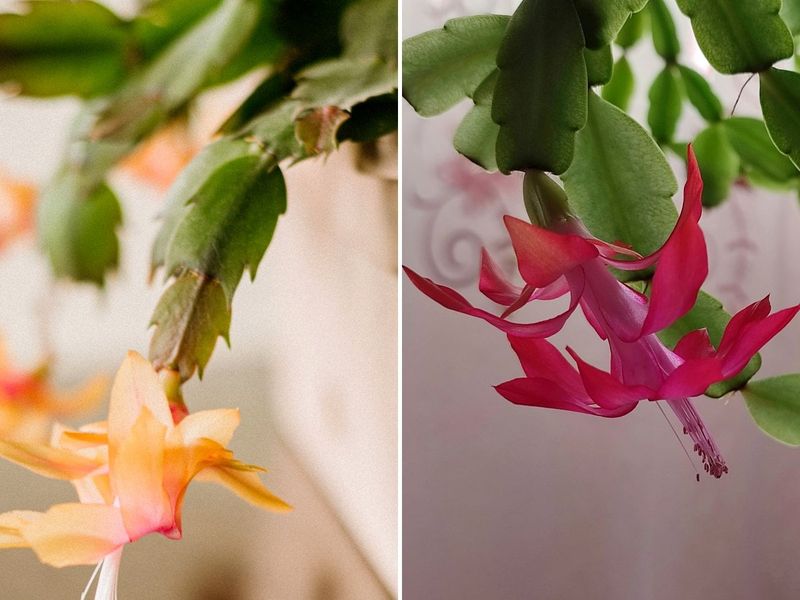
Plenty of plants sold as Christmas cactus are really Thanksgiving cacti. The name gets used loosely in stores and in families, so your plant may be running on a different schedule than you expect.
In that case, the problem may be the holiday on your calendar, not your care.
The easiest clue is in the segment edges. Pick up a stem and look closely.
Pointed, claw-like edges suggest a Thanksgiving cactus, while true Christmas cactus segments have smoother, rounded edges, as described by Illinois Extension.
Why does it matter? Types and cultivars differ in their usual bloom timing.
A Thanksgiving type may bud earlier than a true Christmas type, and some plants simply do their own thing.
Take a moment to check a few segments, since one odd stem can mislead you. If the edges look mixed or unclear, treat the plant as a general holiday cactus and focus on good conditions rather than an exact date.
Knowing your plant type helps you set a fair expectation, and that takes some pressure off both of you.
Give the cactus bright days and uninterrupted dark nights
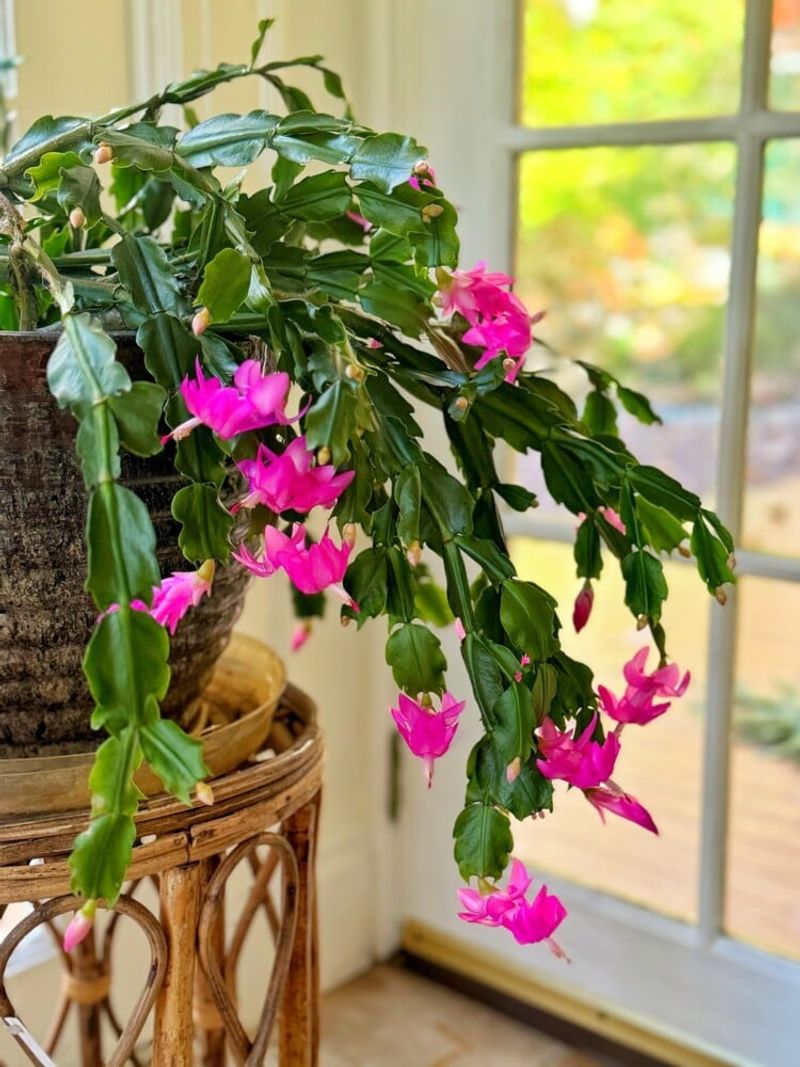
Picture a simple daily rhythm: bright, indirect light in the day, then a long stretch of true darkness at night. That is the heart of the routine, and it usually runs for several weeks.
The plant still needs good daytime light, so this is not a closet plan.
How long should the dark period be? Guidance differs.
Illinois Extension gives at least 12 hours as a minimum, while Iowa State Extension recommends 14 to 16 hours for most plants. Treat those as differing recommendations, not a guaranteed recipe.
Interruptions count. A lamp, a kitchen light, or a hallway glow can break up the dark period.
A spare room or a quiet corner where nobody flips on lights after sunset often works well.
If you have no such spot, you can cover the plant at night with a box or cloth that blocks light while still leaving air flow. Uncover it each morning so it gets bright daytime light.
Keep the schedule steady from night to night. Consistency matters more than perfection, and a missed evening is not a disaster.
Cool nights help, but cold is not the goal
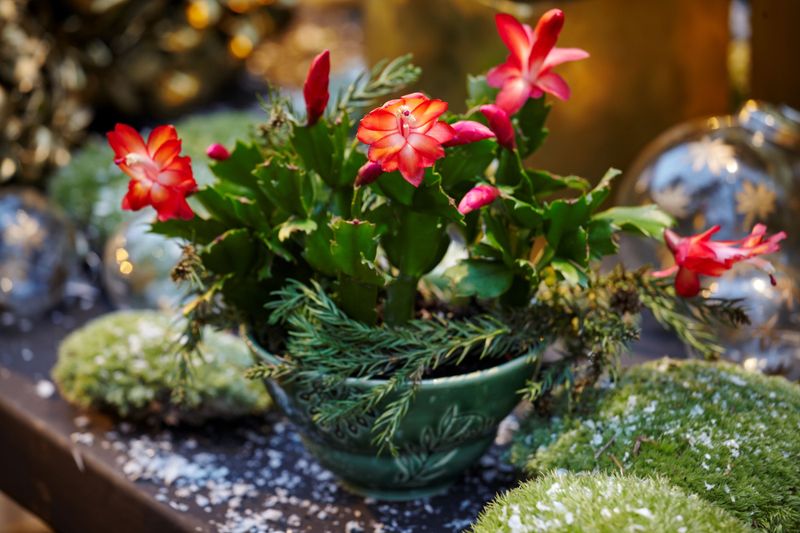
Temperature works right alongside day length. Household guidance commonly points to nights around 55 to 65°F, which University of Minnesota Extension also recommends.
A cooler room, such as a spare bedroom or an enclosed porch that stays mild, can suit this well.
Cool does not mean cold. Illinois Extension cautions that temperatures below 50°F may cause bud drop.
Keep the plant away from frost, cold glass, and drafty doors.
There is also flexibility in how temperature and light interact. UMass commercial guidance says plants at 50 to 59°F may start buds regardless of day length, while at 60 to 75°F they need short days.
That is greenhouse guidance, so use it as background rather than a rule for your living room.
A small thermometer near the plant takes out the guesswork. If your home runs warmer, you may simply lean more on the long dark nights.
No single temperature range suits every cultivar or setting.
Do not let a bud routine worsen limp or pale segments
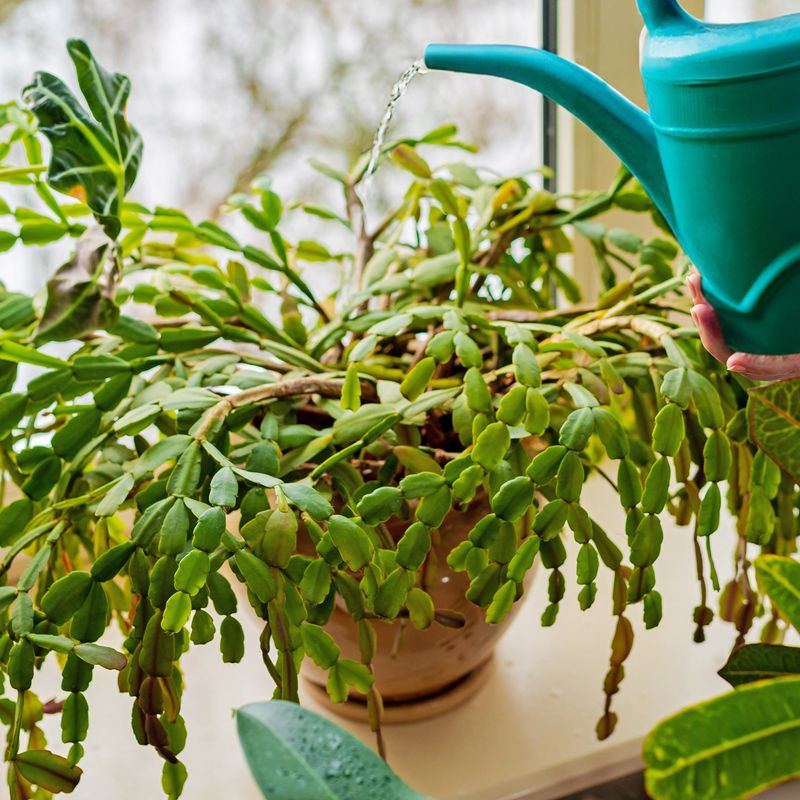
Limp segments make many people reach for the watering can. Hold off for a moment.
Wilting can come from underwatering, overwatering, or damaged roots, and Illinois Extension notes that overwatering and root problems are common causes.
Start with the soil. Push a finger into the mix and see whether it is soggy, barely damp, or dust dry.
Then lift the pot and look at the drainage holes, and empty any water sitting in the saucer.
Pale segments tell a different story. Too much direct sun can wash out the color, so a slightly gentler spot may help.
Here is a tempting shortcut to skip: drying the plant out to force buds. UMass says research does not support withholding water to induce buds, and water stress can reduce bud set.
Aim for even moisture without waterlogging or long dry spells.
Dark nights will not repair rotted roots or stressed stems. Handle those problems on their own track, and let the flowering routine run alongside.
An October start can encourage buds, not promise Christmas flowers
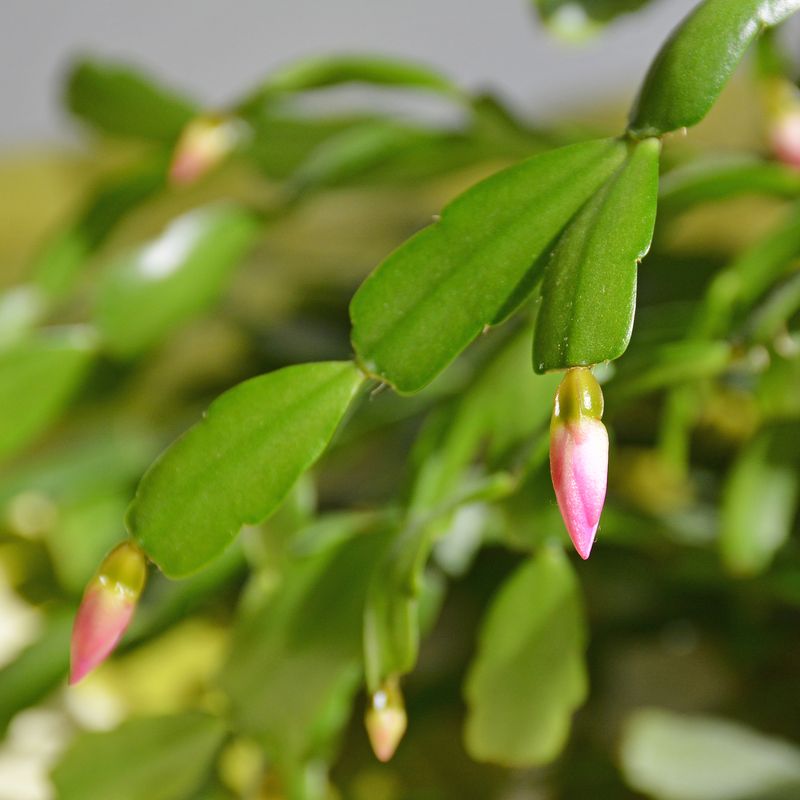
Buds and open flowers are two different milestones. A plant first initiates buds, then those buds need more time to grow and open.
Published timelines cover several weeks, and none of them are deadlines.
UMass reports that controlled short-day treatments take at least three weeks to initiate buds, and first flowers may take about eight weeks. It also says plants in northern U.S. conditions often start buds naturally in September.
That applies to northern conditions, so it is not a national calendar rule.
Other estimates vary. University of Georgia Extension describes roughly five or six weeks to flowering under some cool conditions.
Your indoor light, temperatures, cultivar, and local day length all shape the outcome.
So an October start may help, and it may also land after the holidays. If blooms come in December, wonderful.
If they arrive in January, the plant is not failing, it is just following its own clock.
Once buds appear, keep conditions steady
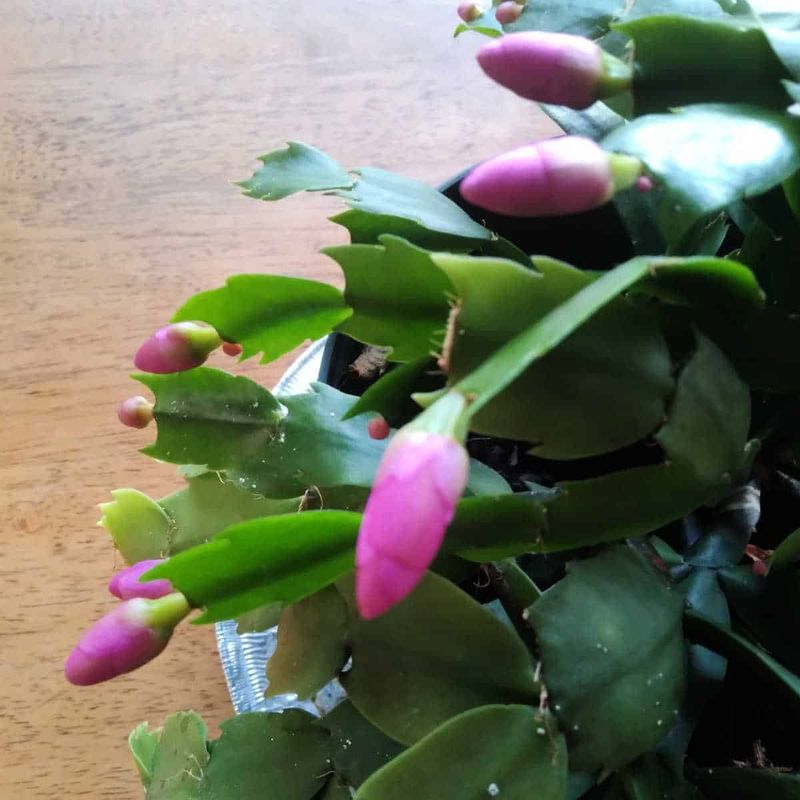
Tiny buds are a great sign, and now the best move is to leave things alone. Iowa State Extension advises avoiding unnecessary moves, drafts, and abrupt changes in light or temperature, since these can contribute to bud drop.
Pick a spot with good light and stable temperatures, and keep it there. Skip the urge to rotate the pot for looks, and keep it away from heating vents and cold windows.
Buds may still fall now and then, even with good care. Steady conditions simply give them their best chance.
The plant sets its own pace, and patience is part of the routine.