
The Native Plants Your North Carolina HOA Can’t Legally Stop You From Growing Out Front
Here is the honest truth up front: North Carolina has no state law that forces an HOA to allow native plants. What most HOA rulebooks actually ban is a messy yard, not a specific plant, and that gap is where smart gardeners win.
The nine natives below look neat, tidy, and intentional, so they are very hard for a board to fairly object to, and many of them replace invasive shrubs your neighbors already have. Plant them well and your front yard can feed goldfinches, fireflies, and pollinators while still passing the drive-by inspection.
1. Inkberry Holly
Picture the most buttoned-up foundation hedge on your street. Now picture it quietly feeding birds all winter.
That is inkberry, and it may be the single best opening move for an HOA yard.
Most North Carolina neighborhoods are full of nandina, sometimes called heavenly bamboo. It is invasive here, and its berries can be toxic to cedar waxwings and other birds that gorge on them.
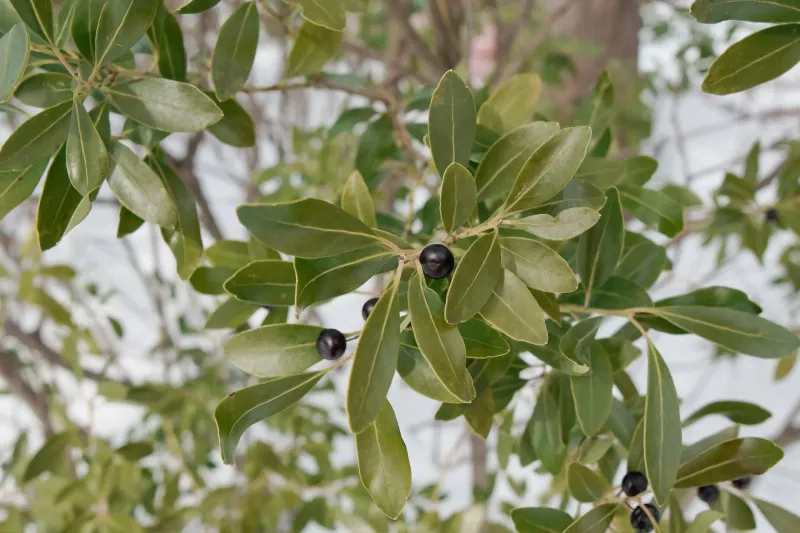
Inkberry (Ilex glabra) fills the same tidy, evergreen role, but its small black berries are a safe food source.
From the street, inkberry reads as classic boxwood-style landscaping. It shears well, stays green year-round, and handles both Coastal Plain sand and Piedmont clay.
Compact varieties like Shamrock or Gem Box keep things low under windows.
Here is the legal angle. Many HOA covenants require a neat or manicured appearance but never list approved species.
A clipped evergreen hedge meets that standard on sight, which makes a complaint very hard to justify. When you pull out nandina and replace it with inkberry, snap before and after photos for your records.
2. Eastern Redbud
Every March, Bradford pears across North Carolina bloom white and smell, frankly, like old fish. Then they split in storms and spread thorny wild offspring into nearby woods.
If your HOA planted one out front, you have a golden swap opportunity.
Eastern redbud (Cercis canadensis) is the answer. Its bare branches erupt in pink-purple blossoms in early spring, feeding native bees when little else is open.
Heart-shaped leaves follow, and the tree stays a manageable 20 to 30 feet.
Boards rarely argue with a flowering ornamental tree. Redbuds look like something a landscape architect would choose, because they often are.
They also host caterpillars that nesting songbirds feed their chicks.
Before cutting any tree, check whether your covenants require approval for tree removal or replacement. Submit a short request that says you are replacing an invasive Callery pear with a native flowering tree of similar size.
Framed that way, it sounds less like a rebellion and more like a favor to the neighborhood.
3. Virginia Sweetspire
Butterfly bush has a great name and a bad habit. Buddleja davidii seeds itself into roadsides and forest edges, and while adult butterflies sip its nectar, almost no native caterpillars can eat it.
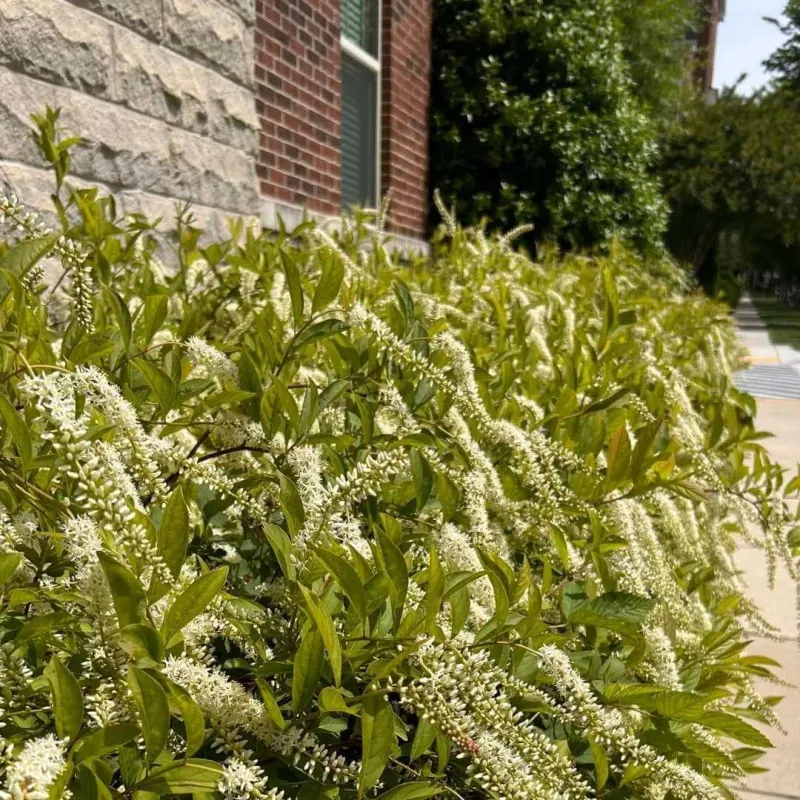
Virginia sweetspire (Itea virginica) gives you the showy blooms without the guilt. In late spring, arching stems fill with fragrant white flower spikes that pull in bees and butterflies.
By fall, the leaves turn wine red and hang on well into winter.
Sweetspire grows naturally along NC streams, so it shrugs off soggy spots where other shrubs rot. That makes it handy for low corners where downspouts drain.
Dwarf types like Little Henry stay knee-high for front borders.
Because it looks like a standard flowering shrub, nobody driving by will guess you are running a wildlife project. That is the quiet trick of HOA native gardening, choosing plants that pass as ordinary while doing extraordinary work.
4. Mountain Mint
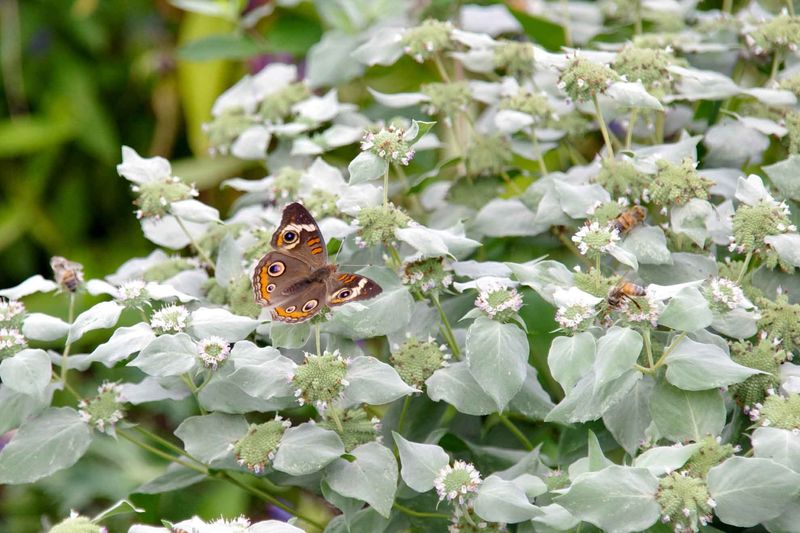
Stand beside a mountain mint plant in July and you will hear it before you see what is happening. Dozens of bees, wasps, and small butterflies crowd the silvery flower heads.
Pollinator researchers often rank it among the busiest plants in any garden.
Mountain mint (Pycnanthemum species) has another perk for tick-worried homeowners. Its strongly scented foliage is something deer tend to avoid, and fewer deer wandering your beds can reduce the ticks they drop along the way.
It is not a force field, but it may help as part of a tick-smart front border.
Keep it tidy and it earns its spot. Mountain mint spreads more politely than true garden mint, but an edged bed or a buried border strip keeps it in line.
A late spring trim keeps plants bushy and compact.
Pair it with clean mulch and a crisp edge along the lawn. That defined border is your best argument if a board questions it.
5. Bee Balm
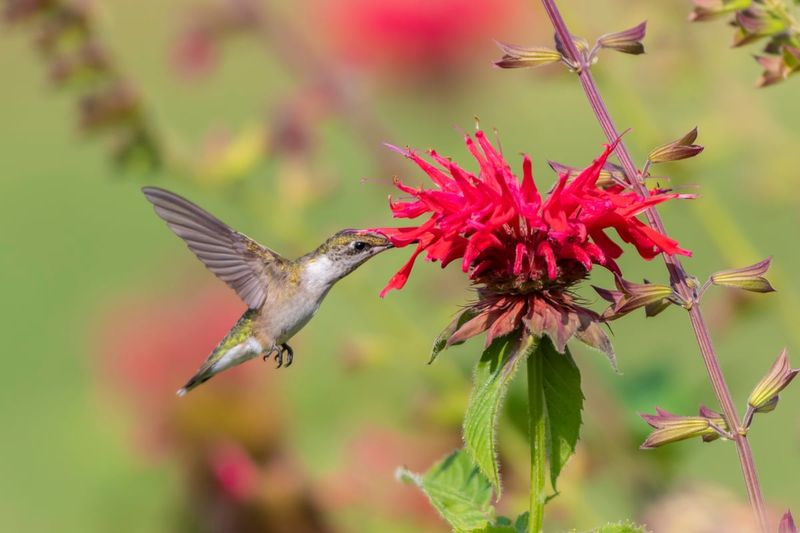
Ruby-throated hummingbirds seem to have a map with every bee balm patch in the county marked on it. Plant scarlet Monarda by the front steps and you may get a front-row show.
Bee balm and its cousin wild bergamot share the same fragrant foliage as mountain mint, which deer usually skip. That scent pulls double duty.
It keeps grazers moving and fills your walkway with a spicy, oregano-like smell.
Color matters in an HOA. Red bee balm looks cheerful and deliberate, the kind of thing people compliment.
For mountain gardeners, lavender wild bergamot fits naturally, while Piedmont and Coastal yards do well with either.
Give it good airflow to limit powdery mildew in humid NC summers. Cut spent stems after bloom to keep things tidy.
A neat plant is a defensible plant.
6. Purple Coneflower
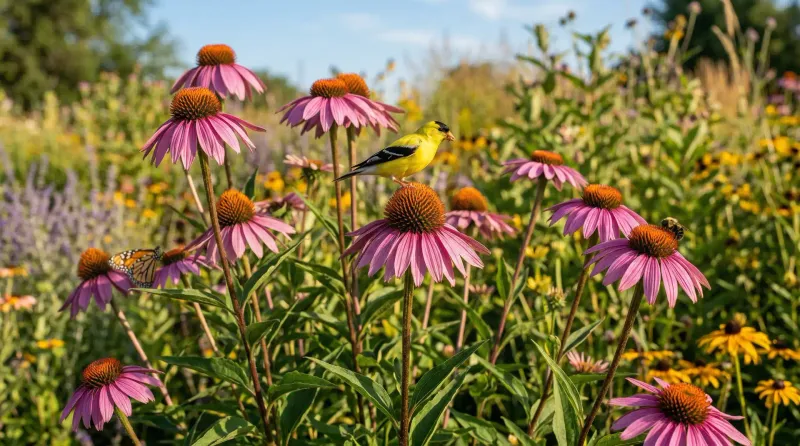
Goldfinches are picky eaters with excellent taste. Leave coneflower seed heads standing into fall and you will see flashes of yellow bobbing on the stems, pulling out seeds one by one.
Purple coneflower (Echinacea purpurea) is probably the most familiar native on this list. That familiarity is an advantage, because boards and neighbors already see it at garden centers and in parks.
It rarely reads as weedy.
Summer brings long-lasting pink-purple blooms for butterflies and bees. It handles heat and drought once established, which matters during dry NC summers.
Here is a useful fact: under N.C.G.S. 47F-3-122, HOAs generally cannot force you to irrigate during a declared drought unless the covenant specifically requires it.
To keep the goldfinch buffet without looking messy, trim flopping stems and leave upright seed heads standing. Plant them in groups of five or more.
Drifts look planned, and planned looks compliant.
7. Christmas Fern
English ivy looks innocent on a shady slope. Give it a few years, though, and it climbs trees, smothers wildflowers, and gives rodents and mosquitoes a hiding place.
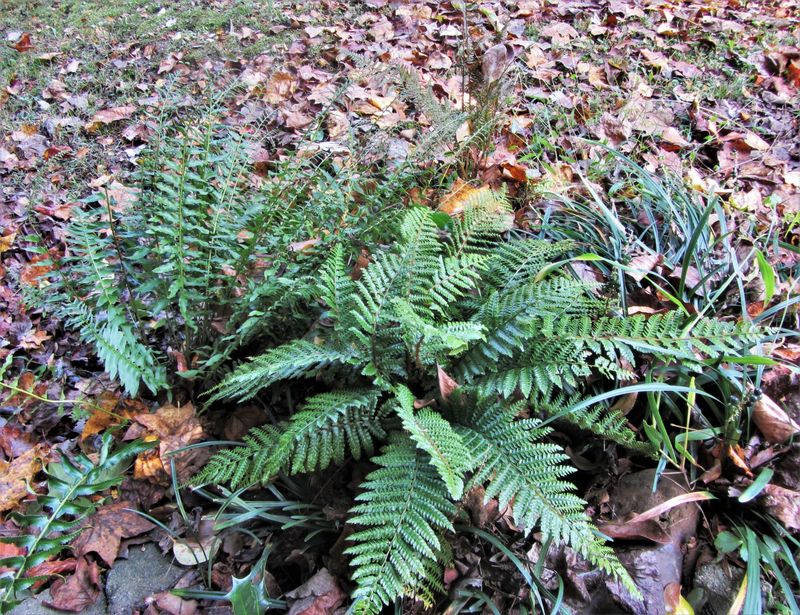
Christmas fern (Polystichum acrostichoides) is the classy stand-in. Its leathery fronds stay green all winter, which is where the name comes from, so your shady front bed never looks bare.
It forms neat clumps instead of running wild.
Here is why this matters for your yard’s wildlife. A mix of ferns, native sedges, and leaf mulch creates cool, damp shelter where fireflies spend their larval stage.
Fewer ivy mats and fewer leaf blowers can mean more summer blinking in your yard.
Pull ivy in fall or winter when the ground is soft. Bag it rather than composting.
Tuck ferns in with a mulched edge, and your shade bed looks like a woodland garden instead of a problem area.
8. Carolina Jessamine
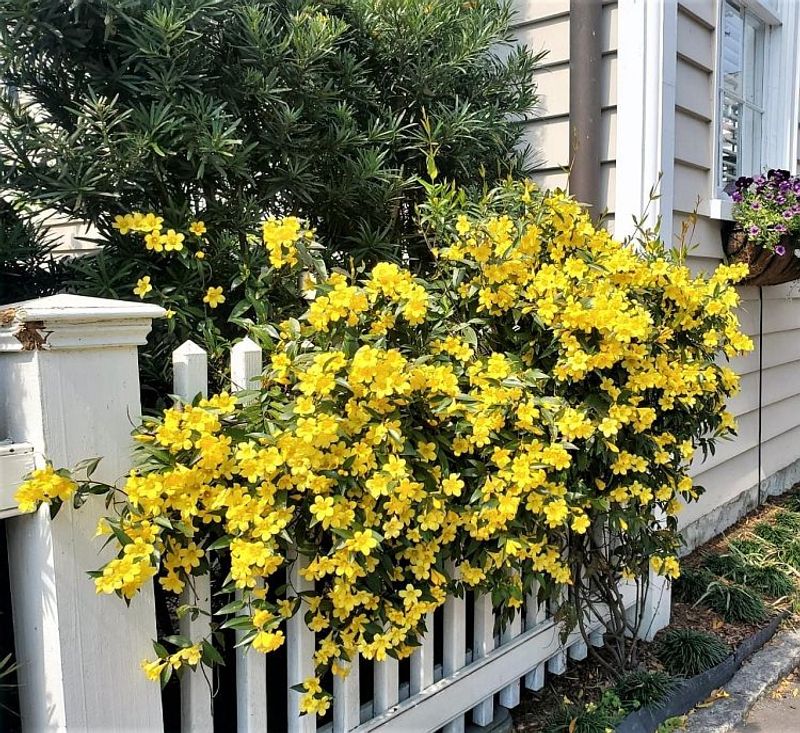
Nothing says late winter in North Carolina quite like the first yellow trumpets of Carolina jessamine. It is the official state flower of South Carolina, but it grows wild across much of our state too.
If a Chinese wisteria is strangling your porch rail or front fence, jessamine is the swap. Wisteria is a heavy invasive that crushes structures and spreads into woods.
Carolina jessamine (Gelsemium sempervirens) stays lighter, evergreen, and much easier to steer.
Train it on a mailbox trellis, lamppost, or arbor for an easy curb-appeal win. Early flowers give waking bees something to eat.
Crossvine and trumpet vine are other natives worth trying if you want hummingbird-red color instead.
One caution for families: all parts of jessamine are toxic if eaten, so skip it where small children or pets chew plants. Otherwise, it is one of the prettiest ways to fix a wisteria problem.
9. Coral Bells
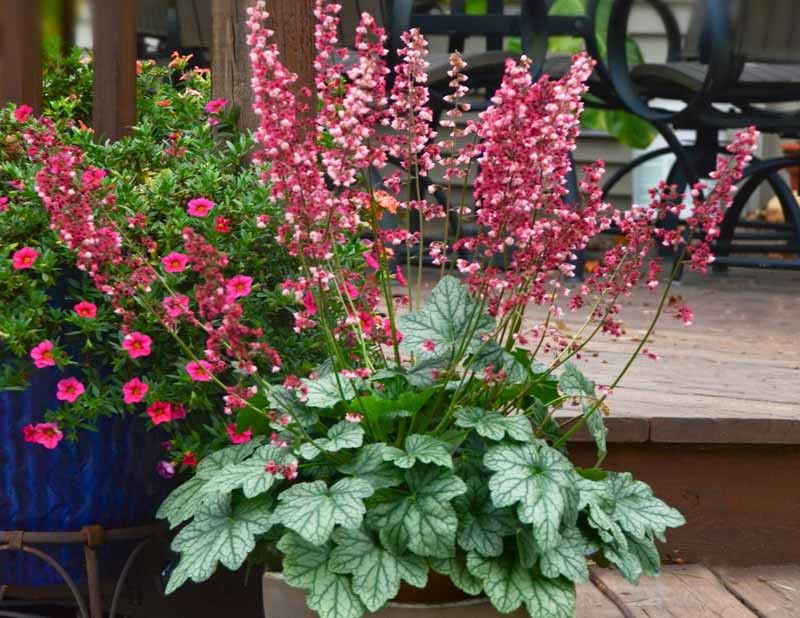
Some plants are designed to make neighbors ask where you bought them. Coral bells, or Heuchera, are that plant, with ruffled leaves in green, silver, and deep purple tones.
Choose the native species, like Heuchera americana or Heuchera villosa, or cultivars bred from them. They do well in NC shade and part sun, and their tiny flower spikes draw small bees and hummingbirds.
As a groundcover along walkways, they are another good English ivy replacement.
Coral bells are your finishing touch. Use them along the front edge of every bed to create a clean, polished line.
That line is what turns a native garden from wild to deliberate in the eyes of an HOA.
If a violation letter ever arrives, stay calm. Check whether the rule is enforced evenly across the neighborhood, ask the board which exact rule you broke, and reach out to the North Carolina Native Plant Society for resources.
Bring photos of your edged, mulched beds, and let your tidy natives make the case.