
Short Or Floppy Foxgloves? How To Tell A Low Rosette From A Weak Flower Spike
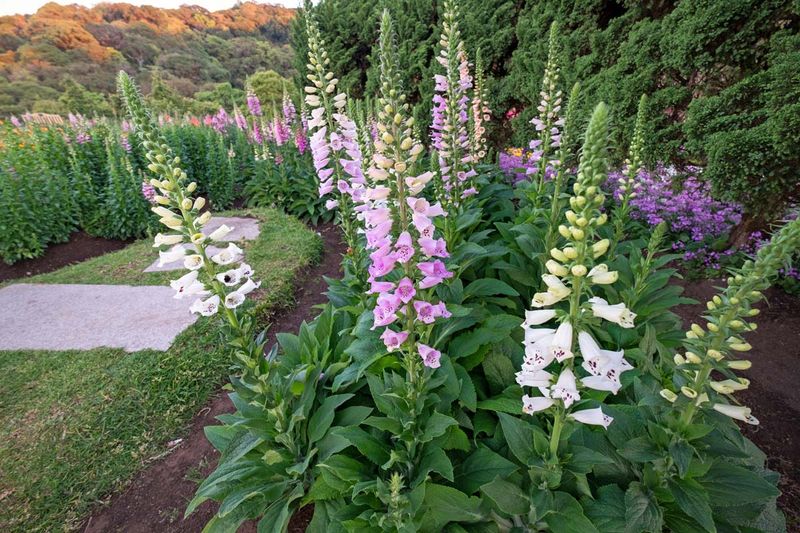
Your foxglove looks small and low as fall settles in, and you wonder if you did something wrong. Many times, the plant is doing just what it should.
A foxglove in its first year often stays close to the ground, and the tall spires come later. Here is how to tell a normal young plant from a flower spike that is struggling, and what care actually helps.
A low fall rosette may be right on schedule
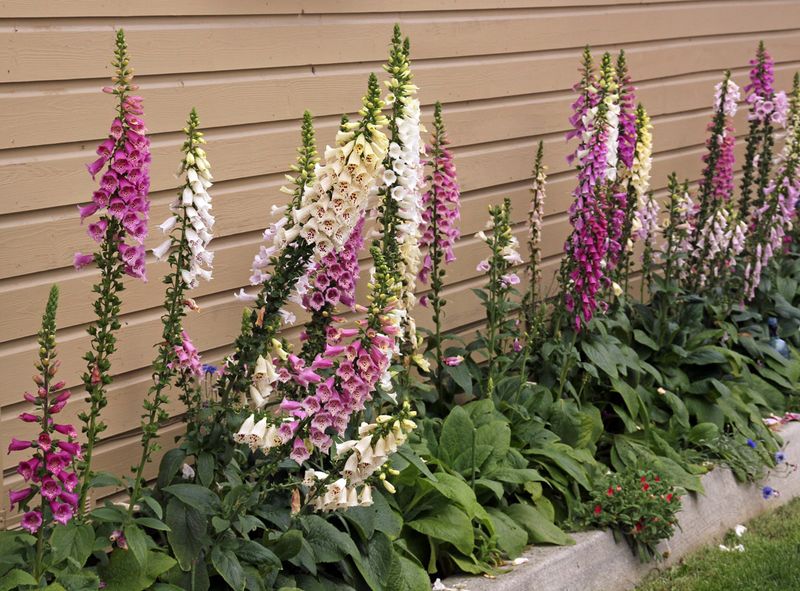
Picture a tidy circle of fuzzy, wrinkled leaves hugging the soil. That is a foxglove rosette, and it is the normal look of common foxglove (Digitalis purpurea) in its first year.
A plant like this is not short and floppy. It simply has not reached its flowering stage yet.
In the typical pattern, Wisconsin Extension describes foxglove as a biennial that makes leaves the first year and sends up a flower spike the second. That is the usual story, not a promise.
Some plants behave more like short-lived perennials, and timing can shift with the cultivar, the climate, and the growing conditions, as North Carolina State Extension also notes.
So a low plant in October does not mean you need to rescue anything. A rosette with firm, green, growing leaves is usually a plant on track.
Worry more if the leaves are mushy, yellowing across the whole plant, or shrinking over time, since those signs point to a site problem rather than a normal stage.
Think of fall as the rosette’s build-up season. It is gathering strength underground and in those leaves for whatever comes next.
You can help it along, but you cannot rush it, and nobody can guarantee exactly when it will bloom.
Check the variety before judging its height
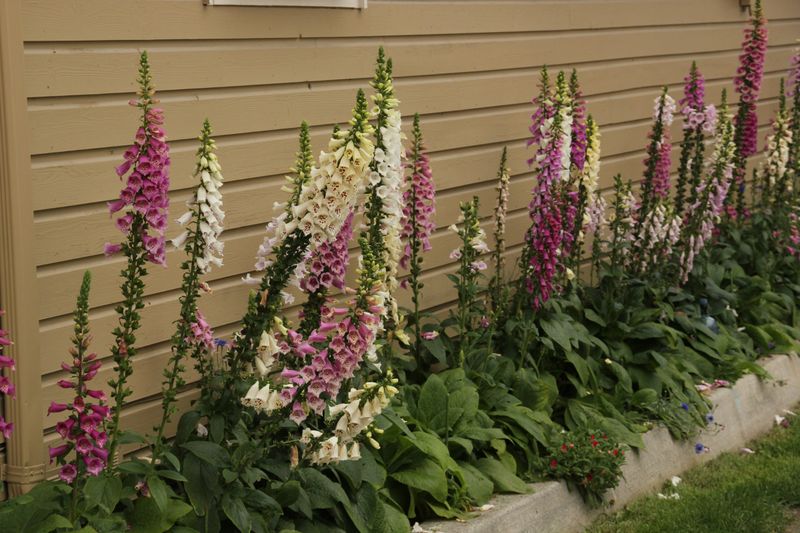
Before deciding a foxglove is too short, ask two questions. Is it a young rosette that has not bloomed yet, or is it a plant with an actual flower spike that came up smaller than you hoped?
The answers lead to very different next steps.
Variety matters a lot. Wisconsin Extension lists compact ‘Dalmatian’ types that flower in their first year at about 16 to 20 inches, while other cultivars reach around 3 to 4 feet.
A 20-inch spike from a Dalmatian type is normal, not a failure.
Plant age and conditions also play a part. Light, moisture, and soil can all affect how a plant grows, and the Royal Horticultural Society describes foxgloves as plants that do best in the right spot.
Deep shade or very dry soil may hold growth back, but that is only one possibility.
Check your seed packet or plant tag first. Then look at the plant’s stage and its site.
Without those clues, it is hard to name one cause for short growth, so try not to blame a single thing too quickly.
Also remember that foxglove timing can vary, as NC State points out. Not every plant follows the textbook calendar.
Give the rosette suitable growing conditions
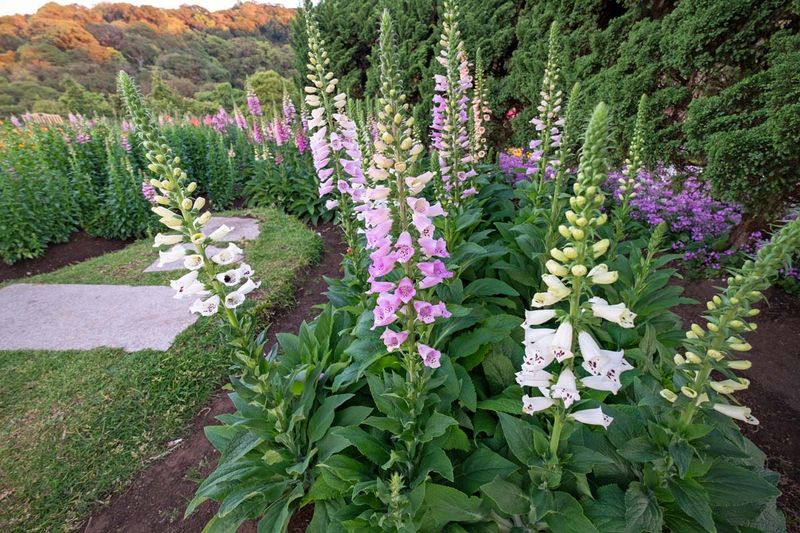
Foxgloves tend to settle in best where light or partial shade meets soil that is moist but drains well. NC State Extension points to this kind of site, and the Royal Horticultural Society gives similar advice for biennial foxgloves.
Both extremes cause trouble. Soil that bakes dry can stress the plant and may limit flowering.
Soggy, waterlogged ground is no better, so a spot where water pools after rain is a poor home.
Light is a balancing act too. No single exposure suits every garden or every cultivar.
A hot, sunny climate may call for more shade than a cool, cloudy one, so watch how your own plants respond.
In fall, a simple routine is enough. Water during dry spells so the soil stays lightly moist, and add a thin layer of mulch if your soil dries fast.
Skip heavy feeding or extra watering meant to push height, since neither is a proven way to make taller spikes.
These conditions support healthy growth, but they cannot guarantee a certain height or bloom. They also vary by region.
Moving or transplanting should follow your local fall weather, not one date for the whole country. Your local extension office can tell you when the ground typically freezes near you.
Give seedlings room to establish
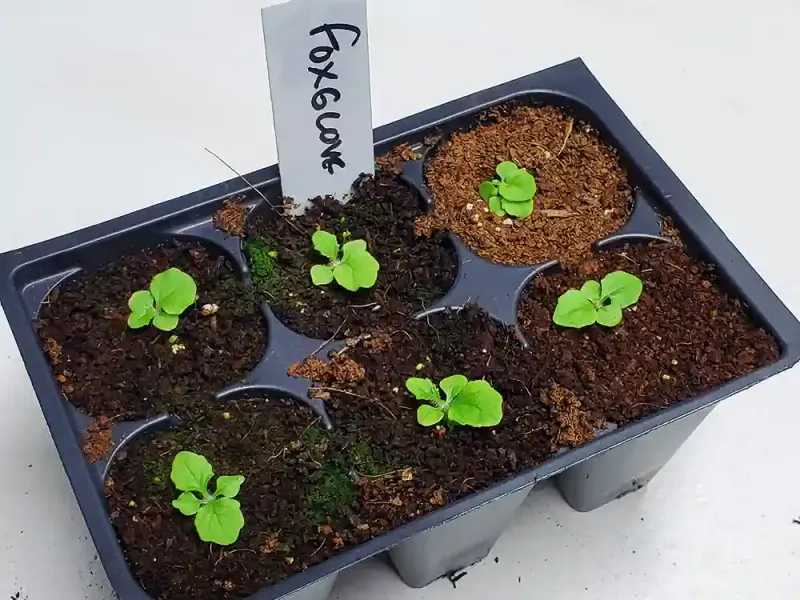
Crowded foxgloves compete for light, water, and air. Giving each plant space helps every rosette fill out its leaves.
Wisconsin Extension recommends thinning seedlings to about 18 inches apart.
Thinning feels harsh, but pulling or snipping the weaker seedlings leaves the stronger ones room. Water the bed afterward so the remaining plants stay settled.
If you would rather save the extras, move them carefully to another spot with similar conditions.
If you are starting from seed, remember that foxglove seeds need light to germinate. Press them onto the soil surface and do not cover them.
Burying them can leave you with nothing but bare dirt.
The same Wisconsin source describes direct sowing in late summer for blooms the following year. Treat that as one regional option, not a rule for everyone.
A gardener in a mild climate may sow on a very different schedule than someone with early frosts.
Match your timing to your local last and first frost dates, and ask your county extension office if you are unsure. Even well-timed seeds may not bloom exactly on schedule, so a little patience goes a long way.
Support tall flower spikes when they need it
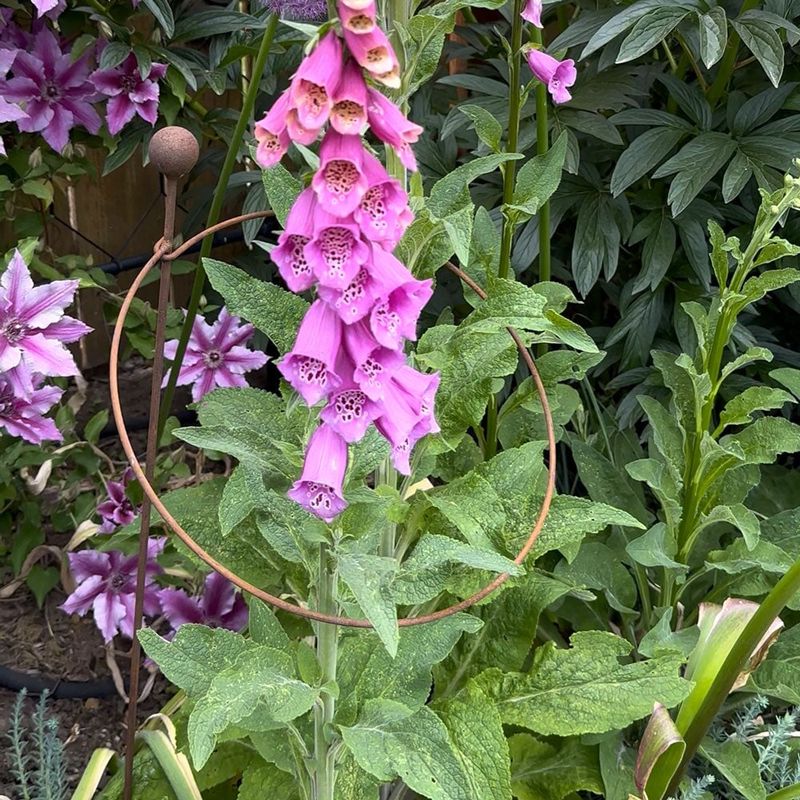
A short plant and a floppy plant are two separate problems. Flopping shows up on tall flower spikes, usually when they are heavy with blooms.
A low rosette in fall has nothing to flop yet.
Tall stems can use a helping hand. Maryland Extension advises staking early, when the plant is about one-third of its mature height.
Tie stems loosely so the twine supports them without squeezing or cutting in.
Choose a stake that will match the plant’s final height, and set it next to the stem without damaging the roots. Soft ties like garden twine or strips of cloth work well.
Check the ties as the stem grows so they never become tight.
Care choices can also play a part. Too much fertilizer or too much water can lead to lush, soft growth with weaker stems.
That is one reason not to push a foxglove with extra feed or moisture to make it taller.
Staking helps, but it cannot promise a stem will stay upright through every storm. Variety and site conditions matter too, and Wisconsin Extension notes that taller cultivars may need support.
Plan for stakes in spring, not for the fall rosette.
Keep foxglove away from curious mouths
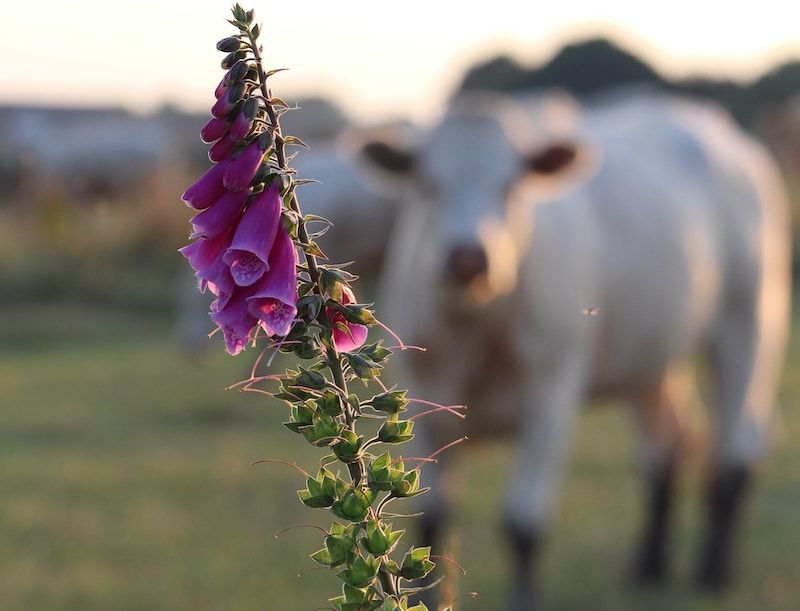
Pretty as they are, foxgloves are dangerous if eaten. Poison Control explains that all parts of foxglove are poisonous if swallowed.
That includes the leaves, flowers, and seeds.
Place plants away from spots where children or pets play. A back border or fenced bed is safer than a path edge.
Wear gloves if you have sensitive skin, and wash your hands after working with the plants.
Never use any part of foxglove for food, tea, or home remedies. Young rosette leaves can look like other leafy plants, so label your plants and tell others in the household what they are.
If someone may have swallowed any part of a foxglove, call Poison Control at 1-800-222-1222 in the US or contact emergency services right away. Do not wait for symptoms, and do not try home treatments.
Focus on what fall care can actually do
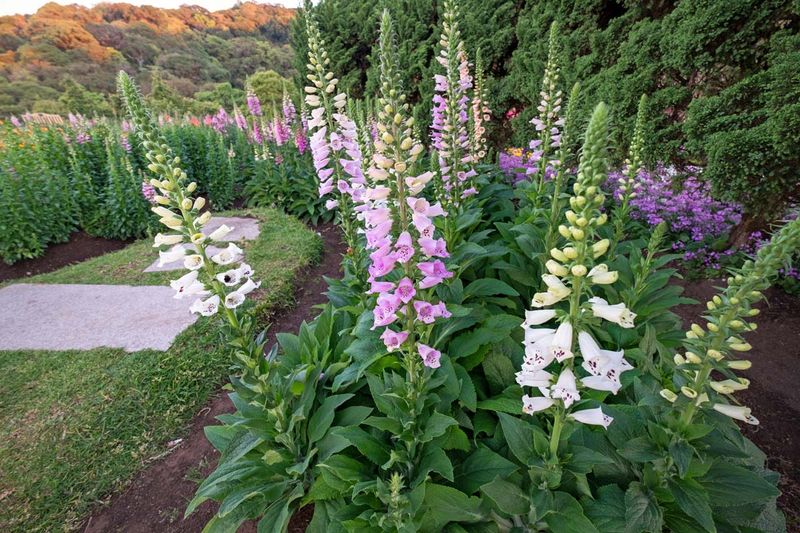
Start by checking whether your low foxglove is simply in its rosette year, since that is the usual pattern. Then give it a suitable spot with moist, well-drained soil, as the RHS suggests, and plan to stake tall stems early next season.
None of this guarantees next year’s height, bloom timing, or upright spikes. It just gives your plant a fair chance.
Sometimes the best fall task is a little patience.