
How to Identify an Unknown Hydrangea Before Deciding Whether to Prune
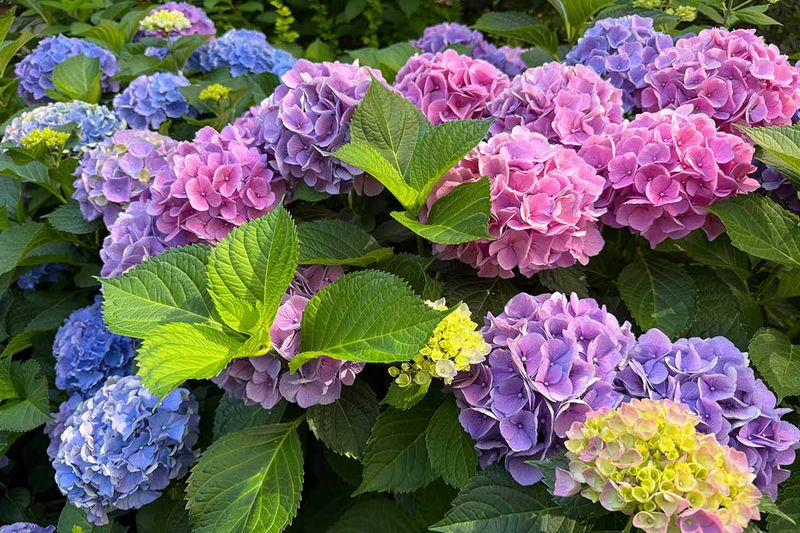
You walk past your hydrangea every day, but do you know which kind it is? That answer decides whether a pair of pruners helps the plant or snips off next summer’s flowers.
Leaves, flower clusters, and growth habit give you clues, and a few simple checks can narrow things down. Here is how to sort it out before you cut anything.
Narrow down the plant before you decide to prune
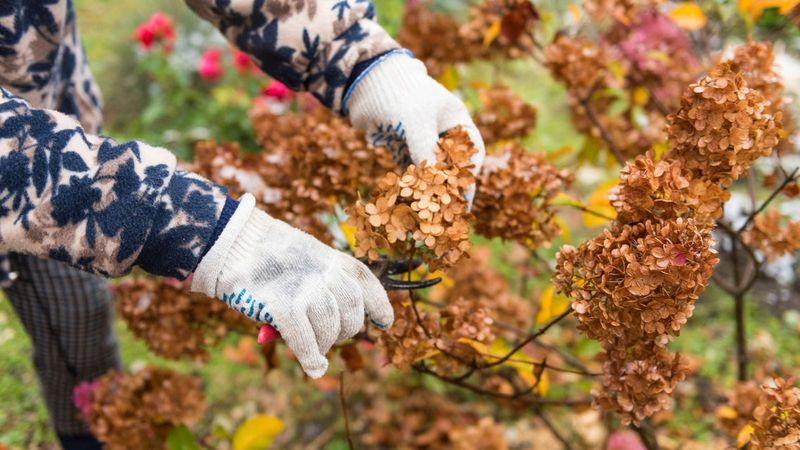
Picture this: it is October, the blooms have faded, and the shrub looks a bit untidy. Before you reach for the shears, pause.
Some hydrangeas set next year’s flower buds on stems that grew this season, so a fall cut can remove the show you are waiting for.
According to University of Illinois Extension, knowing the type of hydrangea is the first step in deciding when, or whether, to prune. Not every fall cut harms every hydrangea.
Some types tolerate pruning well, and University of Minnesota Extension even allows fall pruning for panicle types.
The trouble is that you cannot tell which group you have without a few clues. So the plan is simple: look at the leaves, the flower clusters, and the way the plant grows, and check for a plant tag.
If those clues still do not settle it, skip the fall shape-reduction or cutback and wait. Waiting costs you nothing, while a wrong cut can cost you a season of blooms.
Use leaf shape as one identification clue
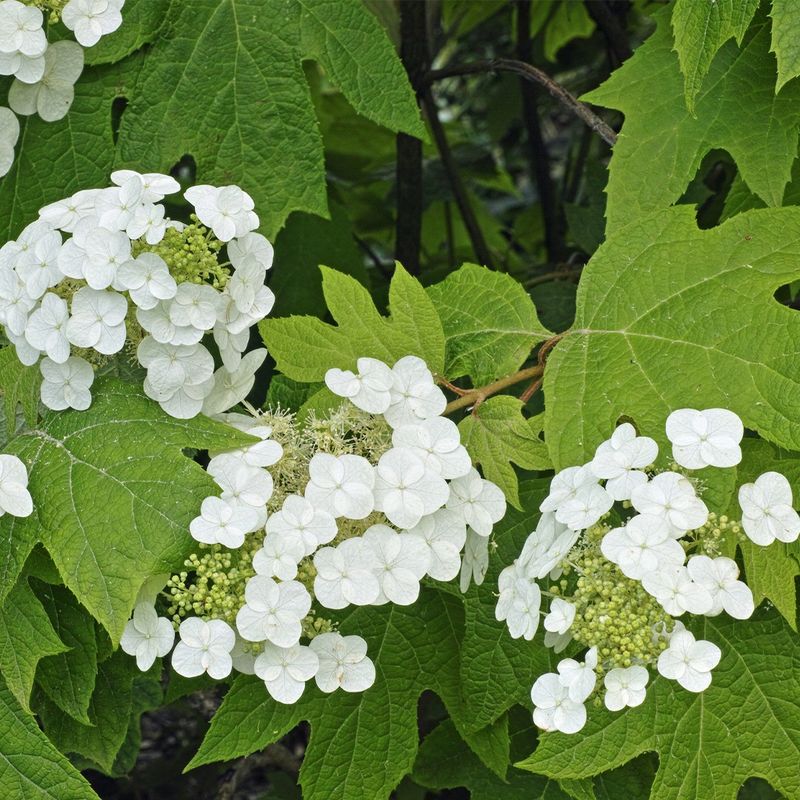
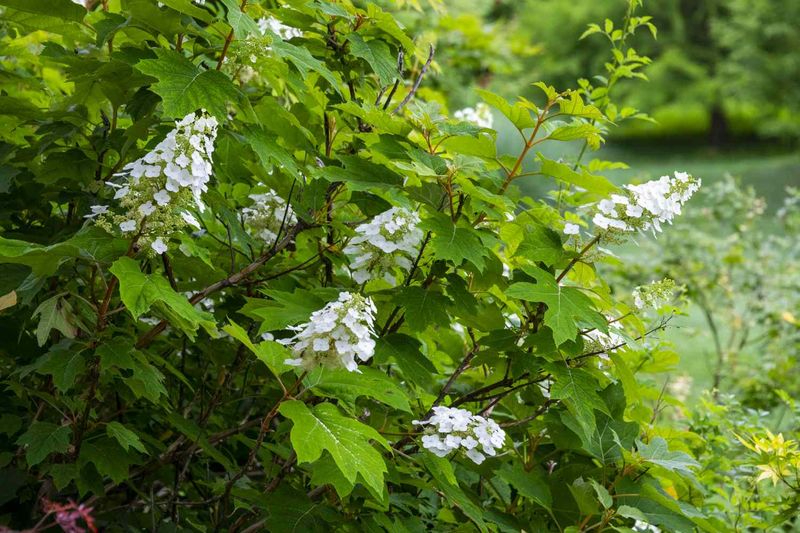
Start with the foliage, since leaves are easy to see and compare. Oakleaf hydrangea has deeply lobed leaves shaped a lot like those of an oak tree, and that shape is a strong hint.
Bigleaf hydrangea commonly has broad leaves with serrated, toothed edges.
Guidance from University of Georgia Extension points to leaf traits as a useful way to tell hydrangea types apart. Still, treat a leaf as a clue and not as proof.
Leaves can look different on young plants, shaded plants, or stressed ones.
Here is a practical way to use this. Pick a healthy leaf from the middle of a stem and note its outline and edges.
Then write down what you see, and move on to the flowers and growth habit. If the leaf looks oak-like, that points toward oakleaf.
If it is broad and toothed, bigleaf is a good guess, but keep checking.
A smartphone photo of the leaf, the flower head, and the whole shrub can also help you compare later, or show a local garden center or extension office.
Compare flower clusters without relying on color or timing
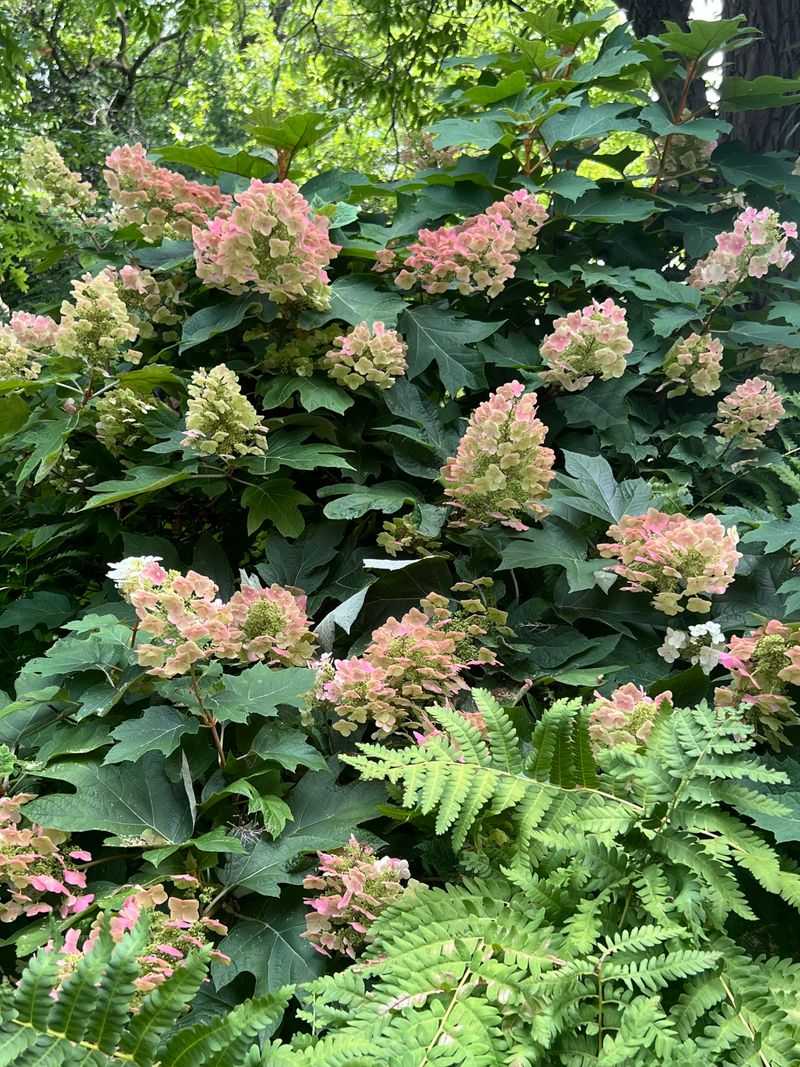
Flower shape helps, but only when you pair it with the leaves. Rounded mophead or lacecap clusters are common on bigleaf hydrangeas.
Large, round snowball-like clusters are common on smooth hydrangeas, as described by Illinois Extension.
Cone-shaped clusters need extra care. Both oakleaf and panicle hydrangeas can have them, so the cone alone will not settle things.
Look at the foliage next. Deeply lobed, oak-like leaves point to oakleaf, while leaves that are not oak-like suggest a panicle.
Now for two things that tend to mislead people. First, flower color is not a dependable species test.
Bigleaf color can shift with soil conditions, and breeders have developed cultivars in many colors, as noted by University of Georgia Extension. A pink or blue bloom does not tell you much about which hydrangea you own.
Second, bloom timing is only a supporting clue. Climate, cultivar, and growing conditions all affect when a plant flowers, so a July bloom in one yard may be a June bloom in another.
Use shape and leaves first, and let color and timing play a small part.
Check whether the hydrangea grows as a climbing vine
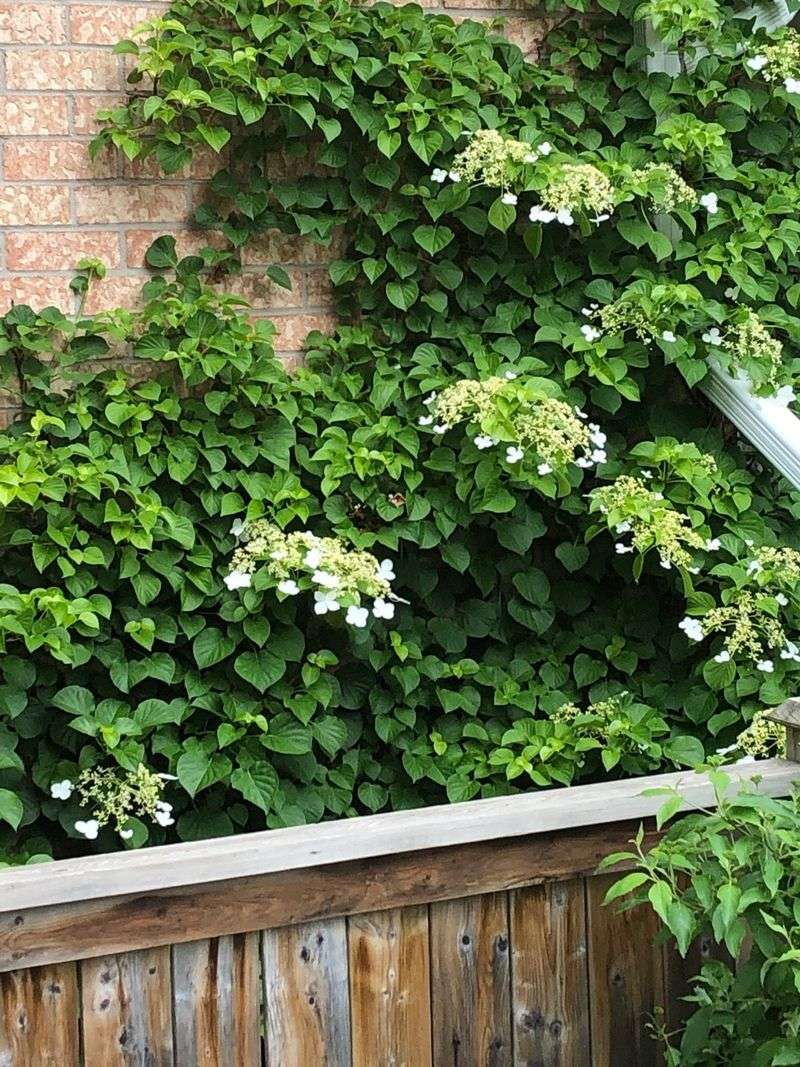
Sometimes the easiest clue is the plant’s overall habit. If your hydrangea is a woody vine climbing a wall, fence, or tree trunk, and it carries flattened white flower clusters, it points toward climbing hydrangea.
According to Illinois Extension, climbing hydrangea generally needs little pruning and flowers on old wood. That means a fall cutback could remove buds, so there is little reason to rush.
As with the other clues, habit works best alongside everything else you have noticed. Check the leaves and the flower shape too, and look for any tag or receipt that names the plant.
Growth habit is a helpful hint, not a guarantee of exactly which cultivar you have.
If you do need to trim a vine that has outgrown its spot, tackling it after flowering is the gentler approach. Otherwise, the easiest choice is to let it climb.
Old wood and new wood determine pruning risk
These two terms sound technical, but they are simple. Old wood means stems that grew in the previous season.
New wood means growth from the current season. As University of Georgia Extension explains, this is a pruning category.
It is not something you can read from stem color, so do not try to judge it by how brown or green a stem looks.
Bigleaf, oakleaf, climbing, and mountain hydrangeas generally bloom on old wood. Cutting those stems in fall can remove next year’s flower buds.
Panicle and smooth hydrangeas bloom on new wood, which makes them more forgiving of pruning.
Bigleaf hydrangeas have one big exception. Some reblooming cultivars flower on both old and new wood, according to University of Georgia Extension and University of Minnesota Extension.
For these, a confirmed cultivar name can matter more than the broad label of bigleaf.
So check the original plant tag, your purchase records, or the nursery where you bought it. If you can find a cultivar name, search it by name and read the grower’s pruning notes.
Without a name, your leaf, flower, and habit clues will have to carry the decision.
Choose a pruning window—or wait until you know more
Once you have a good idea of your plant, the timing is straightforward. Prune panicle and smooth hydrangeas in late winter or early spring, before growth starts.
Illinois Extension and University of Georgia Extension favor that window. Minnesota Extension also allows fall pruning for panicles, so advice does vary.
Old-wood types, such as bigleaf, oakleaf, climbing, and mountain hydrangeas, are best pruned after flowering, not as a routine fall task. Pruning is often optional for them unless size or shape needs attention, as the Illinois Extension hydrangea factsheet notes.
Many healthy shrubs do fine with only a light touch, such as removing dead stems.
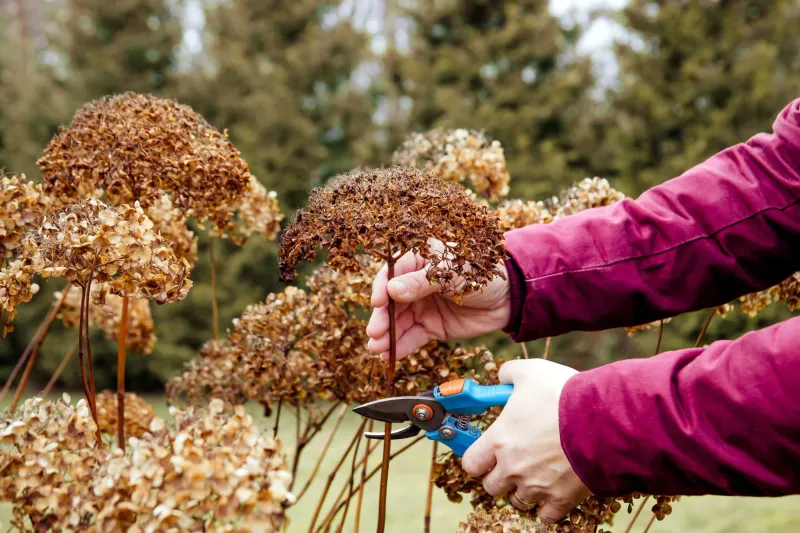
Leaving dried flower heads on the plant is a separate matter. Many gardeners enjoy them for winter interest, and keeping them until late winter or spring is an appearance choice.
It does not tell you whether structural pruning is safe.
If you still cannot say what you have, skip the fall cut. Take photos this season, watch where the flowers form next summer, and you will know far more by then.
A hydrangea left alone rarely complains, but one cut too early can sulk for a whole year.