
If You Want Fall Color With Almost No Work, Here Are 15 Shrubs That Blaze Every Year
Some shrubs need constant pruning, spraying, and worrying, and you still end up with dull brown leaves in October. Others ask for almost nothing and still light up your yard in red, orange, and purple every single fall.
If you are tired of babying plants that never seem happy, picking the right shrub is the easiest fix you can make. Here are 15 tough, forgiving shrubs that bring big autumn color without eating up your weekends.
1. Virginia Sweetspire
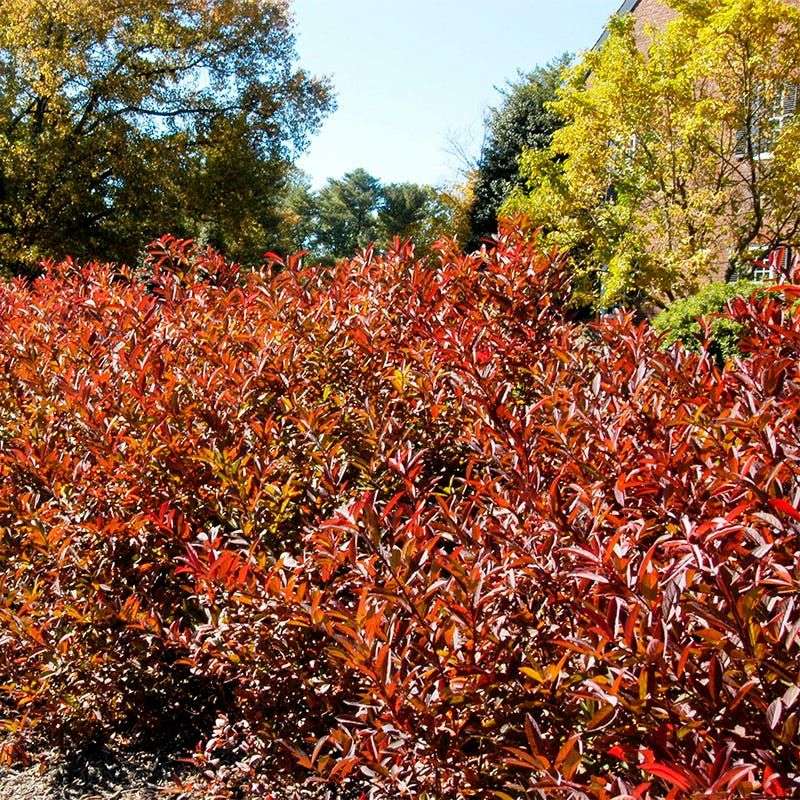
Picture a shrub that handles soggy soil, dry spells, and shade without complaint, then still turns ruby red in October. That is Virginia sweetspire (Itea virginica), a native that seems built for gardeners who forget to water.
Its leaves hold on late into fall, shifting through red, orange, deep purple, and sometimes yellow all on one plant. Deer usually leave it alone, which is a relief if they have chewed up your hydrangeas before.
One easy tip makes the biggest difference: plant it where it gets some sun. It will grow in shade, but sunlight is what pushes the color from nice to fiery.
Spring brings fragrant white flower spikes too, so you get two shows for one plant.
2. Smokebush
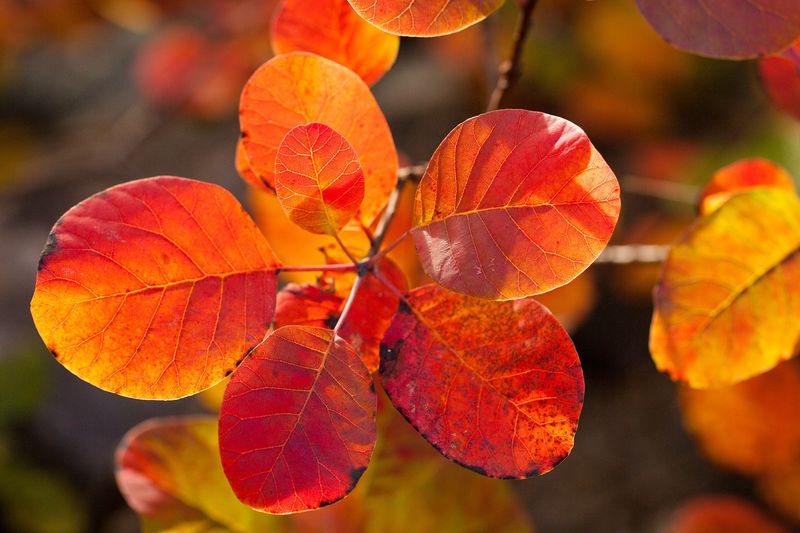
Rocky soil, baking sun, and a forgetful gardener? Smokebush (Cotinus coggygria) laughs at all three.
Once it settles in, it handles drought far better than most flowering shrubs.
Summer brings puffy, smoke-like plumes that give the plant its name. Then fall arrives, and the leaves flip to scarlet, orange, gold, and burgundy, often looking lit from inside when the sun hits them.
Give it full sun for the boldest color. Purple-leaf types like ‘Royal Purple’ are especially dramatic, and you can cut stems back hard in late winter if you want bigger leaves and a tidier shape.
Skip that step and it still looks great.
3. Kodiak Diervilla

Most shrubs save their color for one big autumn finale. Kodiak diervilla, a native bush honeysuckle, starts showing off in spring and just keeps going.
New leaves of ‘Kodiak Orange’ and ‘Kodiak Red’ come in warm and coppery, then deepen to brilliant burgundy-red as the weather cools. Little yellow summer flowers keep bees busy in between.
It tolerates drought, shrugs off deer, and needs no fussy pruning. If you have a tough slope or a hot strip by the driveway where nothing seems to survive, this is a smart swap that fills in fast.
4. Black Chokeberry
Wet corner that drowns your plants? Dry patch that fries them?
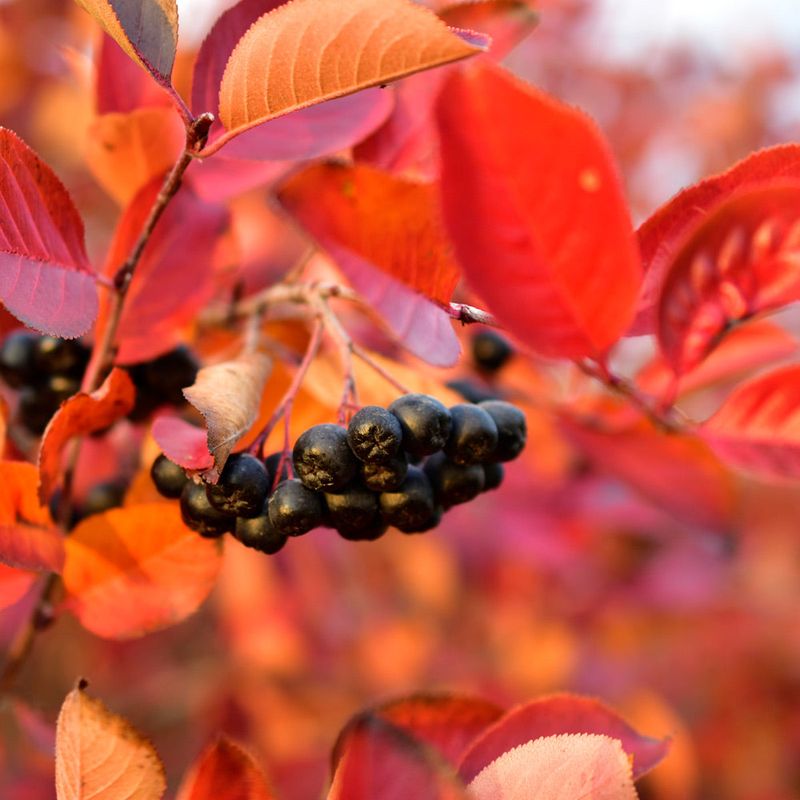
Black chokeberry (Aronia melanocarpa) will grow in both, which makes it one of the most forgiving natives around.
Fall turns the glossy leaves crimson, orange, and purple, and dark berries hang on among them. The fruit is very tart, but birds eventually clean it up in winter.
Disease rarely bothers it, and it is moderately deer resistant. Over time it may send up suckers, so give it room or pull a few each spring.
That is about the only chore it asks for.
5. Dwarf Fothergilla
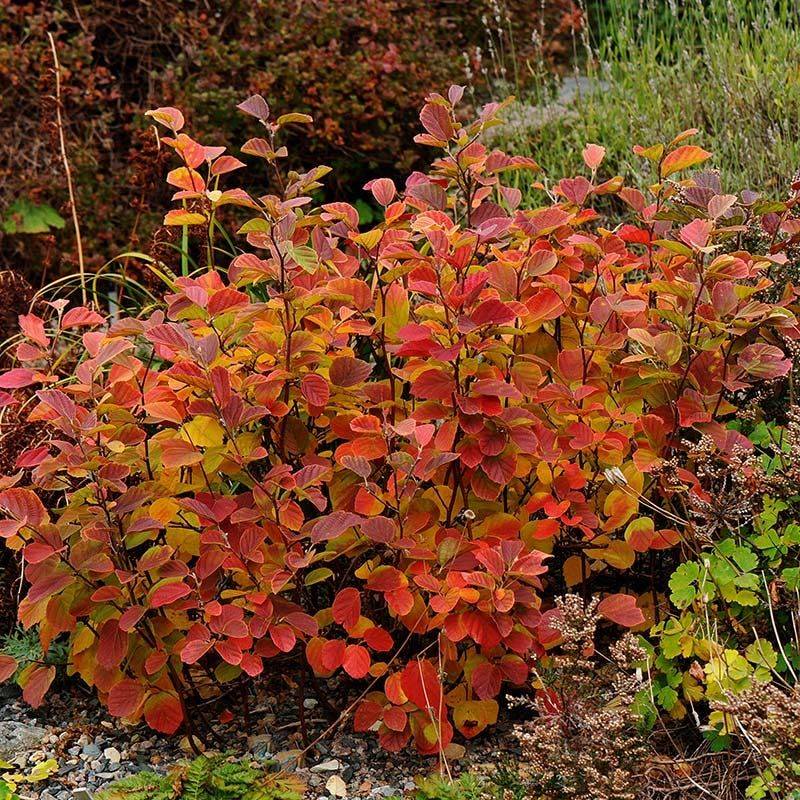
Small yard, big wish list? Dwarf fothergilla packs spring flowers and a fireworks-style fall into a plant that usually stays around 3 feet tall.
In April, fuzzy white bottlebrush blooms smell faintly of honey. By autumn, each leaf can blend yellow, orange, and red at once, so the whole shrub glows like a little campfire.
Pests and diseases rarely show up. For the best color, give it some sun and moist, well-drained, slightly acidic soil, the same kind azaleas enjoy.
A layer of mulch keeps roots happy through summer heat.
6. Cranberry Viburnum
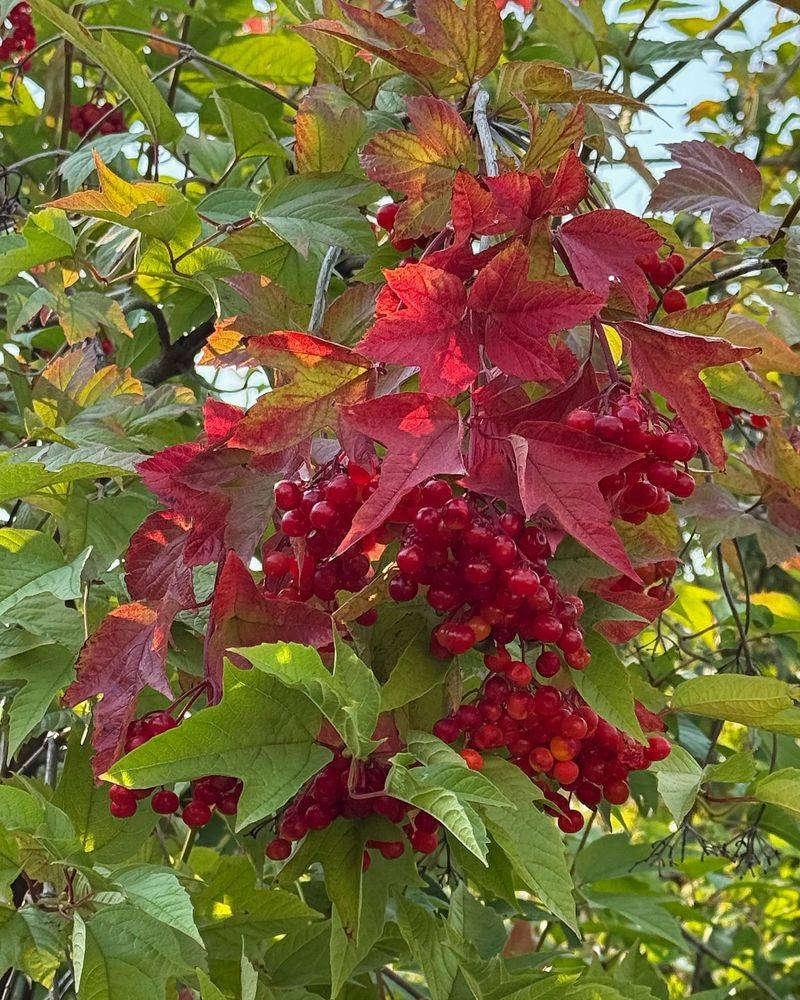
Old farm hedgerows often had American cranberrybush (Viburnum trilobum) growing along the edges, and for good reason. It is hardy, dependable, and pretty in nearly every season.
The leaves look like small maple leaves, and fall turns them burgundy and reddish purple. Shiny red berries dangle below, often staying into winter and feeding hungry birds.
Plant it in full sun to part shade with steady moisture, and it will handle many soil types. If you want more viburnum options, possumhaw and ‘Brandywine’ also bring strong fall color with similar easy habits.
7. Oakleaf Hydrangea
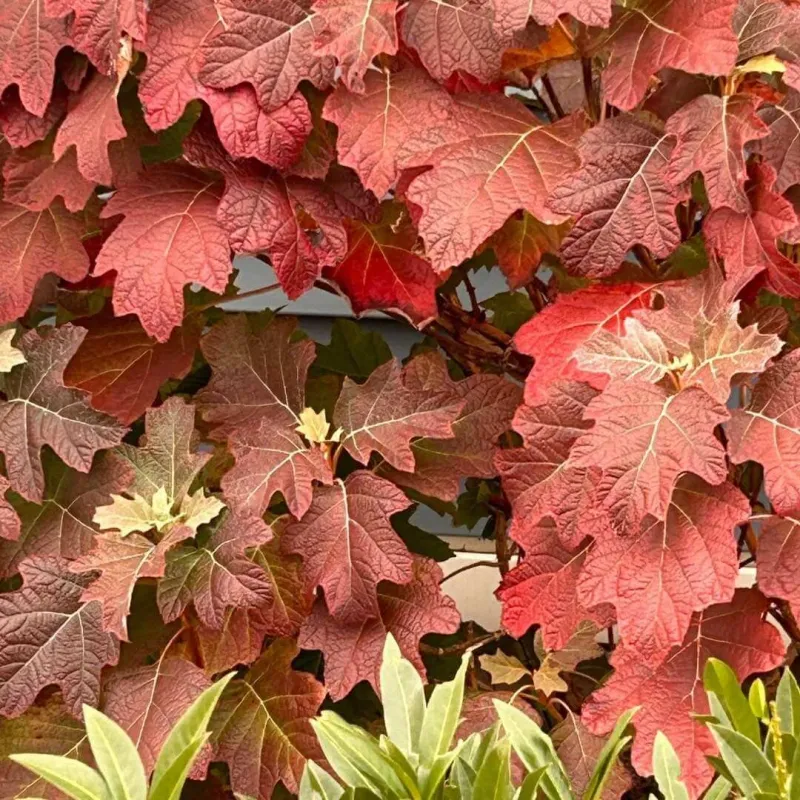
If your bigleaf hydrangea wilts every hot afternoon or skips blooming, meet its far easier cousin. Oakleaf hydrangea (Hydrangea quercifolia) is native to the Southeast and handles dry spells much better once established.
Its big, oak-shaped leaves turn deep burgundy, red, mahogany, and purple in fall, sometimes holding on into early winter. The cone-shaped flowers fade to a soft pink and can stay on the plant for months.
Here is the key to avoiding bloom failure: do not prune it in fall or spring, since it flowers on last year’s wood. When the leaves drop, peeling cinnamon bark gives you something to look at all winter.
8. Blueberry Bush
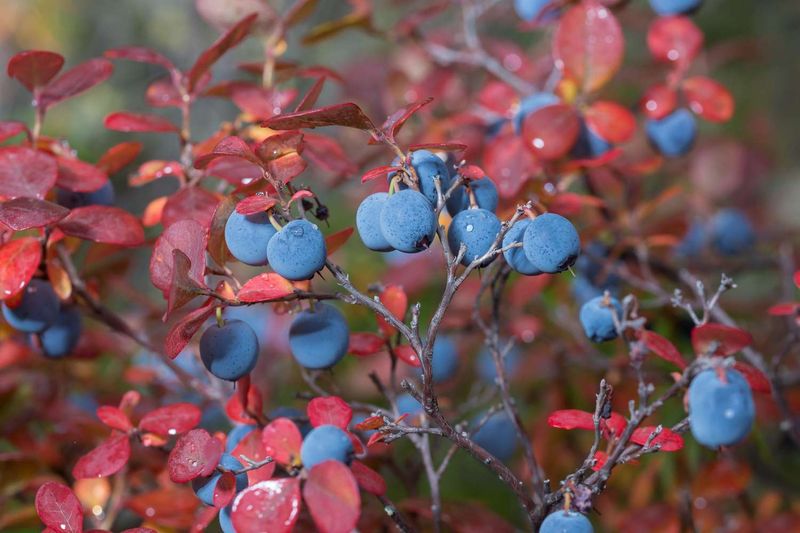
Gardeners who plant blueberries for the fruit are often shocked in October. Highbush and lowbush blueberries produce some of the hottest red fall foliage you will ever see.
So you get sweet summer berries, white spring bells for the bees, and a scarlet autumn show from the same shrub. Not bad for one hole in the ground.
The one must is acidic, well-drained soil. If your leaves look yellow in summer, the soil is likely not acidic enough, and a little garden sulfur or pine bark mulch can help.
Planting two varieties usually improves the harvest.
9. Gro-Low Fragrant Sumac
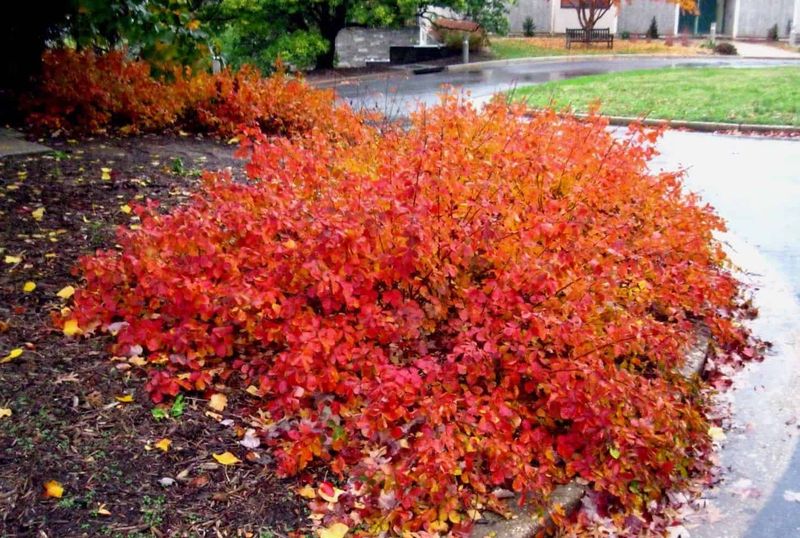
Tired of mowing that steep bank? ‘Gro-Low’ fragrant sumac stays about 2 feet tall but spreads wide, covering ground like a living blanket.
Its three-part leaves smell lightly spicy when brushed, and in fall they light up red, orange, and yellow. It is a far cry from poison sumac, so no need to worry.
Sun or part sun suits it, and poor soil does not slow it down. Plant a few, water them through the first summer, and then pretty much walk away.
10. Spirea
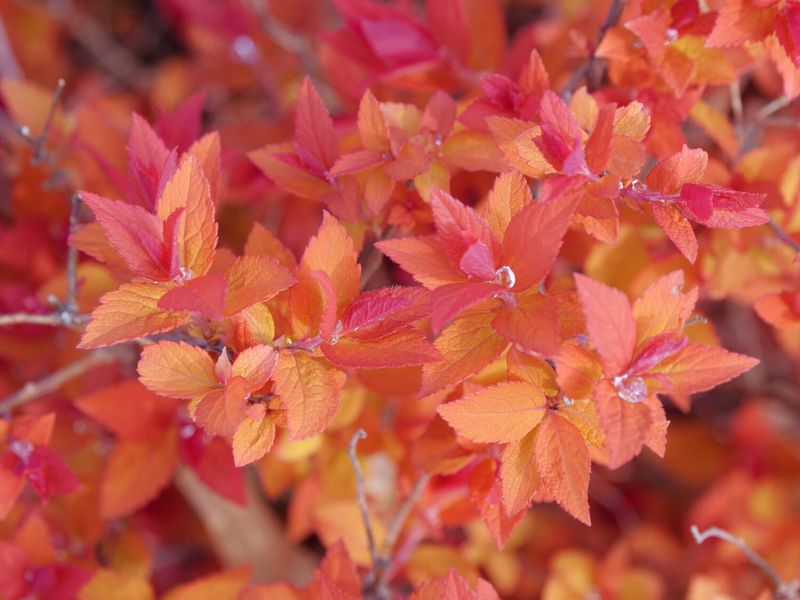
Spirea is the shrub your neighbor probably already has, and that is a compliment. It earned its spot in so many yards by being tough, tidy, and almost impossible to mess up.
Early summer brings clusters of pink or white flowers. Come fall, many varieties shift to warm red, orange, or a coppery glow that looks great next to mums and pumpkins.
Most stay a neat 3 to 4 feet tall and wide. A quick trim after the first flush of flowers may encourage a second round, but even untouched, it stays attractive.
11. Red Twig Dogwood
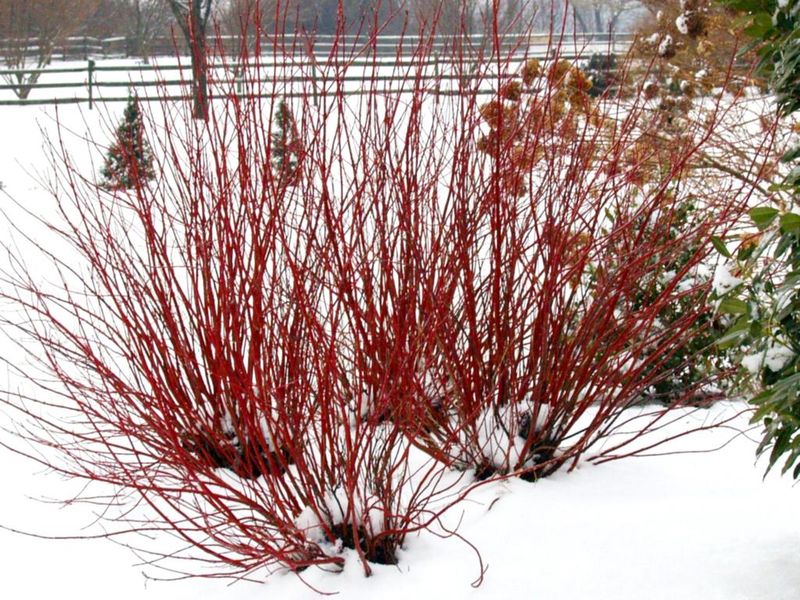
Why settle for one season when a shrub can give you two? Red twig dogwood (Cornus sericea) turns purple in fall, then drops its leaves to reveal bright red stems that glow against winter snow.
It loves damp spots, so a soggy low area in your yard could finally become a highlight. Birds enjoy the white berries, too.
The only real job is optional: cut out a few of the oldest, dullest stems each late winter. Younger stems carry the brightest red, so this simple step keeps the show fresh.
12. Witch Hazel
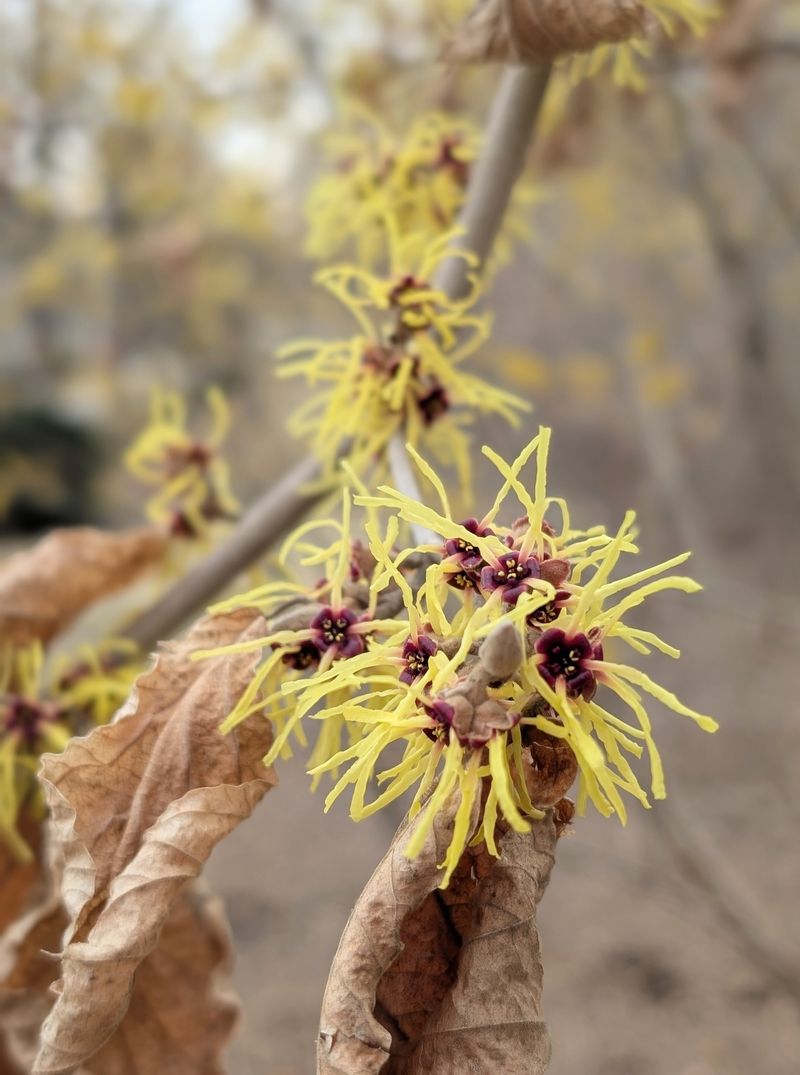
Flowers in November? Witch hazel pulls off that trick, with spidery, ribbon-like blooms and a spicy scent when almost everything else has gone quiet.
Common witch hazel, a native, blooms in fall right as its leaves turn golden yellow. Other types flower in late winter, often in coppery orange or red, after leaves have dropped.
Fun fact: settlers once used forked witch hazel branches for water dowsing. Today it is simply loved for being pest resistant and happy in sun or light shade with very little care.
13. Japanese Maple
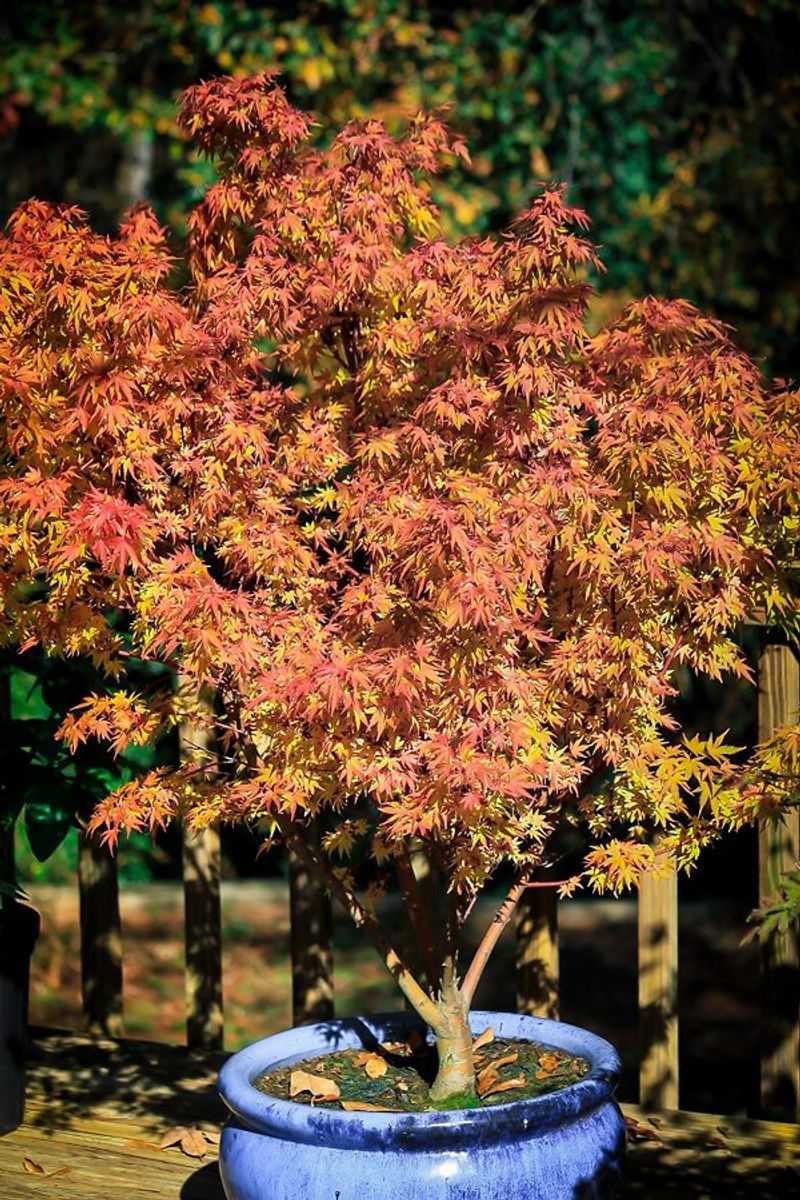
Few plants stop people on the sidewalk like a Japanese maple in October. Depending on the variety, leaves can turn glowing yellow, orange, brilliant red, or deep purple.
Many dwarf and lace-leaf types stay shrub-sized, so they fit tight corners and even large pots. Once settled in the right spot, they need surprisingly little.
The right spot matters, though. Give it well-drained, steadily moist, slightly acidic soil and shelter from harsh afternoon sun, which can scorch the leaf edges.
Get that part right and it rewards you for decades.
14. Ninebark
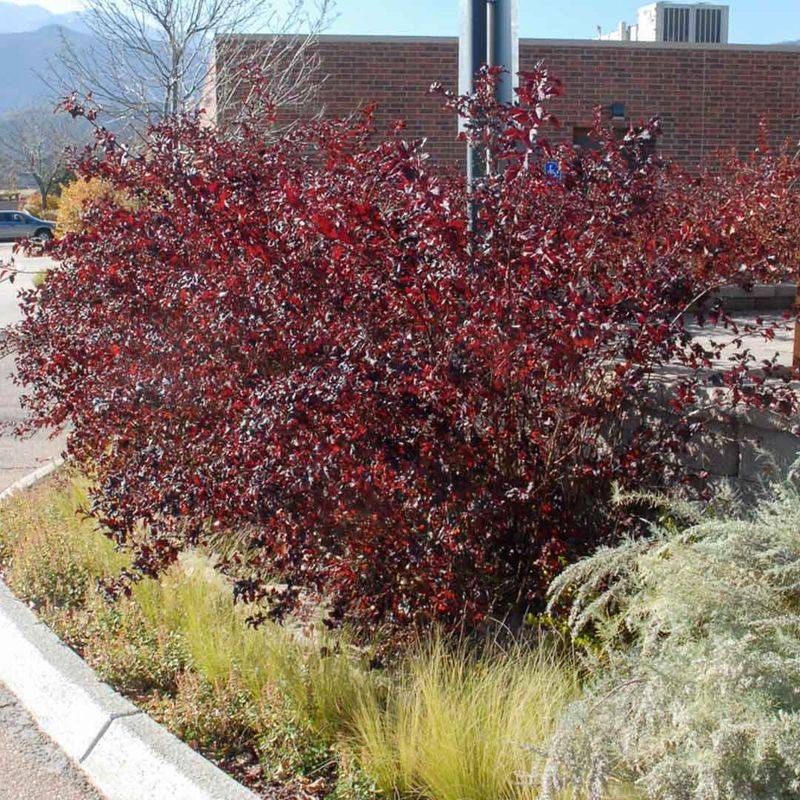
Ninebark gets its name from bark that peels in layers, as if it has nine of them. That shaggy texture is just one reason it belongs on this list.
Purple-leaf varieties like ‘Diabolo’ and ‘Summer Wine’ hold bold burgundy color all season, then deepen even richer in autumn. It makes a striking backdrop for lighter flowers or golden grasses.
This native handles cold, heat, poor soil, and drought once established. If powdery mildew shows up in a humid summer, better airflow and newer resistant varieties can reduce the problem.
15. American Smoketree
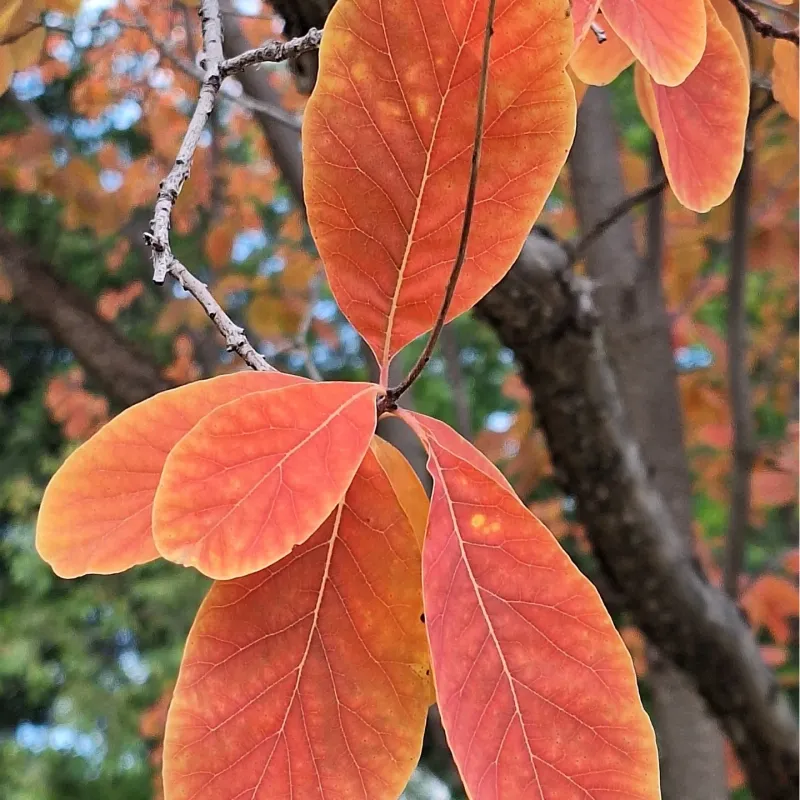
Ask native plant fans for the best fall color in America and the American smoketree (Cotinus obovatus) often comes up. Its round, blue-green summer leaves can turn a blazing mix of orange, red, and purple that looks almost like flames.
It is a cousin of the common smokebush but grows larger, often as a small tree or big multi-stem shrub. Hot, dry, rocky sites suit it just fine.
Color can vary a bit from year to year, but in a sunny spot the good years are unforgettable. Plant it once, water it the first season, and enjoy a low-effort showpiece for a lifetime.