
The North Carolina Native Plants That Cover The Bare Ground Under Your Deck So Weeds Never Take Hold
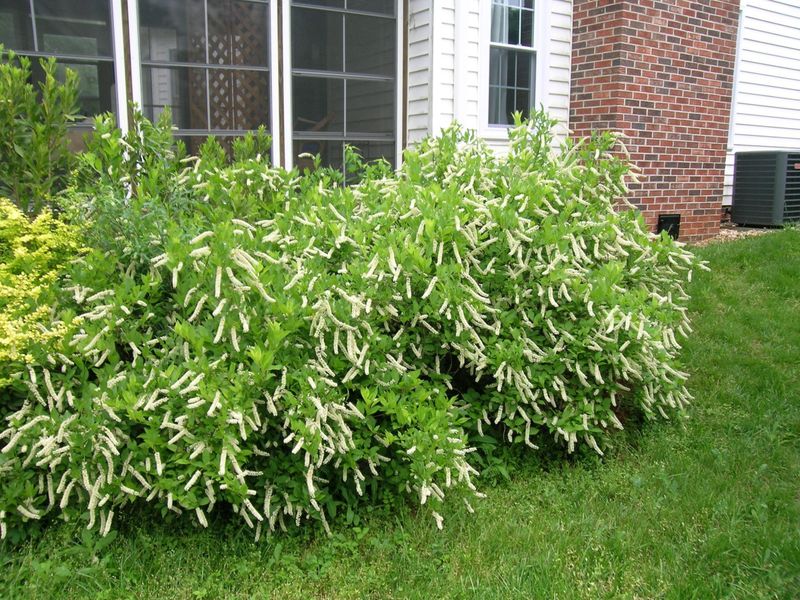
That dusty strip of dirt under your deck is a welcome mat for weeds, ticks, and invasive vines. The good news is that North Carolina has its own native plants that love shade and can carpet that ground so thickly weeds have no room to sprout.
These plants also feed bees, shelter box turtles, and give firefly larvae a damp place to grow. Here are ten tough natives that turn a bare, forgotten spot into a living part of your yard’s ecosystem.
1. Allegheny Spurge (Pachysandra procumbens)
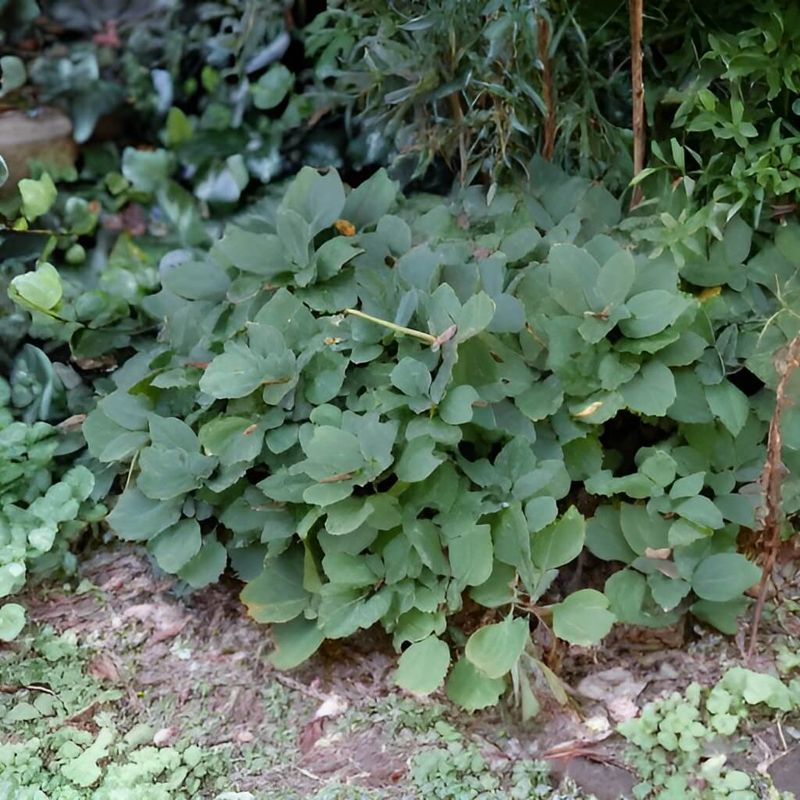
If your neighbor has a sea of shiny Japanese pachysandra, you are looking at an invasive that offers almost nothing to local wildlife. Allegheny spurge is the native cousin, and it does the same job with better manners.
Its matte, softly mottled leaves form a thick evergreen mat that smothers weed seedlings before they get going.
It handles the mountains, the Piedmont, and the Coastal Plain, and it tolerates less acidic soil plus the occasional soggy spell after a summer storm. In early spring, small fuzzy white flower spikes pop up at the base of the plant, giving early native bees a snack.
Plant it 12 inches apart along the deck edge where some light sneaks in. Growth is slow the first year, so tuck shredded leaves between plants to hold weeds back while the carpet fills in.
2. Wild Ginger (Asarum canadense)
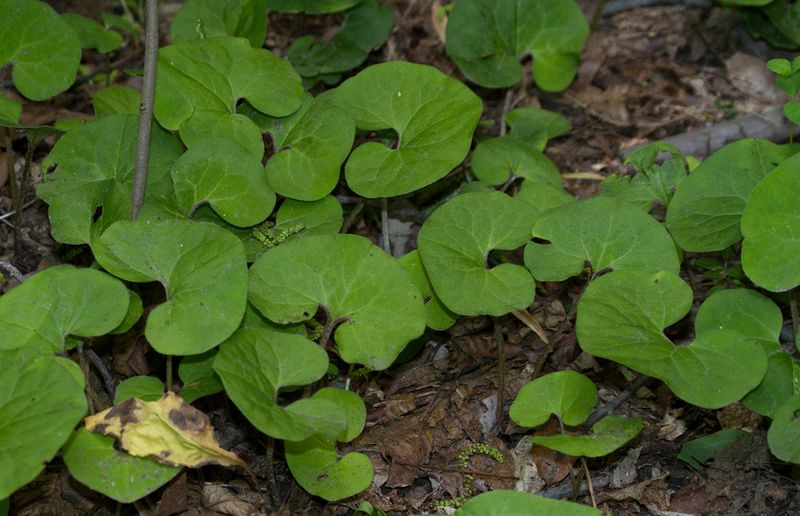
Picture a floor of fuzzy green hearts, each one about the size of your palm. Wild ginger creates that look in deep shade, the kind of dark spot right under the deck boards where grass gave up years ago.
The leaves overlap so tightly that weed seeds rarely see daylight. It prefers steady moisture, so it shines near downspouts or the lower side of a sloped yard, though established patches can ride out dry spells.
You will find it most often in the Piedmont and mountains.
Here is a fun bit of trivia: its odd, maroon, jug-shaped flowers hide under the leaves at ground level. Early-season flies and beetles crawl in to visit them, and ants help spread the seeds around your yard.
3. Christmas Fern (Polystichum acrostichoides)
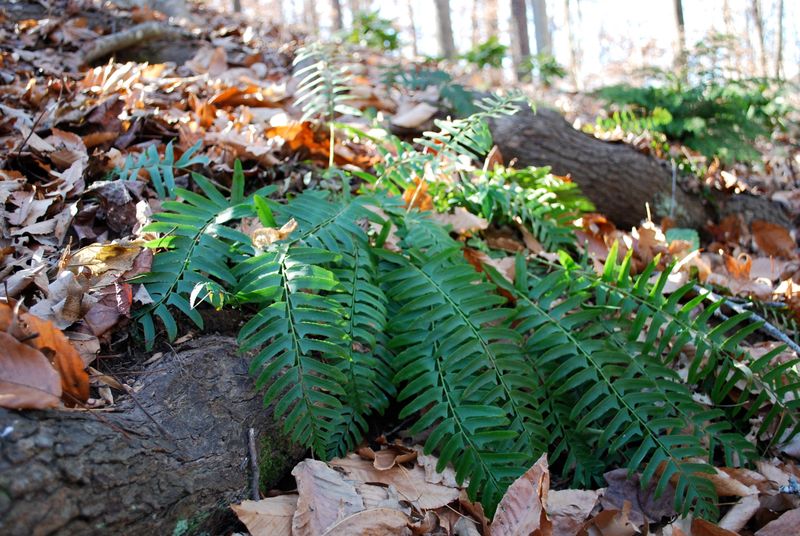
Dry, dark, and rooty is the worst combo a gardener can face. Christmas fern laughs at it.
Of all the plants on this list, it is the one to pick for the bleakest corner under your deck.
The leathery fronds stay green through the winter, which is how it earned its name. Clumps planted 18 inches apart knit into a low canopy that shades out weeds all year.
Wildlife loves the cover too. Box turtles tuck under the fronds on hot July afternoons, and the cool, damp soil beneath helps firefly larvae survive.
If you spot a turtle there, leave it be, since box turtles live their whole lives in a small home range and moving one can doom it.
4. Green-and-Gold (Chrysogonum virginianum)
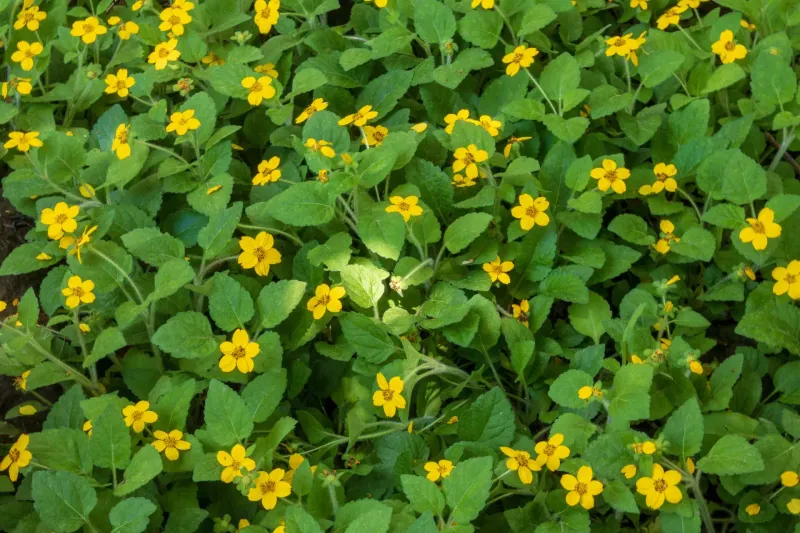
Bright yellow stars on a green rug. That is the easiest way to describe green-and-gold, a cheerful native that brings color to the part-shade edges of your deck.
It spreads by runners to carpet the soil, and its foliage stays mostly evergreen in the Piedmont. Average to dry soil suits it just fine, and deer tend to walk right past it.
Bloom starts in spring and can pop off again in fall, feeding small native bees and hoverflies. Use it where the deck shadow gives way to a few hours of sun.
It makes a handsome replacement if you are ripping out vinca or periwinkle along that border.
5. Golden Ragwort (Packera aurea)
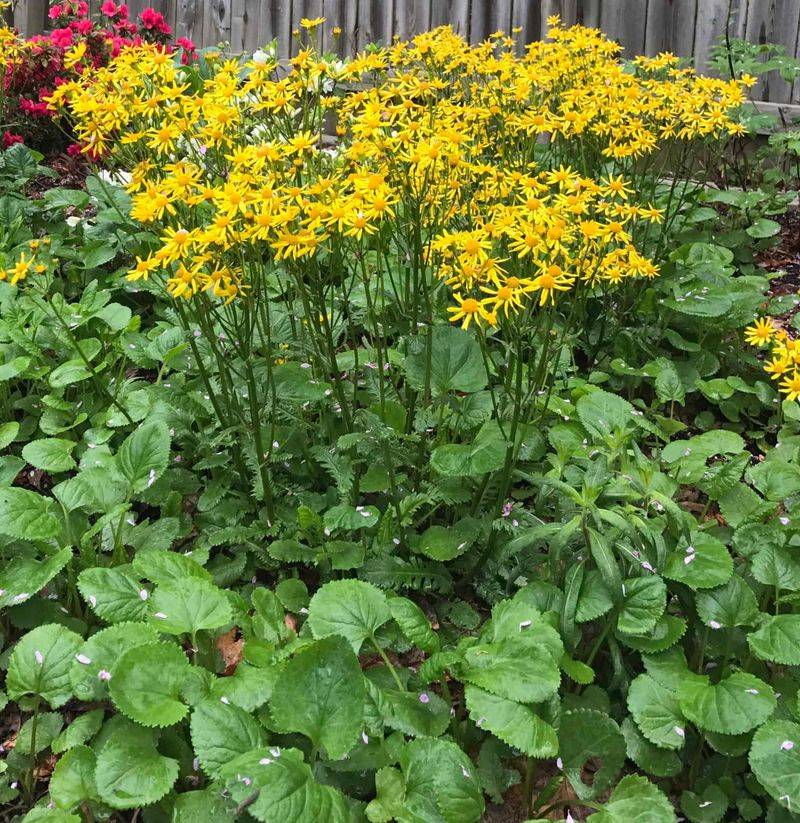
March in North Carolina can feel gray until golden ragwort explodes into yellow. It is one of the first natives to bloom, and hungry early bees find it fast.
The real weed-fighting work happens at ground level. Its rounded basal leaves form a low mat that shades the soil and keeps moisture in, so weeds struggle to germinate.
It spreads quickly in moist, partly shaded ground, which makes it ideal near the drip line where rain runs off the deck.
Box turtles appreciate the cool cover it leaves behind after the flowers fade. Cut the spent stalks if you dislike the look, but the leaves stay put and keep guarding the soil through most of winter.
6. Partridgeberry (Mitchella repens)
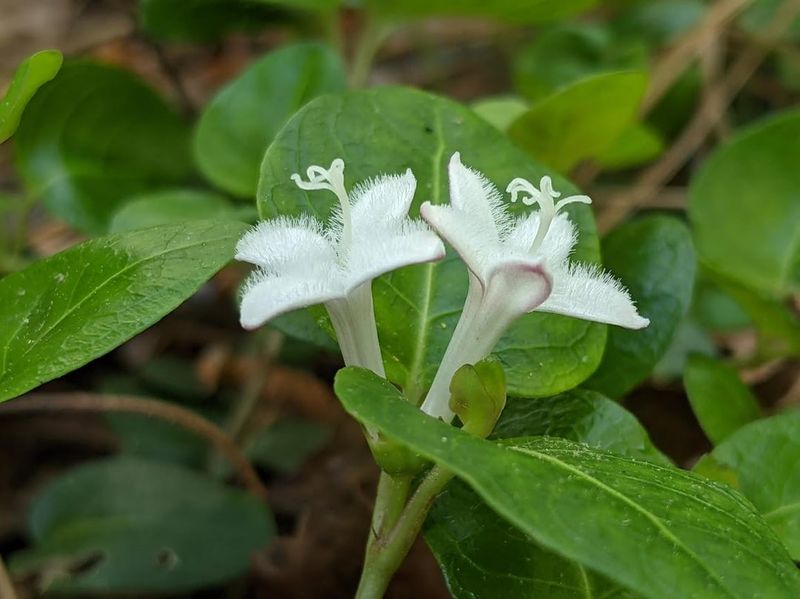
Small but mighty might be the best motto for partridgeberry. Its trailing stems hug the ground with tiny glossy leaves, sometimes with red berries tucked in like holiday ornaments.
It loves shady, acidic soil, which many North Carolina yards have under pines and oaks. Paired white flowers appear in late spring and summer, and each berry forms from two fused blossoms.
You can often see two little dimples on the fruit as proof.
The berries can last nearly a year, giving wild turkeys and songbirds a winter snack. It is slow to fill in, so plant it in a small area first or mix it between ferns to cover the gaps.
7. American Alumroot (Heuchera americana)
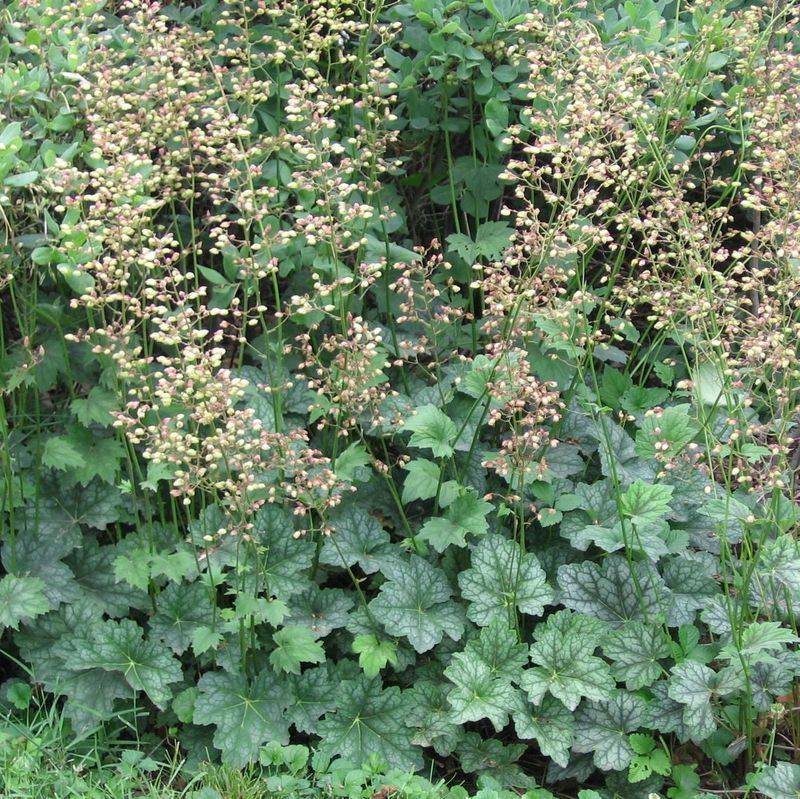
Garden centers are packed with neon coral bells in lime and burgundy. The plain wild form, American alumroot, is the one that truly pulls its weight for local insects.
It grows in tidy mounds with silvery, bronze-tinged leaves that stay semi-evergreen. Tall, wispy stalks of tiny flowers rise in late spring and draw in small native bees.
Use it as an edging plant along the deck border, then let other spreaders fill in behind it. It tolerates dry, rocky spots and partial shade well.
Pick the straight species rather than fancy hybrids to give wildlife the most benefit.
8. Native Violets (Viola spp.)
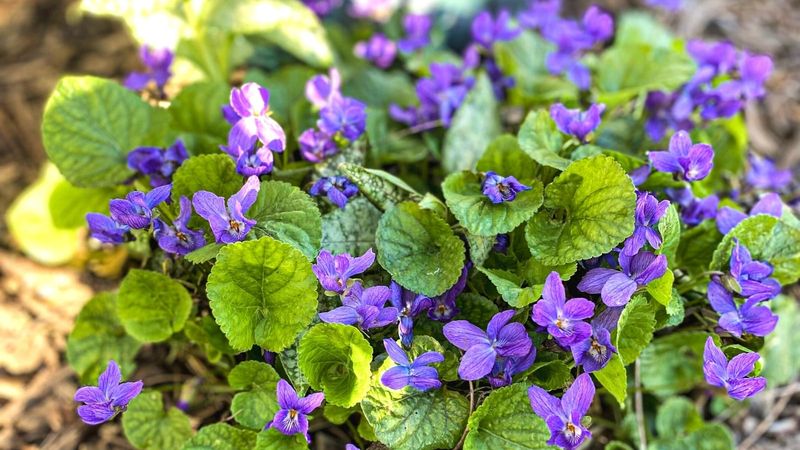
Stop pulling those violets out of the lawn. More than a dozen native species grow in North Carolina, and they might be the hardest-working groundcover you already own.
Violets are the only host plants for fritillary butterfly caterpillars, so every patch you keep helps those orange butterflies survive. Their spring flowers feed early bees, and box turtles happily munch on the leaves and blooms.
They seed around freely in partial shade and average soil, filling bare gaps fast. Under a deck, that eager spreading is exactly what you want.
Let them roam, and weeds lose the race for space.
9. Virginia Sweetspire (Itea virginica)
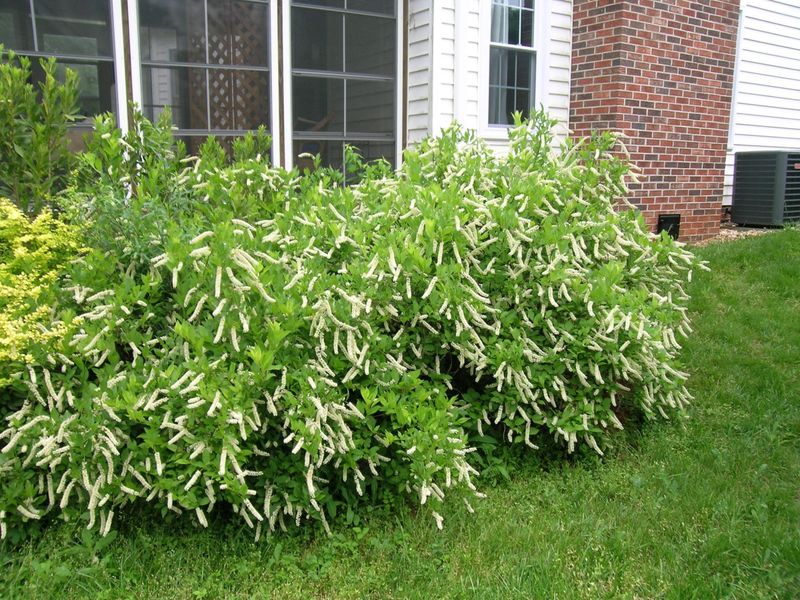
Some decks sit high off the ground with plenty of headroom, and a few flat plants just look lost there. Virginia sweetspire steps in as a low shrub that acts like a groundcover.
It spreads by suckers into a thick colony, which blocks weeds and holds soil on slopes. In early summer, arching white flower spikes smell sweet and buzz with bees.
Fall brings deep red and purple leaves that hang on well into winter.
It handles wet soil, making it a smart pick for Coastal Plain yards. The dense base gives box turtles shady shelter, and it is a great swap for invasive burning bush.
10. Wild Geranium (Geranium maculatum)
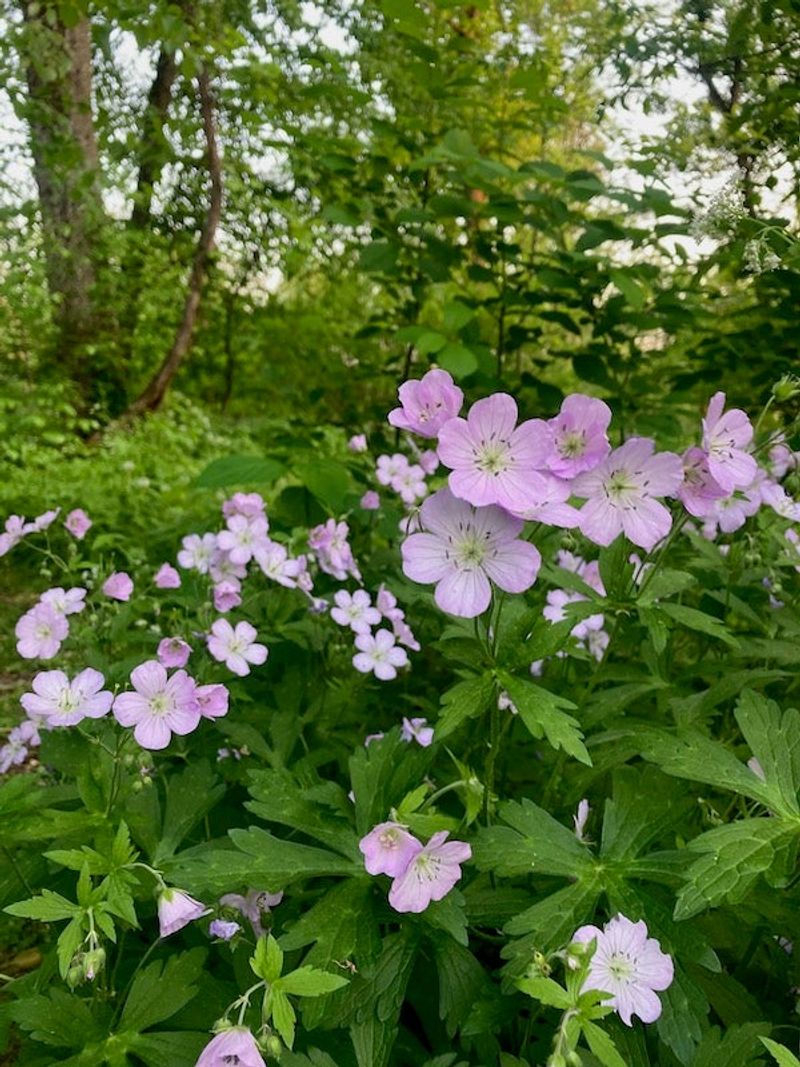
Soft pink blooms floating above lobed leaves give wild geranium an old-fashioned charm. It feels like a cottage garden plant, but it is a true North Carolina woodland native.
Spring flowers pull in bumblebees, butterflies, and specialized mining bees. After bloom, the foliage forms a leafy layer that shades the soil through summer.
It does best in moist, acidic soil with dappled light, so plant it along the deck’s outer edge. Mix it with Christmas fern and violets for a layered carpet that covers every inch of ground.
Plant in fall, and by next spring your bare dirt will be gone.