
Should You Clean Out Your North Carolina Brush Pile Before Winter If Box Turtles Live Nearby?
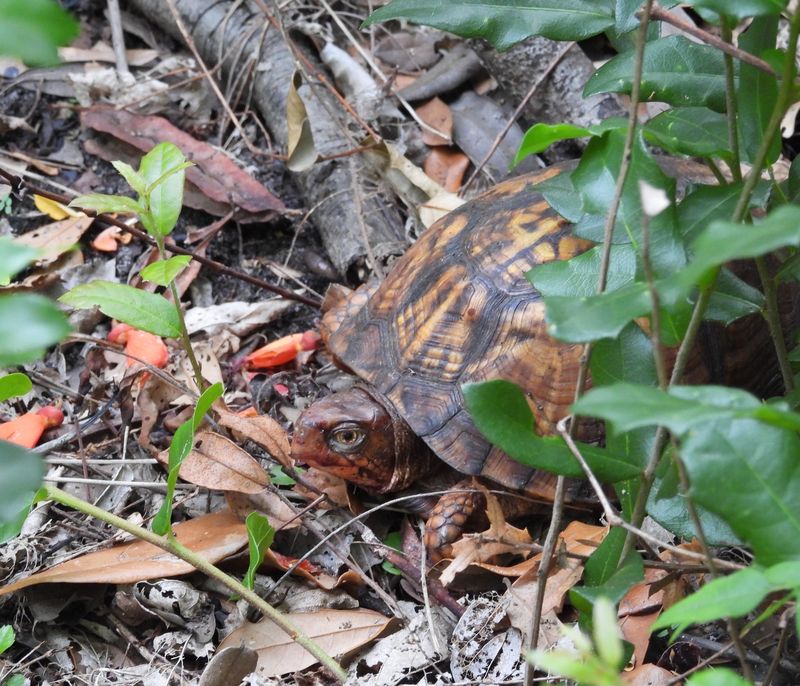
A pile of sticks and leaves in the corner of your yard can look like a chore waiting to happen. For North Carolina wildlife, though, that kind of cover can be a place to hide from cold and weather.
Eastern box turtles live in many of our yards, and fall cleanup is when homeowners and turtles are most likely to cross paths without knowing it. A few careful choices can protect the animals you enjoy seeing in spring.
A brush pile can shelter more than garden debris
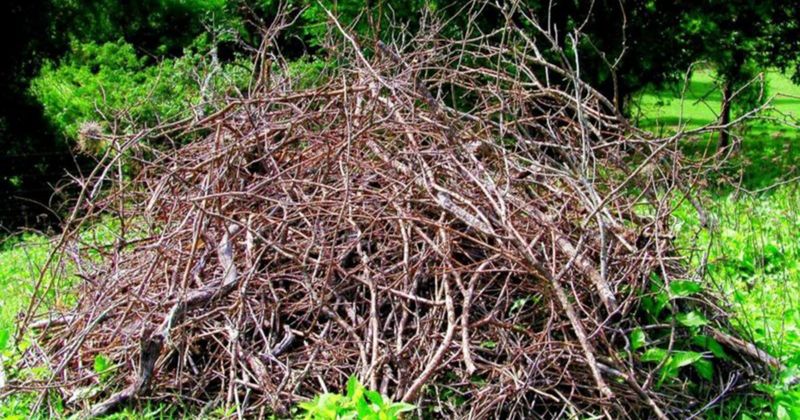
Walk the edge of almost any North Carolina yard and you will find a heap of limbs somewhere. To you it may be leftover storm cleanup.
To a lot of small animals, it is a roof.
NC State Extension says logs and brush piles can shelter reptiles and amphibians in a backyard. Its wider wildlife guidance adds that brush piles give cover to birds and small mammals.
Think wrens, rabbits, toads, and lizards using the gaps for hiding places out of wind and rain.
Extension also describes how a useful pile is built. Larger logs go on the bottom, and smaller branches are stacked on top.
That layout leaves open spaces underneath while the upper layers shed some weather.
Here is the careful part. General habitat value does not mean a turtle is living in your particular pile.
Many piles hold no turtle at all, and nobody can tell from the outside.
So the goal is not to treat every heap of branches as a nursery. It is to remember that a pile has a job in the yard’s ecosystem, and to think before you tear it apart.
A few seconds of thought costs nothing, and it can spare animals that depend on the cover.
Where North Carolina box turtles spend winter

Eastern box turtles do not migrate or build nests for winter. According to NC Wildlife’s species profile, they usually bury themselves in soil or in the leaf litter of the forest floor.
The U.S. Forest Service goes into more detail.
Its eastern box turtle species review lists litter-filled hollows, soft soils, thick brush, and woody debris among the features hibernating turtles use. In plain terms, they look for spots that are loose, covered, and shielded from the harshest cold.
Now the limits. Those sources describe natural ground cover: soil, leaves, hollows, brush, and fallen wood.
They do not say that turtles commonly settle under man-made piles in residential yards, and they do not confirm any pile as a winter den.
What this means for you is practical. Leafy ground, brushy edges, and woody debris near wooded parts of your yard are the kinds of places worth treating gently.
A tidy-looking mound is not proof of a turtle, and a messy corner is not proof of an empty one.
If your yard backs up to woods, a creek, or a field, turtles are more likely to pass through. In the Piedmont, Coastal Plain, and mountains alike, that edge is where cover and shelter tend to overlap.
Fall does not provide a reliable all-clear

Plenty of people wait for a certain week in the fall and assume the turtles are tucked in by then. Turtles do not read calendars.
NC Wildlife notes that box turtles may be active in warmer weather and have been observed in every month of the year.
That means a mild week in December could bring a turtle out, and a warm spell in the mountains looks different from one on the coast. Because conditions vary so much across the state, there is no single date you can count on as the safe point for cleanup.
Waiting until deep winter does not guarantee anyone is asleep either.
There is one more wrinkle. Eggs laid late in the season are a separate matter from adult turtles.
NC Wildlife says late eggs may overwinter and hatch the following spring.
That is a site-specific concern, not a reason to picture a nest in every leaf pile. If you happened to see a turtle digging a nest in a spot this year, treat that patch with respect and leave it alone.
Otherwise, the useful habit is simple: slow down before big cleanup jobs, whatever the date, and look at what the weather and the ground are doing.
Use caution around suspected shelter
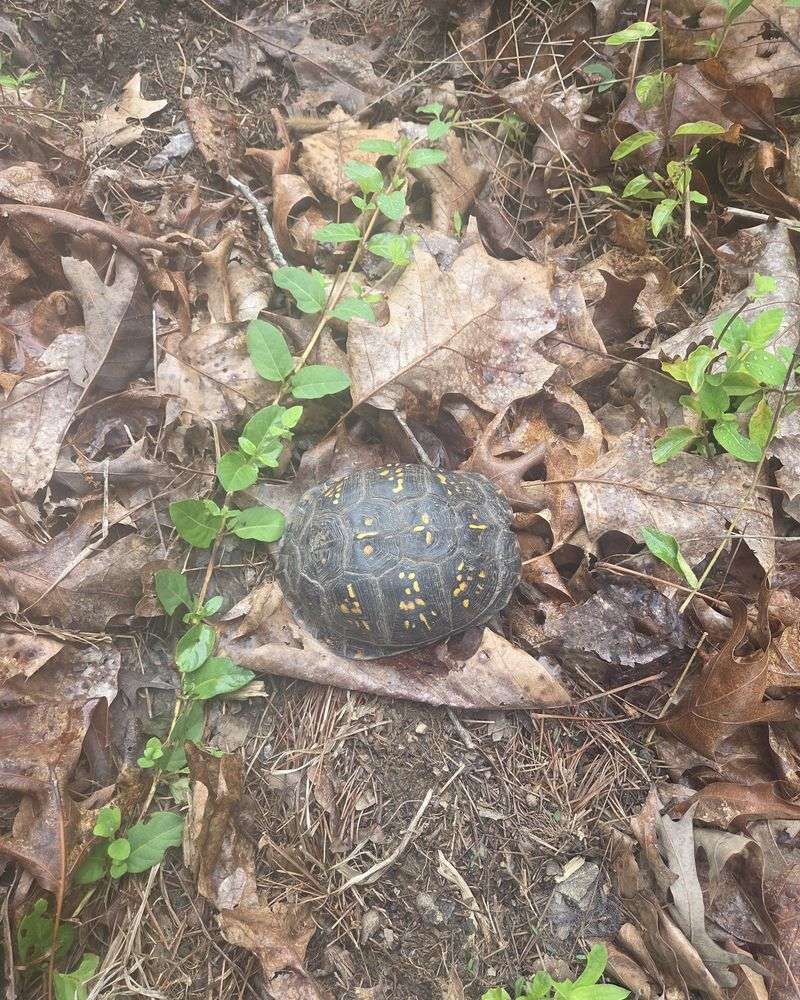
Suppose you have a pile near the woods and you think turtles might use that corner. The gentlest move is the one that takes the least effort: leave it be for now.
Avoid digging into it, mowing over it, shredding it, or burning it.
These steps are precautions based on how turtles use litter, soil, brush, and woody cover, as described in the Forest Service review. They are not a tested cleanup protocol for home yards, and nobody has measured how often ordinary fall chores harm turtles.
Resist the urge to check. Lifting logs, raking through the pile, or poking around to see if something is inside can do the very damage you hope to avoid.
A turtle buried in leaves is easy to hurt and impossible to spot from above.
Fire deserves its own note. A USGS publication on fire and eastern box turtles looks at risks from prescribed burns.
Those are planned land-management fires, which are not the same thing as a backyard burn, so the research does not map neatly onto yard cleanup. Still, setting fire to a heap of brush that may shelter wildlife leaves animals little chance to escape.
If a pile truly has to go, such as when it is unsafe or against local rules, think about timing and a gentle approach, and consider asking a wildlife professional for advice.
Keep habitat patches away from tick-sensitive borders
Ticks are a real worry here, and it is fair to want a safe yard. The good news is that you do not have to pick between turtles and tick safety.
You can sort your property by location.
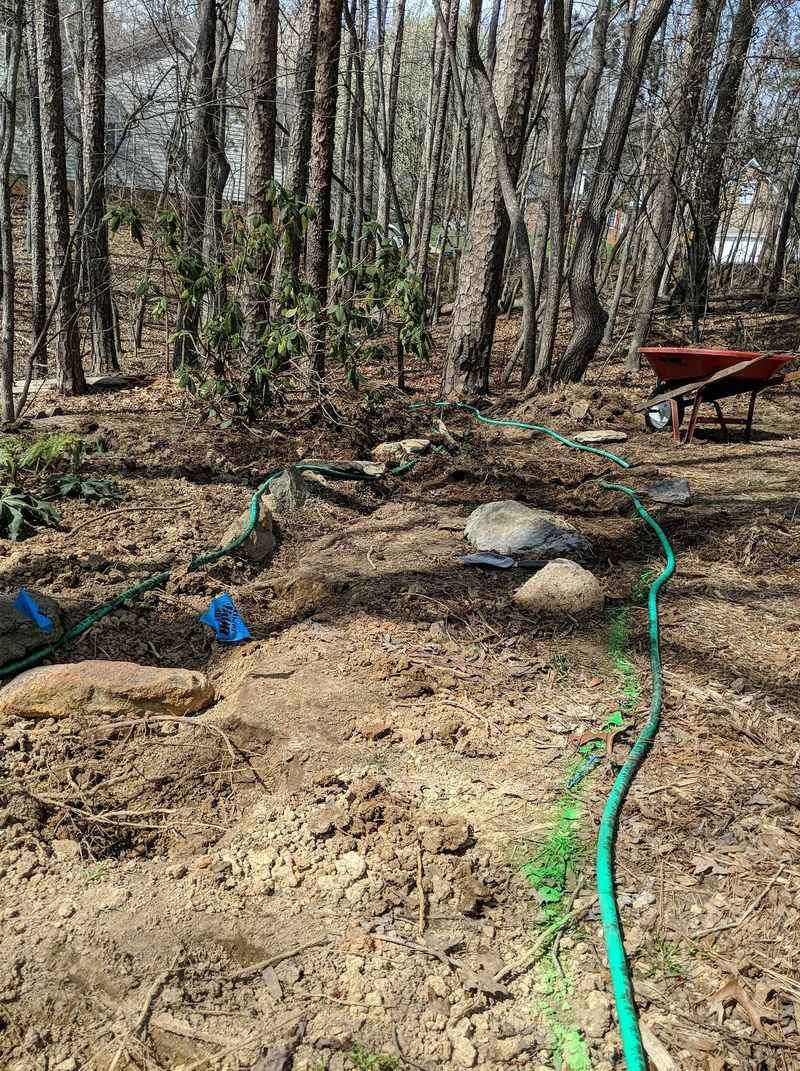
Start near the house and the places your family uses. The CDC’s tick prevention guidance advises clearing leaf litter and brush around homes and at lawn edges.
It also describes a wood-chip or gravel barrier between lawn and woods. Those zones are where you should keep things tidy.
Farther out, you have more room. Pick one corner away from play areas, patios, and paths, and leave it undisturbed.
If you like, build a pile the way NC State Extension’s wildlife handbook suggests, with a base of larger logs.
Be honest about the tradeoff. Keeping brush does not reduce ticks.
Wildlife cover and tick control are different goals, and the way to serve both is to put each in its own place.
A small habitat patch is also more realistic than a promise to leave everything wild. Mow the lawn edge, keep the barrier tidy, and let the far corner be.
If you find a box turtle, leave it in place
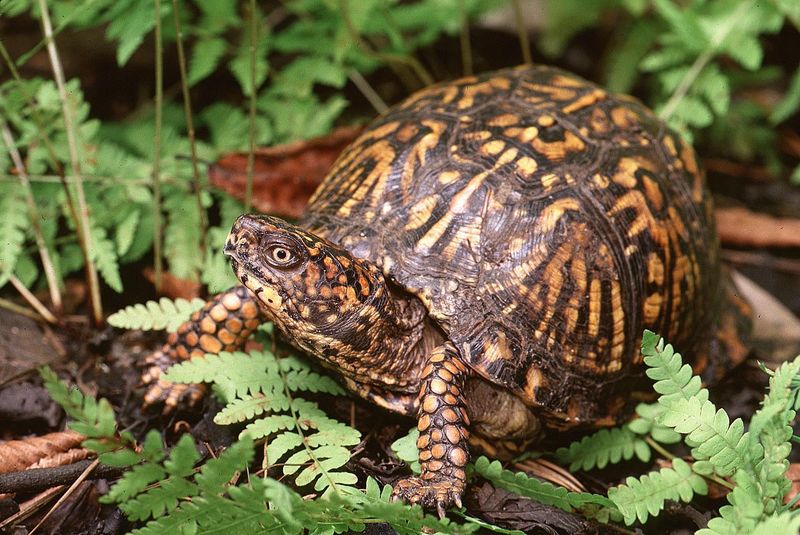
Spotting a box turtle while you work outside is a nice surprise. Your best response is usually to enjoy it and step back.
NC Wildlife advises against relocating box turtles. These animals know their home ranges well, and a turtle carried somewhere new may wander for a long time trying to get back.
If it is not in immediate danger, leave it exactly where it is.
Sometimes a turtle is in the path of a mower or sitting on a busy road. In that case, move it only out of immediate danger, and only the shortest distance possible.
Keep it headed in the direction it was already going.
Do not pick turtles up just to look them over or identify them. Handling is not needed for that, and a photo from a distance tells you plenty.
If a turtle is hurt, such as with a cracked shell or a wound, contact a licensed wildlife rehabilitator. NC Wildlife’s page on injured and orphaned wildlife explains how to find one.
For healthy wildlife that does not need help, the same guidance is to leave it alone.
Choose what to leave undisturbed this fall
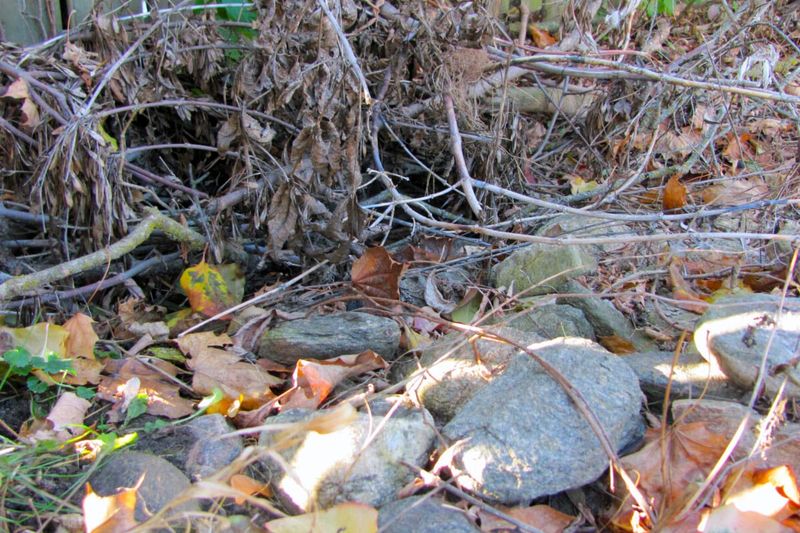
Rake the lawn edges, keep the area near your house clear, and let one out-of-the-way corner stay as it is. Skip the urge to tear apart any pile you suspect might be sheltering wildlife.
This is a precaution, not a claim that every pile holds a turtle, and nobody needs to leave every leaf everywhere.
Since turtles have been seen in every month, and CDC guidance favors clear borders near homes, a split plan fits both goals.
A neat yard and a quiet corner can share the same fence.