
That Tiny Purple Weed Hiding In Your Lawn Is Called Self-Heal, And Generations Kept It For Scrapes
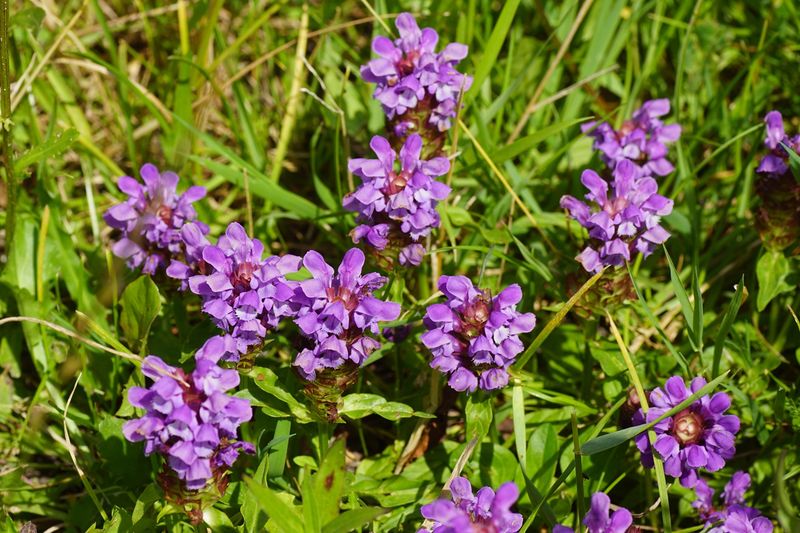
Maybe you have spotted small purple flowers poking up between blades of grass and wondered what they are. They may be self-heal, a low plant with a long folk reputation and a very hopeful name.
Mowers pass over it all the time, so most people never look closely. Here is how to investigate it, what old records say about it, and what to do about a real scrape.
A small purple flower may be self-heal
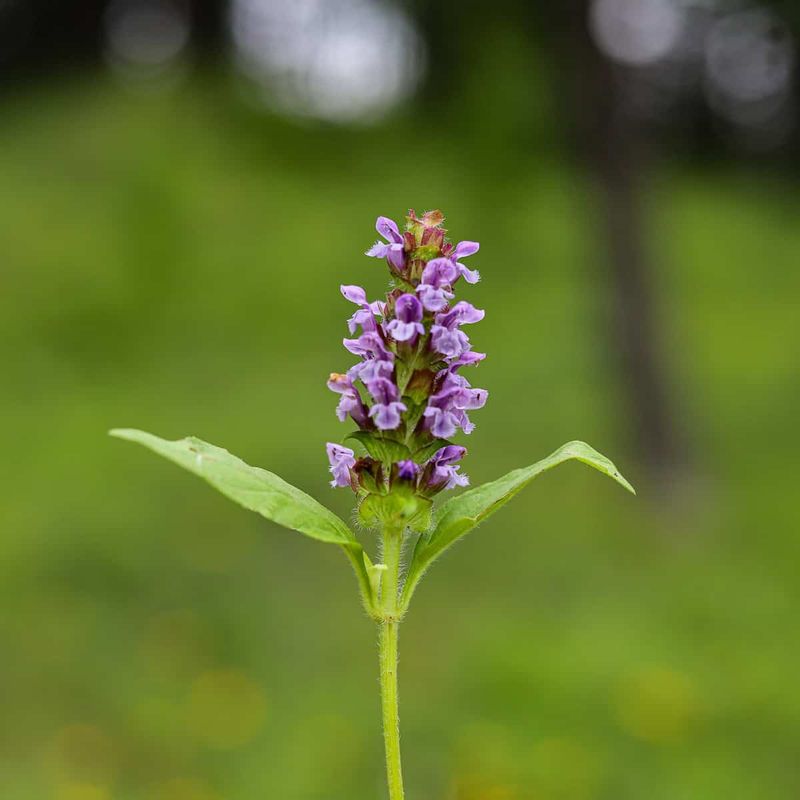
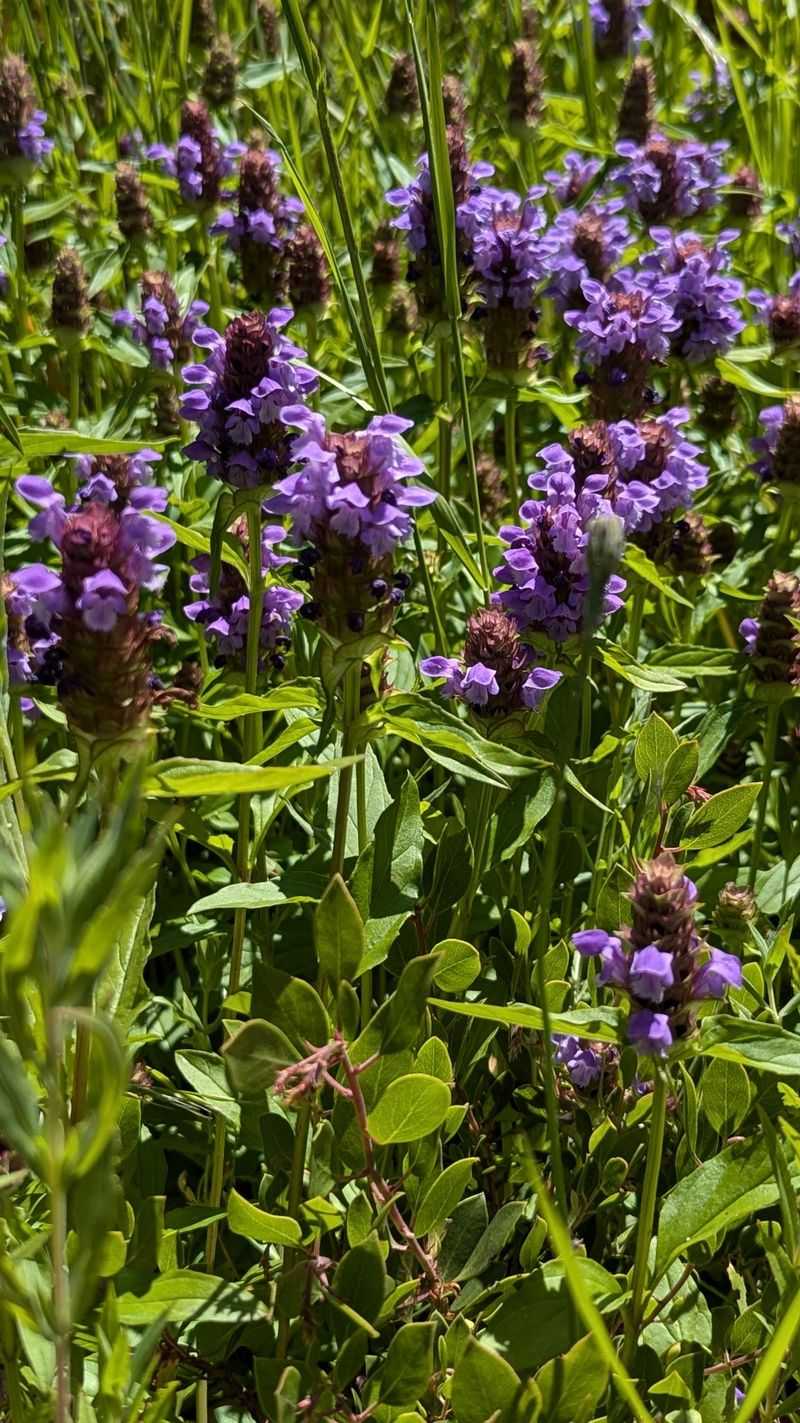
Some tiny purple lawn flowers may turn out to be Prunella vulgaris, a plant commonly called self-heal or heal-all. Those names are just labels, and they do not prove the plant heals anything.
First, the plant itself needs a careful look.
It is a low-growing perennial in the mint family. According to University of Minnesota Extension, self-heal has leaves that grow in opposite pairs along the stem, a stem that is square instead of round, and small purple-to-blue flowers packed into dense clusters at the stem tips.
You can test the stem yourself. Roll a piece gently between your fingers and see if you can feel four edges.
Then check whether the leaves sit directly across from each other, like a pair of hands held out.
Self-heal also spreads. Its above-ground stems can root where the nodes touch the soil, so a single plant can slowly form a patch that creeps across thin turf.
Even if your flower checks every box, treat the match as a good lead and not a final answer. Other lawn plants can look similar, and the clues here are only a starting point for investigation.
If you want certainty, take clear photos of the whole plant, flowers, leaves, and stem, and ask a local extension office. Weed guides such as Penn State Extension’s turf weed guide can help you compare lookalikes before you decide what is growing in your yard.
It can flower in a mowed lawn
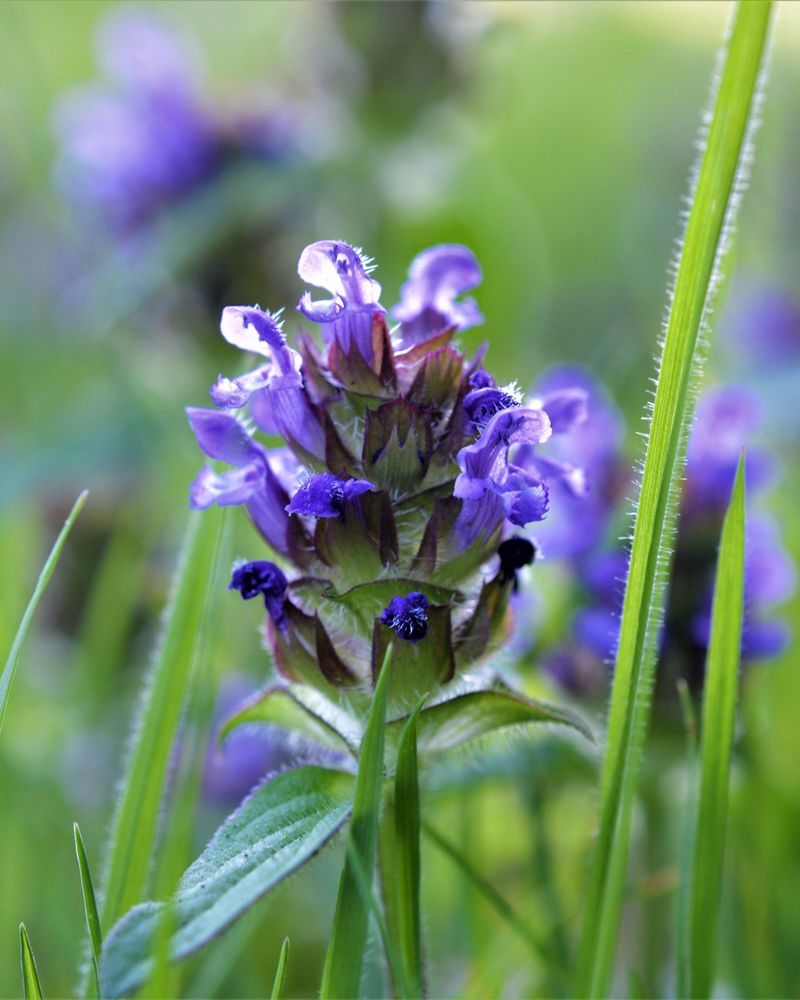
Mowing day usually erases anything tall, so it seems odd that a flowering plant could slip through. Self-heal manages it by staying close to the ground and by spreading sideways instead of reaching up.
The USDA’s plant fact sheet for lance selfheal notes that this form can flower even when mowed fairly short. That is a specific claim about lance selfheal, so it should not be stretched to every form of the plant or every lawn.
The low habit helps explain why people overlook it. A patch of low green leaves blends into turf for most of the season.
Then a few purple flower heads show up near the ground, and suddenly you notice them.
Spreading matters too. Because stems can root as they creep, a patch can fill small gaps in thin grass without anyone seeing it arrive.
None of this means self-heal grows in every lawn or every region. Many small purple flowers can show up in grass, and plenty of them are something else.
If you see one, mark the spot, let it bloom, and check the stem and leaves before you call it self-heal.
A quick note on timing: look closely right after mowing. Flower heads that survived the blades are easier to spot against freshly cut grass, which makes this a handy moment to take photos for identification.
Historical wound-care uses belong to specific traditions
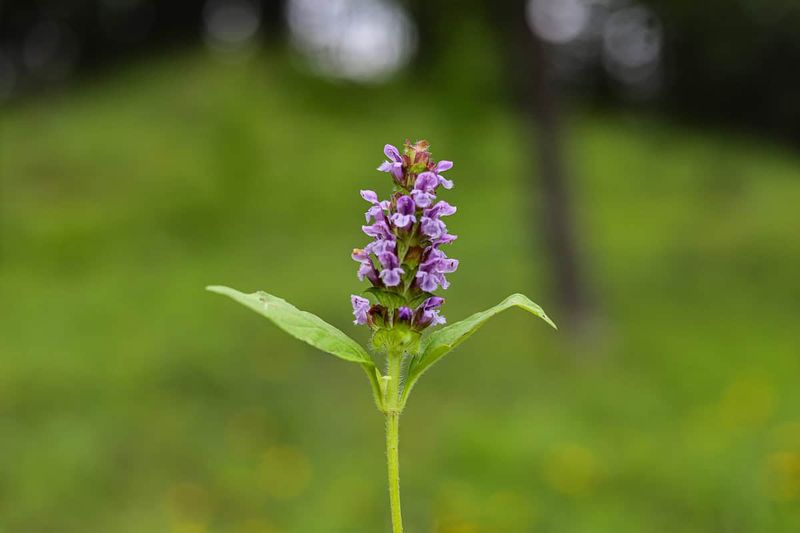
Old records do mention self-heal, but they point to particular communities, not to everyone everywhere. The details matter, so it helps to take the sources one at a time.
USDA material records medicinal uses among specific Native American communities. The USDA fact sheet describes juice applied to boils and a poultice described as traditional first aid for fresh wounds.
Regional ethnobotany records, such as the USDA Forest Service’s Ethnobotany of the Pacific Northwest, are the kind of document where such uses are written down for particular peoples and places.
Europe has its own record. Kansas State Research and Extension describes self-heal being used in European herbalism on fresh wounds.
That is a separate tradition, and it should not be blended with the Native American accounts.
So the claim that generations kept it for scrapes is too broad. The sources show specific uses, such as boils and fresh wounds, among specific groups.
What do these records prove? They show that people used the plant, and that it earned a place in their healing practices.
They do not show that the practice was tested in clinical studies or that it works safely on a scrape today. Think of them as fascinating history, not a how-to guide.
Animal research does not prove it treats human cuts
Folk reputation is one thing, and lab testing is another. Scientists have looked at self-heal, and the results are interesting but limited.
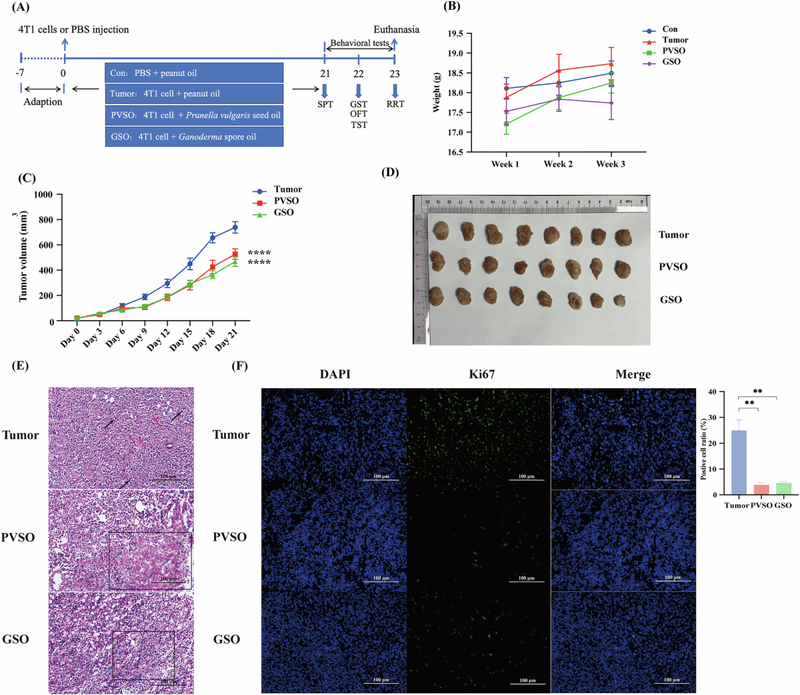
A 2022 study, Akkol and colleagues’ review of Prunella vulgaris, reported wound-healing activity from extracts and isolated compounds in mouse and rat wound models. In plain terms, researchers treated wounds on animals with prepared extracts and saw encouraging effects.
That is a real finding, but it comes with a big gap. Extracts made in a lab are measured and standardized.
A handful of crushed leaves from a lawn is not, and its strength and cleanliness are unknown.
Animals also differ from people. A result in a mouse wound does not show that the same plant works in human skin, and it says nothing about safety for a person with a scrape on a knee.
So the honest summary is this. Self-heal has a documented history and some early animal results.
Nobody can say from that evidence that a home-made remedy treats ordinary scrapes in people.
If research on the plant keeps moving forward, that could change one day. For now, it makes self-heal a curious subject for science, not a treatment to try on yourself.
Use established first aid for a minor cut
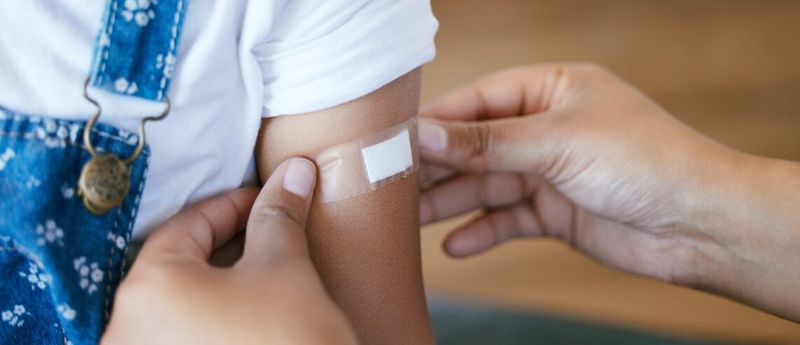
When you get a scrape in the garden, skip the lawn and head for the sink. The American Academy of Dermatology gives clear steps in its guidance on treating minor cuts.
Wash the cut with mild soap and water. Apply petroleum jelly, then cover the area with a sterile bandage.
That simple routine needs nothing from the yard.
Know when a cut needs more than home care. The AAD advises seeing a doctor for a deep or long cut, bleeding that will not stop, or signs of infection.
There is also a practical reason to keep lawn plants off broken skin. The USDA fact sheet warns that self-heal may concentrate lead compounds and other pollutants, and it advises against gathering the plant from roadsides.
You can read that warning in the USDA plant fact sheet.
A lawn has its own unknowns. You may not know what was sprayed on it, what pets have walked across it, or what else is mixed into the patch.
Clippings or crushed leaves are not a safe stand-in for a clean bandage.
Keep a small first aid kit in your gardening bin or garage. Soap, petroleum jelly, and bandages cost little, and having them within reach makes the safe choice the easy one.
Decide whether it belongs in your lawn
Once you have a likely match, the next question is about your grass, not your first aid kit. Self-heal is something to assess, not something to welcome or remove automatically.
The USDA fact sheet describes it as a possible pollinator resource, yet it can also turn weedy or crowd out desired plants in some settings. A patch that feeds bees in a casual lawn may be a problem in a tidy turf area.
Origin is not simple either. Lance selfheal is documented by USDA as native, while Kansas State describes Prunella vulgaris as a Eurasian herb naturalized in parts of North America.
So status depends on the plant form and region.
Learn what you have, then decide how much of it suits your yard. Recognizing a plant is a fine reason to pause the mower, but it is not a reason to treat it as medicine.